". . . But the past does not exist independently from the present. Indeed, the past is only past because there is a present, just as I can point to somethingover there only because I amhere. But nothing is inherently over there or here. In that sense, the past has no content. The past -- or more accurately, pastness -- is a position. Thus, in no way can we identify the pastas past." p. 15
". . . But we may want to keep in mind that deeds and words are not as distinguishable as often we presume. History does not belong only to its narrators, professional or amateur. While some of us debate what history is or was, others take it into their own hands." p. 153 Silencing the Past: Power and the Production of History (1995) by Michel-Rolph Trouillot
. . . . I didn't watch the degrading display last night, that the complicit politicos and media persist in calling a 'presidential debate,' a display that was anything but presidential or a debate. El Vaquero did tune in though, while on a separate computer and screen simultaneously conducting the rehearsal, directing multiple camera angles, etc. for the first event of NOLA Reconnect that goes live -- on Friday already! Long Distance Producer.
The stress around here lately is extremely high with all the moving parts to synchronize, with all the paying audience. It will only increase each coming weekend until the end, with an interactive cocktail party, that isn't Zoom, but a new tech in beta as of this time.
Simultaneously we have the ever increasing stress and anxiety and sheer insanity of NYC's surge of new coronavirus cases and deaths. They doubled between Friday and Monday, and doubled that from Monday to Tuesday for all the reasons we said this was inevitable. Even so the mayor reopened the schools and indoor dining yesterday.
Thank goodness el V ended the day in much better shape than he was in for most of it, including lowered BP and happier mood. He insists our dinner did that (crispy outside, baked inside, organic chicken cutlets in a sauce of wine, mushrooms, garlic and white onion, with heritage potatoes and broccoli, from the Farmer's Market), but I think it was how well the shoot went, and the results of it. This surely lowered my BP too -- it was not a good day by-and-large for either of us, in a sequence of not good days -- despite both of us getting our hair cut and styled for the first time since February. Another friend held in great affection is in the hospital. Two more friends forced to evacuate from the wildfires. Another one has lost everything in the wildfires.
Thus my choice not to tune into the national disgrace put on international display of the one-man-fling of shyte non-stop from his tiny, but still dripping with blood, hands.
Addendum concerning last night. For everyone fond of alternate history, I would like you all to think about what the media would be all up about and all in about and all over, IF ... Hillary had told the shoggoth stalking her around the stage and constantly interrupting her to, "SIT DOWN, MAN, AND SHUT UP!"
Instead, I watched A Fistful of Dollars (1964!) on Amazon Prime.
It’s a weird experience to watch this now since first seeing it as a kid, bringing to it what I’ve learned over the decades* about the tropes of US history and violence, particularly the myth of the solitary gunman’s justified violence to create ‘justice’, tthe Mexican American War, the War of the Rebellion, and the Unglorious Welllost Cause, lynching-Jim Crow, Woodrow Wilson. I's all about posturing, like shoggoth last night -- except Clint Eastwood possesses that prized slow burn solitary heroic stillness and silence that shoggoth can't even imagine, much less see, and never embody.
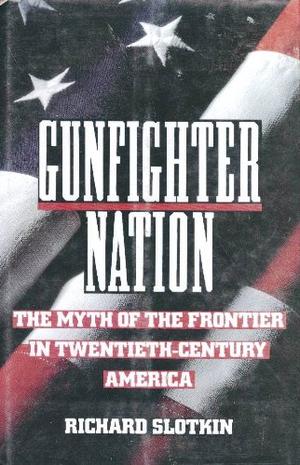
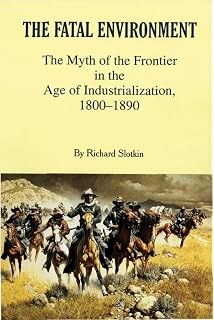
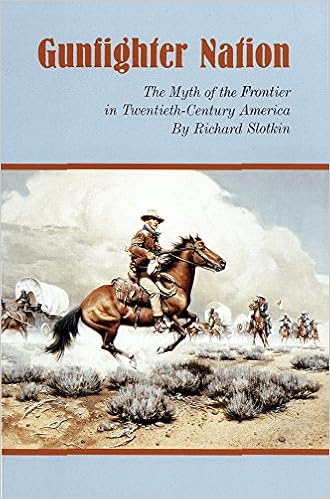
Richard Slotkin, the great historian who taught me so much about this starting in the earlier days of American Studies, should have received the Nobel Prize for history for his work revealing the history of US racism and gun violence in our entertainment which forever pushes the lie that a single white man with a gun can and does set the world right. He should have gotten the Bancroft Prize and at least one National Book Award too. But he did not because nobody wants to deal with these concepts that are our history and character – and most of all don’t want to deal with the knowledge that this toxic culture is created almost entirely out of what we've been indoctrinated into by our popular entertainment.
~~~~~~~~
* Not to mention all I've learned about the making of films and television, from writing the scripts to the technical side of things from the many screen professionals with whom we've been hanging out for so many decades now.
. . . . Could C19 be Nature putting humanity on a time out to give the planet a break? Had finished breakfast, which was our very old, dear friend, business partner and neighbor-across-the street B's wonderful cornbread, an apple, a banana and tea. Turned on the computer and learned FEMA has declared us officially a Disaster. Not just any old disaster either. A Major Disaster. Cuomo was addressing us at that very moment I turned on, but listening for a minute, I realized what he was saying was what I know. As for some of the information at this time, since no matter how much may be brought in, there are no masks, gloves, sanitizer, or testing -- or probably medical care -- available for us, since, it really MUST go to the health workers. And as hard as I tried to prepare for this, I have no means of making a mask. The masks had been taken by resellers already in February, as were the gloves and the sanitizer. Breakfast came after going out early this morning, hitting both the Gourmet Garage and Morton Williams. Per usual there was a line for Trader Joe's, and people are not 6 feet from each other -- I check when I go out, just to see; have no plans to go there, anymore than to Raffettos, which also was open -- not even possible to do 6 foot separation. Raffettos takes cash only and they aren't wearing gloves, even now, I saw through the window. The GG was unpacking today's delivery towers of sanitary hand wipes for the stand at the door for handling the carts and baskets, and to dispose of them when leaving. I had brought a pencil and my own disinfectant wipes (for as long as they last) for punching in the pin for my card when paying, and handling the items. I had improvised that t-shirt mask, but ultimately it doesn't work. Cuomo has declared it mandatory for people in our age group to wear masks when we go out -- but we don't have any, so? But anyway -- today is a lot better than yesterday, just physically. Finally, last night at some point in bed with a book, the radio on, my stomach unknotted, for the first time in many days and nights. In this time loving and appreciating even more our usual radio programs. Last night was the weekly, WGBO's "Latin Jazz Cruise," hosted by our friend Bobbie Sanabría. He began with songs and rhythms of the orisha, Babalú-Ayé, the orisha of healing and the sick. Bobby was so matter-of-fact in his host patter between cuts, most of which was about the music and the artist that created it, just as usual, explaining for people who may not know the Afro Latin religion of Santería, from the Yoruba spiritual way of Lucumi. WBGO is the jazz station out of Newark, that plays every kind of music created by African Americans, and to much lesser degree that which has come of out of Afro Cuba and Puerto Rico. It did us so much good! Music is a healer, a soother and a cleanser, and it brings people together -- plus it brims with history. The rituals, never uncoupled from the sacred music, dance and drum, is expressed in (Yoruba/Santería/Lucumi, and in Haitian Vodún too) rituals that cleanse one from bad influences, stress, etc. -- are limpiado la cabeza, i.e. washing, washing the head and making one strong to resist and survive. Cuba has always been this great cleanser for us and the Postmamboists, where all this ugly stuff is put away, and we disconnect digitally and otherwise, from the world here. Music, being kind and thoughtful -- and laughing, are also limpiado! Then Vaquero joined me and we read aloud, him getting silly, and we laughed together for the first time in a week -- which had a lot to do with rasslin' Zoom for distance teaching, and wrestling with Quick Books to issue Postmambo credit invoices for the postponed "For the Funk of It" trip. We began a new read-aloud-before-bed book, The End of the Myth: From the Frontier to the Border Wall in the Mind of America, Metropolitan Books, 2019 by Greg Grandin. Vaquero had already read it, but I haven't, and he loved it so much he wanted to read it again, but with us doing it together. This is Greg's latest work, the first book to put the great saboteur in the context of our whole history of national mythology. These are along the lines of which I've been talking myself, for quite some time -- quite some time prior to 2016. But Greg has done it so brilliantly, cleanly and succinctly. He is not only a deeply intellectual analyst, but he possesses as well the tools of employing metaphorical, poetic (we really do need poetry now) and symbolic thinking, presenting this all in easily comprehensible and gorgeously composed prose. Greg writes so well, it leaves one breathless. He cites us and American Slave Coast too. Plus he's clearly influenced in his thinking by the writers I've been living with in terms of our national mythology almost all my life, Leslie Fiedler and Richard Slotkin. Slotkin was one of the innovators of American Studies, which brought together history, literature and pop culture, which meant music, movies and tv too -- O I was so there when learned there was such a discipline!) Regeneration Through Violence: the Mythology of the American Frontier, 1600-1860 (Wesleyan University Press, 1973) The Fatal Environment: the myth of the frontier in the age of industrialization, 1800-1890, (Atheneum, 1985) Gunfighter nation: the myth of the frontier in twentieth-century America (Atheneum, 1992) I have all three of these books here, Slotkin's written other works too, including some brilliant fiction of the War of the Rebellion) and though Vaquero knows my devotion to the works and has paid attention when I bring up Slotkin's analysis in pertinent ways, he's never read them. I think we'll start reading them aloud after finishing Greg's. It's unbelievable how clenched in every bit of me I've been for days, now that -- for today anyway -- I've unclenched. I was able to bring back a few things for the neighbor across the hall -- she's just helpless. She doesn't cook. She doesn't even have a pot with a lid with which to make rice and doesn't know how to make rice anyway. Among the items I brought was Vaseline Petroleum Jelly. It's the only thing that gives relief and healing to our hands, which are constantly disinfecting and lathering. She didn't know either that vaseline does this. Vaseline was a staple on the farm when I was growing up. I'd never ever in a billion years been able to guess in the misery of my growing up years that at the end of my life I'd be grateful for having been brought up on a farm and taught from the time I could walk and hold things to cook, clean, plan meals, organized a household. There are so many people like my neighbor, who have been eating out (in her case various aid and assistance organizations for elderly people -- and they've all closed down -- they'd delivered meals too, and she got totally dependent on them) and never cooking) for years. One of our brilliant friends, who doesn't suffer any of the challenges and disabilities of our neighbor, told me once she refused to cook, even have a stove and dishes, because she couldn't stand washing dishes! Every time --which is many times a day -- I wash dishes now, hands covered in hot water and soap, I feel I'm doing the right thing, and I feel safe. 😸
. . . . The following is my response to someone citing this article about the mistakes the opposition to Chavez made in Venezuela, as good advice for the opposition to little hands . . . .
Speaking as someone who has been to Venezuela, knows many Venezuelans, including dissidents and exiles from more than one side, and the history of Venezuela, this piece has more 'disinformation' than information.
Venezuela and the US at this time are fundamentally incomparable, in the sense that Venezuela is not the nation of immigrants from the entire world that the US is and has always been. From Wiki:
About 51.6% of the population is Mestizo, while 43.6% are white of European ancestry and/or Middle Eastern ancestry. Another 3.7% is black/African, while 2.7% is of full Amerindian ancestry, and 1.0% other races ( principally Asian people).[1][2]
So ... which frackin' national cultural traditions is he talking about in which to participate to show you white middel-class college educated Venezuelan too are a Venezuelan? He sure as hell wasn't talking about the culture and traditions of black Venezuelans, all of whom, perhaps, we can recall, are descended from imported slaves, and who enthusiastically, as did black people throughout South America, supported the Bolivaran revolutions, and who were, as here, betrayed by every revolution, as were the Indios, as they were here too.
In the US, which cultures are we to participate in to show we're Real Amurrikans? African American (which, in fact we all do, starting with "GIRRRRLFRIEND!" and ending with with the rad alt white dorks who pretend to be rappers and pose like black prisoners -- see Dylann Roof, throwing faux gang signs etc. want something good? steal it from a black person.)? Hindu -- which tradition of same? Lebanese (the wealthiest group as a group in the nation)? Haitian? Irish? Chinese? Russian? Jamaican?Scandinavian? Cuban? Italian? Persian? Vietnamese? Saudi Arabian? and etc. etc. etc.?
Ours is different history and context than Chavez and Venezuela. Additionally, Chavez provided a stability that Venezuela had not had a in a long time if ever. Stability is what matters most to most people (no small reason Cuba hasn't had insurrection -- safety and stability among a sea of nations where neither exist). As we see, the mission of this regime is to sow chaos and destabilize everything.
We all recall that these people were on those lands long before Andy J showed up and told them they weren't amurrikans and had to get the hella out.
This country's anti-intellectualism has always been so fundamental as to be a religious dogma -- which is not a cultural aspect of Spanish heritage, even now. There are reasons why Andrew Jackson was the ur-ideal of the USian, and those reasons are why so many are trying to draw parallels with little hands and Jackson himself, the era named for him, and Jacksonian politics. These resulted first in genocide and ethnic cleansing in service to the Cotton Kingdom, and, the moment he left office, in the longest and deepest economic crisis the nation ever knew (the only time in history of the US after the War of 1812 until 1863 that the price of slaves fell!) until the Great Depression of the 1930's. Its final result was the Fugitive Slave Act and the War of the Rebellion.
What little hands and AJ do have in common is ignorance and capacity to hate and the tenacity to never stop hating no matter what catastrophes are unleashed. What they don't have in common is Jackson's undeniable physical courage, his gentle and courteous respect for and enjoyment of the company of (white) women, and a genius for war that particularly consisted of his capacity to inspire / terrify men to die on his orders.
What we have here is a civil war now, it looks like. We've been in the first stages, the equivalent the of the incredible ACTIVE opposition set off by Missouri-Kansas-Nebraska and the Fugitive Slave Act, when the actual shooting war began (see, for instance: the number of illegitimate murders of African Americans, and the harassment of Muslim Americans, particularly women brave enough to continue wearing their hijabs). Now we're in chaos of the Buchanan administration that couldn't stop the run off the cliff because of feckless whig and Dems political party alignments for power couldn't or wouldn't stop what the slave power was doing.
. . . . Contributing to this perspective on my part is, since the inauguration, the public friendship and family break-ups I've witnessed on the sidewalks here in NYC, between little hands' supporters arrived to gloat, genuflect and bask in the shrines all over the city and the shock and incomprehension and sheer disdain and contempt and disgust they feel for their old friends in whose homes they expected to crash, when they learn that in this city we've long despised the man and his works. They behave like cultists . . . .
"What the fuck do you care about some stupid pipeline a thousand miles away? You're not even an Indian!" I heard and saw one very well / expensively dressed and coiffed white wife scream the husband of her once-friend while flanked by a scowling husband, scared child and three innocent suitcases, stared at with contempt by the passersby. Our local a/k/a the Bistro reports that this kind of thing is happening in the restaurants all over town, so much so that it's wearing down the staffs, it's so common. Recall that most restaurants are staffed almost entirely by immigrants from everywhere. Many of them are owned by immigrants, as is our local (they are citizens, btw, thank goodness, and they are very productive and active citizens and members of our community, who do a lot of good.)
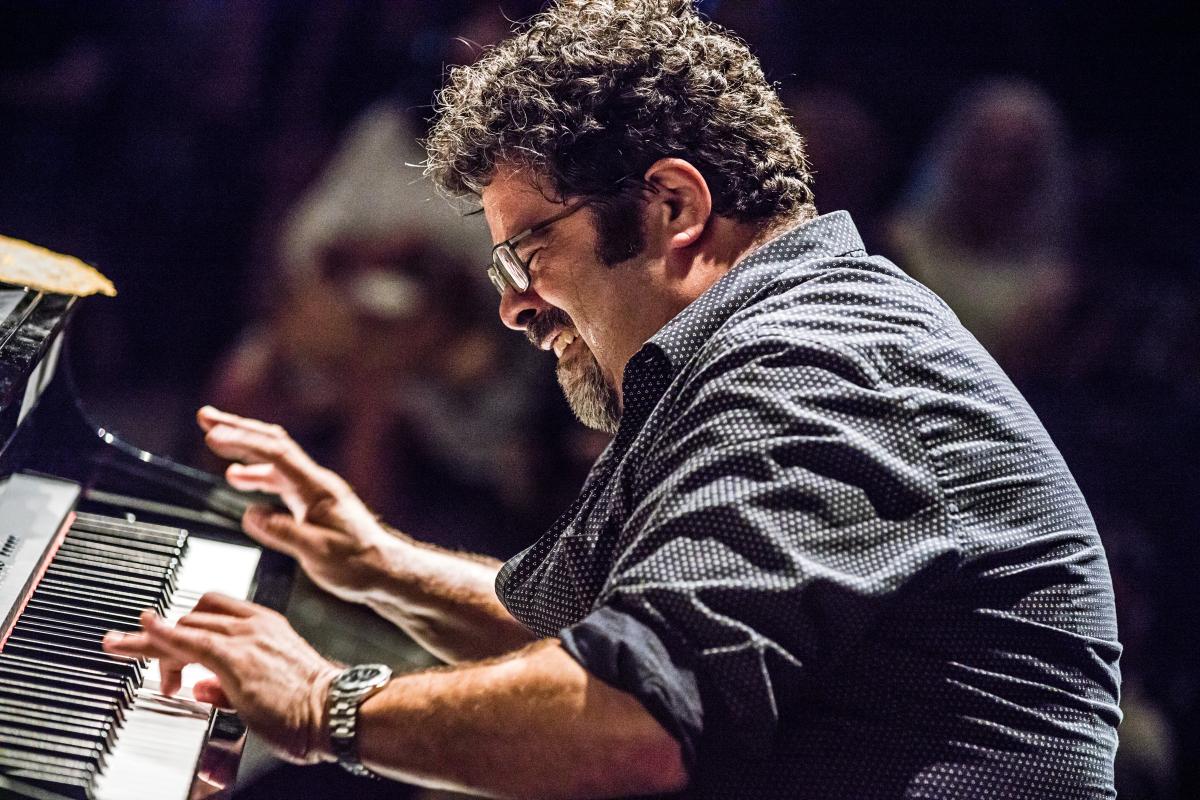
"After the election," the Bistro told us, "We (meaning New Yorkers) were so depressed we could hardly eat. (Unlike previous years, the restaurants in NYC went broke on Thanksgiving Day because none of their reservations showed up!) Now we're all so pissed off we can't sit still and have to be fighting." Imagine these words in the attractive Egyptian Copt culture-inflected (fluent) English . . . . . . . . Last night was amazing all over the city. We were at another of Arturo O'Farrill's*Alianza de Jazz Afrolatina (Afro Latin Jazz Alliance) concert at Symphony Space, which showcased musicians and student musicians who live in Cuba, including the greatest pianist now living, Chucho Valdés--
Gads, it was great to see a woman on that stage last night that was packed with nearly thirty -- yes, 30! -- men!
and his daughter, who has inherited his hands, meaning the hands of his immortal father, Bebo Valdés, and his son, Jesse, whose hair is gone wild since this above video of 2015.
The house was packed. It was political activism on all fronts from start to finish, from Arturo on the stage, the choices of music they made, to the people in the house. The very beginning was a video made of Arturo's Latin Music Community School -- with lots of little girls at the top, front and center, who, of course, won the hearts of everyone. Shouts of "Down with --- " echoed throughout the house at various times --to the shock of the Batista-philes who ran here immediately in 1959-1960, who were among the well-heeled audience members, who evidently were visiting from Florida.
"This is supposed to be music," one of them whispered to her friend while we were standing in line for the ladies room during intermission. "What's that got to do with anything? --- is a great man. How DARE they!" Which, presumably, the latter they've been spouting since 1959 . . . .
More than one Afro-Cubana American in the line heard their loud whispers and responded on the order of, "You want to keep others out now, but you demanded to be let in yourselves. That's just one thing wrong with little hands." They looked at us with incomprehension and hauteur and ignorance equally written on their well-made-up faces, as they hunched shoulders and necks inside the fur of their mink coats and stalked off, presumably to pee in their pants.
We came back to our seats to hear Arturo announce from the stage that a judge had blocked at least parts of the immigration order at JFK, where there was a huge protest against it. The place exploded in cheers and applause.
For the first time in my life ever of being in a theater I heard jackboots charging down the aisle, smelled the tear gas, saw the thugs and felt the batons and what it is like to be dragged out to the jail wagons --from where none of us ever appear again. It's happened in so many nations since the 18th century, and particularly in the over 100 new nations created by fiat in the wake of neocolonialism by other means of the end of WWI and WWII.
That was my historical imagination at work, and not what happened.
. . . .But what happened on the subway! El V and I were discussing various aspects of the coup d'etat, and all kinds of people, all strangers, in our part of the car, leaped to join our conversation. People spoke and asked questions, expressing excitement and curiosity, presumably continuing too, after we got off several stops later.
We were in awe. We'd never experienced anything like this on the subway, except after 9/11 and maybe on New Year's Eves. The subway riders were all young, none older than early 30's. after one of the guys asked our names. He exclaimed, "I thought I knew you! I saw you guys read at Revolution Books last year!" Then he told the people about Slave Coast, and told them about da List too, so people signed up.
Our stop was Houston, where there's a lot of nightlife -- pricey clubs and bars and so on, we passed three veddy expensively, impeccably groomed, fashionable, beautiful, very young women (were the even old enough to drink?). They were passionately discussing -- "What is a democratic government?"
Never. Never on a Saturday night, after midnight, a trio of women like this, talking like this -- never ever before!
In the meantime the protests go on, all over the country and all over the world. Nope, this isn't like Venezuela.
---------------------------------
* See / hear Arturo O'Farrill speak out about his concert, “Musicians Against Fascism,” on the jazz station, WBGO, here.
. . . I revisitedNancy Isenberg's White Trash: The 400 Year Untold Story of Class in America (2016) a few weeks ago. I wanted to see if wanted to revise my iniitial judgment that the book was thematically and argumentatively incoherent too often. I listened to the audio download rather than re-reading the book.
While doing that I was struck in a way I hadn't been during the book read by similarities between Jefferson the Agriculture Philosoph's Monticello and Marie Antoinette's faux rustic village of Hameau de la Reine near to the Petit Trianon in the Park of Versailles. There she and her companions played at being peasants as Jefferson impersonated "gentleman farmer." He was such an 18th century aristocratic fellow (though in a mode that was also peculiarily Virginian).
Isenberg didn't notice these similarities herself. As per usual with White Trash, when the author approaches something revelatory, instead of taking the leap over the walls surrounding the Founding Father of the Domestic Slave Trade and White Supremacy -- she pulls up short and turns to a different topic-- leaving unmined the US's systemic legal foundation of 'race' in the constructing of white divisions of class and poverty.
It was an exciting moment during a visit to th British Museum to spy a first edition on the shelves of the Museum's Enlightment Room.
In the Enlightenment Room, British Musuem -- it's enormous!
Isenberg's chooses excellent quotes from various Jefferson documents and his only book, Notes on the State of Virginia, to illustrate his disdain for farm work, and his disinterest in farming in general. These chosen words suggest strongly that for Jefferson, "farming" for most of his life, was only so much "philosophy" -- fantasy world building that relaxed and entertained his lively mind, resembling closely the role playing of milk maids at Petit Trianon.
Water color of the grounds of Hameau de la Reine village, near Petit Trianon
It wasn't until Jefferson thought of agriculture in the terms of science experiments that he took any personal concern with 'cultivating.' on his own farms (he was a complete failure at it too). This was a deep contrast with Washington's constant concern with farming and how he managed Mount Vernon. Jefferson's exception to his impractical fantasies were his statements that breeding slave women for their "natural increase" must be encouraged as their babies brought more financial value to the estate than the crops brought in.
Wotton House, Surrey. This pdf is a good essay on Jefferson's travels in England (John Adams was his companion):
"A Comparative Study of Thomas Jefferson's Travels to England and Their
Influences on Monticello"
Jefferson admired the great estates, parks and gardens he visited during his travels in England (786) and in Italy and France (1787). Lacking the economic resources held by aristos to build such impressive showplaces, of course, he relentlessly mortgaged his slaves, and created an lesser imitation at Monticello with lower quality materials. That showplace of Monticello is an impractical facade, like Marie Antoinette's Petite Trianon peasant village -- a folly, as certain edifaces des amusants erected on estates were called in England -- except, of course, at Monticello, the slaves were real people, and truly enslaved by every legal, religious and philosophic dictum possible to invoke, and ultimately sold away from the bankrupted Master of the Mountain's fantasy world that their bodies, fertility and labor had bankrolled.
Isenberg shows Jefferson's philosophy of agriculture was formed by European models that had not a chance of working in North America -- particularly not in Virginia, for all kinds of reasons. Invoking the gentleman farmer, his preferred term for a farmer was cultivator -- not yeoman, though this is the word everyone uses when writing about Jefferson's fantasies of how the huge swathes of the Louisiana territory was to be populated and organized. A cultivator differed as much from a yeoman as Theodore Roosevelt's stockman differed from a cowboy. Roosevelt compared the stockman to a southern plantation owner and described a stockman's life as the best life to live -- except that of a southern plantation owner in the antebellum era. Unlike the stockman's whose life was filled with satisfactions and comforts, not least seeing his wealth steadily accrue through the natural increase of his herds and the labor of his hands, the cowboy's life was a hard one, and an economic dead end.
Even as his language for the naming of the newly acquired territory's states could have been used in contemporary (bad) fantasy world-building, it was not the language of sturdy small yeoman farmers: Michigania, Illinoia, Saratoga, and Washington, well, OK, but! -- Sylvania, Chersonesus, Assenisipia, Metropotamia, Polypotamia, and Pelisipia? This was an equally preposterous progression of the fantasy feudal slave state of Carolina designed by John Locke and the Eight Lords Proprietors of Carolina to divide territory into palatinates and baronies, organized under a hereditary aristocracy of margraves, landgraves and caciques. Nor should we forget the proposed Margravate of Azilia as a the buffer zone between Carolina and the Spanish Floridas. Instead of happy serfs however, they would have happy African slaves.
Logo of the Royal African Company
Recall that Locke and these Lords Proprietors were original investors in the Stuarts' Royal African Company, headed by the Duke of York, formed to enslave Africans and sell them in the New World, in order to fill their always empty privy purses.
What does all this have to do with poor whites and class? Isenberg seems not to know, though this history is included in White Trash, it is presented without any connection to the southern colonies' poor white populations, treated as expendable waste by the small, ever increasingly wealthy elite. As critics other than myself have noted, Isenberg forgets about her central theme most of the time.
Though White Trash's argument is fairly incoherent thematically, pieces of it are informative. It's disappointing that she wasn't able to pull together the history of white poverty and class into a satisfactory explanation of our cultural, economic and political psyche. But since she couldn't or wouldn't examine and / or reconcile the victimization of poor whites with the victimization of slaves -- or that of Native Peoples either, though they get some mentions, ultimately the book, though an interesting read, isn't as useful as the author expected. It really founders when the author attempts to force New England's ways and mores into her theme? argument? (it's unclear). The points that are to be made are obscure -- again because of how slavery operated in the north, and the differences between north and south in how they profited from slavery are ignored and / or presented in a manner that can only be called murky.
Isenberg is a terrific researcher, but apparently wasn't willing to work-up her analytical skills to spin 400 years of history around a central theme without losing sight of the argument and straying off into dead ends. She founders at the wall of black - white, which always comes up central to the history, no matter what era and which issue. So, once again, African American history gets side-barred and made lesser, even as the historian centers the class system of whiteness as American history. It's an distorted dialectic of class and poverty, which forces the argument into a shallow flat shape, lacking scope and grain. The further the book progresses the more it presents as rushed and unthought-through, as up against a deadline the author resents as too close.
Another aspect of White Trash that confuses whatever the argument Isenberg thinks she's making is that she repeats, sometimes even word-for-word, illustrations. One example of this is the scene from Harriet Beecher Stowe's novel, Dred: A Tale ofthe Great Dismal Swamp (1856), in which a poor white woman and her children are described -- she uses that same scene word-for-word at least twice -- while missing that the language Stowe has chosen to describe this miserable family is to evoke compassion in the reader, not contempt.
Though written and published before the election, her description of Jackson's political base is the same as that of many descriptions of the orange's political base, and Jackson's braggadocious, impatient, explosive, improvisational character as many describe the orange's character. The politics of resentment come through loud and clear. Though this is of no surprise to anyone who has spent time studying Jackson and the Jacksonian era, it's deeply troubling in its implications for our own immediate future.
Then, suddenly, we're past the Civil War, and these same despised people whom the author has claimed did not support either the seccession or the war, and who ere so badly treated by the CSA, are aligned with the planter-political class.
Then we move into the age of eugenics, a/k/a the Gilded Age, or, as I call it, the Age of Horror, the age that so resembles our own.
She's gone through the Civil War and into this era in which the poor and anyone who isn't male, white and rich are regarded as worthless. Yet, she never explains how and why how these supposed crackers such as James K. Vardeman, whose class is so despised, oppressed and repressed, got wealth, got political power. In fact they get so much wealth and political power they now run the country. How did this happen if they are so oppressed? Did the legal system and white supremacy have anything, anything at all, to do with it?
Ultimately the book ignores its own theme and argument.
As may have been gathered our little anniversary jaunt last week to Lancaster, Pennsylvania exceeded any expectations we had. We liked the city very much too, which was fortunate as we made it our center of operations for the things we wished do outside of Lancaster. It was where we made our home for four nights, at the Cork Factory Hotel, so it was important that Lancaster itself was interesting and pleasant. And it was, o so much. Lancaster felt a place where I could live happily.
But it was there I saw a very sad thing. This was the long screed posted in the windows of The Seed, a cooperative free lending library-art gallery-restaurant-community center located within a sort of shopping mall made from what had been a large factory in the historic downtown of Lancaster. The Seed is a a communal, worker owned venture.
Poster, inside one of the Seed's bathrooms.
The Seed, as a communal collective, is especially concerned that it be a safe space for ALL people, and particularly the young of the local LGBT Lancaster community.
The screed so very respectfully requested gun owners not come into the Seed openly carrying. They pointed out that PA isn't an open carry state even, and thus it was against the law. However, more importantly, openly carried guns made many of the people who come to the Seed to feel safe, feel very unsafe. All the language of the screed was placatory and humble, basically begging the gun carriers not to smash up their place of business or shoot the people who come there. The Seed is the hangout for all who don't fit in elsewhere and so on -- that was so obvious among the heavily goth, pierced and tatted under-25 clientele, or those who operate it. But that cannot include gun carriers.
What a dilemma for a venue that sincerely believes in inclusivity, diversity and eshews excluding anyone.
The performance space in the Seed.
Except, of course, there was nary an African American or Hispanic anywhere to be seen.
Since traveling in Cuba during the first days of the new year my blog-journaling impulse seems to have mostly disappeared. I wonder why, since noting online what I see, read, watch, do had become a normal part of my daily life routine -- kind of like Samuel Pepys and his journal.
I've have done a great deal of journaling by hand in my moleskinne, about our various journeys and events concerning The American Slave Coast, the questions, the interaction with the many wonderful people we've met along the way in the last few weeks again.. This was crowned by the Grad Center's wonderful, packed out even for Slave Coast event on the 8th, with so many brilliant historians and other writers in attendance -- academics and scholars, independents and journalists. Hearing from so many quarters what brilliant addition Slave Coast is to the history discipline, if we were wanting any more validation or satisfaction for giving 5 + years of our lives to this history, it was poured over us in gallons and gallons. There wasn't even standing room left in the venue -- people stood out in the lobby trying to hear the reading, the discussion and then the q&a. For the reading this time we did it together, changing off every few paragraphs. This was particularly well received, and particularly by the African American historians, who are women.
As pleasing as this is, personally I felt detached from Slave Coast as soon as it is went out in the world. I really love the book, but in the same way I love any of the great books of history that were / are vital to the formation of my ideas and thinking on these still vital matters.
I have been writing though, about books read, movies and television watched too, just not here. Also I'm very slowly immersing myself in two book projects.
Lee Marvin as Liberty Valance, Jimmy Stewart as Rance Stoddard, John Wayne as Tom Donophin
Over the weekend I started carving out a chapter on John Ford's The Man Who Shot Liberty Valance (1962) for Hollywood Confederacy: Why The South Won The War. But I'm not sure if should be a chapter itself or a part of a chapter. Structure and organization is everything for a book like this, and I'm still trying to figure that out.
I'm looking at this film in the context of Owen Wister's ur-western movie-novel, though the white supremacist novelist's The Virginian (1902) didn't become a movie, oddly, until 1929, and re-made in 1949. It's particularly enlightening to see how and why Ford's film retains all the elements of Wister's novel, while flipping the author's script, yet keeping the western's rules of engagement with utmost faith.
Others have written about Liberty Valance in the context of the man with the gun, and gender too
(see Roger Ebert -- though he gets several significant details wrong about the characters -- and Richard Slotkin), though not within the context of southern rebels remaking the country as it should be, in the west, I don't think. But of course there is subtext -- a bit, and not foregrounded, in Liberty Valance. Ford was one wiley coyote by golly, having his cake and eating it too, via image and the vocal delivery of small, minor roles, as well character. For ex., with "Marshall Link Appleyard" played by Andy Devine -- he couldn't have signaled any more broadly that the law is a fool despite the protag being Jimmy Stewart, a lawyer and a teacher championing reading, writing and American history.
A made-for-television version of The Virginian came out in 2000, and another in 2014, in which the Virginian is renamed "South." There was a long-running series too, back in 1962 -1971. They Said, back in the fall of 2015, that another movie remake is in the works.
In the meantime it's a wet, chilly, miserable March day here -- typical St. Patrick's Day weather, in other words. Sunday's time change has befuddled my sense of temporality.
Nor have I quite gotten back to anything resembling a routine again since October 1 and all the traveling started. Further off-kiltering my sense of when and where is that El V's still in Cuba with the second tour group of the year. Until last week he and I have been together 24/7 for months!
He and the Cuba ground team are thinking of doing yet a third one yet this year, as well as the two 2017 tours they're already organizing. This would be in November, which like March, is a perfect month to be in Cuba.
Mind, though I said this has been a miserable day here, I myself am anything but miserable.
After the reading / presentation (complete with interesting images thanks to Power Point), the Q&A -- questions for presenting historians and panelists are not soft ball, "Oooo I love you and yourwork so much, I worship you, how do you do it?"
Rather, in these settings, the Q&A presents the opportunity for other scholars to challenge one's conclusions, to bring up genuine inquiries as to theory, arguments, research, and even amplify the material that the writer has presented to the inquirer. It is extraordinarily intellectually stimulating.
Then came the signing the books that were purchased, and then signing the bookstore stock.
The American Slave Coast was launched. And it was over.
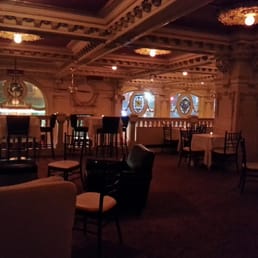
The Aspire Restaurant room in which we had our
celebratory The American Slave Coast launch dinner.
But it was night, raining and cold, not day bright and warm
as is pictured here. And it was also filled with diners.
Except for dinner and a drink to celebrate. Which we did in another of Providence's splendid boutique locavore, seasonal restaurants, Aspire, which happens to be located in the Providence Hotel, where we are staying. It's a multi-room establishment, including the room with the bar -- and unlike so many hotel restaurants and bars we observed during our various trips South to research The American Slave Coast, all the rooms were packed with diners. And there was a very good live jazz band playing. Some were the pre-theater crowd -- Providence's refurbished Gilded Age Playhouse's fall season is underway. Others were connected to some Brown event -- like us -- and others were just locals and visitors for one reason o another.
El V had crab cakes -- good for him, since I got to sample Providence's crab cakes. He also had clam chowder -- which I had earlier elsewhere. Both clam chowders were wonderful, but very different from each other, despite having the same basic ingredients, particularly the potatoes (also local) and clams. As usual he drank Guiness.
I had a watermelon salad, with arugula (just about to go off the menu now the cold has moved in along with the storms). I followed that with a half serving which was more than ample of braised scallops on a risotto bed, with citrus bits and greens.
You see the Gilded Age everywhere.
The Dorrance building was originally
a bank. Think Wharton, The Age of Innocence.
I had a pinot grigio because it was served at the welcome dinner last night at another very fine Providence restaurant. The wine wasn't the bland, limp stuff that pinot grigio has become in NYC. This was chilled to just the right temperature, served in just the perfect proportion to the right wine glass, so that temperature, crispness and flavors all remain through the last sip-and-swallow. These pinots had body and crunch and tang, very refreshing after a long day of intellectual challenge and performance, as well as meeting and greeting.
In any food place we've been in Providence, whether a sandwich shop, coffee and tea and snacks, an old Irish pub with bar food -- Blakes Tavern is the one we went to, where I had my clam chowder experience -- the quality is high, and so is the attitude and service. Everyone seems genuinely pleased that you like their establishment and their food.
As we've long suspected, NYC's restaurant - food hype is way over-rated.
Here, partly, we're seeing the historical influence and experience of Rhode Island as a destination for the very wealthy to eat and vacation. In that sense too, not just the sea orientation, it is similar to Maryland's splendid culinary tradition of the best local produce, sea food, shell fish, meat and poultry, prepared with style and flavor and pride.
What a privilege it has been to be here, finally. Rhode Island may be small -- so small it never sent a delegation to the Constitutional Convention -- neither did New Jersey -- believing the larger states -- they were looking at Virginia -- would screw them over, not realizing how Connecticut would go to bat for the small states for equal representation with two legislative houses, the top one, the Senate, having only two from each state no matter territory or population. But it is fascinating and deep, particularly when explored from the perspectives of the slave and opium trade, smuggling and industry and -- well, money.
Everywhere we see the evidence of very old money for a very long time . . . . A tiered society's evidence in other words, writ large to view, because the state's territory is so small.
Tomorrow is going to be all about Rhode Island and her history as a native son historian takes us round.
Due to my interest in Gore Vidal, the historical fiction author of what has been called Narratives of Empire, I am interested in this film, Best of Enemies, as well. Vidal did know his history, and particularly he understood how history could be and often, even usually, deliberately re-written, facts left out, selectively cited, revised, manipulated to tell the story the historian wished to tell -- rather than the real story, so to speak.
Vidal did it himself in his Narratives of Empire, partly as style and reflection of the eras the novels re-created, while always reminding the reader that fiction cannot be trusted. (I've never quite forgiven him for his mendacious portrait of President Grant in1876: A Novel (1976) -- here we see a bit too much of Henry Adams's influence on Vidal.) The Narratives are an ongoing lesson in both writing history and historical fiction for me, to read, listen to, watch Vidal's process and objective in creating his picture of the U.S. throughout his life, in everything he did, including running for office. He was among the more interesting and valuable Americans the U.S. has produced. Press Release for Robert Gordon's Best of Enemies follows:
My latest documentary, “Best of Enemies”—about the debates and feud between William F. Buckley and Gore Vidal—opens in NY, LA, Toronto and Vancouver this Friday 7/31. I made the film with Morgan Neville, and Magnolia Pictures is rolling it out around the country in August. Opening weekend is very important to an arthouse film and we’d love for you to come out this weekend to attend. Tell your friends too. Tweet, post, tattoo! A good opening weekend means a wider reach to follow.Best of Enemies has received almost universally positive reviews—from across the political spectrum. The film does not take sides in the argument, but makes us consider how we argue. Both Buckley and Vidal were tremendous wits, so the film is very funny. Until it’s not.Below are links to the trailer, to some reviews, and to theaters we’ll be expanding to over the next couple months (the list can increase or diminish, based on opening weekend (it’s a crazy way to do business; we’re hoping it doesn’t rain this weekend in NY)).Sharing information anytime is great, but especially Thursday July 30 and Friday July 31, if you could post or email to remind people it’s opening Friday July 31, we’d be very appreciative.
A review from the Hollywood Reporter:http://www.hollywoodreporter.com/review/best-enemies-sundance-review-767855 Coverage from the New York Times:http://www.nytimes.com/2015/07/26/movies/buckley-vs-vidal-when-debate-became-bloodsport.html?_r=0 In New York, we are opening at IFC downtown and Lincoln Plaza Cinemas uptown.In Los Angeles, we are at the Landmark 12.In Toronto, we are at the TIFF Lightbox.In Vancouver, we are at Fifth Ave. Cinemas. Some of the nice things people are saying:"Outstanding. There could scarcely be any documentary more enticing, scintillating and downright fascinating.” - The Hollywood Reporter“A delicious spectacle” - Newsweek “Witty, nasty and laugh-out-loud hilarious” - Movie Nation“Juicy and thrilling” - The Guardian“Superbly entertaining.” - New York Magazine"Thoroughly engrossing.” - Joe Leydon, Variety Facebook - https://www.facebook.com/bestofenemiesfilmTwitter - @VidalBuckleyDoc#BestofEnemies Thank you, thank you very much!Robert Gordonwww.TheRobertGordon.com
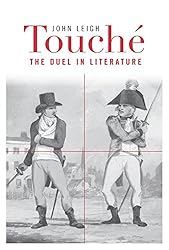
Touché: The Duel in Literature (2015) by John Leigh; Harvard University Pressis the latest addition to the ever-popular histories of dueling. Among others, see: Dueling in the Old South: Vignettes of Social History ( 2000) by Jack K. Williams; Dueling in Charleston: Violence Refined in the Holy City (2012) by J. Grahame Long; Southern Honor: Ethics and Behavior in the Old South (1983) by Bertram Wyatt-Brown; The Duel in European History: Honour and the Reign of Aristocracy (1989) by Victor Gordon Kiernan; Gentlemen's Blood: A History of Dueling From Swords at Dawn to Pistols at Dusk (2008) Barbara Holland.
But this may be the first literary history of the practice.
From the catalog copy:
Many of the greatest names in Western literature wrote about or even fought in duels, among them Corneille, Molière, Richardson, Rousseau, Pushkin, Dickens, Hugo, Dumas, Twain, Conrad, Chekhov, and Mann. As John Leigh explains, the duel was a gift as a plot device. But writers also sought to discover in duels something more fundamental about human conflict and how we face our fears of humiliation, pain, and death. The duel was, for some, a social cause, a scourge to be mocked or lamented; yet even its critics could be seduced by its risk and glamour. Some conservatives defended dueling by arguing that the man of noble bearing who cared less about living than living with honor was everything that the contemporary bourgeois was not. The literary history of the duel, as Touché makes clear, illuminates the tensions that attended the birth of the modern world.
Will South Carolina lower its CSA battle flag flying at the state capital in respect and mourning of the good, Christian people murdered by terrorist attack in Charleston? I first learned of this awful event while, by sorrowful coincidence, we were fact-checking, copy editing via reading aloud this morning the chapters in The American Slave Coast that trace the history of South Carolina, founded in white supremacy, slave trading and slavery of both Natives and Africans from the start of some of the founders in Barbados.
The Obamas knew the murdered pastor. This has got to be a terrible day for them, recognizing in many ways those shot in cold blood were surrogate targets for First Family.
How many times must it be proven that white supremacy and guns are a deadly combination for any nation that proclaims equality and democracy and diversity as positive goods.
Mother Emanuel is, in fact, more than a church. This is a place of worship that was founded by African Americans seeking liberty. This is a church that was burned to the ground because its worshipers worked to end slavery. When there were laws banning all-black church gatherings, they conducted services in secret. When there was a nonviolent movement to bring our country closer in line with our highest ideals, some of our brightest leaders spoke and led marches from this church’s steps. This is a sacred place in the history of Charleston and in the history of America.
One of Mother Emanuel's founders, in fact, was Denmark Vesey, a black martyr for African American freedom (we have a photograph of the ground where he was hung in The American Slave Coast).
The fact that this took place in a black church obviously also raises questions about a dark part of our history. This is not the first time that black churches have been attacked. And we know that hatred across races and faiths pose a particular threat to our democracy and our ideals.
Will this white supremacist be given the death penalty as has the surviving Boston Marathon Bombing brother?
Happy Three Kings Day, Twelfth Night and Epiphany, depending on what this day goes by where you are located.
The discovery of the infant Jesus by the Three Wise Men a/k/a Three Kings is as important in the annual round of uncommon observances as is the Nativity, and celebrated all around the world with street parades -- with bands and costumes -- family parties with music and dancing, as well as food. O to be in San Juan today and tonight!
Traditionally in the Mediterreanean, South American and Caribbean world, it is Three Kings Day when children receive their gifts -- brought by the Kings, of course, not Santa Claus.
In New Orleans Three Kings is the first day of the Mardi Gras season, ya'all -- marked by the Phunny Phorty Phellows krewe* riding the street cars, with champagne and King Cake.
Mille-feuille Bakery Cafe, a superfine establishment, nothing in it is less than $5, including plain "american" coffee -- operated by young French ex-pats -- opened last year near us. They are offering French-style King Cakes (as the photo shows, the French King Cakes are less gaudy than NO's), with the tiny baby token -- the one who finds the baby in her / his slice is the King of the party -- and, in New Orleans at least, is supposed to host the next party.
As the dinner party hostessed / hosted tonight uptown by C&K for a Louisianan actor - filmmaker - storyteller, Colin Gravois, who lives half the year in Louisiana and half in France, is tonight, I was planning on bringing one of these cakes as the hostess gift. But -- damn! they have none left! No more until later in the week.
Sheesh, it was cold when we got up today. Snowing. We're not supposed to get more than an inch. It wouldn't even stay on the ground if the ground temperature wasn't below freezing.
This is surely playing havoc with all the scheduled Kings Day parades and celebrations in the city in our large Caribbean, South American and Mediterranean communities.
---------------------
* The Phunny Phorty Phellows were formed in 1878, in celebration of the official end of Reconstruction (which had effectively happened some time ago by an armed coup d'état) and the institution of Jim Crow -- another name for neoslavery.
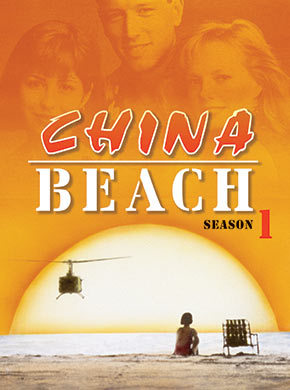
China Beach had four seasons. Only season one (1988), composed only of six episodes including the pilot, seems available from netflix.*
It stars Dana Delany.
The location of the series is the Da Nang evacuation hospital and R&R center, at My Khe, nicknamed by the occupying forces, "China Beach." However, the locations for the video shoots were in California and Hawaii.
Inevitably, China Beach got associated with with the eternally beloved series, Mash (1972 - 1983) -- which was transferred for television from the original setting Altman's 1970 Mash, which was intended to be read by all as Vietnam, not Korea. It was savage, and most savage of all to women. China Beach is dark, less satirical, very cynical and, while sharp and witty, unlike Mash, this series is not a comedy. Nor is it a "war" series. The fighting, the consequences of which the hospital and the shipment center of dead bodies deal with most days and nights happens off screen.
Most of the focus is on the women at the hospital base, who are there to clean up the messes made by and of men, whether of their bodies, their lives, their quarters, and war – while also providing all emotional support, nurture and healing -- and of course, entertainment and recreation. Who thinks of doing any of this for them? Generally speaking, tentatively and experimentally, only each other.
These experiences of the women who worked the bases as nurses, administrators, services personnel, such as the young Vietnamese woman at the community center which the Red Cross My Khe director, Lila, is attempting to build, are based on the book Home Before Morning (1983) written by former U.S. Army Nurse Lynda Van Devante. They too have PTSD. Lynda Van Devante died in 2002.
While anti-war in Vietnam protest is full blown, and both protest and the war are highly criticized at the hospital, on the base, and among the men as irrational, useless and terrible waste, feminism has not yet raised its terrible head in the military.
This dark cynicism about war and the top-bottom military organization made this series, while popular with critics, unpopular with viewers ....
The episodes are written with the multiple characters in the traditional manner of network television, following each character's various fracas, conflicts and problems, as well as their shifting relationships with each other. However, there is arc in the telling over the season, as well as nuance and dimension in the conflicts that weren't as expected from a television series then. So, like Homicide, Xena and Babylon-5, China Beach too, might be one of the early indicators that a new golden age of television was dawning.
The penultimate episode of China Beach is titled "Brothers." It principally creates a denoument of two of the characters' through-lines of the season.
Michael Boatman plays Beckett on China Beach
Beckett is the African American grunt in charge of the base's GRU -- Graves Registration Unit. His job, dealing hands on with the dead, makes him a pariah among those who go in country. Even his shadow falling on them might put them next in the body bag shipment home. Isolated mostly by the other soldiers, he has come to commune with "my men," the dead. The other principal arc is that of Cherry, the wide-eyed, blonde from Iowa, a Red Cross volunteer, who serves doughnuts in the canteen and talks to the men back from in country -- the young women who have volunteered for such jobs are called "Dolly Girls." She came to Vietnam to find her missing older brother, whom she has hero-worshipped all her life.
Through Beckett we can figure out how humanity gets religion from death and the dead, transmitted from those who live with them, who take on the dead's terror and taboo. Beckett walks through worlds. When some of his "brothers" attempt to recruit his dead as transport for heroin, he won't do it, no matter how much he's appealed to in the name of brotherhood. "My men don't want this." They aren't going to participate in the killing of other brothers, in the burned over ghettos of back home.
Cherry's wide innocent eyes see the the truth, faces it with courage, that her beloved brother has become a criminal, preying on everyone, via violence and his enterprise of guns, drugs and whores. The episode is powerful, not sy sll sentimental. There's not closure. Nor is there redemption for dealers or for Cherry's brother. There's no punishment either, other than the hell of their own heads. Both of these men, who don't know each other, have made by the corrupt enterprise that this war is, but they also made their choices to wallow in the filth, as much as Beckett and Cherry have made their other kinds of choices..
The vast amount of the series’s budget spent on music permissions.
Worth it though, particularly for the title cut – “Reflections,” the first single released as Diana Rossand the Supremes, in the Summer of Love, July 24th, 1967. "Reflections" is also notable for being the first time Motown incorporated a bit of the psychedelic touch, as heard in the opening bars. Highly effective – every time the opener comes on my screen, I get a lump in my throat. But the series, like the song, never ever overdoes psychedelia, slang or any of the 60's, or uses them in a cliched manner. The reality everyone is in, there in one of the armpits of the world, is already sufficiently irrational.
The audio values of the China Beach production are brilliant -- loudness of the insect and amphibian life after dark, the churn and thud of choppers, screech, wail and thunder of various weaponry, the constant thump of fans, dehumidifiers, generators, and if, a character is lucky, a whistle of an air conditioner, are as omnipresent source audio as are the hit songs of the day spontaneously sung acapela, out of radios, on tapes, by cover entertainers, and, when the troops are lucky, the actual performers, such as Nancy Sinatra.
This season one of 6 episodes, including the pilot, make for a coherent and satisfying arc themselves, and are more than worth watching. I sure wish I could see the rest of the other seasons.
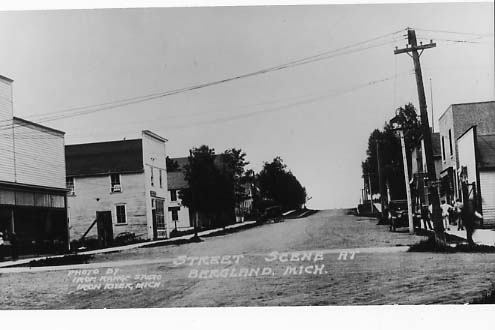
Waiting For the Morning Train: An American Boyhood, is Mr Civil War Centennial Bruce Catton's memoir. Written, probably, at the end of the 1960's, as it was published in 1972, when Mr. Catton was six years from his death in 1978, it is firmly grounded in the 19th century, as he was born in 1899.
Benzonia, Michigan, where Catton grew up
This must explain, at least partly, why these words so resonate with me -- because though born much, much, much later, due to where I was born, I too am at least knee deep in the 19th century:
.... There is a story, probably apochryphal but significant none the less, about a United States Senator who was running for re-election a few years ago. According to this story, the Senator got to a small north country town one evening to make a campaign speech, and just before he was led into the hall where the speech was to be delivered the local party chairman gave him a briefing about the issues that were on people's minds locally.
"You'll notice, at the back of the hall, quite a few Indians," he said. "it would be helpful if somewhere in your speech you could say that you are fully aware of their problem and that you will do your best to solve it."
The Senator promised that he would do this. Then -- moved by simple curiosity -- he asked: "By the way, what is their problem?"
The local man looked at him wide-eyed.
"What's their problem? he repeated. "God damn it, they're Indians!
Yet the Indian was incidental. It was the earth and the fullness thereof that mattered. It passed into American hands just as the tools to exploit it were being perfected -- the tools and the driving urge to use them -- and the men who held the tools moved in as if they had to get the job finished before nightfall. They succeeded (at any rate, recognizable nightfall has not come) and in about a century the job was done. The trees had gone to build homes for half of America, the copper had gone to serve the new age of electricity, and if the iron lasted longer it had been moved south by millions of tons, in a progress as inexorable as the Sleeping Bear's ponderous drift to the eastward, to make railroads and machinery and skyscrapers and weapons; and the land was left bruised and scarred, with the radar domes to indicate that the age of applied technologies advances by geometrical progression.
So we live as the Indians of Lewis Cass's time lived * between cultures, compelled to readjust ourselves to forces that will not wait for us. There is no twentieth-century culture; the twentieth century is simply a time of transition, and the noise of things collapsing is so loud that we are taking the prodigious step from the nineteenth century to the twenty-first without a moment of calm in which we can see where are going. Between nineteenth and twenty-first there is a gulf as vast as the one the stone-age Indians had to cross. What's our problem? We're Indians.
The frontispiece photo of Catton in the 250 copy limited edition of Waiting for the Morning Train
What he says in that last chapter resonates deeply with me on an emotional level. However, this does not obscure that his sympathy for the Indians comes out of his own sense of being out of place in his time. But unlike Henry Adams, who became mean and bitter about it, Catton chooses to smooth out the edges of his temporal alienation by waving a worn velvet cloak of words that are in the cadences of purple nineteenth century prose, an elegiac confetti that are to signify the author's dignity, courage and honor. He chooses "the figure of the Indian" as his conveyance for his own sense of displacement, while in truth he's been blessed with every advantage Native Americans have not had for centuries. He can do this because, as he makes clear in preceding pages, the Native Americans of his part of Michigan at least are not now and never have been a threat, so effectively had the tribes been beaten down and degraded by the turn of the 18th into the 19th centuries. They are no threat to him.
In contrast, as he will get to, mostly by ignoring them as he does in his histories of the Civil War. the "Black Man" is still a threat as the events of the Civil Rights era shows. This is why, perhaps, Catton was able to ignore the place of African Americans and slavery in great epic of the Civil War?
---------------------------
* That I know who Lewis Cass is, without looking him up, shows how many years I've been studying history. Woo.
Vulpine, canine, feline, porcine & equine avatars. Gone to heaven Gone to hell Gone to jail Gone to work Gone to school Gone to lunch Gone to bed Gone to bad Gone to pee Gone to earth. Gone Gone Gone. Fox's earth is Blue Gotham City. Shorter sojourns are spent in other, more dangerous, locations.