LINES OF THE DAY

". . . But the past does not exist independently from the present. Indeed, the past is only past because there is a present, just as I can point to something over there only because I am here. But nothing is inherently over there or here. In that sense, the past has no content. The past -- or more accurately, pastness -- is a position. Thus, in no way can we identify the past as past." p. 15

". . . But we may want to keep in mind that deeds and words are not as distinguishable as often we presume. History does not belong only to its narrators, professional or amateur. While some of us debate what history is or was, others take it into their own hands." p. 153

Silencing the Past: Power and the Production of History (1995) by Michel-Rolph Trouillot

Showing posts with label U.S. History. Show all posts

Wednesday, December 7, 2022

Reading Insurrection

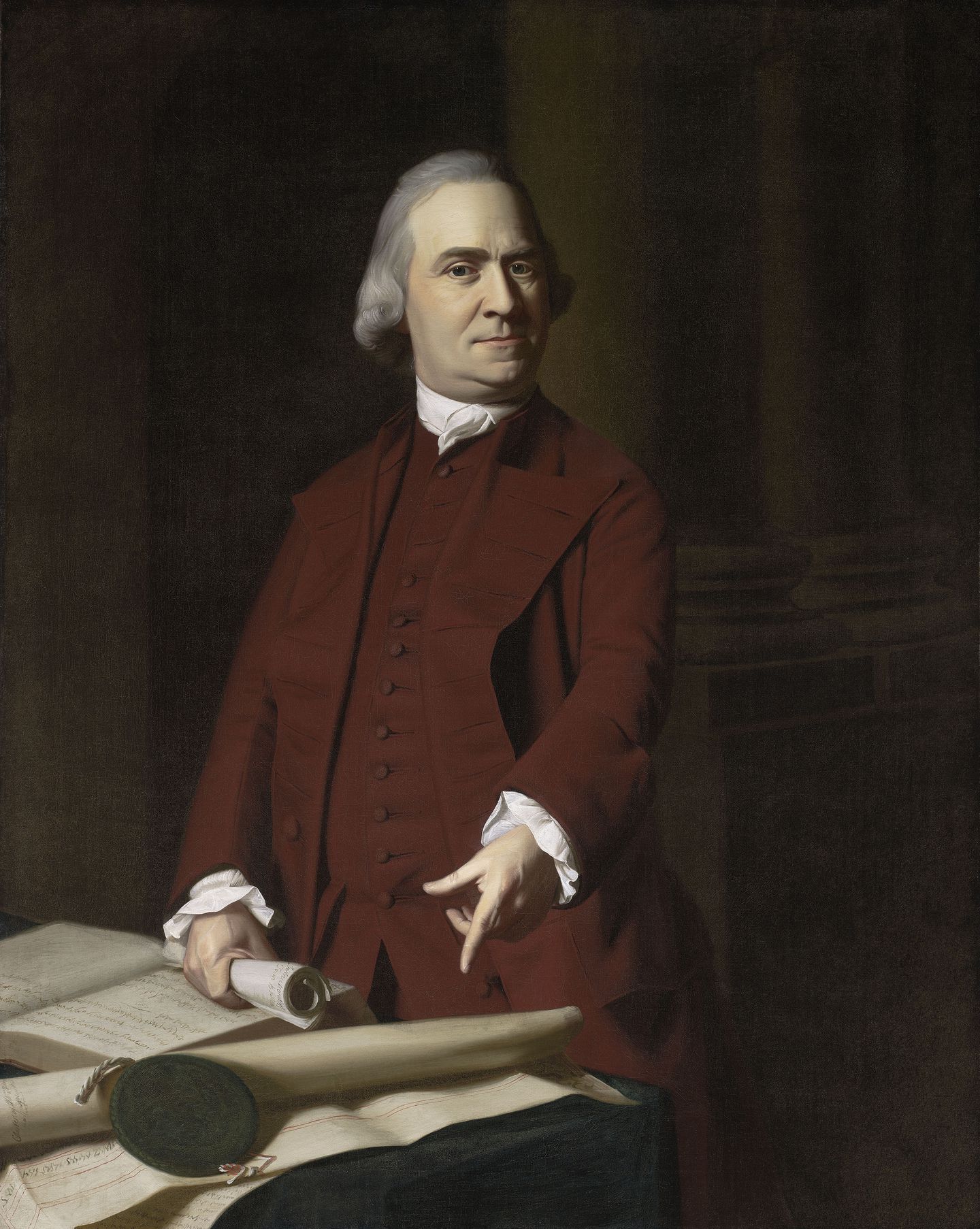
       . . . .  The Revolutionary: Samuel Adams (2022), by Stacy Schiff, and the Tolkien Estate's latest cash cow, The Fall of Númenor (2022), ed. by Brian Sibley, arrived in time for our quarantine/isolation.  They did very well getting me through the variety of existential dreads that chased themselves periodically in herds through my mind and body, during what turned out to be a very mild brush with Covid -- and perhaps the shortest! Today I picked up from the library purrfect seasonal fictionthat goes with Fall of Númenor: the 4th Anthony Horowitz meta effort in the Golden Age of Mystery line, in which the protagonist/narrator is Anthony Horowitz, The Twist of the Knife (2022), and the classic, The Dark Is Rising (1973) by Susan Cooper.


I finished The Revolutionary last night.


So successfully did Samuel Adams obscure his activities organizing a revolution, even from historians’ best effort, that at times it seems as though he’s like the Scarlet Pimpernel, though on the opposition side of the Aristos: “They seek him here, they seek him there. Those Frenchies seek him everywhere. Is he in heaven or is he in hell? That demned elusive Pimpernel”. 

Historians didn't care for Schiff's The Witches: Salem 1692 (2015), so I didn't read that, and my Egyptologist friend and historian of ancient history, and the reviewers too, really disapproved of her Cleopatra: A Life (2010), but it sold very well anyway (as does Witches, though her readers seem not that interested in her 1999 biography Vera Nabokov, Vladimir's wife).  Schiff doesn't even read modern Greek, so that's a problem right there, evidently. I tried to read it myself, and stopped in both sceptism and distrust.

The Revolutionary feels more solid and trustworthy to, takeaways are that Jefferson in particular of the Founders studied Sam Adams's trajectory, tactics and behind-the-scenes secrecy very carefully.  In a letter to Adams, late in Adams's life, he rather says so.  I certainly recognized all of Jefferson's own maneuverings in those of Adams.  The Secessionists didn't study carefully though, and they failed. The current crops of violent seditionists since at least Atwood and Gingrich, have studied with understanding of what he did and how he did it.  His Correspondence Circles and the way to re-purpose words, providing them with different meanings and significance, certainly since Reagan.  Control of the media, which then meant newspapers, is the key.  Secret deals with the already-violence prone such as out-of-work sailors and dockworkers, essential, along with creating one's own militias.  Now it's social media and television, and Oathkeepers, Proud Boys, Neo Nazis, Incels, the outright insane, etc.

Among the many mysteries as to how Adams worked and with whom, is his relative poverty.  At some point it was clear somebody/somebodies were supporting him, enabling to continue his 'seditious' work.  But who?  The obvious guess is Hancock, but I wonder, considering it was B Franklin who sent him the secret Hutchinson documents from England, if Franklin was also a behind-the-scenes secret collaborator?  Their minds would mesh well.  One of the methods evidently used by Adams and others in Boston was to appear in public as enemies, or antagonists, while really working together.

Let's face it: a lot of what Adams did is no different from what the current insurrectionists and seditionists are doing now.

Schiff also says that New England, Massachusetts and Boston in particular, went bonkers around 1765-8, getting progressively so, with periods when things seemed to cool down, but Adams kept working behind the scenes, and then was prepared the moment the Crown and Hutchinson gave him an opening. Schiff says the same thing, going bonkers in this part of the world, is what drove the Salem witch trials.  Henry Adams says the Secessionists went insane too.

On the other hand, there is this, in my opinion: John Adams wasn't a firebreather from the beginning, and neither was Abigail.  The Crown did some truly stupid moves, understood nothing about the colonies or the geography -- and that governance on all levels of the colonies was very bad.  Hutchinson held multiple offices, got salaries for them all, and what he didn't hold himself, he gave to his family members and his friends; He and his cronies did everything to block anyone's path that might challenge their complete control and dominance.  It was a real cabal of power and wealth, which would indeed piss off everybody else.  But Hutchinson and his fellows, as well as those back in Britain, were incapable of envisioning this as anything but their right by wealth and birth, and even less capable of envisioning others seeing it otherwise as well.  So that allowed the right person, with all the pertinent skills, from ability to write, speak, quickly, coherently, persuasively, while being utterly personable in person, with a mind that was able to see all the openings for humiliation, protest and incitement to operate, and one, moreover, who had the imagination, unshared, when he began, with any of his colonial contemporaries, to envision a separation from Britain, and moreover wanted it, and was able to play a very long game.  That was Adams.  He was unique, nearly, it seems -- utterly Bostonian too, a Harvard educated Puritan to the core, though much milder in that than his ancestors, with a great leavening of what was by now in Europe the Enlightenment, though not quite entirely able to let go the days of the 17th Century.

This biography of Samuel Adams, along with Marcus Rediker's Outlaws of the Atlantic : Sailors, Pirates, and Motley Crews in the Age of Sail (2014), provides all the information of how to organize a Revolution and / or Insurrection. First lesson--it will never succeed without deployment of mobs. Second less -- it will never succeed without massive media control and presence, all the time, everywhere.
~~~~~~~~~~~~~~~~~~~~


*  For seasonal watching, I highly recommend Three Pines on Amazon Prime, the adaptation from Louise Penny's Gamache novels, the first season which began on Amazon Prime last Friday, which begins right before Christmas. The town of Three Pines looks so much as I imagined it. The sounds and sights of winter in Three Pines are perfect, shot and recorded in winter, on location. Each murder to be solved is two episodes each, and these two episode go up together on Fridays. The arc mystery thread connecting them each week looks to be one involved with a disappeared young Native woman, whose family are certain she didn't up leave but has been kidnapped or killed.  Though the police won't help them, Gamache gets involved. It also involves, one thinks -- but there's only been two episodes -- the horrors of abuse in Canada's Residency Schools.

Wednesday, October 19, 2022

Is This the First US Science Fiction Novel? The Partisan Leader

      . . . .  Science Fiction, published very early in the United States of America, is a confederate novel by a Virginian, who was a passionate advocate for slavery.  


The Partisan Leader (1836) by Nathaniel Beverly Tucker (male; 'Beverly' is a common male surname and first name in earlier decades among the Aristo class in VA, SC, etc., particularly those descended from pre-Independence VA ), under the pseudonym of Edward William Sidney.  After losing election campaigns in two states, Missouri and Virginia, Tucker's well-connected friends and family got him appointed as professor of Constitutional Law at William and Mary -- his father held the position before him. As we see, this gave Tucker copious free time to write novels (while waited on hand-and-foot by enslaved labor): his first novel, George Balcombe was also published in 1836. *. 

He employed his additional leisure time to write political pro-southern slave state secession, economy and power tracts. Thus, as one likely would expect, this, if not the first, one of the first sf novels -- the novel is set 13 years in the future from the year in which it was published -- would be a romance centered on Virginia, about slavery,  a successful Southern secession from, and confederation against, the dastardly North, which Happy Ending turns the entire Western hemisphere into a vast slave state.

Tucker lived in those halcyon decades in which the Southern Plantation class ruled the Federal government from the White House all the way down, planning to expand slavery as the economic system throughout the Western Hemisphere, while defending it from the heinous designs of Britain, "the Great Apostle of Emancipation”. This 'design' was to destroy the Southern cotton economy in favor of their own in India (which Britain did not have and wasn't trying to have then), while invading the United States with an army of Africans and those freed from bondage out of Cuba, Haiti, Brasil, etc..


One of Tucker's  best friends was Virginian, Abel P. Upshur, who was contributing his bit to expansion and defense by building a navy that could successfully take on Britain's.  The photo above is the USS Abel P. Upshur (DD-193), a Clemson-class destroyer in the service of the United States Navy and United States Coast Guard until -- IRONY!  IRONY! IRONY! --  transferred to the United Kingdom in 1940. During World War II, she served in the Royal Navy as HMS Clare.

The Partisan Leader can be read on the Documenting the South website here

* Incidentally, as a point of interest in the history of American Literature, it was reviewed by this southerner, Edgar Allan Poe.

~~~~~~~~~~~~~


     . . . . This Vast Southern Empire: Slaveholders at the Helm of American Foreign Policy (2016) by Matthew Karp "illuminates this era of American history with an intelligent survey of those Southern politicians and their ambitions, both at the regional level and the federal level. “By the middle of the [19th] century,” he writes, “southern masters ruled over the wealthiest and most dynamic slave society the world had ever known.”

Their leaders were nationalists, not separatists. Their “vast southern empire” was not an independent South but the entire United States, and only the election of Abraham Lincoln broke their grip on national power. Fortified by years at the helm of U.S. foreign affairs, slaveholding elites formed their own Confederacy—not only as a desperate effort to preserve their property but as a confident bid to shape the future of the Atlantic world.

 Calhoun's policy was to insure the power of the agrarian South by limiting the power of the federal government. "That section distinct from the rest of the nation, however, eventually aimed to create its own Confederate States of America and then export that confederacy. The result would be a Southern Empire."

The consequence? The failure or success would depend upon southern statesmen advancing that world through United States foreign policy. “Few mid-nineteenth-century Americans,” he writes, “were more deeply engaged with international politics than southern slaveholders.” Those in positions of power, southern elites, also kept the international politics of slavery under constant surveillance, “tracking threats to slave property . . . monitoring oscillations in global attitudes toward emancipation.”

"Given that global perspective, there was little in the southern “institution” that was “peculiar.” During those antebellum decades, the blunt facts illustrate a vise-like grip on the presidency, the cabinet, and the lower levels of federal administration. Professor Karp quotes Iowa Congressman Josiah Grinnell, who observed that during those antebellum years southern slaveholders held the Secretary of State office for two-thirds of the time."

In their minds, Great Britain’s 1833 Slavery Abolition Act was part of the nefarious design to destroy them.  This accounts for the region's adamant anti-British policy in all things up until the War of the Rebellion.

I do believe though, the author is mistaken when he describes these Southerners as "cosmopolitan, highly educated and sophisticated -- because their fundamental tenets were made of contradiction. They were firmly convinced Britain schemed to destroy them economically for it's own economic benefit.  Yet, these leaders also assumed, presumed and expected Britain to support and assist and finance their Great War of the Rebellion. It could have no choice, they were certain, because Britain's industry depended on King Cotton.

Goes to show, again, that the current crops of racist conspiracists, delusionists, climate and election deniers, disseminators of lies and fakery and outright insanity come from a vast pedigree in our national history of determined violence to rid themselves of government and have their own preferred systems of cruel, selfish greed.


Wednesday, September 28, 2022

What You Got There? A Book?

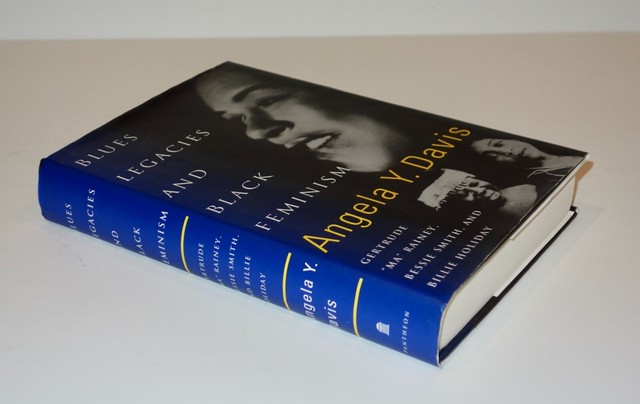
      . . . .  Blues Legacies and Black Feminism: Gertrude "Ma" Rainey, Bessie Smith, and Billy Holiday (1998) by Angela Davis. 


The moment we entered into her thesis, there was all kinds of self-kicking going on.  It was so obvious.  Prior to abolition African American music was primarily a communal expression,  done in the fields, in worship, at funerals.  It was also primarily spiritual.

After abolition, African Americans needed a whole new musical discourse.  They had to make it up because never before had there been opportunity in these lands for them to make music that wasn't communal, that wasn't about the lament of the condition and the yearning for that condition to have passed away, leaving them free to do as other people did.  

For Black women in particular, there was and could be no tradition that was about love, about sex, about romance, about what she wanted for herself, for Black women didn't have choice until after abolition -- and certainly wouldn't be allowed to sing about wanting to marry and raise her own children herself while cooking, cleaning, digging, and having her children go on master's credit side of the ledger and sold off any old time. So post abolition Black women had to invent a gendered, individual, popular musical expression  for themselves.

This was particularly necessary for Black women who would have preferred women as their sexual partners.

And thus, here we come to the Blues, performed by a solo singer, with a single instrument, the guitar, played by herself.  Of course these women couldn't afford more complicated set-ups, but this they could. 

Of course a man got the credit as "inventor of the Blues"*, Robert Johnson, with a powerful legendary tale of meeting the devil at the crossroads as to how he did it to boot.  

Why haven't we read this book before?

* Musicologists of course, know better.  They all know there were a slew of performers.


Monday, January 24, 2022

Hooray For the Tulips! Gilded Age Screens and History in Books!

      . . . . These weeks of below freezing temperatures are good for three very important things:

1) Kills off many strains of bacterias unfriendly to humans and other living beings;

2) Kills off mosquito larvae!

3) Tulips!  Bulbs need days of seriously cold weather underground to burst their dormancy before they can explode in all their glory.


     . . . Still, it is cold, which tends to keep one inside despite having those terrific respirator N95 masks that prevent one's lenses from fogging over, and even though one is fortunate enough to have all the right things to wear outside in below freezing weather, still in possession of easy mobility, while being perfectly comfortable temperature-wise.

     . . . . Fortunately lots of tv to watch and books to read.  

So Many say Julian Fellowes, he brought us the wildly popular Downtown Abbey, has struck out with The Gilded Age, which premieres tonight on HBO. If he has indeed struck out, my theory will be (though I do not swear to stick to that theory) is that he's got Cynthia Nixon playing a sweet, but feisty, spinster sister to an old Dutch aristo glum bitch snob, who wants NO NEW  MONEY HERE! ROBBER BARONS DEPART THESE PRECINTS WHERE I AM NOW! This, when Nixon's simultaneously appearing on HBO in the Sex And the City sequel series, And Just Like That, playing a middle-aged woman who falls madly in lust with a younger hotter than hot Irish-Mexican, non-binary lesbian butch-bitch, and thus blows up her marriage.  Also a couple of years after a risible run to be ... get this, folks! ... governor of the state!  But then, considering the clownships the last governors have been, perhaps that is too harsh on Cynthia Nixon (but still I'm sticking with my own theory that she's often a much better actor than she'd ever have been as governor).

Among the many things to watch I will be checking out The Gilded Age despite the media already telling me to miss it.

Media faux ‘discussion’ about Fellowes’s debut HBO series often includes mentions of other films/tv set (roughly) in the era, always starting with Scorsese's adaptation of Edith Wharton's The Age of Innocence (1993), part of his life-long work of putting (his) historical NYC on film. Unlike Fellowes's series, all of such films are adapted from novels, and so many of them part of the classic American Fiction canon. The other thing to keep in mind as contrast with Fellowes's series, is none of them were written for that marketing classification that publishing has labeled "Historical Fiction."

All of them were written by people who were part and parcel of the era about which they were writing -- it wasn't history, but the their present day lives, even if the time of the novel had succeeded by another era by the time it was published, such as Wharton’s Age of Innocence (1920).  

I regret the second part of Louisa May Alcott's Little Women is left out of the list, particularly that week house party which open Meg's eyes to the realities of the age's marriage market. OTOH the only Little Women screen adaptation that even included the party was the latest, right before the pandemic. I also regret that no one has  thought of adapting for the screen several other Alcott works (which incidentally all are set in this Gilded Age and remark on its morals and mores, such as Eight Cousins, its sequel Rose in Bloom -- almost a harping on the excess of the era -- as is An Old-Fashioned Girl -- or the sequels to Little Women,  Little Men and Jo’s Boys

At the same time, these media writers don't include  Dreiser’s An American Tragedy and his Sister Carrie, both of which had films made from them too.  But then, they're in b&w, and don't have that kind of opulence of pretty things for our eyes to wallow in.


However, thanks to the BBC, Merchant-Ivory, Jane Campion and other fine directors, we have an entire set of on-screen adaptations from Henry James's many novels’ fractal examination of the manners and mores of the era!

     . . . . So many Fine Books to read to keep me from the cold of disenfrancisement and enforced isolation coz all the covidiots -- though lucky for us, our numbers for new infections are dropping, Yay.

Back to books. Currently reading:

Washington At the Plow: The Founding Farmer and the Question of Slavery (2021) by Bruce A. Ragsdale; 

The Bright Ages : A New History of Medieval Europe (2021) by Matthew Gabriele & David M. Perry.

What a unfortunate title! like that attempt to counter Grimdark with Noble Bright -- o gods! -- and how so many other terms so common in titles and labels are used so incorrectly, like HopePunk -- kiddos do you even know that punk was exactly about not having hope, that the future is only dystopian?, or for that matter, Blues, Jazz or Gumbo. It's as though the authors of their Bright Ages are determined to believe the 450's -800 are no different from 15th and 17th centuries -- and what about the centuries that come between?  They use Dark Ages and Medieval interchangeably. Argh! 

Slave Empire: How Slavery Built Modern Britain (2020 -- just available in the US) by Padraic X. Scanlan

Yes, one must tell them this because even today, in the year 2022, the UK outside of Ireland that is, refuse to admit it.  See, even published just today in the UK Guardian, a review of Capitalism and Slavery by Dr. Eric Williams, written at Oxford in 1938, one of the first books I read, back in the 1980's, that shaped to this day my thinking on the subject of Atlantic-New World slave trade and slavery and how it made the capitalist system possible, and financed the Industrial Revolution. Plus, see the first title in this list of four!

Gangsters of Capitalism: Smedley Butler, the Marines, and the Making and Breaking of America's Empire (2022) by Jonathan M. Katz.

As he is writing about places and events I know very well, including having been in Cuba and all those locations many, many times, he's been caught out as wrong on a few things, but it's a fascinating, enlightening and useful book. Let's just not let being a journalist get one to thinking one is an historian. Among his journalist's expertise though, for which I'm grateful, Katz does a thorough job of describing the attempt to fascist reichwing, supremacist rich white to coup the US government with the same sorts of groups and financing that brought both Hitler and Mussolini to power -- all legally (Franco did by military conquest; they did not) -- and how we have the same sorts of groups right now, operating in exactly the same manner as with Proud Boys and Oath Keepers.


Saturday, October 30, 2021

Oct. 31: Postmambo presents ¡Que Viva la Muerte! Gède / kalunga / Death Metal Angola

      . . . . Tomorrow!  Sunday, Oct. 31!  It begins at 3:30 pm! (Eastern Daylight Time)

We'd love to have you with us. To participate, you need to have the Zoom link, which you get from the [seminar] mailing list (because [nedslist] is too big to send Zoom links to). If you're not already on that list, write me and I'll make sure you get the link.

A special one-day virtual event celebrating All Saints' Eve / Day of the Dead / Fèt Gede / Halloween


¡QUE VIVA LA MUERTE!

Long live death!

=> 3:30 pm: Jean-Daniel Lafontant will talk with us about Gède, the lwa of death whose day is celebrated all over Haiti.


=> 5:00 pm: scholar / educator / photographer C. Daniel Dawson talks with us about kalunga and death in Kongo thought and cosmology.


=> 6:30 pm: dinner break.


=> 8 :00 pm: a special edition of Postmambo Movie Night, presenting Death Metal Angola (2014), with filmmaker Jeremy Xido in conversation.  

* * *

COMING SOON!

November 11, 8 pm Eastern: NOLA Reconnect Sessions: Erol Josué talks with Dr. Elizabeth McAlister.

November 18, 8 pm Eastern: Postmambo Movie Night: Jason Berry presents his new film City of a Million Dreams.

Wednesday, September 1, 2021

Daily Depressions, Reading, Watching

      . . . . Our tiny but sublime vacation was followed immediately by non-stop crises of all kinds, all of them made by those over whom we have no control.  Death was bookended by Hurricane Henri and Hurricane Ida. Ida's hollowed out New Orleans's professional class. With no prospect for the return of power for perhaps months, they left the city.  They have the resources to do so -- Tulane shuts down for 6 weeks, but keeps remote learning going, so the faculty get paid.  You see what I mean?  So in crazy heat and humidity, no power, no a/c, no home, no money, no food, no water -- what do you think will happen to those in New Orleans left behind?  Not a scrap of a FEMA person on the ground has yet been seen.

Though we personally have been spared hurricane crises -- so far, as tonight and tomorrow we get a month's worth of rain wrung from Ida's tattered, passing skirts into our already overflowing reservoirs and saturated earth* -- there are the western wildfires, whose toxin-laden smoke we are not spared. The mid-west is dying of drought, while the Gulf is drowning in flood. The blob that calls itself the responsible media is determined to crucify our President in the name of ... what???? A man in a no-win situation had the guts to let go the wolf's ears (which T Jefferson, referring to slavery, said could not be done -- but then, TJ become quite famous in the South, in Virginia, for his cowardice ....) does so, and some how this is reprehensible, but the Jan 1 insurrectionists are merely mis-understood, and must be forgiven.

Then ... there is covid's Delta variant which relentlessly tsunami's across the country.  In Illinois, Bro says he and his cohorts are calling it the "Unvaccinated Pandemic."  They are not saying this good-naturedly. They are as furious abut this as I am  Then comes more death, not from covid, but from people who can't get treatment due to the Unvaccinated Pandemic taking all the medical resources.  This is not of any personal making on our part, or that of anyone we know.  In the meantime, more voter repression, more war on women's reproductive rights and health. In the meantime too, the non-stop crisis that is Haiti, and now also that of Cuba, keep rolling.

And now, I am staring at the approaching mouth of winter's tunnel, a third cold, dreary winter, pretty much enclosed in this tiny space with one other person.  All we're seeing at the end of this tunnel is more vaccinations, more masks and even more dangerous covid variants. Because of Those Ilks.  Well, even people in my family now believe that is how it is with the rethugs: if They don't get Their way one way, They'll get it by something even crazier, such as killing Their own.  Whatever it takes, They get 'er done. **

So I've not been of much use to anyone outside of what is, again,  a tiny circle of close friends who happen to be physically close by, close enough we can meet informally in one of the neighborhood's small parks.  And I'm good for cooking. We continue to eat very well.  I have a big pot roast in the slow cooker right now, with wine, beef stock, herbs, onion, potatoes, carrots and 'shrooms.  It was a home delivery error on the part of MW's interpretation of what I'd ordered back in the spring. On such a wet day, with night temps for the next 2 - 3 nights going into the 60's and even 60's, it made sense to get it out of the freezer.

~~~~~~~~~

     . . . . Fortunately there is a great deal of good reading, and good watching. Never in my past life could I possibly have imagined there would be an extended period of my in which television would be of the greatest importance! This is the state of reading and watching as of today.

FICTION

Continuing:

Penman, Sharon Kay (1995) When Christ and His Saints Slept.  The workout audio book.  I’m going to re-work my way through the Penman Plantagent series.

~ ~ ~ ~

New:


Walker, Martin (2021) The Coldest Case: A Bruno, Chief of Police Novel. The latest, for which I've been waiting since last September.

Walker just won a French literary prize for representation of Southern France and culture to the world.  I have an additional affection for Walker’s series now too.  I introduced these books to Mary F. back in the summer of 2020, and she loved them too.

NON FICTION

Continuing:

Herrin, Judith (2021) Ravenna: Capital of Empire, Crucible of Europe. This one I read alone.

Sampson, Fiona (2021) Two-Way Mirror: The Life of Elizabeth Barrett Browning. I have only a few pages left. I'd have finished it by now but the author is so irritating as she insists on being in the book, and she is not interesting.

Wickham, Chris (2009) The Inheritance of Rome: Illuminating the Dark Ages 400 – 1000. El V and I continue this aloud every night before lights out. 

~ ~ ~ ~ 

New:

Beran, Michael Knox (2010) Pathology of the Elites: How the Arrogant Classes Plan to Run Your Life.

Clark, Christopher (2013) The Sleepwalkers: How Europe Went to War in 1914.

Raven, Catherine (2021) Fox & I: An Uncommon Friendship

WATCH

Watch for: Vera, season 11, 1st, every Tuesday – BritBox;  Frankie Drake Mysteries, season 4, 3rd – PBS; Midsomer Murders, season 22, part 2, ? – Acorn; Crooked House (2017 film fr, an Agatha Christie novel), NF – 1st; Lucifer, season 6/final, 10th – NF; Dear White People, season 4/final, 22nd - NF; 

Continuing:

My Life Is Murder, season 2, 3rd through the 10th eps, 1st – Acorn -- sundrenched Sydney, Lucy Lawless.  Nuff Said.

~  ~ ~ ~ ~

New:


King of Boys  (2018) season 1, "The Return of the King"; Netflix Original.  I started this 7 episode series last night.

Made in Nigeria, by Nigerians, located in Lagos. Even in the first episode the show is ‘showing up’ the endless traditional internal conflicts, such as Yoruba vs Igbo.  Complicating things further we have a Nigerian version of protestant evangelical Christianity (a prosperity church, you betcha, with all the prosperity going to the head minister, natch), and so much more.

It opens media res within a prolonged party, dancing to live music. Money is being ‘sprayed’ i.e. the guests are “making it rain” – they are shoving, pouring, sticking, thousands of dollars upon the giver of the party and the musicians, a tradition in the Afro Caribbean as well as West Africa. So right away there’s a lot going on with which I have a certain level of long-time familiarity.

It’s as multi-lingual as Lagos is. The show is mostly English, but Nigerian English as well as the traditional languages of Yoruba and Igbo. Subtitles are provided then. Plus there is the local pidgin, for which the viewer might like to take advantage of closed captioning. The characters who know each other long and respect and like each frequently lapse into pidgin, a Nigerian variant of code switching done among friends, in the same way African Americans do this among each other.  There is this too -- 'King' is a woman.  She's addressed as "Oba" which is a male gendered title in Yoruba.  If one knows this right at the start, a whole lot of information is provided just by that.

Vivid, intense and not the USA at all.

~~~~~~~~~

*   Even as I type now, the rain begins. I hear it spraying against the window panes.

** See "The Density Divide and the Southernification of Rural America: The Old North/South Split Lives on in the Urban/Rural Divide"  by Will Wilkinson. Thanks to Lawyers, Guns & Money for tipping me to it.

. . . . One of the puzzles of the 2016 election, and the catastrophe of the Trump presidency, is how populist white nationalism finally prevailed at a time when Americans, taken altogether, were less racist than ever. This is one of the questions I take up in the “Density Divide.” But I left out one of my favorite answers to this question largely because it’s too speculative and I didn’t have the data to prove it. My hunch is that rural white culture, which was once regionally varied and distinctive, became more uniform by becoming increasingly Southern. I call this the Southernification thesis.

In the "Density Divide", I argued that the key to answering “Why did white ethnonationalism finally work to win the GOP nomination and then the White House when it didn’t even get close to working for Pat Buchanan or Ron Paul?” was that residential self-selection on ethnicity, personality, and education had made lower density parts of the country progressively more homogenously ethnocentric and socially conservative, which finally made it possible to unify and organize rural and exurban whites as a single constituency.

I’m confident that this is correct, as far as it goes. However, I think it’s an incomplete explanation without something like the Southernification thesis. Before it could be successfully organized politically, America’s increasingly ethnocentric non-urban white population needed to be consolidated first through the adoption of a relatively uniform ethnocentric white culture.

What I’m still groping for is solid empirical confirmation that the Southernification of white rural America did happen and, if so, how it happened. Now, I have few doubts that it did happen and is still happening. Indeed, it’s hard to think of better impressionistic evidence than the spread of Confederate flags far from the South into all parts of white rural America. But that doesn’t seem like quite enough.

But let’s suppose that it is enough. How did Southernification happen? I’m going to take this up at length in another, even more speculative, post. But here’s where I would start: When I was a kid, the Atlanta Braves somehow became “America’s Team.” Could it be that the media mogul who married Hanoi Jane took the critical first step in bringing non-urban white America together by beaming sanitized Southern culture into living rooms everywhere? . . . .

This is the most cogent explanation for what has happened that I've seen.  Of course, one doesn't see it in the Blob, which is what Lawyers, Guns & Money have taken to calling the so-called media, made up of people who have gotten whatever it is wrong almost every time, but still keep getting paid big money to keep getting it wrong.
Monday, July 5, 2021

Books, There Are Many!

     . . . .  Spending the holiday weekend trying to catch up. It only took until 1 AM from arriving at the Miami airport when They Said get there for the 2:35 PM flight, until into the next day to get home.  At one point the plane even turned around on the runway and went back to the gate and all the passengers deplaned again, and sat in the terminal for hours.  A long, masked day.  But at least Miami Airport had food places and good coffee.   So now we're trying to get ready for Thursday's Zoom Postmambo Meet-up, which is, el V's birthday, and the following Thursday's Postmambo Movie Night, as well as other things.

~~~~~~~~ In the Meantime -- About Money and a Librarian!

     . . . . By chance this spring I've been listening to several books of financial history. which inevitably becomes the history of political and mercantile corruption and crime, financial busts, bubbles, panics and depressions, corruption, wars. Among these histories is Ron Chernow's (1990) The House of Morgan: An American Banking Dynasty and the Rise of Modern Finance.  Needless to say, a great deal has changed in the perspectives of the history of banking and the finance and 'investment' industries that devoured the banking business since the passing of another 30+ decades. This is equally true for the much later books such Liaquat Ahamed (2009) Lords of Finance: The Bankers Who Broke the World.

But even in Ahamad's book, the reader learns, if only peripherally, about Bella da Costa Greene, the Pierpont Morgans's private librarian for their great collections here at the library and museum Pierpont built at Madison Avenue.  

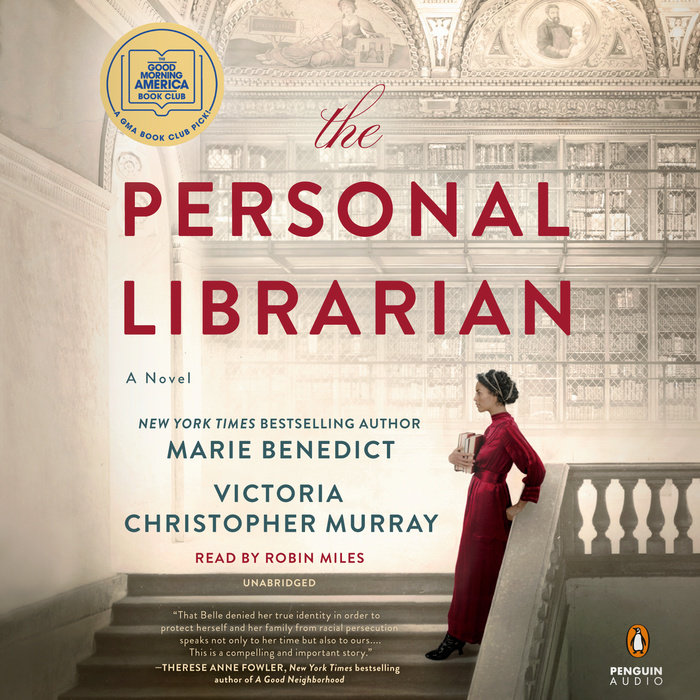
Learning of Bella da Costa Greene, who was born into a black activist family as Jim Crow tighened its noose of the US, and to have her career -- as woman yet! -- had to pass for white, of course this signaled an excellent entry point for an historical fiction for somebody to write (not me).  Evidently others thought a fiction featuring this fascinating figure was something to do too, and did it.


Here in The Washington Post (paywalled) we have an interview with the co-authors of The Personal Librarian, Heather Terrell and Victoria Christopher Murray.


~~~~~~~~  Reading Histories:


    . . . . Chris Wickham's (2009) The Inheritance of Rome: Illuminating the Dark Ages 400 – 1000. This book’s first section covers the same ground, though with a different perspective in some areas, as the also read-aloud, Peter Brown's (1971) The World of Late Antiquity. The perspectives are very different generally, since Wickham’s work is firmly within contemporary data based, statistical, demographic, archaeological, linguistic, etc. work that has changed historiography so much in the last half century. I also relatively recently, i.e. this year, learned a great deal of the late Roman Empire in Douglas Boin's (2020) Alaric the Goth: An Outsider's History of the Fall of the Roman Empire


These histories fit well into June's discussion on Bret Devereaux's blog "Collection" -- The Queen's Latin: Or Who Were the Romans Part I, and so far, Part II Though he does seem (so far) to ignore that Alaric, despite how Romanized in all ways that he was, was refused citizenship, and even advancement beyond a certain level, in the army -- quite like what George Washington with the Brits in the French and Indian Wars. 

What is clear, past, and present, is the two opposing arguments continue about the Roman West vs. East.  Continuity / transition vs. Sharp change / fall? 

Both of these depend on one's perspective as to Western vs. Eastern Empire, Latin Empire vs. Greek Empire -- the same fiber, weave and cloth, or different from the beginning?

I've been reading continuously the newer "Roman" histories for the 'general' reader over the the last few years, such as Adrian Galsworthy's (2016) Pax Romana: War, Peace and Conquest in the Roman World, and James O'Donnell's (2009) The Ruin of the Roman Empire: A New History.*

However, my reading in Roman history is fertile preparation ground for my real recreational historical interest,**  the transition from late antiquity to the middle ages -- Goths! Vandals! Visigoths! Ostrogoths! and mine real favorite, the Merovingians (along with, later, past the scope of this book, the Mongols and Turks)! Franks! Norse! --  which Wickham's book determines to cover in detail. One does have to consider this is 600 years, and the book's less than 700 pages, which might mean a page per year? It doesn't really work out that way, thank goodness, but still, this is Big History, of which, ah-hem,  I'm in favor. And certainly anything Wickham misses here, he's covered in his other works.

The one thing we know certainly is the 6th century was a terrible time into which to be born. One signal that informs us of this: we have less written documentary evidence for the 6th than just about any other century of "Europe" except the 4th. This would explain then, too. why the Western Church possessed more land in "Europe" in the 6th C than it has ever since. But in the last decades we've fortunately been able to learn some of what is not in the tiny written record of documentary history, from historical archaeology.


I'm still waiting for the history of Merovingian Gaul, and Visigothic Spain.


~~~~~~~~~ Reading Fiction

     . . . . It took a long time this year for a novel I wanted to read to show up one way and another.  Fortunately for me I have acquired the final three novels in Andrea Camilleri's Inspector Montalbano series set in the regional of the fictional Sicilian city of Vigatta -- The Sicilian Method (2020) – third to final Montalbano.  The Cook of the Halcyon, and Riccardino are the last two titles, both published in the US in 2021. the Author died in 2019.

Mr. Camilleri prepared years ago for the end of the Montalbano series.

“I finished him off five years ago,” he said in 2012. “That’s to say, the final novel in the series of Montalbano is already written and deposited at the publishing house. When I get fed up with him or am not able to write any more, I’ll tell the publisher: Publish that book.”

Also, the latest Martin Walker’s  a Bruno Chief of Police series set in past and present Provence, The Coldest Case. I've been looking forward to this since finishing up all the previous Bruno novels by the end of last summer.

~~~~~~~~~~Ranking First Half 2021 Reading

     . . . . Now that half of 2021 has passed, I can speak definitely as to which books were my most enjoyable, most informative reading, for the first half of this year:


Robert Irwin's (2018) Ibn Khaldun: An Intellectual Biography;

James Grant's (2019) Bagehot: The Life and Times of the Greatest Victorian;

Marie Favereau's (2021) The Horde: How the Mongols Changed the World;

And already, the history noted above, Chris Wickham's (2009) Inheritance of Rome: Illuminating the Dark Ages 400 - 1000 qualifies.

~~~~~~~~~

* Oddly, as much as I respect and appreciate Mary Beard's work, I find reading her books a chore. Not her fault, but mine.

** Just in case: my professional specialization is the history of the colonial Americans, and the history of the United States, via the lenses of the African Slave Trade and slavery in the Americas, and specifically the slave system of the United States.

Wednesday, February 3, 2021

Walking Under, On and In February

     . . . . Confucius: A Biography (2004) by Jonathan Clements got retrieved from the library today, thereby getting me out walking, which it is always essential to do, no matter how regularly one works out.  Jeosophat! the auto temperature reading machine worked on me -- though I had to remove my fur hat first.  But it meant in-and-out within 90 seconds or so.


It's a small book, but tries to locate Confucian thought within the man's life (551–479 BCE) and place, as well as traditions and culture within which he grew up. I wanted a book that speaks to the recent history his time and location had experienced, but I don't think this book does that. I shall have to be content with the map and google.

The book's from a British house, Sutton Publishing,  previously unknown to me -- which doesn't mean much. What matters is, despite its relatively recent publication, the paper has already turned yellow and brittle.  

As I know nothing about Confucius or his thought, I can't help but know more when I finish reading it.


~~~~~~~~~~~

Walking in February, on top of February snow, and slop all that particular February day-after storm color,  under a grey February sky, I  spotted this street graffito, written in a neat long hand, no dabs, blots or runs, in silver paint – "*rump lost. The South did not win.An efficient summation of too many's state of denial about history, present and past.

Which could be the title for why The New Republic currently is running this piece on American historiography and its own hisytory:

"Against the Consensus Approach to History

How not to learn about the American past"

It says a great deal about the why of the sheer horror of the Woods and Wilentzes at the premises of the 1619 Project.  It's interesting to see it running in The New Republic.   It also applies to the way the ^rump's 'legal' team is couching their argument against impeachment for inciting the 1/6 armed attack on the Capitol, as well as to the deniers of the lost election.

This fits within the spate of studies, reports and articles coming through in many places everyday as to who are the armed attackers, how did they get this way -- and also who they are not -- as well as closer scrutiny of how have so many USians become proselytists for the bottomless cray-cray of q***n, the denial of covid-19, haters of those who wear masks to protect themselves and others from getting sick.

There continues to be this weird impression that the base that is driving this movement for armed authoritarian, white supremacy, nationalist take-over of nearly the first nation to establish itself as a democracy for rights to all of liberty and equality, are not the poor and dispossessed, as some of us have been saying since long before the 2016 election. Quite the contrary. Though it is sobering to recollect how equally true this was of the driving insurrectionists of the war of independence (which again, was why the secession CSAers really believed they'd win: it would be just the same except instead of having only France helping them, they'd have Britain recognizing them as a nation in submission to their King Cotton).  So this piece in the Atlantic Monthly is very interesting too. Considering our history, particularly the determination by the rich to break from England, and the rich to break with the United States, I'm not sure I agree with the AM's piece's premise here, particularly considered side-by-side with the history of  "Consensus History" history piece in the NR.

"We analyzed 193 people arrested in connection with the January 6 riot—and found a new kind of American radicalism."

A graphic - data breakdown of who was part of the Capitol 01/06 armed attack, helping to organize, plan and direct, as well as being cannon fodder.

~~~~~~~~~~~~~~

In the meantime many musicians, including the one in our household who says he's retired from personally making music himself, have learned there is a pile of "unclaimed" residual money in the Hollywood Screen Actors Guild, and the other aspects of Hollywood business as composers, players, vocalists etc. for a lot of them.  Unclaimed because nobody bothered to contact them there were earnings from various aspects of what they did, if they were union members.  So those who have found out, and see the names of people they know, they are having the fun of contacting the musicians/composers and telling them, "There is money for you!"

~~~~~~~~~~~~~~

Began watching the third season of Gommorah on HBO last night.  The first episode felt flat, perhaps due to the endless acres of truly hideous wall paper no matter how wealthy the home or how humble. Some of the sizzle began to return in the second one. It feels different though, from the first two seasons. Is it because so much time has gone by since the second one, plus the world plunged into covid-19 -- which really would make no difference one thinks to these vile criminals -- or because I'm seeing it on an HBO screen, not a netflix screen -- both via streaming though, so that shouldn't matter.


What is the same, if even, perhaps more so: the suburb photography, the depth of the color, which does seem southern Italy, not even, Rome, much less anywhere else.  It's lushly gorgeous. 

Wednesday, January 20, 2021

On January 20th, 2021 The United States Inaugurates A President

     . . . . From: me; To: me;  for my personal archive, so nothing brilliant, particularly insightful or original: Notes From Inauguration Day, January 20th, 2021, watched via the live stream from The Washington Post. 

The U.S. Marine Band just concluded an extraordinarily spirited rendition of "Hit the Road, Jack!" The piece is spirited and jaunty, and more than a bit sneering in its composition, of course, but my goodness, how it came out just now!

The greetings among Harris, Emhoff, Obama and Michelle was moving.  We can only imagine what these four people are feeling.  Harris is so good smiling. Even masked, her eyes tell you she's smiling, and how broadly.

Here, even more strongly than ever, we feel, with all that's happened, and then the pandemic and insurrection, we are seeing history live in real time. Today's speakers and the organization of this centuries' old ceremony and ritual, are communicating to us clearly.

High winds in D.C.  Snow flurries.

It's happened! We have a President of the United States again, after these years of  war waged by the weapons of mass destruction, anarchy, hate, cruelty, greed.

Pence did not applaud Harris when she was sworn in.  Didn't see if he did applaud Biden or not..

Saw many were double-masked.  E V observed, "If I had to be in the presence of those republicans I'd wear three masks!"

The participating women chose beautiful colors in their coats, projecting joy and confidence. No fur!

Though all security tried to convince the President not to perform the transition on the Capitol steps, he insisted.  It was the right call. It wouldn't have been the same if they'd chosen some other place, not public.

The President quoting the verse from “American Anthem” brought tears to my eyes.  How is this even possible?  All the words of his speech carried meaning I felt in my bones.  How is this even possible?  All the words, even those of "Amazing Grace," all these platitudes of national unity, equality, democracy, faith carry meaning.  That's how bad things have been for these last years. Joe Biden and the inauguration inspire this cynical historian, in our emergence from, what the poet spoke, "this terrifying hour." Amanda Gorman hit her inaugural poem, "The Hill We Climb," right out of the park, her delivery perfect.

The 1776 Project is now gone from the gov. website.

The stock market is soaring, as it has pretty much ever since Biden-Harris were elected.

All over the nation we are reading the omens: A birder friend  in Arizona says, “the second Biden started speaking, a pair of mourning doves flew to my balcony and began cooing. (The door is open.)” Here, after the inauguration address, Ned dashed out for a minute.  Above the Towers, huge white clouds, scudding with today’s strong winds of today; beyond them, clear open blue, through which the sun is hitting the Towers with such intensity, we are all illuminated – and a little blinded by the glare.


Friday, November 27, 2020

Thanksgiving TV Dinner

      . . . .The Buffy the Vampire Slayer episode, "Pangs". from season 4, the Thanksgiving episode, of course.  Watched it last night after our really successful dinner a deux.  Moroccan Lamb Pilaf will have to become a permanent part of the meal repetoire.

“Pangs”  has been one of my favorite Buffy episodes all along.  It still remains very good – and, making it all the more pertinent watching this Thanksgiving, "Pangs" includes ‘plague.’ Or syphilis.  Something microbial that kills released by the Native sorcerer who was executed by Spaniards of California's Mission era. Of course the character infected is perennial butt, Xander. But it does get in history, which is another reason this has always been  one of my favorite episodes.

The episode gets in everything that people dream to be the Traditional Family Thanksgiving they want it to be, to how Thanksgiving generally works in reality, when it is family-centered: the insufferable instruction from the newly clued in kid home from college for the holiday, political arguments about history, while Mom, determined to save her perfect Thanksgiving with all the people at the table behaving just as she wants them to. Which means she manages to find a place for the unexpected guest but squeezes a place for that guest at the table anyway.

This is the Buffy family, so Things Untoward Happen. But what's always been most notable for me in this episode, which is ultimately about family, was who wasn’t present at this meal.  Riley, who’d gone home to Iowa for his Saturday Evening Post  cover traditional country Thanksgiving with great big family.


Thus it is equally notable as to who was there, for Buffy's Thanksgiving.   Spike – who had nothing to eat on this day of gorging.  But he was there, as he was even through the very end, and on into the Angel universe. Gads Marsters plays his character so very well throughout all his permutations.  What's even more impressive is at this time no one involved with the series could know there was a season 6, much less what was going to happen in season 6 -- or season 7.  To me this has been a turning point episode in the Buffy verse.

This is also, in spite of Big Matters, one of the funnier episodes, with Buffy as Mom who is going to have Thanksgiving as she pictures it or kill everyone trying, and Giles as reluctant Dad who has no choice but to go down before Bulldozer Thanksgiving Buffy.  Marsters contributes a great deal to the comedy.

I haven't watched any Buffy in years, but I easily could get sucked back into the Buffy verse.  I have the complete boxed set of seasons sitting right here, to hand, by the dvd player.

~~~~~~~~~

More new books arrived today. We are hunkered now, isolating as much as possible. Thus all the phone calls made and received from friends all over who are in the same situation were so precious.  We talked, we zoomed, we emailed.  We're all determined to make through to the other side.  So we all stayed home yesterday and ate by ourselves. 

Wednesday, September 30, 2020

We See It Last Night: Postures of Violence Yet the Insanity Is Real Violence

     . . . . I didn't watch the degrading display last night, that the complicit politicos and media persist in calling a 'presidential debate,' a display that was anything but presidential or a debate. El Vaquero did  tune in though, while on a separate computer and screen simultaneously conducting the rehearsal, directing multiple camera angles, etc. for the first event of NOLA Reconnect that goes live -- on Friday already!  Long Distance Producer. 

The stress around here lately is extremely high with all the moving parts to synchronize, with all the paying audience.  It will only increase each coming weekend until the end, with an interactive cocktail party, that isn't Zoom, but a new tech in beta as of this time. 

Simultaneously we have the ever increasing stress and anxiety and sheer insanity of NYC's surge of new coronavirus cases and deaths. They doubled between Friday and Monday, and doubled that from Monday to Tuesday for all the reasons we said this was inevitable.  Even so the mayor reopened the schools and indoor dining yesterday.

Thank goodness el V ended the day in much better shape than he was in for most of it, including lowered BP and happier mood.  He insists our dinner did that (crispy outside, baked inside, organic chicken cutlets in a sauce of wine, mushrooms, garlic and white onion, with heritage potatoes and broccoli, from the Farmer's Market), but I think it was how well the shoot went, and the results of it. This surely lowered my BP too -- it was not a good day by-and-large for either of us, in a sequence of not good days -- despite both of us getting our hair cut and styled for the first time since February. Another friend held in great affection is in the hospital.  Two more friends forced to evacuate from the wildfires. Another one has lost everything in the wildfires.

Thus my choice not to tune into the national disgrace put on international display of the one-man-fling of shyte non-stop from his tiny, but still dripping with blood, hands.

Addendum concerning last night.  For everyone fond of alternate history, I would like you all to think about what the media would be all up about and all in about and all over, IF ... Hillary had told the shoggoth stalking her around the stage and constantly interrupting her to, "SIT DOWN, MAN, AND SHUT UP!"

Instead, I watched A Fistful of Dollars (1964!) on Amazon Prime.

It’s a weird experience to watch this now since first seeing it as a kid, bringing to it what I’ve learned over the decades* about the tropes of US history and violence, particularly the myth of the solitary gunman’s justified violence to create ‘justice’, tthe Mexican American War, the War of the Rebellion, and the Unglorious Welllost Cause, lynching-Jim Crow, Woodrow Wilson. I's all about posturing, like shoggoth last night -- except Clint Eastwood possesses that prized slow burn solitary heroic stillness and silence that shoggoth can't even imagine, much less see, and never embody.

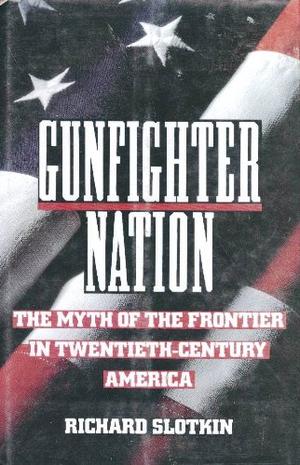
Richard Slotkin, the great historian who taught me so much about this starting in the earlier days of American Studies, should have received the Nobel Prize for history for his work revealing the history of US racism and gun violence in our entertainment which forever pushes the lie that a single white man with a gun can and does set the world right. He should have gotten the Bancroft Prize and at least one National Book Award too.  But he did not because nobody wants to deal with these concepts that are our history and character – and most of all don’t want to deal with the knowledge that this toxic culture is created almost entirely out of what we've been indoctrinated into by our popular entertainment.


~~~~~~~~

Not to mention all I've learned about the making of films and television, from writing the scripts to the technical side of things from the many screen professionals with whom we've been hanging out for so many decades now.

Sunday, June 28, 2020

Gay Pride Weekend, Weather, Refugees and Immigrants, & History

     . . . . Hot, very. Not so sunny though, and the predicted t-storm has arrived, thank goodness.  We've had no rain for all of June.  Drought has arrived I think.

~~~~~~~~~

Nothing can stop LGBTQ from Priding the last weekend of June in NYC. Big gathering going on at Washington Square Park, in concert with a BLM protest as well. Funny.  All was peaceful.  Then cops arrived.  Squadrons of cops.

~~~~~~~~~

It has been commented at Charlie Stross's place, where many commentators are hooked into EU news far more widely and closely than I am, that the EU policy of excluding entry of US tourists isn't so much about the plague as it is to keep US refugees from coming to Europe. Which ends up being quite a lot the same thing, as NYers ran dragging the virus with them to Florida, etc., and now are running back to NY dragging covid-19 with them this direction.  But the EU certainly don't want the MAGA mad cohort coming in to swell their own numbers of crazy.  But more than that, the way the US has just stopped even trying to deal with the pandemic, and that this huge number of deathcultists are screaming that mask-wearing is satan's signature, things are going to be so insane here by January -- not to mention shortages and all the rest -- that again, merkins will want to hide from it in Europe.  Not having that! the EU says.

~~~~~~~~~

Finished Alaric the Goth: An Outsider’s History of the Fall of Rome (2020) by Douglas Boin. Maybe I have a handle finally on what the differences are between a hun, a goth and a vandal. The book's structure and organization was confusing and the content felt very thin, despite the author's hitting the keys relentlessly on his theme, that Alaric's ultimate reason for bringing and army into Rome for 3 days was that Rome was disdainful of outsiders and immigrants, denying advancement and acceptance of him even in the army to which he'd given so much. The reviews made the book sound better and more important than it was. But then what do we know about either Alaric or the era that begins toward the close of the 4th C A.D. opening into the 5th and 6th centuries? My real take-away is that the initiation of what we call(ed) the Dark Ages comes when the Christians in the west are dominating Western Rome and tolerance of any kind they WILL NOT TOLERATE! To be sure the author didn't say that, that is what I am taking away.


Now I've begun another history (besides the ongoing ones that are huge and that I don't read in every day): Charles King's 2014 work, Midnight at the Pera Palace: The Birth of Modern Istanbul. This is another of Constantinople-Istanbul's many eras of many diverse immigrants renewing the city.  It's also Jazz Age Istanbul, which Istanbul had enthusiastically, complete with myriads of jazz bands.  Agatha Christie saw it all, visiting Istanbul several times in this era. She did ride the Orient Express, inspiring one of her most famous works, Murder on the Orient Express, among other works of hers that are set at least partly in Istanbul. This is the era in which the Orient Express is created, the surprise and awe of all of Europe.  As per usual, I am struck hard all over again by the mirroring of Venice and Constantinople-Istanbul, not only in their architecture, but their trajectories as trading empires and their intimately shared past.

Friday, May 22, 2020

Breathing Lilacs: Tragedy Is Personal

     . . . . The memory of yesterday's scent of lilacs at Washington Square Park lingers. Which brought to mind, then, Walt Whitman's, "When Lilacs Last In the Dooryard Bloom'd", his elegy for the assassinated Abraham Lincoln.  Washington Square Park, though not yet a park* -- all of what was to be known as Greenwich Village -- was Whitman stomping grounds too.


I buried my masked face in them, heedless of the bees -- at least until I noticed them, so entranced I'd been by the strong come hither the blossoms broadcast. That I could smell them so vividly, even through the mask shows 1) the difference in air quality here due to virus; 2) how little the mask prevents air born from coming through. Well yes, the mask is to protect others; it doesn't protect us. O the perfume was heady!  The bees' presence also made me happy.

Did three different class guest spots this last week, including one around The Year Before the Flood: A Story of New Orleans, for a Tulane class.

El V is incredible. His SooperDooperPooter for processing, editing and producing video and film and audio got delivered yesterday, and he had it up and functional before bed! So's he able now to send quickly these enormous files of content to the VIMEO website for sharing with the film maker in New Orleans, with whom he's  working on the Cuban content, among other things. It's so great to have decent tools. To render (this word has a special meaning within this Adobe PremierePro program, which I won't clutter this post with)  his work loads and then send them along used to take something 24 hours, and even the slightest burp in internet service or speed would stop it, and then it would have to start all over from zero, including all the edits, tweeks, synching, volume control, color saturation, etc. Now he can do it in minutes!

Seems last night I got mildly high from the amount of Erica’s THC Soothing Salve, and her Freeze lotion, which I vigorously and lengthily rubbed into both of us last night as both of us have screaming neck and back pain. Felt happy and peaceful, giggled a lot together during Reading Aloud. John Quincy Adams just gets to be more fascinating and enjoyable the older he gets.  

And, just before lights out a friend emailed this Yo-Yo-Ma Book Section link:

https://www.nytimes.com/2020/05/21/books/review/yo-yo-ma-by-the-book-interview.html
Q: What books are on your nightstand?
“The World That Made New Orleans,” by Ned Sublette.
“Barracoon: The Story of the Last ‘Black Cargo,’” the oral history of one of the last known African survivors of the Middle Passage, by Zora Neale Hurston.
The memoirs of Alexandre Dumas, the first volume of which I am struggling through in French.
“Spirit Rising,” by the unparalleled Angelique Kidjo, who recommended the first three titles. She and I are working on a new project that explores some of the less-known intersections between what we think of as Western classical and African music.
What great book company to be in -- Alexandre Dumas! even.  So big shout outs this week from both Rhiannan Giddens (Cuba and its Music) and Yo-Yo-Ma (The World That Made New Orleans) -- and Angélique Kidjo too -- who back when it came out had herself photographed holding up The American Slave Coast!  for Ned's books!

Of course I am ignoring just about everything that isn't part of our own little world -- all too easy to do, when in quarantine.  But mentally ill neighbor across the hall helps keep me grounded in the awareness of other realities, with one request after another: opening cartons, bottles, etc. that she can't because she took much of her medication, fell and hurt her arm and shoulder; cooking for her; providing ear plugs and three phone calls of how to use them >?< in one day; a wash cloth because she doesn't have any; toothbrush and toothpaste, etc. 

That we're having nice days is certainly having an effect upon our mood this week. We're just generally more relaxed and peaceful. For now.

All I can say is, "Thank you lordessa, for B and his weekly supply of cornbread!"

Even the absentee ballot requests for both of us arrived -- finally! -- in yesterday's mail, so I will be able to vote in next month's Dem Pres Nom primary -- from which ballot the Dem party bigwigs including Cuomo have done everything they can to 1) not hold; 2) remove Bernie Sanders.

Also, for a variety of reasons, some of our friends are moving back to NYC . . . .

~~~~~~~~~~~~

*  Fort Green Park was Whitman's park of the heart, from at least the 1840's on.