LINES OF THE DAY

". . . But the past does not exist independently from the present. Indeed, the past is only past because there is a present, just as I can point to something over there only because I am here. But nothing is inherently over there or here. In that sense, the past has no content. The past -- or more accurately, pastness -- is a position. Thus, in no way can we identify the past as past." p. 15

". . . But we may want to keep in mind that deeds and words are not as distinguishable as often we presume. History does not belong only to its narrators, professional or amateur. While some of us debate what history is or was, others take it into their own hands." p. 153

Silencing the Past: Power and the Production of History (1995) by Michel-Rolph Trouillot

Showing posts with label Libraries. Show all posts

Monday, February 15, 2021

Weather, Inclement and Cold, Over-Busy Days, Ill Friends, Getting Through With History and Historical Fiction

      . . . . Subject line says it all, and I'd make book this subject line applies to a vast swathe of us across the globe.  The big difference between and much of the vast swathe, is that, tiny, cramped as it is, is snug, and filled with comforts. 

I don't know about others, but the relentless, graphic violence and jeopardy of children, women, and all others who are regarded as the rightful prey offering of the entertainment industries, as well as the entertainment industries' relentless offering of file criminals as identification protagonists has flattened my brain into idiocy, when not rousing me to desire to commit violence on them. 

Happily, there is an antidote that brings us heroism and the projection of loyalty, sacrifice, true friendship and virtues to the fore, while providing good escape action adventure into the past.  The Overdrive- Libby historical fiction series, Duke Classics, has put these novels up on the public libraries that subscribe to Overdrive - Libbey.  These a novels that our great-grandparents and grandparents likely were familiar with, and maybe, like me, stumbled into on their shelves, in their basements and attics, but are hard to find these days, particularly in the libraries.

But one day, titles I've always wanted to try but never came across, such as Joan of Naples by Alexander Dumas, jumped out at me.  This is the 14th Century Queen of Naples (at the top of my list of favorite queens), who was a patron of Boccaccio, a good friend with Pope Clement -- during the Black Death, no less -- and who managed to keep her throne for decades despite so many trying to take it from her (ultimately they were successful, but it took them until she was old).   One can always count on Dumas to have written at some point (or had his factory do it) a novel dealing with a figure of French history about which one is curious.  As you can see from a Dumas era illustration the story of Joan of Naples is filled with action:


This is how one of her husbands met his end, supposedly.

One can access a medieval Romance, such as The Young Lovell, by Ford Maddox Ford. 
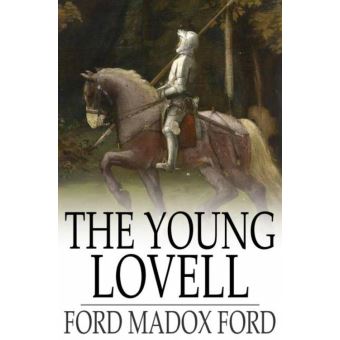


 Ford's Parade's End which might familiar from the BBC-PBS 2012 tv series featuring Benedict Cumberbatch)  and some of his other fiction are considered ground-breaking, like Henry James works, as moving the novel into the modern age.  But Ford wrote for nearly 40 years, and most of his work was not that.


As this particular Overdrive program was developed for university libraries, so today's few brave lit students could find such works for their research, classic authors such as an Elizabeth Gaskell, who usually only have a couple of titles available to a general audience, have their full bibliographies accessible.  Mary Gaskell wrote for money, so she wrote a lot of books, not just her hagiography of Charlotte Bronte,  North and South, Wives and Daughters and Cranford -- the last three BBC productions too.

The works of authors truly obscure authors these days, even to literature students perhaps, such as George Payne Rainsford James are also here.


 I have taken additional cheer from the vivid red and white of roses, the gold-trimmed champagne glasses, and bouffants of chocolate ads running on every online site for Valentine's Days.


We're playing lots of Mardi Gras music in the apartment, not only because our first events of NOLA Reconnect 2: Continuing Stories are coming right up, but because -- hey, Mardi Gras is comin' babee, and is nearly here, as of tomorrow.  This too has been cheery, and does wonderful work taking us out of the mundanity of the ice, illness (some with covid-19, some with other issues, and some with both).  

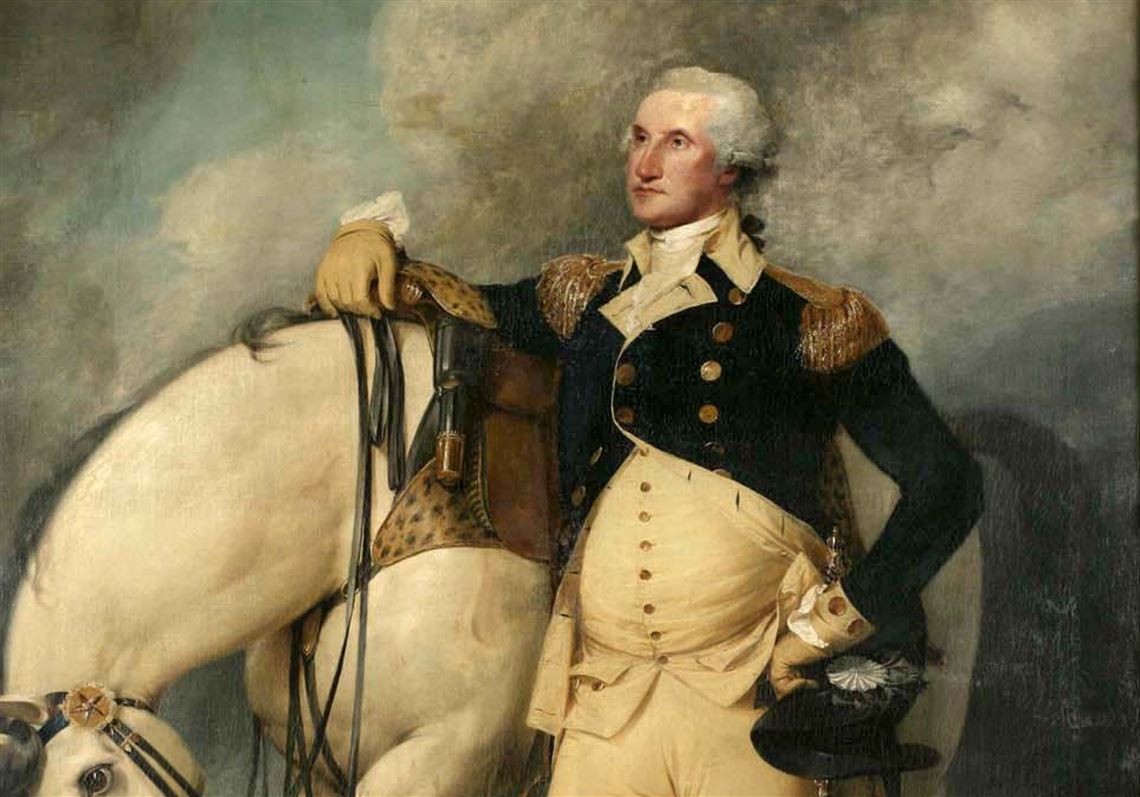
In between, hey I think a lot about George Washington -- Presidents Day -- that figure who remains an historic enigma. Was he really a terrible battle commander but a brilliantly astute political operator?  Was he real a dull mind that never read a book but possessed an intellectual organ that recognized what matters mattered when others couldn't even read the room?


So, among the museum presentation (Black History Month you know), other engagements, NOLA Reconnect, cooking cooking cooking and all that entails, etc. the hour of 8 PM is so welcome.  A couple of hours for tv and books! 

A storm, mostly freezing rain, rolling in.  Another storm Thursday, though this one is mostly snow, They say.  We've already had about three storms I think, in the last 8 days or so -- my sense of time is fairly weird these frigid days and nights, w/o any above freezing temperatures to punctuate.

I tell myself, "Get through this week, and things will get better, at least weather wise!" It's easier to keep that thought in mind because on Saturday, in France, two very elegant, lovely friends got married.  We couldn't be there, but they sent us photos.  O they are beautiful people inside, and so they are beautiful outside too.

 As for last week's tv, it was compelling, with some brilliant, brilliant characters -- particularly female characters -- and presentation.  However, I will confess that, while it was expected, the final episode was, honestly, disappointing.  It seems over 60% of we US voters feel the same about it.  Maybe next season we'll get our druthers?


Wednesday, February 3, 2021

Walking Under, On and In February

     . . . . Confucius: A Biography (2004) by Jonathan Clements got retrieved from the library today, thereby getting me out walking, which it is always essential to do, no matter how regularly one works out.  Jeosophat! the auto temperature reading machine worked on me -- though I had to remove my fur hat first.  But it meant in-and-out within 90 seconds or so.


It's a small book, but tries to locate Confucian thought within the man's life (551–479 BCE) and place, as well as traditions and culture within which he grew up. I wanted a book that speaks to the recent history his time and location had experienced, but I don't think this book does that. I shall have to be content with the map and google.

The book's from a British house, Sutton Publishing,  previously unknown to me -- which doesn't mean much. What matters is, despite its relatively recent publication, the paper has already turned yellow and brittle.  

As I know nothing about Confucius or his thought, I can't help but know more when I finish reading it.


~~~~~~~~~~~

Walking in February, on top of February snow, and slop all that particular February day-after storm color,  under a grey February sky, I  spotted this street graffito, written in a neat long hand, no dabs, blots or runs, in silver paint – "*rump lost. The South did not win.An efficient summation of too many's state of denial about history, present and past.

Which could be the title for why The New Republic currently is running this piece on American historiography and its own hisytory:

"Against the Consensus Approach to History

How not to learn about the American past"

It says a great deal about the why of the sheer horror of the Woods and Wilentzes at the premises of the 1619 Project.  It's interesting to see it running in The New Republic.   It also applies to the way the ^rump's 'legal' team is couching their argument against impeachment for inciting the 1/6 armed attack on the Capitol, as well as to the deniers of the lost election.

This fits within the spate of studies, reports and articles coming through in many places everyday as to who are the armed attackers, how did they get this way -- and also who they are not -- as well as closer scrutiny of how have so many USians become proselytists for the bottomless cray-cray of q***n, the denial of covid-19, haters of those who wear masks to protect themselves and others from getting sick.

There continues to be this weird impression that the base that is driving this movement for armed authoritarian, white supremacy, nationalist take-over of nearly the first nation to establish itself as a democracy for rights to all of liberty and equality, are not the poor and dispossessed, as some of us have been saying since long before the 2016 election. Quite the contrary. Though it is sobering to recollect how equally true this was of the driving insurrectionists of the war of independence (which again, was why the secession CSAers really believed they'd win: it would be just the same except instead of having only France helping them, they'd have Britain recognizing them as a nation in submission to their King Cotton).  So this piece in the Atlantic Monthly is very interesting too. Considering our history, particularly the determination by the rich to break from England, and the rich to break with the United States, I'm not sure I agree with the AM's piece's premise here, particularly considered side-by-side with the history of  "Consensus History" history piece in the NR.

"We analyzed 193 people arrested in connection with the January 6 riot—and found a new kind of American radicalism."

A graphic - data breakdown of who was part of the Capitol 01/06 armed attack, helping to organize, plan and direct, as well as being cannon fodder.

~~~~~~~~~~~~~~

In the meantime many musicians, including the one in our household who says he's retired from personally making music himself, have learned there is a pile of "unclaimed" residual money in the Hollywood Screen Actors Guild, and the other aspects of Hollywood business as composers, players, vocalists etc. for a lot of them.  Unclaimed because nobody bothered to contact them there were earnings from various aspects of what they did, if they were union members.  So those who have found out, and see the names of people they know, they are having the fun of contacting the musicians/composers and telling them, "There is money for you!"

~~~~~~~~~~~~~~

Began watching the third season of Gommorah on HBO last night.  The first episode felt flat, perhaps due to the endless acres of truly hideous wall paper no matter how wealthy the home or how humble. Some of the sizzle began to return in the second one. It feels different though, from the first two seasons. Is it because so much time has gone by since the second one, plus the world plunged into covid-19 -- which really would make no difference one thinks to these vile criminals -- or because I'm seeing it on an HBO screen, not a netflix screen -- both via streaming though, so that shouldn't matter.


What is the same, if even, perhaps more so: the suburb photography, the depth of the color, which does seem southern Italy, not even, Rome, much less anywhere else.  It's lushly gorgeous. 

Wednesday, August 26, 2020

Thises & Thatsas Domestika Trivia

     . . . . Been babying the injured sciatic nerve caused by the trip-and-fall that happened 4 Saturdays ago. 

I still have excruciating pain upon getting up if I've sat in the >ergonomic!< desk chair too long and / or not positioned myself exactly right. I still sit far fewer hours than spend stretched on the bed with overbed table -- which is still impossible to perform writing typing upon.  At least the x-rays showed there was no damage to bones, did not break hip or anything. Still haven't heard anything about the MRI I had a week ago.  At least I can still walk the 20 blocks in both directions to the medical complex, and keep working out.  It's sitting to type or do anything for very long I can't do.

Last night my new stupid fone froze up, couldn’t even power it down to reboot, in the middle of a sentence Vaquero was speaking. Such a piece of shyte phone and such a shyte service T-Mobile. We have to get this fixed!

The Horror!  AAAAAAAAAAAARGGGGGGGGGGGGGGG.


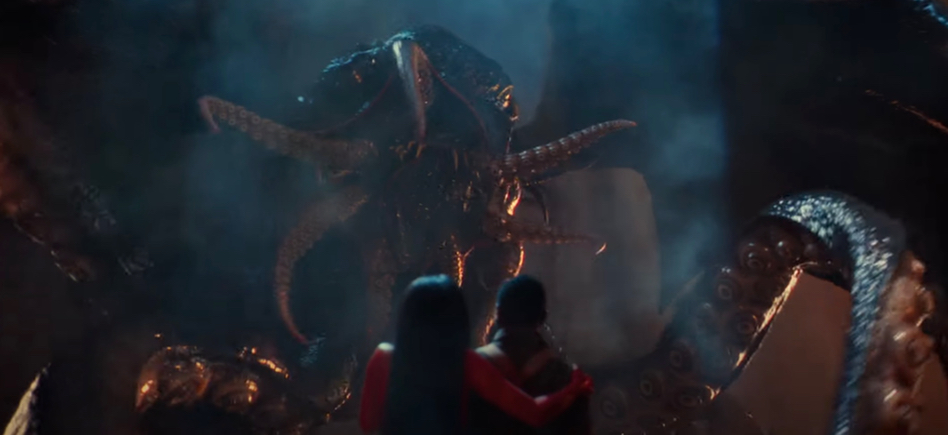
My God My God My God WNYC just shoved the Shoggoth First Lady's voice into my ears about how much Shoggothinchief* 'Loves this country and people'. Shutting off the radio rushing to to bathroom to vomit up the horror that is her souless pitch perfect nazi who speaks english inspires. Please replace those wonderful creatures, the elephants, as the entirely inappropriate symbol of the rethugs,  with the entirely accurate and appropriate Lovecraftian creature of horror and hatred of immigrants, Catholics, Jews, African Americans and women. Thrown up. Better.  

Laura is a Cat 4 hurricane now. Going to slam into LA and TX today.  4 million have been told to evacuate.  To where? Our New Orleans Reconnect on-the-ground Captain was laying in supplies last week already.

WBGO is alternating the old timey Blues with New Orleans old timey music, leaning heavily upon the catalogs of Louis Armstrong and Mack Rebbenack (Dr. John).  Huh.  They're going to do a Howlin' Wolf set.


I now get up to find my Howlin' Wolf t-shirt acquired at the Blues Museum in Clarkesdale, Mississippi back in 2012, and which I've never worn.


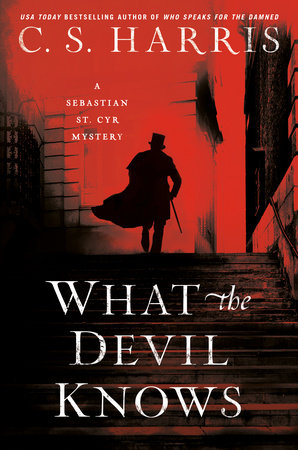
The St. Cyr novels have never had a blank cover before.

Today's perfect weather was perfect for the library run -- both titles I'd requested when Grab 'n Go started here earlier this month arrived to pick-up at my neighborhood Grab 'n Go branch.  One of them is the latest Sebastian St. Cyr Regency mystery -- I enjoy certain aspects of this series very much, though it has sagged at times.  Other problems: in the first books the protag, Vicount Devlin, is hinted to have some special sort of powers, including being able to see in the dark, but that never went anywhere.  The previous two brought it back to form; hope that continues with this latest installment, #16, What the Devil Knows.The author is a New Orleanian, which somehow provides an extra bit of flava to the content, though I'd be baffled as to say how.  It's not as though New Orleans or North America is ever even mentioned in her novels, which are within the era of the French Wars, generally, and which does provide plot points in more than one of the titles. This latest is set in 1814, the "French War" is finally over, and Europe is being divvied up at the Congress of Vienna ....  They think, the wars are over, anyway (1815 is Waterloo).

El V and B drove to 5th pod member S's huge rambling house, in which he lives along, with screened in annex, big yard and swimming pool up in Saratoga. We'd been planning this little vacation get-away for months already.  Due to the fall though, I sadly had to relinquish going myself this year, for I couldn't sit on drive, get up and walk again -- and that drive isn't even really long. But one will avoid that excruciating pain if one can! They are bringing local fresh produce such as sweet corn on the cob (which they been gorging on, grilled, already), blueberries and so on. They will hook up with P on the way back down here to exchange of this for the local Connecticut pork he picked up for us earlier this summer. So, we continue to eat, and eat well.

I am trying to figure out how we can do some kind of Thanksgiving this year, for we'll still be isolating as much as possible.  The schools are reopening in few days, from pre-school, through the universities.  We know what happens then will be what has happened everywhere in this country and other ones when students are brought back in physical space with each other -- and they can't stay away from each other either, nor do they want to.


Tuesday, February 21, 2017

What Is Lost Is Found: A Novel By Walt Whitman

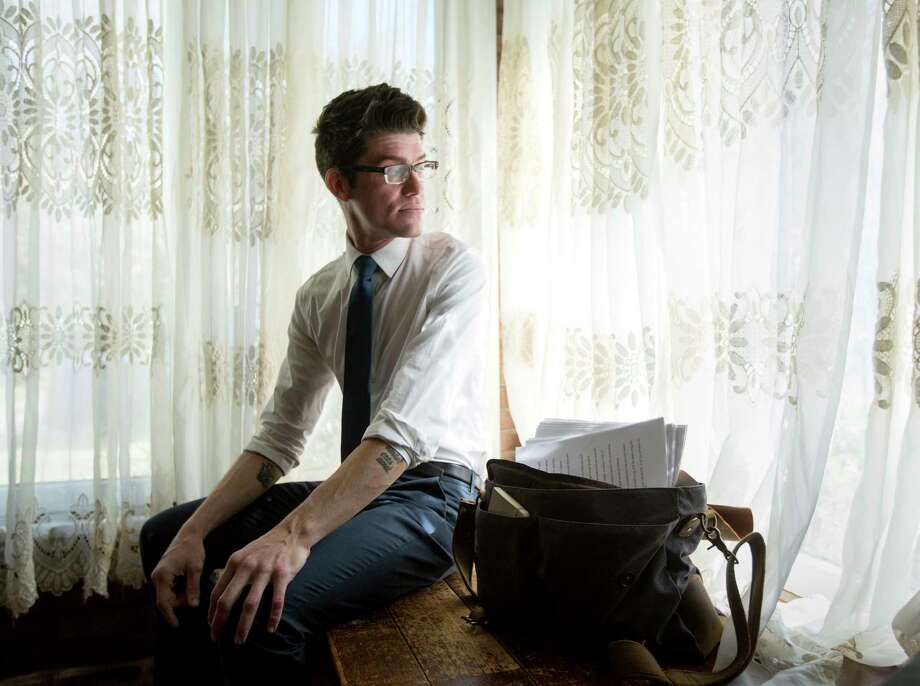
     . . . . Zachary Turpin. a graduate student at the University of Houston found this long lost novel through digital archives.

The New York Times (behind pay wall) opens its story on the discovery like this:
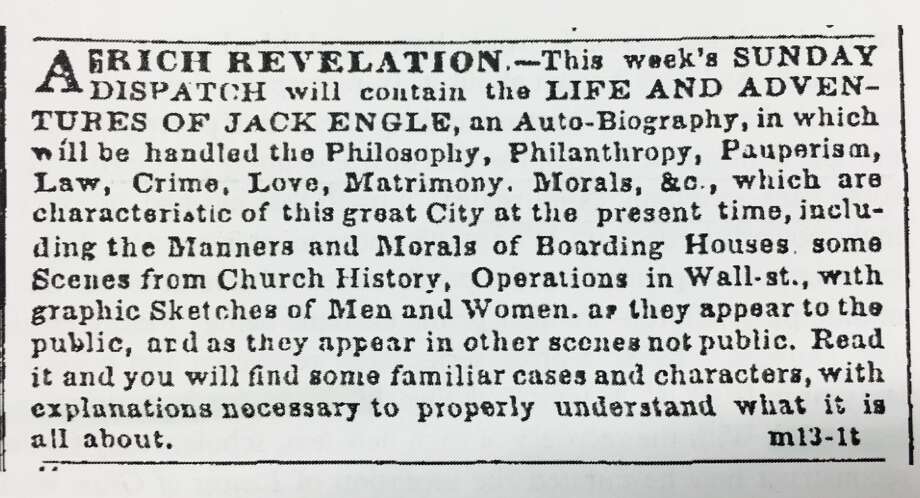
Readers who picked up The New York Times on March 13, 1852, might have seen a small advertisement on Page 3 for a serial tale set to begin the next day in a rival newspaper.
“A RICH REVELATION,” the ad began, teasing a rollicking story touching on “the Manners and Morals of Boarding Houses, some Scenes from Church History, Operations in Wall-st.,” and “graphic Sketches of Men and Women” (presented, fear not, with “explanations necessary to properly understand what it is all about”).
From the NY Times story:
The The 36,000-word “Life and Adventures of Jack Engle,” which was discovered last summer by a graduate student, is being republished online on Monday by The Walt Whitman Quarterly Review and in book form by the University of Iowa Press. A quasi-Dickensian tale of an orphan’s adventures, it features a villainous lawyer, virtuous Quakers, glad-handing politicians, a sultry Spanish dancer and more than a few unlikely plot twists and jarring narrative shifts.
“This is Whitman’s take on the city mystery novel, a popular genre of the day that pitted the ‘upper 10 thousand’ — what we would call the 1 percent — against the lower million,” said David S. Reynolds, a Whitman expert at the Graduate Center of the City University of New York.


Everything about this news is pleasing!

First of all though, as much as we studied Leaves of Grass when I was still at university it was never revealed somehow, whether in class or in critical studies, that this great American poet had ever written fiction at all.  I have learned for the first time that not only did he write fiction, he wrote quite a bit of it.  However, as he turned himself in the poet who would spend his life creating ever more types of Leaves of Grass, he tended to bury or obscure that he had done so. Second, whereas I tended to mine the poet's life and his poetry for historical information on culture and mores of the Civil War era generally and New York City's past, scholars will be mining Jack Engle for years for clues to how he turned himself from prose writer to poet -- and an experimental one at that.

Zachary Turpin

Second,  Turpin discovered this lost work through expert searching of several vast online digital archives that include the Walt Whitman Archive and the Library of Congress.  Any of us can do this now!  It's so exciting for research and scholarship!

I particularly like the Guardian's story about the discovery includes this:
 " . . . "rollicking” anti-lawyer revenge fantasy . . . "

The Life and Adventures of Jack Engle has just been published free online by the Walt Whitman Quarterly Review.

Wednesday, September 23, 2015

Reading Wednesday: E-Book Sales Slip & Print Far From Dead -- But Libraries Hide Information

From behind the NY Times paywall:

"E-Book Sales Slip & Print Far From Dead"

E-sales of 99¢ and self-pub fiction are doing just fine -- still the best selling content on amazilla.

It seems that once publishers won back the right to set prices for their own e-versions of books -- instead of amazilla selling them for 99¢ -- people went back to buying the print version, since the price difference between them wasn't as great as the $1.99 or $2.99 price the online controller made it previously.

Additionally people are preferring to read e-versions on their phones not on dedicated amazilla readers, which means they don't have to buy everything from amazilla, but can get the content from libraries and so on as well.

Yet it is heartening that print book and mortar stores are doing so much better.

Now, if libraries, particularly research libraries, would only understand this, and put books back on the shelves. The other day we were in Bobst and the entire American history section was gone. Among other thing this means all the collections of Founding Fathers' papers are offsite -- everything! Thank goodness we finished TASC before they ripped out the heart of the history collections.


It seems to me that when libraries went digital, depending on the pay digital databases and for downloading pdfs of many, many books, access to information was severely curtailed. They guard access to those pay digital services more severely than the Secret Service guards entry to the White House. Only those privileged in some way -- often in several ways -- now have access to information that demands serious research. This includes public libraries as much as research libraries.

Monday, May 4, 2015

Largest Libraries' Book & Data Retrieval Systems

How is it done?


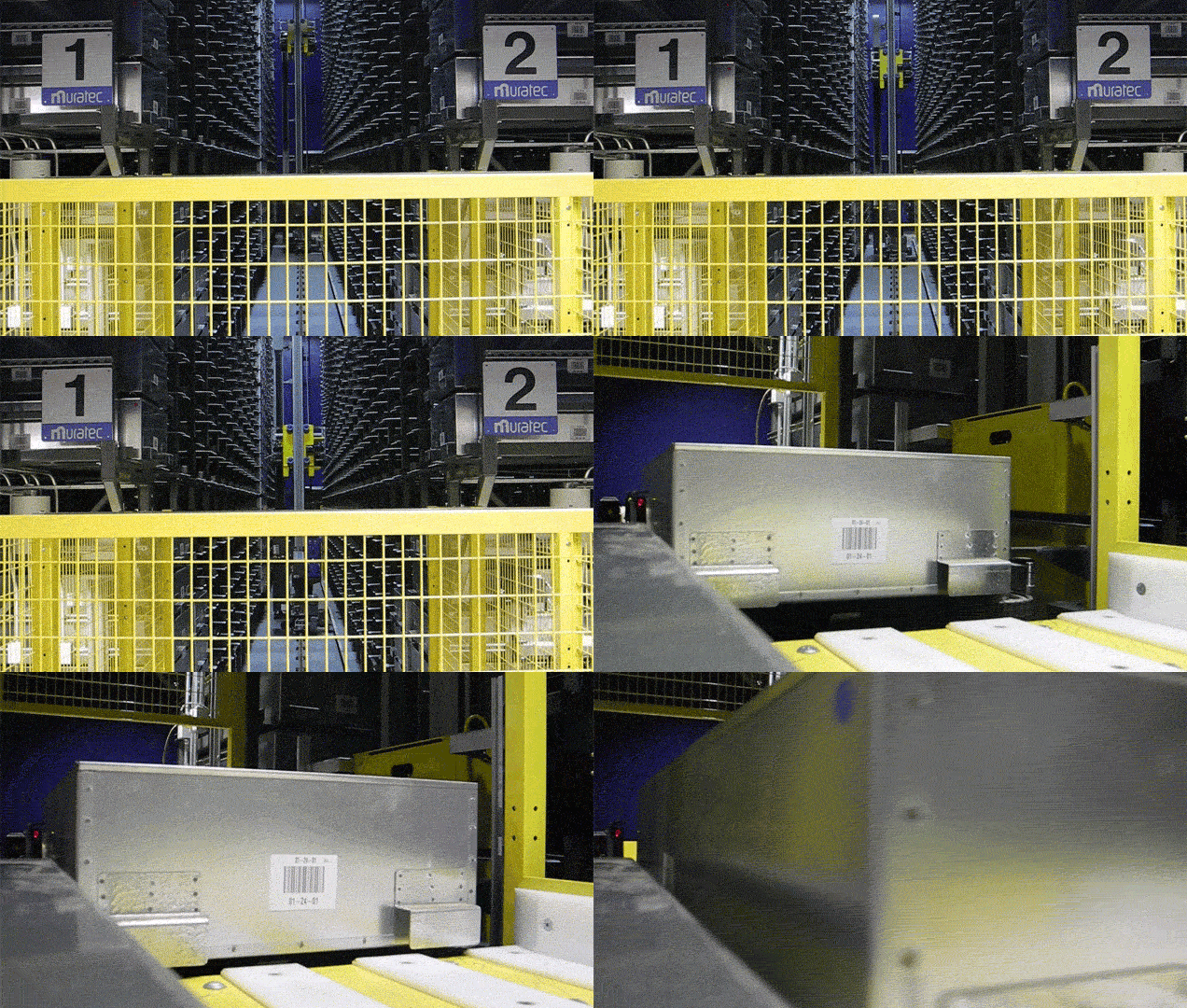
The largest libraries do more than just store books and newspapers on their shelves. When a library collection contains millions of documents, it needs complex and highly sophisticated logistical systems in order to serve its readers’ requests. It needs library robots.
In many libraries, amazing automated transportation and robotic retrieval systems are behind every book you receive from your librarian. Peek far behind the walls of the familiar reading rooms into the seemingly endless rows of stainless steel shelves, data centers, and intelligent servants that deliver humankind’s collective knowledge.

Gifs and more information here.

Saturday, September 6, 2014

So Under The Gun I Can Hardly Think

Yet, thinking is exactly what I am under the gun to be doing, supposedly because I can think, and fact check and do all those things.


To make everything more complicated in the 90 degree heat and the stupendous humidity, when I settle in to do today's quota of pages, the primary library I use, for no reason, locked out my log-in, declaring either i.d. or password was fraudulent, or maybe both.  Reset password, still I am not a user the system recognizes as legitimate.

I phone and am told stupid stuff by someone who doesn't know how things work. I go to two different places (it's a huge research facility with special collections in different locations) -- the first one is closed on Saturdays, though it was open on Saturdays last month --  and am instantly re-legitimized manually, thereby learn that I have materials from ILL waiting -- but at another library elsewhere.

The upshot is, I spent over three hours out in the sun and humidity that I should have used for fact checking and so on and so forth.  Plus another hour + prior to noon, doing the usual Saturday errands, hoping to be finished before it hit 90, though it was already 90, but I didn't know that.


And -- it's Fall Fashion Week! Every female college student with the least pretension to a career in Fashion is in the City.  (So then, how come all the bar - restaurants are packed and nobody's in the designers' stores -- yes, I live where every designer has a loss leader flagship store.)  Bumper to bumper traffic for some reason -- even at 10 AM -- on Houston.  And many tourists with melting down screaming children who are not enjoying their MILFs shopping til they drop for themselves.

I came home, soaked from head to toe -- mentioned, didn't I, the humidity? Drank over a quart of water at one go. Then I gave thanks to the Great Air Conditioner for our reliable, sturdy little unit which keeps our (small) place a cool cave.

All of us sometimes have days like this.  It really could be worse.  O yes, easily, a whole lot worse.

Tuesday, July 15, 2014

Cuidad Juárez - Sunday, July 13

A dear Albuquerque friend drove in to see Las Vidas Perfectas this evening at the Museo de la Revolutión en la Frontera in Juárez.  He and his girlfriend


stayed overnight in the Camino Real. So I got to drive over the bridge to Mexico with L.  -- and did not have to hang out all day while tech went on.  The LVP people took off for Juárez early in the AM.  My back couldn't have taken that kind of all day hang, even with breaks for the mercados. On the other hand, I'm not able to buy anything because getting it home -- American Airlines! and I am also getting cowboy boots this week and they sure do eat space and poundage -- and that would be frustrating. I do love exploring markets like this, whether or not I buy anything. There is always jewelry ....

Going across the border to Juárez was quick and easy.  Coming back was something else.  You can feel the vibration change in the middle of the bridge approaching the admittance gates to the U.S.  For one thing, at some point a U.S. border cop, on foot, appears, nonchalantly strolling across the lanes, for no particular reason at all. The peddlers attempting to sell mops, kitty art, bottles of water, popcorn etc., the people determined to wash your windshield, have gone poof into thin air. Traffic crawls to a halt.  It can easily take 5 more hours now to cross those -- what? 1500 feet to the gates.  We were lucky.  It took us about 35 minutes, but very stressful minutes.  Imagine the New Jersey Turnpike and the turn offs to the Holland Tunnel, but with armed military everywhere you look.  One strolls over and peers for a long time into the backseat where H and I are sitting.  We don't bother to interrupt our conversation to look back at him.

Yet it is a very distressing, particularly for H, who was born in Hidalgo Mexico, but has been a U.S. citizen for years and years, and lives in Albuquerque. One gets a much deeper sense of how truly awful all this is when traveling with U.S. citizen who is of Mexican descent.*

We have our "documents" at the ready as ordered. The guard who takes our passports asks "What were you doing in Mexico?" The implication is only creeps, criminals and other undesirables bother with Mexico. He  doesn't  attempt even the rudiments of politeness.  L is pumping George Jones on his car speakers. El V and L had been singing along.  As el V's the one at the window on the guard's side, he answers, "Attending the opera.  At the museum." The guard snickers, "Was it any good?" El V smarts back, "It was very good.  I was the star."  L groans.  The guard laughs, takes away our passports to run them through the scanners and databases. He quickly returns them.  Now we're allowed to return to the U.S. It takes three minutes to get back to the hotel and have dinner.  Except for el V, none of us have eaten since breakfast and now it's nearly 10 PM.

I did get to spend time in the Museum of the Revolution on the Border itself. Juárez had a huge role in the Mexican Revolution (the Revolution's armed conflict began in 1910 and lasted roughly through 1920).  Morever, like so many museums everywhere, part of the institution is located in the old Mexican Customs House (see: el paso del norte -- trade route!). As much a role as they play in history, I've come to collect visits to customs houses like I've been doing visits to castles.

Among the many interesting things observed about the audience in Juárez is -- it was entirely "Mexican," with the exception of the couple from Ft Worth - Dallas, who scheduled their vacation in order to attend every performance of Las Vidas (they are coming to the Marfa performances as well). However, the earnest, attentive, pretty and very young Japanese women, ubiquitous at anything like this anywhere I've been, in Europe, the U.S. and the Caribbean, particularly Cuba -- they were conspicuous by their absence today. There were three present at Saturday night's El Paso gig, but none at all at el Museo de la Revolutión.

52 women were killed here back in October, 2013, when a bomb was thrown into their place of work.

An image for Majorie Agosin’s book of poetry, “Secrets in the Sand: The Young Women of Juarez.”
The buildings all around us in Juárez were so interesting, so attractive, despite many of them being so run down.  Street signs are not generally in evidence though.  All this the consequences of so many tens of thousands killed there in the drug gang wars, the exploitation of the maquilidoras and the violence there, particularly against women.

I would liked to have explored more, but L, who has spent quite a bit of time in Juárez due to his activist work, says it's really too dangerous.  If L thinks it's too dangerous, then it is.  L goes everywhere, anywhere.

--------------------

*The Mexican born member of the Las Vidas Company had a nasty return as well.  He walked back with several of the other performers because it is so much quicker than driving.  You still have to show your passports and prove you are who you are.  The border patrol guard who took R's passport snickered about his hair -- it's very long, very beautiful and he had braided it into one his lovely signature braid designs.  Yeah, yeah, yeah, you creeps.


Sunday, July 13, 2014

El Paso 3 - Saturday

It wasn't predicted at 8 AM when I looked at the forecast.  Nevertheless, I am having a fine view of a spectacular thunderstorm rolling in fast over the mountains now at 3 PM MST.  Thunder cracking, and lightning, lightning whips reflected in the windows of the hotel's wings on either side of our room.

And now it's over. So fast, it's as if the storm never happened.  The pavement didn't even look wet.  As hot as the pavement is, the rain must have turned to evaporation upon impact.  The temperature was 96º, with a 'real feel' of 101º when the front rolled over us.  The southwest!

Among the events hosted by the hotel today is a bachlorette party. Evidently Mexican culture does these parties very differently than we see in the movies? Because there wasn't a cocktail in sight -- but the desserts were so luscious one gained ten pounds simply by looking at them.

The bride must have hundreds of female friends and relatives, as the dining room was entirely given over to the party and every chair was occupied.  The guests celebrating the bride were of all ages, from very elderly women to tiny girls in the cutest clothes and hairstyles, who behaved even more cutely (can one use that usage?

 Those little girls -- there were some who were maybe three years older than the littlest ones, and like -- I assume cousins everywhere, the older girls are adored by the younger ones, who follow them everywhere, and hug them every chance they get.  The older girls are careful and tender with the littler ones. Latin culture does inculcate that sort of attitude of children to each other.

Turned on the tv for the first time, to see what is up in that.  It maybe because this is a hotel, but the screen resolution was poor, particularly as used to high def and so on as I am from watching solely online. Commercial breaks as ubiquitous as ever.  But imagine the shock when thinking I'm settling in on a PBS overview of the Presidents of the U.S., from Washington to Lincoln.  Narrated by Newt Gingrich, co-written with his wife Calista, Rediscovering Religion in America (2007) proved how fundamentally religious each of the presidents was, and how they believed religion was more important than government to government. Religion here means protestant christianity only, and specifically evangelical protestant christianity.  The program was interrupted with endless, lengthy commercial breaks to sell many kinds of insurance from many insurers to senior citizens.  This is not a PBS as I have ever seen it.  This must be PBS in Texas ....


Gotta say: the women of El Paso are poised and stylish, with that extra elegance and bounce that is part of a latina woman's culture, from whichever hispanic background she hails.  A woman seated at my table at the theater tonight, now retired, used to own her own clothing design business.  She told me that fashion was really big business in El Paso, meaning designers as well as fabricators and manufacturers, though in the last ten years it went pfffffftttt, which is why she's now retired.  But the influence of it once being a big part of the city's economy and cultural life is still evident whenever you see a young or youngish woman, or a little girl.

However, there is still El Paso Fashion Week. I've met many women who worked in fashion in NYC, or whose daughters are now working in fashion in NYC, or who are going to NYC this fall, to study fashion or design at Pratt, FIT, NYU, and so on.

Most of the oxygen today was taken up by preparations for tonight's performance. Which paid off.  It was revelatory.  Las Vidas Perfectas continues to evolve, and shall for as long as it is performed.  The amount of talent assembled on that stage was breathtaking.  The amount of work, perseverance, faith and skill -- as well as the creative and artistic talent -- by so many individuals, to make this so successful can't be measured.

Super Moon, El Paso, Saturday, July 12, 2014
The first performance was a spectacular one, though the performers are all complaining about what was poor, what went wrong, how they effed up, etc. Artists are never satisfied with themselves.  It was spectacularly received too, and I know so, because I heard what audience members said.  For example: a young man, dressed in universal young hipster style, after the first section's applause died down, sighed to his companions, "O, I feel I've gone to New York.  It must be like this all the time there!"  (Ha!  It sure as heck is not, at least not anymore. But I remember what it is was like when I lived in Albuquerque, and artists from Europe or the coasts came in.)

In other words, it was an event worthy of an El Paso super moon!

Tomorrow night, Sunday, with the performance in Mexico, in the Museo de la Revolutión, will surely be even more so, as Ciudad Juárez is entirely Spanish-speaking.  As well, in the latino world, the arts and intellectual pursuits are far more respected than in the U.S.  Artists and intellectuals are part of the political discourse -- the entire spectrum is far more lively than anything you find in the U.S.  Print magazines remain important and vital in the nations south of us, whereas here, it's all gone online, whatever is left, and it's all about entertainment. If something takes longer than 164 characters to look at, make fun of it and dismiss it.  Unless it's filled with non-stop mindless violent action.  Then we can stare at it for days at a time, and so we do, getting to ever higher levels of The Game, whatever The Game may be.

However, in so many parts of some of these countries, violence is a way of life and politics that artists, intellectuals and the people themselves are desperate to change, particularly since so many of them are specific targets of the violence.  It's not a Game.

Saturday, July 12, 2014

El Paso 2 - Friday

Needing a break from the room, and el V's constant Las Vidas' practice, we went walking in what had been El Paso's city center, back when el V was a tad and his father was teaching biology at what then was Texas Western College, now, folded into the UT system, is the UTEP -- University of Texas at El Paso.  El V, back then, knew and loved this downtown - central business district of El Paso, filled with record stores and movie theaters as it was,

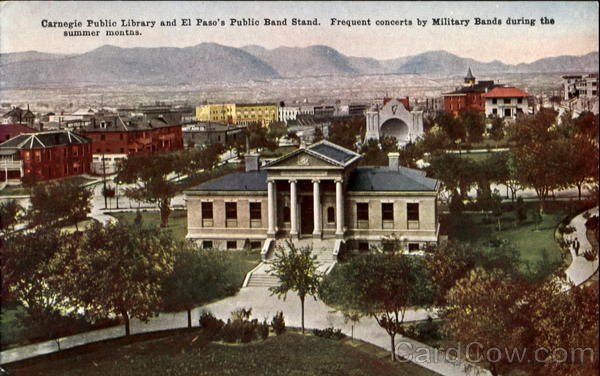
This is the El Paso Main Public Library when el V was a little kid.

The El Paso History Museum is in the foreground; the Main Public Library is in the background.

The museum's ground installations are a fringe benefit for the library.
and the public library.

Like so many cities, El Paso destroyed its downtown by tearing down much of the historic, attractive part, driving away the thriving smaller businesses, in order to build a sterile convention center, sports stadium, etc. The city also employed the Great Terminator upon the very neighborhoods and communites, that give a city a soul, the soul that make cities attractive and liveable:  El Paso drove a damned interstate through the rooted neighborhoods and mercantile centers, killing them dead under concrete, killing the soul.

So, with its downtown  deader 'n a doornail, like so many other cities, El Paso's revitalization wish fullfillment is to upscale the attraction of what remains in the old city downtown center, renting the spaces out to young(ish) entrepreneurs in the, usually vain, expectation these expensive camera cuisine restaurants, and the high fat food plus expensive imported beer sports bars will attract local business and tourism. Throw in the inevitable crafts mall, art galleries, a farmer's market once a week for part of the year, and First Friday Nights special offers, etc. How many small cities and towns have we seen doing this since the 1980's?

The real kicker is how the wealthy corps and politicians count on artists to fix the urban blight that they created themselves, and, then, if by chance the plan actually works -- as in NYC -- grab the real estate back and dump the creatives into the street -- but not these streets. The creatives fixed 'em so they're no longer welcome. Then begins the sterilization process all over again as the prices rise higher and higher and higher, with nothing inhabiting the real estate again except that from which anybody looking for any real fun and surprise will run from at 100 MPH.

There is construction everywhere, just like in every city that anyone wants to live in everywhere in the world, covering ever more open space under asphalt and cement, pretending to be public gardens and recreational territory.

Hotels abound throughout this area, as there are regional headquarters for every national / international bank, mortgage company, real estate moghul, and every kind financial and insurance corporation here -- not to mention those of such light "industry" as textiles and light furnishing finishing, that employ international cheap labor and ship internationally. The busy execs flying in and out, making deals, arming drug dealers, smashing progressive governments and labor movements need places to stay.

But where do they eat?  Probably in the strip clubs, which are further away? they aren't in these restaurants.

Then there is the tourism.  Where do they eat? Well, tourist college kids, think going to Juárez will give them better deals on getting so drunk they must crawl and more exotic and cheaper sex workers.  So there isn't enough enough clientele to make these places profitable 7 nights a week.  Partly, too, it's because they don't really want Spanish speaking clientele.

(It's más pleasant that our hotel's staff is bi-lingual, and so are the guests.  The staff were puzzled by el V and EVF's Spanish though -- they had to tell them it was Cuban.  Then there's E's Spanish-Spanish, pure Castillian -- she's from Madrid.)

What is great here though is the El Paso Historical Museum -- there is a lot of history -- the El Paso Art Museum -- and the El Paso Public Library.  The library is still where it was when el V was a little kid, though the building is not the same. It's open 7 days a week!  You see all kinds of people in it.  It reminds me of Greenville, Mississippi's public library. What else does this library do beyond all the things public libraries are providing these days, including wi-fi connection, computers and a/c?  It is showing the World Cup games for all those who can't watch at home, can't afford to be or don't want to be in a sports bar.  Is that public service or what?

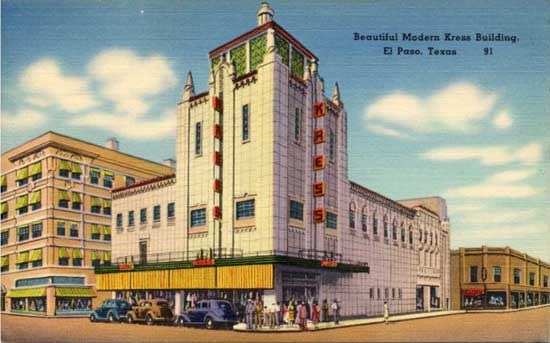
The Kress Building has survived, but everything around it has been torn down, so it sits within a construction site; the streets around it are closed.  This historic post card doesn't show what a glorious jewel of a building it is.

It's nearly impossible to photograph the Kress Building now.
There are some buildings that didn't get torn down during their urban renewal, and I love those. So many Spanish-Moorish styled buildings, that are beautiful.  So we were out photographing madly early this AM while the sun was in the right place to have shadows and not glare.

It's such a pleasure to have all these recognizable bits come together that have not changed about being in the southwest: the clatter of cicadas, big sky, the dry heat, hearing "Mexican" Spanish, local tribes people, the Moorish-Spanish influenced design of buildings, fountains, patios, plazas and courtyards, the food (which though el V can't eat it, isn't stopping me from eating Mexican dishes every chance I get -- the hotel has some of the best red and green chili sauces for breakfast ever) -- and, this is SO TEXAN! Shiner Bock, my beer of choice for this trip.


Or so it felt as the sun rolled down, while the super moon rolled up,  turned yellow, big as a super-large cotton ball, over the mountains, then turned red in the smog for awhile.


El V had hired a car to drive us along the scenic route, as well as look for spots from his childhood days here. The driver was a self-educated tour guide, from India, who has lived in El Paso for 30 years. He was filled with information about everything to do with El Paso and Juárez, and enjoyed sharing.  He seized the opportunity to fact-check various things from the 1960's downtown and campus against el V's memories of the time.

These days though, West Texas is about to go into recycling toilet water, so depleted is the water table from irrigation, and how arid it is, now that the grasslands have been taken out for over a century.  Recycled toilet water won't preserve this profligate water way of life in a region that has always been arid.

Chihuahua grasslands now.

How all the Chihuahua grasslands used to be, only a century plus about twenty years ago.

It's painful to have those instinctive reactions to flying over the Franklin's flatlands, seeing it as ancient, primeval desert monster -- while the facts are that a century ago -- or perhaps a decade or so before that -- those flatlands, mesas and plateaus were grass tall as your knees and the clutching spread of claws on the twisted limbs sand channels were streams and rivers of flowing water. Cattle and cotton and oil .... (In the Sahara it was goats, among other things.)  How quickly we destroy the environment, yet insist we have no responsibility for that or any obligation to it.

This is what is keeping us from ever returning to the southwest -- water. The northeast we are water rich. Doubtless other regions will be going to war with us about this most precious resource of all, in the fairly close future.  Hey -- I've lived to see the return of the wars of religion -- it's not that unlikely I shall see water wars too. If I live, that is.

Dune feels more prescient all the time.


Tuesday, November 12, 2013

Eight Massive Online Troves of Great Reading Material

The following list of online resources to out-of-print texts and other literary materials is nicked from a New York Magazine article by Kathryn Schultz, "11 Lost Literary Classics You Can Download for Free."  Because she included The Education of Henry Adams (1907) and Louisa May Alcott's sensational novel, Behind a Mask Or A Woman's Power (1866) as part of her strong list she wins the Award for Today.

Because Schultz further provided dates of publication for them all, she wins the Award for Tomorrow too.

Then she wins the Award for the Week because, at the end, Schultz appended this list: Eight Massive Online Troves of Great Reading Material.
Thanks to digitization, readers can access literary material we could never have gotten our hands on in the past—because it was expensive, rare, remote, uncollected, impossible to find, or because of a literal prohibition against putting one’s hands on them. Herewith, a tiny sample of this literary abundance, from illuminated manuscripts to Darwin's 15,000 letters.
1. The Digital Scriptorium 
 An online collection of medieval and Renaissance manuscripts from all over the world. Short of breaking into a museum, there’s no better way to view those manuscripts than digitally, since you can zoom in to appreciate the details.

2. The World Digital Library
 My favorite “Surprise me”–style book resource. Sure, you can search it, but you can also click the timeline (8000 B.C. to today), click the globe, and kiss your workday good-bye. Where else will you stumble on a gorgeous illustrated edition of a turn-of-the-last-century Guide to the Great Siberian Railway?

3. Project Gutenberg’s Pirates, Buccaneers, Corsairs, Etc. Bookshelf
 Many people have a passing familiarity with Project Gutenberg and its 42,000+ free books; fewer know that you can search it by “bookshelf.” This pirate-y one is my personal favorite, but there are scores of others for browsing everything from detective fiction to erotica.

4. The Emily Dickinson Electronic Archives
 The Internet is chockablock with thoroughgoing websites for dead authors, from Beatrix Potter to Franz Kafka. This addition includes vast amounts of Dickinsoniana, including scans of all her extant manuscripts.

5. The Public Domain Review
 The old problem with old books was how to find them. The new problem with old books is Whoa, where to start? The Public Domain Review organizes and highlights interesting out-of-copyright works—of all kinds, but its literary collection is excellent.

6. The Darwin Correspondence Project
 Writers gonna write, and their letters to, from, and about each other abound on the web. My favorite batch comes from Darwin, who corresponded with everyone from fellow naturalists to his kids. This site contains the full text of 7,500 of his letters and information on 7,500 more.

7. The Digital Public Library of America
 Among the newest and most ambitious open-access projects, this one aims to make every offering in our nation’s public libraries, archives, and museums freely available online. Its bookshelf contains 1.5 million volumes and counting.

8. The Poetry Archive Historic Recordings
“Into the valley of death rrrrrooooooooode the 600”: To truly appreciate “The Charge of the Light Brigade,” you must hear Tennyson himself bellow it—as he did, into a wax cylinder, in 1890. That recording and those of 49 other poets are free on this site.

*This article originally appeared in the November 18, 2013 issue of New York Magazine.

Saturday, October 5, 2013

Researchers Locked Out By Government Shut Down

Surely the dorks responsible for this are deeply pleased, because this means academics, scholars, scientists, journalists -- everyone who needs reliable information, those who research their facts to back up their ideas and arguments instead of, o, just saying any gee dee ed thing they feel like at the moment and then declare to be the Word of God -- is locked out from doing their job.  In other words all those gee dee ed commies, queers femnazis, and atheists who deny creationism and the holy stars and bars.

From Inside Higher Ed, by Michael Stratford here:
In addition to forcing the closure of government buildings  where research is conducted -- such as the Library of Congress and presidential libraries -- the shutdown was also cutting off access to myriad electronic resources on which many researchers depend. Websites that were not operational included those of the Library of Congress, the U.S. Census Bureau, the National Science Foundation, the Bureau of Economic Analysis at the U.S. Department of Commerce, and the Education Department’s research arm, the Institute of Education Sciences.
PubMed, a free repository of biomedical and life science research maintained by the National Institutes of Health, was operational but a notice on the site warned users that it would not be updated during the shutdown.
Researchers who had traveled to Washington for the purpose of using federal resources to advance their work said they were frustrated by the shutdown.
Read more at the link above.

Why yes, this affects yours truly.


Saturday, June 15, 2013

The Art of Seeds

"The Hudson Valley Seed Library commissioned artists to create imagery for their seed packets."

Nine years ago, Ken Greene was the children’s librarian in an archetypal small town in the Hudson Valley.
He still lives in the vicinity of Accord, N.Y., but in recent years Greene’s life has taken twists and turns that even this onetime acrobat could not have imagined. His day job these days is as a farmer of heirloom vegetable and flower seed but along the way, and almost by accident, he has become a patron of modern American botanical art. So far, he has commissioned more than 80 artists to create paintings to illustrate his seed packets. ....
The tradition of picturing plump tomatoes, glowing sunflowers or mouth-watering sweet corn has a long history in American farming and home gardening, but Greene has brought a unique contemporary twist to the genre.

His brief to his painters: reveal your assigned variety of flower, herb or vegetable in your own way.
“Botanical illustration was the last thing I was looking for,” said Greene, whose enterprise is called Hudson Valley Seed Library.
These are 'real' seeds, for 'real' food plants.*
Heirloom seeds are distinguished from modern hybrids by replicating themselves faithfully. Thus, if you save the seeds of an heirloom tomato or melon (or a radish or lettuce left to seed) one year, you can grow it the next. No one owns the seed, so it can be passed freely among gardeners. Such open access to a crop is the antithesis of the agribusiness biotech profit model, and heirloom seed saving is tied in to the local food movement and all its attendant aspects: environmental sustainability, food security and social justice.
---------------------------------------

*Have you all heard about the fake egg manufacturing biz that hip, hot young entrepreneurs are flogging -- as better for us and the environment than actual eggs --- and cheaper too? made from peas and sorghum, plus other un-named ingredients, at least not named in the hotcchachacha interview with them on some NPR financial program.  I.e. more sugar = faux food, more empty calories and less flavor and pleasure.  Let's all eat bugs! is another faux food thing being flogged more frequently every year.  As we know Bhub, this faux food isn't for us wealthy hotchachacha types, but for the rest of this over-populated with excess people planet.

Saturday, January 26, 2013

Medieval Cats

That cats own the internets everyone knows. We all aren't aware though that cats also owned the information delivery systems of long ago.

On the Medieval and Earlier Manuscripts Blog.

Some of the illustrations are of the type called "marginal grotesques" and are vastly imaginative.


A reply to this elsewhere, calling them medieval LOL cats, ended up provoking this stream of consciousness rant on my part:

In these later years I've become increasingly charmed by early English, which makes makes the history of our language all that much more interesting.

I keep imagining the monks in their enclaves writing these words, and often just composing, rather than only copying.

Sir Gawain and the Green Knight isn't early English of course, but the sense comes through of a congenial community, with many convivial meals, laughter and intelligent discussion going on, discussions about language, compositional techniques, forms and modes, latin vs. attempts to write vernacularly, while drinking much ale and wine. No Rule of Silence in these religious houses and the Church's rural administration grange compounds.  Surely their discussions about 'how to write' contained much comparison with and news of what others like them were doing elsewhere -- lots of exchanges of correspondence with Houses elsewhere in England and Europe, so easy when all the writers wrote in Latin.  :)

This is not the same as the thousands of blog entries posted every day by writers explaining How Writing Is Done -- and even worse, How Reading Is Done. At worst, bs, at best, twaddle dull and even displaying with pride ignorance of much they are declaring, particularly in the not always even subtextual "This is what we who consume our fave genres like potato chips think and we are RIGHT About Everything!  Anything that smacks of the privileged elitist hoity toity scholar or critic is WRONG. Our extrusions are all equal to everything , including Shakespeare. There is no bad writing -- and no such thing as historical fact and accuracy-- it's all made up."

So, medieval illustrations are not exactly LOL cats. lol.

But all of us don't consume genre like that or think like that. A lot of us, who also write, sell and buy books, which, of course, is neither acknowledged nor recognized.  And cute as lol speak was initially, to see adults persist in expressing themselves like pre-literate children as their favorite mode of discourse feels creepy. It bodes badly for our capacity to think, analyze and develop – i.e. become fully functioning, reliable, intelligent, effective adults who can take care of our planet, small animals, growing things and each other.

That's how teh YA publishing marketing demographic eated all the sf/f stuffs. The sf/f writers share the solipsist mind-set of the hypothetical, cliche of the self-centered adolescent. These writers haven't matured emotionally or critically, are determined not to. They are so proud of sharing their nurtured high school mean girl tropes they eveb demand you admire them for their displays of immaturity, in their communications online, in real life and in their books. Again A Major Publisher asked me to write up yet another YA dystopian apocalypse in which there are only two sorts of people left in all teh world blahblahblah, while One Single Young Female Figures It All Out blahblahblah Saves teh World At the Conclusion Of Projected Franchise Which Will, Please Ceiling Cat, Be Major Motion Pictures 2!  I politely declined as very real pictures of very real starving, homeless and houseless Haitian children, women and men run behind my eyelids.  While they still dance and make music and art.

Argh.

------------------------------

* I am aware that all monasteries, houses, granges, abbeys, priories, etc. were not that well endowed with such easy and pleasant living, with a undercurrent of what later would become called 'humanism.'  A lot of them undoubtedly oppressed their surrounding livings -- and each other.  Others were oppressed and exploited by the  local lords, and even plundered to finance wars, and  pillaged and murdered in local lordly rivalries. Yet there were enclaves well-run, well-ordered and filled with the Holy Spirit as well as the spirit of inquiry and creation (which some Christians at least do believe comes from the Holy Spirit, the third part of the Trinity. Out of them came brilliance.

-------------------------------

* In other words, what Charles Stross said:

"The evolutionary pressure selecting for general intelligence (to the extent that general intelligence exists) breaks once a species develops language."

Cats have developed language and thus are now becoming less smart, and we humans are following in their paw tracks as we hoomans have now been trained to do.


Saturday, January 12, 2013

Limited But Free JSTOR Access


http://www.theverge.com/2013/1/9/3857628/jstor-opens-up-limited-free-access-to-its-digital-library


[ "Online digital library JSTOR will begin offering free access to its catalogue of journals, papers, and books. The Register & Read program will now allow individuals to register for the service, but members will only be able to read three items every two weeks. Users won't be able to see JSTOR's whole library either: free accounts will only have access to 1,200 journals from 700 publishers. In exchanges for free access, users will have to enter their personal details at signup that will be shared with JSTOR along with its partners, giving them insight as to who’s reading specific material.

Subscribing to JSTOR is notoriously expensive and often restricted to universities and libraries, so the basic access is a welcome move for those interested in academic papers. Some critics believe that the resource should be free from any restrictions, with former Reddit co-owner Aaron Swartz among them. The digital activist was charged with stealing 4.8 million documents from JSTOR using MIT’s network in 2011, presumably with the intention of uploading them freely to the internet. The case is still ongoing, but that  along with the popularity of the Register & Read trial  has clearly caused JSTOR to rethink its access policy. " ]

Here is that story: "Reddit Co-Founder and JSTOR Hacker Aaron Swartz Commits Suicide"

http://nymag.com/daily/intelligencer/2013/01/jstor-hacker-aaron-swartz-commits-suicide.html


Thursday, November 17, 2011

Barbarians & Thugs Destroy Libraries = Bloomberg & the NYPD

From  "Who Destroys Libraries?"

Thugs and barbarians.

Ergo  Bloomberg & the NYPD.

From a commentator:


What is meaningful in a library? The books and media? The access to information, or to story, or to history? The gathering and cultivating and cataloging of those elements so necessary to civilization? The refuge from ignorance? The refuge from isolation? The people who make it all happen and help us understand the resources available to us? The open door?


A library to me is a public place, defined by who is allowed in rather than by public ownership. And on that measure, as well as every measure which I mentioned above, the library tent at Occupy Wall Street was a public library. They had over 5000 published books, original writing and poetry and art, people who volunteered there, and people who used the library. They had all that until New York City made the conscious decision to destroy the library.


That act of destruction was, to me, not qualitatively different from the book burning in Opernplatz in 1933. Both were political acts of destruction intended as statements of power, demeaning and diminishing those disfavored by the state, targeting the tangible instantiations of knowledge and discourse.


It's so weird how our primary media are reporting these matters -- the Italians protesting Berlusconi are considered worthy of our support, understanding and even admiration.  Even the vaguest semblance of public protest on the part of the non-1% here is at best ridiculous and at worst lese majesty that deserves at least very long prison sentences.

The Wondrous Database

"This Book Is 119 Years Overdue

The wondrous database that reveals what Americans checked out of the library a century ago."

The long article describing the database and its place in a the long sociological study of Middletown, U.S.A (Muncie, Indiana), and the author's personal engagement with what Louis Bloom, a particular patron's checkouts might mean is in Slate today:


Ever since the sociologists Robert and Helen Lynd published a pathbreaking pair of books about the city (Middletown: A Study in Modern American Culture, 1929, and Middletown in Transition : A Study in Cultural Conflicts, 1937) the place has been awash in social scientists studying its every move; this database is in fact part of Ball State’s Center for Middletown Studies
.
Each part of it is fascinating, even though the author's goal, to use it as time travel failed.  In this part anyone who reads / or  writes history or historical fiction can't fail but to be interested.


Stuart’s point about the gap between what you read and who you are got me thinking. Maybe the way Louis receded as I chased after him was not my problem but my answer. In the books Louis checked out he found, as readers everywhere always do, more than just a perfect mirror of his own life (as if “what Middletown read” told us “what Middletown really was”). He also found a way out: a glimpse of the Italy where scientists experimented with frog’s legs, or the state of Mississippi back when killing a slave was a simple property crime. The books he read might even have helped him catch a glimpse of what he wanted his own future to be working in the world of mechanics and of physics, far from Muncie (“Go West, young man”—yes, until you hit the Philippines). Thanks to those books, he too had a telescope. Like mine, it was small and imperfect, with no guarantees about the accuracy of what he glimpsed through it. Still, coming from the sort of Muncie life that he did (his mom had moved them in with in-laws, had even been threatened with having to send the kids off to various relatives) I bet that glimpse at a distant world loomed fairly large for him.


The database, What Middletown Read, can be accessed here.


Friday, July 23, 2010

Libraries: The Next Pop Culture Thang!


From the Library Link of the Day:

A local news story skeptically questioning whether libraries are "necessary" set off a response from Vanity Fair, and a later counterpunch by Chicago's Public Library Commissioner won her support from such diverse, non-library-specific outlets as The A.V. Club and Metafilter, and from as far away as The Guardian.

Call it a hunch, but it seems to me that the thing is in the air that happens right before something — families with a million kids, cupcakes, wedding coordinators — suddenly becomes the thing everyone wants to do happy-fuzzy pop-culture stories about. Why?

Libraries get in fights. Everybody likes a scrapper, and between the funding battles they're often found fighting and the body-checking involved in their periodic struggles over sharing information, there's a certain ... pleasantly plucky quality to the current perception of libraries and librarians. Yes, it plays a little ironically against the hyper-stereotypical buttoned-up notion of what a librarian is, but the sense that they're okay with getting mad in public — like Chicago's Public Library Commissioner did — gives library people a spark they might not otherwise have.

Librarians know stuff. You know how the words "geek" and "nerd" have gone from actual insults to words used to lovingly describe enthusiasts? Well, if we haven't gotten past venerating people who don't know anything, we've certainly reduced, I'd argue, the degree to which we stigmatize people for knowing a lot. This alone might not make libraries cool, but it takes away from the sense that they're actively not cool. More specifically, they live in the world of information, and are employed in part to organize and make accessible large quantities of data. If your computer had feet and a spiffy personality, you see.

Libraries are green and local. This is where there's a lot of potential appeal for the same people who like organic produce and reusable grocery bags. You can pretty easily position a library as environmentally friendly (your accumulation of books and magazines you are not reading is fewer trees for the rest of us, you know), not to mention economical (obvious) and part of your local culture. This is the part of the potential appeal that's anti-chain-store, anti-sprawl, anti-anonymity, and so forth.

Libraries will give you things for free. Hi, have you noticed how much hardcover books cost? Not a Netflix person? They will hand you things for free. That's not an especially hard concept to sell.

"Open to the public" means "some days, you really have to wonder about people." This is where you get the spark of an idea for TLC or somebody to do some goofball show called The Stacks, which follows a small local library through funding problems, trying to get book clubs started, whatever. When your building is open to the public, that means open ... to ... the ... public. And you know what's a little unpredictable? The public. This is where you might get your drama. (When I was in college, the information desk used to post the best questions it received, one of which was "How long do you cook spaghetti?" I suspect many libraries have similar stories.)

There seems to be a preposterous level of goodwill. Quite honestly, I feel like you can go on YouTube and act like a complete goof (in the best way), and if it's for libraries, people have that same rush of warmth that they used to get about people who had sextuplets, before ... well, you know. Before.

I don't know whether it's going to come in the form of a more successful movie franchise about librarians than that TV thing Noah Wyle does, or a basic-cable drama about a crime-fighting librarian (kinda like the one in the comic Rex Libris), or that reality show I was or that reality show I was speculating about, but mark my words, once you've got Old Spicy on your side and you can sell a couple of YouTube parodies in a couple of months, you're standing on the edge of your pop-culture moment. Librarians: prepare.

Thursday, April 2, 2009

A Librarian's Work Never Ends

Everywhere the public library systems' funding has been slashed and slashed and slashed again -- this even before the Big Bubble Burst of last August.

Public assistance, education, libraries, art and museums, and health care are where budget cuts in bad times are always made first, and made most deeply, the very public services that populations everywhere turn to in times of economic despair. Public transportation is also on that list of first, deepest and continuing cuts if you live where there is any public transport-- the budgets are slashed, services are cut, and the price of usage is increased.

If these are not regressive charges upon the public that has not been responsible in any way for creating the global economy, please tell me what a regressive tax is.

In Europe, Merkle, for instance, isn't panting to join in Obama's and the U.S.'s ideas of how to handle this Depression 02. They are counting on their social safety net of housing subsidies, health care, and all the rest that Europeans' taxes pay for, to carry them through, rather than throwing billions and billions at their banks and dying corps. We here, of course, don't have a safety net ....

Here is one public library's story (in Arlington Heights, a well-to-do suburb of Chicago), but I see this same story played out in front of my eyes right here, and I hear the same story from friends all over the country.

The article includes stories from other libraries around the country:

[ "In Sacramento this year, two branches of the public library temporarily stopped accepting cash as fines for overdue books, after thieves struck three times since June — in one instance, taking off with a safe filled with money." ]

[ "In Lynchburg, Va., a gunman shot a man outside the public library on a Monday afternoon in late January. The victim, who survived, staggered into the library bleeding and looking for help. Since then, an off-duty police officer has been hired by the library for extra security." ]

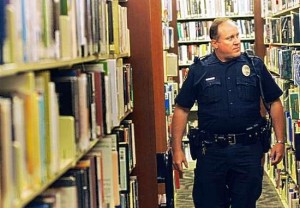
[ "And in Quincy, Mass., where a man was recently arrested in the library and charged with assault and battery with a dangerous weapon, among other offenses, a police officer on beat patrol now walks through the library during operating hours." ]

Libraries have been dangerous places for a long time -- in some places, such as Albquequerque, the university libraries are the worst, attracting predators of all kinds -- which is why some decades back it got difficult to enter a university library (or any other facility) without I.D. Not that this has stopped terrible events from taking place in them or other university facilities -- I'm thinking particularly of some stories from Tulane, at the moment.

But our public libraries deserve so much more from this nation. There are reasons why one of the primary indicators of a 'successful' state is a national library.