LINES OF THE DAY

". . . But the past does not exist independently from the present. Indeed, the past is only past because there is a present, just as I can point to something over there only because I am here. But nothing is inherently over there or here. In that sense, the past has no content. The past -- or more accurately, pastness -- is a position. Thus, in no way can we identify the past as past." p. 15

". . . But we may want to keep in mind that deeds and words are not as distinguishable as often we presume. History does not belong only to its narrators, professional or amateur. While some of us debate what history is or was, others take it into their own hands." p. 153

Silencing the Past: Power and the Production of History (1995) by Michel-Rolph Trouillot

Showing posts with label Novels. Show all posts

Monday, June 13, 2022

Balzac: Fiction Needs Facts, Fiction Needs History, All Fiction Does

      . . . . The 19th C French novelists are a primary resource for thinking about writing/composing both fiction and history.  Balzac and Dumas are both particularly useful. But Dumas was nearly entirely concerned with the history of France provided in the pages of overt fiction. Balzac, however, thought constantly of the relationship of not just historical fiction to history, but the necessity of historical facts and verisimilitude to other fictional forms, particularly those forms we in the US, in this time, loosely call the realist novel, the novel of manners, and, the fiction of the fantastic.

Balzac came up a ‘system’ novel for the literature of realism – which term didn’t yet exist in his time – but was called by the 1820’s French Romantic painters, la couleur locale, and Balzac expanded to la couleur historique.

In describing that attempt, Balzac speaks of local color; in relation to the fiction of the period, his la couleur historique — is indeed more precise. For Balzac as for his contemporaries, truth could most easily be found in the history and expressed in literature with an historical setting: 

"Lit le roman historiques sont l'expression de la France et de la lit au XIXe siecle" (review of H. de Latouche, Fragoletta, 1829). He was to foreshadow Augustin Thierry's opinion, that history would impact nineteenth century fiction, as the young Romantics had experienced a violent reintegration into history, as a result of the French Revolution and the Napoleonic Wars. The example of Sir Walter Scott merely gave a specifically literary dimension to an already intense fascination with history and historical change; and Scott would of course be Balzac's ideal for the whole of his mature literary career. His early aim was that of Scott and of Scott's other disciples, to reconstruct "l'esprit d'une epoque et d'un fait," to make popular the study of history through a form less boring perhaps than the scholarly essays inspired by la Clio classique. 

Even at this early stage, however, Balzac seems to call for a greater degree of truth than do many of his contemporaries. For him, historical fact was to serve as more than a mere springboard for the poetic imagination. He could say that the historical novel should not aspire to the rigorous veracity of scholarly history, that historical figures should have a peripheral role in what is after all a work of fiction. He criticized Vigny for having used history to his own ends:

avait vu quelques scenes poetiques, et il les avait Verite, pour nous convaincre que les artistes viven qu'il s'agit bien moins de mettre le vrai dans le fau le vrai" (review of M. James, Richelieu, 1830).

 Balzac, as he expressed it ten years later, was the exact opposite of literary truth which Vigny developed in his preface to Reflexions sur la verite dans l'art: "L'art du roman vrai dans tous les details, quand son personnage es la litterature, I, 1840).

Even Balzac's excursions into fantastique practiced by Ε. T. A. Hoffmann are dose of reality. The authenticity of details is a point many times in the articles and prefaces he wrote. A realist may deal in fiction, but he must never relinquish fact, "l'immense verite des details." Balzac's rapid abandonment of the historical and fantastique may well be explained by his judgment of  Indiana (1832)*:

 "Ce livre-la est une reaction de la verite contre le fantastique, du temps present contre le moyen-äge, du drame intime contre la bizarrerie des incidents ä la mode, de l'actualite simple contre l'exageration du genre historique."

What had originally been a quest for truth, an imitation of nature, had rapidly become the vehicle for the greatest excesses of the literary imagination. The public had grown tired, Balzac wrote in the preface to La Peau de chagrin (1831), his first important work with a contemporary setting, of "l'histoire de France." Les Chouans appeared in 1829, which also saw the publication of Merimee's Chronique du regne de Charles IX; only two years later Balzac followed his elder, Stendhal, in writing a chronique du XIXe siecle. ....

... the matter might change; the method had not.  The recreation of the past which is the task of the historian would  always remain for Balzac the most adequate analogy to the novelist's undertaking. He intended to write "l'histoire oubliee par tant  toriens, celle des moeurs." Charles Nodier had defined the novelist as historien de moeurs as early as 1817; for Balzac the term became a constant point of reference. He repeatedly proclaimed himself an historian of manners and morals, "plus historien que romancier"; he referrs to his work as "cette longue histoire des moeurs modernes mises en act. He claimed merely to be an humble copyist, the secretary of his society as he said novelists had always been. The gift he prized above addition to the ability to give artistic form to what one had to say, was the accurate observation of reality, which made the roman de mores a more difficult genre than the historical novel. The Balzacian notion of contemporary mores demands "des connaissances presque techniq tandis qu'un roman historique ne veut que la science, des recher et de la lecture". ....

- - - - Balzac's Theory of the Novel / Maurice Z. Shroder / L'Esprit Créateur / Vol. 7, No. 1, Honoré de Balzac (Spring 1967), pp. 3-10 (8 pages) / Published by: The Johns Hopkins University Press / https://www-jstor-org.i.ezproxy.nypl.org/stable/26277449?

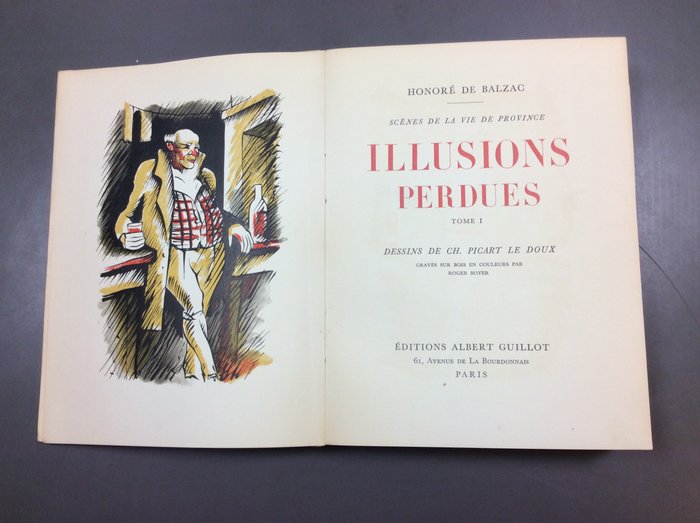
To see why Balzac believed it was more difficult to give artistic form to novels which are histoire des moeurs modernes mises en act -- the novels of contemporary manners -- one of his own works will provide an example. The subject of Illusians perdues (Lost Illusions) is a young man who burns to write literature, who has a decent gift, and the business of writing and publishing.


For those of us in the US, thinking of our own history and fiction that is inspired by our history, our own locale couleur and  locale historique, our National Archives (much available via online portal)  is and excellent resource.

When I'm asked what are the most important tools for writing good historical fiction, I always respond there are five.

1) voracious reading of the respected historians and fiction writers too -- and particularly those who wrote contemporary history of the period in which one's tale and characters are made;

2) Read the newspapers of the period -- that is, if your period had newspapers, but it will have some source of news, if only the local gossips. Indeed, George Eliot made brilliant use of these in Middlemarch, set several decades before she wrote it, though newspapers not only proliferated in that period already, and, indeed, a fictional newspaper is part of the fiction too; [Indeed, Laidislaw goes from his ambition to be a fine artist to working in newspapers and politics -- another case of literature's Illusions perdues!]

3) Look at the arts created in the period -- this includes listening to the music of the time, even though recording wasn't yet invented, probably, one may still learn something important, since making music played a role in so many lives, that speaks to class, and even to politics of those alive at the time;

4) Spend a lot of time with and the National Archives, and with JSTOR, generally now, since pandemic, available to you at home instead of needing to be at your local library, haunt the historical societies and museums of the place;

5) Go to the places one's characters go (which, as we see above, George Sand had not done).

A novel by George Sand, published in 1832:

Indiana is a novel about love and marriage written by Amantine Aurore Dupin; it was the first work she published under her pseudonym George Sand. Published in April 1832, the novel blends the conventions of romanticism, realism and idealism. As the novel is set partly in France and partly in the French colony of Réunion, Sand had to base her descriptions of the colony, where she had never been, on the travel writing of her friend Jules Néraud.

If one has slogged through Indiana, as I have, one sees indeed how Balzac came to the conclusion that it was far more difficult to write fiction as convincing art for a novel of manners than for historical fiction

~~~~~~~~~~~

In the meantime, things continue to roll along.  So much to do, so many places to go in the service of the doing -- please, please, please let neither of us contract covid.

The Heat Storm is reaching us today.  My concern goes out to our family and friends in West and the Southwest, and now the Middle West too.

Wednesday, August 26, 2020

Thises & Thatsas Domestika Trivia

     . . . . Been babying the injured sciatic nerve caused by the trip-and-fall that happened 4 Saturdays ago. 

I still have excruciating pain upon getting up if I've sat in the >ergonomic!< desk chair too long and / or not positioned myself exactly right. I still sit far fewer hours than spend stretched on the bed with overbed table -- which is still impossible to perform writing typing upon.  At least the x-rays showed there was no damage to bones, did not break hip or anything. Still haven't heard anything about the MRI I had a week ago.  At least I can still walk the 20 blocks in both directions to the medical complex, and keep working out.  It's sitting to type or do anything for very long I can't do.

Last night my new stupid fone froze up, couldn’t even power it down to reboot, in the middle of a sentence Vaquero was speaking. Such a piece of shyte phone and such a shyte service T-Mobile. We have to get this fixed!

The Horror!  AAAAAAAAAAAARGGGGGGGGGGGGGGG.


My God My God My God WNYC just shoved the Shoggoth First Lady's voice into my ears about how much Shoggothinchief* 'Loves this country and people'. Shutting off the radio rushing to to bathroom to vomit up the horror that is her souless pitch perfect nazi who speaks english inspires. Please replace those wonderful creatures, the elephants, as the entirely inappropriate symbol of the rethugs,  with the entirely accurate and appropriate Lovecraftian creature of horror and hatred of immigrants, Catholics, Jews, African Americans and women. Thrown up. Better.  

Laura is a Cat 4 hurricane now. Going to slam into LA and TX today.  4 million have been told to evacuate.  To where? Our New Orleans Reconnect on-the-ground Captain was laying in supplies last week already.

WBGO is alternating the old timey Blues with New Orleans old timey music, leaning heavily upon the catalogs of Louis Armstrong and Mack Rebbenack (Dr. John).  Huh.  They're going to do a Howlin' Wolf set.


I now get up to find my Howlin' Wolf t-shirt acquired at the Blues Museum in Clarkesdale, Mississippi back in 2012, and which I've never worn.


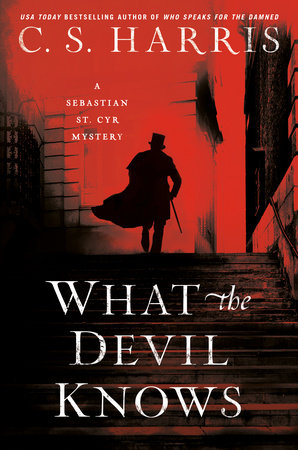
The St. Cyr novels have never had a blank cover before.

Today's perfect weather was perfect for the library run -- both titles I'd requested when Grab 'n Go started here earlier this month arrived to pick-up at my neighborhood Grab 'n Go branch.  One of them is the latest Sebastian St. Cyr Regency mystery -- I enjoy certain aspects of this series very much, though it has sagged at times.  Other problems: in the first books the protag, Vicount Devlin, is hinted to have some special sort of powers, including being able to see in the dark, but that never went anywhere.  The previous two brought it back to form; hope that continues with this latest installment, #16, What the Devil Knows.The author is a New Orleanian, which somehow provides an extra bit of flava to the content, though I'd be baffled as to say how.  It's not as though New Orleans or North America is ever even mentioned in her novels, which are within the era of the French Wars, generally, and which does provide plot points in more than one of the titles. This latest is set in 1814, the "French War" is finally over, and Europe is being divvied up at the Congress of Vienna ....  They think, the wars are over, anyway (1815 is Waterloo).

El V and B drove to 5th pod member S's huge rambling house, in which he lives along, with screened in annex, big yard and swimming pool up in Saratoga. We'd been planning this little vacation get-away for months already.  Due to the fall though, I sadly had to relinquish going myself this year, for I couldn't sit on drive, get up and walk again -- and that drive isn't even really long. But one will avoid that excruciating pain if one can! They are bringing local fresh produce such as sweet corn on the cob (which they been gorging on, grilled, already), blueberries and so on. They will hook up with P on the way back down here to exchange of this for the local Connecticut pork he picked up for us earlier this summer. So, we continue to eat, and eat well.

I am trying to figure out how we can do some kind of Thanksgiving this year, for we'll still be isolating as much as possible.  The schools are reopening in few days, from pre-school, through the universities.  We know what happens then will be what has happened everywhere in this country and other ones when students are brought back in physical space with each other -- and they can't stay away from each other either, nor do they want to.


Monday, August 10, 2020

Louisiana -- Plus: John M. Barry's The Great Influenza

     . . . . Looks like the Postmambo digital festival-tour,  NOLA Reconnect, is a go -- three weekends in October.  

Interviews with figures such as Jason Berry and John M. Barry, film makers like Lily Keber, Mardi Gras Indians, musicians, live music, cooking lessons from New Orleans's 5 Star chefs, and o so much more.  People know they're stuck at home, and they are desperate to be able to look at other faces, hear other voices and interact with People, both those they already know and people they don't.  (El V frequently mentions how much he misses meeting new people -- he loves meeting people.) 

Some of the Frequent Rumbero Travelers of Postmambo, who paid in for the March tour that had to be canceled have said "Keep the change," as there are costs that don't have to be met, such as lodging and transportation, so they were entitled to a refund.  So Postmambo is going to take the 'change' and use it to fund participation for students who would love to be part of this experience but can't afford it.  A scholarship in New Orleans history, music and culture, so to speak.

People are Zoomed out, so we can't do it that way -- it has to be interactive, so people can interact with each other, even if it is digitally.  Great techs on the ground there in NO who can't wait to make this happen -- who have had quite a bit of experience doing this kind of thing already.  The captain of our ground crew did this with a conference in Havana herself -- she directed it -- from New Orleans!  Technology sometimes can be our friends.  People are really excited about this.

~~~~~~~~~~~

     . . . . I read John M. Barry's The Great Influenza: The Story of the Deadliest Pandemic in History (2004), plus later editions up to 2018) in about 5 days..  Each section of the book is fascinating and filled with pertinent information. I anticipated returning to it at my evening reading time throughout, despite how very painful and gruesome so much of it was.  Infuriating too, as we're experiencing all the same issues with our own pandemic a century later, except for not SEEING it, the way people of every class back a century ago saw the Great Influenza. Indeed, nobody could escape seeing and experiencing.


Barry never disappoints.  As I began reading the first section of biographical background to the heroes of The Great Influenza,

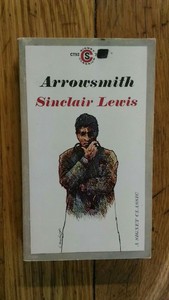
This is the edition in which I read Arrowsmith the first time -- A Signet PB.

I immediately flashed on how much of the trajectory was familiar to me from reading Sinclair Lewis's Arrowsmith (1925) -- which gratified me so much reading it the first time in my farmgirl's bedroom, because it began in North Dakota.  So I looked, and there the book is, in the index. It was part of the  context of discussing the institutes and universities the Great Influenza's hero medical scientists who founded such institutions as Johns Hopkins (which back then was referred to by all and sundry as "the Hopkins").  He has a small sub-section too, concerning how little writing and reference was committed either during or after to the Great Influenza; not by regular people or by writers like Hemingway, whose father was a doctor, or Faulkner.

I can think of only Katherine Anne Porter, in her short novel, Pale Horse, Pale Rider (1939 collection, 3 novellas)  tells the story of a couple caught by it. Pale Horse is one of the few works I've of hers I have read though.  Porter herself said that the title story was about the pale rider, Death, who takes away an entire era, as illustrated in the ironic last line: "Now there would be time for everything."* 

Chaucer and contemporaries didn’t write about the Great Mortality either.

This time around, as with 9/11, and now c19 writers were dedicating their their fingers from the gitgo to describe in dreary irrelevant detail every nuance of their own precious sensations, emotions, actions and non-actions, in their lovely summer retreats, second homes, surrounded by green and water, where they take walks in Nature and never see another person.  They don't see Covid-19 and those it sickens and kills either.

Nor does anyone else, in the USA at least, unless poor and of color, or working in the hospitals, morgues, nursing homes / assisted living and ambulances, actually SEEN anyone sick with c19, whether they recover or they don't. Back with the Influenza nobody could hide from it and what it wreaked. It was in everybody's house -- and in many places everyone who lived in that house died and there was nobody to move the bodies. And when it was over, who was left had to deal with them in however the region was dealing, whether in Philadelphia or a 3 house village in Alaska. But the yahoos out there now, rich and whatever -- they haven't seen and they know they aren't going to, so they are utterly unaffected. It's their life and they'll lead it as they choose.

Were writers of all sorts exhausted from 3 years of pandemic, the Great Influenza's indescribable gruesomeness that millions and millions experienced up close and personal, for themselves. and in company with everyone else around them? So very different from c19 -- so far -- but then the Great Influenza rolled for 3 years -- 1917-1920, with successive waves. Though generally, not always in every spot, it became rather milder and didn't outright kill as many -- it still killed in large numbers. So people had to get on with making life again, and also just wanted to forget this?

A lot of the literary writers were in the war one way and another.  Then came the Roaring Twenties and Prohibition (1920), followed by the Great Depression, followed by another great mobilization, WWII.  Maybe there wasn’t time to work all this horror out into words?

Something else too ... ithe Influenza, like c19, creates hallucinations and changes in the brain, which sometimes never changed back (people think this happened with Woodrow Wilson at the Peace Conference when it got it).  Flashbacks, even, sometimes to things that never happened. It sure does sound like the descriptions of Shell Shock.  So those poor saps got shell shocked from this incredible stupid war -- and they got this on top of that, along side of that.  No wonder so many people were lost after that stupid war ... the Lost Generation.

*  Katherine Ann Porter provided me with little of interest in that time of my life when I read her work, though I am hard-pressed to say why that was the case. I think it’s because horse was in the title and I was still young enough to be hopeful when ‘horse’ was in a title, inside there would be a ‘real’ horse.

Wednesday, April 22, 2020

More Far Away With With Gordon Doherty, Though Not So Far As The HIttites

    . . . . Son of Ishtar was such a successful distraction from the here and now, I resolved to give one of Gordon Doherty's previous works a try. 

The Strategos TrilogyBorn in the Border Lands, Vol. 1. (2011)

Byzantine Empire Palaiologan Double Headed Eagle

This trilogy's chronological location is the 11th century A.D., opening in 1046.  A weak and corrupt Palaiologan 'empire' facing off against the energetic incursions of the Seljuk Turks to take the Emperor's throne.  I've been able to read only a few pages, but it appears Christian Apion (Greek Christian, not Roman),  born low, but also born a natural warrior, is the serial protagonist.  His is the era of Alp Arslan and the Battle of Manzikert, so there shall be battles and war, blood and cruelty, abounding, with detailed descriptions of the weaponry and strategies, the moves and counter moves, and at least, surely, from the Byzantine side, utter desperation.

It seems Doherty does repeat himself.  Many of the elements present in his latest, third trilogy of which Son of Ishtar is the first installment, appear already in the first pages of Born in the Border Lands. Among these are a mysterious female figure who appears and disappears, almost magical birds, portents and prophesies. But these are are the ages, without polling and marketing, in which the supernatural abounds.

However, over the last 3 or 4 years, maybe more? I've been attempting to fill the gap in my historical knowledge, of varieties of the Turks in the Middle East and "Turkey", the fierce people who kicked out the Arabs -- as the Mongols attempted to do with the Turks in the 13th century. As the tribe(s) who became the Ottoman empire were not the first Turkimen to invade the Middle East from the upper steppes (many under pressure of Mongolian expansion).  I don't know anywhere near as much about the Seljuks as I do about the Ottomans' origins and acension to both Empire and the (Sunni) Caliphate.

Of course, here, the Seljuks are the villains who must be defeated while Byzantium must be defended, preserved and expanded.  Good luck with that ... the 1204 Sack of Constantinople, which constituted the 4th Crusade isn't that far off from 1046, and, helped along by the Genoese, the Pisans and the Venetians, there will be an infinity of corruption, pillage, murder, poison, intrigue and failure in Byzantium in those years -- all ending up with 1453, and the Ottoman establishment thereafter of the Caliphate in Constantinople. 

Which rather causes one to wonder what was the point of it all?

a monogram of chi (Χ) and rho (Ρ) as the first two letters of Greek Khristos Christ, used as a Christian symbol by the Greek Church

~~~~~~~~~~~~

    . . . . It's the middle of the week, so we put in a grocery order, which appeared very quickly, from the wonderful MW supermarket. They have just initiated their own delivery service pilot service, rather than depending on Instacart and the other ubiquitous delivery services, who charge the customer and the vendor both -- and which the reviews lean toward as being disappointing in quality of service as well.

Most of what I put on the list was available.  This means fresh! sweet Italian sausage, made on the premises, is on the menu tonight, which also happens to be faculty 6 PM Wine Wednesday.  Was also able to score a couple of roasts, more chicken, and -- ham! as well as other equally welcome supplies, before what is on hand was used up.

Plus, of course, drinking coffee and tea with milk is safe for another week.  


Wednesday, April 6, 2016

How Not To Describe Fiction Set in Africa

From the UK Guardian, by Ainehi Edoro, "How Not To Talk About African Fiction, " here.

    This is the opening, which, as it should, informs the reader of the theme and the subject of this opinion piece:
The history of modern African fiction is essentially 100 years of branding disaster. In marketing African fiction, the conventional practice among publishers both in Africa and the west has been to simply tag a novel to a social issue. “Such and such a novel explores colonialism.” Done. “So and so offers a searing representation of the scourge of misogyny.” Done. “Corruption takes center stage in so and so’s novel.” Done.
      African fiction is packaged and circulated, bought and sold not on the basis of its aesthetic value but of its thematic preoccupation.
Film (2013) included such high profile actors as Chiwetel Ejiofor and Thandie Newton

Ainehi Edoro's chose as one of her examples of how differently fiction written out of African imaginations and experiences are described on amazilla.  The two novels  are David Mitchell's Cloud Atlas 2004), and Chimamanda Ngozi Adichie's Half of a Yellow Sun (2006).   Both books have been made into films.

Tom Hanks, Halle Berry among other names played multiple roles in this 2012 film. 


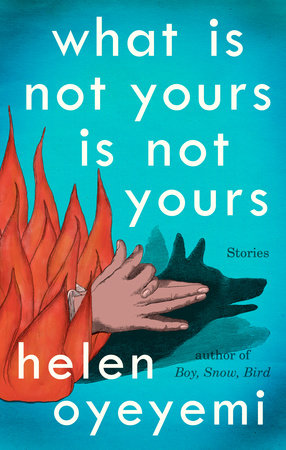
 Edoro concludes with a quote from an interview with Helen Oyeyemi, author of six books, the most recent a collection of her short fiction, What Is Not Yours Is Not Yours (2016).  (NPR review here.)
" [    In a recent interview, Helen Oyeyemi identifies what is really awful about burdening fiction with social issues:
I’m wary of – how do I put it – “getting tagged,” I guess, but I also understand the need to try and do that. When I try to think about my favourite books, I’m still not quite sure how I found them. There needs to be something you can say to people that lets them know that they might like this book, but I sometimes worry that the kinds of things that people say about what I write would not help my books find the readers I intend. I feel like most writers write for people who just read, who would open a book and jump in and see what’s there. But burdening a book with promises that once you’ve read this book, you’ll understand this issue or that issue—it’s not good. [Read more] " ]

Wednesday, July 15, 2015

Reading Wednesday - Traitor's Blade by Sebastien De Castell

Traitor's Blade (2014) is the first installment of a fantasy series with the serial title, Greatcoats, that is inspired to a degree by Dumas's famous Musketeers.  Nor does one need Dave Duncan's blurb to know that fine Canadian author is also an influence. The second volume, Knight's Shadow, appeared earlier this year.


Traitor's Blade reads like what it is, a first novel.  As a first effort any intelligent reader -- particularly any reader who has also published -- will give the poor proofreading (such as "waste" for "waist") a pass, since genre publishing doesn't usually shell out for professional proofreaders -- or even copy editors.

A good copy editor or line editor though, would have helped Traitor's Blade become the better book that it is trying to be. An editor would have helped the author to smooth out his uneven tone which lurches between what so many mistake as Dumas-style wit and banter, and meaningful yet clumsy metaphysical speculation on the nature of being and nothingness. A good editor would have recognized the author loads too many fight scenes at the front, abruptly introduces magic, then disappears it again for most of the book until suddenly -- magical creatures! An editor would have informed the author that his big reveal is buried. Though Falcio seems to know what this all about, there's so little time provided to the reveal of the big reveal the reader is left scratching her head as to what actually happened and what it means.

The narrative does move quickly, but necessary transitions have been omitted, which screws with pacing and rhythm.

Another way of putting it is that Traitor's Blade needed another revision.

Some of these problems are inevitable with a first person narrator, who emotes like someone who has read the addresses of Vlad Taltos often and uncritically, yet who is admirably attempting to hit those notes of tension, high stakes, peril, courage and justice that combine so pitch perfectly in BBC / America's   


The Musketeers (season 1, 2014; season 2, 2015 -- the very best adventure television ever! with the best coats! horses! leather! and steel!). The voice of the narrator hasn't yet been fine tuned to the story being told, or the voices of the other characters.  Voice is hard!

Doing the Dumas affect effectively in English is also difficult.  The French language tends to lend itself to that affect of effortless ballon that English doesn't -- which perhaps


explains why the language of ballet remains French. English language genre writers often seem to equate the tone of cynicism and sarcasm with the light-footed repartee and wit in which a Dumas veils his concerns with justice, loyalty, honor and courage.

Justice, loyalty, honor and courage are what Traitor's Blade is about.  So much so that Falcio, our narrator and protagonist, informs the reader early on that the great difference between his kind -- the King's Greatcoats (read musketeeers) and knights (read the Red Guards) is that he and the Greatcoats are about justice, which is for all, no matter what class and station, while knights are about honor, which is about themselves. This is the primary reason I am looking to find De Castell's second novel, since its title, Knight's Shadow, suggests in this book the author may be exploring that conflict more deeply. That's interesting, and not something we've seen much of lately in fantasy fiction.

The voice may not be quite as fresh as it will be, and it is not yet trained, but the mind behind the creation isn't going to be satisfied to writing to formulae.

Or so it seems to this reader.

P.S. The jacket copy bio's tone doesn't well serve Sebastien De Castell, who it seems to this reader, is on the brink of having a fine writing career.  Yah, it's a genre thing but really, he is an adult.  His book, which wrestles with adult matters -- and so few do these days --  proves it.

Charoite in rough state.
Charoite polishes up into lovely jewelry and other pretty items.


P.P.S.  The author's choice, to name Greatcoat's quest, the King's Charoites, is a happy one. In New Age parlance, chariotes' energies can promote physical and emotional healing, help overcome obsessions / addictions and channel other positive transformations when worn on the body. Their shades of violet are lovely.


Sunday, May 24, 2015

Splendid! An Interview With Amitav Ghosh

Ghosh's final volume in the Ibis Trilogy, Flood of Fire, is published this week in the UK, and will be here too, at the end of the summer.


I have so enjoyed and admired the first two volumes, Sea of Poppies (2008 and River of Smoke (2011).  This trilogy is what the finest of historical fiction writers, who also respect the history of their subject can accomplish. This subject is something that neither fiction writers or military historians who write in English have much treated: this vast canvas of India, China, the British Empire and the circumstances of the first Opium War.

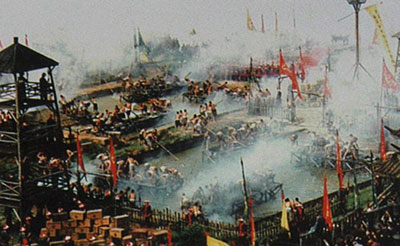
November 1839: British ships blow up four Chinese junks, initiating the first Opium War.
It's a bit brave these days for a writer to cite Lawrence Durrell as a formative influence, since the revelations that he abused his daughter, but Ghosh does it.


Ghosh, who was about to turn 50 when he embarked on the [Ibis] trilogy, says he found it daunting: “For the next 10 years, this was what I was going to do. But I also knew that I had to set myself something really difficult and ambitious. And that has proved to be the case. I was determined that the individual books should stand alone – it’s indefensible, aesthetically, for it be just one huge book chopped into three. One of my favourite experiences was reading Lawrence Durrell’s Alexandria Quartet in Alexandria. I love his writing and it is strange how he is kind of forgotten now. He had an incredible range and the books capture all aspects of a cosmopolitan life in the eastern Mediterranean. They do articulate with each other so that you get glimpses of characters across books, but they are not all meshed together. If I had a model, that was it.”
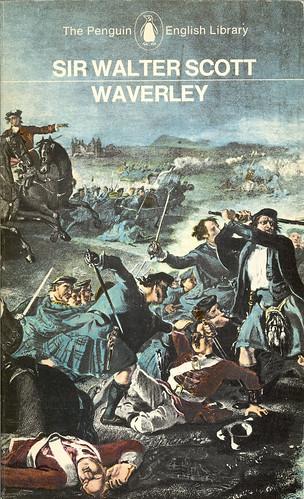
Ghosh gives large credit to Walter Scott, too, as an influence on writing his own historical fiction:

Ghosh was born in Calcutta in 1956 and was brought up in India, Bangladesh and Sri Lanka as his family moved around with his ex-soldier father on various secondments to the Indian government. The peripatetic life meant that books became particularly important to him – one early childhood favourite was Richmal Crompton’s Just William series before he moved on to the novels of Sir Walter Scott, for many the inventor of the historical novel as we know it today. “Scott had a huge influence on many early 19th-century Indian writers and I found his books utterly absorbing and remember curling up in bed with them at boarding school”. He was at the prestigious Doon School where Vikram Seth, a pupil a couple of years ahead of him, came back to teach and they talked a lot about writing to each other. “Not long ago I went back there and looked at those same editions of Scott in the library. I was the last person to have checked them out.”
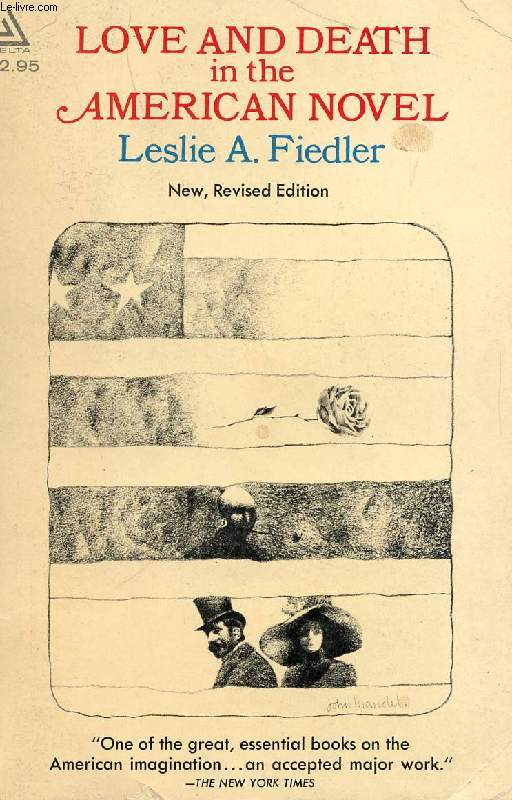
I still have this edition of Fiedler's book on my shelves.  I've read it -- and many of the books he mentions in it -- many, many times. I spent my undergrad sophomore year looking for, and reading, every novel he mentions in this study of American literature and culture. Fortunately the library was that of the U of Wisconsin so the books were to be had.
That last sentence is sad: there's so much contemporary writers could learn from Scott about how to write good historical fiction; yet, not only do these writers not read Scott, many of them don't know who he is/was; if any do know who Scott was all they know is Ivanhoe, sneering at him in second-hand via Mark Twain blaming Scott for the American South.  (Twain also sneers at James Fenimore Cooper, without whom Twain would never have had a writing career from whose classics his own Huck Finn is descended in an undeviating line, as Leslie Fiedler brilliantly traces in Love and Death in the American Novel.)  For these writers, historical fiction is the same as history, and they don't believe in either of these practices as a discipline, with modes and standards.  Like their fiction, to them history is just something to make up, without even observing the realities of the period.

Ghosh is aware of discipline, as he has a Ph.D. from Oxford in Social Anthropology, a subject that demands travel and writing skills.  He's changed off writing fiction (for which he's been nominated for, and won, many awards including the Arthur C. Clarke Award for The Calcutta Chromosome (1997)  with non-fiction on occasion:
. . . . In an Antique Land (1992) was a broadly non-fiction study emerging from his studies that investigated the relationship between Egypt and India, alternating his experiences of living in villages and towns in the Nile Delta with an imagined history of an 11th‑century Jewish trader and his slaves. Different again, The Calcutta Chromosome won the 1997 Arthur C Clarke award, but Ghosh says he never thought of the book “as being science fiction. It is in many ways a historical novel that is projected into the future as well as the past. And what does such labelling achieve anyway? It just separates what is called the literary mainstream from this other kind of writing. Who are among the most memorable writers from the mid to late 20th century? John Wyndham, Arthur C Clarke, Ursula Le Guin, Doris Lessing. And from the supposed mainstream who reads Angus Wilson today? To the literary establishment Lessing’s later books, about planets and so on, were a kind of embarrassment. But she very strenuously resisted that sort of partitioning and these writers have staying power because they were saying things about society that was in many ways more perceptive than what the literary mainstream was saying.”
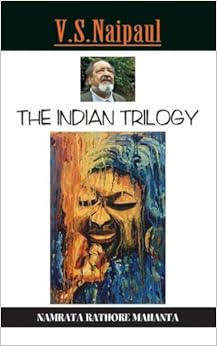
It does seem odd that Ghosh gives Naipaul so much credit for the surge of India's literary scene, since Naipaul didn't respect India and Indians, of which he wrote


dismissively and pessimistically in his Indian Trilogy: An Area of Darkness (1964), India: A Wounded Civilization (1975) and A Million Mutinies Now (1990). India and Indians were not pleased with him in those days. Nor is Naipaul an Indian, but a Trinidadian. But this seems to have passed from the UK's and India's literary memory.

Now it's with Ghosh -- and Vikram Seth -- that British Indians and India literary writers are liking to be displeased, calling them middle brow hacks who peddle pablum to the white middle class. Nevermind that this so-called white middle-class has shrunk to pathetic size and doesn't much like reading anything anyway, at least books that feature adults facing adult problems which are not solved by a (white) chosen one or a super hero.

However, this reader enjoys and admires both Ghosh and Seth's books, as well as Scott and Cooper, and Durrell's Alexandria Quartet too.  I even admire and enjoy Twain.


Monday, March 2, 2015

Authors & Review(er)s + Text Excised from Trollope's Duke's Children Discovered

From the Guardian: "Why All Writers Are Vain" as their vanity appears to a writer who is also a reviewer:


. . . . The vast majority of writers, if they have a modicum of self-awareness, must know that they probably belong among the literary also-rans rather than the exceptional elites. In my own case, I know I am not the cleverest or most original thinker and my prose is not the most beautiful. But if I am honest, somewhere inside me, probably not too far beneath the apparently modest surface, is the hubristic belief that if I can apply my skills of clear exposition and synthesis to the right subject, I might just write a book of exceptional worth.
I doubt that I am unusual. I’ve met, interviewed and shared stages with many writers over the years, and the majority have come across as modest, grounded people. Only one has turned up in a hotel lobby wearing sunglasses, and that was a performer turned author. Of all the speakers at one literary festival which requires participants to wear head-set microphones, only two have so far refused to do so because it messed up their hair – both male. And yet although the writing profession is generally free of the ostentatious egotism of rock’n’roll, the ways in which it is infused with vanity have become increasingly evident to me. The excessive admiration or pride in their own work that I detected in those two writers would reappear time and again, and eventually I would come to recognise it in myself.

For those who are happy readers of Anthony Trollope's novels, particularly his Palliser novels, or as they are also known, The Parliamentary Novels, there is this:


A limited, deluxe edition is being published that restores the cut text, amounting to about 40,000 words.

“It’s quite extraordinary the different cumulative effect it has, on the richness of the text and the subtlety of the characters,” said Joe Whitlock Blundell at the Folio Society. “When I first read The Duke’s Children 30 years ago, it all seemed to be focused on the Duke’s reactions. But in the restored version, the characters of the children come through far more sympathetically.”
Amarnick writes in a commentary to the new edition that the “thousands of cuts did tremendous damage” to the work. Although Trollope did not delete any of his 80 chapters, he removed consecutive paragraphs in some places; in others, he cut sentences, phrases and words, even replacing a word with one which was slightly shorter on some occasions.
. . . . “There is no concrete evidence for who exactly forced him to make the cuts, though it seems probable that it was Charles Dickens Jr who requested a shorter book for serial publication,” said Whitlock Blundell. “As for his reluctance, there can be no doubt about it. He was very sensitive to any requests to cut his work, and wrote in his autobiography, ‘I am at a loss to know how such a task could be performed. I could burn the MS, no doubt, and write another book on the same story; but how two words out of every six are to be withdrawn from a written novel, I cannot conceive’.”
This may bring tears of justification to the eyes of many an author instructed to cut their own works to improve the narrative flow, structure and rhythm, or for the "economy of cost".

As a friend commented elsewhere, ". . . it's kind of hard to believe Trollope would be improved by the restoration of verbiage."

Like her, I'm not an admirer of Trollope as a prose stylist. As an observer of his times,, most certainly he's a novelist to be mined. But most of his books are nearly unreadable, as far as I'm concerned. Exceptions would be The Way We Live Now, some of the Palliser chronicles and some of the Barsetshire books. But the Pallisers and Barsetshire sequences only after I learned a great deal more about the Victorian era politicians, issues and the Church of England than in previous readings. If one doesn't know the political and Church of England historical miliieu these books are near impenetrable morasses -- or at least they were for me.

Partly this was because, as same amiga remarks in the discussion, "What bugs me are the inevitable purity/virgin subplots. I'd like every one of them cut entirely." 

Yet, there are ladies in his novels who, despite the author, end up successful without being virgin.  But all that Trollope verbiage tends to conceal that they avoided humiliation, disgrace, despair and death. 

Then there's his habit of naming characters with silly names -- such as Killancodlem, Quiverful, Filgrave --  thinking he was following in Dickens footsteps, while viewed as witty by some readers, for others are annoying at best. At worst one cannot take such names seriously, as the age of Dickens had long since been superceded. OTOH, there are a plenitude of astonishingly preposterous names among the English aristos, at least to the ears and eyes of Merikans. 


Even Trollope's novel about wife abuse, stalking, etc., He Knew He Was Right (2004), is a slog to read, and, for that matter, so is the BBC production of it a nearly unendurable slog, except that it does have Bill Nighy in his delightfully slimy persona.


The major exception to the slogs is The Way We Live Now, all about money and publishing and marriage. These matters read just fine to contemporary literature-minded Merkians, even without knowing anything about the Age, so to speak.

Like The Way We Live Now (2001) did, anchored by David Suchet playing the financial ponzi schemer, August Melmont, fortunately some of these other books too have made terrific television, as they excise enormous wadges of Trollope's plodding text. I still love BBC's The Pallisers (1974 - 1975) -- which also gives the Duchess of Omnium the focus she should have -- and 

Susan Hampshire as the Duchess of Omnium during her unhappy European marriage tour.

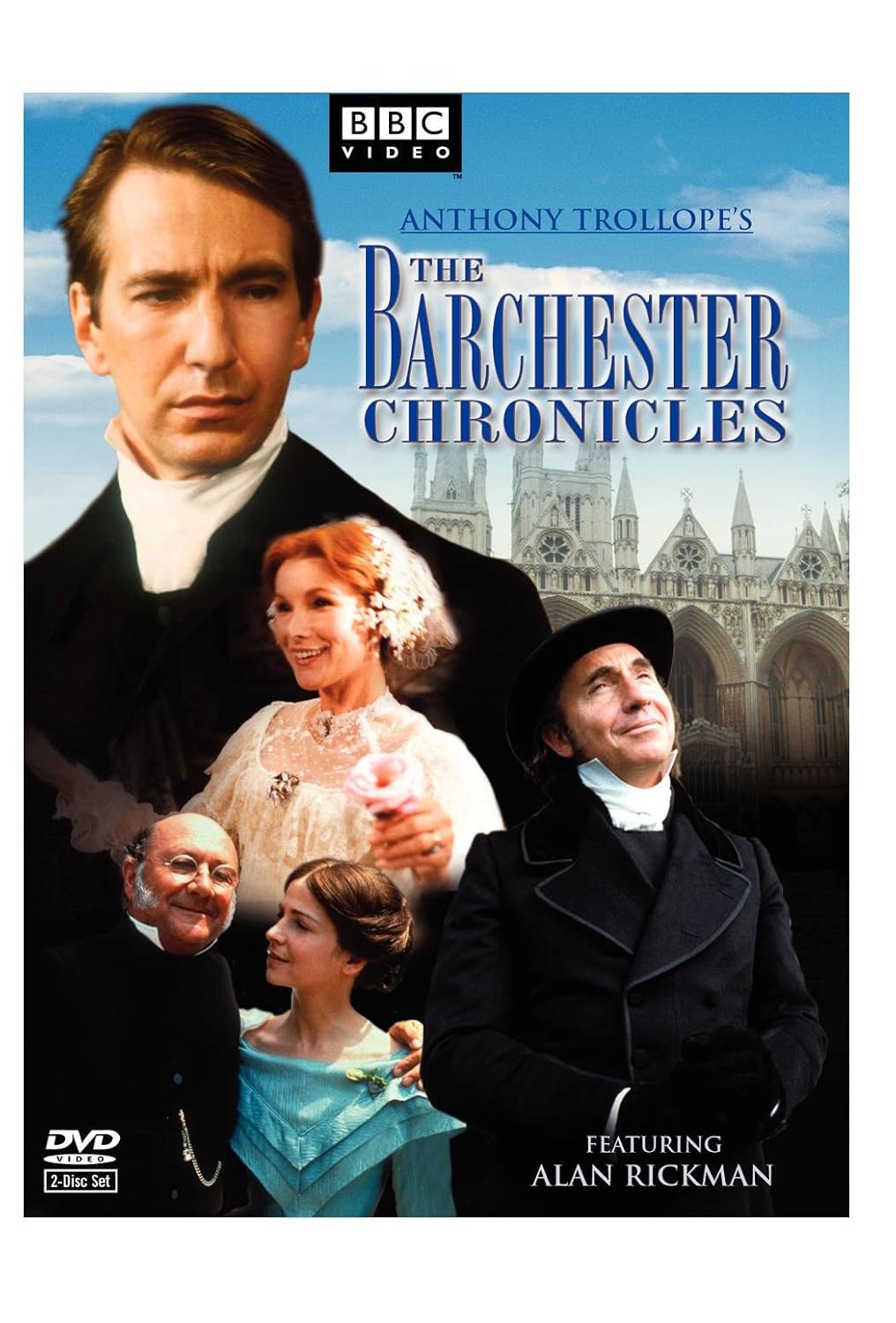
played by the delightful Susan Hampshire, -- and the Chronicles of Barset (1982 in which Alan Rickman inhabits Obediah Slope -- and it even includes Susan Hampshire, again, as delightful in the role of  La Signora Madeline Vesey Neroniwooed, alas, by Slope, as she was in The Pallisers and as Lady Churchill, in The First Churchills. 


All of these series are happy ways to spend this endless winter.

Thursday, February 26, 2015

Reading Wednesday - The Silkworm

Well, this one went on too long.

Rowling / Galbraith's inexperience with the hardboiled, noirish, private investigator genre exposes itself throughout her second Cormoran Strike novel, in ways that weren't so obvious in the first one -- which was also shorter.

How much she's done a borrow of the paint-by-the-numbers sort from out of the Big Hat of what we call generally mystery and suspense writers is also revealed. She intelligently borrows though, from the most successful.  Agatha Christie, for one, particularly from "Hickory Dickory Dock"; physical and character elements of Lee Child's Jack Reacher in her Striker protagonist, for two examples.


Judging from The Silkworm, it feels as though the author rather despises women.* ll the women in the book are repulsive in some way, with the exception of Striker's assistant Robin, who -- coincidentally? -- strongly resembles the author herself, including the constantly commented upon, distinctive, gorgeous red-gold tresses and fine figure. Robin's mother is also comes through as attractive, but is so in an age-appropriate mumsey style, so we know she too, like Robin, is acceptable, despite being female.  But Silkworm's character, the one whom Striker is compelled to rescue, a la Jack Reacher's white knight complex, is such a pathetic woman that it's her very helplessness that is the compelling factor in his decision to take her on. Though at one point he does witter to himself that it is her honesty: she really does want her husband to come back and she really loves her mentally dysfunctional daughter, that she is innocent, that motivates him.  So the only other kind of woman Strike or author can stomach, besides the brilliant and gorgeous Robin-type, is a pathetic, innocent, selfless incompetent.

O that wittering.  We get every detail of every movement, every thought, every conversation.  O lordessa save us!  When reading on the page one could easily skim through this, but listening to the audio version, every syllable is drawn out, and the reader - actor just lurves it all -- o the multiple voices of impersonation.  Really that so-called sexual-romantic tension between Robin and Strike, puleese.  One can believe Robin would admire him for his skills, but anything else, o good grief. Drop this, if there are more books, because the two as mentor-mentee, eventually equal partners in the business of detecting would be so much more interesting than this manufactured by-the-numbers attraction. But that's the rule for these protags: no matter how old, battered and injured, how rude and crude, woman just fall for them at first sight. Even smart, gorgeous, competent women.

By the way, Strike is not nice to women generally. He lies to them, he uses them even when he despises them, as with the publishing assistant. He feels tremendously sorry for himself all the time on the level of a fifteen-year-old boy, while evidently his author believes this shows him to be sensitive. But really, he's a drag to be around for anyone: male, female, transgender.

One other thing, author?  With the injury Strike has?  He could not keep going all through the book. I have years of experience with pain in parts of the body that affect walking and running, and I know.  But then, as the protagonists of many a sort of romance genre novel have magical vaginas that have every man who looks at them fall in at least lust, these guy protags have the magical body that keeps them WINNING physically and sexually, no matter age, disability, poverty or appearance.

The first Cormoran Strike novel, The Cuckoo's Calling, had a charm of first time out, in which the author was able to describe the delight and pleasure she experienced herself of the perks of celebrity and wealth, from designer boutiques, private cars with driver, instant access into clubs that admit only the rich and famous, paparazzi.  That was fun, because she was having fun with it.

But, by the second novel, she seems only to know this now, so Striker must be stalked by the mobs of paps too, though it doesn't seem likely. Really, in this day and age, when have you seen a twitter feed blow up about a private investigator? seen one's face on the cover of media mags at the supermarket check-out? So, in order to have paparazzi stalking Strike, Strike must have a tabloid-famous father . . . .

Supposedly Strike is the cuckoo in his father's nest, unacknowledged, unwanted, impoverished, solitary, wounded by war, rejected for the seventy-millionith time by his tabloid-adored perfect beauty aristo financée.

However, whenever this this poor, solitary, broke, friendless, rejected bastard is up against it, imprisoned into inaction by his incapacities -- wait! --  he's revealed to have wizardly powers that get him immediate access, cars, cash, information, muscle -- er, he has loyal friends and relatives with money, influence, possessions and skills. Where would Strike have been in The Silkworm without his half-sibs, or even in Cuckoo, without his dad's loans -- which he can't pay back?

Elizabeth George's aristo New Scotland Yard DI Lynley, 8th Earl of Asherton, doesn't even get that kind of paparozzi coverage from the London press -- except for his wedding to another aristo.  But he and his cases don't. Good grief, one might think Strike is the third coming of both Sherlock and Poirot! It's not because he's brilliant, it's because his dad was one of the biggest rock 'n roll stars of the era when that mattered, and the figures he's investigating are celebrities or part of a celebrity culture.  Both these novels are all about celebrity, not about justice.

Both of these books have been bought by -- I believe, the BBC? -- to be made into series, just her other pseudonymous novel, A Casual Vacancy -- it too went on for too many pages that didn't add anything -- has been (and is currently being broadcast in the UK).  One does feel they will make better television series than they did books.  Particularly if the producers don't shove in all those latin tags at the top of each chapter that are in Cuckoo, and all those lines from Jacobin vengance tragedies that precede each Silkworm chapter -- there mostly to remind the reader of how very well educated the author is.  One feels that if the author had worked more on structure and pacing than she did on finding the right lines to quote, she might also have cleared up some of the loose ends such as the man who touched Orlando and the the thug from whom Strike conveniently has 500 pounds when he's supposedly broke, but never did the deed that supposedly earned him the payment of the 500 pounds.  If more attention had been given to these sorts of matters than private clubs, the best restaurants, wittering and paparazzi, The Silkworm would have been a better book to read and, particularly, to hear.

-----------------------------

*   Of course, judging by this novel it appears the author also holds a low opinion of the publishing industry and everyone in it, from agents to editors to publishers, and certainly the young women who staff most of the administrative positions.

Wednesday, February 11, 2015

Reading Wednesday - Ancillary Justice & The Silkworm

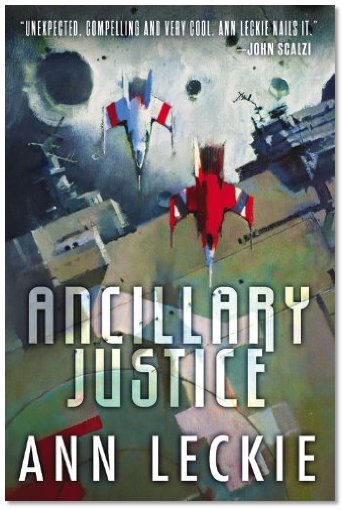
In fact I stayed up past my bedtime to finish Ann Leckie's Ancillary Justice (2013).  It's a fast read, very well written, which reminded me  throughout of an sf novel published


21 years ago, also in which much of the action is on an ice planet, featuring "characters" of gender


fluidity or neutrality, by another writer of above-average talent, Nicola Griffith's Ammonite (1992).  Both writers and their books are very smart.

What do I mean by this?

For starters, at this particularly moment, particularly in the mystery/thriller/suspense/police procedural genres, the extremely cold parts of our planet are of great interest, i.e. "nordic noir."  The latest entry into this subgenre that began rolling with the popularity of Sweden's Kurt Wallender series (both in print and as two television series -- one on Swedish tv and the other on English television starring Kenneth Branaugh) is Fortitude, where a murder is committed in small town professional scientific community in the Arctic.

The second thing I mean is how Leckie handles gender. In Justice, what is masculine and feminine, or he or she, slides all over the place There are no other markers in the for male or female than pronouns, and those pronouns seem to have quite other significance than sexual identification. The unmarking of gender as identification for sex or hierarchy is of great interest in current sf/f.

The third smart thing is that Justice is space opera. Publishers and readers alike have been wanting updated space opera for a while now, upgraded to a more current reflection of "The Way We Live Now" than the by now quaint treatment of ST and the racist, sexist  Firefly, which underneath, whether or not Whedon realized that's what he was doing, celebrates the slaveocracy rebels of the War of Southern Rebellion (1861 - 1865).

But what is smartest of all about Justice, is that it doesn't come across as smart.  By that I don't mean comes across as dumb, because it doesn't.  What I mean is that the text reads so elegantly in composition and organization, that all these elements are effortlessly there, and centered, while there's a strong plot that, like all stories are supposed to do, pulls the reader along to find out what will happen next. It doesn't draw attention to how smart it is at all.  Instead we simply experience the pleasure of its smartness.

If I had a criticism to make of Ancillary Justice it would be that Orbit, the publisher, gave it an unattractive cover.  Indeed, the cover may be what has kept me away from the book for so long.  The cover's elements are clunky and clumsy, colored with muddy grey and green tones. The cover as depicted in the photo above is of much sharper resolution and clarity of tone than on the book on my desk.


The Silkworm is the second novel featuring private investigator and Afghan war vet, Cormoran Strike, by Robert Galbraith. I didn't actually read it, but listened to it via library audio download during my workouts. The Silkworm's case is set in the publishing industry.

We encounter several novelists and editors and publishing companies, an agent or two. What is interesting to me about this is, as per usual in fiction, and I suppose naturally so, publishing as depicted in the novel is only concerned with novels -- whereas in reality, most of the publishing industry is not fiction, and profits from all forms of fiction are falling. There are a few exceptions to this, and the author of this series, who, as we all know Roberta, is in reality J.K. Rowling, is a mighty exception.

I'm not liking this second Cormoran Strike investigation as much as I did the first one. It feels more like a dutiful fill in the formula blanks for the genre, than the fresh delight that seemed to come through about everything in the first one, The Cuckoo's Calling, from entering extreme high end restaurants and boutiques who cater to the very prosperous, to packs of ravening paparazzi. This delight in exploring the new, distilling the author's own experiences of entering the world of private cars and drivers, hair stylists and designers, the deference and perks with which the celebrated are received everywhere, covered a lot of the clumsiness of composition.

This second time around, not so much, particularly the habit of preceding each chapter with a quotation from plays, mostly out of the Jacobean era of English drama. No more than the Latin quotations at the head of each chapter of Cuckoo's Calling, do these quotes seem to illuminate either character or action, or do only occasionally. They feel irrelevant, because Cormoran Strike, our protagonist, doesn't have knowledge of either Latin or the history of English literature, and certainly doesn't give a damn about either one. The epigraphs are tacked on decorations rather than integrated, graceful ornaments. Whether or not this was the author's intention, their function seems to be reader reminders that Galbraith is really Rowling, who is educated and smart. This kind of error in presentation she never made in the Harry Potter series.

I probably won't be reading any more Cormoran Strike books.  But I will read Leckie's second, Ancillary Sword -- though when I don't know, so much work, so many projects are stacking up.  Maybe on the plane to NO for the Caribbean Conference at the end of the month?

Saturday, August 9, 2014

Best Beach / Summer Vacation Read

My best summer read didn't take place at a beach, but on the university's outdoor swimming pool deck. I spent the mornings in intensive Spanish classes (two semesters in 6 weeks), nights memorizing and drilling Spanish irregular verbs, grammar and prepositions.  The middle afternoon, after a bout at the gym, it was swimming time, under the golden sun and turquoise sky of New Mexico.


That summer I read for the first time, Tolstoy's Anna Karenina.  In-between long takes of Kostya Lev's meditations, Anna's dresses, Kitty's disappointment,


Stiva and Dolly's marital ups and downs, the most exciting horse race ever written, haymaking, babies born and brothers dying -- I'd leap into the pool to cool off and swim some laps.

 It smells faintly still of my coconut-hibiscus scented tanning oil.


Anna's rise to passion and fall to suicide lasted the whole summer.

When I finished the novel, the Spanish course was finished and it was time to pack, leaving behind this paradise to New York, and a life that not only would not be centered around a university, but where winter mattered, and except for him, I knew not a soul.

That summer I was also madly, passionately in love, and living with him!

There were many adventures, felicities and infelicities, in many places, still ahead for him and me, including break-ups and separations. Then, we got married.  The adventures -- and the marriage -- are still works in progress.

Wednesday, April 23, 2014

King's Ransom - Sharon Kay Penman - Reading Wednesday

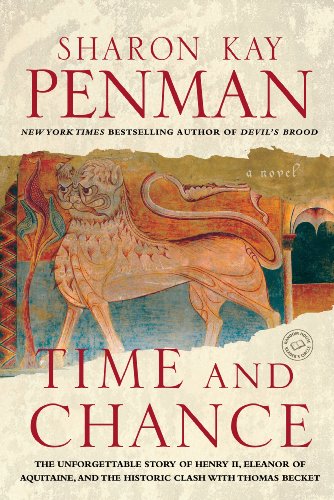
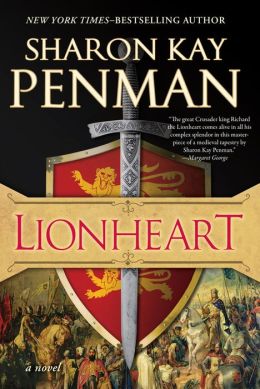
King's Ransom is the sequel to Lionheart, as well as the concluding volume in the chronological series of five historical novels by Sharon Kay Penman, a fictional narrative of the reigns of the first Plantagenets.

1982
By chance Penman began the series with the Last Plantanget, Richard III.

This was followed by what Penman has named "The Welsh Series"  -- Here Be Dragons, Falls the Shadow and The Reckoning. Fictional characters (as opposed to the historical personages such as Henry III,  Llewelyn the Great, Llywelyn Fawr Simon de Montfort) from the Welsh trilogy, and their descendants appear in the Plantagent series. As time rolls on, these figures become an ever looser net of connections among all the novels, until in King's Ransom, the fictional Welsh characters are more name checks than characters of scope within the historical events described.


1995

2002

2008


2011

2014 USA; 2013 UK
This series of meticulously researched novels has been the author's principal writing occupation for twenty years. Penman says there will be no more Plantagenet books.  Perhaps, even as fair as Penman's always been to the youngest of Henry II and Eleanor of Aquitaine's sons, as much as she has worked to understand John, she could not bear to give the disloyal provocateur of the Magna Carta -- who then, like Pharaoh, hardened his heart and attempted to go back on that contract -- his own book?

As the author herself put it, Lionheart, though entirely historically based, was a novel of the legendary Richard II, a fitting figure of courtly romances, heroic ballads and joi d'vivre.  King's Ransom is a novel that focuses on Richard the man, one who may have suffered from post traumatic distress syndrome.

The greater part of King's Ransom is directly focused upon Richard’s adventures and disasters in Europe, after leaving the Middle East. There is a long series of shipwrecks (three!) and other misadventures in his attempts to get back his own French lands after being denied safe passage from what is now Marseilles and the lands of Provence. This forces him into territories ruled by the cold and perhaps mad Holy Roman Emperor, Henry VI.  The King escapes capture by hair-breadths several times, until finally he is captured.  Though readers know how this part of the story turns out -- though it isn't at all the story of romantic ballad and novels like Ivanhoe -- the tale is as filled with suspense and tension as an adventure novel read for the first time.

How he escapes being turned over by Holy Roman Emperor, Henry VI, to his implacable enemy, Philip II of France, for prolonged torture, humiliation and inevitable death, is nail biting.  This is because Penman's deep research tells a very different story from the legend of faithful wondering minstrel.  The reader really doesn't know what will happen.  As it happens, very early, the reviled by high born English churchmen, the Bishop Ely, discovers Richard's whereabouts quickly and informs the intrepid Queen Eleanor.  Nevertheless, it takes nearly three years to get Richard back to Normandy, due to various twists, turns and factional interests that range from the Vatican, to the courts of Philip II, Henry VI and Richard's ever treasonous brother, John. In contrast to those interests, Penman does a splendid job showing just how much it was in the interest of so many -- also beginning with the Vatican -- to get Richard released.  What isn't fictional though, was the enormity of the ransom that needed to be raised -- and the consequences of such an outrageous sum for the empire Richard had inherited from Henry II.

What perhaps is fictional, but it is plausible, but cannot be proven one way or another, is Penman's sense that King Richard I's catastrophic fall from the pinnacle of the medieval world into which he was born, to being a prisoner stripped naked of every royal prerogative, had a permanent effect not only on his physical health but his core identity.

This long arc of Richard's ordeals that begin even before he attempted to sail back to Europe, makes this final volume a more intimate presentation of a medieval monarch than in any of the previous Plantagenet novels. As well,  the cast of characters around the royal protagonist are compelling, particularly, as per usual, Queen Eleanor, who even after her Lionheart dies, still has major work to do, and Richard's sister, the former queen of Sicily, Joan -- who experiences a romance worthy of one of the courtly ones composed back in the courts of her mother as well, in the court of her future husband, the Count of Toulouse.

Though Penman has long made convincing argument out of historical records that Richard was not gay, she still has not managed to solve the question of Richard's marriage to the unfortunate Berengaria of Navarre.  She investigates that the Lionheart's seeming disinterest in his Little Dove (his pet name for his Queen), which made the disaster of no heir of his own body is connected somehow to his experience of being imprisoned.  But again, there is no way to know this certainly.

With the end of Lionheart and Eleanor both, it appears Penman has come to the end of the Plantagents in whom she is so passionately interested that she spent years researching each volume in this series.

The author has left her readers with perhaps the most complete, comprehensible portrait of one of the most fascinating people to have lived, whose life adventures, like those of her son, inspired one courtly romance after another.  There never was a queen again, quite like Eleanor of Aquitaine.