LINES OF THE DAY

". . . But the past does not exist independently from the present. Indeed, the past is only past because there is a present, just as I can point to something over there only because I am here. But nothing is inherently over there or here. In that sense, the past has no content. The past -- or more accurately, pastness -- is a position. Thus, in no way can we identify the past as past." p. 15

". . . But we may want to keep in mind that deeds and words are not as distinguishable as often we presume. History does not belong only to its narrators, professional or amateur. While some of us debate what history is or was, others take it into their own hands." p. 153

Silencing the Past: Power and the Production of History (1995) by Michel-Rolph Trouillot

Showing posts with label gender. Show all posts

Thursday, November 16, 2017

Black Sails and Treasure Island + Outlander and Voyager

     . . . . Black Sails (2017) Season Four, final season was very good.  At this moment I'm still wondering this may be the most historically accurate action adventure period presentation dramatized on screen (and read in most historical fiction).  Cuba! Views of its bay and fortalezas and habana vieja that I too have seen and been to! Invasion of Nassau to put down the motley pre-era of Revolution crew of pirates, self-emancipated slaves, free blacks, indentures and the lower classes in general – as the greatest threat to civilization.

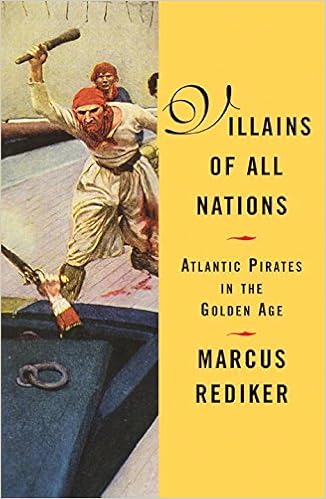
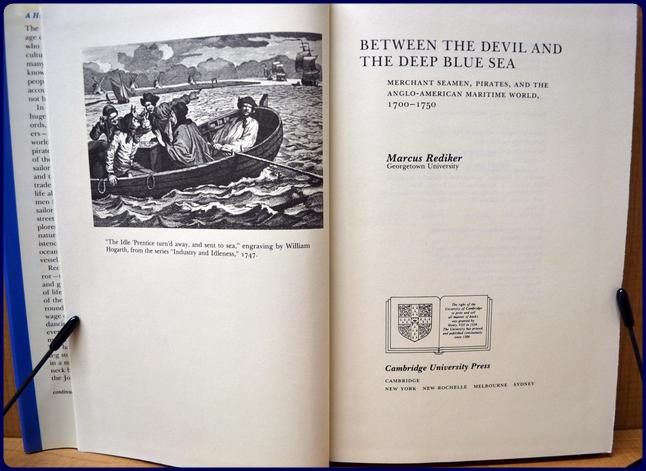
The Black Sails writers really read Marcus Rediker it looks like.

A deluxe 1886 edition of Robert Louis Stevenson's Treasure Island included a treasure map.


 This isn't to say that some liberties with historical facts have not been taken -- for instance the Peruvian shipment on the pirated Spanish vessel, Urca de Lima, was made of valuable commodities such as hides and chocolate,  but not that ever more powerful chimera of gold! gold! gold! which is the ever more enthralling, ever more unattainable source of the stories of  Robert Louis Stevenson's Treasure Island and Starz's Black Sails.  But, over all, throughout, Black Sails tacks remarkably close to what historical facts of Nassau's early history we know.


Guess who . . .  he didn't begin like this.


So it matters more for Spain and Britain to cooperate in putting them than the current war between their rulers. Their sheer outrage that anyone not of the ruling classes should attempt to change anything is brilliantly emoted.

These outsiders' ideals of anti-slavery, equality and fairness, have been bubbling along for the previous season, though sometimes submerged either by the imperious demands of survival, which means financing survival, and rivalries and conflicts of interests of all sorts.  In the final season both the ideal, inter-personal conflict and greed are at center of every action.  In the last episodes the audience begins to glimpse through the current action, the characters as we first got to know them in Stevenson's Treasure Island.


Professor Marcus Rediker


After watching the end of the series, I re-read Treasure Island, on Gutenberg since Black Sails is the prequel to the stories of all these characters long and long before Jim Hawkins enters the picture at his mother's inn, the Admiral Benbow, the black spot and all the rest.  Needless to say, in Black Sails, everybody was much much younger and very good looking, which they generally are not in Treasure Island, except perhaps that charming, enticing storyteller we meet as one-legged Long John Silver, with a parrot named Flint (Captain Flint is the central protagonist in Black Sails) -- and many of them had ideals of freedom, liberty and equality, escape from the real evils of the poor and powerless  attempting to create an alternative to Europe's ancien régime.

But in the end, as stolen treasure does, the Urca's fictional gold destroyed them all. And now they're old, so old, if not actually you know,  like Captain Flint, dead. Yet they're still chasing after that damned treasure for which  that hundreds if not thousands have already lost their honor,  blood and lives.

It had been a long time since I'd re-read Treasure Island.  What isn't different though -- and this is brilliant of Black Sails, considering its unique social and political concerns (also so much part of the age), which are seldom if ever found in adventure entertainments --  from the first pages already, the evil miasma of the Urca treasure contagion is in play.  Hawkins, the boy, of course, like we kids who are much of Stevenson's targeted audience, can't see it.  But the boy can see danger, far more quickly than the adults do.

This particularly struck me in terms of Starz's Outlander, both because I just finished re-reading Voyager, the third novel in Diana Gabaldon's historical romance series from which this current season is adapted, and the latest episode takes place at sea, sailing to Jamaica. The ships used in this episode are among those that had been constructed for Black Sails. 
Voyager's action is located in the spread of 1745 - 1765, only a few decades after Black Sails in 1715.  The African slave trade, slavery and indenture slavery were reaching their peak during this entire arc. This is something that the pirates of the era understood thoroughly.  The more oppressed the bottom, i.e. slaves, can be, the more oppressed are every class above them.

Voyager was the book in the series after which I quit, because none of it was working any more. The arbitrary artificiality of the obstacles being put int the way of the twenty years older Claire and Jamie, to have a life without running, and lots and lots of their happy, happy sex is preposterously obvious. This is the point where the series goes off the rails in the books, and probably does on television too.  It's all more likely due to the author's embarrassing caricatures of non-white characters and her ignorance of the cultures in the Caribbean in general.

The author's determination to keep this a romance, is, in the end, makes the effort only about the personal, and by extension to family and clan's well-being, which are still personal concerns.  In Black Sails, romance was not the point.  Sex wasn't even the point., though there was a lot of it, some, unwatchably violent and abusive, detailed and prolonged. Though lesbians were not punished for being lesbian,  gay men had to keep their love a terrible secret, which such demand by society and law at large, has effects on the development of character, thinking and action.

Loyalty and companionship matter of course, but most of all for some, at least, among the Black Sails' crews, there were those who had larger loyalties to ideals of social and political justice, for women and men, for black as well as white. Not only is Black Sails a prequel to Treasure Island, but it's a prequel to revolution, located as it is on the eve of the Era of Revolutions that set the whole world on fire (with help from that anti-revolutionary, Emperor  Napoleon) -- Washington, George Danton, Toussaint L'Ouverture, Símon Bolívar.  But the Outlander books, really about Claire and Jamie's ROMANCE, and  her family and their romance,s as more and younger members of her family arrive in the past from the future, are missing this dimension.

Perhaps that makes the contrast between Starz Outlander and Black Sails all the more stark: Outlander's Voyager turned us cranky and impatient; Black Sails got ever more compelling as the seasons and episodes rolled on.

Friday, October 14, 2016

Hug In the Face Of One Of Our Nation's Ugliest Weeks

This has been a very bad week. All of us fortunate to have loving, supportive, decent partners and friends, need to hold each other more than usual, hold each other closer than usual, kiss each other more often than usual, tell each other what a good people we are, and how glad we are to have us in our lives.
Judging just by the street* women are deeply upset by this week, hurt and depressed, on the behalf of our daughters, sisters, mothers ourselves.  Everyone here is talking about it.  Of course we who lived long in this city have known this man (and his father before him) was the most creepy and disgusting of creatures for all his life, thanks to his always being in the news one way or another, but he's now thrown the shyte that is himself all over the world, pretending he is our country.


Beyond that though, this has been a horrible week for decent males everywhere. When I think I'm ashamed for our country, it's nothing to how el V, for instance feels.  And I'm hearing good, decent men all over the street talking about this too, though fairly quietly, almost with embarrassment.  With real sadness.  They are depressed too.

But we can help each other.  So hug and kiss and express our respect and affection for each other in every way that works.

I am so grateful for all the wonderful, decent, brilliant, honest, talented, funny people in my life -- whichever gender, whichever skin tone, whichever religion, whichever language.

----------------

*   Here, "street' means conversations participated in and overheard while buying ingredients for pasta at Raffetto's (est. 1906!), walking to the dry cleaners, checking out library materials, sitting in the Bistro for a nightcap, riding the subway to Lincoln Center Jazz** looking at greens in the Morton Williams produce section, overhearing the guys at the deli talking with the punters, etc. It doesn't mean media of any kind.  It means face-to-face real life personal contact and experience.

~~~~~~~~~~~~~~~~~~~~~~~~~~~~~~

**  Lincoln Center's Jazz Club is located in the Time Warner Building on one of the slices of pie that makes up Columbus Circle -- right across the avenue where is located one of the towers branded with the name of the king of narcissism and abuse. This was Wednesday night, and the whole place all the way to the top dead dark, except for a few lights in a few windows on the bottom three floors. No action going on there at all. Nor was there any at the branded with his name hotel down the street in my own neighborhood. This is not the same as 'his' tower, though, where women had been protesting this week.  The orange stalin has splattered many a very ugly NYC building with his name.

Wednesday, February 11, 2015

Reading Wednesday - Ancillary Justice & The Silkworm

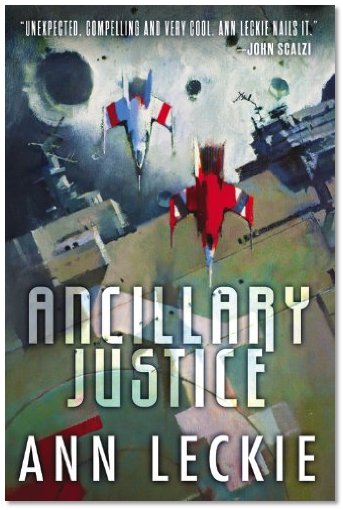
In fact I stayed up past my bedtime to finish Ann Leckie's Ancillary Justice (2013).  It's a fast read, very well written, which reminded me  throughout of an sf novel published


21 years ago, also in which much of the action is on an ice planet, featuring "characters" of gender


fluidity or neutrality, by another writer of above-average talent, Nicola Griffith's Ammonite (1992).  Both writers and their books are very smart.

What do I mean by this?

For starters, at this particularly moment, particularly in the mystery/thriller/suspense/police procedural genres, the extremely cold parts of our planet are of great interest, i.e. "nordic noir."  The latest entry into this subgenre that began rolling with the popularity of Sweden's Kurt Wallender series (both in print and as two television series -- one on Swedish tv and the other on English television starring Kenneth Branaugh) is Fortitude, where a murder is committed in small town professional scientific community in the Arctic.

The second thing I mean is how Leckie handles gender. In Justice, what is masculine and feminine, or he or she, slides all over the place There are no other markers in the for male or female than pronouns, and those pronouns seem to have quite other significance than sexual identification. The unmarking of gender as identification for sex or hierarchy is of great interest in current sf/f.

The third smart thing is that Justice is space opera. Publishers and readers alike have been wanting updated space opera for a while now, upgraded to a more current reflection of "The Way We Live Now" than the by now quaint treatment of ST and the racist, sexist  Firefly, which underneath, whether or not Whedon realized that's what he was doing, celebrates the slaveocracy rebels of the War of Southern Rebellion (1861 - 1865).

But what is smartest of all about Justice, is that it doesn't come across as smart.  By that I don't mean comes across as dumb, because it doesn't.  What I mean is that the text reads so elegantly in composition and organization, that all these elements are effortlessly there, and centered, while there's a strong plot that, like all stories are supposed to do, pulls the reader along to find out what will happen next. It doesn't draw attention to how smart it is at all.  Instead we simply experience the pleasure of its smartness.

If I had a criticism to make of Ancillary Justice it would be that Orbit, the publisher, gave it an unattractive cover.  Indeed, the cover may be what has kept me away from the book for so long.  The cover's elements are clunky and clumsy, colored with muddy grey and green tones. The cover as depicted in the photo above is of much sharper resolution and clarity of tone than on the book on my desk.


The Silkworm is the second novel featuring private investigator and Afghan war vet, Cormoran Strike, by Robert Galbraith. I didn't actually read it, but listened to it via library audio download during my workouts. The Silkworm's case is set in the publishing industry.

We encounter several novelists and editors and publishing companies, an agent or two. What is interesting to me about this is, as per usual in fiction, and I suppose naturally so, publishing as depicted in the novel is only concerned with novels -- whereas in reality, most of the publishing industry is not fiction, and profits from all forms of fiction are falling. There are a few exceptions to this, and the author of this series, who, as we all know Roberta, is in reality J.K. Rowling, is a mighty exception.

I'm not liking this second Cormoran Strike investigation as much as I did the first one. It feels more like a dutiful fill in the formula blanks for the genre, than the fresh delight that seemed to come through about everything in the first one, The Cuckoo's Calling, from entering extreme high end restaurants and boutiques who cater to the very prosperous, to packs of ravening paparazzi. This delight in exploring the new, distilling the author's own experiences of entering the world of private cars and drivers, hair stylists and designers, the deference and perks with which the celebrated are received everywhere, covered a lot of the clumsiness of composition.

This second time around, not so much, particularly the habit of preceding each chapter with a quotation from plays, mostly out of the Jacobean era of English drama. No more than the Latin quotations at the head of each chapter of Cuckoo's Calling, do these quotes seem to illuminate either character or action, or do only occasionally. They feel irrelevant, because Cormoran Strike, our protagonist, doesn't have knowledge of either Latin or the history of English literature, and certainly doesn't give a damn about either one. The epigraphs are tacked on decorations rather than integrated, graceful ornaments. Whether or not this was the author's intention, their function seems to be reader reminders that Galbraith is really Rowling, who is educated and smart. This kind of error in presentation she never made in the Harry Potter series.

I probably won't be reading any more Cormoran Strike books.  But I will read Leckie's second, Ancillary Sword -- though when I don't know, so much work, so many projects are stacking up.  Maybe on the plane to NO for the Caribbean Conference at the end of the month?

Wednesday, July 23, 2014

It's Reading Wednesday

However, due to the Work Trip Travel from Hell, and all the issues, including computer woes, related to that, I've read nothing to speak of since July 10th.

On the 10th I read enough of the historical  "police mystery" novel (Paris, 1870; flashbacks to the War in Algeria, which would have been 1848, which doesn't fit entirely well with the age of the Parisian detectives in 1870), Baudelaire's Revenge. by Dutch novelist, Bob van Laerhoven.  I returned the book to my carry on about 2/3 of the way through, with no intent to finish it. The women are grotesques, who, morally rotten, are rapidly rotting physically. They are fairly implausible characters, though a certain segment of Parisian men such the Goncourt Brothers, and cosmopolitans such as Dickens and his companions, might view women as such surrealist, hyper-active degenerates. This reader, on the other hand, felt in dire need of mental and emotional cleansing. P
articularly this is so, as political, social, cultural and material history all inform us that women, along with children and others without legal identity, were the most powerless members of society. What they did, what they were, were actively determined by men, their poverty and lack of other opportunities.

Sigh.


Such choices on the author's part for female characters make the publisher's choice, to portray on the cover, a figure who resembles so closely the title screens of the televised versions of Agatha Christie's Poirot, figure all the more inexplicable.

There are constant infelicities of translation on nearly every page.


So I've read nothing but that horrid book the entire time, with the exception of re-reading for the firswt time in a long while, some splendid pages of William Faulkner's The Unvanquished -- o, how he plays with time, language and pov!

However, today, not only did the splendid UPS fellow deliver my Tony Lama boots* but serendipitously, two novels were delivered by the equally nice Fed Ex fellow (neither of whom are responsible for what it is that they bring me):


1)  Deborah Harkness's concluding volume, The Book Of Life, of herAll Souls Trilogy;


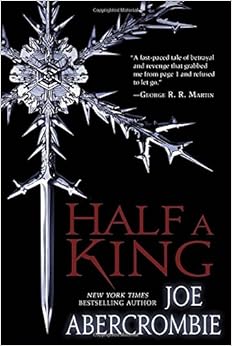
2)  Joe Abercrombie's Half a King, which is probably only the first installment of a series, and a YA series at that, though there's nothing in jacket copy or pr that says so. The only clue is the text's font size -- much larger than one sees in adult targeted readers.

Again, for this reader, it's more than annoyance when nothing informs me that a book is YA, Romance, self-published or religiously themed -- and by golly, sometimes all of them at the same time!

Grrrrrrrrrrrrrrrrrrrrrrrrrrr.

--------------------

*  Which, with a few other high points -- all about the work -- made the Texas trip worth doing.

Thursday, February 20, 2014

Man Friends

An historical novel that would be fun to research and write -- if I were to go in that direction -- is one centering american men's friendship, the language and practice, from the early years through the Civil War. If we see loving relationships between fathers and sons in such a novel, that would be value added.


Without even trying I can think of several bold-faced historical pairs of such friends.

The tenderness in the language with which men of those decades speak of their friends, and their behaviors a joyeous thing.  These are very different from what these days goes by the rubric "bromance." The very word -- tender -- will not be coming out these boy-children's mouths, but was commonly spoken by men about each other's friends in those days.  In letters and journals of these decades you see the men write phrases as he performed such-and-such an act on the behalf of a male friend "as tenderly as a woman," for instance.


It's interesting to google male friendships nineteenth century or 1840's and the majority of the images that come up are two women or a man and a woman.

Friendship is one of the most precious and wonderful of all experiences.  It seems to me that perhaps it was easier for men to be friends in some earlier eras than it is now.  This might be true of women as well: that they could have life-long tender friendships more easily in another time.  I don't know enough about these matters to know.