LINES OF THE DAY

". . . But the past does not exist independently from the present. Indeed, the past is only past because there is a present, just as I can point to something over there only because I am here. But nothing is inherently over there or here. In that sense, the past has no content. The past -- or more accurately, pastness -- is a position. Thus, in no way can we identify the past as past." p. 15

". . . But we may want to keep in mind that deeds and words are not as distinguishable as often we presume. History does not belong only to its narrators, professional or amateur. While some of us debate what history is or was, others take it into their own hands." p. 153

Silencing the Past: Power and the Production of History (1995) by Michel-Rolph Trouillot

Showing posts with label SF/F. Show all posts

Wednesday, October 19, 2022

Is This the First US Science Fiction Novel? The Partisan Leader

      . . . .  Science Fiction, published very early in the United States of America, is a confederate novel by a Virginian, who was a passionate advocate for slavery.  


The Partisan Leader (1836) by Nathaniel Beverly Tucker (male; 'Beverly' is a common male surname and first name in earlier decades among the Aristo class in VA, SC, etc., particularly those descended from pre-Independence VA ), under the pseudonym of Edward William Sidney.  After losing election campaigns in two states, Missouri and Virginia, Tucker's well-connected friends and family got him appointed as professor of Constitutional Law at William and Mary -- his father held the position before him. As we see, this gave Tucker copious free time to write novels (while waited on hand-and-foot by enslaved labor): his first novel, George Balcombe was also published in 1836. *. 

He employed his additional leisure time to write political pro-southern slave state secession, economy and power tracts. Thus, as one likely would expect, this, if not the first, one of the first sf novels -- the novel is set 13 years in the future from the year in which it was published -- would be a romance centered on Virginia, about slavery,  a successful Southern secession from, and confederation against, the dastardly North, which Happy Ending turns the entire Western hemisphere into a vast slave state.

Tucker lived in those halcyon decades in which the Southern Plantation class ruled the Federal government from the White House all the way down, planning to expand slavery as the economic system throughout the Western Hemisphere, while defending it from the heinous designs of Britain, "the Great Apostle of Emancipation”. This 'design' was to destroy the Southern cotton economy in favor of their own in India (which Britain did not have and wasn't trying to have then), while invading the United States with an army of Africans and those freed from bondage out of Cuba, Haiti, Brasil, etc..


One of Tucker's  best friends was Virginian, Abel P. Upshur, who was contributing his bit to expansion and defense by building a navy that could successfully take on Britain's.  The photo above is the USS Abel P. Upshur (DD-193), a Clemson-class destroyer in the service of the United States Navy and United States Coast Guard until -- IRONY!  IRONY! IRONY! --  transferred to the United Kingdom in 1940. During World War II, she served in the Royal Navy as HMS Clare.

The Partisan Leader can be read on the Documenting the South website here

* Incidentally, as a point of interest in the history of American Literature, it was reviewed by this southerner, Edgar Allan Poe.

~~~~~~~~~~~~~


     . . . . This Vast Southern Empire: Slaveholders at the Helm of American Foreign Policy (2016) by Matthew Karp "illuminates this era of American history with an intelligent survey of those Southern politicians and their ambitions, both at the regional level and the federal level. “By the middle of the [19th] century,” he writes, “southern masters ruled over the wealthiest and most dynamic slave society the world had ever known.”

Their leaders were nationalists, not separatists. Their “vast southern empire” was not an independent South but the entire United States, and only the election of Abraham Lincoln broke their grip on national power. Fortified by years at the helm of U.S. foreign affairs, slaveholding elites formed their own Confederacy—not only as a desperate effort to preserve their property but as a confident bid to shape the future of the Atlantic world.

 Calhoun's policy was to insure the power of the agrarian South by limiting the power of the federal government. "That section distinct from the rest of the nation, however, eventually aimed to create its own Confederate States of America and then export that confederacy. The result would be a Southern Empire."

The consequence? The failure or success would depend upon southern statesmen advancing that world through United States foreign policy. “Few mid-nineteenth-century Americans,” he writes, “were more deeply engaged with international politics than southern slaveholders.” Those in positions of power, southern elites, also kept the international politics of slavery under constant surveillance, “tracking threats to slave property . . . monitoring oscillations in global attitudes toward emancipation.”

"Given that global perspective, there was little in the southern “institution” that was “peculiar.” During those antebellum decades, the blunt facts illustrate a vise-like grip on the presidency, the cabinet, and the lower levels of federal administration. Professor Karp quotes Iowa Congressman Josiah Grinnell, who observed that during those antebellum years southern slaveholders held the Secretary of State office for two-thirds of the time."

In their minds, Great Britain’s 1833 Slavery Abolition Act was part of the nefarious design to destroy them.  This accounts for the region's adamant anti-British policy in all things up until the War of the Rebellion.

I do believe though, the author is mistaken when he describes these Southerners as "cosmopolitan, highly educated and sophisticated -- because their fundamental tenets were made of contradiction. They were firmly convinced Britain schemed to destroy them economically for it's own economic benefit.  Yet, these leaders also assumed, presumed and expected Britain to support and assist and finance their Great War of the Rebellion. It could have no choice, they were certain, because Britain's industry depended on King Cotton.

Goes to show, again, that the current crops of racist conspiracists, delusionists, climate and election deniers, disseminators of lies and fakery and outright insanity come from a vast pedigree in our national history of determined violence to rid themselves of government and have their own preferred systems of cruel, selfish greed.


Wednesday, March 24, 2021

Reading and Listening: Black Nerdom

      . . . . In a sad way, because in this absolute white supremacist historical nation, the common denial that this subject even exists is as normal as mass gun fire massacres. But though I am anything but a nerd of any kind, much less one who is Black, I still feel a sense of personal skin in this game. 

This is due to an incident that happened at the last sf/f gathering I attended, which happened to be a reading, in the early aughts of this, the 21st Century.*  A White man, ended threatening me with rape and murder because he insisted that Black people did not and never did have anything whatsoever to to do with sf/f and its peculiar** visions of the past or the present or the future. He slammed a chair on a table when I tried to draw attention to Afro Futurism and African American musical vision in funk, jazz,  including as early with, but not limited to, Sun Ra.


 He screamed I was a liar, that I'd made-up Afro Futurism.  There was no such thing, and certainly not in Science Fiction and Fantasy.  For one thing HE had never heard of it, and he knew science fiction and fantasy inside out,  because he was now 50 and had been reading it all HIS life.

Alas, we are certainly still holding on with fang and claw to that peculiar* white version of sf/f -- and all the other related pop cultural expressions and experiences.


Long read article in the New York Times Magazine.  As the NYT is paywalled, here is the url:

https://www.nytimes.com/2021/03/24/t-magazine/black-nerds-culture.html

The Black Nerds Redefining the Culture by Adam Bradley

"By pushing back against centuries-old stereotypes, a historically overlooked community is claiming space it was long denied."

The piece is a fine run-down of pop culture sf/f nerdom and Black expression.  However, this is my favorite part, which is equally essential information for White nerds who are BLM allies:

....A BRIEF HISTORY of Black nerds dates back to before the Revolutionary War, to Phillis Wheatley, the young Black woman born a slave who was the first person of African descent to publish a collection of English poetry — only to have to prove her authorship, as well as her knowledge of the works of Homer, Ovid and Virgil, to a panel of “the most respectable characters in Boston,” as the 18 white men described themselves in a note “To the Public” that introduces her “Poems on Various Subjects, Religious and Moral” (1773). The Black nerd also lives in the pages of Charles W. Chesnutt, whose short-story collection “The Conjure Woman” (1899) reads like a late 19th-century iteration of Peele’s “Get Out,” where the resources of the Black imagination overcome the sunken place of white mythmaking and domination. And it lives in Ralph Ellison’s “Invisible Man” (1952), whose nameless Black male protagonist is a self-described “thinker-tinker” writing the story of his life from his underground lair fitted with precisely 1,369 light bulbs; even the novel’s title evokes H.G. Wells’s science fiction classic “The Invisible Man” (1897), repurposing invisibility as a metaphor for the erasure of Black identity under the racist white gaze....


Alas, unmentioned are two early expressions -- these would be very early even if the author was White -- of sf/f imaginings, Iola Leroy, or Shadows Uplifted (1892) by Frances E. W. Harperand, even prior to the War of the Rebellion and abolition, Blake; or The Huts of America: A Tale of the Mississippi Valley, the Southern United States, and Cuba (1859) by Martin Delany.


(Anyone who knows me or el V can see why this discovery excited us so much.  Ha!)

~~~~~~~~~~~~~

In the meantime, even though The American Slave Coast has been out of print in print for months, due to the covid-19 aggravated shortage of print and production plants, Robert Christgau was moved to give the book his current Substack space, And It Don't Stop.  He told us yesterday, when informing us it was going up, that he'd been working on this 'stack' for weeks.  It also took him years to read Slave Coast because the content is so painful to read.  But it is a permanent, large, part that is our nation's history. 

~~~~~~~~~~~~~

*  This incident had a great deal to do with my removal of self from the field.


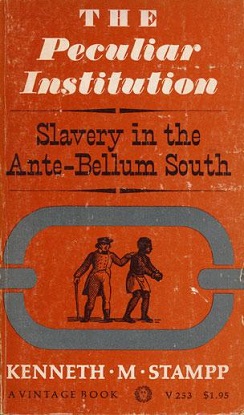
*See the classic history by Kenneth E. Stampp, The Peculiar Institution: Slavery in the Ante-Bellum South (1956). The book was revelatory still at the end of the 1980's when I read it first.  It is still most worth reading, particularly if one is beginning a program of self-education into these matters, in hopes of being a better informed ally of BLM.


Monday, March 30, 2020

This Is Why There Are So Few William Gibson

     . . . . This is the difference between third rate sf/f writers and a Bill Gibson. Neither Bill nor, say, would a Jack Womack, have ever said anything this callous, this ignorant and this stupid, and certainly not in public for publication, much less brag about bringing the virus to a place where, so far, it isn't.

Man, even in these times these hacks couldn't resist the idea of promoting ME ME ME ME ME. 


Friday, January 26, 2018

The Le Guin Cat

     . . . .  Pard must notice the Absence.


                                        From ULG's blog on Bookview: Go here.

Saturday, November 5, 2016

Requiem For Thousands of BBSes Gone

     >>> Those who had the experience and those who didn't -- a generational as well as digital divide.

Images weren't possible, which had so much with their demise.

Ah, the GEnie SFRT . . . .
The four Science Fiction RoundTables (the SFRT): the official online home of the Horror Writers Association and the Science Fiction and Fantasy Writers of America before the Internet became popular (SFWA members, who were all published authors, received free access to the SF RoundTables) {J. Michael Straczynski developed the show Babylon 5 while on the SFRT and maintained his e-mail presence throughout the run of the show}

Not to mention the Buffy discussion group!

In The Atlantic, "The Lost Civilization of Dial-up Bulletin Board Systems."


Wednesday, August 10, 2016

Reading Wednesday -- What We CAN'T Read

Science Fiction and Fantasy short fiction written by African American authors is what the average sf/f reader won't be able to read.


Fireside's  Fiction’s report, #BlackSpecFic, finds less than 2% of SF stories published in 2015 were by black writers; Black science fiction writers face 'universal' racism, study finds.

Full data Excel spreadsheet of African American stories can be viewed here  found in Sf/F short fiction publications, including Analog, Beneath Ceaseless Skies (still despise that name!), etc.
The report, published by the magazine Fireside Fiction, states that just 38 of the 2,039 stories published in 63 magazines in 2015 were by black writers. With the bulk of the industry based in the US, more than half of all speculative fiction publications the report considered did not publish a single original story by a black author. “The probability that it is random chance that only 1.96% of published writers are black in a country where 13.2% of the population is black is 0.00000000000000000000000000000000000000000000000000000000000000000000000000000321%,” says the report.

 The report, with links, that includes accompanying essays, here.
Author Troy L Wiggins wrote in another accompanying essay that: “The truth is that I have a better chance of being wrongfully convicted of a crime than I do of selling a piece of short fiction to a major speculative fiction magazine.”
This situation is just, just -- well there are no words to describe what this situation is, except three.

Thursday, May 12, 2016

Genre Mashup -- Thriller + Fantasy

How does a writer reconcile satisfactorily two different genres with different narrative demands?


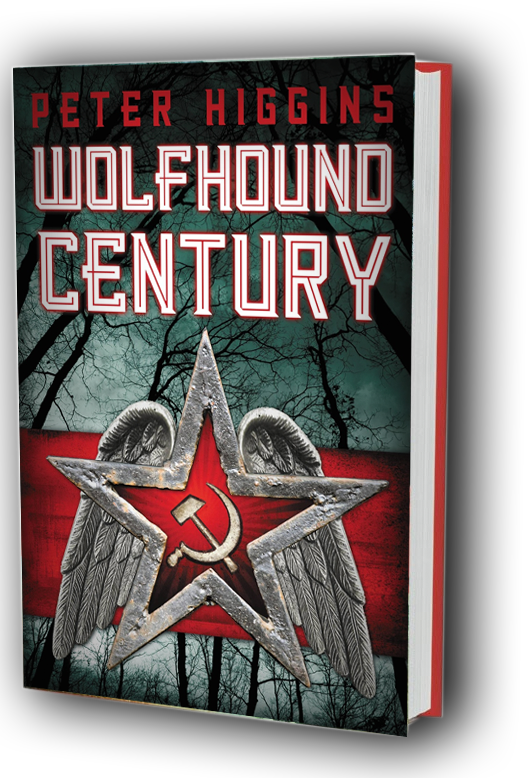
Peter Higgins writes about the challenges bringing together the colliding thriller genre and fantasy genre elements -- from structure to pacing to fantastic vs realistic in his Wolfhound Century trilogy fantasy modeled on Soviet Russian history.

As an example of what Higgins learned:
I soon realised it wasn’t just the diverse story elements that were in constant creative tension, it was the genres themselves. Fantasy and thriller are two distinctly different ways of thinking and imagining. They stretch and tear and illuminate each other, and I was constantly working to keep them in balance. Thriller wants to press on and keep the tension high, fantasy wants to linger and explore; thriller wants to end decisively, fantasy wants to go on expanding forever. . . . 
Free imagination versus rules and control: that’s one way of conceiving the collision between thriller and fantasy. Thriller is about the logic of conventions: plot, believability, recognisable character types, mysteries that have hidden solutions, resolutions waiting to be uncovered. As a writer of thrillers, you have to follow the rules or it just doesn’t work. Fantasy is otherwise. A fantasy story, once it announces itself as such, can do anything it wants. It can say anything and go anywhere. Bring back the dead. Cure any sickness. Animate any inanimate thing and give it a voice. In fantasy, you can take any pleasure you like from anything you can think of. I found that fantasy wants to break thriller apart: it wants to split the carapace, disrupt the predetermined plot machine and crack open an inexhaustible well of narrative possibility. Refreshing and repurposing, fantasy unlocks the strangeness, plenitude and imaginative wealth inside the thriller world.
Beyond this, however, Higgins goes on to explicate why he thinks these two genres together are successful in his work because the religious, political and cultural history of Russia are by heritage used to the fantastic insertion into the daily mundane reality.  In other words he didn't just go, o wouldn't it be cool to have zombies run around in Elizabeth Bennett's village! Which doesn't work for a satisfying reading experience, but instead is so preposterous as to be stupid -- unlike Wolfhound Century --  because that's not how that culture and history behave -- as Austen herself illustrates in Northhanger Abbey.

The three volumes are titled Wolfhound Century (2013), Truth and Fear (2014) and Radiant State (2015).  Published, I believe, by Orbit UK and Orbit U.S.

Wednesday, December 30, 2015

The Imperious Drive


This last week Antipope's Charlie's Diary examined "Fantasy Shibbolths" here.

Earlier this month Charlie's Diary took on "Science Fiction Shibboliths" here.

In the course of both of these articles and the discussions of the subject matters that follow, empire, imperialism and colonialism were unavoidable topics.

Yet we get this silly article about SF/F in the LA Book Review here, that complains the person from part of the former UK empire is not employing the correct terms to talk about SF/F.  Both writers, the subject of the criticism and the critic, miss the really important points that writers of sf/f  such as Charlies don't.


Empire, above.

Empire, below.


Fantasizing that sf/f -- or any pop culture -- saves the world is alike to living in an imperialist theme park because the default of the field is always empire one way and another. It's impossible to argue that steampunk isn't about class and empire, though the field is to be applauded in fact on how many diversities of empire it can envision.

Which is why even an article about the #1 UK television baking show speaks of it in terms of the yearning for empire even in desserts and faux competition here (NY Times article so use one's paywall work-around of choice).

Quote:
It’s astonishing to think that not even a century ago, Britain was the largest, most effective and arguably the most brutal empire the world had ever seen — one of the fundamental political institutions that structured the entire world. This might explain why British national identity, such as it is, continues to manifest itself in signifiers left over from the days of Empire: gin, tea, cricket, flags, those wretched “Keep Calm and Carry On” posters, all of them now zombified and divorced from their material basis. Their appeal is the dream of an endless summer of Pimm’s, bowls and thwarted romantic expectations on the lawn of a great country estate, as if this lifestyle could ever be made possible without the violent exploitation of around one-third of the population of the earth. Ten years ago, adorning oneself with these signifiers might have been considered a somewhat alternative statement. Since then, though, they’ve gained a great deal of popularity, to the point where they’re firmly established in the mainstream of middle-class culture in the British Isles.
For sf/f, telling doncha think, the author's use above of "zombified?

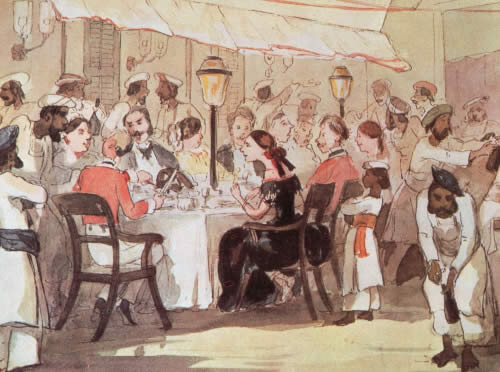
Which brings one to another new restaurant that has opened in the neighborhood, that largely and loudly beckons the truly non-historic consciousness of the young tourists in their deluded fantasy of finding NYC's historical golden past of of a hip and happening underground -- a cultural rebellion of the above ground fortunate --proclaims itself as serving up an authentic colonial Indian food experience (owned by recent immigrants from either Pakistan* or -- India). Is this a sign of the desperate times in which the underground, the vast majority of the world live, that the formerly colonialized too feel it necessary to mine the hip hip hooray above ground colonial golden past of empire, in order to survive in a new world.  Will we be seeing the Native populations of North America open theme park restaurants celebrating the fun and delicious era of the Trail of Tears?

------------------------

*  Here it has been noticed that often restaurants owned by people of Pakistani origin bill themselves as "Indian" because this designation is understood more easily by the young and the tourists who are honestly ignorant of both history and geography.

Tuesday, August 25, 2015

Interview With Samuel R. Delany

"The award-winning novelist discusses the intersection of race, sexual identity, and science fiction. By Cecilia D’Anastasio"

Among the questions D'Anastasio asks is this one:


CD: You have said, “For better or for worse, I am often spoken of as the first African-American science-fiction writer.” What did you mean by that?

Delany has a long and interesting response.  Here's a pull of a single paragraph in this response:
 ". . . . But another set of ghosts are needed to make our own discussion here make sense—ghosts who come from the genre (and I used the word advisedly) we call “the literary.” For an idea of how much literature has changed since I first entered the field as a writer in 1962, or perhaps when, in 1966, I attended my first science-fiction convention in Cleveland, consider first what the academy that gives us our sense of what literature is teaches today—and then consider how that differed from what it taught in 1967. In that year, there were no virtually black studies classes (much less programs or departments); there were no women’s studies classes or programs, and no gay studies or queer studies classes or programs."

After reading that paragraph, I sat and thought about it for a long time. This is called living history, and Delany is very aware of doing so.  Even the universities today aren't what they were when black studies, women's studies, gay studies, etc. were founded.

Checking out the interview is worthy it just to see the the very fine James Hamiltonphoto-portrait of Delany that illustrates the interview at the top.

Saturday, May 9, 2015

Film - Ex Machina - Spoiler Free

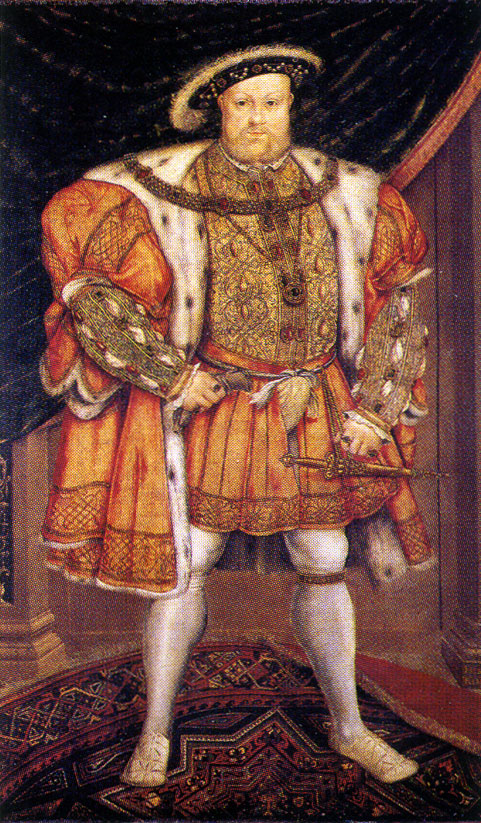
Ex Machina, an sf film that has been touted more than once as the best film to be released so far in 2015, opened here some weeks before last week's national roll-out. I saw it soon after PBS began airing Wolf Hall, with which Ex Machina has more than a little in common with Henry VIII's quest for the perfect woman/queen/wife, who all turn into disappointments, sooner, usually, than later, with the exception of Jane Seymour, who quickly provided the king with a son and then removes herself by selflessly dying.

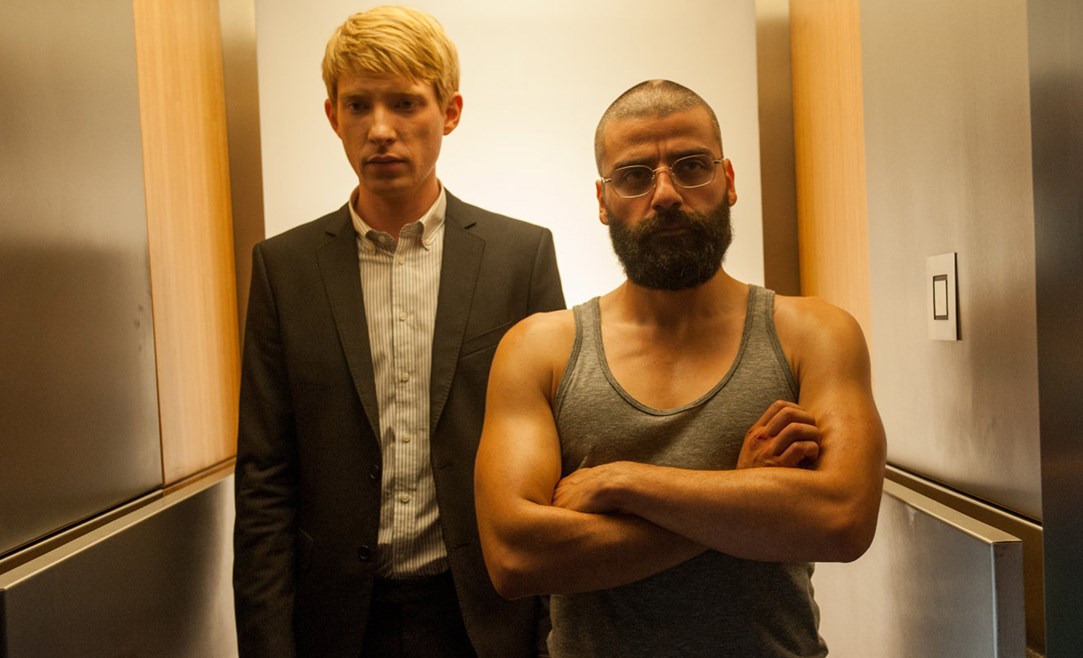
Though Ex Machina's Nathan, king of technology, has a different coloring, his build resembles Henry VIII
Caleb, with his employer, the genius god Nathan. Nathan partly constructed Ava the AI via Calebs porn preferences, which he suveilled and mined, in order to make Ava's Turing Test as complex as possible.
However, Ex Machina and Wolf Hall share another quality, which is male rivals who jostle and jar to prove themselves the smartest, most powerful guy in the room. Wolf Hall's King Henry VIII prided himself on his learning as well as his majesty, and Ex Machina's Nathan, who sets in motion all the action that is the film, as founder-coder of the most successful search engine, the most wealthy man in the world, is arguably much more powerful than a king, and as capricious, entitledly vicious and cruel as any king. Nathan wrote that code when he was 13, and now is obsessed with his AI project. Nathan's brought his younger employee, Caleb, to his Norwegian Fortress of Solitude to perform the Turing Test on Ava (Eve) his latest AI prototype. Is she the AI singularity or not?  Caleb is a different type than Nathan, but he too is very, very smart.

Nathan and Caleb are performing their nerds' version of this.
Part of the film is about the outsmarting game Nathan and Caleb play on each other.

It's also about being God. Nathan, who is an obnoxious though very smart egoist, is enthralled by Caleb calling him God, though Caleb repeatedly corrects his employer with what he actually said, which was that the ability to create actual artificial intelligence would be "like a god, not God." As Caleb is all about the semantics of everything, mechanical and human, this is an essential difference of definition, but Nathan is going with God being himself, thank you, because he's smarter than everyone else.

Which brings us to the title of the film, Ex Machina, from Deus ex Machina, drama's god from the machine . . . .

Does the capacity to create a fully, independently functional, self-aware, artificial consciousness of free will make the man God?  Then we must think, "God is dead," and has been dead a long time before the present of this film.  Our tech-obsessed society killed God, putting the mechanically built God in humanity's God's place.

It is a commonplace that (male) humanity kills its father-God.  But what have females done with fathers and God, other than serve?

Two AIs.  One talks, the other doesn't. One survives, the other doesn't.  It matters not whether the AI has the capacity to talk when they both are programmed to be female.  Like Lucifer, Eve will rebel.
Was it Nathan or Caleb who proved himself the smartest guy in the room?  The answer is irrelevant.  What matters is the next question: what happens now?

Beyond, or below, God, there are many question thrown up by Ex Machina, via the very smart scripting and photography, particularly about what makes up gender, at least of what qualifies as the feminine and the female -- and even, as we see by the still above, ethnicity. These are the questions most critics and reviewers have focused on, though a quick google-through will show they don't all agree on what those questions about men and women are, or what they signify.

Ex Machina, so say the critics, is a movie about ideas, in the best traditions of science fiction, as well as a magnificently constructed and photographed film. So it is, and thus  I went to see Ex Machina again this week. It was a sparsely attended late morning screening; all the audience with the exception of two elderly out-of-town hetero couples and me, were white men between the ages of 20-something and mid-30's.  In the meantime mothers and fathers of all colors and heritages and ages were streaming into the theater down the corridor, young kids in tow, to see Avengers: Age of Ultron.  If anyone were to ask,  I'd suggest instead of Ultron,  Ex Machina, anytime -- if the questioner is older than 11.

Wednesday, May 6, 2015

Reading Wednesday - A Crown for Cold Silver

A Crown for Cold Silver (2015 - Orbit) by Alex Marshall (a pseudonym) begins as a comic parody of grimdark fantasies.  Grimdark burlesque, because what else can a reader take away from these lines straight off the first page?

First sentence:
"It was all going so nicely, right up until the massacre."
Second sentence begins with the invocation of the thoughts of a Sir Hjortt, who hollers at an innocent little village:
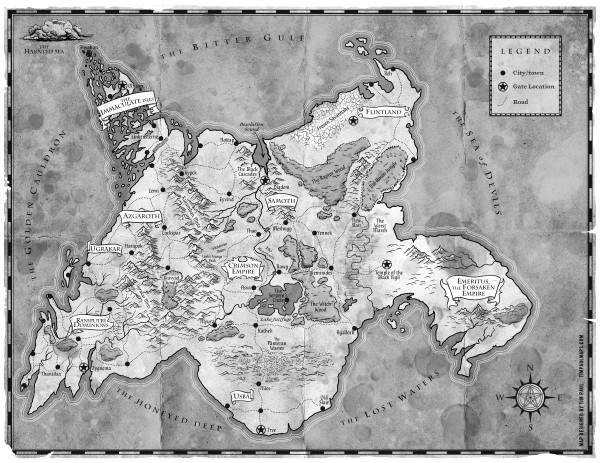
"I am Sir Efrain Hjortt of Azgaroth, Fifteenth Colonel of the Crimson Empire  . . . "
 yadda yadda yadda. Followed by:
"In the names of the Pontiff of the west and the Queen of the Rest . . ." 
 and somebody called Queen Indsorith.

What kind of name is Hjortt? try it out on the tongue sometime, and dang doesn't it come out as something close to fart? soon followed by a tipica grimdark litany of preposterous mashed-up naming (such as even the title of the book!), titles, places, demons, animals, thrown on the page at random:  Azgaroth, Crimson Empire, Immaculates, weirdborn, Crimson Codices, Chainwitch, owlbats, the Cobalt General, the Five Villains, Fallen Mother, horned wolves, sun knives, etc, as well as every possible diversity of gender and match-up that can be thought of  among a variety of species and demons, religions and


cultures assembled from those in Europe and Asia -- hey, we are diverse! No faux European medieval - Renaissance fantasy for us!  But worry not -- there are no full-blooded characters here either, just the expected grimdark cutout placeholders, who, you know, are subverting the genre.

From the start then, present is the signature grimdark authorial self-congratulation of her/himself's witty cleverness (Some Have Said  author's editor has confirmed Alex Marshall is male).  See! my many references to the names of metal bands!  And like metal bands' "music" arrangements, lyrics and presentation, the text is bloated with faux portent, pretension and self-complacent superiority.

As well, readers see present from the first line, parody or not, the signature of grimdark, which is grimdark protagonists just cannot shut up and their narrators just cannot resist commenting. Protags and narrators talk-talk-talk everyone to death, most of all the reader.  A Crown for Cold Silver's protags and narrator are no different in this than it is in its authorial self-congratulation of her/himself's witty cleverness.

In case the reader misses the joke of parody/burlesque of grimdark self-inflation, the book is tricked out with an epigraph from Goya and his Los Caprichos:
"Friendship is the daughter of virtue. Villains may be accomplices but not friends."
The reader cannot help but connect this epigram to the title's inclusion of "cold silver" which recollects Judas sell-out of Jesus for thirty pieces of silver.  Beyond that too, this is one of the many textual moments that provokes the reader into believing the author keeps falling into being a better writers than s/he intends for this particular work.

None of this will come to the eleven-year-old male mind of a certain sort -- who will  more than likely take this book seriously and love it -- except -- O! NOOOOOOOOOOOOO!  the Cobalt General is an old lady. NO NO NO NO! O, author, so sly, so delighting in "grimdark subversion". . . .

--------------------------

BTW, Cold Silver also mocks Steven Brust's Vlad Tatlos Dragaeran series and the Khaavren Romances. So much to mock, so little time, one imagines Marshal thinking as s/he frantically types so many words: Burnished Chain, dunecroc, Diadem's Central Chainhouse Known as the Dens, Diadem's Jewel, Black Pope, Almighty Matron, godguana and etc.

Question: is it possible to mock what was already a mockery?

Sunday, April 5, 2015

Ann Leckie - Ancillary Sword

Leckie, Anne (2014) Ancillary Sword. Orbit – Hachette. New York.

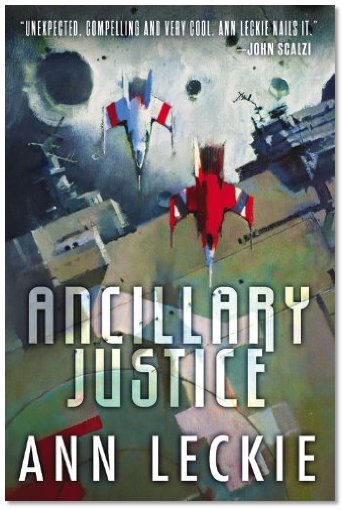
Why have the covers of these books been made so ugly while reflecting nothing of what's inside?
Ancillary Sword reads as fast as its predecessor, Ancillary Justice. I began reading it about 10 PM on Thursday night, and finished it during Friday night's reading hours. It's accidental that I read this book only hours before the Hugo awards short list was announced. 

Some readers have said Ancillary Sword wasn't up to the quality of Ancillary Justice. I don't agree. However, I think I can see why some feel this way. It's like traveling anywhere: you can only see it for the first time once.

Justice educated us into understanding the strangenesses of the world Leckie created.  The grammar is used as we currently usually employ English grammar. But it takes time to comprehend the vocabulary in which Sword of Justice is written. It is almost entirely Leckie's usage of gendered nouns and pronouns that creates the strange of Radchaai space and its citizens -- yet the full collective noun, is the non-gendered "human". Since Justice has educated us into seeing and hearing what was initially strange and puzzling, Sword is more immediately accessible to the reader than Justice was. As Sword is more immediately accessible some think it is a bit disappointing.

In terms of language driving the narrative, the plot and and dramatizing the narrator-protagonist Breq, even the titles of the books provide another sophisticated and intriguing dimension to the series.  In Justice, it was the sword on which we focus, i.e. how the ruler of a planetary empire employs organized military violence and war, to adjudicate the imperium's disputes and conflicts, even, literally within itself.  In Sword, it’s about how justice -- legal, political, social – can be employed to counter even Anaander Mianaai's imperial inner conflicts, as well as specific disputes in specific places.

In both books, the outcomes still depend upon how particular minds choose their own employment of violence and law, on behalf of individuals and collective entities. These collective entities are also themselves often individuals, so to speak, contained within a larger collective, such as the captive labor in generational perpetuity labor slavery within the larger collective of the empire, spiraling down through containment within the planetary system, the planet, the tea plantations and the administrations of all of them.

Though the second novel is titled Ancillary Sword, Fleet Commander Breq serves on a Radch imperium Mercy (of Kalr) ship, while being countered by a Sword (of Atagaris) ship, complete with the ancillaries, which Breq's Mercy ship doesn't have. But it is justice, strained through mercy, that Breq must wield, for the survival of her ship and mission, not the sword of military violence.


Ancillary Sword tackles other issues of an imperium's violence as well: colonization, exploitation and slavery, as well as wars of conquest and civil war for control that are not only inevitable to empire, but even, in many ways, an empire's raison d'etre (see: Napoleon's empire, to examine this signature of imperium from fairly close period in our own time, but one distant enough in history that we can see it more clearly than our own).

Leckie give us all this, not only through characters' dilemmas, but with language.  She creates an exciting work of fiction that interrogates the boundaries of civic responsibility for individuals whether AI, such Station Administrator Celar, or collective individuals such as the variety of ancillaries, and the variety of levels that make up the whole society of the Atohoek (ad hoc?) planetary system, at this moment, within the Radch imperium. This is an impressive achievement. 

So far the Ancillary novels are among the most original, most interesting writing achievements that has come out of science fiction in quite a few years.

Thursday, March 26, 2015

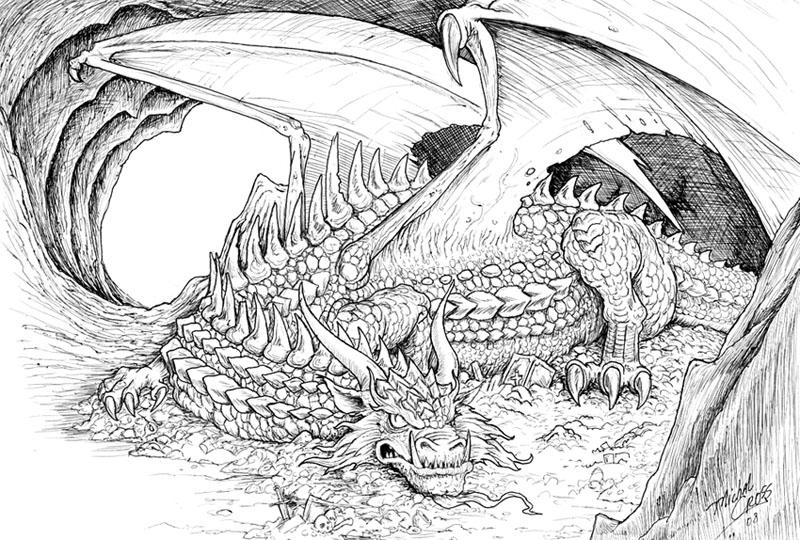
What To Do With Dragons

I was finally able to pick up The Widow's House, fourth volume in Daniel Abraham's Dagger and Coin series..


I've read the prior volumes, and quite liked the first two. The third one though, was fairly generic in ways the first two were not.  However, The Widow's House is back to form and I stayed up later than I should have for two nights in a row, reading it to the end -- because I could not guess how it would end, which is not the case for this reader with most fiction at this point.

As Widow's House contains a dragon that held some promise of being an interesting character,  I got to thinking about dragons in fiction.  Actually, the most interesting thing Inys the dragon does is get drunk. That may be a first?  I can't recall whether any of the dragons in the books of the alternate history/fantasy Tremaire series ever got drunk.

Writers like to have dragons, but few of them seem to know what to do with them when they get them. Among those who seem to understand their dragons are the


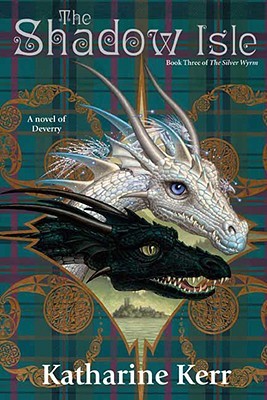
writers Katharine Kerr, whose Deverry dragons are essentially cats (which works very well), or McCaffrey's, in the first Pern novel, who are medieval heavy


cavalry chargers with super firepower. Another exception is McAvoy's Mayland


Long, the black dragon of Tea With the Black Dragon (1983) -- "black dragon" signifies my favorite oolong tea -- is a shape shifter. So, as a wise Mandarin, he possesses human-kind personality and physical characteristics. And Novak


 knows how to create an Enlightenment - Age of Revolution philosophe with Tremaire.  Others of her dragons also had differentiated characters and voices.*

However, Hobb's dragons seem nothing more than slabs of mountain in one series and, unintentionally on the part of the writer, never made any sense. Another couple of her series made dragons be everything from rotting toxic poisonous swimming serpents to mad things that made no sense. These dragons' real function is to become woods out of which are constructed ships, that communicate with the special persons. Then there was another series, which I confess I couldn't read which seemed to try to unify the mountain dragons of a Fitz series's world with the world of the Shippers. In that one the dragons' function was to give a very special young female a save the world mission.

Got's dragons' function -- so far, only expected function -- is to be WMD -- which so far at least can't seem to be imagined actually taking place in the narrative either. Wait! one of them burned up a bad guy once who spoke contemptible insults about Daenerys Stormborn of the House Targaryen, the First of Her Name, the Unburnt, Queen of Meereen, Queen of the Andals and the Rhoynar and the First Men, Khaleesi of the Great Grass Sea, Breaker of Chains, and Mother of Dragons in a language he mistakenly thought incomprehensible to the Mother of Dragons Who Is Always Threatening / Promising Something-or-Other Will Be Done to Something-o- Someone-or-Other. Or did that only happen on-screen and not on the page at all?  It's all so long ago who remembers?

The exceptions to this would be the afore-mentioned Novak dragons,  Kerr's, and now, Abraham's Inys, the world's last dragon, has personality / character. Still, for all his size, Inys inhabits only few pages of The Widow's House. He's referred to much more than he's on-stage, er, on page.

Which again seems that with dragons, when one has them, it's difficult to give them actions of active significance, beyond deus ex machina, or, as in Hobb, McGuffin roles. This seems so for Got's dragons. ** 

Well, in fact Abraham's Inys is instrumental to a significant action: as he falls to the weapons of the enemy, the inhabitants of the city that has never been successfully sieged other than by insiders opening the gates -- OPEN THE GATES to save the dragon that was thought to be saving them -- AND THE CITY FALLS TO THE ENEMY.  Horribly.

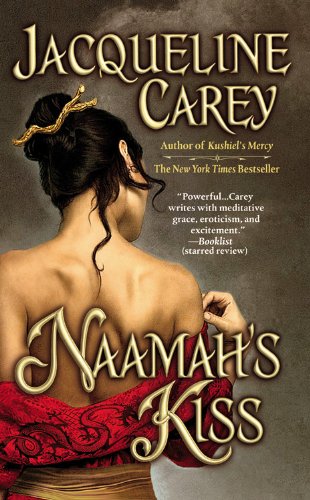
There is the Ch'in dragon in Carey's Namaah spin offs from the Phedré - Terre d'Ange series, featuring Moirin, whose voice is exactly like Phedré's, and whose


vagina is equally magical. In the second volume, Naamah's Kiss, Moirin goes to Ch'in and rescues Snow Tiger-- a celestial princess imprisoned by her uncontrollable dragon powers and appetites. Moirin saves and liberates Snow Tiger via her afore-mentioned divine vagina.** It also employed the Westerner-goes-to-Asia-and-saves-the kingdom trope.


Maybe the best dragon is still Smaug from The Hobbit, though he too was onstage for a relatively short period?  But he had a character and agency up the wazoo, and he sure did something. And when he fell, the story of what he wrought wasn't magically concluded.  He was onstage as long as he needed to be.

-------------------------------------

*   I haven't read the volumes released since Tremaire and Captain William Laurence went to Africa -- I've been so immersed in one way and another for the last few years with the Age of Revolution and Napoleón history and slavery)

** This seems equally so for dire wolves. Everyone talks endlessly about dragons and dire wolves, but they do very little, and in fact entire books go by and they don't even appear

* * *  Please take note: I am neither criticizing the divinity of the vaginas of either Phedré or Moirin, nor the author for giving them these vaginas.

Their vaginas have as much right to possess magical power as do the bodies of the super-powered, super-attenuated male characters in every genre from mysteries (for example, James Lee Burke's Robicheaux and Clete, or Child's Jack Reacher) to sf/f, in which these aging Warrior - Heroes are still taking and giving punches and kicks more powerful than a mule's and getting up immediately, or at least recovering after a day or two in the hospital with no further problems until they again do something stupid.

No matter how old they are crowds of gorgeous lascivious and smart women throw themselves at these old, beat-up guys who continue to exhibit truly bad judgment and make terrible life choices. Additionally, their wives and lovers keep getting killed because of these guys' bad choices, even as they white-knight service even more gorgeous and / or deserving females.

So why shouldn't a Fantasy Female God-blessed heroine be the most beautiful and attractive woman in the intelligently and lovingly imagined author's world, the foundations of which are built on a spiritual belief in the worship of love and beauty, that these qualities are indeed divine? Carey's women live fully within their milieu of theology, philosophy and history that are inclusive, not exclusive (though of course the less special Special Terre d'Ange's take it for granted they are superior to all other peoples, which surely annoys the Others), so within this world building they are entirely plausible extra-special saviors.

As a reader, my real objections are the primary characters' non-differentiated voices, vocabulary and cadences. "Blessed Elihu" and "love as thou wilt" seem invoked in every gdded paragraph; by the fourth volume what had been fresh about the voice and invocations had crossed over into annoying and even snort-provoking. One was so tempted to do the drinking game with the endless repetitions, but -- you know? probably Phedré would agree and say, "as thou wilt, what makes you happy."  :)

Wednesday, February 11, 2015

Reading Wednesday - Ancillary Justice & The Silkworm

In fact I stayed up past my bedtime to finish Ann Leckie's Ancillary Justice (2013).  It's a fast read, very well written, which reminded me  throughout of an sf novel published


21 years ago, also in which much of the action is on an ice planet, featuring "characters" of gender


fluidity or neutrality, by another writer of above-average talent, Nicola Griffith's Ammonite (1992).  Both writers and their books are very smart.

What do I mean by this?

For starters, at this particularly moment, particularly in the mystery/thriller/suspense/police procedural genres, the extremely cold parts of our planet are of great interest, i.e. "nordic noir."  The latest entry into this subgenre that began rolling with the popularity of Sweden's Kurt Wallender series (both in print and as two television series -- one on Swedish tv and the other on English television starring Kenneth Branaugh) is Fortitude, where a murder is committed in small town professional scientific community in the Arctic.

The second thing I mean is how Leckie handles gender. In Justice, what is masculine and feminine, or he or she, slides all over the place There are no other markers in the for male or female than pronouns, and those pronouns seem to have quite other significance than sexual identification. The unmarking of gender as identification for sex or hierarchy is of great interest in current sf/f.

The third smart thing is that Justice is space opera. Publishers and readers alike have been wanting updated space opera for a while now, upgraded to a more current reflection of "The Way We Live Now" than the by now quaint treatment of ST and the racist, sexist  Firefly, which underneath, whether or not Whedon realized that's what he was doing, celebrates the slaveocracy rebels of the War of Southern Rebellion (1861 - 1865).

But what is smartest of all about Justice, is that it doesn't come across as smart.  By that I don't mean comes across as dumb, because it doesn't.  What I mean is that the text reads so elegantly in composition and organization, that all these elements are effortlessly there, and centered, while there's a strong plot that, like all stories are supposed to do, pulls the reader along to find out what will happen next. It doesn't draw attention to how smart it is at all.  Instead we simply experience the pleasure of its smartness.

If I had a criticism to make of Ancillary Justice it would be that Orbit, the publisher, gave it an unattractive cover.  Indeed, the cover may be what has kept me away from the book for so long.  The cover's elements are clunky and clumsy, colored with muddy grey and green tones. The cover as depicted in the photo above is of much sharper resolution and clarity of tone than on the book on my desk.


The Silkworm is the second novel featuring private investigator and Afghan war vet, Cormoran Strike, by Robert Galbraith. I didn't actually read it, but listened to it via library audio download during my workouts. The Silkworm's case is set in the publishing industry.

We encounter several novelists and editors and publishing companies, an agent or two. What is interesting to me about this is, as per usual in fiction, and I suppose naturally so, publishing as depicted in the novel is only concerned with novels -- whereas in reality, most of the publishing industry is not fiction, and profits from all forms of fiction are falling. There are a few exceptions to this, and the author of this series, who, as we all know Roberta, is in reality J.K. Rowling, is a mighty exception.

I'm not liking this second Cormoran Strike investigation as much as I did the first one. It feels more like a dutiful fill in the formula blanks for the genre, than the fresh delight that seemed to come through about everything in the first one, The Cuckoo's Calling, from entering extreme high end restaurants and boutiques who cater to the very prosperous, to packs of ravening paparazzi. This delight in exploring the new, distilling the author's own experiences of entering the world of private cars and drivers, hair stylists and designers, the deference and perks with which the celebrated are received everywhere, covered a lot of the clumsiness of composition.

This second time around, not so much, particularly the habit of preceding each chapter with a quotation from plays, mostly out of the Jacobean era of English drama. No more than the Latin quotations at the head of each chapter of Cuckoo's Calling, do these quotes seem to illuminate either character or action, or do only occasionally. They feel irrelevant, because Cormoran Strike, our protagonist, doesn't have knowledge of either Latin or the history of English literature, and certainly doesn't give a damn about either one. The epigraphs are tacked on decorations rather than integrated, graceful ornaments. Whether or not this was the author's intention, their function seems to be reader reminders that Galbraith is really Rowling, who is educated and smart. This kind of error in presentation she never made in the Harry Potter series.

I probably won't be reading any more Cormoran Strike books.  But I will read Leckie's second, Ancillary Sword -- though when I don't know, so much work, so many projects are stacking up.  Maybe on the plane to NO for the Caribbean Conference at the end of the month?

Sunday, November 16, 2014

Glory Road and Gone With the Wind

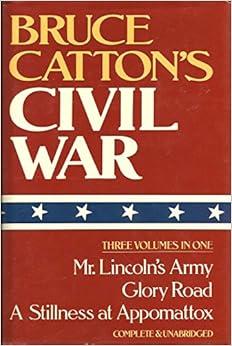
Bruce Catton's Glory Road, second volume in his first trilogy, Army of the Potomac, was published in 1952. The concluding volume of the trilogy, Stillness at Appomattox, received the Pulitzer for history in 1954, and the National Book Award for nonfiction. 


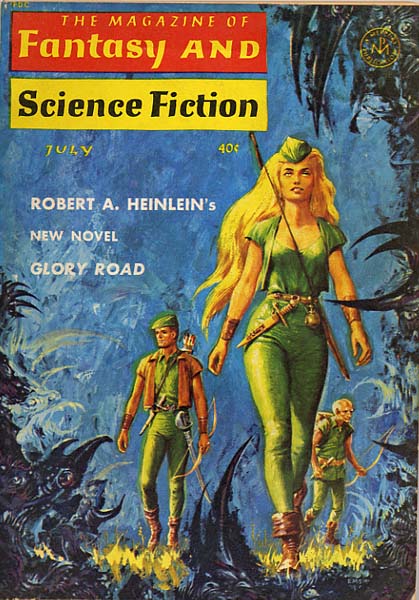
Heinlein serialized his Glory Road in the high summer of the Civil War centennial, 1963.  I've often wondered whether Catton had any influence on Heinlein's choice of title for that space adventure, or in any other way.
By 1963 the Civil War was branded as Catton's War as he published his second trilogy of the Civil War, called The Centennial History of the Civil War (1961 - 1965).  His 


books sold -- no exaggeration -- in the millions.  From his first publication, he was a successful popular history writer, but his Civil War books drove his reputation up into the stratosphere. During the Civil War's Centennial Catton was on television, radio and in all the publications. At least so says the biographical materials. 

I wouldn't know about that from personal experience since I too young and too far out in nowherelandia -- in a state that didn't become a state until 1889 -- for the Civil War centennial to matter or even be noticed. Settled mostly by immigrant Nordic, German, Polish and Russian farmers in the homesteading years at the end of the 19th century, there were few if any people in my my state who had a great, a grand or father who fought in the Civil War. In 1861-66 Sherman and his railway cronies hadn't even yet begun the slaughter of the great buffalo herds in my state. The gallant officers of the Lost Cause went to the Far West, like Wyoming, to reinvent themselves as stockmen/cattlemen (as Theodore Roosevelt divided owners from labor (the cowboy), or to New York, London, Chicago to become successful lawyers, bankers and investors,  not as dirt farmers in the midwest. The Civil War was only talked about in the 4th grade American History class and the high school sophomore American history class.

But Catton's name as synonymous with the Civil War was so pervasive it did penetrate my consciousness a little because he was listed among the offerings from the Book of the Month Club that my grandmothers weren't interested in, and there were adverts for the books in the Sunday Minneapolis Tribune's book pages, which I would glance at without reading, while waiting for my dad to get through with the comix section.  After church, while waiting for us kids and Mom to get out of Sunday School -- she was one of the Sunday School teachers -- he'd drive to town and buy the Minneapolis paper, almost only for the comix.

Whether Heinlein had any interest in the Civil War, I don't know.  But Catton might have been interesting to him if only because he was such a successful writer, who served briefly in the navy during WWI, began his writing life as a journalist, who quickly became so popular and successful he was syndicated. He served as an information specialist in WWII (too old by then for active field service) and was the editor of The American Heritage Magazine until his death -- if I have that correctly. And then there was the Civil War Centennial.

I find Catton unreadable, despite all the positive remarks about him made by David Blight -- for whom I have the greatest respect.  Blight admires Catton's writing style, which I find purple, mawkish and sentimental, and thus, his text, too often, ultimately dishonest.


Catton came by his fascination with the Civil War honestly, in the same way that his contemporary, Margaret Mitchell did, by listening to the veterans of the war in his small town telling each other experiences in the war, and attending gatherings of observances and pageants that were rather like early Civil War reenactments --see his memoir, Waiting for the Morning Train (1972), which is a lovely book, about an America that had long been gone for Catton too. 

In some ways his first trilogy at least was a reaction to Gone With The Wind, as the war is perceived from the viewpoint of the average Union troop.  But he can't resist falling for the gallant courageous knights in grey* and the glory that is war, death in service to a Greater Cause. Despite the Centennial History inclusion of social and economic causes and effects of the war, slavery, well, he's not particularly interested in it, and ultimately doesn't think the average black slave was as unhappy with his condition as northerners though. However, the war was a tragedy, in that the blood of so many gallant white people was poured into the ground in an effort that may not need to have been mobilized.

That there might some tragedy involved here for the millions of the African Americans about whose bodies everybody was fighting, including themselves to possess themselves, isn't part of his narrative. For Catton the significance of slavery and the Civil War is embodied in Abraham Lincoln, the Emancipation Proclamation and the Union's triumph, which is America's triumph of perfecting itself in its unfinished glory of its exceptionalism. What Catton thought about it can be found here.

Part of that for Catton, was that he, like most historians (did he or his academic full-time research assistant paid for by his publisher, read Kenneth Stampp's blow-up-the-paradigm, The Peculiar Institution, one wonders, published in 1956?) followed the line of definitively disproven thinking that slavery was an inefficient and economically non-productive system, which would soon have withered away, if the fire eaters on both sides, that of secession and abolition, had been effectively gotten to sit down and shut up. 


Another way of putting it is that Charles Sumner got what he deserved from Preston Brooks.  (Edmund Wilson certainly thought so, as we see in his Introduction to Patriotic Gore.)

Catton's vision of the Civil War is essentially Romantic, which has fully digested the Glorious Lost Cause revisionism. He cites how often Byron was found in the possession of a dead troop on both sides, and even, here we mention them, in a slave's cabin, harvested from the left behind possession of his former master, running from the Union army. In this way, I will state that Margaret Mitchell was a more honest writer than Catton: Scarlet O'Hara saw and never did see anything glorious and Romantic about the War, before, during or after.  She saw it as a terrible stupid waste of time and blood, and of women's hopes and dreams.


What they had in common though, was a negative: neither of them was interested in the waste of time and blood, the hopes and dreams of African Americans.

This, while the Civil Rights movement was at its height ....

Then, there's Shelby Foote's narrative of the history of the Civil War, from the same period.  Ken Burns, what you wrought was a regression yet again.  But that's yet another tale.

What I really want to say, which is a caution: reading these books is still a worthwhile experience, but they should not be the first books about the Civil War one reads, because imprinting is inevitable, nor should they be the only books read about the Civil War.  This holds at least as much for Foote as for Catton.

 ----------------

* Most of the troops in the CSA army never received a uniform and those that did hardly ever got a second one; the CSA couldn't organize itself to uniform its army. But then they were mostly poor men, who were, in the opinion of many of their planters' sons' officers, no more worthy of the respect of clothes than their slaves back on the plantation.  They weren't paid or given leave, tents, blankets or food either -- just like the people back home on the plantation that the troops were bleeding for the planters' to keep possession of.

Wednesday, July 23, 2014

It's Reading Wednesday

However, due to the Work Trip Travel from Hell, and all the issues, including computer woes, related to that, I've read nothing to speak of since July 10th.

On the 10th I read enough of the historical  "police mystery" novel (Paris, 1870; flashbacks to the War in Algeria, which would have been 1848, which doesn't fit entirely well with the age of the Parisian detectives in 1870), Baudelaire's Revenge. by Dutch novelist, Bob van Laerhoven.  I returned the book to my carry on about 2/3 of the way through, with no intent to finish it. The women are grotesques, who, morally rotten, are rapidly rotting physically. They are fairly implausible characters, though a certain segment of Parisian men such the Goncourt Brothers, and cosmopolitans such as Dickens and his companions, might view women as such surrealist, hyper-active degenerates. This reader, on the other hand, felt in dire need of mental and emotional cleansing. P
articularly this is so, as political, social, cultural and material history all inform us that women, along with children and others without legal identity, were the most powerless members of society. What they did, what they were, were actively determined by men, their poverty and lack of other opportunities.

Sigh.


Such choices on the author's part for female characters make the publisher's choice, to portray on the cover, a figure who resembles so closely the title screens of the televised versions of Agatha Christie's Poirot, figure all the more inexplicable.

There are constant infelicities of translation on nearly every page.


So I've read nothing but that horrid book the entire time, with the exception of re-reading for the firswt time in a long while, some splendid pages of William Faulkner's The Unvanquished -- o, how he plays with time, language and pov!

However, today, not only did the splendid UPS fellow deliver my Tony Lama boots* but serendipitously, two novels were delivered by the equally nice Fed Ex fellow (neither of whom are responsible for what it is that they bring me):


1)  Deborah Harkness's concluding volume, The Book Of Life, of herAll Souls Trilogy;


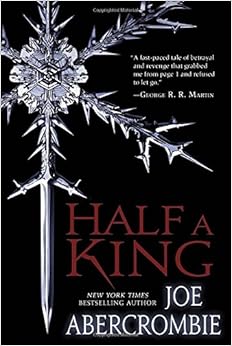
2)  Joe Abercrombie's Half a King, which is probably only the first installment of a series, and a YA series at that, though there's nothing in jacket copy or pr that says so. The only clue is the text's font size -- much larger than one sees in adult targeted readers.

Again, for this reader, it's more than annoyance when nothing informs me that a book is YA, Romance, self-published or religiously themed -- and by golly, sometimes all of them at the same time!

Grrrrrrrrrrrrrrrrrrrrrrrrrrr.

--------------------

*  Which, with a few other high points -- all about the work -- made the Texas trip worth doing.

Sunday, May 4, 2014

Filming Vonda N. McIntyre's The Moon and Sun

The film production of Vonda N. McIntyre's 18th century French alternative historical novel (featuring Pierce Brosnan as Louis XIV) flew McIntyre over to watch some of it in progress.

She provides an account, with photos, here


More photos here, with a link to a YouTube video, that begins with a beat of Vonda McIntyre sitting next to Brosnan.

YAY! Go Vonda!

Wednesday, February 5, 2014

Reading Wednesday - The Marriage Plot's Future?

Ever since the cloning of Dolly the Sheep -- and even before -- a cluster of classic plots have occupied my own thinking about stories, whether (still) in old-fashioned print, on screen, in song lyrics and any other way.


I first thought about this when I was a young woman exploring my sexuality.  So many stories I'd read hung breathlessly upon young women's virginity -- who was going to get it, and what will happen to her when that happens?  I came to the age of sexual expression when virginity wasn't what determined the rest of one's life. If one were educated and / or determined, neither did  having a child -- and raising that child oneself -- without a husband define one's social status. Rather than being Ruined and condemned to prostitution and an early, miserable death, a pregnant single woman family, these days many parents even are nearly pathetically grateful that their child has chosen to reproduce.  Two plots gone right there!  (Unless, of course, you are a poor, resourceless girl, raped and abused by whomever -- but we don't like those stories.  We like stories of promiscuous, careless, lustful girls who fall by their own stupidity. We still do ....)

Married the wrong man?  You can get divorced.  There were even lawyers and law students who would handle your case pro bono!  Anne Bronte Tenant of Wildfell Hall conditions no longer in place  Neither would there have been an impediment between Rochester and Jane, for he is allowed to divorce his mad wife. (Sadly,for people without funds, this is not true in most cases. Extricating oneself from an unhappy -- and particularly from an abusive marriage -- isn't that straight forward, easy, and inexpensive, particularly when your abuser prefers to kill you and then himself rather than lose his power over you.)

Finally, there are all the historical fictions of the future, what happens with them? No desperate Queen Catherine of Aragon faking pregnancies in vain hope of extracting Henry VIII from his obsession with the younger and presumably fertile Ann Boleyn.  Corporate power dynasties can clone themselves, as well as employ many other technologies to reproduce themselves -- perhaps, even digitize their consciousness -- literally making the legal fiction that corporations are persons reality.


Science fiction has been writing stories about these last matters for decades already; I edited Not of Woman Born, an anthology of such stories before the turn of the 21st century.

So, now what?

A novelist and film critic discuss the future of story-telling's ubiquitous marriage plot in The New York Times, here.

Dana Stevens describes it this way:

This past year alone, in the world of film — which, as the dominant popular art form of the last century, can be said to have picked up the marriage-plot baton from narrative fiction — we’ve seen movies like Richard Linklater’s “Before Midnight,” the third installment of a two-decade-spanning trilogy that treats long-term romantic partnership (not marriage — significantly, the character played by Julie Delpy resists that step) as a permanent negotiation involving countless small compromises, disappointments and, often, self-deceptions. More radically, Spike Jonze’s man-meets-software romance “Her” imagines a very near future in which love breaks down not just traditional gender binaries but the line between human and nonhuman itself (and in which the familiar “love triangle” becomes a complex love polyhedron involving hundreds of simultaneous human and digital paramours).
Whatever form the marriage plot assumes as it continues to evolve, it seems clear that the richest and most ambitious love stories will be those that aren’t afraid to call into question what we mean both by “love” and by “story,” whether by opening up the closed temporal loop of “happily ever after” (in the style of Michel Gondry’s mind-bending, time-shifting sci-fi romance “Eternal Sunshine of the Spotless Mind”) or acknowledging the impermanence and imperfection of all relationships (like Woody Allen’s “Annie Hall,” which could be seen as an early turning point in the reinvention of the contemporary rom-com). The freeze-frame kiss that’s marked the end of so many Hollywood romances — the image of a man and a woman joined forever in changeless heterosexual bliss, the ultimate teleological goal of all love — is coming unfrozen, and what happens after those two pairs of lips separate is ours to decide.


Tuesday, June 4, 2013

Sexism Makes SF/F Women Writers Tired

This merely another in the series of frequent eruptions of How SF/F and SFWA can embarrass itself and look foolish, sexist and / or racist / and / or whatever other bad mannered and socialization behavior can be engaged in.  Most people on the face of the planet won't know much less care.  This is the sort of thing that made me give up the org and the culture so long ago -- yet, like so many things that are bad for us and our blood pressure, not to mention taking up space in our little brains that could be used so much more profitably -- I can't keep my eyes away from these eruptions.
How every single discussion about Sexism and woman-type stuff on the Internet (and real life) has ever happened and ever will happen, always, forever, until the Earth finally falls into the Sun (or until the Patriarchy is dismantled.)
It goes with this:

"Sexism and SFWA, as seen by a former SFWA president.

Is there any more reason to wonder why sf/f is so riddled with such yahoo-saurian types as consumers and writers? Even when so many -- men and women -- explain.

They cannot and will not and don't want to hear.  Sexism.  It exists.  Get over it. Besides, sexualized female bodies are still the greatest marketing tool of all time, and selling our stuff is the name of the game.

Now there is another thing, the unfortunate editor of the SFWA Bulletin (for which there has never seemed to be an earthly use (so many reasons I left the org), is / was female, and she's resigned.  Undoubtedly the two men who set off this typical sfwa firestorm this time won't resign from anything -- indeed one of them isn't even a member of the org -- but a woman must be punished for their sins.  Because these saurians of the community are untouchable.  There's no other reason their inane and silly maunderings ran for frackin' 15 years in the Bulletin, because this field is all about the Sacred Name and Ancestor Worship.  So the misogyny and sexism and the rest are embedded in the org from the beginning.  It's not going to stop, particularly since this is the field that is the crown of nerd culture, which currently dominates pop culture from top to bottom.