LINES OF THE DAY

". . . But the past does not exist independently from the present. Indeed, the past is only past because there is a present, just as I can point to something over there only because I am here. But nothing is inherently over there or here. In that sense, the past has no content. The past -- or more accurately, pastness -- is a position. Thus, in no way can we identify the past as past." p. 15

". . . But we may want to keep in mind that deeds and words are not as distinguishable as often we presume. History does not belong only to its narrators, professional or amateur. While some of us debate what history is or was, others take it into their own hands." p. 153

Silencing the Past: Power and the Production of History (1995) by Michel-Rolph Trouillot

Showing posts with label Television. Show all posts

Wednesday, December 7, 2022

Reading Insurrection

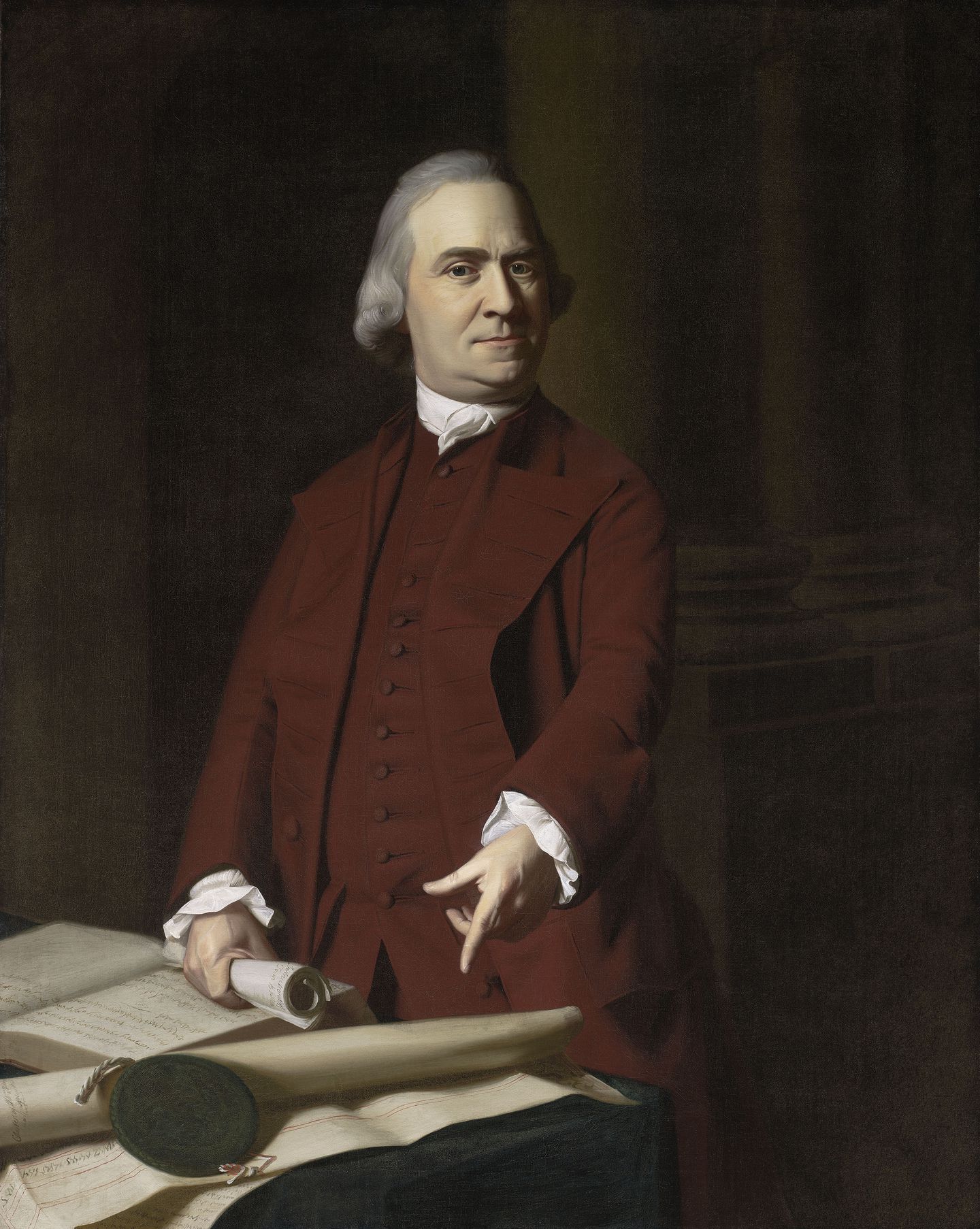
       . . . .  The Revolutionary: Samuel Adams (2022), by Stacy Schiff, and the Tolkien Estate's latest cash cow, The Fall of Númenor (2022), ed. by Brian Sibley, arrived in time for our quarantine/isolation.  They did very well getting me through the variety of existential dreads that chased themselves periodically in herds through my mind and body, during what turned out to be a very mild brush with Covid -- and perhaps the shortest! Today I picked up from the library purrfect seasonal fictionthat goes with Fall of Númenor: the 4th Anthony Horowitz meta effort in the Golden Age of Mystery line, in which the protagonist/narrator is Anthony Horowitz, The Twist of the Knife (2022), and the classic, The Dark Is Rising (1973) by Susan Cooper.


I finished The Revolutionary last night.


So successfully did Samuel Adams obscure his activities organizing a revolution, even from historians’ best effort, that at times it seems as though he’s like the Scarlet Pimpernel, though on the opposition side of the Aristos: “They seek him here, they seek him there. Those Frenchies seek him everywhere. Is he in heaven or is he in hell? That demned elusive Pimpernel”. 

Historians didn't care for Schiff's The Witches: Salem 1692 (2015), so I didn't read that, and my Egyptologist friend and historian of ancient history, and the reviewers too, really disapproved of her Cleopatra: A Life (2010), but it sold very well anyway (as does Witches, though her readers seem not that interested in her 1999 biography Vera Nabokov, Vladimir's wife).  Schiff doesn't even read modern Greek, so that's a problem right there, evidently. I tried to read it myself, and stopped in both sceptism and distrust.

The Revolutionary feels more solid and trustworthy to, takeaways are that Jefferson in particular of the Founders studied Sam Adams's trajectory, tactics and behind-the-scenes secrecy very carefully.  In a letter to Adams, late in Adams's life, he rather says so.  I certainly recognized all of Jefferson's own maneuverings in those of Adams.  The Secessionists didn't study carefully though, and they failed. The current crops of violent seditionists since at least Atwood and Gingrich, have studied with understanding of what he did and how he did it.  His Correspondence Circles and the way to re-purpose words, providing them with different meanings and significance, certainly since Reagan.  Control of the media, which then meant newspapers, is the key.  Secret deals with the already-violence prone such as out-of-work sailors and dockworkers, essential, along with creating one's own militias.  Now it's social media and television, and Oathkeepers, Proud Boys, Neo Nazis, Incels, the outright insane, etc.

Among the many mysteries as to how Adams worked and with whom, is his relative poverty.  At some point it was clear somebody/somebodies were supporting him, enabling to continue his 'seditious' work.  But who?  The obvious guess is Hancock, but I wonder, considering it was B Franklin who sent him the secret Hutchinson documents from England, if Franklin was also a behind-the-scenes secret collaborator?  Their minds would mesh well.  One of the methods evidently used by Adams and others in Boston was to appear in public as enemies, or antagonists, while really working together.

Let's face it: a lot of what Adams did is no different from what the current insurrectionists and seditionists are doing now.

Schiff also says that New England, Massachusetts and Boston in particular, went bonkers around 1765-8, getting progressively so, with periods when things seemed to cool down, but Adams kept working behind the scenes, and then was prepared the moment the Crown and Hutchinson gave him an opening. Schiff says the same thing, going bonkers in this part of the world, is what drove the Salem witch trials.  Henry Adams says the Secessionists went insane too.

On the other hand, there is this, in my opinion: John Adams wasn't a firebreather from the beginning, and neither was Abigail.  The Crown did some truly stupid moves, understood nothing about the colonies or the geography -- and that governance on all levels of the colonies was very bad.  Hutchinson held multiple offices, got salaries for them all, and what he didn't hold himself, he gave to his family members and his friends; He and his cronies did everything to block anyone's path that might challenge their complete control and dominance.  It was a real cabal of power and wealth, which would indeed piss off everybody else.  But Hutchinson and his fellows, as well as those back in Britain, were incapable of envisioning this as anything but their right by wealth and birth, and even less capable of envisioning others seeing it otherwise as well.  So that allowed the right person, with all the pertinent skills, from ability to write, speak, quickly, coherently, persuasively, while being utterly personable in person, with a mind that was able to see all the openings for humiliation, protest and incitement to operate, and one, moreover, who had the imagination, unshared, when he began, with any of his colonial contemporaries, to envision a separation from Britain, and moreover wanted it, and was able to play a very long game.  That was Adams.  He was unique, nearly, it seems -- utterly Bostonian too, a Harvard educated Puritan to the core, though much milder in that than his ancestors, with a great leavening of what was by now in Europe the Enlightenment, though not quite entirely able to let go the days of the 17th Century.

This biography of Samuel Adams, along with Marcus Rediker's Outlaws of the Atlantic : Sailors, Pirates, and Motley Crews in the Age of Sail (2014), provides all the information of how to organize a Revolution and / or Insurrection. First lesson--it will never succeed without deployment of mobs. Second less -- it will never succeed without massive media control and presence, all the time, everywhere.
~~~~~~~~~~~~~~~~~~~~


*  For seasonal watching, I highly recommend Three Pines on Amazon Prime, the adaptation from Louise Penny's Gamache novels, the first season which began on Amazon Prime last Friday, which begins right before Christmas. The town of Three Pines looks so much as I imagined it. The sounds and sights of winter in Three Pines are perfect, shot and recorded in winter, on location. Each murder to be solved is two episodes each, and these two episode go up together on Fridays. The arc mystery thread connecting them each week looks to be one involved with a disappeared young Native woman, whose family are certain she didn't up leave but has been kidnapped or killed.  Though the police won't help them, Gamache gets involved. It also involves, one thinks -- but there's only been two episodes -- the horrors of abuse in Canada's Residency Schools.

Sunday, October 16, 2022

The Reveals Are What We Like: Rings of Power, Finale, "Alloyed"

"Alloyed"  

     . . . . "Alloyed" was a fine episode, a satisfying finale. 

We have a new dimension to the Elven – Númenórean wars of the Second Age: Adar, a villain protagonist in the middle, between Sauron and the Elves.  Adar, “Lord-Father”, has a twisted paternal sense of care for the orcs, whom he played a significant part in their creation, forced to, perhaps, by Sauron, or forced to twist-torture them too much for his own tolerance. Adar thinks he killed Sauron it appears now, because of this.  Adar has destroyed the Southlands for humans to make a home for his orc progeny, outcast by all, where they can live without threat of the sun. This is quite a twist, and it's terrific, not only filled with interest, but also does make Rings Of Power its own ‘creation’ so to speak.


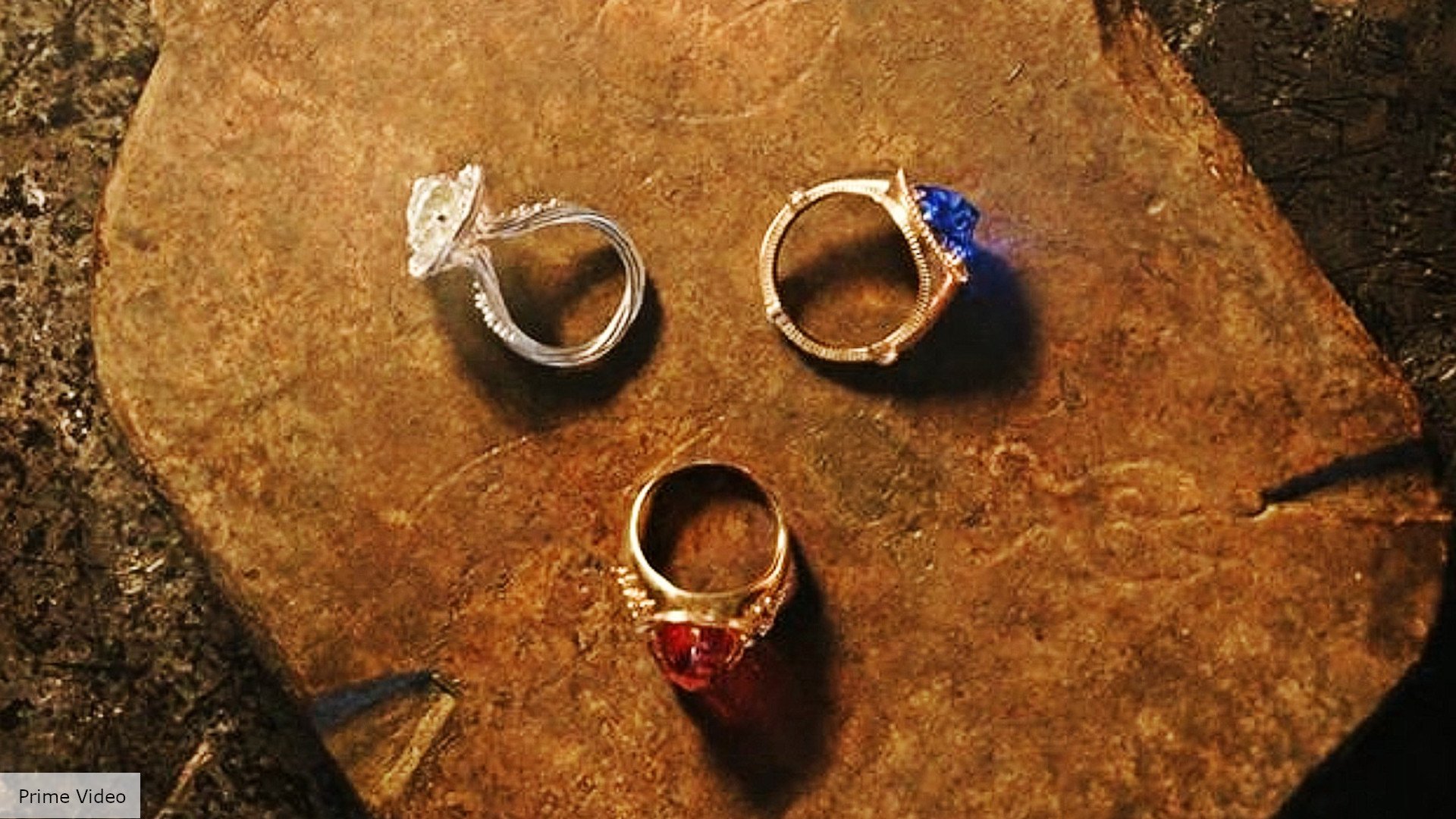
How the three elven rings are forged, with mithril and the gold and silver that come from Valinor were fine; Galadriel's Valinor dagger, which has been part of several pivotal scenes throughout the series, returns to find its own destiny. What a shop Celebrimbor has in Lindon! Those scenes, in their own way, rival in spectacle those of Khazad-dûm. Ya, we learn who is Sauron, though they did a stoopid fake out at the top, alas. Galadriel’s got a whole lot more to be guilty about – she brought Sauron to Linden, where he sussed out the why and how to make the rings in Celebrimbor’s workshop. 

Númenor’s king died, as blind Míriel returns with Elendil, where Pharazôn is waiting to make policy for a cold war by the Númenóreans on elves and their enviable 'immortality'.  Architect apprentice, Elendil's daughter, Isildur's sister, Eärien, saw something no doubt in the palantír – that was left hanging, as do many story/plot lines in Tolkien’s LotR's trilogy, as he moves us from one arc of action to another set of characters in another location for long stretches.

We also learn conclusively the Big Stranger is A Good, not a Peril.  Of course the Weirdling trio were involved – a set of magi from Rhûn, i.e. the Eastlands, i.e. Persia. This is the my personal second favorite part. The reason for this is because I have long


felt Rhûn was a Tolkien take on the ancient world empires of Babylon, Assyria and particularly Persia and Phoenicia.  Partly this is because the name "Radagast" comes up in readings about Persian Empire. The Big Stranger realizes he is a wizard.  He must go off to learn/relearn who is and what he must do, in – Rhûn. Which partly makes sense because Babylon/Persia are the homelands of a class called Magi, who have all sorts of specialist knowledge upon which the King of Kings depends. Those from other lands come to study with the Persian Magi to learn everything from astronomy to medicine to prophecy. Rhûn is where those Perils of Weirdlings are from, who thought he was Sauron. Nevertheless, since the Weirdlings were that ignorant at reading signs and portents, surely there’s nothing for Big Stranger to learn about himself in Rhûn?  Well, maybe how to read that tattered bit of star map our lamented, late Sadoc gifted him, in which he wraps the precious apple which Nori gifted him. A quite different gift of knowledge from that gifted by Sauron to Celebrimbor, hey?


But the most precious gift of all is Nori’s giving of herself as Big Stranger's companion, with her Harfoot sense to keep him straight, find them food and keep them hidden. Plus this provides the driver for the necessary Tolkien Journey There and Back Again. One does wish they had shortened Nori’s farewells several beats, as Big Stranger just hangs out on the overlooking hill under a tree, waiting, waiting, waiting for her so they can get on with his journey to the Big Apple of Knowledge. 

So much to look forward to, whenever the second season arrives.

~~~~~~~~~~


-- Deadline’s Inside The Ring Episode 8 | The Rings of Power | Prime Video


Nice essay on Slate  -- "One Way The Rings of Power Outdoes the Lord of the Rings Movies" hint -- female characters.  O my goodness the fanfascist bros howl at this! Just as much as they do about all the characters not being whit.


Thursday, October 13, 2022

Only What We See - No Spoilage: Rings of Power, Episode 7

 Episode 7: “The Eye” 


    . . . . We see through Galadriel’s eyeseeing fire, ash, smoke and destruction.  In the middle we learn Queen Míriel’s lost her sight.  We conclude (nearly) with Disa and Durin essentially losing their moral sight as they claim the mithril for themselves, as well as Khazad-dûm, after Dwarf King Durin III disinherits Durin IV for disobeying him about the mithril, and locking Elrond out of the dwarf kingdom. The Balrog’s eyes open to the dwarves, elves and mithril too. But the very end is Adar, seeing through the toxic smoke, to Orodum, claiming the burnt over, destroyed Southlands for himself and the orcs, renaming it, “Mordor.”

Our most likeable grouping is the triad of Durin IV, his princess Disa, and the half elf, Elron. These are the three with lives that allow for time that includes long development of friendship, marriage and perspective.  These three share highly developed sense of play, humor and appreciation of good things.

The Harfoots returned, in their most interesting and arresting appearance so far in the series. Their scenes include the Big Stranger and the Weirdlings trio.  The Big Stranger does magical  good, before Sadoc sends him off with a star map to where other Big People are who may help him, while the Weirdlings seem to do evil. Nori, Poppy, their mother and Sadoc soon decide to follow the Big Stranger and help him, because that is what Harfoots do – they help each other out and don’t leave each other alone.  This is where I went, “So what happened to that business of leaving carts of Harfoots of those who can't keep up with the main group on the wandering trail, emphasized in previous episodes?”  However, thanks to Harfoots, we’re pretty sure we’ll be seeing ents, if not this season, in some later season, as Sadoc tells us that “trees can talk, at least some of them do.” In the first episode we saw an ent silouhetted on the distant horizon, when the Big Stranger’s transport from wherever hit Middle Earth in an arc of fire. I, for one, am hoping we shall finally see entwives, at some point.

Two characters who are believed dead, Celeborn and Isildur, we know from LotR are not dead. Their fates in the series won’t be revealed probably for some years?  Happily, we learn Isildur’s bonded horse, Berek, survived and refused to board the ship back to Númenor.


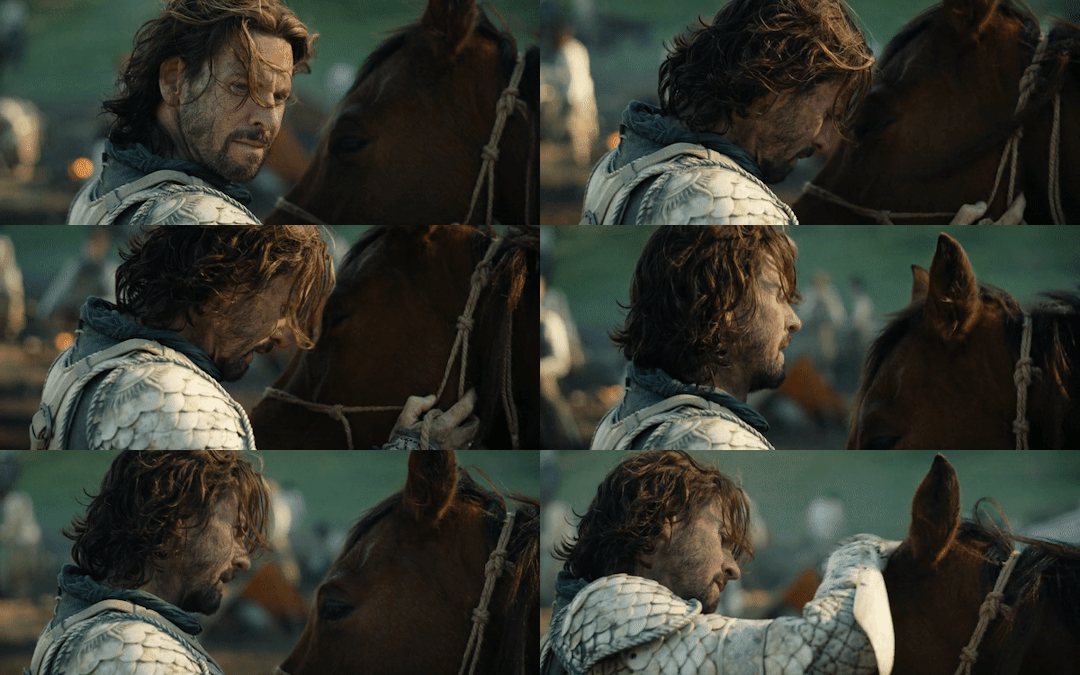
Set free by Elendil, Berek gloriously gallops across the plain, tail flagged, nostrils wide, on the trail presumably of his rider. One guesses that Elendil guesses Berek knows his bonded rider isn't dead.

Though his father, Durin III, disinherits Durin IV, we also know that it can’t be that long before mithril is mined, since there are weapons and armor made from it that remain in possession of elves in LotR’s Third Age’s ending. Though it ends in horror of the balrog some scenes later, the cavern into which the Tree sent its vast root system that had transformed at the end of the First Age into the magical mithril, was a sight worth seeing.

Galadriel shows compassion, as well as some progress into what will become her notable wisdom and long view with young adult Theo, the youngster who cannot find his mother, whose entire life and all he knows destroyed, who feels a weight of guilt, believing the catastrophe of the volcano and tsunami of orcs that overwhelm the Southlands is his fault, that he caused it by giving that sword hilt-key to Weglef. She comforts Theo, she assures him that it isn’t his fault – as later, blind Queen Míriel assures Galadriel the catastrophe is not her fault either. Galadriel protects him, declares him a soldier, and ultimately tets him reunited with his mother Bronwyn, and now, his surrogate father, the sylvan elf, Arondir. However, we also wonder, is it wise of her to be taking the Halbrand, the newly recognized king of the Southlands, which essentially, no longer exist, to Linden so the elves can heal his wounds? Perhaps we shall find out in the next, the final episode of the first season of Rings of Power. But in this episode the last thing we see is Adar staring east to Mount Doom, and declaring the charred, ash fogged Southlands, now safe from the Sun's light, the homeland of his orcs.


~~~~~~~~~~~~~~~~~

Unlike the RoP figures, since we have read LotR and possess hindsight, we know the terrible things that occur at end the Second Age of Middle Earth in Lord of the Rings via tales, song, poetry, memories and legendarium.  We never learned of any of it through the memories and accounts of those who were there and who participated in them. In Rings of Power we are receiving this past via those who were there, who suffered and died, who were the remembered heroes of the Light, and we see as they see, the recalled traitors and perpetrators of the Dark. Seeing the initiation of the horrors of the Second Age played out for our eyes, seeing the seeds of horrors, that may need not have happened, planted throughout this, as well as the previous episodes, adds dimensions to our responses that we couldn’t have only reading of them at the conclusion of Middle Earth’s Third Age, via the memories and descriptions long after, by a few who were there, and those who were not present in the Second Age.

It is important for the story and arcs Rings of Power are showing and telling us, that we be reminded that what we recall from a telescoped portrait view, is now given to us in landscape video – and it often differs in significant ways, while providing compelling stories and characters that we can’t have known from our previous understanding. That understanding came to us enclosed within the halo of heroic history. Here we witness the events and characters without the nimbus of memory’s glory, including characters' moral doubts, inter and intra rivalries, dislike and conflicts. As we know, even well documented, well researched history, leaves out a great deal, often deliberately left out, often revealed long after the canon histories are written.

It seems from the slagging outcry of many, just as with the more recently unearthed stories and events of, say, slavery, Jim Crow and the Civil Rights era, many do not wish the tarnish be brought into the poetry and histories, as well as glow on those halos and nimbi. This disinclination applies at least equally to the language in which ROP is told on screen presently. Though it mirrors that of the language employed by Tolkien in LotR, it is shouted out as ‘bad writing’.  One can’t help but speculate these have either never read LotR, or merely are determined to destroy the progress of RoP for reasons hidden deep within their own hearts. Others though, probably really don’t like this progenitor of heroic fantasy and its legacies, honestly cannot relate to its virtues, which dislike on its own, is perfectly legitimate.

On the other hand, no matter how brilliant these sequel, prequels and adaptations of the originals of the progenitors of the genres might be, they can never bring us the same sense of wonder and discovery.  We have acquired masses of experience and knowledge of literature, language, history, and sheer living experience that nothing can now break through to provide the same experiences of when we were young.  But sometimes, they can provide a respectable simulacrum.  For me, since Rings of Power is its own, if smaller thing, it comes the closest to the reading experience of LotR in those earlier years,  a close resemblance, the memory of what it was like reading the LotR the first 20 + times!  However, I, for one, generally disliked Peter Jackson's adaptation, and dislike it more as time goes one, while many who hate Rings of Power have only seen PJ's trilogy and never read the books -- as too long and boring. There are the others though, who have the appendices and Silmarillion memorized; they loathe this series.

Then there are the racists who are concertedly campaigning to kill the series dead because a Black Puerto Rican is cast as an elf, and an Anglo African is a Harfoot. They reveal themselves as residents of Mordor and worshippers of Sauron with every comment they make.  There are so many reasons to feel that in genre fans, whether for print, television, film, gaming, awards, have been overtaken by a significantly large contingent of fascists.

Despite FanFascism, and Point-to-Point Replicant\ Demanders, there are watchers who do like Rings of Power’s fractal changes from the original LotR’s Third Age perspectives of the  Second Age. Some even find it more interesting, while it remains much the ‘feel’ of Tolkien, that it is at home within These Times in which we are viewing this legendary universe. For instance, this sort of viewer enjoys the non-canon, original characters most, figures as sylvan elf Arondir (who does his own stunts) and Dwarf Princess, Disa. 

~~~~~~~~~~~~~~

"Fiona Apple Drops New Song, ‘Where the Shadows Lie,’ From ‘Lord of the Rings: The Rings of Power"

Deadlines After Show for "The Eye", Episode 7, here.

An  essay in New York Magazine as to why, whether we enjoy them or not, these prequels are always going to be inferior experiences to our experiences with the originals: "The Fantasy Prequel Problemby Kathryn VanArendonk.


Monday, October 3, 2022

Speaking Rings Of Power - Episode 7 "Udûn"

     . . . . Ep. 6, "Udûn".  Moveth now the Second Age's Doom.

Nampat arrives with vengeance in this episode. No dwarves, no Harfoots in this sequence of events, only orcs, Númóreans, other humans, one High Elf, and one Sylvan Elf.

In the Black Speech, the official language of Mordor, nampat means Death. The orces pound out Nampat as their war-chant, marching behind Adar. Soon they arrive at Sauron's Tower of Ostirith, taken over as a watchtower over the Southlands by the sylvan elves after Sauron's defeat in the First Age. Our villagers have taken refuge there from the coming of Adar and his orcs.


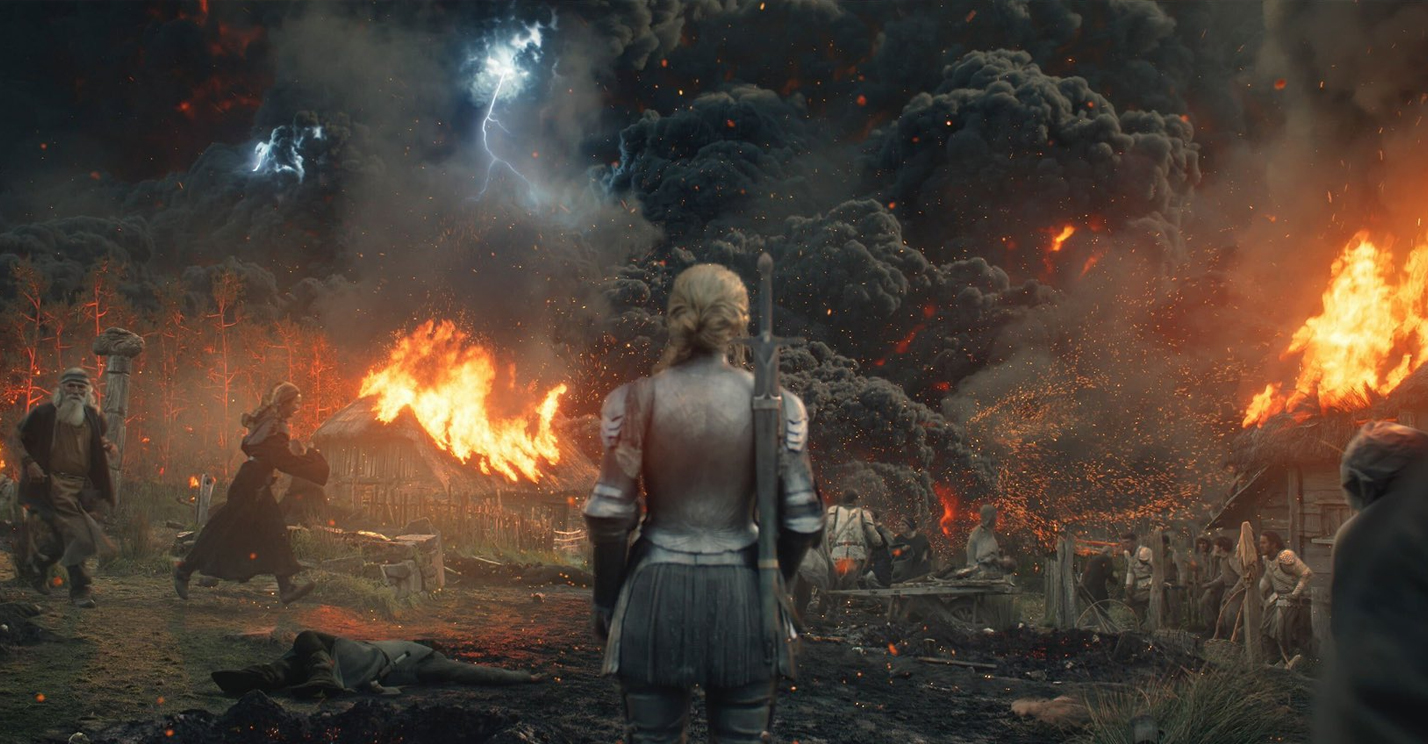
Reversal after reversal, twist after twist, come quick and fast. Halbrand, Galadriel and Arondir fight with particular skill and heroism. Yet, yes, it ends with Doom bursting upon the Númenóreans and the Southland humans. To save his mother Bronwyn’s life, Theo gives Sauron's sword hilt- key to Adar. Somehow it gets passed to traitor villager, Waldreg, who activates it. The waters of the earth above ground and subterranean are loosed through those dreadful tunnel excavated underneath the the Southland over a long stretch of time via enslaved human labor. The underground waters meet a molten region under the Southlands, thus a mountain explodes into volcano – Mt. Doom  comes to life – flood, fire balls and orcs pour into the village. Galadriel is subsumed into fiery darkness. She was right. Sauron lives.  Cue episode 7.

Only two more to go, and I'm very sorry about that.

Just as old school LotR readers will likely be shocked that Galadriel can have what appear to be threshold romantic moments with not just one man, but two – Elendil and Halbrand -- how could this distant ice queen of Lothlórien, married for so long to that dull fellow, Celeborn, behave like this, any more than she does hand-to-hand combat and has a hot temper, which desires to wipe every orc off the face of the earth?

Elendil


Galadriel and Halbrand, King of the Southlands


LotR lovers equally could  have a difficulty accepting that the orcs are elves, actual beings, Adar says, “as worthy as the breath of life and just as worthy of a home.”

It was  clear cut in LotR as the Big Bad Dark and all its creatures, were unadulterated evil, and the Big Bright Virtues of the Light, the elves, etc. were unadulterated Good. But here in Rings of Power's Second Age of Middle earth, both Adar and Arondir plant alfirin seeds, which elves traditionally plant on the eve of battle so that new life can grow "in defiance of death". That Adar does this too -- is it a sign that he's potentially redeemable? Or just that he holds onto to a bit of his elven heritage despite all the evil he's committed? Arondir too plants some of the seeds in Bronwyn’s wound to help them heal after they are cauterized.  This is imaginatively involving and very different, while still, to my mind, consistent with what Tolkien created.

Hal is recognized as King of the Southlands, but Adar doesn’t recognize him at all, despite their shared past, in which he inflicted some dreadful hurt upon Hal.  Adar confirms he one of the elves who are the “sons of the dark,” the first orcs, a Uruk, a Moriandor,  made by Morgoth’s torture, and evidently Sauron's too. Adar advises Galadriel that she own her own darkness, that he isn't "the only elf alive who has been transformed by darkness.” Yet, prior to the Doom, Halbrand and Galadriel save each other from their respective urges to commit murder, in an affecting scene. While horse Berek, ridden into battle by Isildur, and his father Elendil bond. Previous to this, Galadriel speaks Words to her horse and it speeds so effectively she catches up with Adar fleeing with the Key.

May Queen Regent Míriel escape the flood and fire emergence of the Dark, but one fears she did not survive, so Pharazôn has his way open to rule Númenor, to institute his ambition to dominate the elves, dwarves and all the rest of Middle Earth.

At this moment the only one of this group of heroes seemingly entirely beyond the effect of the dark, is Arondir. Galadriel and Halbrand are touched by it, as is Theo, who admits how Sauron's sword hilt-key draws him by the sense of personal power he feels when holding it. This is a morally complicated world, with characters who aren’t black and white, which LotR was as well, at least in a sense, as with Boromir and his father. But the LotR's world constantly harks back to the treasons, corruptions and destructions within various characters of the heroes legendarium of the Second Age, that brought about its fall. There's a great deal of viewing satisfaction watching this roll out, despite knowing how it will conclude.

This episode gave me shivers of doom – but then the Second Age is doomed, particularly these very Southlands. Nevertheless, it was satisfying and effective; it moved the plot along swiftly, while we learned quite a bit more about some of our principal characters, including how Elendil's wife died -- drowning.  What we see and learn in this episode has been set-up in the previous ones.  The episodes are building on and out from each other.

Among the fireballs of bitter bile and malice relentlessly released by Some upon this series are the accusations that the lines spoken by are our heroes are stupid-silly. Patience, Watchers! High Language dialog can -- and probably will -- feel forced and artificial in our own wizened rhetorical age. But read aloud the same efforts in the revered LotR, and if they aren’t among the current elderly who first discovered LotR back when it first became a publishing phenomenon, and they themselves were young, so young, people shudder.  So what do we want? Pseudo hipster quippage a la PJ, or occasions in which heroes speak in fabricated, skaldic poetics?  Myself, I vote to apply judiciously,  "the glorious ground of Endill . . . . "


Monday, September 26, 2022

Rings Of Power: Episodes 3, 4, 5 -- No Spoilers

     . . . .  I in no way am a Lore Master, nor have cared to be. I am only interested in what Rings of Power is giving me on my screen, and judging it from that alone.  This is the same way I judged the Lord of the Rings books and the tale(s) they told me; I judged and accepted purely from their text, not even the Appendices or any other content.

Rings of Power

 Ep. 3: “Adar”

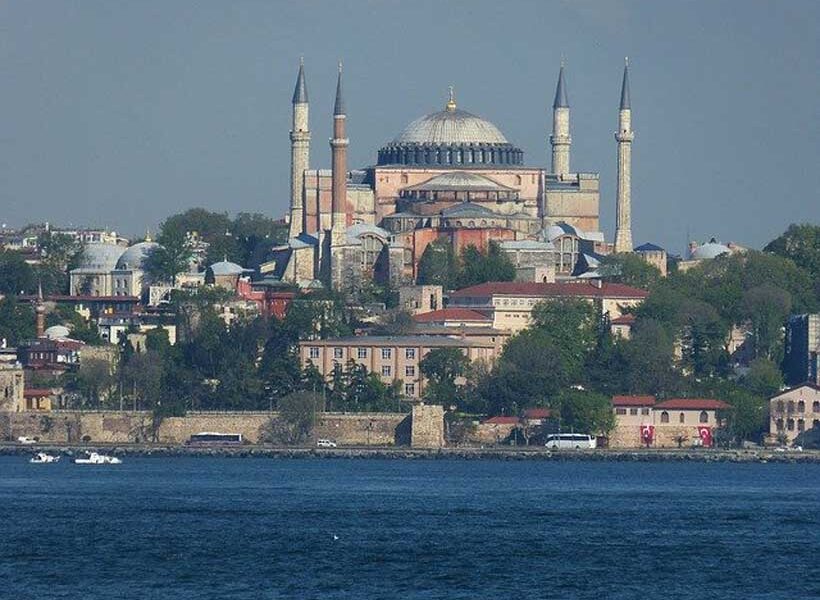
      . . . . This begins with an aside thought: cannot help notice the domed, and columned Ironkeep ediface of House of the Dragon's King's Landing,  and the round domed ediface -- the palace? -- of Númenor, both look like Instanbul's Hagia Sophia, when viewed from the water. 


Númenor's City


Hagia Sophia, Instanbul


The haters of Rings of Power are out in full force. What they do or don't see is very different from what I see. Moreover, the impatience of the viewers astonishes. 

This is story telling. There is no  narrative fiction, structured, organized, and finished up for either plotting or characters from which it is adapted (even less than from which HotD was adapted, which is suffering the same fan reactions). Moving through a big narrative arc must take the time to build out all the elements, as anyone who has written and studied these matters has experienced.

These fan fascists demand everything right this minute and demand it the way They have decided what is what. This show was planned to be 50 episodes from the git go, maybe even more episodes than I shall live to see, a grim thought, that.  It takes time, it should take time, it NEEDS to take time. However, They have decided if this isn’t what They demand, it has no right to exist.  Worse we have seen too, even before the series started, death threats leveled at actors who aren’t exactly WHITE for even being in the series. “Terror of a Black Hobbit” as someone quipped.

As for myself, with this episode I'm coming to admire how at least one theme is beginning to emerge: building and making  are always paired with congruent destruction. We see it coming through, even with the orcs and whoever is animating them for these enormous building projects which are made with slave labor out of landscape destruction, but are made, not magicked into existence. We certainly see it in Númenor, with both the man Halbrand, desperate to start smithing, and Elendil's daughter, Eärien, who finally gets accepted into the Builders Guild. *

The title of this series is about the making of the rings, and already in the second episode we got a whole bottle of Maker's Mark with what the Dwarves have done in Khazad-dûm.  It's the pushing of the making of things too far, via someone's carelessness, or someone’s intentional dark intent, that spells the doom of Middle Earth (but what this means as far as elves are concerned, we will not learn until episode 5, "Partings").  It's the confluence of certain figures out of each group -- excluding Harfoots (at least so far) -- that are responsible.  Even in the elves the drive to make is always paired with the drive to destroy, as we see in the very opening scenes of the first episode, with other elf children destroying Galadriel's paper swan ship for no reason at all. All these Peoples go from the  glory of Númenor that we get to see with our own eyes on the screen thanks to the incredible efforts of the show and the people who come together to make it the very best they could -- and that they really tried is shown right there -- to Ragnarok's smoking ruin, the end of a world -- at least presumably we will see this by the end of the 50 episodes. 

Someone said Númenor feels like something less Mediterranean (which is just about the only thing I've agreed with him about regarding ROP), more based on trade, and more classical -- than medieval. Well, that’s because it’s not – see again the comment here above -- of the central palace’s architecture and the Haggia Sophia. It’s Persia, it's the Eastern Roman Empire, that later historians called Byzantium, called  Rûm by Seljuks and many others, called by the Ottomans themselves the Ottoman Empire.  I.e. not Mediterranean, but looking to the Sea of Marmara, Anatolia, the Black Sea. and the endless litany of previous empires including the Phoenician sea empire, the sun worshipping Assyrian empires, Babylon, reaching even further back, beyond even the Bronze Age into the prehistoric -- and generally, always looking east, not west at all, until the days of the Roman conquests. The show did this beautifully with Númenor. Further, all the references to Melkor brings to mind the Phoencian deity Melqart, also spelled Melkart or Melkarth, chief deity of Tyre and of two of its colonies, Carthage and Gadir (Cádiz, Spain).

There are legitimate criticisms for sure -- the choice of cliff hangers and so on, the length of battle/fight scenes, the filler scenes of beautiful horses on a beautiful shore against a beautiful sea**, and so on.

If ROP continues as it has so far, I am very glad that I will have the whole series to re-watch as binge during one of the endless stretches of dreary winter ahead.  There is so much richness of detail in all the scenes – such as those that went by so briefly, the puppet show (and we have one in the 4th episode of House of the Dragon too! the parellelisms of these series is odd, since they are so different in tone) in one of the city’s public spaces, that I look forward to many rewatches of the entire show, when it is completed.  I don’t know about others, but one of the reasons for my own many re-reads of LOTR is there is so much richness of detail and shading in the narrative and locations I couldn’t take in all of it, thus going back many times.  It seems the creators of this show are respectfully doing their best to do the same for the screen production.

His family and its dynamics were one of the other primary developments in this episode, and again it will be about the making or the destruction of something, yes?  Plus, yes, interesting, and relatable, not cringey or smarmy either.

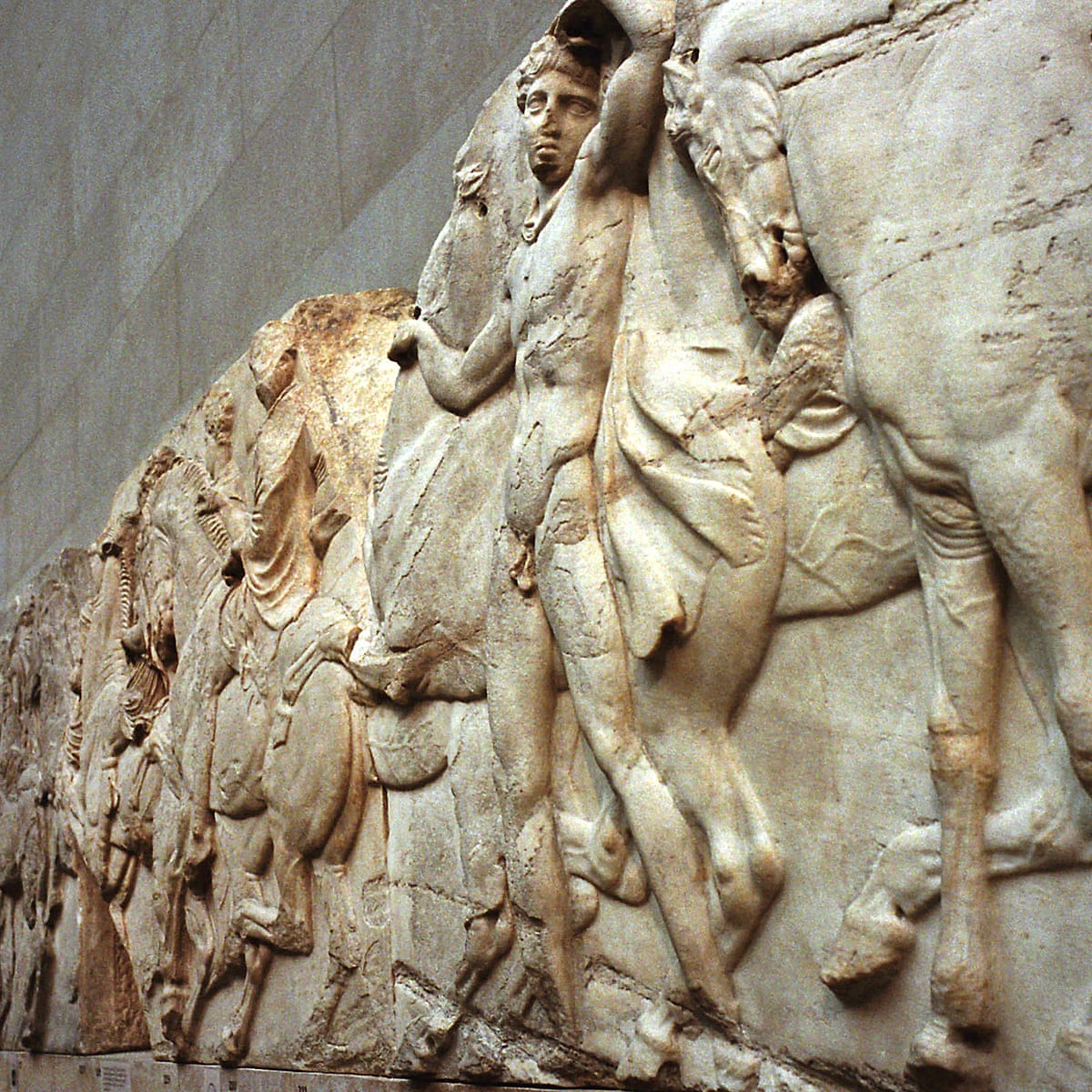
** What we're getting here though, is an exhibition of joy in making of the production teams. There are beats when the camera is close-in profile of Galadriel's mount's head and I swear it is a vein-perfect reproduction we're seeing of horse heads from the Elgin Marbles friezes -- which are indeed astoundingly beautiful. It's one of the greatest privileges of my life that once I got to see them at the British Museum.


 After Show Inside the Ring Episode 3's final segment is with the composer; we learn the reason for that gallop on the beach was to showcase the the elements of the composer's thinking about the transition from the second age to the third age in terms of music and culture. Second age being ROP, and third age of course LOTR.

So ya, in the end I liked it, and appreciated it for just what it was, but also for the thoughts of time and creation and destruction that beat provided within the context of the episode and show.  IOW, in many ways the show shows itself more than thoughtful of the subject matter and what it is doing, creatively.  But too slowly for too many, evidently.  It's not throw-away stoopid quipage.

~~~~~~~~~~~

Ep. 4: “The Great Wave" 

     . . . . This was one heck of an episode, where all the elements of the first three come together. The female characters are particularly impressive, beginning with Disa, the Dwarf princess (what a voice; the writers having her sing to the stone was an inspired innovation in the lore), but the male principals are not slouches either, as with the Southern lands warding sylvan elf, Arondir.  Everything in this episode was set up in the first three -- though we are still waiting for Meteor Man's reveal. They are quite toying with us there. It looked wonderful. Again, the theme of making, the destruction the making may bring, and the destruction by other forces outside of the most wonderful making. The Regent Queen Miriel's comment in her vision of an earthquake, "Our island must stretch at times, just like you, little one," addressing the infant, was splendid. 


This was almost as impressive as Princess Disa’s Stone Song / Pleas to the Rock (or, if one wishes to be silly for oneself, Disa's Rock Song ha!)

In this episode we saw Galadriel start to wrestle with her own character flaws.  She has a long way to go with that, and she's only begun to fight.

As with LotR’s multitude of heroes, we are seeing by this episode they are emerging for ROP too. That one sees characters' personal integrity, their loyalty, their dreams, their nobility, often in conflict with temptations, terror and even their drive to personal power, with the characters working to overcome their ignoble impulses, failing sometimes, and sometimes with some, we will know, failing all together and embracing the destruction of the dark, it's such a relief from the plodding, infantile, cheerlessness of it's HBO rival, ROP (I think I like that one too though, for different reasons and dislike some of it immensely in the same way I disliked immensely a lot of its predecessor, which, in our own time, is HOTD’s sequel).  But in Rings of Power we are seeing evil as the real stuff that all people must combat, in very many ways, whether magical persons or not.

So, Rings of Power is already half-seen; four more episodes to come.

~~~~~~~~~~~~

Episode 5, "Partings"

     . . . . It began with parts of Episode 3, consolidated in Episode 4. With this episode, I fell in love with Rings of Power.

Like the previous episodes. with the exception of the second one's endless swim of  Galadriel's Great Renunciation in order to return to Middle Earth and continue her war against Sauron, this episode moved very fast, while heightening the stakes' tension for all the plotlines.  I don't know what all is going on, I don't know who everyone is, which is part of why we keep reading LotR too, or watching a program. There is so much going on, as there is in the LotR books, it takes a lot of time to process it all, which is why the richness of the experience continues for so many re-readings, and with this show, many re-watches.

Just remember if feeling impatient, “Not all who wander are lost,” as Harfoot Poppy's road song goes at the beginning of this episode. if it is the actor’s voice singing, that voice is beautiful.  Again, composer Bear McCreary discusses the musical composition in the Deadline's Amazon After Show.

https://www.youtube.com/watch?v=o1huhLztCuc

The Big Stranger a/k/a Meteor Man is acquiring language and social education, saves his little group from death by warg/whatever with a Big Power Move, but suffers a reaction, that begins to turn his arm black.  Goes to a spring, intones words in a language for which closed caption gives no translation, and the water runs up the limb, turning to … ice?  But it heals him from whatever it is. The power of it blasts Nori when she gets caught in it.  She runs away in fear. Still don’t think Big Stranger is Sauron, due to the following scene with those closed shaved heads standing around Big Stranger’s landing site.  They don’t look … nice. Are they … female ... androgynous?

Again loving Durin and Elrond’s relationship. Elrond didn't exactly break his oath, since he discussed with Durin Gil-Galad's insistence the dwarves share the discovery of mithril, that Gil-Galad already knew of the substance and was on watch for its appearance, and why -- and that the Dark was returned.  So much depends on friendship and truth, even survival of peoples.

The Tree, from First Age, with roots delving multi-branching and deep into the Misty Mountains which magically create mithril, the only substance that magically can preserve the Light for all time.  Tolkien’s Nordic reimagining of the mythic World Tree Yggdrasil, roots eternally gnawed from below by the great wyrm, Níðhöggr (Malice Striker)


 In ROP, this tree is destroyed by a Balrog in the First Age's Ragnarök. This kind of building of significance of mithril beyond ‘magic&elves’ into the narrative of the Second Age is lovely, while providing that sense of enchantment that we took from LotR.  All the other ROP's Trees, as images and metaphorical statements are appropriate to Tolkien thematic use too. Then there are elements such the Big Stranger's arm wound inflicted by creatures of the Dark, paralleled by the Andar scene with an orc's arm wound from the Light - sun.  That's just another bit of the thoughtful compositional richness that we are seeing increasingly in this series

Is it possible Halbrand is Theo’s father? The dark deeds he committed ... were they as evil as what that villager does to be taken in by Andar?  One likes too this mystery of both Halbrand and Andar's characters' seemingly deeply wounded, while each having conflict about their natures, which manifest in different ways -- one fleeing Dark, and then attempting redemption, the other, perhaps, having fled the Light, attempting to find community with the Dark's monsters -- which too, in this show are shown as more complex than Tolkien portrayed them in LotR.

We see Galadriel being a little more diplomatic and reasonable than before.  Perhaps she and Halbrand are teaching each other good lessons? For she has to persuade him too, to return to Southlands, which he has vowed not to do for reasons in his past -- which are not yet revealed.

It's interesting too that the comic relief, appropriately Tolkienesque, comes out of Elrond and Durin's friendship, with none of the inappropriate, cringey Peter Jackson's attempt at comic relief at even the most inappropriate contexts, as with Gimli and dwarf tossing -- I hated that so much.

If wishes were horses, we'd have 10 episodes instead of the 8. I wonder if I’ll live to see all 50 episodes.  Will the world survive to make and broadcast all 50 episodes? In the meantime, I'm looking forward even more to having this to watch back-to-back during dreadful January.
Saturday, September 17, 2022

First Thoughts: Rings of Power (2022) Season 1, 1st - 2nd episodes, "A Shadow of the Past" & "Adrift"

RINGS OF POWER

NO SPOILERS

      . . . . The first two episodes went up 09/02 on Amazon Prime together. Thereafter, it's a single episode per week, for a total of 8 episodes. As the first two eps were the same night, the reactions here are out of seeing them both back-to-back., thus are rather muddled together.

~~~~~~~~~~

As the first episode of  a brand new series should do, "A Shadow of the Past" made me appreciate and understand the the second episode better.  This is promising for a series which the rabid Tolkien/Jackson fan base are determined to doom

The poetry that threads throughout LOTR concerning Middle Earth's distant past provided much to the reader’s sense of wonder and enchantment, the larger-than-life heroism of an age of history/legend. But the Rings of Power is the present of that Age of Legend. In this ROP present, it is not enchanted and lovely for those fighting the battles and run over by the wars, any more than is it is in the later poetry made from past battles and wars for those living and dying, and doing the fighting and surviving.

However, the first episode does provide us with the enchantment and wonder of the poetry, tales and epics composed about this age of Middle Earth via what we get to see of this truly beautiful world, presented to us living in an age in which the world’s beauty is decreasing daily by increasing destruction.  But it too is taken for granted by those for whom it is their world, just as we have taken for granted that beauty of our own world. We are not nostalgic for what is, only what is gone. And we know well, some of us even in our own time, how almost inevitable it is to craft our nostalgia into something particularly superior to our present, and always much more beautiful.

We rapidly learn of the past catastrophes issued from the Dark, and the looming threat of its imminent return. We already know the earlier wars of Sauron, in which he was ultimately defeated, left in its wake immeasurable loss, grief, suffering and death. We recall it remembered and memorialized in poetry much later, in the waning days of elves in LOTR’s Middle Earth. We are informed without being told this is an eternal cycle of re-formed, insidious corruption that inevitable overwhelms the world in a Ragnarök. That scene with Elrond trying to describe and memorialize the wars that now are over, when we already know the wars are returning tell us that – not to mention that sign of the destruction of basics for the farmers, the diseased corruption of a cow and her milk. During a different time in the Great Cycle Frodo and Sam even talk about this process while in the midst of their ordeal in Mordor – “Do you think they’re make a song of us, Mr. Frodo?” We see Bilbo and Frodo try to do much the same later after their parts concluded in the Great Cycle of \Wars Between Light and Dark.

So we are provided our knowledge via nostalgic enchantment, against a background of beautiful, fascinating spectacle to our own eyes’ currency. What I would love to know, which I never will know, is whether anyone who doesn’t know this material beforehand has this reaction?

Other reactions:

Additionally to Dwarf Princess Disa, and Prince Durin, once we got to see his face acting in second episode, instead of full body bombast of episode one, in this one I was almost as immediately won by a sort of Southlands Ranger Sylvan Elf, Arondir,  part of  the permanent elf border guard force surveilling the Southlands of men who had been corrupted by Sauron in the first War Cycle against the Dark.* As happens so often these outposts and forces are dismantled and disbanded just when they need to be enlarged. Dropping safety measures as the threat materializes … seems … familiar. That we see these humans view the elves as an occupying military force is important information because, of course they would!  So would we.

A most brief Ent sighting in confluence of a meteor landing and Galadriel's Refusal to depart Middle Earth.

The Harfoots appear to be a transhumance people, not nomads, strictly speaking. Which would explain how they eventually become hobbits and settle down. At this stage in their culture though, they seem proto/druidic, at least some of them.

What in the world are those guys who are wearing megafauna moose horns? Are they supposed to be Harfoots too, disguising themselves from being sighted by the Big People?  I waited and waited, but never found out. [Now past episode 4, I still don't know!]

I’m so sorry I didn’t get to see this first episode first.  I really appreciated what and how it accomplished so much successfully.

 *  

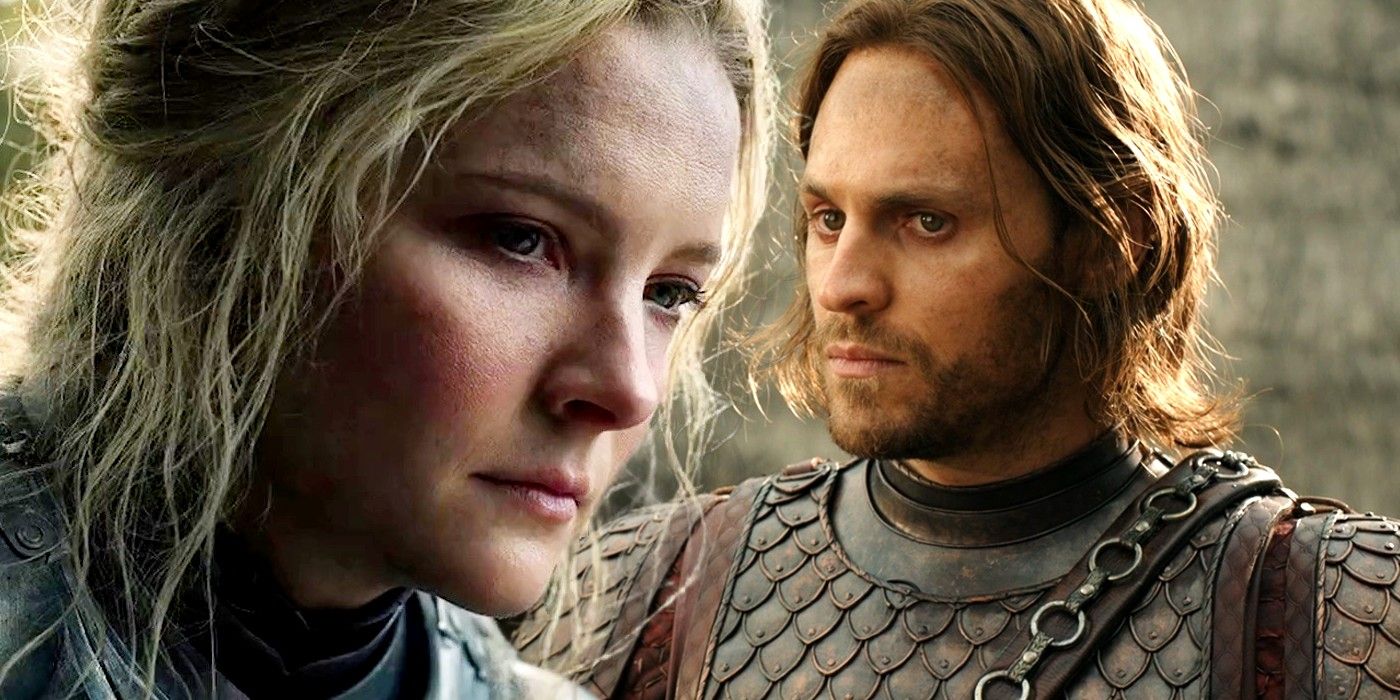
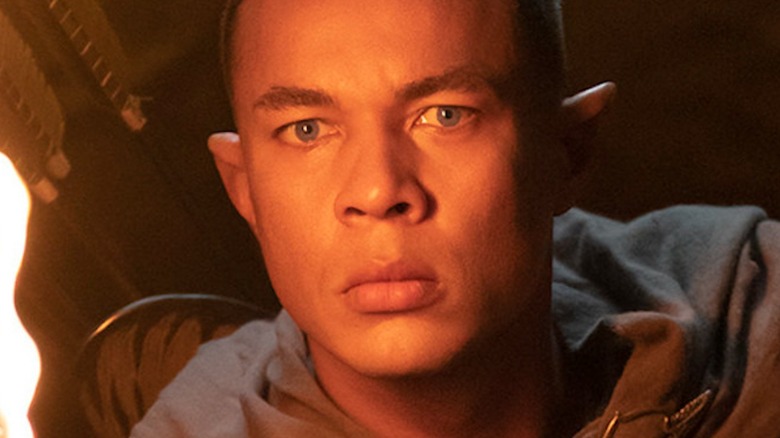
Arondir, the sylvan elf, who emerges quickly as one of the Heroes

Is it a coincidence that the two characters who immediately drew me in, Disa and Arondir, are non-canon?

Other coincidences?

We have the nearly simultaneous release of two screen fantasies, which are dueling categories themselves, one a grimdark fantasy challenging the light fantasy. Coincidence that both are prequels to their world famous predecessors >!<, and both are from unreliable chroniclers, historians and narrators, coming at both of them from  a variety of sources. Which emphasize different events, causes and even actions, and have their own agendas.

Fan rage, narcissism, social media meltdowns about both of them are weird to say the least. I'm not saying that adults shouldn't enjoy Star Wars or LOTR etc. But -- it's very strange to see 'adults' throwing their toys off the high chair tray like this. It is too reminiscent of history’s religious wars of all kinds, including those in the eastern Roman Empire of the iconoclasts – must destroy because I don’t believe it. Death threats were made against at least two people at World Con this yea, as well as to the actors portraying various characters in both ROP and HOTD.

I don't love much of anything any longer, not in These Times.  However. everything good that happens in These Times feels epic, IS epic, because we don't know if it will ever be able to happen again. That feels quite Tolkienish to me. For all we know there will be no more seasons of either ROP or HOT D (or much else), with Winter Coming, the cost of living, and particularly power -- even pubs unable to afford to stay open. People are already saying in Europe both Netflix and amazon are shedding subscribers because they can't afford them -- or even internet subscriptions. 

Here endeth ye sermon; defenestrate me now, rabidly self-identified fan base of the smartest people in the room. because I think this is well done, and I am intrigued.

After Show Inside The Ring Episode 1 

After Show Inside the Ring Episode 2

In these After Show shows, one falls in love with the actors' relationship as Disi and Durin as much as we fall in love with fictional characters' Disi and Durin's relationship on the screen in ROP.

~~~~~~~~~~

Ep 2: “Adrift”-- There sure was a lot of Harfooting in this episode. This episode had way too much swimming (unless one viewed Galadriel's nearly transparent dress even when dry as a positive point), endless action scenes and scare jumps that were not interesting (like Jackson's endless battles with orcs, trolls, are not interesting -- one wants more story, less action, so to speak).  The only part I liked was the dwarves. Gotta say I liked the dwarves much more than I thought I would.  Particularly Disa -- she lightens and brightens and vitalizes all of the ponderousity of Durin, and the stiffness (this changes as the series continues) of Elrond's character. 

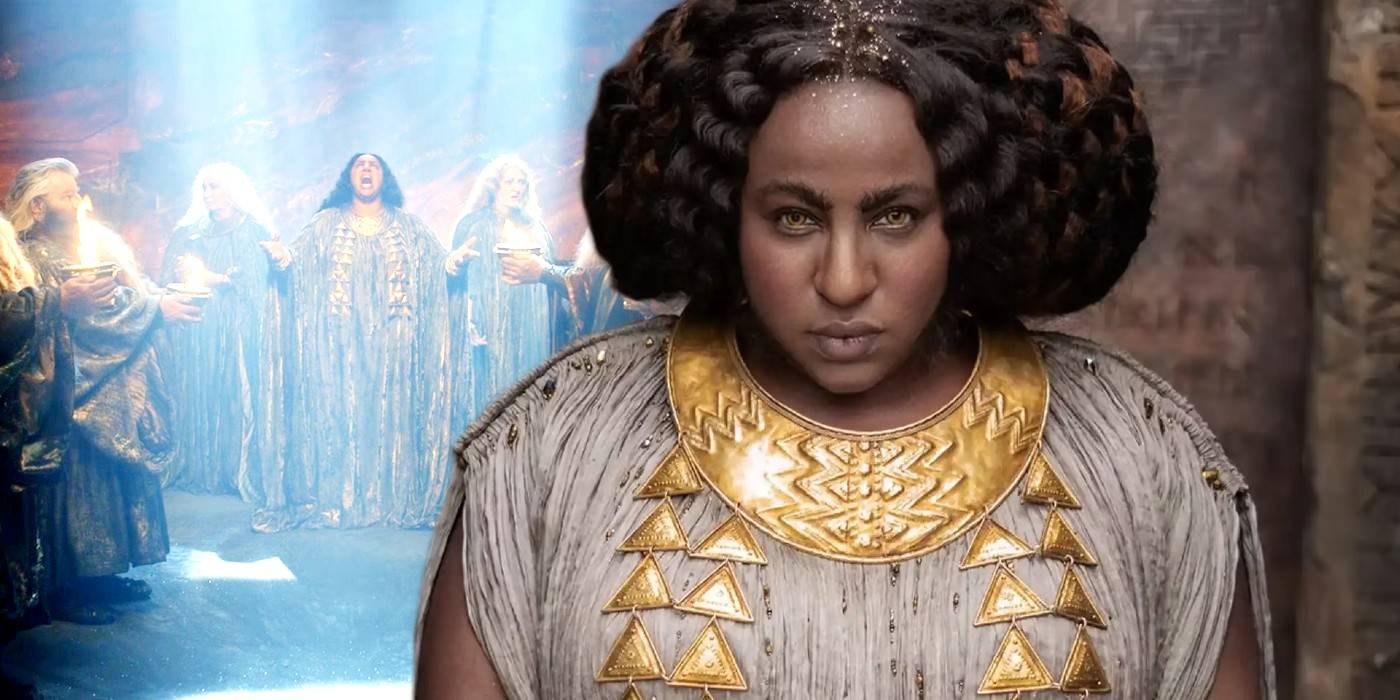
Dwarf Princess Disa, WhoTruly the Smartest Person in the Room, Who the Room Is Most Fortunate to Have!

Such a screen presence has Sophia Nomvete! Must admit that Khazad-dûm was more than impressive, and it is interesting.  It is brilliantly colored, as filled with pure water and light as the elven lands, just different.

The first episode begins mostly in the bright light and day; this second one was mostly grey and dark, though there was a great richness in the variety of shades of dark and grey, laced with the glow of precious metals and gems, the shimmer and sparkle of tumbling, white waters. Who would have thought that outside of Khazad-dûm would suggest claustrophobia? Khazad-dûm is breathtaking in detail, and so gorgeous.


Wednesday, August 3, 2022

Postmambo Rides, While I Do Face Splat and Then Watch 1930's Shanghai

       . . . .  Tomorrow, Thursday, August 4, 2022, at 8 pm Eastern, Postmambo Sessions presents a Zoom conversation with T.J. English about his just-published book Dangerous Rhythms: Jazz and the Underworld.

T.J.'s many books -- all of them about organized crime -- include The Westies, Paddy Whacked, The Savage CityThe Corporation, and of course the best-selling Havana Nocturne, which was the basis for an unforgettable Postmambo Cuban Music Seminar live in Havana in February 2019. Collectively, they offer a vision of America as compelling as any novelist's. He's also a well-known music head: Dangerous Rhythms was previously the title of the series he curated at Manhattan's Zinc Bar. He and I can talk up a storm, and we have many times, but this is also your chance to jump in and ask him whatever you want -- within reason and the bounds of legality.The Zoom link will go out two hours before start time on Thursday. You need to be on the [seminar] mailing list to receive it (this is [nedslist].) So if you're not on [seminar], shoot me an e-mail at ned@qbadisc.com and put [seminar] in the subject line.Our next Postmambo Movie Night (title and guest TBA) will be August 25. In September we return to our regular schedule of the second and third Thursday of each month.* * *Reading: "Soon the world will be unrecognizable," Robin McKie, Guardian: "The publication of Bill McGuire’s latest book, Hothouse Earth, could not be more timely . . . The crucial point, he argues, is that there is now no chance of us avoiding a perilous, all-pervasive climate breakdown. We have passed the point of no return and can expect a future in which lethal heatwaves and temperatures in excess of 50C (120F) are common in the tropics; where summers at temperate latitudes will invariably be baking hot, and where our oceans are destined to become warm and acidic."

Watching: Judge Maya Guerra Gamble rebukes Alex Jones: "Your beliefs do not make something true." https://twitter.com/washingtonpost/status/1554856818450612225

Watching: Reefer Madness (1936) colorized clip (musical!): https://twitter.com/SoozUK/status/1554131039496376320 The pastel smoke!

Music in NYC: Miguel Zenón Quartet, Village Vanguard, Aug. 23-28. Their concert at Columbia's Miller Theater in May was a serious contender for best of year, if there ever could be such a thing as "best." Tour schedule here: https://miguelzenon.com/schedule/

* * *

UPCOMING POSTMAMBO MUSIC SEMINARSAug. 11-18: Cali and Buenaventura, Colombia.Feb. 1-6, 2023: New Orleans: For the Funk of It.More to come in 2023. 

~~~~~~~~~~~~~~~~~~~     

     . . . .  I have a chin so purple it could be black, same with right knee, scratched up right side of nose, smashed mouth, and a bruised right frontal bone.  Monday morning tripped on a sidewalk bump I could not see, due to color and the damaged optical nerve of my right eyes that severely impairs at best looking down. I came out of this far, far better than a woman of my age -- and my back and multiple previous injuries -- has any reason to expect, No broken teeth or bones or blood. 

Giving the credit to my constant quest to improve back strength and reduce pain via exercise, stretch, vitamins, diet and medicinal cannabis.

~~~~~~~~~~~~~~~~~~

 
     . . . . What to Watch when a mess: Miss S. (2020 China, 2022 HBO). Shanghai remake of Miss Fisher’s Mysteries, in great detail, except in Chinese, and in Shanghai, not Australia.  The clothes and jewels are equally exquisite too. Purrfect escape viewing. The principals have nailed down the elegant yet sexy sit-and-lean-into-each-other on the office desktop, such a signature move in Hollywood Tracy-Hepburn flix of the 1930’s.

The ladies in Miss S are so pretty, as pretty as their clothes, though oddly, one cannot miss, that though this is supposedly Shanghai in the 1930's, the elite women such as Miss Su dress in couture from the late 1940's - early - mid 1950's. Which strikes me, at least, as, odd.  Of course their shoes are pure 2020, not at all 1930's either.  But all are beautiful, and exquisitely fabricated. Miss S follows the Miss Fisher laudable practice of repeating the wearing of the fabulously expensive, hand-made gowns and jewelry throughout. We see new outfits created and purchased, but then they move into the rotation.  Miss Su repeats wearing her beautiful chemsongs, as well as her Western gowns.


The actress who plays Miss Su has terrific comic timing.  The whole cast is very good.

The major difference between the Australian production of Miss Fisher's Murder Mysteries and the Shanghai-Netflix production of Miss S is there are chase scenes and fights of the sorts seldom, if ever, in the Australian version. Since Miss S is 2020?, and Miss Fisher's Murder Mysteries is 2012-2015, which isn't that much of time difference, this seems a deliberate decision to have more 'action' than the Australian version. As the series progresses, it gets a bit more dark too, in a way that Miss Fisher did not.

Another major difference revealed as the series roll on – emphasis on not having children as a good choice that women naturally shall want to make. Early on there’s an ep in which Su’s assistant poses as a woman desperate for an abortion – it’s not the abortion that’s criminal or wrong, but the men making money from providing dangerous and toxic conditions, at great expense.

A darker dimension is with us as we realize that soon China will be invaded by Japan, and WWII comes early to Shanghai.