LINES OF THE DAY

". . . But the past does not exist independently from the present. Indeed, the past is only past because there is a present, just as I can point to something over there only because I am here. But nothing is inherently over there or here. In that sense, the past has no content. The past -- or more accurately, pastness -- is a position. Thus, in no way can we identify the past as past." p. 15

". . . But we may want to keep in mind that deeds and words are not as distinguishable as often we presume. History does not belong only to its narrators, professional or amateur. While some of us debate what history is or was, others take it into their own hands." p. 153

Silencing the Past: Power and the Production of History (1995) by Michel-Rolph Trouillot

Showing posts with label Tolkien. Show all posts

Sunday, October 16, 2022

The Reveals Are What We Like: Rings of Power, Finale, "Alloyed"

"Alloyed"  

     . . . . "Alloyed" was a fine episode, a satisfying finale. 

We have a new dimension to the Elven – Númenórean wars of the Second Age: Adar, a villain protagonist in the middle, between Sauron and the Elves.  Adar, “Lord-Father”, has a twisted paternal sense of care for the orcs, whom he played a significant part in their creation, forced to, perhaps, by Sauron, or forced to twist-torture them too much for his own tolerance. Adar thinks he killed Sauron it appears now, because of this.  Adar has destroyed the Southlands for humans to make a home for his orc progeny, outcast by all, where they can live without threat of the sun. This is quite a twist, and it's terrific, not only filled with interest, but also does make Rings Of Power its own ‘creation’ so to speak.


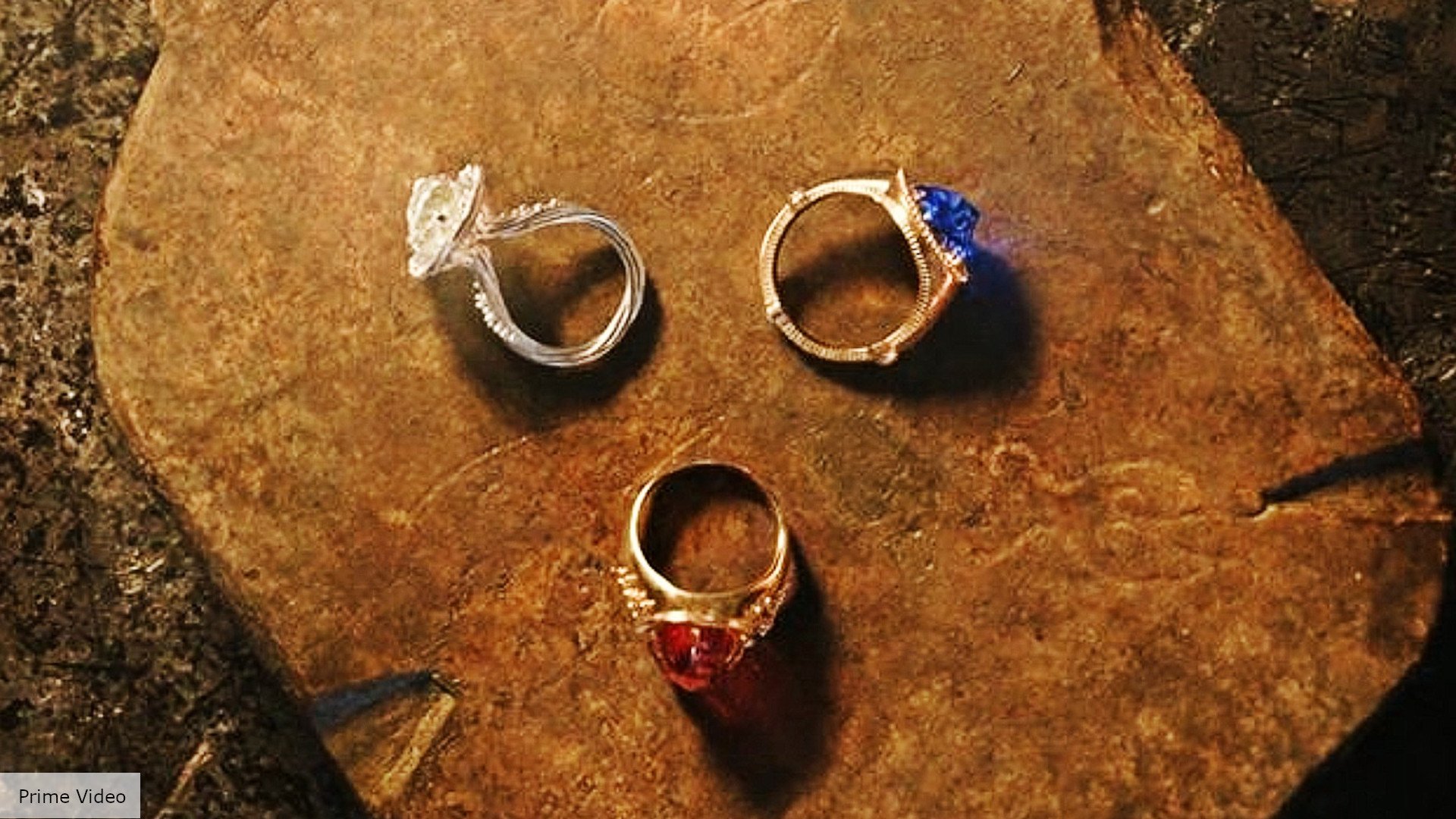
How the three elven rings are forged, with mithril and the gold and silver that come from Valinor were fine; Galadriel's Valinor dagger, which has been part of several pivotal scenes throughout the series, returns to find its own destiny. What a shop Celebrimbor has in Lindon! Those scenes, in their own way, rival in spectacle those of Khazad-dûm. Ya, we learn who is Sauron, though they did a stoopid fake out at the top, alas. Galadriel’s got a whole lot more to be guilty about – she brought Sauron to Linden, where he sussed out the why and how to make the rings in Celebrimbor’s workshop. 

Númenor’s king died, as blind Míriel returns with Elendil, where Pharazôn is waiting to make policy for a cold war by the Númenóreans on elves and their enviable 'immortality'.  Architect apprentice, Elendil's daughter, Isildur's sister, Eärien, saw something no doubt in the palantír – that was left hanging, as do many story/plot lines in Tolkien’s LotR's trilogy, as he moves us from one arc of action to another set of characters in another location for long stretches.

We also learn conclusively the Big Stranger is A Good, not a Peril.  Of course the Weirdling trio were involved – a set of magi from Rhûn, i.e. the Eastlands, i.e. Persia. This is the my personal second favorite part. The reason for this is because I have long


felt Rhûn was a Tolkien take on the ancient world empires of Babylon, Assyria and particularly Persia and Phoenicia.  Partly this is because the name "Radagast" comes up in readings about Persian Empire. The Big Stranger realizes he is a wizard.  He must go off to learn/relearn who is and what he must do, in – Rhûn. Which partly makes sense because Babylon/Persia are the homelands of a class called Magi, who have all sorts of specialist knowledge upon which the King of Kings depends. Those from other lands come to study with the Persian Magi to learn everything from astronomy to medicine to prophecy. Rhûn is where those Perils of Weirdlings are from, who thought he was Sauron. Nevertheless, since the Weirdlings were that ignorant at reading signs and portents, surely there’s nothing for Big Stranger to learn about himself in Rhûn?  Well, maybe how to read that tattered bit of star map our lamented, late Sadoc gifted him, in which he wraps the precious apple which Nori gifted him. A quite different gift of knowledge from that gifted by Sauron to Celebrimbor, hey?


But the most precious gift of all is Nori’s giving of herself as Big Stranger's companion, with her Harfoot sense to keep him straight, find them food and keep them hidden. Plus this provides the driver for the necessary Tolkien Journey There and Back Again. One does wish they had shortened Nori’s farewells several beats, as Big Stranger just hangs out on the overlooking hill under a tree, waiting, waiting, waiting for her so they can get on with his journey to the Big Apple of Knowledge. 

So much to look forward to, whenever the second season arrives.

~~~~~~~~~~


-- Deadline’s Inside The Ring Episode 8 | The Rings of Power | Prime Video


Nice essay on Slate  -- "One Way The Rings of Power Outdoes the Lord of the Rings Movies" hint -- female characters.  O my goodness the fanfascist bros howl at this! Just as much as they do about all the characters not being whit.


Thursday, October 13, 2022

Only What We See - No Spoilage: Rings of Power, Episode 7

 Episode 7: “The Eye” 


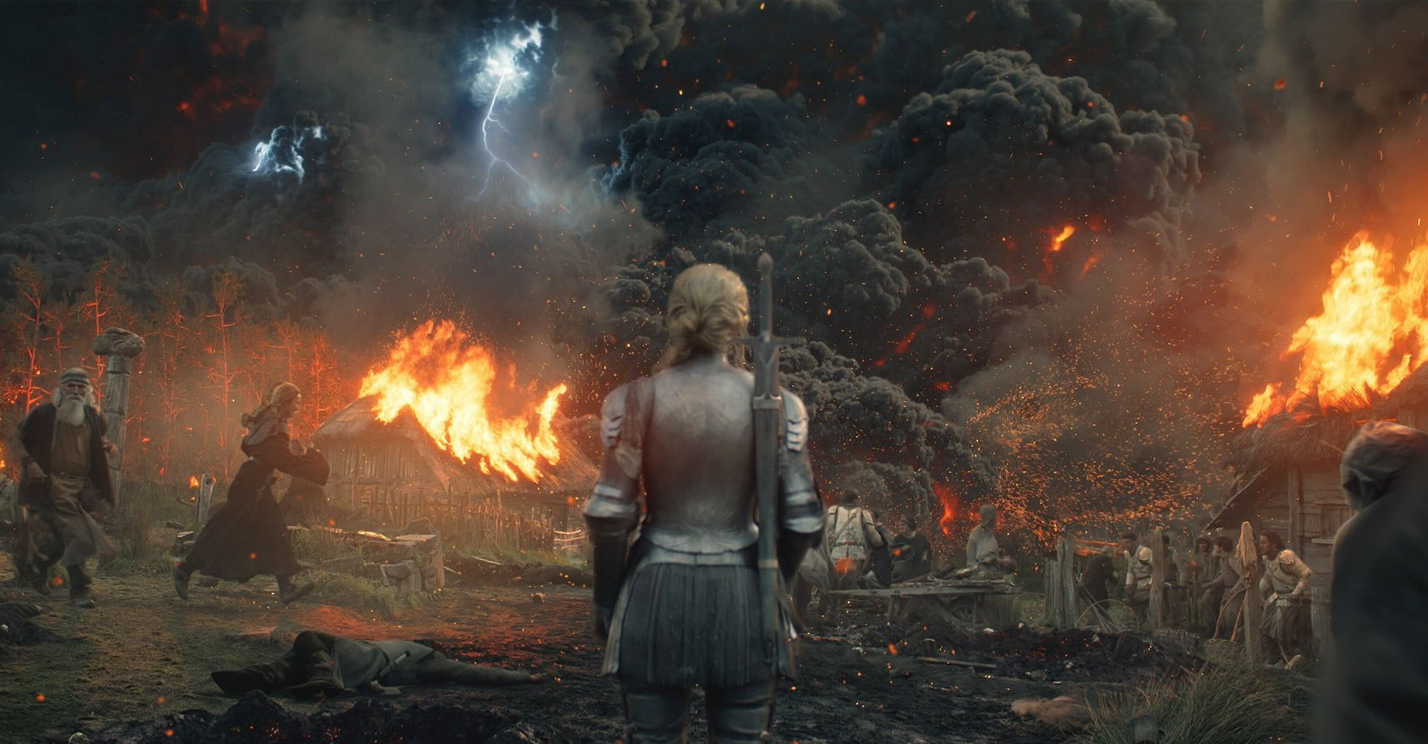
    . . . . We see through Galadriel’s eye, seeing fire, ash, smoke and destruction.  In the middle we learn Queen Míriel’s lost her sight.  We conclude (nearly) with Disa and Durin essentially losing their moral sight as they claim the mithril for themselves, as well as Khazad-dûm, after Dwarf King Durin III disinherits Durin IV for disobeying him about the mithril, and locking Elrond out of the dwarf kingdom. The Balrog’s eyes open to the dwarves, elves and mithril too. But the very end is Adar, seeing through the toxic smoke, to Orodum, claiming the burnt over, destroyed Southlands for himself and the orcs, renaming it, “Mordor.”

Our most likeable grouping is the triad of Durin IV, his princess Disa, and the half elf, Elron. These are the three with lives that allow for time that includes long development of friendship, marriage and perspective.  These three share highly developed sense of play, humor and appreciation of good things.

The Harfoots returned, in their most interesting and arresting appearance so far in the series. Their scenes include the Big Stranger and the Weirdlings trio.  The Big Stranger does magical  good, before Sadoc sends him off with a star map to where other Big People are who may help him, while the Weirdlings seem to do evil. Nori, Poppy, their mother and Sadoc soon decide to follow the Big Stranger and help him, because that is what Harfoots do – they help each other out and don’t leave each other alone.  This is where I went, “So what happened to that business of leaving carts of Harfoots of those who can't keep up with the main group on the wandering trail, emphasized in previous episodes?”  However, thanks to Harfoots, we’re pretty sure we’ll be seeing ents, if not this season, in some later season, as Sadoc tells us that “trees can talk, at least some of them do.” In the first episode we saw an ent silouhetted on the distant horizon, when the Big Stranger’s transport from wherever hit Middle Earth in an arc of fire. I, for one, am hoping we shall finally see entwives, at some point.

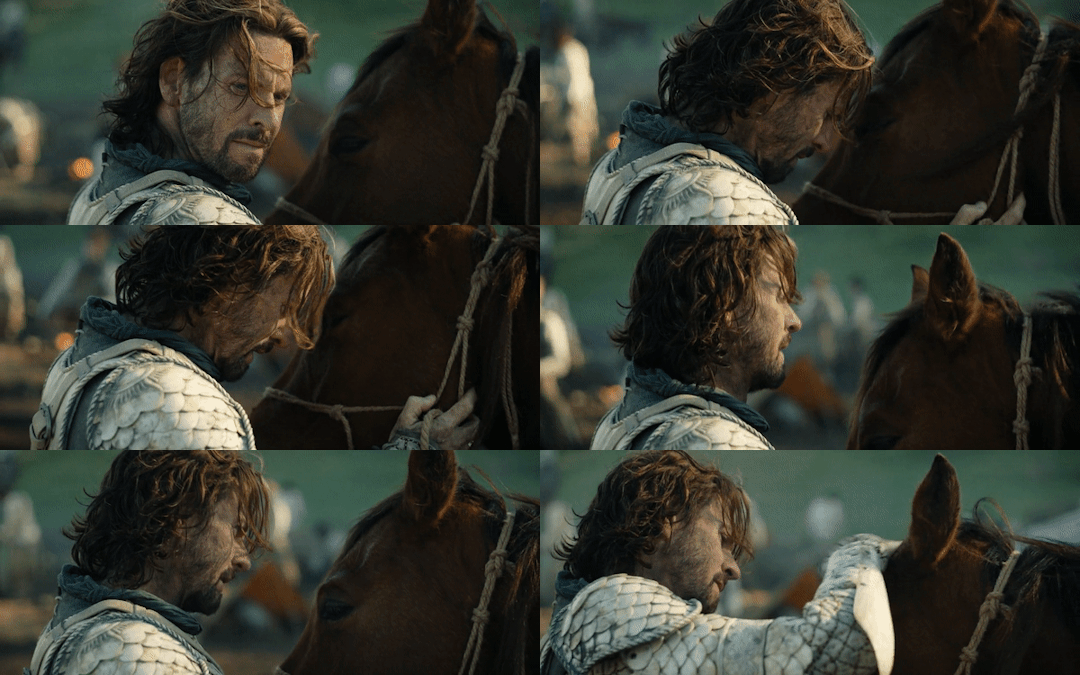
Two characters who are believed dead, Celeborn and Isildur, we know from LotR are not dead. Their fates in the series won’t be revealed probably for some years?  Happily, we learn Isildur’s bonded horse, Berek, survived and refused to board the ship back to Númenor.


Set free by Elendil, Berek gloriously gallops across the plain, tail flagged, nostrils wide, on the trail presumably of his rider. One guesses that Elendil guesses Berek knows his bonded rider isn't dead.

Though his father, Durin III, disinherits Durin IV, we also know that it can’t be that long before mithril is mined, since there are weapons and armor made from it that remain in possession of elves in LotR’s Third Age’s ending. Though it ends in horror of the balrog some scenes later, the cavern into which the Tree sent its vast root system that had transformed at the end of the First Age into the magical mithril, was a sight worth seeing.

Galadriel shows compassion, as well as some progress into what will become her notable wisdom and long view with young adult Theo, the youngster who cannot find his mother, whose entire life and all he knows destroyed, who feels a weight of guilt, believing the catastrophe of the volcano and tsunami of orcs that overwhelm the Southlands is his fault, that he caused it by giving that sword hilt-key to Weglef. She comforts Theo, she assures him that it isn’t his fault – as later, blind Queen Míriel assures Galadriel the catastrophe is not her fault either. Galadriel protects him, declares him a soldier, and ultimately tets him reunited with his mother Bronwyn, and now, his surrogate father, the sylvan elf, Arondir. However, we also wonder, is it wise of her to be taking the Halbrand, the newly recognized king of the Southlands, which essentially, no longer exist, to Linden so the elves can heal his wounds? Perhaps we shall find out in the next, the final episode of the first season of Rings of Power. But in this episode the last thing we see is Adar staring east to Mount Doom, and declaring the charred, ash fogged Southlands, now safe from the Sun's light, the homeland of his orcs.


~~~~~~~~~~~~~~~~~

Unlike the RoP figures, since we have read LotR and possess hindsight, we know the terrible things that occur at end the Second Age of Middle Earth in Lord of the Rings via tales, song, poetry, memories and legendarium.  We never learned of any of it through the memories and accounts of those who were there and who participated in them. In Rings of Power we are receiving this past via those who were there, who suffered and died, who were the remembered heroes of the Light, and we see as they see, the recalled traitors and perpetrators of the Dark. Seeing the initiation of the horrors of the Second Age played out for our eyes, seeing the seeds of horrors, that may need not have happened, planted throughout this, as well as the previous episodes, adds dimensions to our responses that we couldn’t have only reading of them at the conclusion of Middle Earth’s Third Age, via the memories and descriptions long after, by a few who were there, and those who were not present in the Second Age.

It is important for the story and arcs Rings of Power are showing and telling us, that we be reminded that what we recall from a telescoped portrait view, is now given to us in landscape video – and it often differs in significant ways, while providing compelling stories and characters that we can’t have known from our previous understanding. That understanding came to us enclosed within the halo of heroic history. Here we witness the events and characters without the nimbus of memory’s glory, including characters' moral doubts, inter and intra rivalries, dislike and conflicts. As we know, even well documented, well researched history, leaves out a great deal, often deliberately left out, often revealed long after the canon histories are written.

It seems from the slagging outcry of many, just as with the more recently unearthed stories and events of, say, slavery, Jim Crow and the Civil Rights era, many do not wish the tarnish be brought into the poetry and histories, as well as glow on those halos and nimbi. This disinclination applies at least equally to the language in which ROP is told on screen presently. Though it mirrors that of the language employed by Tolkien in LotR, it is shouted out as ‘bad writing’.  One can’t help but speculate these have either never read LotR, or merely are determined to destroy the progress of RoP for reasons hidden deep within their own hearts. Others though, probably really don’t like this progenitor of heroic fantasy and its legacies, honestly cannot relate to its virtues, which dislike on its own, is perfectly legitimate.

On the other hand, no matter how brilliant these sequel, prequels and adaptations of the originals of the progenitors of the genres might be, they can never bring us the same sense of wonder and discovery.  We have acquired masses of experience and knowledge of literature, language, history, and sheer living experience that nothing can now break through to provide the same experiences of when we were young.  But sometimes, they can provide a respectable simulacrum.  For me, since Rings of Power is its own, if smaller thing, it comes the closest to the reading experience of LotR in those earlier years,  a close resemblance, the memory of what it was like reading the LotR the first 20 + times!  However, I, for one, generally disliked Peter Jackson's adaptation, and dislike it more as time goes one, while many who hate Rings of Power have only seen PJ's trilogy and never read the books -- as too long and boring. There are the others though, who have the appendices and Silmarillion memorized; they loathe this series.

Then there are the racists who are concertedly campaigning to kill the series dead because a Black Puerto Rican is cast as an elf, and an Anglo African is a Harfoot. They reveal themselves as residents of Mordor and worshippers of Sauron with every comment they make.  There are so many reasons to feel that in genre fans, whether for print, television, film, gaming, awards, have been overtaken by a significantly large contingent of fascists.

Despite FanFascism, and Point-to-Point Replicant\ Demanders, there are watchers who do like Rings of Power’s fractal changes from the original LotR’s Third Age perspectives of the  Second Age. Some even find it more interesting, while it remains much the ‘feel’ of Tolkien, that it is at home within These Times in which we are viewing this legendary universe. For instance, this sort of viewer enjoys the non-canon, original characters most, figures as sylvan elf Arondir (who does his own stunts) and Dwarf Princess, Disa. 

~~~~~~~~~~~~~~

"Fiona Apple Drops New Song, ‘Where the Shadows Lie,’ From ‘Lord of the Rings: The Rings of Power"

Deadlines After Show for "The Eye", Episode 7, here.

An  essay in New York Magazine as to why, whether we enjoy them or not, these prequels are always going to be inferior experiences to our experiences with the originals: "The Fantasy Prequel Problem" by Kathryn VanArendonk.

Monday, October 3, 2022

Speaking Rings Of Power - Episode 7 "Udûn"

     . . . . Ep. 6, "Udûn".  Moveth now the Second Age's Doom.

Nampat arrives with vengeance in this episode. No dwarves, no Harfoots in this sequence of events, only orcs, Númóreans, other humans, one High Elf, and one Sylvan Elf.

In the Black Speech, the official language of Mordor, nampat means Death. The orces pound out Nampat as their war-chant, marching behind Adar. Soon they arrive at Sauron's Tower of Ostirith, taken over as a watchtower over the Southlands by the sylvan elves after Sauron's defeat in the First Age. Our villagers have taken refuge there from the coming of Adar and his orcs.


Reversal after reversal, twist after twist, come quick and fast. Halbrand, Galadriel and Arondir fight with particular skill and heroism. Yet, yes, it ends with Doom bursting upon the Númenóreans and the Southland humans. To save his mother Bronwyn’s life, Theo gives Sauron's sword hilt- key to Adar. Somehow it gets passed to traitor villager, Waldreg, who activates it. The waters of the earth above ground and subterranean are loosed through those dreadful tunnel excavated underneath the the Southland over a long stretch of time via enslaved human labor. The underground waters meet a molten region under the Southlands, thus a mountain explodes into volcano – Mt. Doom  comes to life – flood, fire balls and orcs pour into the village. Galadriel is subsumed into fiery darkness. She was right. Sauron lives.  Cue episode 7.

Only two more to go, and I'm very sorry about that.

Just as old school LotR readers will likely be shocked that Galadriel can have what appear to be threshold romantic moments with not just one man, but two – Elendil and Halbrand -- how could this distant ice queen of Lothlórien, married for so long to that dull fellow, Celeborn, behave like this, any more than she does hand-to-hand combat and has a hot temper, which desires to wipe every orc off the face of the earth?

Elendil


Galadriel and Halbrand, King of the Southlands


LotR lovers equally could  have a difficulty accepting that the orcs are elves, actual beings, Adar says, “as worthy as the breath of life and just as worthy of a home.”

It was  clear cut in LotR as the Big Bad Dark and all its creatures, were unadulterated evil, and the Big Bright Virtues of the Light, the elves, etc. were unadulterated Good. But here in Rings of Power's Second Age of Middle earth, both Adar and Arondir plant alfirin seeds, which elves traditionally plant on the eve of battle so that new life can grow "in defiance of death". That Adar does this too -- is it a sign that he's potentially redeemable? Or just that he holds onto to a bit of his elven heritage despite all the evil he's committed? Arondir too plants some of the seeds in Bronwyn’s wound to help them heal after they are cauterized.  This is imaginatively involving and very different, while still, to my mind, consistent with what Tolkien created.

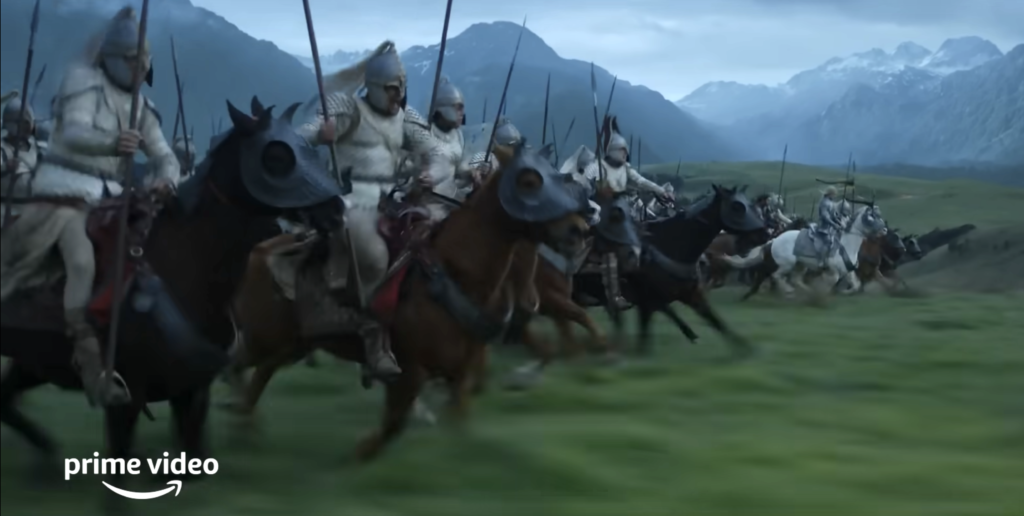
Hal is recognized as King of the Southlands, but Adar doesn’t recognize him at all, despite their shared past, in which he inflicted some dreadful hurt upon Hal.  Adar confirms he one of the elves who are the “sons of the dark,” the first orcs, a Uruk, a Moriandor,  made by Morgoth’s torture, and evidently Sauron's too. Adar advises Galadriel that she own her own darkness, that he isn't "the only elf alive who has been transformed by darkness.” Yet, prior to the Doom, Halbrand and Galadriel save each other from their respective urges to commit murder, in an affecting scene. While horse Berek, ridden into battle by Isildur, and his father Elendil bond. Previous to this, Galadriel speaks Words to her horse and it speeds so effectively she catches up with Adar fleeing with the Key.

May Queen Regent Míriel escape the flood and fire emergence of the Dark, but one fears she did not survive, so Pharazôn has his way open to rule Númenor, to institute his ambition to dominate the elves, dwarves and all the rest of Middle Earth.

At this moment the only one of this group of heroes seemingly entirely beyond the effect of the dark, is Arondir. Galadriel and Halbrand are touched by it, as is Theo, who admits how Sauron's sword hilt-key draws him by the sense of personal power he feels when holding it. This is a morally complicated world, with characters who aren’t black and white, which LotR was as well, at least in a sense, as with Boromir and his father. But the LotR's world constantly harks back to the treasons, corruptions and destructions within various characters of the heroes legendarium of the Second Age, that brought about its fall. There's a great deal of viewing satisfaction watching this roll out, despite knowing how it will conclude.

This episode gave me shivers of doom – but then the Second Age is doomed, particularly these very Southlands. Nevertheless, it was satisfying and effective; it moved the plot along swiftly, while we learned quite a bit more about some of our principal characters, including how Elendil's wife died -- drowning.  What we see and learn in this episode has been set-up in the previous ones.  The episodes are building on and out from each other.

Among the fireballs of bitter bile and malice relentlessly released by Some upon this series are the accusations that the lines spoken by are our heroes are stupid-silly. Patience, Watchers! High Language dialog can -- and probably will -- feel forced and artificial in our own wizened rhetorical age. But read aloud the same efforts in the revered LotR, and if they aren’t among the current elderly who first discovered LotR back when it first became a publishing phenomenon, and they themselves were young, so young, people shudder.  So what do we want? Pseudo hipster quippage a la PJ, or occasions in which heroes speak in fabricated, skaldic poetics?  Myself, I vote to apply judiciously,  "the glorious ground of Endill . . . . "