LINES OF THE DAY

". . . But the past does not exist independently from the present. Indeed, the past is only past because there is a present, just as I can point to something over there only because I am here. But nothing is inherently over there or here. In that sense, the past has no content. The past -- or more accurately, pastness -- is a position. Thus, in no way can we identify the past as past." p. 15

". . . But we may want to keep in mind that deeds and words are not as distinguishable as often we presume. History does not belong only to its narrators, professional or amateur. While some of us debate what history is or was, others take it into their own hands." p. 153

Silencing the Past: Power and the Production of History (1995) by Michel-Rolph Trouillot

Showing posts with label empire. Show all posts

Sunday, March 27, 2016

Irish Writers Reflect on the 1916 Easter Uprising

My copy of Yeats' Collected Poems
     As Yeats is so impressed upon my literary bones this was of interest.  His great commemorative poem, Easter 1916, is cited by most of the writers, Irish literary lights as they all are.


As  example,  from Colm Tóibín, who connects dying in a military - political condition that made success impossible with that of the suffering of Irish women:
] "The men of 1916 had no chance of success. They went out to die, a few hundred of them – while thousands were being slaughtered each day in the trenches of Belgium and France. The scale was important. Big wars are terrible and killing civilians is just cowardly, but pitching a few hundred men against the might of the British army is a revolution. It was a transcendental moment of sacrifice and of suffering. Perhaps it was a result of colonisation, with its enforced poverty and shame, but Ireland was for a long time interested in the idea of suffering well, or of suffering better than the oppressor; none was expected to suffer more, or more quietly, than the women of Ireland, into whose bodies and biology suffering was hard-wired. So the idea of blood sacrifice is not removed, in my mind, from a modern state that cannot legislate for the proper medical treatment of pregnant women, because suffering is something we are supposed to do well. Also dying, if it comes to that. 
All nations have founding myths. I suppose I would prefer to have a revolution in my country’s past than a monarchy. I would prefer to move on from Catholic nationalism than from fascist dictatorship. But the truth is that local history has given way, in my lifetime, to global economics, and we have no good stories for this: no parades, no revolutions. The stories we tell ourselves about the past are not about politics. I mean they are not about fairness, about who has power and where the money goes. They contain a deeper madness. The stories we tell are about killing and being killed, and why that was all a terrific thing to do." ]
In contrast to the gravity of Tóibín's and  the others' pieces which generally were serious meditations upon death and politics, was Roddy Doyle's bit. He is the only member of this group who has a comic sense of the universe, and did it ever show.

I've always liked Irish humor. As well, culturally religious as the Irish are, either because of that, or in spite of it, they are the group I know of in which there are many folktales of an Irishman getting the best of the devil -- outwitting even the greatest Trickster of them all.  This deeply impressed me from the first time I ever encountered such stories in some of the tales included in a book in my small school's meager library. I thought, "No such story of the devil would ever have been told in my religion!"  This provoked further thoughts such as, "Do Catholics have more fun than Lutherans?" since the relationship my Catholic friends had with their parents seemed so much warmer and relaxed than those we Lutheran kids had with ours.

Of course that was long before I ever learned anything about Ireland colonization by England or just about anything else.  I hadn't yet read a single poem of Yeats -- or even heard of the man with whose words and life I would spend so much of my 20's.

  

Sunday, April 5, 2015

Ann Leckie - Ancillary Sword

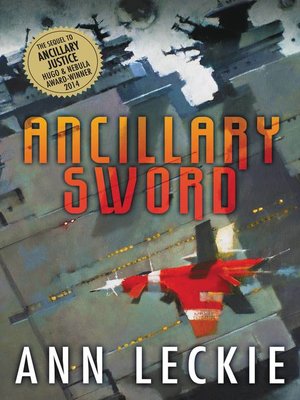
Leckie, Anne (2014) Ancillary Sword. Orbit – Hachette. New York.

Why have the covers of these books been made so ugly while reflecting nothing of what's inside?
Ancillary Sword reads as fast as its predecessor, Ancillary Justice. I began reading it about 10 PM on Thursday night, and finished it during Friday night's reading hours. It's accidental that I read this book only hours before the Hugo awards short list was announced. 

Some readers have said Ancillary Sword wasn't up to the quality of Ancillary Justice. I don't agree. However, I think I can see why some feel this way. It's like traveling anywhere: you can only see it for the first time once.

Justice educated us into understanding the strangenesses of the world Leckie created.  The grammar is used as we currently usually employ English grammar. But it takes time to comprehend the vocabulary in which Sword of Justice is written. It is almost entirely Leckie's usage of gendered nouns and pronouns that creates the strange of Radchaai space and its citizens -- yet the full collective noun, is the non-gendered "human". Since Justice has educated us into seeing and hearing what was initially strange and puzzling, Sword is more immediately accessible to the reader than Justice was. As Sword is more immediately accessible some think it is a bit disappointing.

In terms of language driving the narrative, the plot and and dramatizing the narrator-protagonist Breq, even the titles of the books provide another sophisticated and intriguing dimension to the series.  In Justice, it was the sword on which we focus, i.e. how the ruler of a planetary empire employs organized military violence and war, to adjudicate the imperium's disputes and conflicts, even, literally within itself.  In Sword, it’s about how justice -- legal, political, social – can be employed to counter even Anaander Mianaai's imperial inner conflicts, as well as specific disputes in specific places.

In both books, the outcomes still depend upon how particular minds choose their own employment of violence and law, on behalf of individuals and collective entities. These collective entities are also themselves often individuals, so to speak, contained within a larger collective, such as the captive labor in generational perpetuity labor slavery within the larger collective of the empire, spiraling down through containment within the planetary system, the planet, the tea plantations and the administrations of all of them.

Though the second novel is titled Ancillary Sword, Fleet Commander Breq serves on a Radch imperium Mercy (of Kalr) ship, while being countered by a Sword (of Atagaris) ship, complete with the ancillaries, which Breq's Mercy ship doesn't have. But it is justice, strained through mercy, that Breq must wield, for the survival of her ship and mission, not the sword of military violence.


Ancillary Sword tackles other issues of an imperium's violence as well: colonization, exploitation and slavery, as well as wars of conquest and civil war for control that are not only inevitable to empire, but even, in many ways, an empire's raison d'etre (see: Napoleon's empire, to examine this signature of imperium from fairly close period in our own time, but one distant enough in history that we can see it more clearly than our own).

Leckie give us all this, not only through characters' dilemmas, but with language.  She creates an exciting work of fiction that interrogates the boundaries of civic responsibility for individuals whether AI, such Station Administrator Celar, or collective individuals such as the variety of ancillaries, and the variety of levels that make up the whole society of the Atohoek (ad hoc?) planetary system, at this moment, within the Radch imperium. This is an impressive achievement. 

So far the Ancillary novels are among the most original, most interesting writing achievements that has come out of science fiction in quite a few years.

Saturday, December 29, 2012

"The full story of the British empire is yet to be told .... "

So speculates Martin Kettle in yesterday's UK Guardian Comment section. What he speculated has provoked 500 comments so far. Or, perhaps it would be more accurate to say, it has provoked a lively argument. Too bad so many of the argumentative are so stone ignorant of history of anywhere, including the countries in which they live.

Myself, as historian of New World slavery and the contexts in which it operated, appreciate how much he focuses on the 17th century, the century of the baroque, and the continuance of the Wars of Religion, while all the while Europe expands its abilities for extraction of resources around the world, and particularly in the New World. Very seldom do those who praise the gold and silver splendors of the Baroque era consider how and why all that gold and silver came available for those palaces, theaters, cathedrals and dinner services. Kettle does this via consideration of a new exhibit up in Amsterdam's City Museum, called "The Golden Age." These days more people pay duely lipservice to the fact that New World slavery funded the European Industrial Revolution. But even those willing to accept that tend to remain resistent to considering what those riches extracted from South America and Mexico with African and Indigenous slave labor funded before that -- not only elaborate salt cellers but even the ships that allowed for further slave transport pillage and-plunder and exploration. Not that there was anything to stop this process, any more than there's anything to stop the process of China's current pillage and plunder investment in Africa. No matter what power manifests itself, whether Egypt, Rome, a European power -- Africa, the birthplace and cradle of homo saps -- is central to the current imperial extraction.

The Amsterdam exhibition tracks all these aspects of globalisation's first wave. The Dutch established colonies in modern-day Brazil, South Africa, Sri Lanka and Java – and on Manhattan, too. Theirs was a connected world. In a 1656 picture of the centre of Amsterdam, Ottoman merchants are shown negotiating a deal just round the corner from where the picture itself now hangs. A Dutch translation of the Qur'an was printed there in 1696.

But this was a time of slavery and war too. Slavery was illegal in the Netherlands, but Dutch ships carried and sold slaves in Africa and Surinam, and Dutch fortunes waxed rich from the profits of the trade. The Dutch were renowned in China for their violence, and their arms industry – still the sixth-largest in the world today – was formidable. By modern standards, Dutch justice was anything but enlightened. Two ghoulish Rembrandt drawings of the public strangulation of a female murderer depict one of the many dark sides of the golden age. 

In the Age of Revolution exhibit here at the New York Historical Society last winter, there was a gallery devoted to Dutch Surinam in the 17th century, set up as a tavern, complete with sound of various figure speaking from the historical record. Around it were hung those famous paintings of the place, with traders, seamen, women -- particularly slave-whores -- from around the world, with a very large number of Atlantic seaboard captains and merchants. The seventeenth century Caribbean and Atlantic were the center of the world then, o yes, to degrees that we can hardly imagine. It's this kind of work done by museums and historical societies at the top of their game that helps fill in the picture from the documented texts.

A lot of this was also repeated in the Liverpool International Museum of Slavery as well. I sure wish I could visit this one too, but that's unlikely.