LINES OF THE DAY

". . . But the past does not exist independently from the present. Indeed, the past is only past because there is a present, just as I can point to something over there only because I am here. But nothing is inherently over there or here. In that sense, the past has no content. The past -- or more accurately, pastness -- is a position. Thus, in no way can we identify the past as past." p. 15

". . . But we may want to keep in mind that deeds and words are not as distinguishable as often we presume. History does not belong only to its narrators, professional or amateur. While some of us debate what history is or was, others take it into their own hands." p. 153

Silencing the Past: Power and the Production of History (1995) by Michel-Rolph Trouillot

Showing posts with label Ireland. Show all posts

Wednesday, September 15, 2021

Warm and Woolly September

      . . . . Ay-up, in the 80's, fuerza sunshine.  Of course this is the day to trek to REI and buy serious wool sox, and hit the shops on Broadway for cashmere sweaters. To balance this out, my personal air conditioning unit is arriving tomorrow.  I'll continue to have use for this for at least another three weeks, I suppose.

     . . . . .Other significant news: CNN reports that as of today, 1 in 500 people in the US have died of Covid.

~~~~~~~~~ Books

Some serious reading has arrived in la casa, because people send us books. 
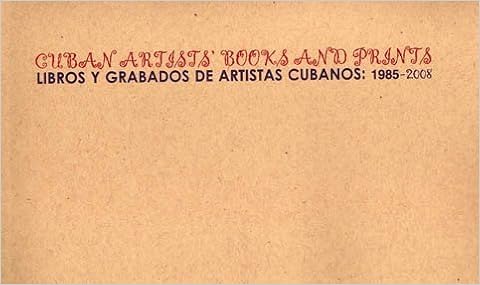


Just today we received Libros Y Grabaos De Artistas Cubanas: 1985-2008, the catalog for the exhibit held in a different world, held at the Museum of Modern Art, and funded by the Grolier Club of Manhattan. It's a beautiful volume, splendidly fabricated, with equally beautiful content.


Illuminating antiquity, somebody I don't even know -- though I do know his name, I've never met the person -- sent me a copy of the massive, annotated, mapped, appendiced and encyclopedic indexed The Landmark Herodotus: The Histories (2007), edited by Robert B. Strassler.  It's so big it's too heavy to hold. It has to rest on a lap desk or some other support. A reference resource. I have read Herodotus's Histories -- or at least read widely in them. The Polish journalist, Ryszard Kapuściński has read them all, many times.  He annotates Herodotus with his own book, Travels with Herodotus (2004) which focuses on a lifetime of reading Herodotus on the road, studying and reporting. He never traveled without the Histories. Even if one isn't familiar with or care about Herodotus, as with all of Kapuściński's writing it well worth reading, because so goo.

Now for the busy, busy 19th Century.
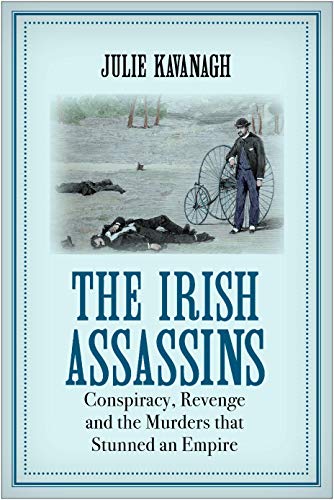


The title is unfortunate because it make the book sound like a Victorian sensationalist 'true crime' tale, when The Irish Assassins: Conspiracy, Revenge, and the Phoenix Park Murders That Stunned Victorian England (2021) by Julie Kavangh, is a serious work of history. In Serbia it was the Black Hand, the open-secret society that funded and planned the assassination of Duke Ferdinand and his wife in 1914.  Here in 1882, it's the Irish American funded, Invincibles, the militant arm of the Irish Independence Movement. At the moment when talks between the Movement and the British government were making headway, the day after Gladstone's emissary, Lord Frederick Cavendish arrives, he and the Irish undersecretary, Thomas Burke, are assassinated by the Invincible in Dublin's Phoenix Park.
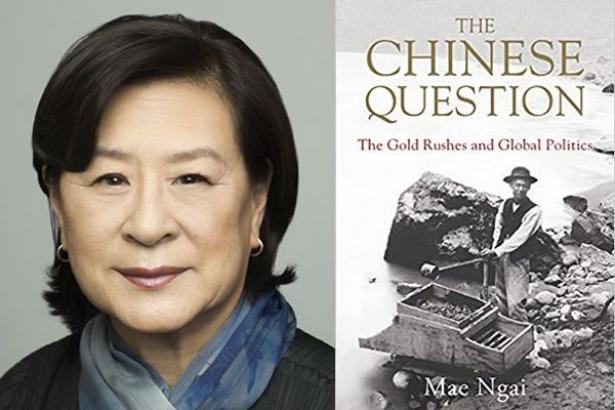


The Chinese Question: The Gold Rushes and Global Politic (2021) by Mae Ngai, traces the anti-Chinese racism in the gold fields around the world 1848-1899. It was remarkably the same in South Africa and Australia as it was in California.
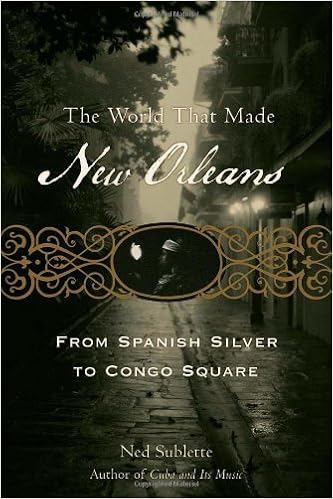


People still buy our books. We just heard a school in New Orleans is purchasing two hundred copies of The World That Made New Orleans: From Spanish Silver to Congo Square. In the meantime, most of New Orleans's power was restored by the end of last week, but not so out there in Cajun Country.  People we know have organized a truck convoy to take supplies to Thibodeaux and Houma. With our contribution I requested sanitary supplies in various sizes be included. People, even when women are part of the organizing and planning, tend to forget this necessity.


~~~~~~~~~~~ Watching

Tomorrow Postmambo Movie Night presents The Rumba Kingsfollowed by a conversation with filmmaker Alan Brain.



~~~~~~~~~~~~~~~~~My Favorite Thing This Week (so far)

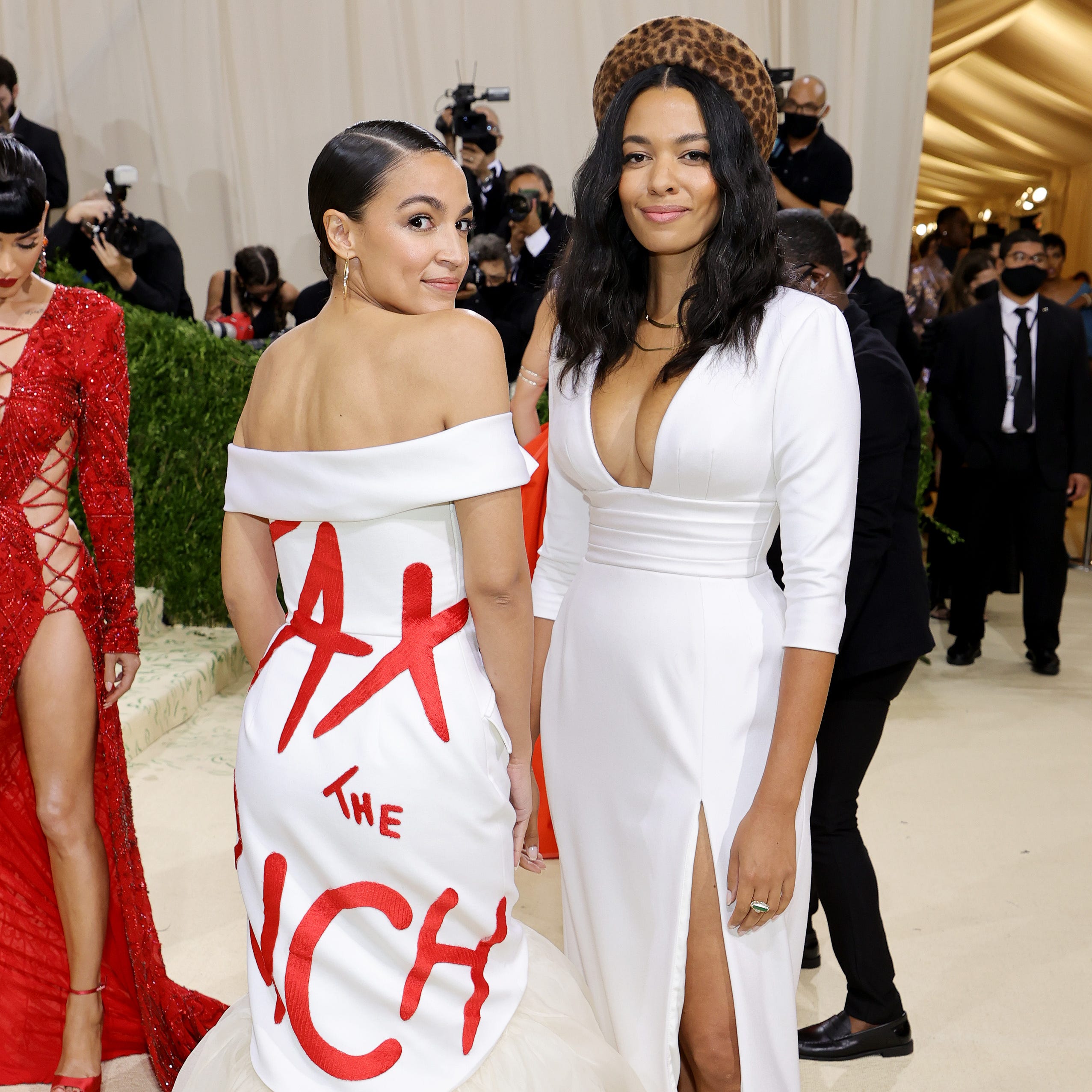
Alexandria Ocasio-Cortez, at Monday night's Metropolitan Museum of Art Costume Institute Gala (part 1), in a borrowed dress from her designer girlfriend and 'escort':


The meta and the irony of this.  So much reading one can do -- 
"I don't really care - do you?"  That one has never attended any Met Costume gala!
 

Sunday, March 27, 2016

Irish Writers Reflect on the 1916 Easter Uprising

My copy of Yeats' Collected Poems
     As Yeats is so impressed upon my literary bones this was of interest.  His great commemorative poem, Easter 1916, is cited by most of the writers, Irish literary lights as they all are.


As  example,  from Colm Tóibín, who connects dying in a military - political condition that made success impossible with that of the suffering of Irish women:
] "The men of 1916 had no chance of success. They went out to die, a few hundred of them – while thousands were being slaughtered each day in the trenches of Belgium and France. The scale was important. Big wars are terrible and killing civilians is just cowardly, but pitching a few hundred men against the might of the British army is a revolution. It was a transcendental moment of sacrifice and of suffering. Perhaps it was a result of colonisation, with its enforced poverty and shame, but Ireland was for a long time interested in the idea of suffering well, or of suffering better than the oppressor; none was expected to suffer more, or more quietly, than the women of Ireland, into whose bodies and biology suffering was hard-wired. So the idea of blood sacrifice is not removed, in my mind, from a modern state that cannot legislate for the proper medical treatment of pregnant women, because suffering is something we are supposed to do well. Also dying, if it comes to that. 
All nations have founding myths. I suppose I would prefer to have a revolution in my country’s past than a monarchy. I would prefer to move on from Catholic nationalism than from fascist dictatorship. But the truth is that local history has given way, in my lifetime, to global economics, and we have no good stories for this: no parades, no revolutions. The stories we tell ourselves about the past are not about politics. I mean they are not about fairness, about who has power and where the money goes. They contain a deeper madness. The stories we tell are about killing and being killed, and why that was all a terrific thing to do." ]
In contrast to the gravity of Tóibín's and  the others' pieces which generally were serious meditations upon death and politics, was Roddy Doyle's bit. He is the only member of this group who has a comic sense of the universe, and did it ever show.

I've always liked Irish humor. As well, culturally religious as the Irish are, either because of that, or in spite of it, they are the group I know of in which there are many folktales of an Irishman getting the best of the devil -- outwitting even the greatest Trickster of them all.  This deeply impressed me from the first time I ever encountered such stories in some of the tales included in a book in my small school's meager library. I thought, "No such story of the devil would ever have been told in my religion!"  This provoked further thoughts such as, "Do Catholics have more fun than Lutherans?" since the relationship my Catholic friends had with their parents seemed so much warmer and relaxed than those we Lutheran kids had with ours.


Of course that was long before I ever learned anything about Ireland colonization by England or just about anything else.  I hadn't yet read a single poem of Yeats -- or even heard of the man with whose words and life I would spend so much of my 20's.