LINES OF THE DAY

". . . But the past does not exist independently from the present. Indeed, the past is only past because there is a present, just as I can point to something over there only because I am here. But nothing is inherently over there or here. In that sense, the past has no content. The past -- or more accurately, pastness -- is a position. Thus, in no way can we identify the past as past." p. 15

". . . But we may want to keep in mind that deeds and words are not as distinguishable as often we presume. History does not belong only to its narrators, professional or amateur. While some of us debate what history is or was, others take it into their own hands." p. 153

Silencing the Past: Power and the Production of History (1995) by Michel-Rolph Trouillot

Showing posts with label medieval history. Show all posts

Thursday, March 2, 2023

Not Wednesday, But It Is A New Month, So Here Are A Few Books

     . . . .  Essex Dogs (2023)  by Dan Jenkins is the first in a projected trilogy set in one of my perennial eras of fascination, the 14th century. Jenkins has written many popular histories of the middle ages, many of which I've read, without being impressed; he's also written-narrated on camera quite a few history progammes for Brit tv.  This is his first foray into fiction. 


This first novel follows one very small troop of hired fighters -- the Essex Dogs of the title -- from the 1346 Normandy Beach landing, through this particular French campaign, to its conclusion with the Battle of Crécy.  So, the part of story of King Edward III I’m interested in primarily, the role the Black Death played in the War starting in 1348 and thereafter, particularly how the English monarchy handled the effects of the Great Pestilence, is not here. 

What we've got is the sort of debunking of the chivalry and prowess on the field and leadership with which we are all deeply familiar, at least in fiction, since at least the days of Glenn Cook and Abercrombie. OPn the other hand, let's be honest here: being a monarch, or merely a member of a monarch's family, is to be a monster. It cannot be helped.  Part of this debunking chivalry is the theme of what a twit, turd, and creep is the Black Prince, showing him as a thoroughly horrible youth not in least above raping and further degrading peasant girls. This goes against what contemporaries and chroniclers have written of him:  

"Contemporaries praised the Black Prince's chivalrous character, in particular his modesty, courage and courtesy on the battlefield. According to the medieval chronicler Jean Froissart, after the battle the Black Prince held a banquet in honour of the captured king and served him dinner.

No one can ever say that the practice of chevauchee was ever anything but brutal in the extreme, destroying everything in the path, including ethics, morals, compassion, honor and that phantasm, chivalry:

Even in his lifetime, contemporaries challenged the Black Prince’s heroic image, recasting him as a villain. Criticism focused on his chevauchée raiding expedition [-- Me here: 'raiding expedition' mildly describes the murder, pillage, rape, burning and destroying everything within as 20 mile radius of the army's passage --but never fear, the novel revels in describing these matters, in detail, as Our Dogs do indeed participate.] in France in 1355–56, a brutal affair designed to demoralise the enemy. Starting in Bordeaux in September 1355, Edward moved across France passing Toulouse, Carcassonne and Narbonne. He focused his attention on towns where he could inflict the most damage with the least resistance. His troops looted, burned property and killed inhabitants. On campaign with the Black Prince in 1355, Sir John Wingfield wrote a letter to the bishop of Winchester proclaiming that “there was never such loss nor destruction as hath been in this raid”.

This novel is as gritty as it gets, i.e. gritty for gritty's sake – how many detailed phlegm balls are hawked on every page? It was neither interesting or revelatory.  It may be fiction but we’ve seen all of it depicted in novels many, many times before, and we know this first invasion of France by Edward III was successful, if only by the hair of winning at Crécy. Jones has a Name, has written many books of popular history, and television programs, but there is no fictional narrative drive, pacing or voice to this first novel by a guy who hasn’t written fiction before.  On the other hand, this novel details this “road to ruin for both England and France” as The Spectator’s reviewer labeled this 1346 campaign, the initiation of what became the 100 Years War -- though truly, the war began quite a few years earlier than 1346, at least as early as the Battle of Sluys, 1340 -- or even earlier.

Jones tells us he got the idea for how the book should work from a dinner with GRRM.

It was an interesting experience though, reading the fictional Essex Dogs by night, and three times a week working out to the audio version of  Ian Mortimer's Edward III: The Perfect King: The Life of Edward III, Father of the English Nation (2006) I've read biographies of Edward III by other authors, who admire him for many reasons, while providing a fair judgment of the shortcomings, or downright evils that may have been committed -- though which is which, contemporaries, posterity and historians do not necessary agree to.

Myself am suspicious of Mortimor’s claims that Edward II wasn’t executed, but lived on as a wanderer for another decade + in Europe. I also admit to being skeptical regarding Edward III's expenditures on luxuries of every kind, including dressing people for the earlier decades' endless tournies being excused as necessary PR for the Crown of England who also must project an aura as the ultimate badass warrior king, rather than as bad for England as well as for the war -- I mean the expenditure is even more astounding than the accounts of what the Queen Mother spent purely on luxurious living, decade after decade, including her racing stables -- every year Queen Elizabeth had to pay off her mother's debts. Mortimer (one wonders: distant relative of the Mortimer family who highjacked Edward II's crown?) excuses his order to behead his uncle, the Duke of Kent, as something he had no choice about – that in particular, I’m not buying, since in a matter of less than a half year Edward III and his supporters arrested Mortimer and executed him.

Alas though, this biography doesn't answer my perennial question, which is how in the world were France, particularly, and England also, keep fielding armies for this war when the Great Mortality returns time and time and time again, crops can't be planted, or if they are the English burn them or steal them so famine stalks France. Where are the fighting men coming from -- particularly when so many French nobles are killed at the same time in such military disasters as Crécy and Poitiers? The plague came back to England too, crops weren't planted and / or the weather destroyed them, yet somehow Edward III manages to keep getting ever increasing taxation passed to fund his wars, while so many die and go hungry.

The writers / historians I've read haven't mentioned the supreme irony that Edward III, the supreme King of Chivalry, identifying himself and his court with mythical King Arthur, chivalry's values, and performative, at least, practices, was the European king to dethrone the traditional  aristo knight in shining armor as skilled swordsman and horse rider, by funding and encouraging in every way projectile weapons, from the long bow to gunpowder and cannon.  They Do Say there were early cannon used at Crécy.

Balancing out some of the lacks as perceived in Mortimer's biography of Edward III, are his frequent citations of the rather astonishing number of successful and effective warrior noblewomen that populate the 14th century, such as Joanna of Flanders.  Isabella of 15th C Spain did not come out of a vacuum.

     . . . . Two other books, one a novel, also written by a successful screen writer and director, as well authentically a novelist, John Sayles, and the other non-fiction as well, but these two are centuries apart:

John Sayles Delivers Epic Battles and Travels in a New Novel

“Jamie MacGillivray” gives readers a sweeping tour of 18th-century history, from Scotland to the American Colonies.

The reviews are quite good.

Then to the 19th century New York City:

MADAME RESTELL: The Life, Death, and Resurrection of Old New York’s Most Fabulous, Fearless, and Infamous Abortionist (2023) by Jennifer Wright.
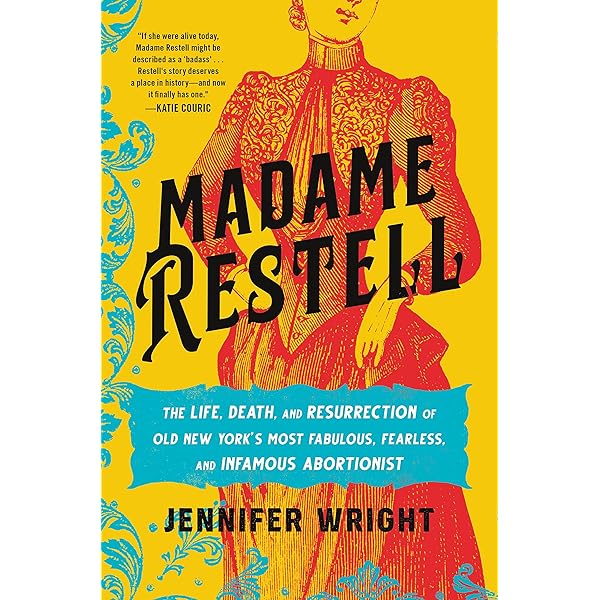

The title tells us what we need to know, which includes how pertinent this book is today, as the good people, male doctors killing women giving birth because they thought it cool to go from working with a corpse in a mortuary to deliver a baby, men just generally, of course, but particularly Anthony Comstock, battle to make this woman stop helping women.  Fascinatingly, at the end, when she's to be arrested, she commits suicide.  But, the author asks, "Did that happen? Or did she fake the suicide and escape, as for years her family hinted?

Saturday, January 23, 2021

RIP Sharon Kay Penman 1945 - 2021

 Sharon Kay Penman died yesterday, Friday, January 22, 2021.

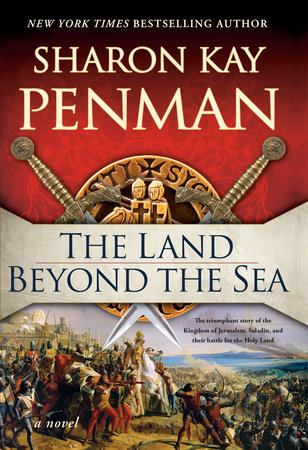
Her last novel, The Land Beyond The Sea (March 2020), was the last novel I borrowed from the library, right before covid-19 closed everything in March.  I wasn't able to return it to the library until the second week in August, when a few branches re-opened, for pick-up and returns.


I had read Penman's previous novels in the sequence they were published.

She was one of those great historical novelists who researched the deep scholarship.  She delved into the academics' work as carefully as the scholars themselves researched their primary materials and read the original languages, out of which to create those scholarly resources she so carefully consulted.   I particularly appreciated how she embraced that history isn't fixed, how much new information can change what we thought we knew. Sshe expected this, acknowledged and adjusted, accordingly, as much as possible.  

Our household expresses that constant of historiography like this: "How much the 11th century has changed in the last ten years!"

Penman's books helped get me through some tough times, so immersive and dense with detail of the long ago they are.  Though history changes, her books will continue to help us escape for hours from a terrible present -- or just a very hot day, too hot, too humid, too glary, to go outside.


Wednesday, May 6, 2020

There Are Still Some Books; A Future, Maybe?

     . . . . el V was putting in an order.  "What would you like?" 

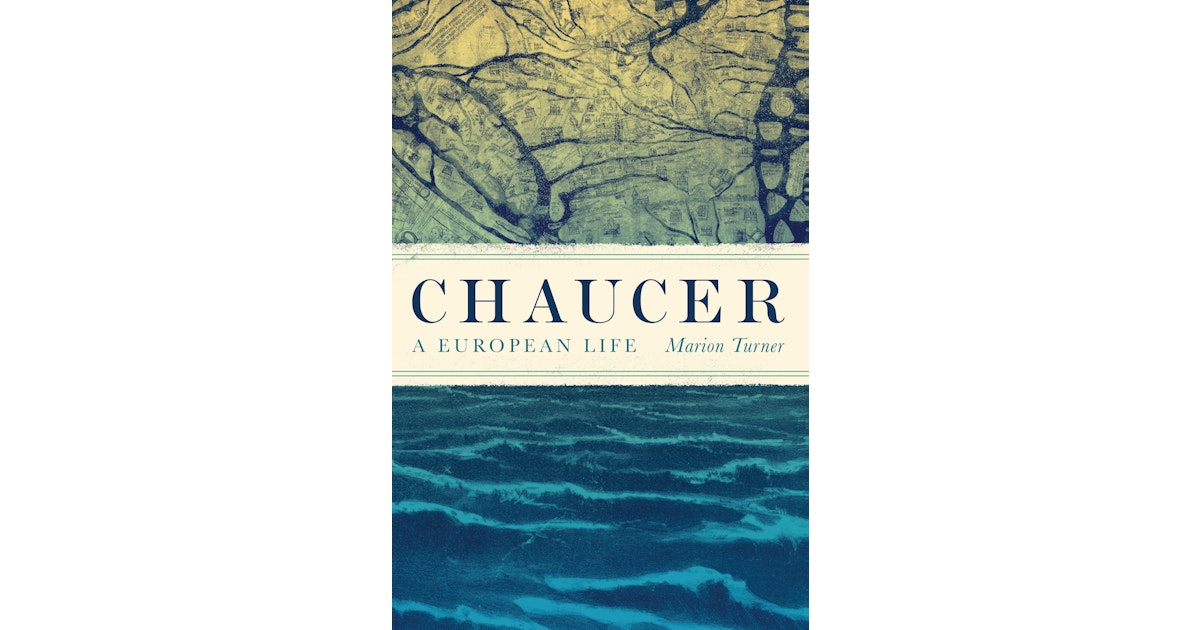
It took some time but finally recalled a title from Before, published in the fall of 2019, that I had been 'saving' for a shut-in time - Chaucer: A European Life by Marion Turner.


This isn't a lit crit study focused on literature, but social, cultural, political history, and not only that of England, but greater Europe.

Chaucer's times within the all important 14th century! He lives through the Bubonic Plague, as child in the first wave, and as a young man in the second wave of the later 1360's. His king was Edward III, various members of his family Chaucer served in various offices and in other ways. 

As I'm currently suffering Edward III withdrawal since finishing the biography of him by Ian Mortimer, this is exactly what I want and need.

Liking the human history of the oceans, The Boundless Sea, very much, but I also need something more, o I dunno, that fills in more about the 14th century, the hinge century of Europe between medieval and 'modern.'  Also, at the moment, Boundless Sea's author is enthralled with the centuries' repetition of the Indian Ocean trade between the East Coast of Africa, Egypt, the Red Sea, India and Southeast Asia, reaching up and down, eventually, into China proper.  The same goods continue to be traded, whether B.C. or A.D. or even the 17th century, and generally in the same locations, though ports silt in, names change, still as the centuries roll along even more nationalities and languages appear. So, right now, a little slow.

     . . . . The Diaries of John Quincy Adams .... Alas, JQ is no longer POTUS, though he has a difficult time letting go of D.C., but finally he moves back to Quincy, MA -- because his son George is lost at sea, evidently falling off a packet boat (it has been suggested in other books that George either fell overboard from being drunk or, due to being an Adams probably, committed suicide.  His propensity for drinking too much could also be attributed to being an Adams.  One of JQ's brothers was an alcoholic who committed suicide due to being unable to fulfill the family expectations, which were always beyond high.  Only JQ lived up entirely to expectation.

George's death is truly sad, particularly for Louisa, who has lost so many children already, either from miscarriage or still birth, or in very early childhood. For once Louisa is mentioned in the Diaries with clearly stated sorrow and sympathy, beyond, "my wife unwell" -- which back in the day could mean with menstrual period (not many of those!) or because pregnant, or recovering from miscarriage or birth.

Somewhere around losing the presidency and Andrew Jackson entering it, JQ seems to have lost his interest in swimming in the Potomac, in favor of riding his good horse, and lost his passion for trees as well. At least there are no more entries in the Diaries (as edited, anyway) of either.  I'm sorry for that, for they humanized JQ so much, and were amusing in their own right, as well as casting light upon publicly accepted behaviors of white men of a certain class in the America of the 1820's.

~~~~~~~~~~

     . . . . We have arrived at the point of sketching out plans for leaving here.  If fortunate, in the fall.  Ya, work still seems to be coming in, but for how long?  And it's not as though this is work that can't be done from somewhere else, as it is all writing work.

Additional local news: one of the people for whom I've been cooking has gone away, to live with his sister.

Wednesday, April 22, 2020

More Far Away With With Gordon Doherty, Though Not So Far As The HIttites

    . . . . Son of Ishtar was such a successful distraction from the here and now, I resolved to give one of Gordon Doherty's previous works a try. 

The Strategos TrilogyBorn in the Border Lands, Vol. 1. (2011)

Byzantine Empire Palaiologan Double Headed Eagle

This trilogy's chronological location is the 11th century A.D., opening in 1046.  A weak and corrupt Palaiologan 'empire' facing off against the energetic incursions of the Seljuk Turks to take the Emperor's throne.  I've been able to read only a few pages, but it appears Christian Apion (Greek Christian, not Roman),  born low, but also born a natural warrior, is the serial protagonist.  His is the era of Alp Arslan and the Battle of Manzikert, so there shall be battles and war, blood and cruelty, abounding, with detailed descriptions of the weaponry and strategies, the moves and counter moves, and at least, surely, from the Byzantine side, utter desperation.

It seems Doherty does repeat himself.  Many of the elements present in his latest, third trilogy of which Son of Ishtar is the first installment, appear already in the first pages of Born in the Border Lands. Among these are a mysterious female figure who appears and disappears, almost magical birds, portents and prophesies. But these are are the ages, without polling and marketing, in which the supernatural abounds.

However, over the last 3 or 4 years, maybe more? I've been attempting to fill the gap in my historical knowledge, of varieties of the Turks in the Middle East and "Turkey", the fierce people who kicked out the Arabs -- as the Mongols attempted to do with the Turks in the 13th century. As the tribe(s) who became the Ottoman empire were not the first Turkimen to invade the Middle East from the upper steppes (many under pressure of Mongolian expansion).  I don't know anywhere near as much about the Seljuks as I do about the Ottomans' origins and acension to both Empire and the (Sunni) Caliphate.

Of course, here, the Seljuks are the villains who must be defeated while Byzantium must be defended, preserved and expanded.  Good luck with that ... the 1204 Sack of Constantinople, which constituted the 4th Crusade isn't that far off from 1046, and, helped along by the Genoese, the Pisans and the Venetians, there will be an infinity of corruption, pillage, murder, poison, intrigue and failure in Byzantium in those years -- all ending up with 1453, and the Ottoman establishment thereafter of the Caliphate in Constantinople. 

Which rather causes one to wonder what was the point of it all?

a monogram of chi (Χ) and rho (Ρ) as the first two letters of Greek Khristos Christ, used as a Christian symbol by the Greek Church

~~~~~~~~~~~~

    . . . . It's the middle of the week, so we put in a grocery order, which appeared very quickly, from the wonderful MW supermarket. They have just initiated their own delivery service pilot service, rather than depending on Instacart and the other ubiquitous delivery services, who charge the customer and the vendor both -- and which the reviews lean toward as being disappointing in quality of service as well.

Most of what I put on the list was available.  This means fresh! sweet Italian sausage, made on the premises, is on the menu tonight, which also happens to be faculty 6 PM Wine Wednesday.  Was also able to score a couple of roasts, more chicken, and -- ham! as well as other equally welcome supplies, before what is on hand was used up.

Plus, of course, drinking coffee and tea with milk is safe for another week.  


Wednesday, January 22, 2020

Monty Python / Terry Jones, Chaucer & the 100 Years War

     . . . . The announcement of Terry Jones's death seems to have revived the controversy he caused with his book, Chaucer's Knight: The Portrait of a Medieval Mercenary (1980). 


The book went into 4th edition, which is high achievement for a work of literary, historical  criticism, written by a non-academic.

Jones argued that Chaucer's knight had been battle-hardened in the mercenary companies, fighting for plunder and pay, not for a sovereign's honor and glory. The knight's story of battle-hardened legendary Greek figures was to show real politic and war choices, in the manner of Machiavelli.  This made sense to me, considering Chaucer's era was that of the 14th century Edward Plantagenets.

Chaucer's King, Richard II, was the grandson of King Edward III. Richard's father was Edward, the Black Prince, who died of illness before his time. King Edward III was elderly, and died not long after, leaving England's future in the hands of a boy king and regents, none of whom had the brilliance and sheer capacity for ruling, hard work or warring possessed by Edward I and Edward III. 

These are the times of the Hundred Years War. The English military strategy of chauvachée ruled. For those unfamiliar with the term, chauvachée meant no rules, no decorum: the army lived off the land, plundered everything it could eat and carry, burned the rest, and killed civilians, including women and children, as a matter of purpose. *

The Hundred Years War was a golden age for mercenary war lords and their 'Free Companies." One of the most famous and richest was that of English John Hawkwood.* Joining up with Hawkwood's mercenaries was the foundation of many an English family's rise in fortune and rank, as was the chauvachée plundering of France by members of the English armies. Used to plundering at will with little or no repercussion, some of the nobility and unemployed mercenaries and soldiers during truces took doing the same in parts of the realm of England.  It wasn't a very good time for many in England in the dotage years of King Edward III, and the boy king Richard's, and, then, King Richard II's own reign.**

So, count on someone with a high sense of humor, satire and irony -- as we see in every frame of Monty Python works -- to recognize humor, satire and irony, and mockery of genteel Romance-fiction traditions in the work of another great artist like Chaucer.  But as with the placement of slavery as central to the history of the American War of Independence, the Constitution, the War of the Rebellion, traditionalists of literary scholarship tended to clutch pearls when first confronted with such irreverent revisionist literary history.

~~~~~~~~~~~~~~~

*      There are concrete descriptions of what a campaign of chauvachée meant for entire departments of France in Maurice Druon's historical fiction series, The Accursed Kings.
Also in the excellent biography, The Perfect King: The Life of Edward III Father of the English Nation (2006), by Ian Mortimer.


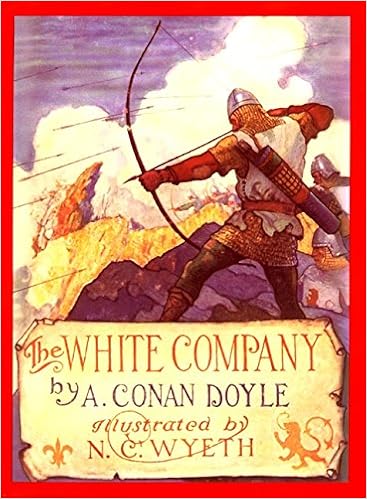
* *   Arthur Conan Doyle's favorite of his own works is an historical novel titled by the name Hawkwood's mercenaries were given, The White Company. There are numerous historical figures in The White Company, including the Black Prince, but Hawkwood is not among them. 


***   Richard II was deposed in 1399.

Wednesday, July 11, 2018

People Still Read Real Books -- Sir Steven Runciman

      . . .  . Working my way through Steven Runciman's three volume history of the Crusades.


[ "  His three-volume A History Of The Crusades, published between 1951 and 1954, set out to exemplify his belief that the main duty of the historian was "to attempt to record, in one sweeping sequence, the greater events and movements that have swayed the destinies of man," and show that history's aim was to give a deeper understanding of humanity. He aimed as much at a non- specialist audience as at fellow academics.
For Runciman, the crusades were the last of the barbarian invasions; their disaster was their failure to understand Byzantium. "High ideals were besmirched by cruelty and greed, enterprise and endurance by a blind and narrow self-righteousness," he wrote, "and the holy war itself was nothing more than a long act of intolerance in the name of God, which is a sin against the holy ghost." ]

I came to 
Runciman (1903 - 2000) only two summers ago, and not for via the Crusades, but the enduring conflicts over the control of Italy via The Sicilian Vespers, among the Papacy, France, the Holy Roman Empire, Spain and the Angevins (i.e. also the English - Plantangenets, etc.).  So not even even the shocking insanity of Venice's organization of the 1203 - 04 Crusade to take out Constantinople and their great rival -- as they saw it -- for the trade via the Black Sea, in which they destroyed the bulwark between Europe (including Venice) and the great Islamic states > Ottomans, is new information by now. 

Nor, so far, am I impressed by the 'colorful' narrative style, which reads clunky to me.

HOWEVER!  These books were published 80 + years ago (1951- 1954), so -- wtf do I know?  So much has been written since, that references these books, including by Roger Crowley, who is a very fine writer as well as scholar.  Crowley does know all the languages, which is the most important aspect of this work -- Arabic, Latin, Greek, Turkish, French, etc. Runciman also references, as much as possible, only the contemporary works.  Though of course his references do roll ahead as far as the late 19th century and aughts of the 20th -- and so much was still not revealed that Crowley, et al. have had the advantages of.

I do wish I'd had access to Runciman's books back when I was decades younger. On the other hand, that I hadn't means I didn't imprint, and new work > research > information doesn't have a problem moving to the forefront of my thinking.


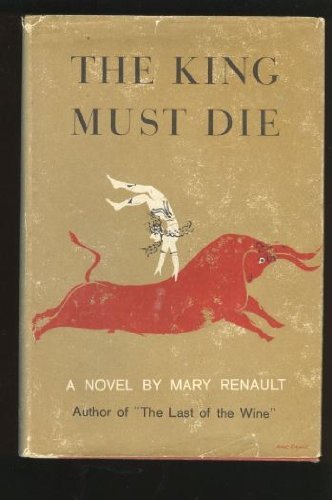
Whereas, when it comes to Mycenae Greece, I can never get Renault out of my thinking -- and, alas, she was wrong about so much.

 Runciman, though, he wasn't wrong in either facts or interpretation. He was ahead of his time.

Monday, April 24, 2017

The Revival: Ertuğrul

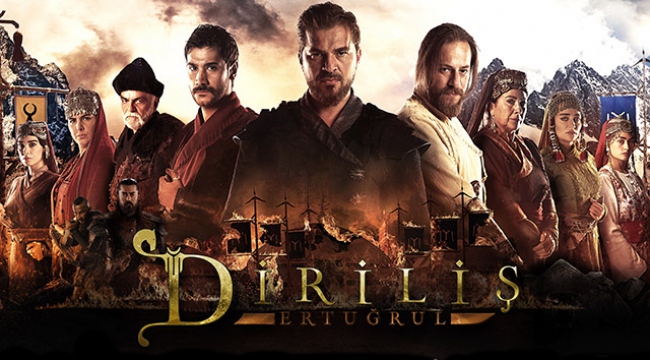
     . . . . Resurrection: Ertugrul (2014) 1st season.  Turkish television. Streaming from Netlix.


From Wiki:
Diriliş: Ertuğrul (English: The Revival: Ertuğrul) is a Turkish historical adventure television series created by Mehmet Bozdağ, starring Engin Altan Düzyatan in the title role. It is filmed in Riva, a village in Beykoz, intracity district of Istanbul, and premiered on TRT 1 in Turkey on December 10, 2014. The show is based on the history of the Oghuz Turks and takes place in the 13th century and centers around the life of Ertuğrul, the father of Osman I, the leader of the Ottoman Turks and the founder and namesake of the dynasty that established and ruled the Ottoman Empire. While only a small principality during Ertuğrul's lifetime, would prevail as a world empire under his son's dynasty for the next six centuries after his death.
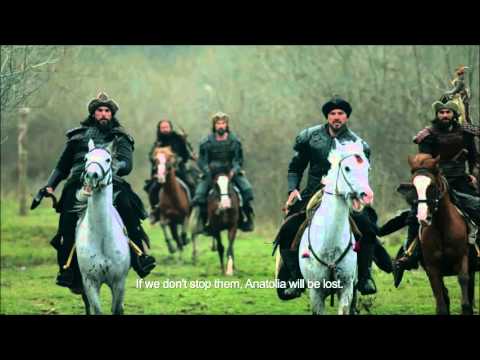
Love it, and I’m only  3 1/2 episodes into the 30 episodes on offer.  A colorful, exciting historical medieval sword and intrigue adventure – conflicting Turkic tribes, intra-family betrayals, nasty villains, political treason, heroes, Mongols and Templars in the 13th century.

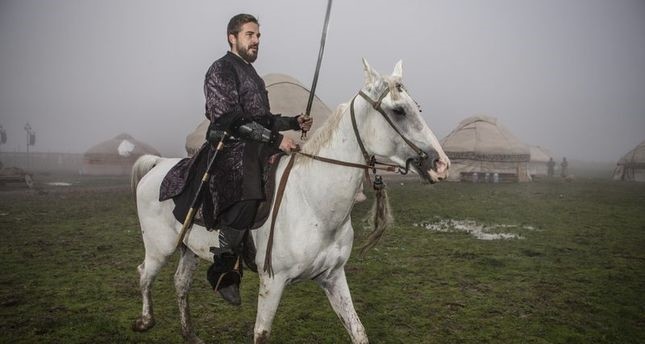
In an early scene Ertuğrul unsaddles this horse, while having an important conversation.  During the scene the horse kept looking at Ertuğrul, happy horse ears cocked toward his voice.  One got the sense that this horse liked the actor, or at least found the guy interesting enough to pay attention to him.  In the previous scene, Ertuğrul sits on the ground and talks to his himself -- or the horse -- attempting to puzzle out the dilemma into which he's plunged his clan by rescuing prisoners who have escaped from the clutches of the Big Bad, who is very powerful and has suzerainty over his people.
The collision of a variety of nomadic horse peoples, all of whom have been disrupted from traditional lands by the fire of the Mongol sweep across the northern steppes.


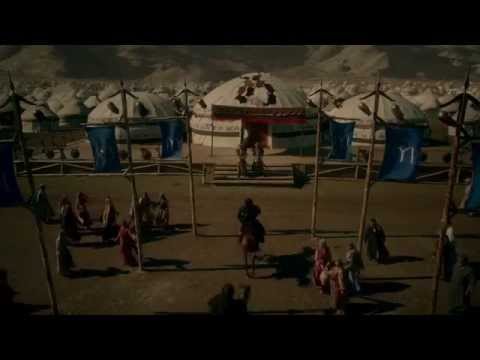
Their culture and way of life is shown in lovely detail -- yurts, many yurts! The details of the varieties of armor and weapons is terrific. This series has all the elements that make historical drama series my favorite viewing.  It's helping get through the current dearth of availability of such viewing for the moment, as I impatiently anticipate the second season of The Last Kingdom showing up next month streaming on Netflix.


Don't mess with Halim.
Happily, unlike some of the other very popular Turkish television series currently available on Netflix too, Resurrection also keeps the romance / plots to a realistic minimum. Historical / adventure fictions that center the plot on love and romance are most definitely not my cuppa tea.  Though, of course, it is important that Ertuğrul, the son of the Oghuz tribe, connect with Seljuk Halime, as she will be the mother of his son, who will be the forefather of the Ottoman Turks and their empire.


As with most current historical sword etc. fighting costume dramatizations these days, as we see in series out of India and so one, this one too has enthusiastically learned from the Japanese wuxia to shoot the action scenes.  This works out well for the production in countries like Turkey and Inida whose laws forbid graphic, detailed, lascivious scenes of violence, death and / or sex – another reason I enjoy these series.  People are not forever tearing off the clothes and throwing women against the wall to depict passion – even when there’s a perfectly good bed right next to them!  It’s beyond years since that tired, boring, uncreative trope for passion passed its sell-by date.

Tuesday, December 1, 2015

'Tis the Dark Season - Short Days and Long Nights - Reading Wednesday

The lovely time of year, the crawl up to the winter solstice, is here, days of light filtered as through a martini, night dark and sweet as deep piled blue velvet.  We want our pleasure reading to enhance the alternating chill and coziness. The high Middle Ages and the Plantagenets fill this seasonal bill so well, since so many of our anglo Christmas and Yule traditions are associated the periods of their reigns. Here follow some suggestions.

Thus we may begin in the 13th century with Four Queens: The Provencal Sisters Who Ruled Europe  (2007) by Nancy Goldstone.  The four sisters in question are Marguerite (married to the King of France), Eleanor (married to the King of England), Sanchia (married to the King of Germany), and Beatrice (married to the eventual King of Sicily). Born and raised in Provence, these sisters played a large role in European politics for most of the 13th century.  These four sisters were as unequal in the power to influence politics as they were in the happiness of their marriages. There was much sisterly jealousy, jostling for first position in the great public feasts of the day, and therefore, some very public temper tantrums, and less public plotting against each other.


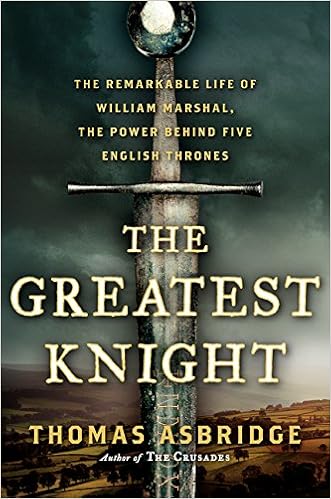
We continue with The Greatest Knight: The Remarkable Life of William Marshal, the Power Behind Five English Thrones (2014) by Thomas Asbridge.

William the Marshall was known throughout Europe as the greatest warrior of his time. But despite having served five different kings in close and trusted capacity, much of his life was difficult, not to mention dangerous.  Shoot, without even factoring in wars and battles, being close to rulers is dangerous in itself.  He  ascended to acting regent for the young Henry III (cr. 1216 - d.1272), son of the catastrophe that was King John, by the close of his long, remarkable life.

It was in the reign of Henry III that the "Tales of Robin Hood" began to circulate, due to Henry III's grasping nature and general incompetency (yet, considering he kept his throne all those years, he must have known how to do something right).  He it was who expelled the Jews from England, which, as the consequence, as we have seen elsewhere and in other eras, made the country poorer.  Much of what he grasped went into the beautification of his many homes and sumptuous living.


Henry III was father to Edward I, Hammer of the Scots.

Certainly the word pictures of the luxuries to be found in the castles of the Romances so popular in these times were what Edward I grew up among in the homes of his father, and his mother, Eleanor of Provence (this is one of the sisters of Four Queens).  Eating on gold and silver, drinking the finest wines and wearing the finest silks was matter of course.

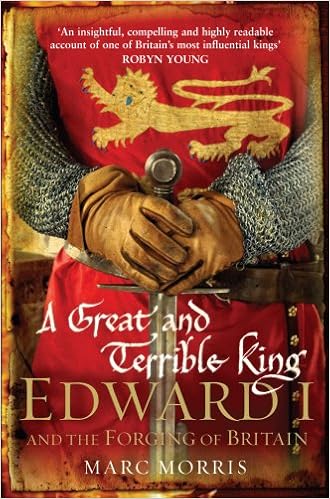
A Great and Terrible King: Edward I and the Forging of Britain (2008) by Marc Morris tells the long tale of Longshanks, as this Edward was also known because his legs were long, was long-lived -- 1239 - 1307, and had a long reign -- 1272 - 1307. However that Scots business and Wallace were right at the very end of his reign.

After Longshank's own death, another generation of luxurious Christmas living in the reign of his son, Edward II, is celebrated in that wonderful Christmas poem, Sir Gawain and the Green Knight.

Richard's reign had problems but it was certainly a period of high literary achievement. Other excellent associated reading for the season is Geoffrey Chaucer's Romaunt of the Rose, and The Book of the Duchess, dedicated to the deceased Blanche of Lancaster, wife of the First Duke of Lancaster,l John of Gaunt, (1340- 1399. Lancaster was uncle to King Richard II.  Lancaster eventually made his mistress, Katherine Swynford, his third wife. Katherine's sister, Philippa, was married to Geoffrey Chaucer and had served the Duchess Blanche.  Further, Katherine, with the Duke of Lancaster, became an ancestor of Princess Diana Spencer as well as to members of all the dynasties that followed the end of that of the Plantagenets.


By now we're heading out of the medieval era into the modern the world, the 1400's, which will bring us the Age of Exploration and the collision of Europe with North and South America.  However, in Spain, the light of the Renaissance and the modern had not yet dawned.  It was pretty darned dark there in the mountain hideway where Isabella's mother secreted herself and her children from the murderous intentions of her husband the King.

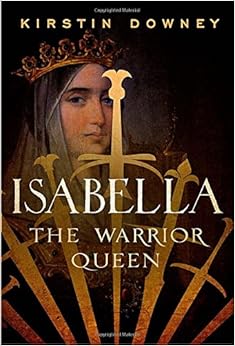
The story of Isabella: The Warrior Queen (2014) by Kirstin Downey, who funded Christopher Columbus, makes a solid bookend to stories of the Plantagenets -- which are deeply entwined with that of the Iberian Peninsula during the preceding century via marriage, including that of Duke of Lancanster to his second wife, Constance, a Spanish infanta.  (Alas, this marriage never led to Lancaster crowned King of Spain, as he'd hoped.)

Isabella, who was the driving force to the union of Spain and driving out the Moors, is as exciting* as the Cantar de Mio Cid, and one essentially unknown to English-only reading readers.  For this reason alone I'd be grateful to Downey for writing this book.  It fills in much about British and French history in the 13th and 14th centuries as well, because the author carefully fills us in on Isabella's immediate family. Her survival in earlier years was as precarious as any princess's or prince'd in the family of the Delhi Moghul rulers of a somewhat later era.  Spain was a literally cutthroat political situation -- but then no more so that that of England, which all these works show in great and fascinating detail.

The greatest difficulty faced in reading these books is that everyone -- except for Blanche and Constance -- have the same names, over and over, generation after generation.  Especially Eleanor.  And I didn't even include a book specifically about her!  But then, she's 11th and 12th centuries.


However, her life certainly influenced many of the Arthurian Romances, particularly via the popularity of Geoffrey of Monmouth's History of the Kings of Britain, which remained equally popular in the time of Henry III and Edward I.

---------------------------

*   This is not to be taken as an endorsement for what the Isabella and Ferdinand did, expelling both the Moors and the Jews. See, above, that Spain wasn't feelin' the Renaissance, or at least not in the way other parts of Europe did.  They definitely felt the invade and conquer part.

Even in Edward I's time, the English court made as much fun of the clothes and customs of his Spanish bride, Eleanor of Castile (she put carpets on the stone floors!) as it reputedly did about Henry VIII's Spanish Catherine of Aragon -- though that seems to be rather exaggerated or perhaps even pure invention of fiction and drama writers -- and Charles II's Portuguese bride -- she who brought him the profits of several trading cities of western India. Not that even that was enough to fill Charlie's constantly empty coffers and privy purse and to satisfy the ever demanding paws of his favorites and consorts.  For that he had to resort to slave trading. And selling his wife's personal jewels and furniture.