LINES OF THE DAY

". . . But the past does not exist independently from the present. Indeed, the past is only past because there is a present, just as I can point to something over there only because I am here. But nothing is inherently over there or here. In that sense, the past has no content. The past -- or more accurately, pastness -- is a position. Thus, in no way can we identify the past as past." p. 15

". . . But we may want to keep in mind that deeds and words are not as distinguishable as often we presume. History does not belong only to its narrators, professional or amateur. While some of us debate what history is or was, others take it into their own hands." p. 153

Silencing the Past: Power and the Production of History (1995) by Michel-Rolph Trouillot

Showing posts with label medieval culture. Show all posts

Saturday, January 23, 2021

RIP Sharon Kay Penman 1945 - 2021

 Sharon Kay Penman died yesterday, Friday, January 22, 2021.

Her last novel, The Land Beyond The Sea (March 2020), was the last novel I borrowed from the library, right before covid-19 closed everything in March.  I wasn't able to return it to the library until the second week in August, when a few branches re-opened, for pick-up and returns.
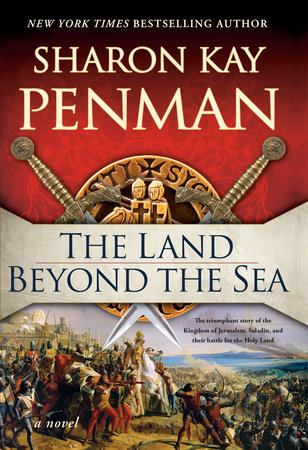


I had read Penman's previous novels in the sequence they were published.

She was one of those great historical novelists who researched the deep scholarship.  She delved into the academics' work as carefully as the scholars themselves researched their primary materials and read the original languages, out of which to create those scholarly resources she so carefully consulted.   I particularly appreciated how she embraced that history isn't fixed, how much new information can change what we thought we knew. Sshe expected this, acknowledged and adjusted, accordingly, as much as possible.  

Our household expresses that constant of historiography like this: "How much the 11th century has changed in the last ten years!"

Penman's books helped get me through some tough times, so immersive and dense with detail of the long ago they are.  Though history changes, her books will continue to help us escape for hours from a terrible present -- or just a very hot day, too hot, too humid, too glary, to go outside.


Wednesday, May 6, 2020

There Are Still Some Books; A Future, Maybe?

     . . . . el V was putting in an order.  "What would you like?" 

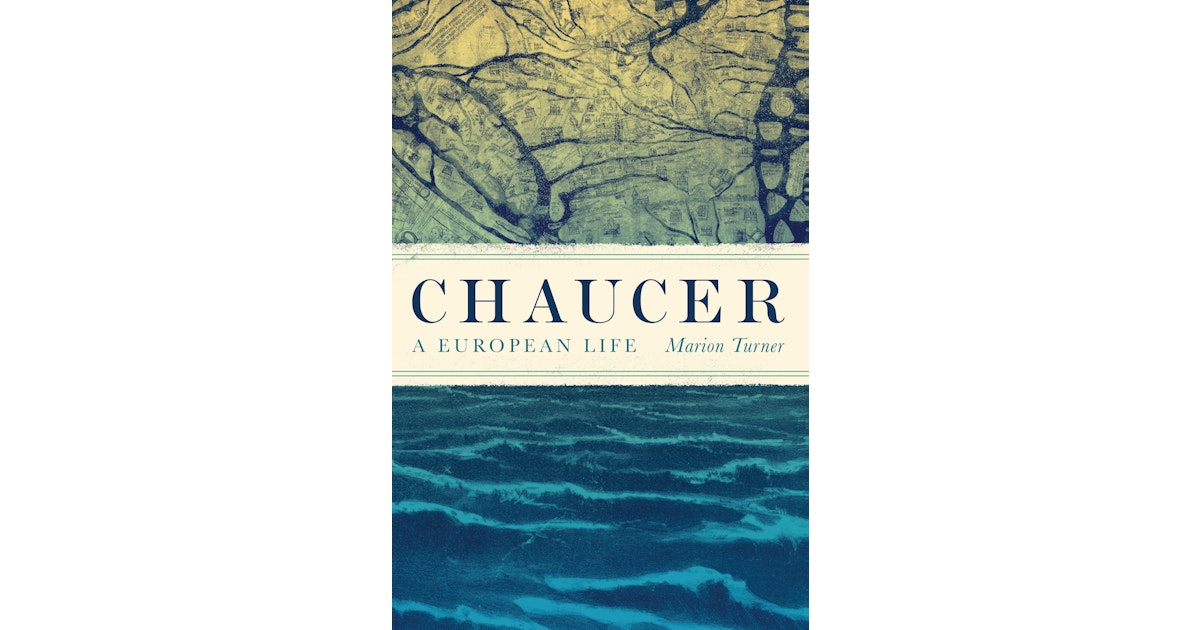
It took some time but finally recalled a title from Before, published in the fall of 2019, that I had been 'saving' for a shut-in time - Chaucer: A European Life by Marion Turner.


This isn't a lit crit study focused on literature, but social, cultural, political history, and not only that of England, but greater Europe.

Chaucer's times within the all important 14th century! He lives through the Bubonic Plague, as child in the first wave, and as a young man in the second wave of the later 1360's. His king was Edward III, various members of his family Chaucer served in various offices and in other ways. 

As I'm currently suffering Edward III withdrawal since finishing the biography of him by Ian Mortimer, this is exactly what I want and need.

Liking the human history of the oceans, The Boundless Sea, very much, but I also need something more, o I dunno, that fills in more about the 14th century, the hinge century of Europe between medieval and 'modern.'  Also, at the moment, Boundless Sea's author is enthralled with the centuries' repetition of the Indian Ocean trade between the East Coast of Africa, Egypt, the Red Sea, India and Southeast Asia, reaching up and down, eventually, into China proper.  The same goods continue to be traded, whether B.C. or A.D. or even the 17th century, and generally in the same locations, though ports silt in, names change, still as the centuries roll along even more nationalities and languages appear. So, right now, a little slow.

     . . . . The Diaries of John Quincy Adams .... Alas, JQ is no longer POTUS, though he has a difficult time letting go of D.C., but finally he moves back to Quincy, MA -- because his son George is lost at sea, evidently falling off a packet boat (it has been suggested in other books that George either fell overboard from being drunk or, due to being an Adams probably, committed suicide.  His propensity for drinking too much could also be attributed to being an Adams.  One of JQ's brothers was an alcoholic who committed suicide due to being unable to fulfill the family expectations, which were always beyond high.  Only JQ lived up entirely to expectation.

George's death is truly sad, particularly for Louisa, who has lost so many children already, either from miscarriage or still birth, or in very early childhood. For once Louisa is mentioned in the Diaries with clearly stated sorrow and sympathy, beyond, "my wife unwell" -- which back in the day could mean with menstrual period (not many of those!) or because pregnant, or recovering from miscarriage or birth.

Somewhere around losing the presidency and Andrew Jackson entering it, JQ seems to have lost his interest in swimming in the Potomac, in favor of riding his good horse, and lost his passion for trees as well. At least there are no more entries in the Diaries (as edited, anyway) of either.  I'm sorry for that, for they humanized JQ so much, and were amusing in their own right, as well as casting light upon publicly accepted behaviors of white men of a certain class in the America of the 1820's.

~~~~~~~~~~

     . . . . We have arrived at the point of sketching out plans for leaving here.  If fortunate, in the fall.  Ya, work still seems to be coming in, but for how long?  And it's not as though this is work that can't be done from somewhere else, as it is all writing work.

Additional local news: one of the people for whom I've been cooking has gone away, to live with his sister.

Wednesday, January 22, 2020

Monty Python / Terry Jones, Chaucer & the 100 Years War

     . . . . The announcement of Terry Jones's death seems to have revived the controversy he caused with his book, Chaucer's Knight: The Portrait of a Medieval Mercenary (1980). 


The book went into 4th edition, which is high achievement for a work of literary, historical  criticism, written by a non-academic.

Jones argued that Chaucer's knight had been battle-hardened in the mercenary companies, fighting for plunder and pay, not for a sovereign's honor and glory. The knight's story of battle-hardened legendary Greek figures was to show real politic and war choices, in the manner of Machiavelli.  This made sense to me, considering Chaucer's era was that of the 14th century Edward Plantagenets.

Chaucer's King, Richard II, was the grandson of King Edward III. Richard's father was Edward, the Black Prince, who died of illness before his time. King Edward III was elderly, and died not long after, leaving England's future in the hands of a boy king and regents, none of whom had the brilliance and sheer capacity for ruling, hard work or warring possessed by Edward I and Edward III. 

These are the times of the Hundred Years War. The English military strategy of chauvachée ruled. For those unfamiliar with the term, chauvachée meant no rules, no decorum: the army lived off the land, plundered everything it could eat and carry, burned the rest, and killed civilians, including women and children, as a matter of purpose. *

The Hundred Years War was a golden age for mercenary war lords and their 'Free Companies." One of the most famous and richest was that of English John Hawkwood.* Joining up with Hawkwood's mercenaries was the foundation of many an English family's rise in fortune and rank, as was the chauvachée plundering of France by members of the English armies. Used to plundering at will with little or no repercussion, some of the nobility and unemployed mercenaries and soldiers during truces took doing the same in parts of the realm of England.  It wasn't a very good time for many in England in the dotage years of King Edward III, and the boy king Richard's, and, then, King Richard II's own reign.**

So, count on someone with a high sense of humor, satire and irony -- as we see in every frame of Monty Python works -- to recognize humor, satire and irony, and mockery of genteel Romance-fiction traditions in the work of another great artist like Chaucer.  But as with the placement of slavery as central to the history of the American War of Independence, the Constitution, the War of the Rebellion, traditionalists of literary scholarship tended to clutch pearls when first confronted with such irreverent revisionist literary history.

~~~~~~~~~~~~~~~

*      There are concrete descriptions of what a campaign of chauvachée meant for entire departments of France in Maurice Druon's historical fiction series, The Accursed Kings.
Also in the excellent biography, The Perfect King: The Life of Edward III Father of the English Nation (2006), by Ian Mortimer.


* *   Arthur Conan Doyle's favorite of his own works is an historical novel titled by the name Hawkwood's mercenaries were given, The White Company. There are numerous historical figures in The White Company, including the Black Prince, but Hawkwood is not among them. 


***   Richard II was deposed in 1399.