LINES OF THE DAY

". . . But the past does not exist independently from the present. Indeed, the past is only past because there is a present, just as I can point to something over there only because I am here. But nothing is inherently over there or here. In that sense, the past has no content. The past -- or more accurately, pastness -- is a position. Thus, in no way can we identify the past as past." p. 15

". . . But we may want to keep in mind that deeds and words are not as distinguishable as often we presume. History does not belong only to its narrators, professional or amateur. While some of us debate what history is or was, others take it into their own hands." p. 153

Silencing the Past: Power and the Production of History (1995) by Michel-Rolph Trouillot

Showing posts with label Islam. Show all posts

Wednesday, April 22, 2020

More Far Away With With Gordon Doherty, Though Not So Far As The HIttites

    . . . . Son of Ishtar was such a successful distraction from the here and now, I resolved to give one of Gordon Doherty's previous works a try. 

The Strategos TrilogyBorn in the Border Lands, Vol. 1. (2011)
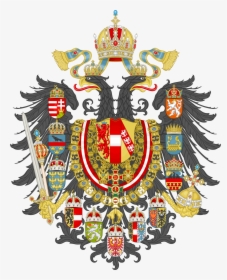
Byzantine Empire Palaiologan Double Headed Eagle

This trilogy's chronological location is the 11th century A.D., opening in 1046.  A weak and corrupt Palaiologan 'empire' facing off against the energetic incursions of the Seljuk Turks to take the Emperor's throne.  I've been able to read only a few pages, but it appears Christian Apion (Greek Christian, not Roman),  born low, but also born a natural warrior, is the serial protagonist.  His is the era of Alp Arslan and the Battle of Manzikert, so there shall be battles and war, blood and cruelty, abounding, with detailed descriptions of the weaponry and strategies, the moves and counter moves, and at least, surely, from the Byzantine side, utter desperation.

It seems Doherty does repeat himself.  Many of the elements present in his latest, third trilogy of which Son of Ishtar is the first installment, appear already in the first pages of Born in the Border Lands. Among these are a mysterious female figure who appears and disappears, almost magical birds, portents and prophesies. But these are are the ages, without polling and marketing, in which the supernatural abounds.

However, over the last 3 or 4 years, maybe more? I've been attempting to fill the gap in my historical knowledge, of varieties of the Turks in the Middle East and "Turkey", the fierce people who kicked out the Arabs -- as the Mongols attempted to do with the Turks in the 13th century. As the tribe(s) who became the Ottoman empire were not the first Turkimen to invade the Middle East from the upper steppes (many under pressure of Mongolian expansion).  I don't know anywhere near as much about the Seljuks as I do about the Ottomans' origins and acension to both Empire and the (Sunni) Caliphate.

Of course, here, the Seljuks are the villains who must be defeated while Byzantium must be defended, preserved and expanded.  Good luck with that ... the 1204 Sack of Constantinople, which constituted the 4th Crusade isn't that far off from 1046, and, helped along by the Genoese, the Pisans and the Venetians, there will be an infinity of corruption, pillage, murder, poison, intrigue and failure in Byzantium in those years -- all ending up with 1453, and the Ottoman establishment thereafter of the Caliphate in Constantinople. 

Which rather causes one to wonder what was the point of it all?

a monogram of chi (Χ) and rho (Ρ) as the first two letters of Greek Khristos Christ, used as a Christian symbol by the Greek Church

~~~~~~~~~~~~

    . . . . It's the middle of the week, so we put in a grocery order, which appeared very quickly, from the wonderful MW supermarket. They have just initiated their own delivery service pilot service, rather than depending on Instacart and the other ubiquitous delivery services, who charge the customer and the vendor both -- and which the reviews lean toward as being disappointing in quality of service as well.

Most of what I put on the list was available.  This means fresh! sweet Italian sausage, made on the premises, is on the menu tonight, which also happens to be faculty 6 PM Wine Wednesday.  Was also able to score a couple of roasts, more chicken, and -- ham! as well as other equally welcome supplies, before what is on hand was used up.

Plus, of course, drinking coffee and tea with milk is safe for another week.  


Tuesday, January 30, 2018

Flu, Nomads, the Eurasian Steppes and Ertugrul, the Brave Man

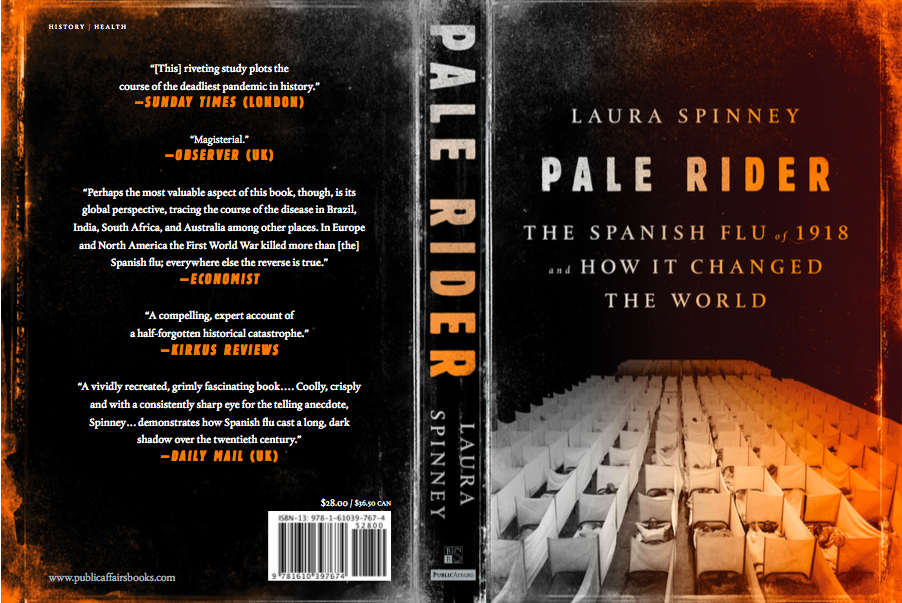
     . . . . Pale Rider: The Spanish Flu of 1918 and How It Changed the World (2017) by Laura Spinney is given a substantial review in the LRB: 


I listened to some Spinney interviews last year,  though I haven't read the book --  I do have the flu currently, alas.  (Yes -- I got the flu shot, back at the start of September, but we know this year was iffy for protection against the Big Mutator.)

With the current flu getting so much news coverage one does think of this book, as well as because this is the centenary of the Spanish flu pandemic. 

I learned from the review, (written by a physician) the three centers from which its global spread probably issued. I didn't know any of this before.

Maybe for me the most interesting factoid I got though -- is that perhaps the first flu epidemic was in 'Asia' 2000 years ago, acquired from horses. Was this the first strike against the rest of humanity by the Eurasian steppes and the nomads. long before the Mongols?


Baiju Noyan is a bad man, a VERY bad man.


I think of such a thing since I am watching the second season of Resurrection: Ertugrul, in which the big bad is the Mongols, and particularly Ogedei's general, Baiju Noyan.

Unlike in Jack Weatherford's histories of the Mongols, they are really eviLe here (though Weatherford pulls no punches when it comes to Genghis's sons, whom he holds responsible for what the Mongols came known for). They are worse by far than the first season's Crusaders. Even the nomad tent and their warriors (alps) say this is so.  Certainly more prone to random acts of cruelty and torture for the sake of it, and bloody on a grand scale. This season is more graphically violent and grisly than the second one, which is only one large difference between the series' season 1 and season 2.

Initially, with the first episodes, I thought the second season was going to retell the first one, merely shifting roles around as to antagonists and protagonists and maybe even recreating the same characters but with different names and tribal membership.

But once I'd gotten a few episodes in, it was clear this season was very different.  The poetry and passion of romance have almost disappeared.  Halime Hatun, Ertugrul's love, to whom he now is married, is pregnant -- the longest pregnancy ever -- but she hardly ever appears except for him to order her "to be patient and wait." (I fear tremendously the Big Bad is going to kidnap her.) Mother Hayme seems to have lost her great wisdom just when she needed it most -- but plausibly so.

This season is far less concentrated on God's will, and the gorgeous mysticism and maybe, even the magic, of Islam.  (However, we have a hermit who appears whenever Ertugrul is in the direst of straits, feeds him, hides him his cave, reunites him with his loyal alps -- some are traitors). Other annoyances of the first season, such as the predictable episode arc of at least one exceedingly lengthy battle scene, and the truly annoying predictable slo-mo, stop action, of horses galloping, have been dropped. Each episode moves faster than in the first season, and seem shorter though they are the same length.

Season 2's Ertugrul (called "Brave Man") is focused in utter desperation on keeping the promised arrival of the Golden Horde from overrunning all of Anatolia -- and perhaps, though much of this is vague, particularly in terms of the years involved, the Persian Seljuk Anatolian Sultanate of Rûm (Rome, i.e Byzantium, though that word wasn't used until the 16th century, while Istanbul didn't come into use until 1923), which borders the lands of Byzantium.

Along with this comes something I really like, the often overlooked aspect of the Mongolian generals' front line operations in the lands they are targeting for conquest. It didn't happen in one sudden, massive invasion.

Cohorts were sent ahead long before the arrival of the Golden or the Blue Hordes -- sometimes years. Not only did they perform terrorist lightning strikes along the borders and penetrate deeply into the targeted territory. They spent years subverting tribal influencers with bribery, kidnapping of family members controlling and using them behind the scenes. 

Yet another aspect was to disrupt the local economies of trade,  herding and manufacture (this is in the charge of women) as much as possible. As Baiju Noyan says, "The only thing I love more than fighting is winning a battle without having to fight it." 

However, the Turkmen Seljuks employed the same tactics themselves when moving out of Central Asia into Asia Minor, with the same devastating effects upon the population and trade as the Mongols accomplished. 
Battle of Köse Dağ; Mongols won, Seljuks lost.


From this I'm picking up that even today the Turks harbor no forgiveness for the Mongols, recalling with hatred their subjection of over a century, which happened after getting clobbered at the battle of Köse Dağ (1243) -- won, not coincidentally one might think, by -- Baiju Noyan.

Seemingly (I don't know -- my ignorance is abysmal) this subjection of the 300 year Seljuk Empire in Anatolia by the Mongols until their own empire fell apart is the reason there aren't histories of the Anatolian Seljuks per se as there are of other Seljuk spheres as in Persia, or the Arab eras, etc.

Additionally, Anatolia was where the Byzantines Greeks and the Ilkhanate Empire (the Mongolian dynasty that took over from Seljuk Rûm) clashed the most, constantly ceding and conquering and reconquering, despite their many alliances. So the region was in state of flux and disruption at the best of times for all these years. 
"The Mongols and the "Franks" [including the Venetians] made many alliances against the Egyptian Mamluks, the wall against which Mongols and Europeans always broke. Also Frankish-Mongol alliances weren't very effective to start with. The Mongols, i.e. the Ilkhanate Empire [see above] were allied with Byzantium -- though that also broke down constantly as well. Despite many attempts, neither Hulagu [brother of Kublai; ruler of the Ilkhanate Empire, including most if not all of Anatolia] nor his successors were able to form an alliance with Europe, although Mongol culture in the West was in vogue in the 13th century. Many new-born children in Italy were named after Mongol rulers, including Hulagu: names such as Can Grande ("Great Khan"), Alaone (Hulagu), Argone (Arghun), and Cassano (Ghazan) are recorded.[27]"
Which reminds me of how often I see the name 'Attila' in the credit rolls of Italian television series -- another legendary hero's name (depending on one's perspective) that never lost in Italy associations of overwhelming power.

OTOH, this perhaps provided the liminal space where flourished the legendary aspects of the Oghuz and Osmans, from of whom rose the origin stories of the Ottomans, and the legendary warriors such as Ertugrul of the Kayi tribe. This season his trajectory has Ertugrul resembling both Christ and King Arthur, i.e. sharing aspects, as mythical figures invariably do.

This is the era when the Mongol conquers in Asia Minor converted to Islam, while also importing vast numbers of Chinese scholars and administrators from the Yuan dynasty back in Eastern Asia. 

What these alliances did do (as with Venice) was facilitate trade routes and exchange between east and west across Asia Minor to China and back -- and across Africa too. 


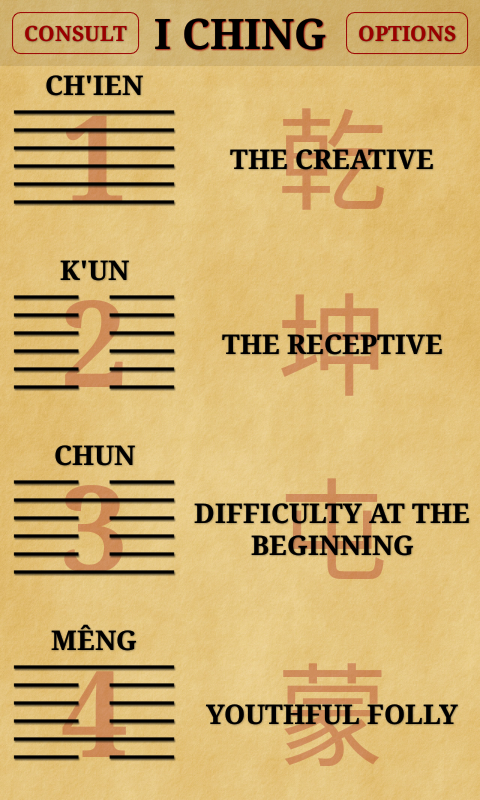
A reading done by Ifá; versus the Dilogun, produces 256 possible combinations of symbols which define specific combinations of Odu. The Odu are indicted by throwing cowrie shells in the sand tray.


The I Ching advisories are found via throwing coins.
This is probably when Ifá probably came to the burgeoning West African kingdom of Oyo, home of the Yoruba. El V has always believed that the Ifá readings of shells and trays and signature advice was based on the I Ching. By the 13th and 14th century the Yoruba had firmly embedded Muslim counselors from "the North," i.e. Islamic Africa 

El V studied the I Ching when he was taking Chinese classes, and of course he's studied Ifá -- which, it seems not too many, or anybody else, has done both. And now he's got me to bring him the historical trajectory of trade and conquest that made this cultural interpenetration possible. (The Yoruba have always been brilliant at taking something from another culture and transforming it to fit their own expression -- they still do it, as we see in Cuba all the time. Or here, for that matter -- Africans and African Americans are just brilliant at expression, form and style.) 

History is so exciting! I think telling el Vaquero this stuff made him fall in love with all over again.  

Ha! And to think this all is because I watch a Turkish telenovella. At one point a primary character is wearing a robe that I swore had Chinese designs on it. So I went looking at more history again. And by golly, that's yet another historic detail the series has right. It's always all about trade.

We've only resumed treading aloud, now that el V's back from Cuba, Barry Cunliffe's By Steppe, Desert, and Ocean: The Birth of Eurasia.  The maps are brilliant. It's extra exciting when we hit sections that deal with the same peoples I've beeen watching on Qin Empire: Alliance, and Resurrection: Ertugrul, as well as in Jack Weatherford's books on the history of the Mongols.

I've been thinking about the steppes, nomads, Mongolians, China, Islam, and trade for several years now.  But it's so complicated, and I have no grounding in the geography, so it's  hard to grasp this. 

Once again, I understand how impossible it is to deal with history without geography and vice versa.  Ertugrul sends me back to both after every episode I watch, and I think I'm all the more improved because of it.

It's worse than sad though, that we, as USians and Europeans do NOT know this geography and history -- history of actual, long-standing empires that we've never even heard of.  If we did have more than a passing acquaintance, at best, with these matters, maybe the world wouldn't in quite the state it is currently.

Friday, February 24, 2017

1453 -- The Holy War for Constantinople + The Ruin of the Roman Empire: A New History

     . . . . Constantinople has finally fallen. 


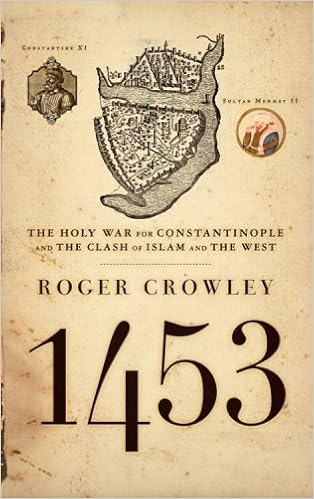
This month I've been listening to 1453: The Holy War for Constantinople and the Clash of Islam and the West (2005) by Roger Cowley. The book isn't finished yet, but the city that had survived every siege and attack for over a thousand years, with the shameful exception of those who one might have thought her allies, the Christians of the Crusades in 1204 has finally been taken. And that too happened due to an error, not an actual breaching of the walls by force. 

Which of these are Minas Tirith and which Constantinople?


More than ever I am convinced that Tolkien carefully read the first hand witness accounts, particularly the diary of the Venetian Nicolò Barbaro, of this battle that went on day and night for almost two months, and drew on those accounts heavily for the siege of Minas Tirith. 


However Gandalf's magic worked while the Christian magic that had so long kept the protective dome of God and the Virgin over the Great City failed. Rohan and the armies of the dead came to save the White City, whereas the living armies from the west never did, fighting as they were among themselves. Finally the massive numbers of the orcs overwhelmed the walls. The warriors within the walls that had never before been breached, though valiant beyond comprehension, were too few, too few. 

But in the end it was truly the conflicting Churches' theologies and commercial greed on the part of the West that took down the ancient Red Apple, The City of the World's Desire -- not Islam.


I'm beginning to wonder that Mehmet II's success in taking the ancient Christian capital of the east, when all others had failed (and he nearly did himself -- the continual turning tides of fortune for both sides makes so much of this story's drama and tension) had so much to do with his successor, Süleyman the Magnificent, obsession to take Vienna, within the heart of the not holy or imperial Roman empire. He must equal his forefathers' achievements, and taking Vienna would even outdo Mehmet's conquest of Constantine's city (which he tried and failed at in 1529). 

And from that victory which didn't happen, Süleyman expected to move on to take Rome. The Ottomans been trying to conquer Rome from the south in previous decades, thereby terrifying Queen Isabella, and solidifying Spain's belief that Islam was coming for them very soon. After all, the Ottoman emperor had announced to the world that it was. (So, as many moriscos as possible were expelled, to prevent them from becoming a third front in the Iberian peninsula.) In the meantime the Ottomans had occupied a significant extend of Italy's boot.


Cowley's book has made fine companion to the audio book that engaged me in January the outraged philosphical history of what did not happen (and could not then,, have happened), James O'Donnell's The Ruin of the Roman Empire: A New History (2008) -- which outrages most readers, particularly his presentation of Justinian as the effective villain.

In-between the falls of Rome and Constantinople, I remain occupied with the Merovingians. El V got himself a book to read on the plane to Miami and back and in the Hampton Inn room, a history of the Middle Ages. It begins with Charlemagne, as these things all do; it has not a single Henri Pirenne cite, which I allowed boded well for the book's value.* It's fairly elementary, meaning that I pretty much know this outline quite well, but he knows nothing, but has gotten interested via my interest in the Merovingians and the Carolingians. 

He's promised though to get me some more up-to-date histories of the Merovingians because I'm frustrated by what we've got. None of the contributions to this history by archeology are included, thus we get nothing of the people: only the power elites. Nothing about the buildings, or agriculture. And hardly anything about trade and commerce.  Additionally, as a Belgian, Pirenne was more than willing to always rank the Carolingians as the most important development in the transition.\

---------------------------

*    The Pirenne Thesis concerning the change from the Roman world to what some call Late Antiquity, others, the Dark Ages. was promulgated to its fullest in 1935, in his Mohammed and Charlemagne. That was nearly a century ago, based in scholarship older than that.  Research and scholarship has moved on significantly since then.  Full text of "The Pirenne Thesis Analysis and Criticism" here.