LINES OF THE DAY

". . . But the past does not exist independently from the present. Indeed, the past is only past because there is a present, just as I can point to something over there only because I am here. But nothing is inherently over there or here. In that sense, the past has no content. The past -- or more accurately, pastness -- is a position. Thus, in no way can we identify the past as past." p. 15

". . . But we may want to keep in mind that deeds and words are not as distinguishable as often we presume. History does not belong only to its narrators, professional or amateur. While some of us debate what history is or was, others take it into their own hands." p. 153

Silencing the Past: Power and the Production of History (1995) by Michel-Rolph Trouillot

Showing posts with label animals. Show all posts

Tuesday, September 4, 2018

Labor Day's Labors, Labor Day's Relaxation: Cat, Friends, Music, Politics, Books, Films

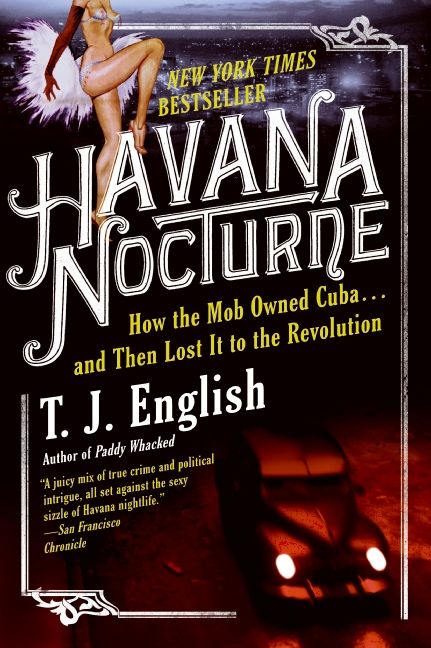
     . . . . El V spent all his day from getting up until evening, when we for our friends' brownstone uptown shrimp boil, doing the final edits for his and T.J. English's Havana Nocturne mob tour 


weekend in Havana, February 12 - February 16, 2019, based on T.J. book.  Youtube with information ---


     , , , , Myself, spent the day working on a mission statement for the offering to various special archives at universities and libraries of a brilliantly curated collection of recorded Latin music in excellent condition that goes back to the 1940's until now.  Hardly such thing exists in cultural institutions and universities as of this moment.  It's time, as the greats are shuffling off the mortal coil . . . .

     . . . . Uptown then, in the heat and humidity to see friends and eat!

The New Cat, who came this summer to chez Our Hosts, about nine months since Tom the Old Cat passed away, buried in the yard under a rose bush, was not to be seen. Cat's been trying out names ever since coming to the Jumel Terrace brownstone, but none have stuck. Cat is currently is sporting a multi-syllabled name, is one that I can't remember on hearing only once.

Shortly before people thought we should depart due to next day -- today, being a work day for us all -- the Cat Himself came down to check out the commotion.

He stood, a four-legged statue, looking at the strangers at his table, then winded his lithe way around us, into the kitchen, out again, and departed. Nothing here of interest, his tail communicated -- so Aby of him. His general confirmation and very short, smooth, sleek, shiny coat is that of an Abyssinian -- maybe my favorite flavor of feline. However! his coloration is pure bright orange tabby. Further he is a dactyl paw cat. Those huge feet on such slender legs are eye-catching in their own way.

As ever we had a wonderful time, which wasn't due particularly to most of us present knowing each other well, for numerous years either.  It was entirely, I am certain, due to Our Hosts.

There was much, spirited conversation around Aretha Franklin's funeral. C knew Aretha quite well, having designed stage costumes for her often. One of the guests had watched all nine hours of the broadcast +.  Among us, lots of speculation and / or blame for the Obamas not showing up at the funeral, though two of the  guests were inclined to cut him more slack than some others. The older people, including el V and a music writer had been to Aretha shows back into the day when she was touring her first album and successfully crossing into pop from Gospel.

Cuba was another major topic of conversation.
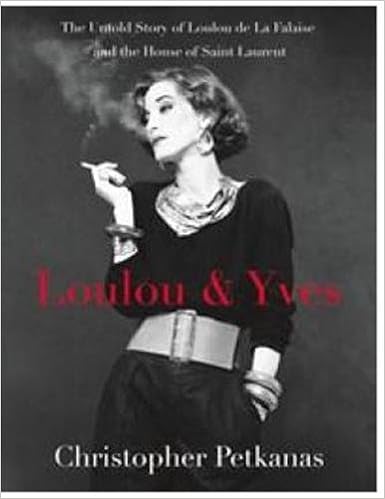


Other subjects involved aspects of the fashion industry -- one of the Guests of Palor has just published a big book on Yves St. Laurent, Loulou & Yves. He had a house outside of Avignon for 20 years, so we also talked about France and Provence, wine and history.

There was discussion of the Nixon-Cuomo Dem Governor nomination primary on the 13th. Everyone present is voting for Nixon, not expecting her to win. So all will hold noses and vote Cuomo in the election in November. But we are the sorts of Dem voters who truly dislike him -- dislike him vastly more than we ever came to disliking his father.

This led inevitably to Spike Lee, BlacKkKlansman, Boots Riley and his beef with BlacKkKlansman (Spike made cops heroes against white supremacy and racism; both films feature black guys who talk white on the telephone). Some of don't give a damn what Riley claimed BlacKkKlansman was, nor did we agree with Riley -- we thought it was one of the most interesting films cinematically that Spike's done in while. The night we went with a group of friends, we talked about it, not necessarily agreeing, all through dinner, and then carried on a spirited e-mail discussion about it for a week. 

This led the conversation into effective political activism and organization, and, again, what losers the Dems are. However, Boots Riley's own new film, Sorry to Bother You, is a worthwhile watch too. It's about labor and capitalism as well as race. Boots has a lot to say about this worth paying attention to, and does so in an interview on Democracy Now (the entirety of the interview is well worth reading) that I hadn't thought about before, as to why political activism is no longer as effective as it used to be:

[  ". . . . And for too long, the left has gone away from class struggle. Right? We’ve gone away from class struggle in favor of spectacle, and hidden in the arts and academia. So, a lot of our biggest fights are sometimes about not what we’re saying, but how we’re saying it. And I agree how we’re saying things are important. It means, though, that we have to look at how the working class is talking and what they really mean, as opposed to just trying to adjust how people are talking, and making a movement around things that we can do something about, because then people have a real choice of what they want to get involved in. You know, it’s not that people don’t hear that story, for instance, and think it’s ridiculous, but, even me, I’m sitting here like, “OK, how do I—is this something I can do? Let me move on from this. Like, what”—you know, throwing up my hands. . . . " ]

We spoke of the fire that has destroyed the National Museum of Brazil, a catastrophic loss of 200 years of research into the history of Brasil, as well as multitude of irreplaceable world-class art objects from Europe and other parts of the world. Why did this happen? Corporate thugs refusing to finance maintenance. Speculation: did one of those thugs want the ground on which the museum was located? Don't put that past Brasilian corporate thugs, though the slashed funding making it impossible to maintain an effective fire system was enough to enable this calamity all by itself.

Outrage was expressed independently by one and all over the morning's news that the New Yorker had invited Steve Bannon as the headline attraction to next month's New Yorker Festival.  This led us to speak of Jimmy Breslin and what he would have said about this, and then Pete Hamill -- both great New York journalists who both wrote/write (Pete's still with us, thank goodness, unlike Jimmy) fiction as good as their journalism. These men, now, these men had EARS for how NYers of every class and heritage talked.

Ay-up, a gathering of NYers who discuss local news -- Aretha and Cuba are both local news, at least in this circle, and so is Brasil -- one of the group spends a lot of time there, collecting art.

Much Aretha music played, and much Cuban music too, with the emphasis on the boleros of the 1940's and 1950's.

The food, o the food, was spectacular.

How C always does this, makes such memorable experience out of what doesn't look like anything -- beyond cooking her ass off all day, of course. She is a spectacular Southern hostess with the very most. Martha Stewart should go hide in a cobwebbed cave in shame for calling herself a hostess.

Like the rest of us C's been way too busy this summer to do much recreational at all. She just got shut of a most hideous and miserable project. Collapsed for three days -- which she used to finish the last 200 pages of Slave Coast, which she discussed in detail with me -- is that an honor or what? But get-togethers at K and C's are always memorable in the very best ways. Well, there was the Thanksgiving when the dining table collapsed in slo-mo, which maybe wasn't the best way but it was spectacular and never fails to be remembered.

Now, teeth grinding for at least two months -- will a hurricane(s) hit or not? Will one get here like Sandy did? Will it destroy the rebuilding throughout the Caribbean and the Gulf from last year's hurricane catastrophes?

On the subway coming home, I gave out dollar bills to 7 separate desperate homeless people who asked for food or money because they were so hungry. Three of them were vets.  Yah, this nation is such a grrrrrrrrrrrrrrrrrrrrrrrrr8 superpower.


Thursday, May 10, 2018

Nîmes: Out of Chronological Order -- Spanish Southern France

     . . . .  Nîmes is the Spanish side of southern Gaul -- as Nice is the Italian side of southern Gaul and Avignon is in the middle and mostly medieval. Going through the photos again today, and I can't resist posting right now the photos that tell us so much about southern, Roman Gaul.  

Nîmes was where our travels concluded, as far as sight-seeing was concerned.  It was from Nîmes we took the train back to Cannes, where I picked us from the station and drove us back to hers and David's place in Bar-sur-loup.  The next morning David drove us to the Nice airport, and we flew home. 

That I can't resist putting up some of the Nîmes photos doesn't mean we loved it more than Avignon, or even Bar-sur-loup (though we did love all three of these places in a way that we didn't love Italy's Ventimiglia, and certainly did not in any way love Cannes! what a vulgar, ugly place filled with vulgar ugly people).

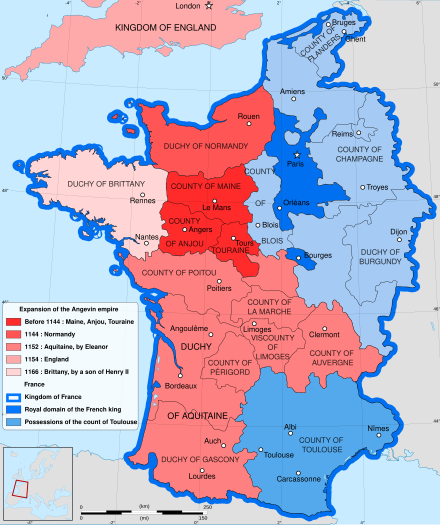
See where Nîmes is, on the far right side of the map. Provence is on the other side of that boundary.


Nîmes is on the other side of the boundary of Provence proper, i.e. just barely inside what used to be Aquitaine, the land of Queen Eleanor -- Provençal Occitan / Languedoc-Roussillon (Lang -- tongue / language of doc / Occitan -- this is in the beginning of el V's Cuba and Its Music). This is the very edge, yes, but I am / was in the land of Queen Eleanor of Aquitaine! You cannot imagine what this does / did to me

Recall how important Iberia was to the history of Rome.  Hannibal began his campaign against Rome from Carthegenian Iberia.  Pompey the Magnus won additional military glory in Iberia. The young Octavian, still only the young relative of ruling Julius Caesar, stationed with the Roman cavalry there.  The later Emperor Hadrian was born in Iberia, of an Hispano-Roman family.


Thus one is not surprised to see bulls and bullfighting still revered in Nîmes. 

Bulls are iconic throughout the Mediterranean coastal regions, it seems, from the most ancient days of Crete's bull dancers, Zeus's rape of Europa in the shape of a bull, bulls given sacrifices, which latter was continuously practiced in the western Roman empire at least, even deep into Rome's Christian eras.  We ate lunch in a restaurant called la Grande Bourse located by the Roman arena.  The heads of the most brave bulls of each feria are mounted high on the walls around the huge dining area, which one knows is packed during the fighting of the bulls.


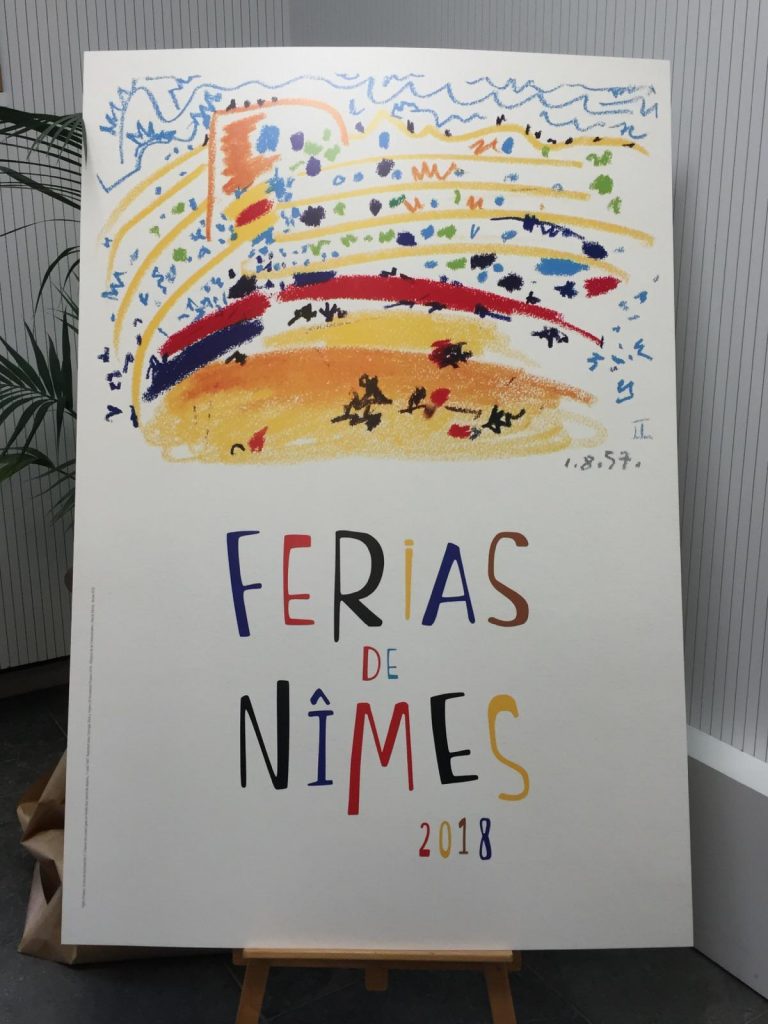
If one doesn't wish to believe that a love for the bull fight could exist in such a civilized, haute bourgeois spot as the south of France, so colonized by animal rights loving British, see the above image. This handsome specimen of bovine strength and beauty was lovingly stenciled all through the city.  It wasn't a part of the city's advertising for Ferias de Nîmes 2018, but a project of presumably an individual art student? from the University of Nîmes? Whom, presumably, marched in the May 1st parade of unions and students protesting the neo con policies of Macron and the drive to privatize so many of France's public agencies and institutions.

Tuesday, January 30, 2018

Flu, Nomads, the Eurasian Steppes and Ertugrul, the Brave Man

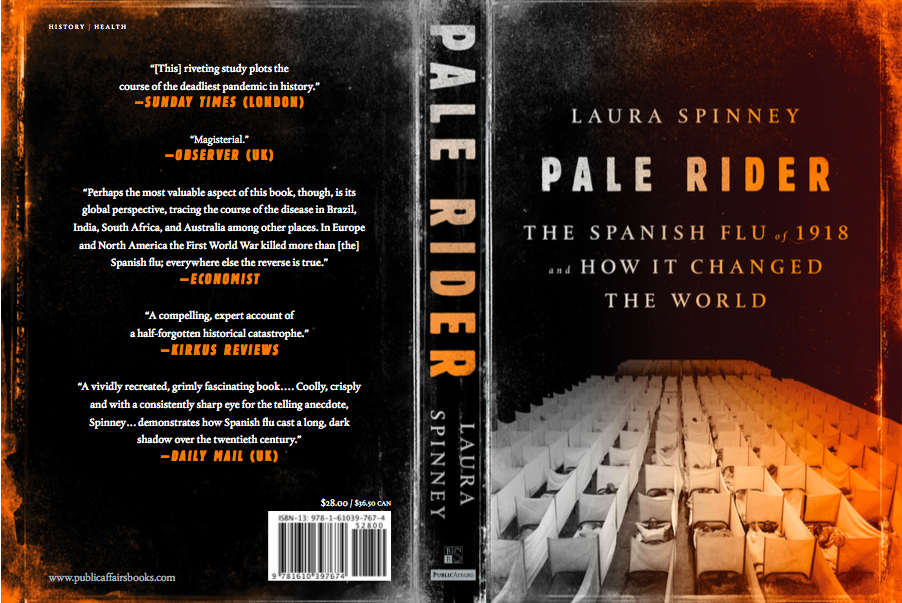
     . . . . Pale Rider: The Spanish Flu of 1918 and How It Changed the World (2017) by Laura Spinney is given a substantial review in the LRB: 


I listened to some Spinney interviews last year,  though I haven't read the book --  I do have the flu currently, alas.  (Yes -- I got the flu shot, back at the start of September, but we know this year was iffy for protection against the Big Mutator.)

With the current flu getting so much news coverage one does think of this book, as well as because this is the centenary of the Spanish flu pandemic. 

I learned from the review, (written by a physician) the three centers from which its global spread probably issued. I didn't know any of this before.

Maybe for me the most interesting factoid I got though -- is that perhaps the first flu epidemic was in 'Asia' 2000 years ago, acquired from horses. Was this the first strike against the rest of humanity by the Eurasian steppes and the nomads. long before the Mongols?


Baiju Noyan is a bad man, a VERY bad man.


I think of such a thing since I am watching the second season of Resurrection: Ertugrul, in which the big bad is the Mongols, and particularly Ogedei's general, Baiju Noyan.

Unlike in Jack Weatherford's histories of the Mongols, they are really eviLe here (though Weatherford pulls no punches when it comes to Genghis's sons, whom he holds responsible for what the Mongols came known for). They are worse by far than the first season's Crusaders. Even the nomad tent and their warriors (alps) say this is so.  Certainly more prone to random acts of cruelty and torture for the sake of it, and bloody on a grand scale. This season is more graphically violent and grisly than the second one, which is only one large difference between the series' season 1 and season 2.

Initially, with the first episodes, I thought the second season was going to retell the first one, merely shifting roles around as to antagonists and protagonists and maybe even recreating the same characters but with different names and tribal membership.

But once I'd gotten a few episodes in, it was clear this season was very different.  The poetry and passion of romance have almost disappeared.  Halime Hatun, Ertugrul's love, to whom he now is married, is pregnant -- the longest pregnancy ever -- but she hardly ever appears except for him to order her "to be patient and wait." (I fear tremendously the Big Bad is going to kidnap her.) Mother Hayme seems to have lost her great wisdom just when she needed it most -- but plausibly so.

This season is far less concentrated on God's will, and the gorgeous mysticism and maybe, even the magic, of Islam.  (However, we have a hermit who appears whenever Ertugrul is in the direst of straits, feeds him, hides him his cave, reunites him with his loyal alps -- some are traitors). Other annoyances of the first season, such as the predictable episode arc of at least one exceedingly lengthy battle scene, and the truly annoying predictable slo-mo, stop action, of horses galloping, have been dropped. Each episode moves faster than in the first season, and seem shorter though they are the same length.

Season 2's Ertugrul (called "Brave Man") is focused in utter desperation on keeping the promised arrival of the Golden Horde from overrunning all of Anatolia -- and perhaps, though much of this is vague, particularly in terms of the years involved, the Persian Seljuk Anatolian Sultanate of Rûm (Rome, i.e Byzantium, though that word wasn't used until the 16th century, while Istanbul didn't come into use until 1923), which borders the lands of Byzantium.

Along with this comes something I really like, the often overlooked aspect of the Mongolian generals' front line operations in the lands they are targeting for conquest. It didn't happen in one sudden, massive invasion.

Cohorts were sent ahead long before the arrival of the Golden or the Blue Hordes -- sometimes years. Not only did they perform terrorist lightning strikes along the borders and penetrate deeply into the targeted territory. They spent years subverting tribal influencers with bribery, kidnapping of family members controlling and using them behind the scenes. 

Yet another aspect was to disrupt the local economies of trade,  herding and manufacture (this is in the charge of women) as much as possible. As Baiju Noyan says, "The only thing I love more than fighting is winning a battle without having to fight it." 

However, the Turkmen Seljuks employed the same tactics themselves when moving out of Central Asia into Asia Minor, with the same devastating effects upon the population and trade as the Mongols accomplished. 
Battle of Köse Dağ; Mongols won, Seljuks lost.


From this I'm picking up that even today the Turks harbor no forgiveness for the Mongols, recalling with hatred their subjection of over a century, which happened after getting clobbered at the battle of Köse Dağ (1243) -- won, not coincidentally one might think, by -- Baiju Noyan.

Seemingly (I don't know -- my ignorance is abysmal) this subjection of the 300 year Seljuk Empire in Anatolia by the Mongols until their own empire fell apart is the reason there aren't histories of the Anatolian Seljuks per se as there are of other Seljuk spheres as in Persia, or the Arab eras, etc.

Additionally, Anatolia was where the Byzantines Greeks and the Ilkhanate Empire (the Mongolian dynasty that took over from Seljuk Rûm) clashed the most, constantly ceding and conquering and reconquering, despite their many alliances. So the region was in state of flux and disruption at the best of times for all these years. 
"The Mongols and the "Franks" [including the Venetians] made many alliances against the Egyptian Mamluks, the wall against which Mongols and Europeans always broke. Also Frankish-Mongol alliances weren't very effective to start with. The Mongols, i.e. the Ilkhanate Empire [see above] were allied with Byzantium -- though that also broke down constantly as well. Despite many attempts, neither Hulagu [brother of Kublai; ruler of the Ilkhanate Empire, including most if not all of Anatolia] nor his successors were able to form an alliance with Europe, although Mongol culture in the West was in vogue in the 13th century. Many new-born children in Italy were named after Mongol rulers, including Hulagu: names such as Can Grande ("Great Khan"), Alaone (Hulagu), Argone (Arghun), and Cassano (Ghazan) are recorded.[27]"
Which reminds me of how often I see the name 'Attila' in the credit rolls of Italian television series -- another legendary hero's name (depending on one's perspective) that never lost in Italy associations of overwhelming power.

OTOH, this perhaps provided the liminal space where flourished the legendary aspects of the Oghuz and Osmans, from of whom rose the origin stories of the Ottomans, and the legendary warriors such as Ertugrul of the Kayi tribe. This season his trajectory has Ertugrul resembling both Christ and King Arthur, i.e. sharing aspects, as mythical figures invariably do.

This is the era when the Mongol conquers in Asia Minor converted to Islam, while also importing vast numbers of Chinese scholars and administrators from the Yuan dynasty back in Eastern Asia. 

What these alliances did do (as with Venice) was facilitate trade routes and exchange between east and west across Asia Minor to China and back -- and across Africa too. 


A reading done by Ifá; versus the Dilogun, produces 256 possible combinations of symbols which define specific combinations of Odu. The Odu are indicted by throwing cowrie shells in the sand tray.


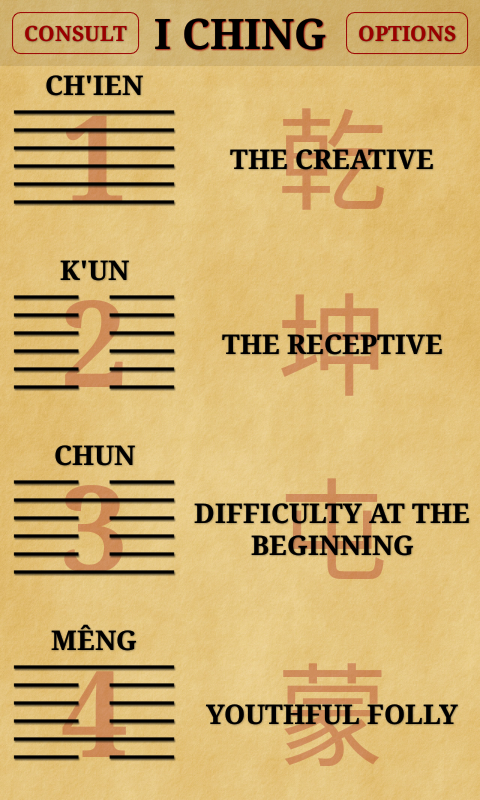
The I Ching advisories are found via throwing coins.
This is probably when Ifá probably came to the burgeoning West African kingdom of Oyo, home of the Yoruba. El V has always believed that the Ifá readings of shells and trays and signature advice was based on the I Ching. By the 13th and 14th century the Yoruba had firmly embedded Muslim counselors from "the North," i.e. Islamic Africa 

El V studied the I Ching when he was taking Chinese classes, and of course he's studied Ifá -- which, it seems not too many, or anybody else, has done both. And now he's got me to bring him the historical trajectory of trade and conquest that made this cultural interpenetration possible. (The Yoruba have always been brilliant at taking something from another culture and transforming it to fit their own expression -- they still do it, as we see in Cuba all the time. Or here, for that matter -- Africans and African Americans are just brilliant at expression, form and style.) 

History is so exciting! I think telling el Vaquero this stuff made him fall in love with all over again.  

Ha! And to think this all is because I watch a Turkish telenovella. At one point a primary character is wearing a robe that I swore had Chinese designs on it. So I went looking at more history again. And by golly, that's yet another historic detail the series has right. It's always all about trade.

We've only resumed treading aloud, now that el V's back from Cuba, Barry Cunliffe's By Steppe, Desert, and Ocean: The Birth of Eurasia.  The maps are brilliant. It's extra exciting when we hit sections that deal with the same peoples I've beeen watching on Qin Empire: Alliance, and Resurrection: Ertugrul, as well as in Jack Weatherford's books on the history of the Mongols.

I've been thinking about the steppes, nomads, Mongolians, China, Islam, and trade for several years now.  But it's so complicated, and I have no grounding in the geography, so it's  hard to grasp this. 

Once again, I understand how impossible it is to deal with history without geography and vice versa.  Ertugrul sends me back to both after every episode I watch, and I think I'm all the more improved because of it.

It's worse than sad though, that we, as USians and Europeans do NOT know this geography and history -- history of actual, long-standing empires that we've never even heard of.  If we did have more than a passing acquaintance, at best, with these matters, maybe the world wouldn't in quite the state it is currently.

Sunday, November 5, 2017

Chronicles of Prydain -- Best Fantasy Series for the Youth? What About the Animal Heroes?

     . . . . Chronicles of Prydain -- Best Fantasy Series ever?  But is it? 


Is it the very best? -- this person passionately believes it is; at Vox News he tells us that he so much believes it true that he writes to tell us this news every year or so.  Read all about it here

I had all the Prydain books, but they never grabbed me.  I can hardly remember anything about them now.  Perhaps I was already too old when I encountered them in high school? I certainly don't have them on my shelves now, though Winnie-the-Pooh and many other books of fantasy and whimsy, with a sort of non-adult flavor remain. 

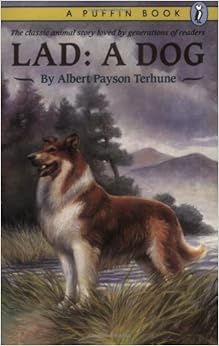
Also, the guy writing this is a -- guy, who lurves it that the Hero is a another young guy. That might have kept me from truly rolling with it, perhaps? though the guy-centeredness of so many other books and series never interfered with my passionate attachment to them, from The Black Stallion, his boy, Alec, to Lad, A Dog (see - Lad, another guy!), to LotR, not to mention some of my beloved Zane Greys, and many others -- even Pooh! 

Or -- maybe -- because I was living on a farm, I just knew too much about pigs to suspend my disbelief (always have had some trouble with Charlotte's Web re that).

I loved animal books -- which no longer seem to be written.  Did the Youth lose interest in animal protagonists?  Or was it just the publishing industry?  Anyway, I read every single one that came my way, many of them over and over and over, like the Black Stallion books and the Bambi Books, and Lassie Come Home


I received at least one of that sort of book every Christmas from each set of grandparents and from Mom and Dad.  So that was three books at least every Christmas!

I sobbed every time at the deaths of the animal protagonists in the books I re-read so avidly -- Ginger the rebel / bad slave in Black Beauty, Joe in Beautiful Joe, you name a death and I cried. Albert Payson Terhune's Lad, A Dog (1919), provoked particularly copious tears. Once it happened that I was reading his death while in school (the one-room country school house). The entire room including the teacher were aghast -- what ever could be happening to me? No one could understand how I could weep over a dog, dying, in a book!


I loved all the Terhune books. It wasn't only the canine principals that had me re-reading them constantly though. It was the setting. It was an exotic world, a magical one, as much as any fantasy world I might encounter later (those books weren't around anywhere when I was growing up). The Master and the Mistress, the kingdom of Sunnybank -- which I later learned was in New Jersey, He and She could drive into unknowable NYC for dog shows -- all this was as foreign and unknowable as the moon. This dimmish, but constant background kingdom of Sunnybank that cast a spell as irresistable as any of a fantasy novel. Sunnybank was ruled by Him, to whom Lad owed all his service and loyalty, and Her, who in turn ruled Him, and whom Lad adored in all humility and to whom his devotion was entire -- and that had that inexplicable thing -- servants! who even served the dogs.  Thus dogs' lives and hierarchy reflected perfectly this perfect feudal world, with impeccable class system -- a creation of the plutocratic, bloated Gilded Age. 


I was too unsophisticated and ignorant to recognize it for the class system that the Terhune books celebrated at the time. So every aspect of this strange world so far away in both time and space fascinated and enthralled me, those times that so-called 'real world' penetrated the world of the characters -- characters that could not have existed without that upper, non-understood plane of Master and Mistress / Him and Her ruling that world.

I'm not sure I'm recollecting exactly how the owners of Sunnybank were called in Lad's mind -- but it was something like that. What I do recollect clearly was how much I liked the dogs having real names, as -- to my mind -- being the significant ones -- while the human beings were -- to my child mind -- peripheral.

Too bad the world isn't really run that way, the non-human world at the center, and we hooman beans the side-bar.

Friday, May 26, 2017

A Day in the Life of Jack The Fox

     . . . .Darling amiga, Austin Slim sent me this.  It's so purrfect it must be further shared
"A fox looks like a dog, purrs like a cat, but in fact it is neither."
"The have the nicest nature of any animal I have ever met."

"Sometimes he may do naughty things.  But not to those who are nice to him."

Monday, April 17, 2017

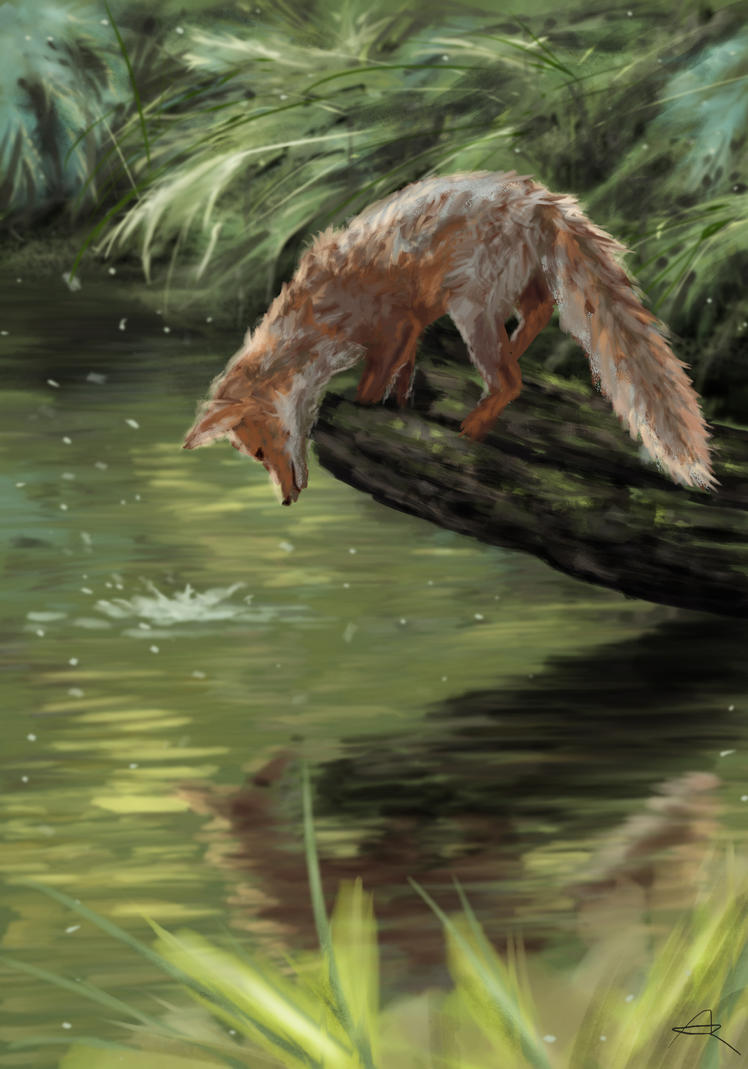
Fox Barks Hark the Spring

     . . . . 'Tis the season to think of traditional folk tales of foxes, kitsunes, kumihos, hulis, jings.


It is a wonder. After millennia of humans' determined assault on the not-tamed, that human and fox can still look - see the other, reflecting ancient, necessary complicity between the domestic and the wild.  We see ourselves in the other.

Tuesday, April 12, 2016

Disney's New Live Action - CGI Jungle Book

The live action Disney Jungle Book IMAX reboot opens this weekend.


Sunday, March 15, 2015

History - Sheep Guard Dogs

One morning I woke with the realization that I didn't know when in human culture we began training herding sheepdogs.

So far I've learned that it is far more ancient that I'd have assumed -- if, that is, if I'd ever thought about it previously.  I have other things to do but I can dig a little in the time cracks.

This is what I learned last week:
Through the Middle Ages in Europe guardian dogs have been used to guard livestock, such as sheep and goats.  The evolution of the herding sheepdogs breeds we know today correlates with the elimination of the wolf and increased land enclosure for production of food and fodder crops.
Instead of allowing sheep and goats to roam wherever pasture could be found with Livestock Guardian Dogs protecting them from predators such as wolves, bears and other predators, shepherds increasingly selected dogs that would instinctively herd flocks of sheep together.


Wednesday, December 17, 2014

'Tis Of The Season -- Angels and Birds and Blessings

It's a lovely day here, with temperatures higher than they've been.  Though the wind, when it hits, while walking where it flows, is chill, it's not a strong wind.

Doing some preliminary Christmas food shopping, on my way to Raffetto's (est. 1906!) this morning, it seemed a good time to for my annual meditation about


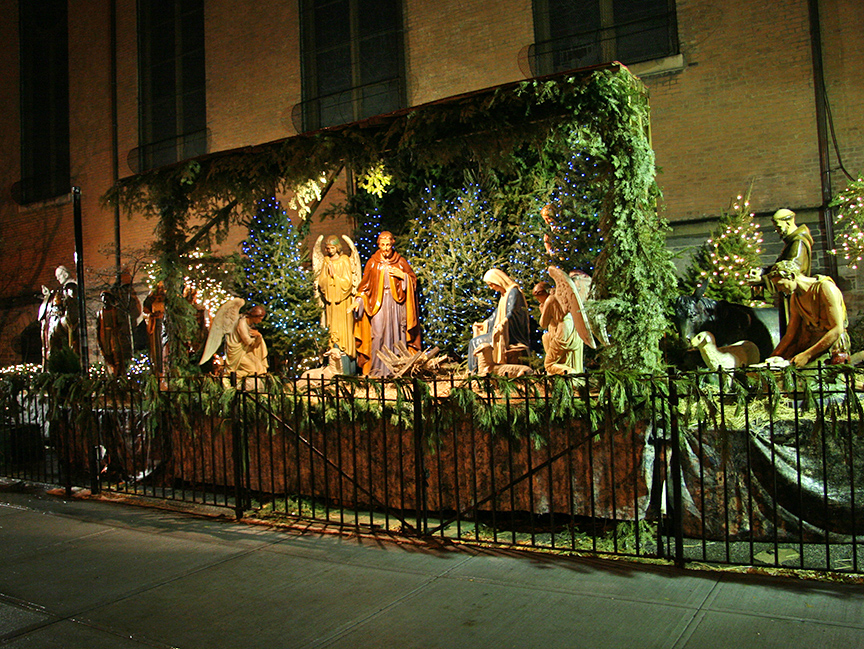
Christmas while gazing at the simple, traditional Nativity scene St. Anthony's puts up on the Houston side of the church. This is something I make time to do every Christmas at least twice, once in the daytime and once at night. I tend to enter what perhaps resembles a state of prayer, leaving me feeling refreshed and thankful for my privileged life.

I am also thankful for St. Anthony's, the anchor of this neighborhood where I've lived my adult life for the most part. The church, the friary, the convent and the school have saved our immediate blocks from being entirely taken over by billionaire giganticism and become 100% an alcohol, Chanel and restaurant corridor, where only the bloated plutocracy can afford to live and eat.


Today, there was something new going on with the Créche: birds, just our plain old street sparrows and pigeons. They filled the stable, among the Holy Family, the angels, the humble cow and the donkey, with their chirping and cooing, swooping and fluttering, perching upon the wings of angels for a minute to puff and chatter. They were happy birds, dancing upon the festoons of evergreen within and without the stable, in air that was invigorating, not freezing. Some of the sparrows were not flying, but hovering in place, over the manger, beating their wings at the speed one associates with humming birds, not sparrows.

The birds' happiness made me so happy that I burst into tears.

This must have had something to do with St. Francis of Assisi, the patron saint of animals and the environment, who is credited in Church history with creating the first nativity scene, because he wanted people to understand the depths of poverty into which Our Lord was born, and the pure miracle of a birth that was for the sake of peace on earth and good will to all men -- and animals and the earth itself.

So, right there, on the sidewalk next to Houston Street, filled with honking and sirens, on my way to buy pesto and pasta, I was given a Christmas blessing.

Tuesday, January 28, 2014

Political Jobbing Cats!

Pussy cat, pussy cat, where have you been?
I've been to London to look at the Queen.
Pussy cat, pussy cat, what did you do there?
I frightened a little mouse, right under her chair.


Cats poised to descend on Parliament to help rid Westminster of vermin; see, here.

Larry is Westminster's Chief Mouser.  However, Larry Needs Help
as the Mouse Population Soars.

Larry Meets You Know Who

Friday, March 8, 2013

For the Love of Animals & Books


A friend's question concerning a novel about a wolf published in 1914 reminded me of a question jigging in my mind this winter.


Why did novels featuring animals, that were published for the adult market, disappear?  In fact, are there still novels even for kids featuring an animal, that provides all kinds of natural history education, being published?

Albert Payson Terhune made an excellent living writing about collies, particularly Lad of Sunnybank,, the sequels and spin-offs from that book.  I think the stories originally ran in the high-paying magazines, like The Saturday Evening Post, that also published writers like F. Scott Fitzgerald.

I read and re-read and re-read novels like Beautiful Joe, Black Beauty, National Velvet, the Lad books, the Bambi books, White Fang, Call of the Wild. I read many others animal centric books too, but those, like Walter Farley's Black Stallion books, were specifically targeted to a juvenile market.  But these others were not.  Then there was the huge Book Club hit, and later a movie, from Lassie Come Home. This one wasn't written as a kid's book either. Much later Watership Down arrived, which I confess I read as an adult and read once and recall nothing of.  It too was for an adult market, not the kids', if I recall the marketing correctly.


I'm speaking of fiction, not the books about animal companions that get published occasionally even now, such as , or books by observers like naturalists, such as the ones about otters (Ring of Bright Water) Gavin Maxwell, or the Elsa the lioness Born Free books. These still show up, occasionally.

Nor do I mean talking animals books like Wind in the Willows or the Redwall series. I mean books that center real animals.

This question arrived about the time I watched the film made from War Horse -- which was written as a children's book.

The final shots in War Horse were of Joey, re-united finally with his Albert, back on the farm, staring out of the yard, through the sunset, looking back to Europe and his adventures, presumably reflecting upon all those others who loved him, loved him at least as much as Albert does.

In her film, Lassie doesn't do this, if I'm recalling correctly.  She is blissfully cuddling her puppies as her boy Joe and the Rich Girl hang over her litter bed, presumably to make a litter themselves one of these days.  One after another, people fall in love with Lassie.  And though she is sympathetic, gives what she can to each one, she remains forever faithful to her boy, Joe.

I'm not so sure about War Horse, Joey the stallion.  I think he loved all his lovers in the ways they wished to be loved; Joey kept them in mind, as much as he kept in mind his boy and loved him., while adventuring. Despite the terrible things Joey went through, Joey's the perfect representation of "If you can't be with the one you love, love the one you're with."  Hey, he survived!

Friday, November 30, 2012