LINES OF THE DAY

". . . But the past does not exist independently from the present. Indeed, the past is only past because there is a present, just as I can point to something over there only because I am here. But nothing is inherently over there or here. In that sense, the past has no content. The past -- or more accurately, pastness -- is a position. Thus, in no way can we identify the past as past." p. 15

". . . But we may want to keep in mind that deeds and words are not as distinguishable as often we presume. History does not belong only to its narrators, professional or amateur. While some of us debate what history is or was, others take it into their own hands." p. 153

Silencing the Past: Power and the Production of History (1995) by Michel-Rolph Trouillot

Showing posts with label Spanish history. Show all posts

Friday, November 23, 2018

Buckle Up to Swash -- ¡Altriste esta aqui!

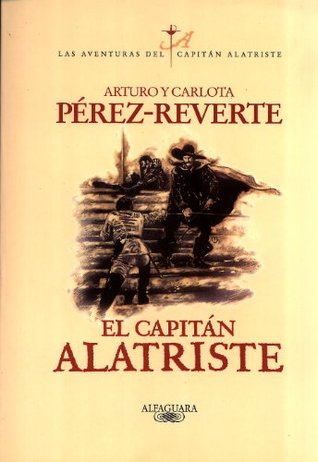
     . . . .  Las aventuras del capitán Alatriste, the series of novels by Arturo Pérez-Reverte, featuring this great Spanish swordsman, soldier and adventurer of the 17th century, has been a recurring topic


The first title in the English translation was published in the UK and the US back in1996; the latest one was released here in the US in 2011.


Back in 2006 a Spanish language film, Alatriste, was made, with Viggo Mortensen as capitán Alatriste, but, we lamented, it was never released in the US. 


However! Now! available! streaming on amazon prime, subtitled in English, the description says, is the 2016 Spanish television Alatriste series!

I haven't watched yet, having for a change a cornucopia of watching riches -- though, not unusually, not much watching time.  However, as el V heads out again soon, watching this will fill in gaps left by his absence. 

This is going to be splendid because nobody does European medieval and renaissance era sword fights like the Spanish.  This includes brilliant battle sequences with swords from horseback.  They never forgot how this sort of thing is done.

Spanish television does Spanish historicals extraordinarily well,* maybe better than other Europes' historical tv / films. Spanish swashbuckle is just about equal, even, in the French swash's ballon element,** which is so indigenously French. 

Unlike the French though, (at least going by Dumas) the Spanish swash additionally contains tragic awareness, the knowledge of the darkness in which all things inevitably end, the darkness that eats from the inside, which is what distinguishes Spanish swash from that of the other European swashes.


~~~~~~~~~~~~~~~~

* Which one sees in concentrated form in the Spanish television series El ministerio del tiempo, which I admire and enjoy so much too. Whether art and literature, history and politics, all the details are just right -- and are always included. Nothing in the episodes happens in situational or transactional tv vacuum, but fully in the milieu of its time, whether in the past or the present.

** definition: https://ballethub.com/ballet-term/ballon/


http://michaelminn.net/andros/biographies/balon_jean/index.html

Saturday, May 19, 2018

El Ministerio del Tiempo - To Distract From Our Daily EviLes

     . . . . This Spanish television series is both fun and filled with tension Netflix has this television time travel series available for streaming, El Ministerio del Tiempo -- The Ministry of Time.  


Among the show's established perimeters is that travel can only go into the past. It's not possible to go to the future, because, as is the secret Ministry's motto, "Time is what it is."  So, while the ministry has also continued into the future since the days the doors were discovered and mapped and the equations to use them were worked out by a combination of 16th C Moorish, Jewish and -- I think, still not sure -- Jesuits, the ministry, like Spain, continues.

Our newly recruited team:  Alonso de Entrerríos of Seville, taken in the aftermath of a battle in 16th century Flanders;  Amelia Folch,, the first and only history student at a Barcelona university in the late 19th century; Julián Martínez, a 21st century emergency paramedic from Madrid.

In our own present time the location is mostly Madrid, however the Ministry's the employees are from different times. They can travel to what the time is in Ministry HQ, because the HQ is in now. The Ministry's mission is to keep the past from being changed, to preserve the existence of Spain, no matter how good or how bad. 

The fun part is the variety of historical figures of Spain's past, particularly its Siglo de Oro (though just how golden the century was really, at least in Europe, with the Ottomans beating their's, the Holy Roman Empire, the Venetian and others' butts all the time, particularly in the Mediterranean -- not to mention the English with the Armada).  The notable historical figures include even fictionally created personages from the 16th century.


 The show's new swordsman-recruit from the 16th century, Alonso de Entrerríos, discovers in the present the novels of Arturo Pérez-Reverte's Captain Alatriste.  In our time, many who encounter Entrerríos just assume he's Captain Alatriste -- since I like and admire the Alatriste novels, I love this series's bit. 

The series mixes a generally light treatment with more serious matters, without beating the viewer down with the more grave elements.  It's an excellent way to make Spain's national history real to the viewer too, no matter what age.  It would be good family viewing, I think, without talking down to the audience either. 

Our first period adventure was preventing French time travelers, with the aid of a beautiful but of course corrupt Spanish -- countess? duquessa? -- from changing the history of the guerrilla warfare that contributed so much to Napoleon's failure in Spain, from which he continued to failure in Russia, etc.  Upcoming events include what may be a Spanish whitewashing of history -- to keep Spain out of WWII.  Right now I'm in the middle of trying to keep Lope de Vega from sailing with the Armada and dying before he wrote his great works, that helped make the 16th century, in this sense at least, Spain's Golden Century.

Already though I have learned that the principle three characters' more personal concerns from their own times get mixed up with their historical missions.  The show does an elegant job of showing us just how impossible it is to not to mix the personal with the historical, the present with the past, even in the past -- though this is prohibited to all employees of the Ministry.

The writers do an equally excellent job of getting quickly past the by-now-to-we-jaded sf/f readers info dumps about how and why and introduction of characters to their new lives in the past and present. They cut to the chase with the most minimum of O What Is This!

One does wish Netflix USA did more Spanish television series 


(particularly Isabella, which I am dying to watch) -- Spain does historicals so very well -- the horse riding and sword fighting in particular! I have gotten more than tired of the endless Asian sword and sorcery, whether live action or anime -- there's such a damned glut, and it's all the same.

The series also sued NBC for ripping it off -- see here, the lawsuit the Spanish producers filed about Timeless.  Once one has watched even the pilot for El Ministerio del Tiempo, it's pretty hard not to be disgusted with NBC utterly shameless behavior -- the characters are even the same, particularly the group leader who is a young female historian.


Thursday, May 10, 2018

Nîmes: Out of Chronological Order -- Spanish Southern France

     . . . .  Nîmes is the Spanish side of southern Gaul -- as Nice is the Italian side of southern Gaul and Avignon is in the middle and mostly medieval. Going through the photos again today, and I can't resist posting right now the photos that tell us so much about southern, Roman Gaul.  

Nîmes was where our travels concluded, as far as sight-seeing was concerned.  It was from Nîmes we took the train back to Cannes, where I picked us from the station and drove us back to hers and David's place in Bar-sur-loup.  The next morning David drove us to the Nice airport, and we flew home. 

That I can't resist putting up some of the Nîmes photos doesn't mean we loved it more than Avignon, or even Bar-sur-loup (though we did love all three of these places in a way that we didn't love Italy's Ventimiglia, and certainly did not in any way love Cannes! what a vulgar, ugly place filled with vulgar ugly people).

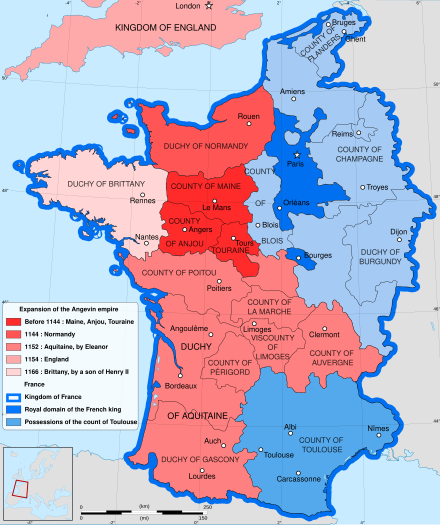
See where Nîmes is, on the far right side of the map. Provence is on the other side of that boundary.


Nîmes is on the other side of the boundary of Provence proper, i.e. just barely inside what used to be Aquitaine, the land of Queen Eleanor -- Provençal Occitan / Languedoc-Roussillon (Lang -- tongue / language of doc / Occitan -- this is in the beginning of el V's Cuba and Its Music). This is the very edge, yes, but I am / was in the land of Queen Eleanor of Aquitaine! You cannot imagine what this does / did to me

Recall how important Iberia was to the history of Rome.  Hannibal began his campaign against Rome from Carthegenian Iberia.  Pompey the Magnus won additional military glory in Iberia. The young Octavian, still only the young relative of ruling Julius Caesar, stationed with the Roman cavalry there.  The later Emperor Hadrian was born in Iberia, of an Hispano-Roman family.


Thus one is not surprised to see bulls and bullfighting still revered in Nîmes. 

Bulls are iconic throughout the Mediterranean coastal regions, it seems, from the most ancient days of Crete's bull dancers, Zeus's rape of Europa in the shape of a bull, bulls given sacrifices, which latter was continuously practiced in the western Roman empire at least, even deep into Rome's Christian eras.  We ate lunch in a restaurant called la Grande Bourse located by the Roman arena.  The heads of the most brave bulls of each feria are mounted high on the walls around the huge dining area, which one knows is packed during the fighting of the bulls.


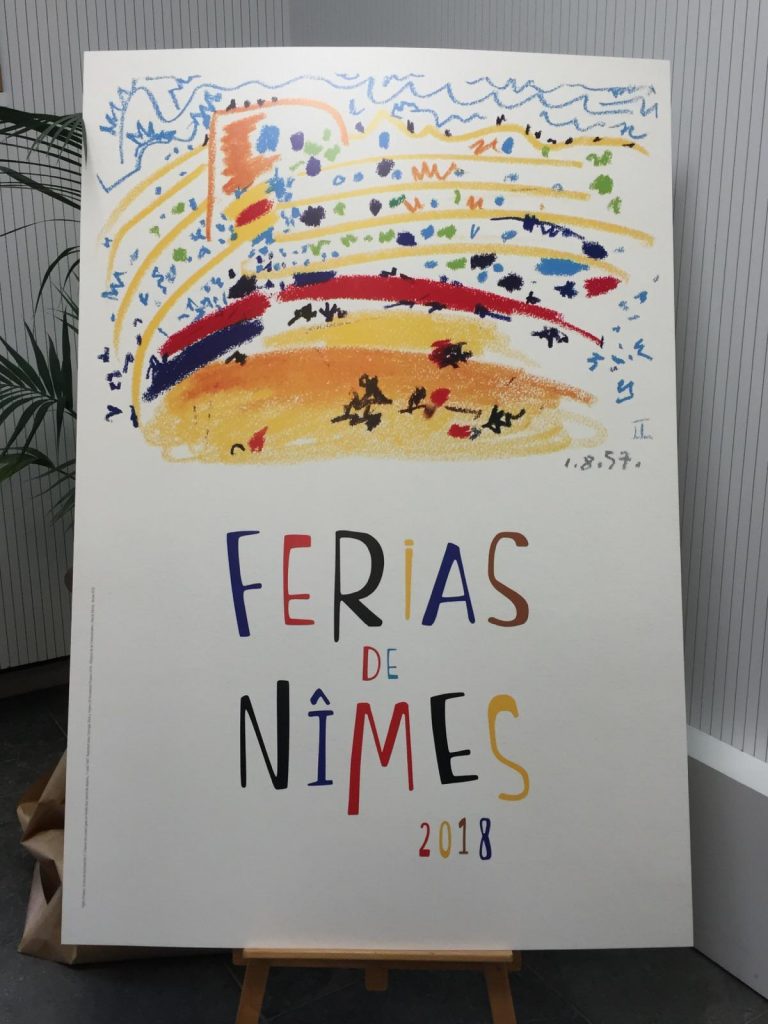
If one doesn't wish to believe that a love for the bull fight could exist in such a civilized, haute bourgeois spot as the south of France, so colonized by animal rights loving British, see the above image. This handsome specimen of bovine strength and beauty was lovingly stenciled all through the city.  It wasn't a part of the city's advertising for Ferias de Nîmes 2018, but a project of presumably an individual art student? from the University of Nîmes? Whom, presumably, marched in the May 1st parade of unions and students protesting the neo con policies of Macron and the drive to privatize so many of France's public agencies and institutions.

Wednesday, February 12, 2014

María Dueñas - el tiempo entre costuras in Spain; The Time In Between in the U.S. - Reading Wednesday

A first novel, el tiempo entre costuras (2011) is a phenomenon.  It was a best seller in Spain, translated into many languages and made into the most watched television minseries in the history of Spanish television.


In the U.S. the novel is titled The Time In Between, translated by Daniel Hahn (2012), published by Atria, an imprint of Simon & Schuster. This site provides a video trailer for the novel.

An interview with Dueñas in English can be seen here:


Set before and during the Spanish Civil War and the run-up to World War II, the novel's protagonist, a poor girl, grows up to become a successful couturier -- and a WWII spy.

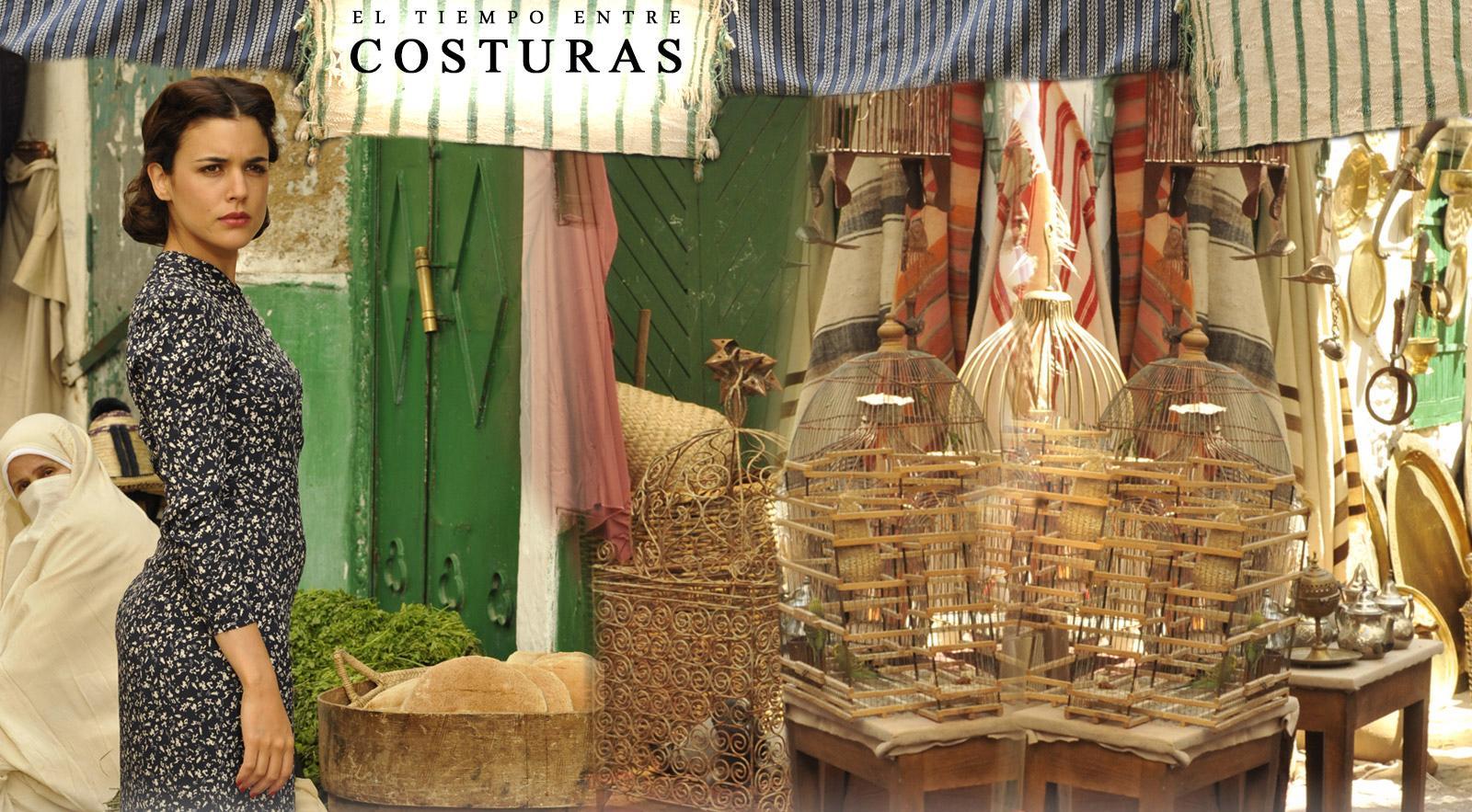
In this English language description of the television series, the writer begins by asking if Spain has found it's own Downton Abbey ....  Here's a YouTube Trailer.


So popular and influential has the series been that it has revived sewing of all kinds among Spain's women and girls.  Doubtless, as the period is the Great Depression, and Spain's economic woes are currently about the same -- sewing one's own clothes is not only creative, but practical. Judging from various stills, you do understand the television series is all about a beautiful woman designing, fabricating, sewing and wearing the most beautiful clothes.  And nazis, of course.

It's a winner, whether as a novel or a television series -- though, for me, personally the television series is better than the book, because of the colors and the clothes and seeing the locations.