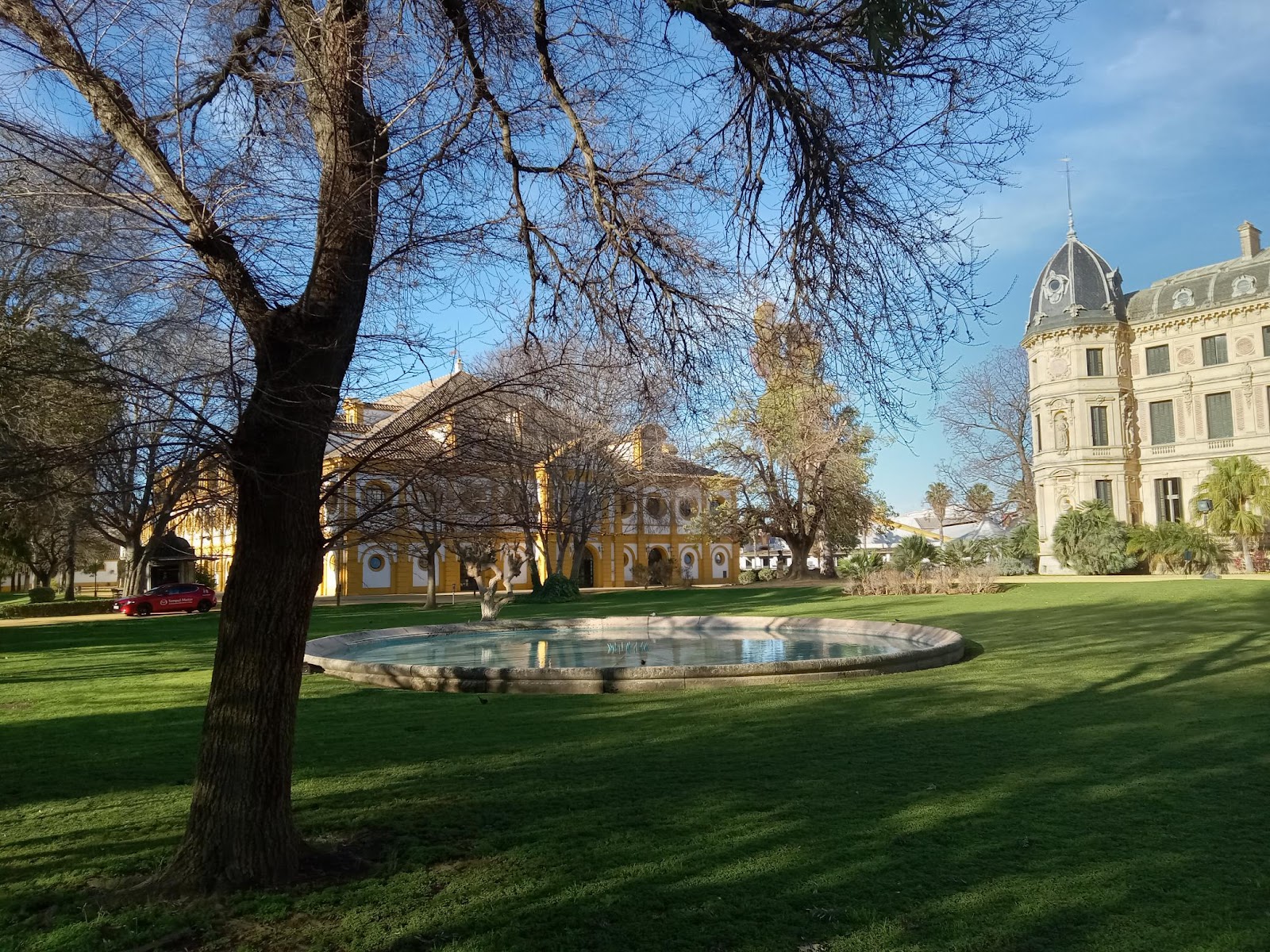
| The plaza through which we walked from our Convento Hotel, to enter the truly old Cádiz. |
| Thus we entered streets such as this on our way to the excavations and the Atlantic. |
... a fox is a wolf that brings flowers ...
| The plaza through which we walked from our Convento Hotel, to enter the truly old Cádiz. |
| Thus we entered streets such as this on our way to the excavations and the Atlantic. |
| The Oldest City, Thought By Archaeologists To Have Been Established By the Phoenicians About 800 BC. |
. . . . I could not wrap my mind around the fact that we walked to this place from our hotel in Jerez, that this was in the middle of the 'new' city of Jerez.
El V took some fotos that day of me taking fotos and sent them off in the real time experience smart fones allows us to do, "Because you looked so happy," and those he sent them to said the same. I was really enjoying myself. As well as being breathless seeing in real time the horses and riders executing their moves with such incredible rhythm and precision -- that nano second pause between one hoof hitting the ground as another was lifted -- I swooned. By the way, the relationship in this part of the world between these horses, what they are bred and trained to do, is so close with the omnipresence of Flamenco.
Our friend in Jerez, who has a foundation that promotes Flamenco between Jerez and New Orleans, dances Flamenco and runs festivals -- told me there are times when some of her people are around these horses, they have fallen into the Flamenco clapping, as people do in Spain all the time, particularly the closer one gets to Sevilla and Granada. The horses, hearing the clapping, riderless as they are, begin moving with the rhythms. Flamenco, dressage, bullfighting -- they are related, as are the fans and the tipica Flamenco fringed shawl. See how the movements of the dancers, with and without shawls and fans, as well as their postures are mirrored by matadors and their capes.
| I Was Particularly Struck By This Team. Stables at the top of the Exercise - Warm Up - Practice Ring. |
| Stables. One of the horses in a loose box kicked up one heck of a fuss for quite some time, kicking and kicking. S/he would push head out the door, and then go back inside and kick some more. |
| Expecting To Make Points! |
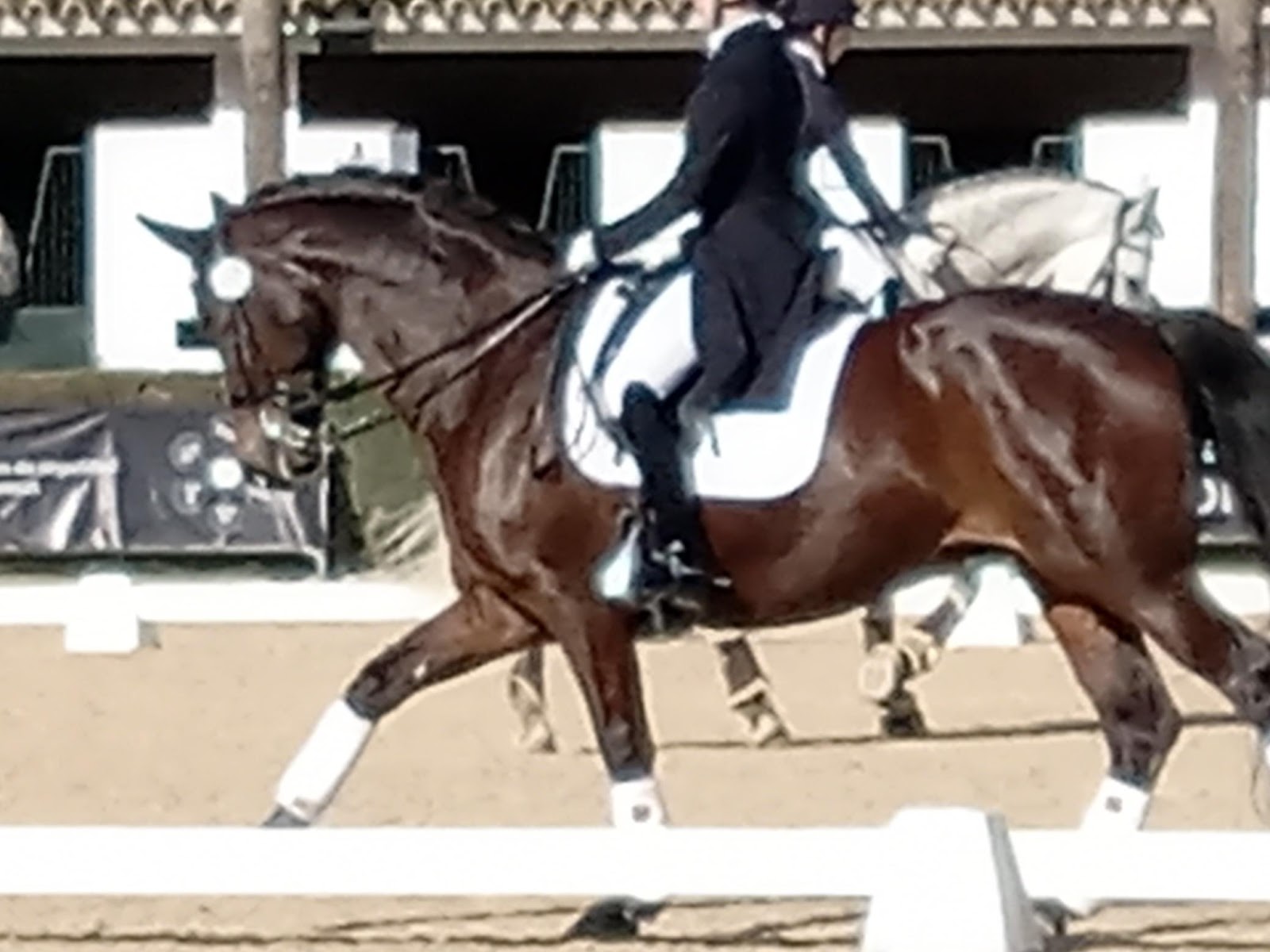
| This Rider Had Sparklies On the Front of Her Helmet; Her Horse Had Matching Sparklies On Bridle's Head And Nose Bands. |
. . . . Here are horses, horses whose coats literally glowed and gleamed. Depending on the color and tone of the coat, I could see my face reflected from their smooth flanks reflecting the sun. There was a chilly wind, but otherwise the weather was likely optimal for the events. So it became even more pronounced, how very hard the horses worked, for at the end of each performance, when they were allowed to drop their heads and necks out of the constant curve, their necks were so wet -- and with the drop out of position, their necks suddenly looked lighter and smaller. I was so close I could see all the veining under their thin, sensitive skins.
| Competition Performance Judging Ring |
| Performance Judging Ring |
| Warm Up Ring, Starting To Fall In Love |
| Warm Up Ring -- Canine Presence Was Omnipresent |
. . . . As my personal record of this Viaje it is necessary to include more foto notas from Madrid, as Madrid was our first city on the itinerary. It was an excellent preparation for all that came next, including getting over the worst of jetlag in the comfort of the 5 star Hotel Prado. Additionally to the comfort, it was location. The famous Neptune Fountain is in the circle plaza outside, and a few steps away, cross the street, walk through the tipica big Hispanic city leafy, flowered, grass covered with public toilets, cross the street on the other side, and there you are: at the Prado Museum.
At this time at least, Spain is inexpensive, which is why we could do this trip as 4 and 5 stars -- the dollar is so strong against the Euro. However, this isn't the case for changing money. Big fees are charged, so we used cards almost exclusively.
Spain was vastly less expensive than anywhere in the US, particularly NYC. Last night at our local, we had only wine and an appetizer last night at our local. It cost significantly more than any full meal with wine we had in Spain, including the most 'splurge' meal we had in Cádiz, in one of the very best restaurants in Spain, with an international clientele.
And, ya, the wine last night was not near the quality of the Spanish terroirs; Europe doesn't tax wine and beer to death as the US does, nor must they it travel across the ocean, or even land -- so much of it is made near the restaurants. Many of restaurants have on their wine list wines available only in that particular restaurant-bar-taberna, meaning a special relationship with the vintners.
Most of all, I think, I was excited because I knew who Alvaro de Bazan y Guzman was! I didn't need to read the plaque to find out, I just needed his name. I knew about Lepanto and the Great Siege of Malta! I felt the same way so often in the Prado, looking at portraits of different Spanish court grandees painted by Goya -- I knew who people such as Godoy and Floridablanca were. This was the first time I noticed that Spain's historic sites have information plaques in Braille as well as print. It was the same at the 9th C Muslim wall remains. This is one of Goya's historical interpretation of the battles with the French invasion forces. This one features Egyptian Mameluke Imperial Guard cavalry regiments. Yet another stupidity of Napoleon. By the supreme Católica God who gave Spain back to the Christians after more than 7 centuries, how could he think the Spanish would passively accept a takeover that centered Muslim fighters? [This is not my photo, as no photography or recording of any kind is allowed in the Prado.] This Is Not the White House. The royal palace in Madrid, not far from the 9th C Muslim Wall remains. This was the weekend, and tourists from near (Spain) and far were present even as closing time was imminent. No, one cannot go in. Not sure though, whether the flag meant the king was in residence. This palace is surrounded by vast gardens that are essentially woods. The Spanish kings were even more insane about hunting than the English and French ones. This tradition has continued into the present: recall the Spanish royal scandal not that long ago regarding members killing elephants. |
| From my seat I had a splendid view of the dancers' feet. The dancers are percussionists. They and the musicians and singers are on a particularly constructed platform called a tablao (pronounced tabl-ow! ow like meow). This platform is actually a drum head, with air space between it and the 'ground' that makes for a resonator, as the belly of a non-electric guitar is a resonator. 'Tablao' is used interchangeably to refer to the stage-platform and to Flamenco itself. |
. . . . At Jerez de la Frontera we entered the Southern Land of Oranges, Horses, Fans and Flamenco.
As per usual, I remain fascinated with the financial, administrative matters concerning housing, feeding and stabling and other organizational structures that make such a vast enterprise as this work -- and it is far from the only one of vast Equestrian centers to be found in Spain.
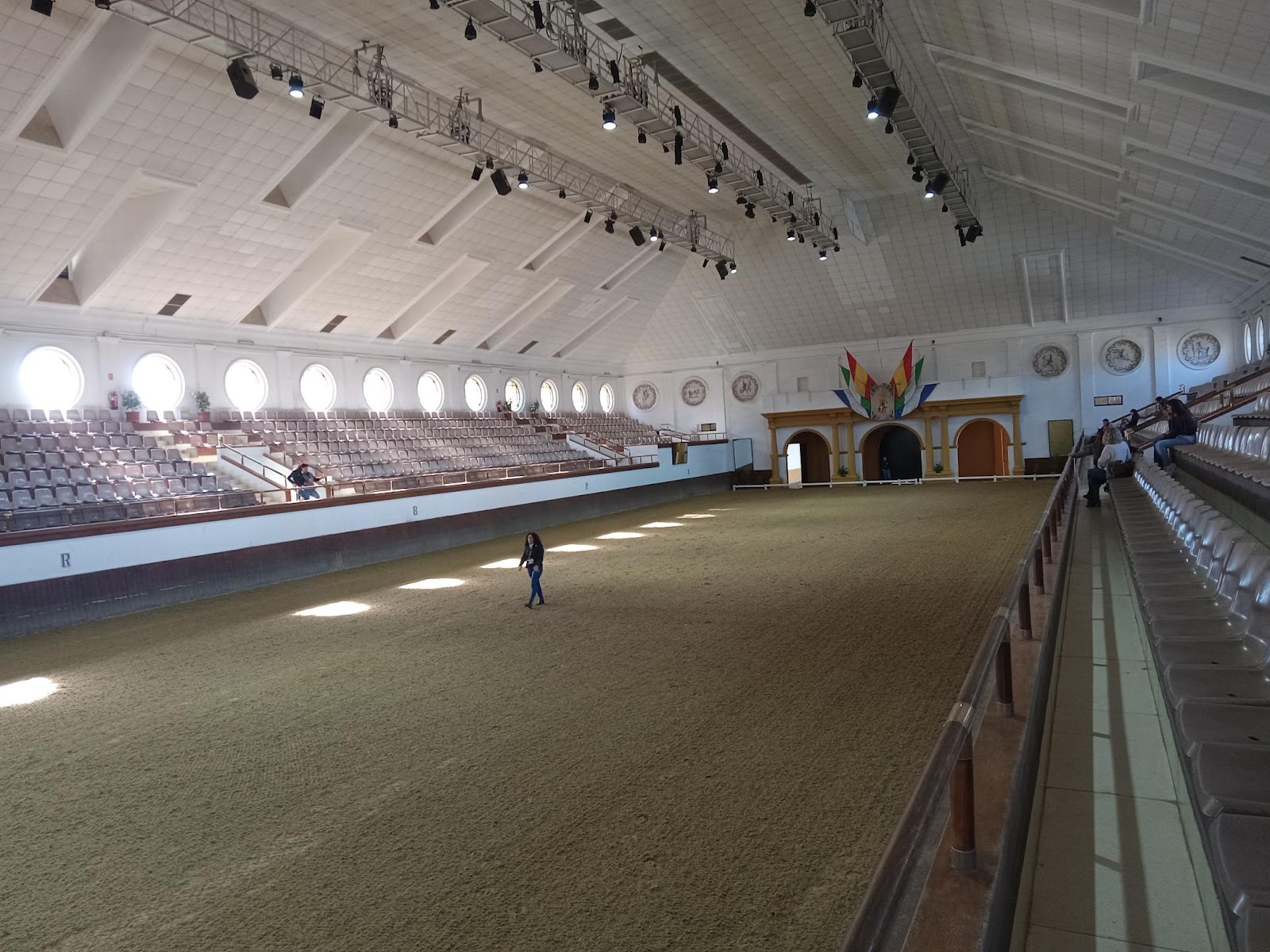
| Opposite End From Royal Box, Entrance/Exit Performers and Competitors. I don't know the function of the mirrors there, which at this size aren't clear are mirrors. |
| Jerez Royal School Grounds. The Lower Roofed Building is the Indoor Ring, the White Building Is Offices. |
| Remains of 9th C Arab Wall Fortress located at present Cuesta de la Vega, near the crypt of the La Almudena Cathedral; Long Before Madrid, And After Both Charles Martell and Charlemagne. |
| A Member of the Cat Families That Live In and Around the 9th C Muslim Wall Remains. |
| One of the Cat Houses And Villages Built for the Ferals Who Live In and Along the Cádiz Sea Wall, On the Atlantic Side! |
. . . . We were conducted around The Archivos de Indias this AM by colleagues.
Carlos III in the 18th C ordered all the documents that dealt with Spain's empire east and west to be housed in one building. This edifice is modeled much like his palace-hunting grounds Escorial -- the advisor who gave him the ideas is buried ... in New Orleans, which this is mentioned on his tomb. One of the Archives's colleagues has spent time in the Historic Museum of New Orleans deciphering the handwriting of the Spanish documents there -- her specialty. The other has done work with Lubbock TX, which university there has a program that sends students to Sevilla for 6 months. It's amazing this internationalism, which, of course, TX is so antipathic about -- just saw the news today o boy, what Abbott's done to the school system in Houston -- because Houston is a Dem stronghold. Terrifying what's going on and what is going to happen.
[Originally posted on DW on 03/15/23]
. . . . We are at the end of the world, or at least the end of Europe, in the oldest, continuously inhabited city in Europe, Gadir, established by the Phoenicians, now, finally, Cádiz. Now we know that we can go further, and we won't fall off. Cuba, Havana, is just over there. (Though it is Jerez, la frontera de Jerez, that actually looks a lot like Havana (without the dilapidation -- and when we get to Sevilla, now that recalls Havana in every way, which as the treasure flotas arrived from Havana to Sevilla, la reina católica's city, and which she made the capital of her kingdom, would be expected, right?). The tap water in Jerez was safe to drink, but it tasted funky in the way New Orleans tap water does. Here in Cadiz, it's still safe to drink, which as it turns out is true throughout Spain. We are so used to being Cuba, where one cannot drink the tap water. Potable water was and always is a problem there, just as it is in St. Augustine, FL.
We are in a 4-star hotel that was a convent. The church is still consecrated and operating as a church, but the sisters have gone ... where? elsewhere? It is extremely quiet, which is good for sleeping. One feels to be in a fortress (of God?) or a prison (of God?). But it is still cold, dark and convent-y, though with mod cons.
It's a good thing to be reminded, as one falls in love with Spain, that even when/where it was Muslim, it has always been a prodigiously Catholic country, about which history there is a lot to be said, and not much of it good. At least as far as the history I know goes, and speaking relatively to most people, at least in the USA, I know whole lot. It cannot be divorced from the Church's history, and the history of Spain (and Portugal) anywhere.
So much experienced -- cannot do anything except jot notes in Moleskine and take fotos with foney-fone. In mine mind's eyes, I see endless processions of beautiful horses, Flamenco dancers and, yes, matadors and bulls. Watch certain Flamenco expressions and there is so much there from the arena, or did it flow from the dancers to the arena -- even from dancers much, much before Jesus, perhaps, even likely, from before the Romans? The bulls were in Iberia before the Romans and the arenas. Africa is just a quick passage across the Mediterranean . . . there are bull rings and arenas there too, on the southern side.
[Originally posted on DW on 03/012/23]
~ ~ ~ ~ ~ ~ ~
. . . . Today was Phoenicians and Romans, mostly.
After which I took fotos and video of cats, cat houses, and cat towns under the seawall that protects Cádiz from the tormentas of el atlántico as we sunset walked around the island where is situated the oldest, longest continually inhabited city in Europe. We did both Romans and Phoenicians today.... and cats.
Speaking of cats instead of horses, I have a nice foto of one of the cats that live in and around the remnant of the Umayyads' fortress wall on the site that became Madrid -- going back so far, but not yet as far as Charles Martel or Charlemagne -- time, time, time. It is impossible not to time travel in Cádiz.
. . . Took fotos and video of cats. Cat houses, and cat towns under the seawall that protects Cádiz from the terrors of the Atlantic as we sunset walked around the island where is situated the oldest, longest continually inhabited city in Europe. So of course included are cat houses and communities.
The people of Cádiz care for the feral cats in the same way do those of Istanbul. Places for them to shelter from the salty humdity and sea spray, to relax and hang out, and to eat. These are cleverly constructed so the cats can get to the food but the always ravenous gulls and other birds cannot. Wonder if rats can? But I've yet to see a rat anywhere, but this is a city, moreover one so ancient as this, with constant grain shipments, surely there are rats.
We did both Romans and Phoenicians today.... and cats. Will have dinner at a Moroccan restaurant with a lovely woman from Finland we met on the train yesterday. Dancing Flamenco is her hobby and passion. Otherwise she's festival organizer. One of her festivals is a Steampunk festival.
Perhaps there is a way to transfer the short video I shot of one of the competitors and her horse in Jerez yesterday morning to here. I could do it via a long process of getting it to this wonky laptop's hard drive in Word video files. But I don't have time for that before I get back to NYC, where I would do the work on my desktop, which is much more powerful and faster. Trust me: this is equine poetry in motion. Ever since I've gotten here, i.e. to Spain, my mind's eyes, are filled with horses and dancers as I try to sleep. I've never been in a country, not even England, not even Virginia or Kentucky, where horses are such an integral part of a national identity and history. No wonder 4th grade Horse Girl me dreamed of coming here.
So little time to write, to transfer, etc. It's all my notebook, and occasionally trying to put some of it up here via my fone. Weird experience that.
But I am so afraid of missing, losing something, of these incredible experiences that just never stop, not for a second.
[Originally posted on DW on 03/13/23]
As this is the longest stretch of travel in Spain for our itinerary, we flew from Madrid to Jerez.
Holy cow is this ever horse country! Descending to the airport, taxi-ing into the (very small) city, to our hotel, everywhere there are exquisite horses, of elegant conformation and silhouette. Quite the highest end designer equine runway models.
Plus, there is Flamenco and sherry. And the classic Islamic White Cities of the Atlsntic and Mediterrean coasts. After deplaning, in the terminal, you are greeted by a welcome to Jerez mural that is first, a gorgeous horse, and a beautiful dancer in classic Flamenco form.
Last night in Madrid, we saw a Flamenco show in a very up close and personal space, deliberately created to be as close to the underground and caves-cellars (generally those belonging to a taberna, thus wine storage, all over Spain, and particularly in the south, dating from at least the Roman eras, but I'd guess from the Carthaginian ones too) from which the tradition emerged. (We were the only mask wearers, but so what?) It was the first time I have been that close to the performers. So I could parse how much of their classic poses are the same as those of bullfighters, fo one thing. Though none of the dancers used cotenants, one of them wore a shell medallion, which I like to think was a homage to the ancient predecessors of cotenants, already in the days the Roman's, who used clam shells.
Tomorrow we're taking a tour of the largest Roman amphitheater in Spain. But first, dressage!
I can't believe I'm finally here, where I've wanted to go since 4th grade. Better late than never is true . . . .
[Originally posted on DW 03/11/23]
~ ~ ~ ~ ~ ~ ~
. . . . More foney-fone fotos of horses in braids, and even, yes, in sparklies, than any sane person can take! Sparklies, though subdued and tastefully minimal, on the riding helmets too. What? They think they're royalty, nobility, or something?
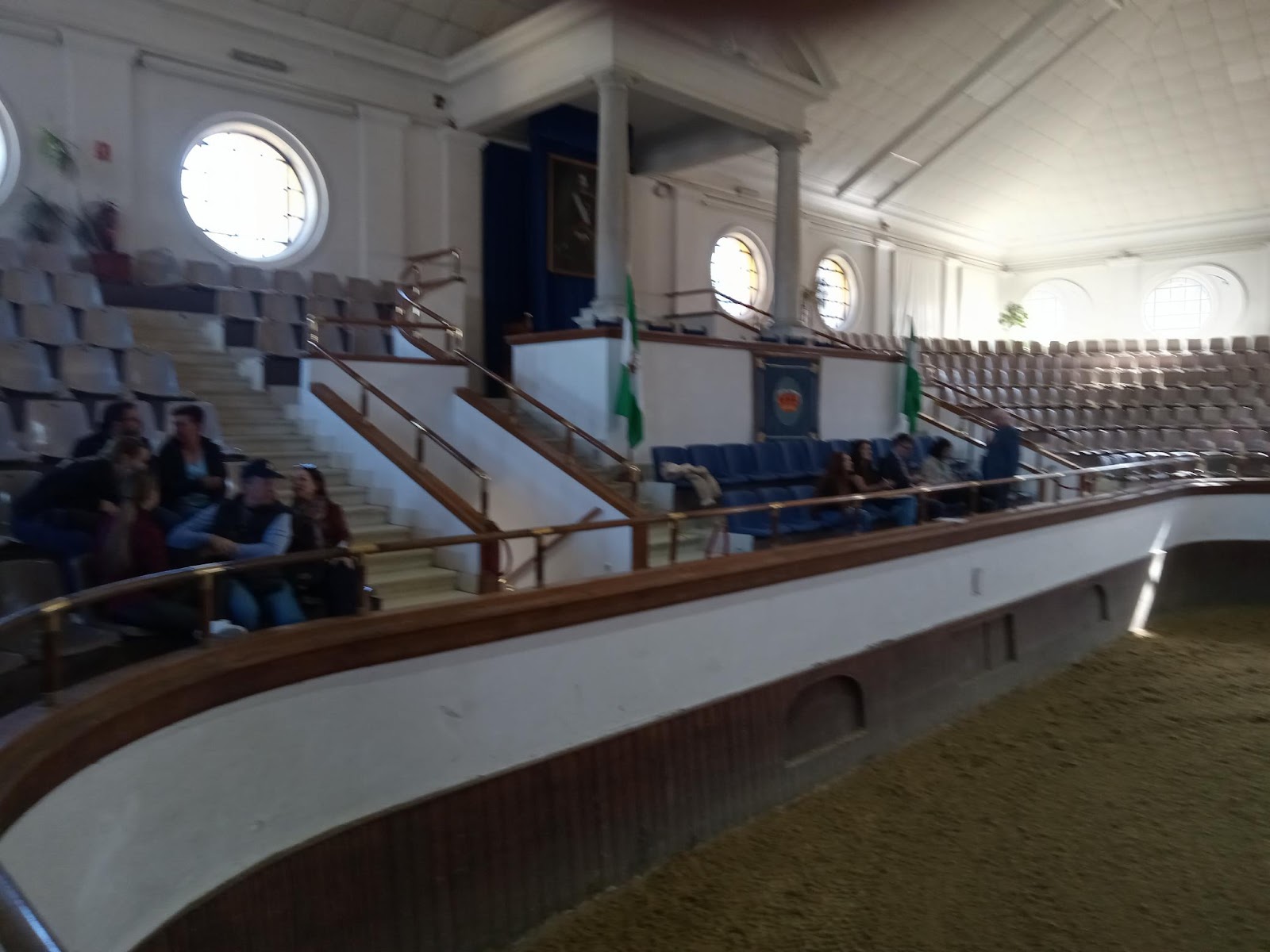
Indoor ring though, no sparkles. But mirrors at one end, the Royal box at the other, with a gigantic portrait of the king on the back wall of the box. I guess that's sort of a mirror for somebody? No fotos allowed, not even with foney-fones.
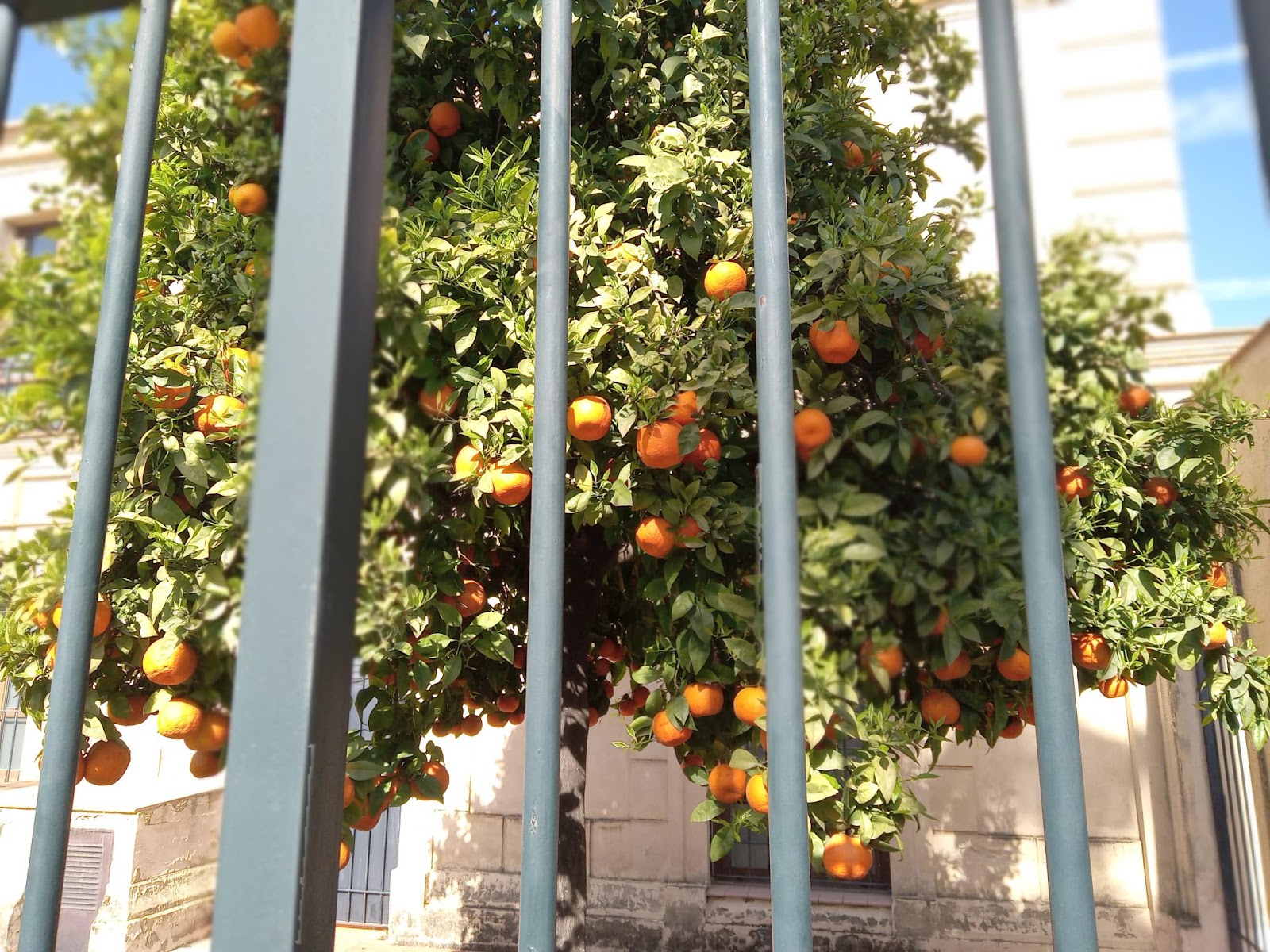
Orange trees in the grounds. Fotoed those.
Must move on to next thing now, and train, to Cadiz.
[Originally posted on DW 03/12/23]
. . . . Madrid's tap water made all the difference for recovering from dehydration caused by jetlag, adjusting to the altitude, and thorough upset of usual metabolic routines. I drank gallons and gallons. Recall, high altitude also promotes dehydration, which dehydration in these circumstances makes jetlag, lack of sleep and metabolic interruptions so much worse.
Madrid's on a plateau surrounded by impressively jagged mountain chains. It was spectacular as they appeared out of the clouds, snow-covered points and sides, as we were in that long descent to the airport. I recalled how moved and impressed I was waking to the view below of southwestern France, the vast forests, mountains, ravines and farmlands. It was the same this time, except it wasn't Gaul, but Iberia, and it looked in terms color and soft shapes like all those paintings we know -- except this was real. Then, suddenly these ominous mountains . . . with steep ravines and foothills seemingly impassable except to those who know. This is a Transhumance world. There is even an upcoming festival in Madrid to celebrate the ancient Iberian Transhumance way of life. El V recorded me, it turned out, face pushed against the window, eyes wide, repeating, "Wow," over and over.
It moved me, like that flight over southwestern France, this in my own eyes revaltion of what Spain is, it's history going back at least to the Phoenicians, the Romans and the Visigoths, particularly about Madrid, why it is here. Recall, there is so little Islamic presence in the region as to only a single archeological artifact's survival of their barely there footprint, the antipodes of Southern Spain. Knocked me out, it did.
The observance of Women's International Day -- there is a lot to say about that, because we were right in it.
Can't believe we've been here just about 48 hours, as months of activity feel have happened. However, jetlagged, needing to adjust to altitude, and the disruption of usual metabolic routine, while NO usual exercise, though a lot of walking is going on, up and down -- remember those mountains, hmmmm? Plus eating so well, and o lordessa, in heaven, drinking wines made right here.
In the meantime too, when it comes to hotels, restaurants, art and entertainment, Madrid is so inexpensive, particularly compared to NYC. Don't forget, that like the other European nations, i.e. the EU, Spain supports art and literature and entertainments. We have nothing like this in the US. In fact, in every way it feels like re-entering civilization from a long sojourn in a failed and toxic state, where we may all die any day from starvation, homelessness, disease, violence public and personal, climate catastrophe, and most of all plain all out stupidity. In comparison to Madrid, even the avenues around the Met look grubby and shabby.
So much has happened already, including a whole day at the Prado, meetings with various people, drinking the best wine, and falling down unconscious -- not from the wine but from jetlag and altitude adjustment as well as arriving w/o sleep reasons. Tomorrow is day trip to Toledo, which Spain took back from Islam in 1085, and which was the capital, as far as that would go, of Christian Spain, until Philip II decided to make this nothing place on this plateau his capital of his kingdom.
Gads, I love this!
I have some fotos, but am too tired to do the work to present them here now.
O lordessa it is wonderful to be here!
I could live here. Easily.
. . . . The word used in Spanish for 'dressage' is 'doma.'
Essentially, it is the Spanish who gave us 'dressage' , which, ya, we all know, but just in case we didn't I thought I'd mention it. People forget that in the 16th Century, Austria and the Habsburgs were inherited by the Spanish throne, which is why it is called the Spanish Riding School in Vienna. Think about what this all means in terms of the history of the breeding of the horses themselves, who came from Spain in the 16th C.
Here's an interesting piece from Dressage Today, concerning contemporary developments out of the Spanish-Spanish dressage techniques into the New World generally, and particularly the US West, called doma vaquera.
In Spain, doma vaquera is also connected with the art of bullfighting. Both the work in the bullfighting arena and with cattle requires speed, quickness, agility and a high degree of collection from the horse. Unlike in dressage riding, where riders ride with one (snaffle bridle) or two reins (double bridle) in each hand, doma vaquera requires the rider to hold the reins in one hand, typically the left. The right hand must be free for work, such as holding the garrocha, a long pole designed to distract the bull. The discipline of bullfighting from a horse is called rejoneo. The horse for rejoneo is a doma vaquera horse that performs movements such as piaffe, passage, terre-a-terre, jambette, pirouette on three legs, etc.
. . . . And so we did, go to New Orleans...
As miserable prepping for the 10-day journey was, mostly due to the very mixed weather and temperatures we would experience, as well as the knowledge that for the first time in years, I would be spending entire days within the company of over 50 other people -- and more due to some of the venues being clubs! the going itself was just fine and as smooth as it could possibly be. LaGuardia airport’s renovation and remodeling has included handling TSA lines a lot better, smoother and faster. el V did everything anyway, via his fone, so I had nothing at all to do but show my passport. At the TSA metal detectors, again, I was questioned as to my non removal of footgear; the TSA person said I didn’t look old enough to be pardoned that requirement! so I should feel complimented by her inquiring. This was also the case at departure. (Surely it would have been different if I wasn't wearing a mask though!) Throughout the security process and inside the security perimeters, I was comfortable in my mask, in the terminal and on the plane, i.e. not anxious, despite so many coughing and not masked. What the heck, yanno? I decided to do this, so there it is. As our beloved Dr. Song, says, "The mask is the vaccine." And so it is. The rain-wind storms were over by the time we were ready to land at New Orleans's new Louis Armstrong airport.
![]() |
| Outside the Lolis House in Treme, which was our base camp for the Treme Second Line Parade Sunday. Spike Lee gave us both t-shirts from his production in response to the Levee failure of Katrina, If God Is Willing and Da Creek Don't Rise. El V was interviewed on camera for the film. The great geographer and scholar of New Orleans, Richard Campanella, provided fascinating and heartbreaking history of New Orleans, the levees and pumping stations, particularly around the why of the pumping station failure and flooding of Katrina. |
"For the Funk of It" was another extraordinary Postmambo experience. None of us got covid , or a cold, or anything else. This is much easier to do, when the schedule is so carefully planned and calibrated, for an environment which is highly ventilated as part of the eco-structure of the place as is New Orleans, and mask wearing inside the transportation -- with open windows when possible. It would be a lot different moving 50 people around NYC in winter than in New Orleans. Which is why we did "For the Funk of It" on these days.
Then, yesterday, we left Spring behind and returned to Winter, though of course, our friends here, will not allow us to ignore the fact they endured some of the most brutal Winter NYC's had in a while, while we danced under the moon (the last nights anyway) and heard the best music. As one of our multiple generations of on-the-ground-in-the-community guides said to me, "Every artist we saw, every act was pure Star -- not three stars, not four stars, not four and a half stars, but FIVE STAR WORLD CLASS, Babeee, and if I wasn't doing this gig I'd never have gotten to hear this!"
As I have been feeling this trip confirmed that New Orleans is in the midst of another Renaissance of artistic, creative explosion. The energy there is incredible, which is felt and seen in everything from music to art to cuisine. New Orleans is changing a lot, thanks to the influence of the numbers of 'others' moving in, from Honduras and Mexico, to Haitians and Cubans. Particularly the Haitian and Cuban musicians who have chosen New Orleans, rather than Miami, as their US city of refuge. When we lived in New Orleans during the days of the Tulane Fellowship for The World That Made New Orleans: From Spanish Silver to Congo Square (for which 4 digit audio royalties came in again, the day before we left on "For the Funk of It") there were no Cuban or Haitian musicians or bands there. The influence percussively and vocally is flowing back-and-forth, inspiring fresh takes and innovation from both directions. What is particularly exciting about what is going on there currently, is that, this being New Orleans, so rooted generationally in the mud of the place, that the gorgeous, foundational mosaic that made New Orleans unique and special in the world musically isn't being thrown out at all. It is still the base, the center, but that base is growing, spatially, up, down and all around.
This makes the city a crackling, sizzling place of excitement and vitality -- quite unlike, say, Manhattan. However, one fears, that like, say Manhattan, the greed capitalist land speculators are going to shut it all down by making it impossible for anyone who isn't quite, quite rich to live there. Even within our own 'woke' group of Travellers, are quite a few who have second homes in New Orleans, which means people like our generationally planted ground crews, are having one hell of a time finding somewhere to live, since the Katrina floods took out their multiple generational family prosperity and homes. One sees the effect of this in the undeniable fact that all the service industries, whether hotels, restaurants, doctors, ophthalmologists, etc. can't get the staff they need to operate full-time. Many are leaving New Orleans.
It is clear, the trauma of Katrina has by no means left the fibers and sinews of New Orleans and her people.
One other thing is clear, yet again, what Postmambo Seminars do and accomplish, cannot be done without dedicated, experienced, caring people who know the people and the territory, inside and out, who are connected, to the very height and depths of their souls.
One way and another, "For the Funk of It" gave back to New Orleans, did not just take -- we pumped at least $100,000 directly into the musical and Black communities. Which is something, a small thing, but something.
It also showed that when done mindfully, carefully, in cooperation with and guidance from the knowledgeable, connected people who live there, like-minded group travel can be done again, safely. So we are starting to believe Postmambo al-Andalus can be done with our people in 2024.
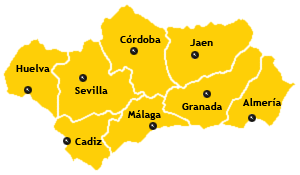
. . . . At the Friday evening start of the weekend, one can learn one is going to Spain for two weeks in March: Madrid, Toledo, Sevilla, Granada, Cordoba and Cadiz. We are going with another couple, one half of which is the director-son of Arturo O'Farrill's Afro-Latin Jazz Orchestra, which is all about performing, and who is the head of the Board of Arturo O'Ferrillo's Afro-Latin Jazz Alliance, which is all about schools, teaching, training and bringing up young performers, outreach into the communities and the communities that may not know about them or the musics.
Let's face it -- we both were careless. We'd been in one our city's brief interregnums of Covid, where the numbers had fallen so far, and hospitalizations were hardly happening for Covid. Then all anyone talked about was children with flu and RSV filling up the hospitals. But if one digged, one learned, which I had learned, there was no part of the city that wasn't classified as 'High or Severe Risk for Covid.' The numbers are alarming -- the governor's been talking about reinstating masks (she won't). The numbers started slowly rising with Comic Con, the Holy Days, so before Thanksgiving they were going rapidly up, and now there's the World Cup -- and next weekend that horror show called Santa Con -- all of these are super spreader situations, year after year. We really should have known better than going to a crowded restaurant where nobody masks except some of the basement Mexican staff.
O, there was something else that happened on Saturday. Our internet failed. Turned out it is because our wire from outside has suffered rain damage. It must be replaced, which means getting a time when the building's office will open access to the roof so the provider's technicians can replace it. In the meantime a temp fix, with new modem. But we may have to revert as we did until that temp fix to using the provider's outside hotspot, which means no secured internet.
But let me close with this, which I am finally going to visit, since having the desire to do pricked about age 10, seeing the color plates of it in the set of Lands and Peoples, that went along with the other sets of books, as for Science and so on, that came with the purchase my parents made when I was six of the Books of Knowledge. One has to reserve tickets months ahead of time, so now is the moment to do that.
. . . . La Leyenda El Cid (2020) Season One, AmazonP Spanish Original Series
The set piece of the first episode is a joust celebrating the meeting of the King of Navarre with the King of Leon. I'm unsure as to whether jousts in royal lists of this nature were in play back in 1060, when Rodrigo 'Ruy" Díaz de Vivar, who will one day be known to all Spanish as el mío Cid, has only very recently been promoted from mere page to squire -- but I may be wrong. I am finding anachronisms though, which I do know are such, but there are also cultural and social bits that are historically just right, and are sheer joy -- which so far at least, this series is for my kind of watcher: pure joyeous (early) medieval period television. This is the most lavish and expensive Spanish tv ever, and it looks it. In Spanish, but dubbed into English -- or it can be watched in Spanish with English subtitles.
![]() |
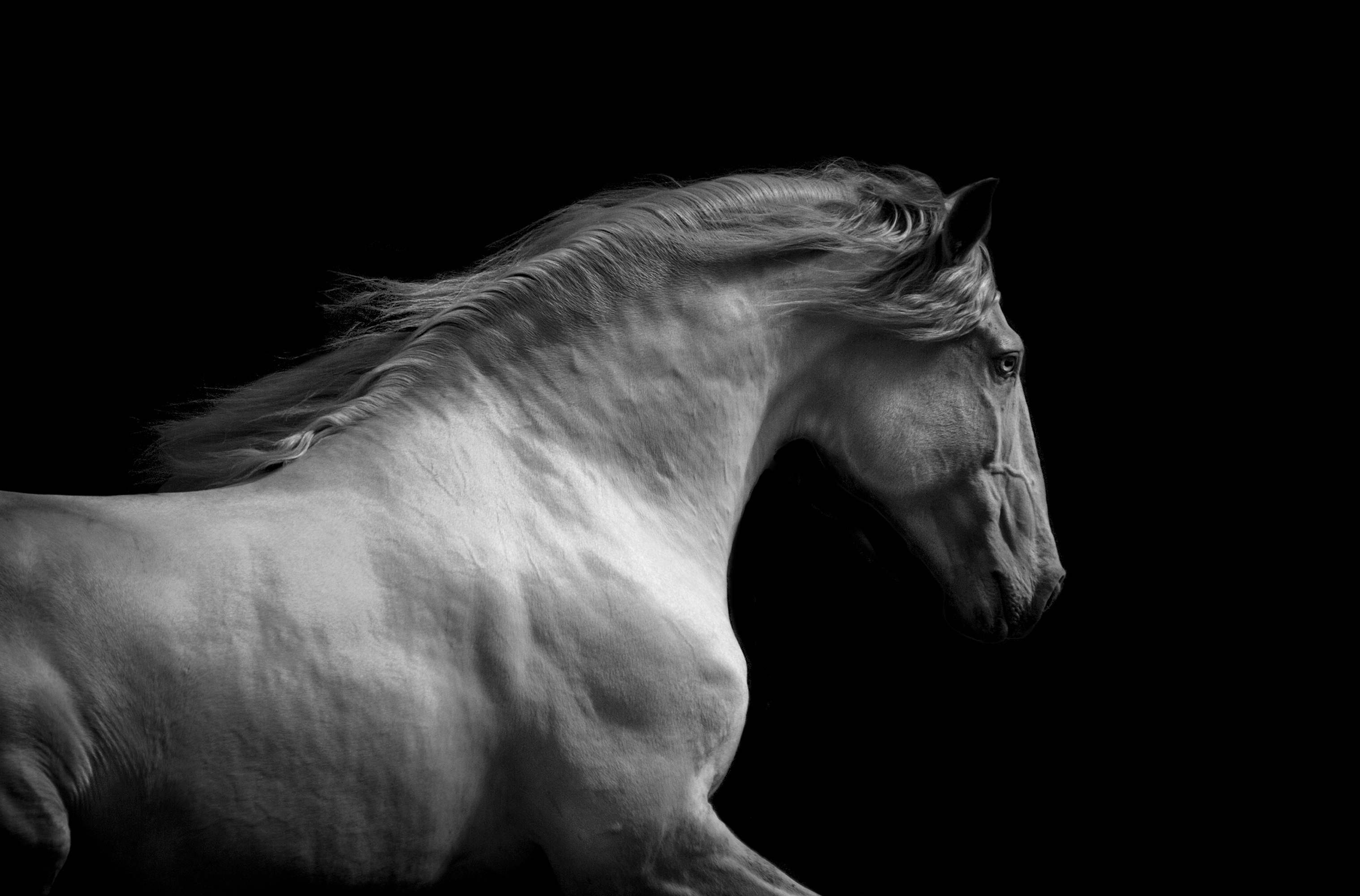
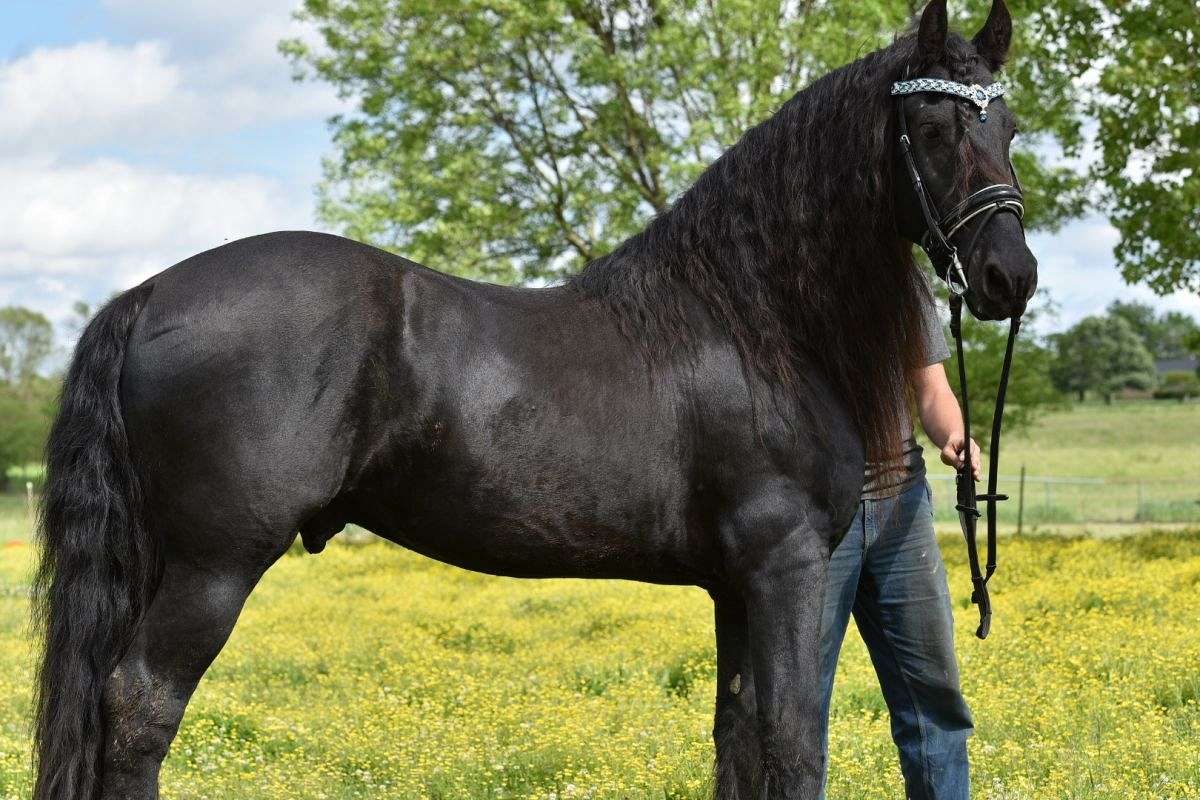
| Contemporary Friesian Stud; They Are Still BIG! |
A discussion about the New! Huge! Friesian (Dutch) Horse! introduced as a gift at the León court, also gave me great pleasure, as experienced warriors admire the stallion, agree he's magnificent, and also think falling off a horse this big is a long fall. Recall this is Spain, long before the Reconquista: the much lighter, but swift, strong and durable desert horse breeds are by now nearly indigenous to the Peninsula. As well Iberia was famous for horse breeding already by Caesar's time. As this is a Spanish production then, the horses are all A++ quality.
Nor are the mules forgotten. Riding, or driving, a high bred mule is not a sign of low status in Spain in those centuries. Mules were prefered by doctors, scholars, and even many high Churchmen, as well as by Muslim wise men and diplomats such as the series's character of Abu Bakr (though I don't know -- or don't yet -- whether this is one of the historical Abu Bakrs of 11th - 12th Century al-Andalus or not -- in Islamic history there are many Abu Bakrs).
Got a kick from the references to the Normans and their New! Innovative! Superior! way of carrying lances on horseback.
![]() |
| Medieval Moorish Warrior Mounts |
Birds are significant others as well in 11th Century Iberia. Ruy attempts to read warnings, signs and portents when he encounters them. In my Turkish 14th C fave, Ertugrul, the hero talks to his horse; Ruy talks to birds -- more accurately, he asks the birds questions, whereas Ertugrul opines, and his horse, who knows him well, tends to laugh. But the Spanish of the days of Castile y León aren't known to laugh much at birds of good or bad omen . . . .
This is spectacular tv, particularly if one owns a big screen tv. All real world locations. Very colorful (and dusty). Nor is there CGI. Those wonderful long trains of armies or trade caravans that reach way back down the roads are all real people on real horses, just like in ye olden days of film. . The castles would not be that weathered and eternal looking though. Which is something I noticed way back when I was a kid way back when a kid sitting in the Film Forum for classics, independent and revival titles, adoring the castles in that Charleton Heston El Cid. Nevertheless I saw it three times.
anyway -- besides, Sophia Loren! whom we miss greatly in this series, as Lucía Guerrero, the actor playing Doña Ximena Díaz del Cid, doesn't (so far) provide the fire we know Ruy's wife possessed, and Ms. Loren possesses too).
It's only 5 episodes, alas. And I'm sensing he's not our legendary el mío Cid by the end of them, because 5 episodes don't seem to be enough time to get there, with all the Iberian Peninsular politics, royal intrigue and betrayal among all the Christian states' murderously dysfunctional families (not matter how the centuries roll, some things don't change).
The series begins when Ruy's a page and a squire. After the second episode he's still not even a knight,which is as far as I've gone so far, trying to not use it up all my delight all at once. The actor, Jaime Lorente, ... though young, looks too old to be either page or squire. Does this mean they thought ahead, of Lorente aging convincingly into el mío Cid? Will there be a season 2? I sure do hope so.
~~~~~~~~~~~
The day before the snow storm I as able to score a copy of War Lord (2020) the final novel (#13) in Bernard Cornwell's Saxon Tales series, a/k/a via the BBC - Netflix adaptation, The Last Kingdom. Thus I'm well fixed, between arid Spain and wintery mix, 10th century, Northumbria, though I will be sorry to take leave of Uhtred, son of Uhtred, who also was son of Uhtred. But even this Uhtred knows his story has run its course, he's held his final shield wall. There is no choice. Destiny, Fate -- are all.