LINES OF THE DAY

". . . But the past does not exist independently from the present. Indeed, the past is only past because there is a present, just as I can point to something over there only because I am here. But nothing is inherently over there or here. In that sense, the past has no content. The past -- or more accurately, pastness -- is a position. Thus, in no way can we identify the past as past." p. 15

". . . But we may want to keep in mind that deeds and words are not as distinguishable as often we presume. History does not belong only to its narrators, professional or amateur. While some of us debate what history is or was, others take it into their own hands." p. 153

Silencing the Past: Power and the Production of History (1995) by Michel-Rolph Trouillot

Showing posts with label Dance. Show all posts

Monday, March 27, 2023

Back To Madrid - Horses Are Resting

      . . . . As my personal record of this Viaje it is necessary to include more foto notas from Madrid, as Madrid was our first city on the itinerary.  It was an excellent preparation for all that came next, including getting over the worst of jetlag in the comfort of the 5 star Hotel Prado.  Additionally to the comfort, it was location.  The famous Neptune Fountain is in the circle plaza outside, and a few steps away, cross the street, walk through the tipica big Hispanic city leafy, flowered, grass covered with public toilets, cross the street on the other side, and there you are: at the Prado Museum.

At this time at least, Spain is inexpensive,  which is why we could do this trip as 4 and 5 stars -- the dollar is so strong against the Euro.  However, this isn't the case for changing money. Big fees are charged, so we used cards almost exclusively.

Spain was vastly less expensive than anywhere in the US, particularly NYC.  Last night at our local, we had only wine and an appetizer last night at our local. It cost significantly more than any full meal with wine we had in Spain, including the most 'splurge' meal we had in Cádiz, in one of the very best restaurants in Spain, with an international clientele. 

And, ya, the wine last night was not near the quality of the Spanish terroirs; Europe doesn't tax wine and beer to death as the US does, nor must they it travel across the ocean, or even land -- so much of it is made near the restaurants. Many of restaurants have on their wine list wines available only in that particular restaurant-bar-taberna, meaning a special relationship with the vintners.


First Cena (Dinner) in Madrid, a restaurant that specialized in regional wild mushrooms.  Along with the wine, of the Castile Terroir, this may have also been the very best, most delicious meal we had on this journey. The plates and other dishes all had individual regional mushrooms and surrounding plants as their design.

As she cannot go on such a viaji, the bird pin placed on the design was gifted to me by as friend in her place right before we left. She has for a year been fighting cancer, with extraordinarily difficult treatments, who is scheduled for surgery very soon. 

 The pin was always in my cross body bag. Throughout the journey, at different meals, I clicked this Bird of Passage and texted the fotos to her in real time.  She said they picked up her spirits after yet another round of chemo.


Alvaro de Bazan y Guzman (1526-1588), a hero of Lepanto, 33 years as General Admiral of the Spanish Navy, never was defeated.  I was so excited to encounter this monument to him in an enclosed courtyard on our way to visit the 9th C Muslim Wall remains.  The Battle of Lepanto truly was a one of those most significant events in history.  Though almost a draw in terms of lives and ship lost, it did prevent the Turks from moving into the western Mediterranean.  It also increased, not only Spain's, but Europe's anger and disgust with France. She was not at Lepanto. Thanks to Francis I, France was allied, as she'd been for long, with the Turks.  Something we don't hear much of over here in terms of European history. Spain was one of the few European nations to send help to the Siege of Malta against the Turks.  France was begged to, but did not.

Most of all, I think, I was excited because I knew who 
Alvaro de Bazan y Guzman was! I didn't need to read the plaque to find out, I just needed his name. I knew about Lepanto and the Great Siege of Malta!  I felt the same way so often in the Prado, looking at portraits of different Spanish court grandees painted by Goya -- I knew who people such as Godoy and Floridablanca were.


This was the first time I noticed that Spain's historic sites have information plaques in Braille as well as print. It was the same at the 9th C Muslim wall remains.


This is one of Goya's historical interpretation of the battles with the French invasion forces. This one features Egyptian Mameluke Imperial Guard cavalry regiments. Yet another stupidity of Napoleon.  By the supreme Católica God who gave Spain back to the Christians after more than 7 centuries, how could he think the Spanish would passively accept a takeover that centered Muslim fighters?
[This is not my photo, as no photography or recording of any kind is allowed in the Prado.]


This Is Not the White House. The royal palace in Madrid, not far from the 9th C Muslim Wall remains.  This was the weekend, and tourists from near (Spain) and far were present even as closing time was imminent.  No, one cannot go in.  Not sure though, whether the flag meant the king was in residence.  This palace is surrounded by vast gardens that are essentially woods. The Spanish kings were even more insane about hunting than the English and French ones. This tradition has continued into the present: recall the Spanish royal scandal not that long ago regarding members killing elephants.


Madrid, our first Flamenco performance in Spain.  We were seated next to a lovely Japanese American couple from Seattle.  This was their final night before flying home from their vacation, which began in Fez, Morocco.  They liked Marrakesh much more than Fez, and Spain more than that. The wife is a Flamenco aficionado, who takes classes back in Seattle.  El V and I were the only audience members who masked.


Red is Passion.  See those hands clapping that distinctive Flamenco cracking rhythm? Despite the late 19th C Spanish officials and intellectuals, and later, Franco's repressive attempts to stop the prevalent popularity of Flamenco music and dance with foreigners and tourists, it was a failure.  At this time there is no national Spanish music at all, except Flamenco.  It is everywhere.  Students come in droves from everywhere to study in every city in Spain, though particularly in Sevilla and Granada, of course.  No matter where you are, you will hear casual Flamenco clapping as men and even little kids practice, even in train stations.


From my seat I had a splendid view of the dancers' feet.  The dancers are percussionists.  They and the musicians and singers are on a particularly constructed platform called a tablao (pronounced tabl-ow! ow like meow). This platform is actually a drum head, with air space between it and the 'ground' that makes for a resonator, as the belly of a non-electric guitar is a resonator.  'Tablao' is used interchangeably to refer to the stage-platform and to Flamenco itself.


Saturday, March 25, 2023

Go Any Further and We Shall Fall Off

      . . . .  We are at the end of the world, or at least the end of Europe, in the oldest, continuously inhabited city in Europe, Gadir, established by the Phoenicians, now, finally, Cádiz.  Now we know that we can go further, and we won't fall off.  Cuba, Havana, is just over there.  (Though it is Jerez, la frontera de Jerez, that actually looks a lot like Havana (without the dilapidation -- and when we get to Sevilla, now that recalls Havana in every way, which as the treasure flotas arrived from Havana to Sevilla, la reina católica's city, and which she made the capital of her kingdom, would be expected, right?). The tap water in Jerez was safe to drink, but it tasted funky in the way New Orleans tap water does.  Here in Cadiz, it's still safe to drink, which as it turns out is true throughout Spain. We are so used to being Cuba, where one cannot drink the tap water. Potable water was and always is a problem there, just as it is in St. Augustine, FL.

We are in a 4-star hotel that was a convent.  The church is still consecrated and operating as a church, but the sisters have gone ... where? elsewhere? It is extremely quiet, which is good for sleeping. One feels to be in a fortress (of God?) or a prison (of God?).  But it is still cold, dark and convent-y, though with mod cons.

It's a good thing to be reminded, as one falls in love with Spain, that even when/where it was Muslim, it has always been a prodigiously Catholic country, about which history there is a lot to be said, and not much of it good.  At least as far as the history I know goes, and speaking relatively to most people, at least in the USA, I know whole lot.  It cannot be divorced from the Church's history, and the history of Spain (and Portugal) anywhere.

So much experienced -- cannot do anything except jot notes in Moleskine and take fotos with foney-fone.  In mine mind's eyes, I see endless processions of beautiful horses, Flamenco dancers and, yes, matadors and bulls. Watch certain Flamenco expressions and there is so much there from the arena, or did it flow from the dancers to the arena -- even from dancers much, much before Jesus, perhaps, even likely, from before the Romans? The bulls were in Iberia before the Romans and the arenas.  Africa is just a quick passage across the Mediterranean . . .  there are bull rings and arenas there too, on the southern side. 

[Originally posted on DW on 03/012/23]

~  ~  ~  ~  ~ ~ ~

Cádiz Cat Houses and the Atlantic

     . . . . Today was Phoenicians and Romans, mostly. 

After which I took fotos and video of cats, cat houses, and cat towns under the seawall that protects Cádiz from the tormentas of el atlántico as we sunset walked around the island where is situated the oldest, longest continually inhabited city in Europe. We did both Romans and Phoenicians today.... and cats.

Speaking of cats instead of horses, I have a nice foto of one of the cats that live in and around the remnant of the Umayyads' fortress wall on the site that became Madrid -- going back so far, but not yet as far as Charles Martel or Charlemagne -- time, time, time. It is impossible not to time travel in Cádiz.

    . . . Took fotos and video of cats. Cat houses, and cat towns under the seawall that protects Cádiz from the terrors of the Atlantic as we sunset walked around the island where is situated the oldest, longest continually inhabited city in Europe. So of course included are cat houses and communities.

The people of Cádiz care for the feral cats in the same way do those of Istanbul.  Places for them to shelter from the salty humdity and sea spray, to relax and hang out, and to eat.  These are cleverly constructed so the cats can get to the food but the always ravenous gulls and other birds cannot.  Wonder if rats can?  But I've yet to see a rat anywhere, but this is a city, moreover one so ancient as this, with constant grain shipments, surely there are rats.

We did both Romans and Phoenicians today.... and cats. Will have dinner at a Moroccan restaurant with a lovely woman from Finland we met on the train yesterday. Dancing Flamenco is her hobby and passion.  Otherwise she's festival organizer. One of her festivals is a Steampunk festival. 

Perhaps there is a way to transfer the short video I shot of one of the competitors and her horse in Jerez yesterday morning to here. I could do it via a long process of getting it to this wonky laptop's hard drive in Word video files.  But I don't have time for that before I get back to NYC, where I would do the work on my desktop, which is much more powerful and faster.  Trust me: this is equine poetry in motion.  Ever since I've gotten here, i.e. to Spain, my mind's eyes, are filled with horses and dancers as I try to sleep. I've never been in a country, not even England, not even Virginia or Kentucky, where horses are such an integral part of a national identity and history.  No wonder 4th grade Horse Girl me dreamed of coming here.

So little time to write, to transfer, etc.  It's all my notebook, and occasionally trying to put some of it up here via my fone.  Weird experience that.

But I am so afraid of missing, losing something, of these incredible experiences that just never stop, not for a second.

[Originally posted on DW on 03/13/23]

Jerez: Hola Caballos!

As this is the longest stretch of travel in Spain for our itinerary, we flew from Madrid to Jerez.

Holy cow is this ever horse country! Descending to the airport, taxi-ing into the (very small) city, to our hotel, everywhere there are exquisite horses, of elegant conformation and silhouette.  Quite the highest end designer equine runway models.

Plus, there is Flamenco and sherry.  And the classic Islamic White Cities of the Atlsntic and Mediterrean coasts. After deplaning, in the terminal, you are greeted by a welcome to Jerez mural that is first, a gorgeous horse, and a beautiful dancer in classic Flamenco form. 

Last night in Madrid, we saw a Flamenco show in a very up close and personal space, deliberately created to be as close to the underground and caves-cellars (generally those belonging to a taberna, thus wine storage, all over Spain, and particularly in the south, dating from at least the Roman eras, but I'd guess from the Carthaginian ones too) from which the tradition emerged. (We were the only mask wearers, but so what?) It was the first time I have been that close to the performers. So I could parse how much of their classic poses are the same as those of bullfighters, fo one thing. Though none of the dancers used cotenants, one of them wore a shell medallion, which I like to think was a homage to the ancient predecessors of cotenants, already in the days the Roman's, who used clam shells.

Tomorrow we're taking a tour of the largest Roman amphitheater in Spain. But first, dressage! 

I can't believe I'm finally here, where I've wanted to go since 4th grade.  Better late than never is true . . . .

[Originally posted on DW 03/11/23]

~  ~  ~  ~  ~  ~  ~

Royal Amigos del Caballos

      . . . .  More foney-fone fotos of horses in braids, and even, yes, in sparklies, than any sane person can take!  Sparklies, though subdued and tastefully minimal, on the riding helmets too.  What? They think they're royalty, nobility, or something?

Indoor ring though, no sparkles.  But mirrors at one end, the Royal box at the other, with a gigantic portrait of the king on the back wall of the box.  I guess that's sort of a mirror for somebody? No fotos allowed, not even with foney-fones.

Orange trees in the grounds.  Fotoed those.

Must move on to next thing now, and train, to Cadiz.

[Originally posted on DW 03/12/23]


Monday, March 6, 2023

Brain Fog Calls For A Road House In Another Time, Another Place

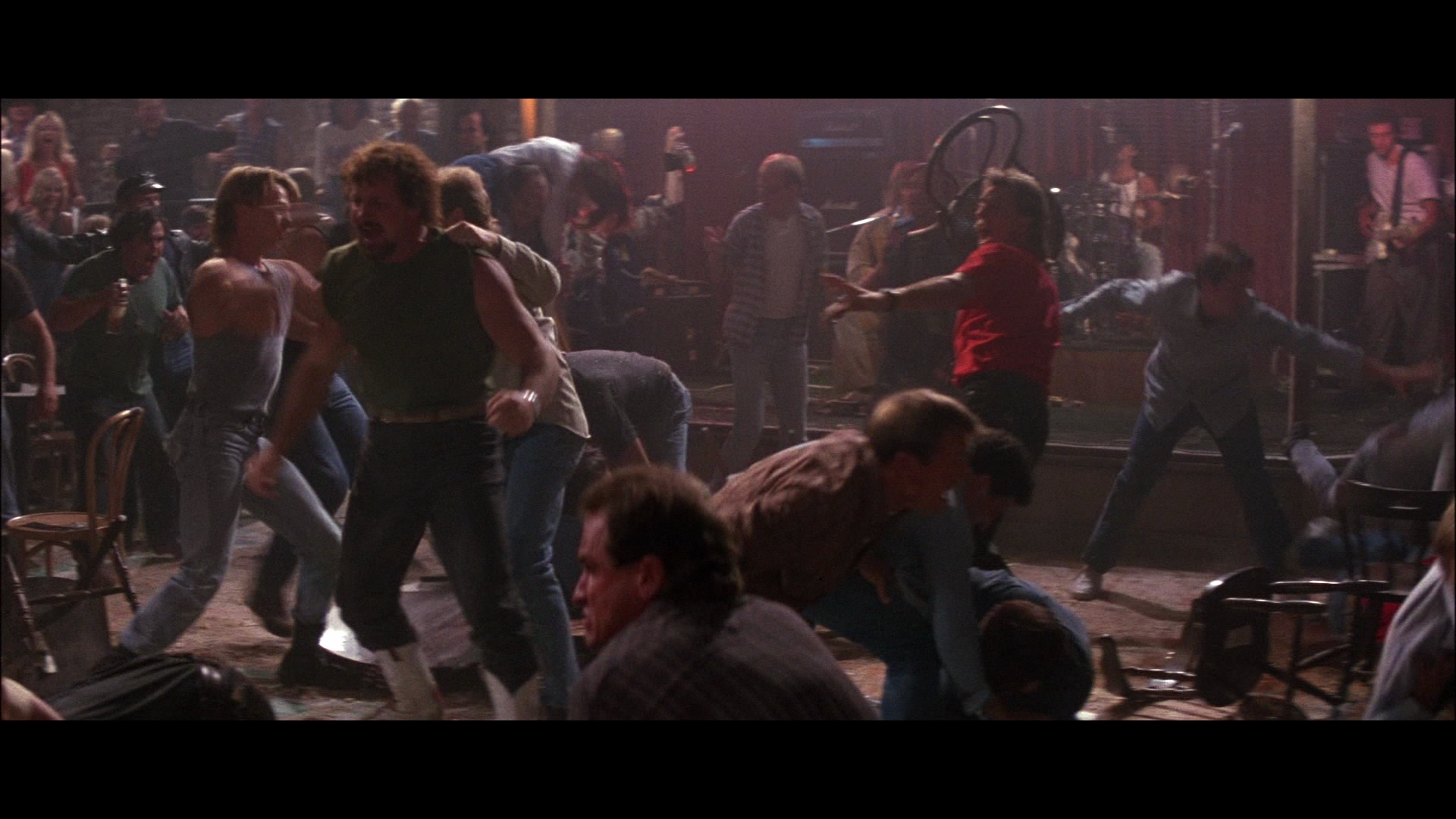
      . . . . Road House (1989)


What a secure time it was that something like this could be a movie.  OTOH, I swear to gd, this is kinda what the Jack Reacher novels went for. (First Jack Reacher novel was 1997.)  Here we have James Dalton, a bouncer -- excuse me, Cooler! -- who is not only a legend for cleaning up night clubs, but the whole towns and counties that are run by thugs and other nogoodniks in flyover country nowherelandia. Then he moves on. 


In this film, the nowherelandia is in Kansas – or is it Missouri? Not only are the reviewers kinda confused about this but it seems the film’s characters are as well, but everybody knows Something Happened With Our Hero in Memphis which is why he's no longer there. Our Hero Dalton has a network of bouncers, -- excuse me -- coolers! instead of marines and Big Gummit D.C. Intelligence allies that Reacher’s got, but still a network. Or at least Sam Elliott as Wade Garrett, who is an even more super Cooler than Dalton.

So it’s the lone gunman who cleans up the western town under a siege of terror by local thugs, except Dalton does it with what he’s learned in New York University’s philosophy department, and his Asian martial arts skillz, instead of two blazing six guns  (though there comes the point when gunz must uzed; this is America!).  Not to mention the best hair and exquisite wearing of pants (not jeans! those tight, sexy black levis are for Sam Elliott) that nobody else can get away wearing because they'd look so stupid in those high waisted, soft, flowing trousers – but Swayze’s ass and legs are magnificent in them.

Road House was edited by the same guys who edited Die Hard, RoboCop, Predator, Commando, Total Recall, Basic Instinct, Tombstone, therefore we are not mistaken that Dalton's character is one of those larger than life sorts, like a superman, while flattering us that he’s just like us really, the way Spider Man is (while Batman isn't just like us, being a zillionaire and all) -- while making fun of both this superhero genre and affectionately ribbing this film in which the superhero is a – bouncer. The affection the editors have for the film shows in many ways, not least in how palpably we feel the sheer sexiness of the feelings at least three of the characters have for each other.  It is really one of the few really sexy films I’ve watched, I think, i.e. the characters even gave this watcher hot feels.

Other entertainments that RH appears to make part of a pattern are the Travolta Saturday Night Fever (1977) and Urban Cowboy (1980), which may have set off this examination of fairly specific, but disparate US cultures in connection with matters outside the law or accepted mores. Flash Dance (1983), Dirty Dancing (1987) of course, not only because of the amount of dancing in RH (though it is fairly muted -- just like the female characters are in RH, even Kelly Lynch's character, though Kathleen Wilhoite's Carrie has good moments, particularly when she melts into sexy feels inadvertently viewing Dalton naked (but then, everybody does, even when he's not naked, but her moments just felt so authentic and you like her for them too) -- unlike in SNF, FD, UC, or DD), through pop music combined with pro and non-pro dancing. Here are supposedly normal people like us, who love combining dancing for fun as well as going for our personal best. But only DD and RH star Patrick Swayze at his peak of gorgeousness. Not to mention equal peak Sam Elliott gorgeousness in a different manner, showing up in RH, as Swayze’s sidekick.


Closing day for the original Gilley's, Pasadena, TX.

In spite of this superheroing, I too have a lot of affection for Road House because 1) the sex parts really feel sexy;  2) I spent a lot of time in my earlier in the famous Texas outside of Houston's gigamous roadhouse, Gilley's (where Urban Cowboy did scenes); the Double Deuce, judging by the size of its parking lot, was the Gilley’s of its locale.

That world is gone, as much as NYC’s world of Studio 54, Danceteria and the Paradise Garage. They were of their time.

I suppose we must also think of Cocktail (1988) with hyper annoying Tom Cruise? Which I’ve never seen it, though I think I tried to watch it, once.  Now that is a truly stupid movie – just read the story line!  But then, for me, anything that features Tom Cruise (except when he was paired with Paul Newman) is unwatchable.

There was a Road House 2 (2006). It went straight to video. They Say it was a sequel in name only. 

O. Dear. They Say there’s a Road House remake in production


Fight at the Double Deuce!  SuperHero Bouncer Dalton is the only one who can stop this going on!

It’s interesting that from this perspective, there are so approaches to liking Road House. Though the reviewers in 1989 cocked snooks and sneered about it, it's a good action film with lots of other stuff going on, the kind thing that attracted so many of us to the Reacher novels. The action sequences are what we see praised these days as making a movie "that's fun to watch." for those who prefer action to feels.  Alas though, the ridiculous part is the entire premise of a bouncer and national fame for being part of a community improvement - gentrification action.  Nevertheless, I doff my sombrero to whomever had the brain storm to translate all those concerns of crime vs gentrification and the hierarchies of clublandia, all constant subjects then in the era, into this concept. That is, these were constant subjects if you lived where these matters were going on and of concern, all at once, anyway, as we did.

The film concludes with the Jeff Healey Band, which is featured mostly throughout the film, playing a cover of Bob Dylan’s "When the Night Comes Falling." This film, in a lot of ways is comment on US films and culture of the time, and if looked at with care, done as a goof on it, in the same way that Dylan’s own sense of humor has done in his own films like Masked and Anonymous (2003) funning on his long decades of dealing with celebrity and the intersections thereof, while determined to remain a working musician who riffs endlessly on US culture and musical traditions.  I mean, the penultimate great violent sequence in Road House is a monster truck driving into a car dealership and crushing all the brand new cars. This could only be imagined in America!

This has been one of the most interesting movies I’ve watched in years.  I wonder … if I’d seen it when it came out, would I have gotten all this?  I … rather doubt it.  Sure I believed I was truly tuned in back in 1989, but from the perspective of this year I see how freakin’ callow I was, and how little I really knew.

Just who were those people who got away with making this?  They must have had a lot of fun -- most of all, this flick is relaxed, like they had been doing yoga and tai chai daily, for years.

Have a Monster Truck!


~~~~~~~~~~~~


Essentially packed.  Have some hours tomorrow to copy edit, change mind, remember what is forgotten, etc.


Saturday, December 24, 2016

¡Nochebuena!

      . . . . The cooking has begun,  and so has the nibbling.

The Christmas music of our Puerto Rican friends is blasting (Puerto Rico OWNS Christmas!)

Dancing may be going on, as well as cooking.

Some gifts.

Some wine . . . .


Saturday, December 26, 2015

After Christmas, Prior to Cuba and the New Year

Christmas Day's pork roast turned out very well, according to those who ate it and, I confess, to my own judgment as well. The roast is almost entirely about the stock elements around it, which were in the freezer as leftovers from previous pork entrees, and about timing, ensuring it is well cooked, but not even a little bit dry.  So it's paying attention more than physical work.

Trust me: peeling a butternut squash is hard work!
The parsnip and squash soup was more complicated and difficult for me to pull together. Unlike the roast, the soup is a lot of steps from cutting open, peeling, chopping and pre-roasting both parsnips and squash just a little bit before starting the ingredients in the stove top soup kettle. Then  must be paid a lot of attention, to keep from scorching.

Perhaps a meal of left-overs, just enough for el V and me.  :)

This paying attention part -- I'm rather astonished I pulled that off, considering the consequences of Christmas Eve included not getting home and into bed until nearly 5 AM.

Christmas Eve dinner was outstanding. It included venison and wild boar sausages and duck breasts, both grilled outside. That's what many on our coast have done this year because it's been so unseasonably warm. With no need or desire to further heat up the house, many traditional winter foods were jettisoned for the feast and instead of baking a ham, grilling out in the garden is the thing. K & C's courtyard / patio was just lovely. Except we were certain that mosquitoes were about . . . .

Among the terrific company was this year's winner of the Man Booker Award for Fiction,  He managed to get a flight in from Minneapolis. In fact we first met years ago at another holiday dinner, Thanksgiving, also hosted by K & C -- the n'er to be forgotten Thanksgiving when the dining room table's additional leaves parted company with each other, and everything on the table slow-moed into the ever-widening, snowy-lined table cloth crevasse. And, then the disaster after that, while K was fare welling the guests on the long steep brownstone steps, he slipped on a bit of ice that hadn't gotten the salt, fell and broke his ankle. This was back when the huge economic depression was just starting, and when people like us, artists, freelancers etc., were hit, and hit very hard, almost a year before there was official recognition that the economy, thanks to the banks, was crashing and burning.

BTW,Booker winner plans, he says, some big Fantasy fiction set in a fantasy Africa, drawing on African myths and history.  El V and I just happen to have some fairly serious knowledge of these matters . . . and as well there are two big West African projects he's doing himself in 2017, which will involve going back to the African Atlantic coastal countries for some serious time.


It was a terrific Christmas Eve.  We had no idea it was so late because the time just whizzed by in great conversation, food, drink and friends. At midnight I looked out of the great bay window of K's second floor study The perfectly round winter moon was nested in a web of bare black tree branches, wreathed with bits of fog. If this had been a film and I looking out that great bay window at midnight, I would have exclaimed, "Oooooo, look everyone!  It's snowing!" And have seen Santa's sleigh and reindeer gliding through the fog above Madame Jumel's mansion.


But it did not snow and  I did not see a sleigh and reindeer crossing the moon.

Instead, we embarked on a dancing salsathon to K's magnificent vinyl record collection of Puerto Rican and Cuban salsa stars.

Today's much colder than the previous days of this week.  But it's still grey -- can't remember the last time there was a sunny day.  Rain is to begin, yet again, and keep up until Tuesday.  This is going to interfere with the getting of these things one must have before flying to Havana.  Among them disposable champagne glasses* for 30 +, to drink to 2015 at our last U.S. meal before taking off for Cuba.

--------------------------------

*

My special gift this year: a set of indescribably beautiful -- and fragile -- champagne flutes.  They are staying home.  But we used them last night, specifically, to drink a toast to the confounding of rethuggianism, those who made so much money out of our economic miseries.

Among other things though, I received Mary Beard's SPQR!  And the print version of Isabella: Warrior Queen, which is one of my year's best / most important reading round-up -- but I actually listened to an audio download.  Now I have the author's footnotes and bibliography, thank goodness.

Wednesday, January 21, 2015

It's Chaucer, It's Ballet, It's Kate Chase Sprague. It's Huey Long - It's All History

I don't always have time to participate in the Reading Wednesday meme, as I haven't got the time for recreational reading, since I spend so much of every week in focused reading for research and fact-checking.  However, here are four books I'm currently reading purely out of my need for escape from the matters of slavery and the slave trade.

Each one deals significantly with a particular era in history.  I list them here in that chronological order.


Chaucer's Tale: 1386 and the Road To Canterbury (2014) by Paul Strohm. This is a small book of history that, happily for me, deals with the wool trade's administrative structures, and the political cut-throatery of who controlled it in these peak centuries when it was all England had to finance a nation and the crown.

As interested as I am in England's wool industry of the 14th and 15th centuries, and that its central figure is the author of The Canterbury Tales, this small history is remarkably dull reading.  Which it shouldn't be since the story is interesting: how this man whose only claim to notice is that he was married to  Philippa de Roet,  whowas a lady to Blanche, Duchess of the powerful Duke of Lancaster, and Philippa's  sister, Katherine, became this same Duke's long- time mistress and finally his third wife.  But his sister-in-law had some years  yet before marriage with Lancaster, when Chaucer was one of London's wool custom controllers, and a member of Parliament -- and what happened to Chaucer when his faction fell out of power.

Nevertheless a great deal of political and economic information necessary to fully understand the Wars of the Roses is within the purviews of this book. Fortunately I know enough about this era -- though not even approaching a specialist's knowledge -- that the dull narrative didn't get in the way of reading the whole story


Apollo's Angels: A History of the Ballet (2010) by Jennifer Homans.  I'm particularly thrilled to be reading this as it's been on my reading list since it was published.  Since it was among my Christmas gifts this year, it's as though I finally received permission to do so. The history begins in 1533, with the wedding of Catherine Marie de Medici to the French king, Henry II. Anyone interested in the development of manners, etiquette, courtesy and their relationship to the King's Body Royal, courts and the body language that goes with them, and the further significance to realm political is going to find the first sections essential reading -- and absolutely fascinating.  I've read much of this information in other books, but never in one continual chronological narrative that includes the political and social history of the early Renaissance in Europe.

Homans, who has a Ph.D. in Modern European History (all this means within the acadamy is its not Ancient or Prehistory -- it doesn't mean the 20th century specifically), is the Distinguished Scholar in Residence in History and European and Mediterranean Studies at NYU.  That she brings this deep historical knowledge to her experiences with ballet makes this study very special.

For a ballet lover like herself, Homans's conclusion about ballet's future history is a melancholy one.  She thinks the art form's not likely to survive, as all ballet's the elements are anchored by the body and how it communicates in motion and space, is progressively less interesting to generations more anchored in digital kinetics and communication.  They are -- and employing this word deliberately -- in dynamic opposition.


American Queen: Rise and Fall of Kate Chase Sprague, Civil War "Belle of the North" and Gilded Age Woman of Scandal (2014) by John Oller.  This one might be a contender for the longest title for a single subject biography, but then this title was surely the publisher's idea, attempting to cram as many search tags into it as possible.

Kate was the most beautiful woman not only in Washington D.C., but in the country, and the nation's foremost social hostess, none of which small, manic-depressive Mary Todd, with family fighting for the CSA, could be. Gads, Mary Todd Lincoln hated Kate Chase! She had her reasons, starting with Kate's father, Salmon P. Chase, who believed he should be POTUS and while Lincoln's Secretary of Treasury, campaigned from that position to take Lincoln's place. Kate devotedly did her best to help her father fulfill his ambition. If Chase succeeded, Kate would serve as First Lady.

As Kate's beauty blossomed when photography was becoming common we can see her reputation as a great beauty is not exaggerated.  Considering how photographs of the time fade, how immobile the subjects had to be, and the acres of fabric in which the female body was swathed in those days -- that her beauty still shines from these photos like a brilliant star among dull clouds, is the proof.

Her wedding to the wealthy Rhode Island financier, Richard Sprague, was hailed as the social event of many seasons, the union of a prince and a princess.  We know that often those fairy tales turn out badly, and Kate didn't escape that fate.


Kingfish: The Reign of Huey P. Long (2006) by Richard D. White. This is an easy-reading book that covers what many other books about Louisiana's famous son, Huey Long, have described. But for later generations whose great-grandparents were barely born in the 1920's and the 1930's, this book will inform them why Long's still particularly relevant to our particular political time and climate.  It gives a good account too as why populism so often becomes demagoguery, which will lead to no good, as we saw in the same decades with Mussolini and Hitler. They weren't the only ones by any means, and Huey Long wasn't the only one in the U.S. by any means either.

While Long himself did not use black race baiting among his tactics, he didn't do anything for African Americans, and he did include as much anti-semitism in his electioneering and power plays as any other demagogue like Vardaman (Mississippi) did, and a lot more than the average politician, who used plenty.

Anyone wanting to believe the silly adage that an armed society is a polite society should become familiar with how public life played in this period. Armed conflict between individuals anywhere was the rule, whether in a hotel, on the street or in the halls of justice and legislation. Conflicting corrupt political machines brought their own armed gangs to law-making and battled each other up and down and around the state.

For me, personally, perhaps the most important thing I gained from this biography is a deeper understanding of the importance of patronage in politics. Long went to war against FDR because he wasn't allowed to have control of federal money and jobs creation FDR's policies were putting in place.  The party who controls the patronage controls a state, and who controls the patronage also controls the party.

This finally satisfactorily explains to me:

1) Why the South's always been against federal taxes for federal funding of public works, often, like Long, blocking it in Congress, as with any infrastructure public works that we so desperately need, and even refusing it such as increase in Medicaid funding as several southern states have done; they don't control it.

2) Why the first federal agency Nixon and the anti-government repubs targeted for destruction, way back in the 1970's was the Post Office.

Controlling the Post even in colonial times was a license, literally to print money -- it also was a printer so it printed the colonies' financial paper.  The basis for Benjamin Franklin's influence and fortune, was winning the Crown's appointment as Philadelphia's postmaster in 1737.  He also owned a printing press to print the Post's commissions for official documents and so on.  He rose to become the Colonies' Postmaster General. The office only become more important once there was independence and a nation. The patronage out of the Post Office may have been the greatest of any agency, and reached down to the the bottom of the most isolated corner of the U.S. -- i.e. the job of mail carrier in remote rural areas often made all the difference to the mail carrier's family's finances, keeping them fed and clothed, particularly in hard economic times.

That had to be done away with in order to undermine the power of big government, allow more power to the private corporate sector and undermine the Dems as a corollary -- because in many places with majority black voters, post office jobs were very good ones to have, and the Dems locally tended to reward their base with those jobs. So removing the Post Office as a federal agency, destroyed both a voting base's power and a powerful union.  Nevermind that the Post Office been an admirably functioning agency for two centuries. He started the project in 1970, with the removal from the cabinet of the office of Post Master General and the Post Office as a cabinet-level department. The destruction of the U.S. Post Office has been ongoing every since.  He also began the destruction of U.S. health care by de-regulation of the health insurance corporations.

Ah yes, even recreational reading teaches . . . .

Sunday, December 14, 2014

Tonight - Alvin Ailey American Dance Theater at NYC City Center

"The Life of Odetta" is the performance tonight.


Yesterday at least 25,000 peacefully marched and protested here in solidarity with the March in Washington D.C., protesting police brutality and the actions that include results such as unjustified death, executed with impunity, with no consequences to the perpetrators.

Those who demonstrated against this yesterday were surrounded at all times by police in riot gear, carrying the same weapons as the military, surveilled by helicopters and drones.

Yesterday was also NYC's unwelcome situation of hosting the annual Santacon -- thousands of really drunk college revellers who are really obnoxious and badly behaved.  Mostly, need we say, white people.  Not a cop was in sight where they charged and held up traffic, barfing and insulting those around them.  Anyone who objects to these hordes descending upon us the second Saturday in December, making our lives difficult -- we're called grinches and anti-liberty.  Nevertheless, the hipsters of Williamsburg, Brooklyn, where the organizers wanted these jerks to pee and vomit this year, refused to participate.  Can't have a Santacon without participating bars serving discounted drinks  . . . .


Under these circumstances, an Alvin Ailey (a New York dance company, it was founded in 1958) choreographed dance biography of the performer of "Freedom Trilogy" (1962), in the heart of the Civil Rights era, seems about as appropriate as NYC can be.


Wednesday, May 15, 2013

After the Quake: Music, Politics, and Spirituality in Haiti

The final program in el V's HipDeep series that investigates the historical, political, cultural and spiritual elements in Angola - old Kongo, and the diaspora into the New World has been created.

This program focues on San Domingue in the past, and Haiti, as it was called, after the slave revolution.  Though program is centered after the terrible earthquake, it is not about the quake or rebuilding, particularly.  It's a wild, high velocity, high energy, fast moving show dealing with vodou and the music and culture, and how these both bleed into the political situation and are repressed by it. Among other things you will learn what a real zombie is, what it signifies. You can hear it here.


For this exclusive Afropop Worldwide Hip Deep report, producer Ned Sublette travels to Port-au-Prince, where he checks in with bandleader Richard Morse of RAM, and with Lolo and Manzé Beaubrun of Boukman Eksperyans, both of whom produced hotly controversial carnival songs this year. In a country where the president, Michel Martelly, was formerly the Tags – 1 dance-music singer, the complexities of politics are felt in music. We'll look at how vodou and carnival interact to provide a vocabulary for political expression in the tense post-quake atmosphere. We’ll meet 95-year-old Emerante de Pradines Morse, who was the first singer to perform the songs of vodou as entertainment in Port-au-Prince; we’ll hear from historian Laurent Dubois, author of Haiti: The Aftershocks of History; and we’ll go crowd-surfing in the crush of carnival at Jakmel, the southern Haitian port city that was once a colonial cousin to New Orleans. Produced with support from a Knight Luce Fellowship for Reporting on Global Religion, a program of the University of Southern California's Knight Chair in Media and Religion.
This is long series in every way: long dreamed of;  long envisioned, long struggled to make possible; long in creation.  And here it is, fulled realized, created, and concluded!

Congratulations Mr. Sublette!

Saturday, March 16, 2013

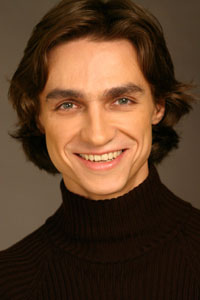
Backstory to Sergei Filin, Bolshoi Ballet's Aristic Director

Those who love, or even, merely, enjoy ballet, probably know about the terrible event back in January, when Sergei Filin, the Bolshoi Ballet's Artistic Director, was attacked with sulfur oxide thrown into his handsome face.  He's endured mulitple operations since, to repair, as far as possible, his sight and his face. He is still in recovery.


Until very recent days who the culprit was for committing such an awful act was unknown, though speculation, even informed speculation, abounded.

The March 18th issue of The New Yorker has a very long, informative piece by David Remnick, that goes into the entire background to this criminal act of aggression, "Danse Macabre." (The link is to the single-screen view.) As ballet lovers know, there's a long history between the Russian Ballet and Russia's rulers. The Boshoi in particular has always mirrored in its own way Russia's conditions.  It's no different now, Remnick and many of the people with whom he spoke say.
I heard this all the time. Sometimes an institution has an uncanny way of embodying the society to which it belongs. For decades, the office of the heavyweight championship of the world—and the battles for that crown, from Jack Johnson to Mike Tyson—said something about the racial dynamics of twentieth-century America. So it is at the pinnacles of Russian dance. Since the nineteenth century, the country’s two principal stages—the Mariinsky, in St. Petersburg, and the Bolshoi, in Moscow—have acted as microcosms of imperial Russia, Soviet Russia, and, now, Vladimir Putin’s Russia. 
How can a ballet lover not resonate to this?

After the Revolution, the imperial theatres were not, initially, a priority for the Bolshevik leadership. “It is awkward to spend big money on such a luxurious theatre,” Lenin said of the Bolshoi, “when we lack simple schools in the villages.” In 1921, Lenin told Anatoly Lunacharsky, the cultural commissar, to “lay all the theatres in the grave”—to destroy them—and focus on the urgent needs of the workers and the peasants: literacy, food, medicine. But Lunacharsky noticed that, even with civil war consuming the entire country, peasants and workers were happy to fill the seats of the Bolshoi. And it wasn’t revolutionary theatre that captivated them. It was, in part, ballet. They lacked, at first, a certain connoisseurship. Some workers, Ezrahi writes, were so ignorant of the mute art of ballet that they asked one another when the performers would begin to sing. Nevertheless, Lunacharsky insisted that the workers “ceaselessly demand opera and ballet.” The Bolshoi, in the end, was not razed.
It's not a part of the focus of Remnick's piece, but this explains why Cuba's Revolution put such an emphasis on the arts, and why, one of the consequences is that today Cuba is a ballet powerhouse.


Monday, February 11, 2013

Mardi Gras! Tomorrow!

For some people.

Got to do an NYU gig on Cuba. Also, Abe Lincoln's birthday!


Rainstorm with excellent flood potential Wednesday -- thank goodness el V flies to San Fran either Wednesday AM or early afternoon, can't remember which, to present at a Cuban Salas Convention, with lot of dance department  people, as well as enthusiastists. And another blizzard this weekend. We shall see. But this means I need to go shopping tomorrow for hunkering again, just in case.

He had to go to the Eye Ear and Throat person today, because his head is still so congested and ears won't unplug from flying congested on Tuesday. He can't fly again with congestion and ears already plugged up. There would be a passenger event, as the airlines call it.

That tiny piercing of the eardrum to allow drainage couldn't be done, because you can't fly if you have it done. So the doctor told him to use sudafed, which is essentially speed. Which means getting it from the drugstore is a major pain even though it's an over-the-counter drug. You can't get much at a time, and you have to sign all these papers that supposedly prove you're using it as it is intended rather to to make meth.

Everything gets more of a hassle all the time. This is hardly the land of the free is it.

Ah well. We'll have an early V-day dinner tomorrow night and then head off to the Jazz Standard for some spectacular guitar music. As these are some South American musicians surely they will invoke Mardi Gras?

But it's not New Orleans.  That's the one.


Tuesday, May 26, 2009

Africa Leads

The capacity to tell good stories and to create lovely things is part of survival. This, about the !Kung Kalahari desert people, from the NY Times Science section, in an interview with anthropologist Pauline Weissner, explains how it works. She also postulates that this capacity was what allowed humans to move out of Africa in the first place.

Africa's natural resources continue to be exploited by richer regions of the world, and thereby further impoverishing Africa's own environment and the people who have depended on them for millennia. Now it's the baobab tree, which almost all of us surely encountered for the first time in Antoine Saint-Exupéry’s The Little Prince. His own planet was too small for the baobab to flourish ....

It's been the annual DanceAfrica dance festival here. The author tells us he's ignorant of the vast variety of African dances. Accordingly, he's also ignorant of the music, so his description doesn't help too much. Part of his criticism is that the festival didn't include dances from East Africa, Egypt and Morocco. The title of the festival, "Rhythmic Reflection: African Legacies Revealed," refers to the Atlantic slave trade into the New World. Thus groups from these regions weren't part of the slave diaspora to the New World. Maybe he should read Cuba and Its Music?

Tuesday, August 26, 2008

Sometimes I Don't Like My Work

Back reading Arlene Croce pieces in The New Yorker, attempting to properly ascertain just how much of her political agenda penetrated her critical point of view, and how she utilized her position as dance critic to push her political agenda.

Since she concentrated on pre-Russian Revolution classical ballet, it seems she could present many reactionary agendas 'between the lines.' But it's difficult to judge that, when I bring such an opposite perspective to what I'm reading. That's why I got drafted to do this, because I know the ballet vocabulary, I have watched many of the ballets, I know ballet history and I love ballet, whereas Vaquero and the others don't. But Croce is becoming an increasingly unpleasant writer to spend time with, as her nasty world view seeps through an ever-thinner mask.

As well, this week is hard. Our New Orleans friends, both those who were relatively unscathed materially (but that doesn't exclude trauma) and have been able to return and those who lost everything and cannot return, are hurting so badly. Or else they are pretending that they've moved on, when with every e-mail, every word their grief and trauma appears.

So, I get to watch Fred Astaire and Errol Flynn movies this week, every night around dinner time. Last night I saw The Master of Ballantrae. Tonight it shall be Robin Hood. The Story of Irene and Vernon Castle, Virginia City, and Birth of Blues are on the schedule. So is The Outlaw. No, that's neither Flynn nor Astaire, but it is Jane Russell.

Do you think anyone at the demCon will mention New Orleans and the shameful neglect and denial meted out to her citizens?