LINES OF THE DAY

". . . But the past does not exist independently from the present. Indeed, the past is only past because there is a present, just as I can point to something over there only because I am here. But nothing is inherently over there or here. In that sense, the past has no content. The past -- or more accurately, pastness -- is a position. Thus, in no way can we identify the past as past." p. 15

". . . But we may want to keep in mind that deeds and words are not as distinguishable as often we presume. History does not belong only to its narrators, professional or amateur. While some of us debate what history is or was, others take it into their own hands." p. 153

Silencing the Past: Power and the Production of History (1995) by Michel-Rolph Trouillot

Showing posts with label research. Show all posts

Saturday, March 25, 2023

Archivos de Indias

      . . . . We were conducted around The Archivos de Indias this AM by colleagues.

 Carlos III in the 18th C ordered all the documents that dealt with Spain's empire east and west to be housed in one building. This edifice is modeled much like his palace-hunting grounds Escorial -- the advisor who gave him the ideas is buried ... in New Orleans, which this is mentioned on his tomb.  One of the Archives's colleagues has spent time in the Historic Museum of New Orleans deciphering the handwriting of the Spanish documents there -- her specialty. The other has done work with Lubbock TX, which university there has a program that sends students to Sevilla for 6 months.  It's amazing this internationalism, which, of course, TX is so antipathic about -- just saw the news today o boy, what Abbott's done to the school system in Houston -- because Houston is a Dem stronghold.  Terrifying what's going on and what is going to happen.


[Originally posted on DW on 03/15/23]

Monday, June 13, 2022

Balzac: Fiction Needs Facts, Fiction Needs History, All Fiction Does

      . . . . The 19th C French novelists are a primary resource for thinking about writing/composing both fiction and history.  Balzac and Dumas are both particularly useful. But Dumas was nearly entirely concerned with the history of France provided in the pages of overt fiction. Balzac, however, thought constantly of the relationship of not just historical fiction to history, but the necessity of historical facts and verisimilitude to other fictional forms, particularly those forms we in the US, in this time, loosely call the realist novel, the novel of manners, and, the fiction of the fantastic.

Balzac came up a ‘system’ novel for the literature of realism – which term didn’t yet exist in his time – but was called by the 1820’s French Romantic painters, la couleur locale, and Balzac expanded to la couleur historique.

In describing that attempt, Balzac speaks of local color; in relation to the fiction of the period, his la couleur historique — is indeed more precise. For Balzac as for his contemporaries, truth could most easily be found in the history and expressed in literature with an historical setting: 

"Lit le roman historiques sont l'expression de la France et de la lit au XIXe siecle" (review of H. de Latouche, Fragoletta, 1829). He was to foreshadow Augustin Thierry's opinion, that history would impact nineteenth century fiction, as the young Romantics had experienced a violent reintegration into history, as a result of the French Revolution and the Napoleonic Wars. The example of Sir Walter Scott merely gave a specifically literary dimension to an already intense fascination with history and historical change; and Scott would of course be Balzac's ideal for the whole of his mature literary career. His early aim was that of Scott and of Scott's other disciples, to reconstruct "l'esprit d'une epoque et d'un fait," to make popular the study of history through a form less boring perhaps than the scholarly essays inspired by la Clio classique. 

Even at this early stage, however, Balzac seems to call for a greater degree of truth than do many of his contemporaries. For him, historical fact was to serve as more than a mere springboard for the poetic imagination. He could say that the historical novel should not aspire to the rigorous veracity of scholarly history, that historical figures should have a peripheral role in what is after all a work of fiction. He criticized Vigny for having used history to his own ends:

avait vu quelques scenes poetiques, et il les avait Verite, pour nous convaincre que les artistes viven qu'il s'agit bien moins de mettre le vrai dans le fau le vrai" (review of M. James, Richelieu, 1830).

 Balzac, as he expressed it ten years later, was the exact opposite of literary truth which Vigny developed in his preface to Reflexions sur la verite dans l'art: "L'art du roman vrai dans tous les details, quand son personnage es la litterature, I, 1840).

Even Balzac's excursions into fantastique practiced by Ε. T. A. Hoffmann are dose of reality. The authenticity of details is a point many times in the articles and prefaces he wrote. A realist may deal in fiction, but he must never relinquish fact, "l'immense verite des details." Balzac's rapid abandonment of the historical and fantastique may well be explained by his judgment of  Indiana (1832)*:

 "Ce livre-la est une reaction de la verite contre le fantastique, du temps present contre le moyen-äge, du drame intime contre la bizarrerie des incidents ä la mode, de l'actualite simple contre l'exageration du genre historique."

What had originally been a quest for truth, an imitation of nature, had rapidly become the vehicle for the greatest excesses of the literary imagination. The public had grown tired, Balzac wrote in the preface to La Peau de chagrin (1831), his first important work with a contemporary setting, of "l'histoire de France." Les Chouans appeared in 1829, which also saw the publication of Merimee's Chronique du regne de Charles IX; only two years later Balzac followed his elder, Stendhal, in writing a chronique du XIXe siecle. ....

... the matter might change; the method had not.  The recreation of the past which is the task of the historian would  always remain for Balzac the most adequate analogy to the novelist's undertaking. He intended to write "l'histoire oubliee par tant  toriens, celle des moeurs." Charles Nodier had defined the novelist as historien de moeurs as early as 1817; for Balzac the term became a constant point of reference. He repeatedly proclaimed himself an historian of manners and morals, "plus historien que romancier"; he referrs to his work as "cette longue histoire des moeurs modernes mises en act. He claimed merely to be an humble copyist, the secretary of his society as he said novelists had always been. The gift he prized above addition to the ability to give artistic form to what one had to say, was the accurate observation of reality, which made the roman de mores a more difficult genre than the historical novel. The Balzacian notion of contemporary mores demands "des connaissances presque techniq tandis qu'un roman historique ne veut que la science, des recher et de la lecture". ....

- - - - Balzac's Theory of the Novel / Maurice Z. Shroder / L'Esprit Créateur / Vol. 7, No. 1, Honoré de Balzac (Spring 1967), pp. 3-10 (8 pages) / Published by: The Johns Hopkins University Press / https://www-jstor-org.i.ezproxy.nypl.org/stable/26277449?

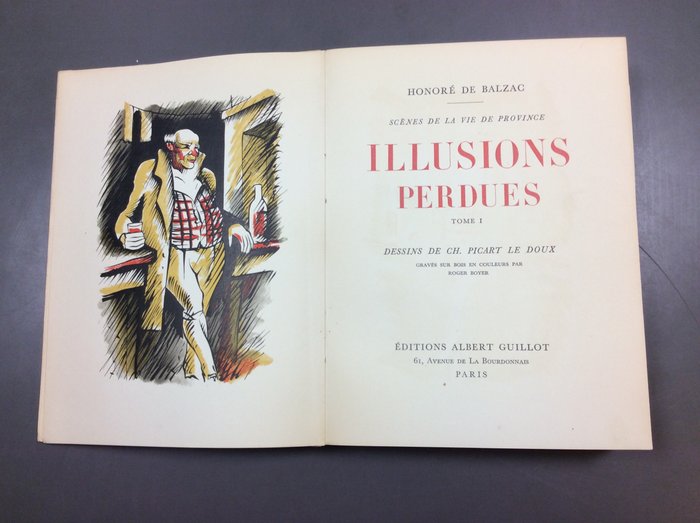
To see why Balzac believed it was more difficult to give artistic form to novels which are histoire des moeurs modernes mises en act -- the novels of contemporary manners -- one of his own works will provide an example. The subject of Illusians perdues (Lost Illusions) is a young man who burns to write literature, who has a decent gift, and the business of writing and publishing.


For those of us in the US, thinking of our own history and fiction that is inspired by our history, our own locale couleur and  locale historique, our National Archives (much available via online portal)  is and excellent resource.

When I'm asked what are the most important tools for writing good historical fiction, I always respond there are five.

1) voracious reading of the respected historians and fiction writers too -- and particularly those who wrote contemporary history of the period in which one's tale and characters are made;

2) Read the newspapers of the period -- that is, if your period had newspapers, but it will have some source of news, if only the local gossips. Indeed, George Eliot made brilliant use of these in Middlemarch, set several decades before she wrote it, though newspapers not only proliferated in that period already, and, indeed, a fictional newspaper is part of the fiction too; [Indeed, Laidislaw goes from his ambition to be a fine artist to working in newspapers and politics -- another case of literature's Illusions perdues!]

3) Look at the arts created in the period -- this includes listening to the music of the time, even though recording wasn't yet invented, probably, one may still learn something important, since making music played a role in so many lives, that speaks to class, and even to politics of those alive at the time;

4) Spend a lot of time with and the National Archives, and with JSTOR, generally now, since pandemic, available to you at home instead of needing to be at your local library, haunt the historical societies and museums of the place;

5) Go to the places one's characters go (which, as we see above, George Sand had not done).

* 

A novel by George Sand, published in 1832:

Indiana is a novel about love and marriage written by Amantine Aurore Dupin; it was the first work she published under her pseudonym George Sand. Published in April 1832, the novel blends the conventions of romanticism, realism and idealism. As the novel is set partly in France and partly in the French colony of Réunion, Sand had to base her descriptions of the colony, where she had never been, on the travel writing of her friend Jules Néraud.

If one has slogged through Indiana, as I have, one sees indeed how Balzac came to the conclusion that it was far more difficult to write fiction as convincing art for a novel of manners than for historical fiction

~~~~~~~~~~~

In the meantime, things continue to roll along.  So much to do, so many places to go in the service of the doing -- please, please, please let neither of us contract covid.

The Heat Storm is reaching us today.  My concern goes out to our family and friends in West and the Southwest, and now the Middle West too.


Tuesday, February 21, 2017

What Is Lost Is Found: A Novel By Walt Whitman

     . . . . Zachary Turpin. a graduate student at the University of Houston found this long lost novel through digital archives.

The New York Times (behind pay wall) opens its story on the discovery like this:
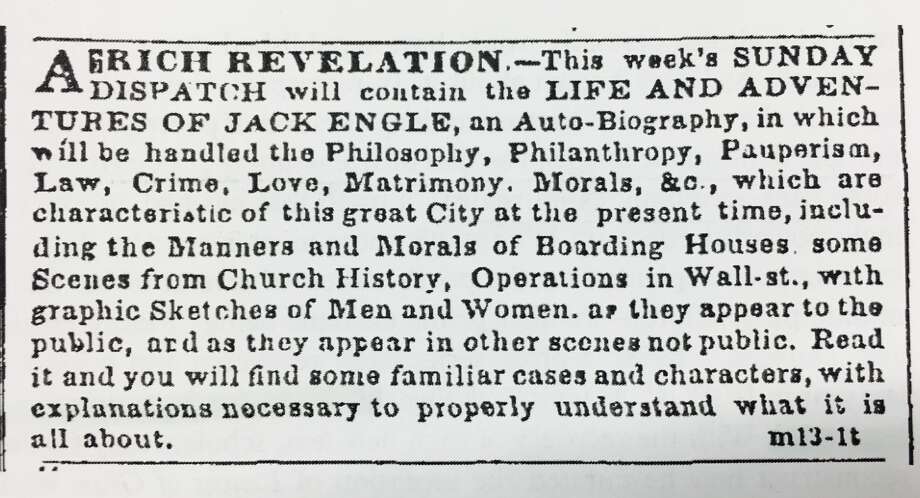
Readers who picked up The New York Times on March 13, 1852, might have seen a small advertisement on Page 3 for a serial tale set to begin the next day in a rival newspaper.
“A RICH REVELATION,” the ad began, teasing a rollicking story touching on “the Manners and Morals of Boarding Houses, some Scenes from Church History, Operations in Wall-st.,” and “graphic Sketches of Men and Women” (presented, fear not, with “explanations necessary to properly understand what it is all about”).
From the NY Times story:
The The 36,000-word “Life and Adventures of Jack Engle,” which was discovered last summer by a graduate student, is being republished online on Monday by The Walt Whitman Quarterly Review and in book form by the University of Iowa Press. A quasi-Dickensian tale of an orphan’s adventures, it features a villainous lawyer, virtuous Quakers, glad-handing politicians, a sultry Spanish dancer and more than a few unlikely plot twists and jarring narrative shifts.
“This is Whitman’s take on the city mystery novel, a popular genre of the day that pitted the ‘upper 10 thousand’ — what we would call the 1 percent — against the lower million,” said David S. Reynolds, a Whitman expert at the Graduate Center of the City University of New York.


Everything about this news is pleasing!

First of all though, as much as we studied Leaves of Grass when I was still at university it was never revealed somehow, whether in class or in critical studies, that this great American poet had ever written fiction at all.  I have learned for the first time that not only did he write fiction, he wrote quite a bit of it.  However, as he turned himself in the poet who would spend his life creating ever more types of Leaves of Grass, he tended to bury or obscure that he had done so. Second, whereas I tended to mine the poet's life and his poetry for historical information on culture and mores of the Civil War era generally and New York City's past, scholars will be mining Jack Engle for years for clues to how he turned himself from prose writer to poet -- and an experimental one at that.

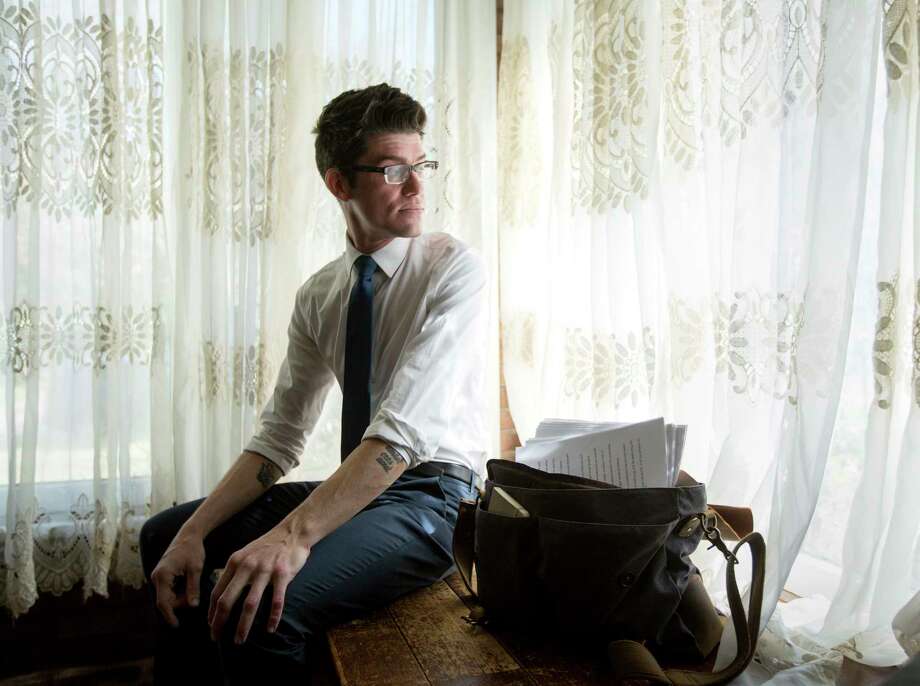
Zachary Turpin

Second,  Turpin discovered this lost work through expert searching of several vast online digital archives that include the Walt Whitman Archive and the Library of Congress.  Any of us can do this now!  It's so exciting for research and scholarship!

I particularly like the Guardian's story about the discovery includes this:
 " . . . "rollicking” anti-lawyer revenge fantasy . . . "

The Life and Adventures of Jack Engle has just been published free online by the Walt Whitman Quarterly Review.

Monday, June 8, 2015

Historical Gleanings Into Historical Fiction - Patrick O'Brian and Simon Bolívar

As all know who have enjoyed reading Patrick O'Brian's splendid naval adventure series of Captain Aubrey and Stephen Maturin's adventures during the wars of Napoleon, the War of 1812, etc., O'Brian also translated into his fiction from the great fiction achievements of the great writer of the same period, Jane Austen.

Many of us also can testify first hand how very well-researched is O'Brian's series: history manners, the variety of ways of speaking, slang, naval terms, you name it, O'Brian had studied all of it. Surely he very carefully studied period maps as well.

Perhaps it's not as well known how sly O'Brian was.  For example, I recently learned only by looking at the maps of northern South American in this era that one of the places in Simon Bolívar's Liberator trajectory, in what is Venezuela, is named Maturín.  As we well remember, Stephen Maturin was a Spaniard -- who identified as a Catalan, very important! -- who so hated Napoleon he was willing to work with the English.  This is the historical


background for some of the volumes, by the way -- the English blockading the rebelling Spanish South American colonies when they were allied with Spain, just as they blockaded the trade of North America.  Previous to these wars, 40% of South America's trade with the infant United States.  So one can see how important all these actions are.

It was a happy moment, seeing Maturín on a map in a history about the South American colonies' savage and terrible wars of independence from Spain.

I still can't find out, though surely South Americans have written books about it, from where Spain got the money in 1811 - 1812 to send such a huge fleet to Caracas to counter the Miranda liberation.

Thursday, November 13, 2014

Proofing / Fact Checking, Why Yes, This Is A Big Part Of Writing

It took much of the morning and most of the afternoon to proof the 30 + pages that is our References list for The American Slave Coast (not the same thing as the citations sourcing various quoted text, facts and so on for those not familiar with the tedious process of writing this sort of work  -- which includes the delight of citing one of historian Andy Halls's posts from his blog, Dead Confederates, and a couple of other online friends and colleagues).

What's only interesting to me was noticing that when it comes to the books on the Reference list (there are other References too, that aren't books, but collections of papers and so on*), there are more books among those titles that are published by the University of North Carolina Press (Chapel Hill), than from any other publisher. Runners-up would be the LSU press, Yale University Press, Harvard University Press and Oxford University Press.

There's, of course, a lot of sourcing to digital materials put up by the Documenting the the American South project, which is one of the most useful tools for American history there is. Also to the University of Virginia's Southern History site, plus many others, including state Historical Societies. More and more state history magazines and journals have succeeded in digitizing their


archives, putting them online in searchable format -- as are a vast number of historical runs of no longer existing newspapers and magazines.

All this content -- as well other digital sources, such as JSTOR, can be accessed from one's own laptop at home.  Even five years ago when we began The American Slave Coast: A History of the Slave Breeding Industry, a lot of this hadn't yet gone up. A miracle for researchers. That one can access holdings in institutions all over the world this way has changed research so much in just the last five years, it can't even be quantified.  For one thing it allows more people to actively pursue historical studies than ever before, people who didn't have the necessary advantage of being on a faculty at a university.

In ye olden days there were institutions that didn't allow access to materials at all to anyone who wasn't a certified academic or some other acceptable researcher, like a journalist affiliated with a Big Name paper, a presidential speech writer, and so on.   Often hefty fees for the privilege would be charged too.  This is no longer much the case.  Which is good. This is what I mean by "information wants to be free."

-----------------------

*  It must have been about five years ago too, when I read an observation made by Robert V. Remini, he, who despite having left us, still owns the Jacksonian Era: "When I first began doing this work," he said, speaking of his graduate school researches and the work that became the first volumes of his massive life of Andrew Jackson, the Jackson papers were all still in longhand, they hadn't been put into type yet and published.  The difference working with the typeset papers from attempting to decipher the handwriting of so many not all that literate correspondents and Jackson's own writing made my work so much faster and easier."

This:


vs. this:


You decide.

Sunday, September 7, 2014

Bill Gates Discovers Big History

Bill Gates discovered Big History via dvds he watched while on the treadmill in his private gym.  He's decided to put Big History courses into all the country's high schools.

There are questions anyone should ask about Bill Gates dictating a nation's high curriculum.  He's responsible for the Common Core and other initiatives such as


Microsoft Encarta* that don't seem to have worked any better than anything else in creating an authentically educated population. By now these Big History courses are being taught all over the U.S. and Gates plans to get his plans added to thousands more schools within the next year or so.  However, anecdotally, the students in the university courses that we teach now and again, when asked, can't point to a map and show where a place is, whether in the U.S. or anywhere else, never heard of the Emancipation Proclamation or any of the Presidents, the Mexican War, the War of 1812, etc.

In other words, reading about these courses, students aren't learning actual history: there is no methodology for evaluation of historical actualities.  It's an undisciplined hodgepodge of unproven, if exciting, theories without supporting, discriminating documentation -- rather the way within genres, so much so-called alternate history is written.

Myself, am quite fond of Big History. It's a constant feedback loop, delving into the history of any where, any time and any place -- the local feeding into the larger picture and the larger world's affect upon the ever smaller and more local.  For instance, if one wants to understand the history of cotton's drive of the global economy and how it got to be a part -- and such a huge part -- of the global economy in the nineteenth century, a study of the history of a single Mississippi plantation is where to begin.  This moves one on to transport back and forth between Mississippi and Europe, European capital instruments, and how they flow to Mississippi and so on.  But without looking at both the larger and the smaller, the historian will have a process and a system that's incomplete.

In any case,  el V's books, and now our The American Slave Coast, are Big Histories of their subjects, because that's how I've always rolled -- the interconnections and influences among subjects and events within various time frames. Thus The American Slave Coast begins with Europe's first conscious voyages into what they called the New World.  Africans were on all those voyages, in a spectrum of positions from skilled seamen to those whose condition was that of being enslaved, from the time of Colombo's very first sail.

It is fun reading the description of Bill Gates discovery of Our Favorites: the Annales School of historians.

It's also fun to read how his advisor in these matters, Australian David Christian, began realizing his concepts.

He went through the same process I witnessed el V go through, in his first


attempts to write what became Cuba and Its Music: From the First Drums to the Mambo, which became that book that people are still reading and teaching, precisely because it is a Big History.  It begins with the Phoenicians, and, indeed, that first section remains the most popular part of the book with those who aren't reading for the music only.

Back then El V didn't know what Big History was. He was so frustrated in his attempts to find his way into writing the book.  He kept going further and further back in time. (Though he'd done a great deal of very high quality, professional writing, until then he hadn't written book.)  I gave him a bunch of books from my shelves that he'd never looked at, including Braudel.  That was his eureka time -- a subject's story could be told from before the subject, i.e. Cuban music, existed -- it could and, for full understanding, should be told from the existence of the forces that made the crucible which brought the subject into being.  Fortunately with his Spanish language skills, he was able to dig into Spanish resources that most music writers don't have, and brought those early days of Phoenician traders in Iberia, and the era of the Peninsula's Roman dominance, into -- appropriately for the subject -- throbbing life.

The NY Times Magazine article about Gates and his new philanthropic education mission here.
---------------------

*  Link here to description of Microsoft Encarta at Wiki, which supposedly destroyed Microsoft Encarta. I never found it useful -- too clumsy, and too difficult to extract any useful scope of information.  The same reason e-books are not useful for me: too much time wallowing around swiping, ticking, clicking, going from one place to another, rather than absorbing information, much less knowledge.

Saturday, September 6, 2014

So Under The Gun I Can Hardly Think

Yet, thinking is exactly what I am under the gun to be doing, supposedly because I can think, and fact check and do all those things.


To make everything more complicated in the 90 degree heat and the stupendous humidity, when I settle in to do today's quota of pages, the primary library I use, for no reason, locked out my log-in, declaring either i.d. or password was fraudulent, or maybe both.  Reset password, still I am not a user the system recognizes as legitimate.

I phone and am told stupid stuff by someone who doesn't know how things work. I go to two different places (it's a huge research facility with special collections in different locations) -- the first one is closed on Saturdays, though it was open on Saturdays last month --  and am instantly re-legitimized manually, thereby learn that I have materials from ILL waiting -- but at another library elsewhere.

The upshot is, I spent over three hours out in the sun and humidity that I should have used for fact checking and so on and so forth.  Plus another hour + prior to noon, doing the usual Saturday errands, hoping to be finished before it hit 90, though it was already 90, but I didn't know that.


And -- it's Fall Fashion Week! Every female college student with the least pretension to a career in Fashion is in the City.  (So then, how come all the bar - restaurants are packed and nobody's in the designers' stores -- yes, I live where every designer has a loss leader flagship store.)  Bumper to bumper traffic for some reason -- even at 10 AM -- on Houston.  And many tourists with melting down screaming children who are not enjoying their MILFs shopping til they drop for themselves.

I came home, soaked from head to toe -- mentioned, didn't I, the humidity? Drank over a quart of water at one go. Then I gave thanks to the Great Air Conditioner for our reliable, sturdy little unit which keeps our (small) place a cool cave.

All of us sometimes have days like this.  It really could be worse.  O yes, easily, a whole lot worse.

Wednesday, December 4, 2013

Reading Wednesday - Hild by Nicola Griffith

The narrator of Nicola Griffith’s Hild (2013, FSG) is its subject, the English St. Hilda of Whitby, one of the Church’s patron saints of learning and culture.


The tale of her life begins when she’s barely three years old, and concludes while she’s still a young woman, about to marry the warrior with whom she grew up. By then, she’s only recently baptised, not yet an abbess, and certainly not a canonized saint. (It's a pleasure to encounter a female saint canonized for something other than being subjected to protracted torture and death.) But already she's an advisor and counselor to kings -- a precarious position in the early years of the Christian conversion of multitudes of  cut-throat, treacherous, ambitious Anglo-Saxon kings striving to become overking of all the rival domains, one of whom is Hild’s uncle, King Edwin.

Despite some gruesome scenes of battle and torture, it’s a lovely novel, because it’s a book about seeing. Through the eyes of Hild, who, in early childhood, becomes seer for Edwin, we see a beautiful land still touched only lightly by the effect of human transformation. She has the capacity, perhaps inherited from her mother, to notice and recall what most eyes slide over.


Though her relationship with her mother is often uneasy and uncomfortable, whenever they are together she drills Hild in honing her capacity to see and remember. Equally important, her mother shows Hild how to shape what she sees into word-stories that will sway a king’s thinking, thereby keeping herself and those she cares for safe from a capricious ruler perpetually suspicious of conspiracy. Pondering everything she sees, she seeks to find the significance in the behaviors of weather and seasons, trade and agriculture, and people and animals from the smallest to the largest.

In the way that women who are married to unite kingdoms are called peace weavers, Hild is a pattern weaver. She creates original patterns on her loom in the weaving house, which not every woman can do -- i.e. not everyone has her imaginative power to re-create materially what she sees first in her mind. The place of weaving in seventh-century women's lives is part of Hild’s thematic matrix, as it describes how the women of this time and place weave relationships among each other, for themselves as individuals and within the larger weaving patterns that include family alliances -- at least for women who are of high enough status to have places at the fortress-courts from which powerful men exert dominance, extract tribute and launch their wars.

In the society this novel describes, a woman’s female relatives are her primary security.  Even if they dislike each other, mothers, daughters, sisters, aunts, and cousins will never repudiate each other, because they don’t dare. When posted as a stranger to another court, if a lady's retinue contained a member of an ally's weave, she would find a place ready-made for her within that member's weave.

Of nearly equal importance in this social system is a formally recognized companionship between two young girls called gemæcce (pronounced something like yem-ATCH-ee). This pair bond is decided upon, or consented to, by mother, lady, queen, or other influential woman.  Typically, this pair bond will be with someone the girl grew up with, whose own female relatives have ties to her relatives. The gemæcce partnership is for life, is nearly as important as who is chosen to marry the girls, and sometimes supersedes their relationships with the men. Hild's gemæcce is a charming young person named Begu, who is her polar opposite, with different valuable qualities; for instance, Begu gets Hild to play, she can make her laugh.

Though they cannot enter into a gemæcce pairing with women of the higher ranks, the weave of female allies in this seventh-century world can include women of lower status and even an enslaved woman. For a seer, to whom information is essential, these women are invaluable sources as well as a web through which the seer can transmit ideas and information she wishes to be widely spread.

Women are not warriors in this time, but are permitted to learn how to fight if they want to. For some women, knowing how to fight is necessary because a king going to war wants his seer at his side. If a battle goes against the king, the seer needs to be able to defend herself.

The book's research is meticulous. More to the point, the author understood her research so well that she weaves a fine, taut pattern of the past in the form of an historical novel. It's beautifully written, sentence by sentence. It's also skillfully composed: tension where it's needed; action that rises and falls in appropriately timed phrases; at times suffering, disease and death; other times women get giggling drunk together; in another phrase a vision is dreamed into water rippling over leaves. Though the characters are like all human beings who have ever lived and who live now -- they compete for power, they fall in love, they enjoy their food and drink -- it's a world very different from this one.

Hild is a splendid way to submerge, particularly in the season of the Winter Solstice and the Yule log.

Tuesday, November 12, 2013

Eight Massive Online Troves of Great Reading Material

The following list of online resources to out-of-print texts and other literary materials is nicked from a New York Magazine article by Kathryn Schultz, "11 Lost Literary Classics You Can Download for Free."  Because she included The Education of Henry Adams (1907) and Louisa May Alcott's sensational novel, Behind a Mask Or A Woman's Power (1866) as part of her strong list she wins the Award for Today.

Because Schultz further provided dates of publication for them all, she wins the Award for Tomorrow too.

Then she wins the Award for the Week because, at the end, Schultz appended this list: Eight Massive Online Troves of Great Reading Material.
Thanks to digitization, readers can access literary material we could never have gotten our hands on in the past—because it was expensive, rare, remote, uncollected, impossible to find, or because of a literal prohibition against putting one’s hands on them. Herewith, a tiny sample of this literary abundance, from illuminated manuscripts to Darwin's 15,000 letters.
1. The Digital Scriptorium 
 An online collection of medieval and Renaissance manuscripts from all over the world. Short of breaking into a museum, there’s no better way to view those manuscripts than digitally, since you can zoom in to appreciate the details.

2. The World Digital Library
 My favorite “Surprise me”–style book resource. Sure, you can search it, but you can also click the timeline (8000 B.C. to today), click the globe, and kiss your workday good-bye. Where else will you stumble on a gorgeous illustrated edition of a turn-of-the-last-century Guide to the Great Siberian Railway?

3. Project Gutenberg’s Pirates, Buccaneers, Corsairs, Etc. Bookshelf
 Many people have a passing familiarity with Project Gutenberg and its 42,000+ free books; fewer know that you can search it by “bookshelf.” This pirate-y one is my personal favorite, but there are scores of others for browsing everything from detective fiction to erotica.

4. The Emily Dickinson Electronic Archives
 The Internet is chockablock with thoroughgoing websites for dead authors, from Beatrix Potter to Franz Kafka. This addition includes vast amounts of Dickinsoniana, including scans of all her extant manuscripts.

5. The Public Domain Review
 The old problem with old books was how to find them. The new problem with old books is Whoa, where to start? The Public Domain Review organizes and highlights interesting out-of-copyright works—of all kinds, but its literary collection is excellent.

6. The Darwin Correspondence Project
 Writers gonna write, and their letters to, from, and about each other abound on the web. My favorite batch comes from Darwin, who corresponded with everyone from fellow naturalists to his kids. This site contains the full text of 7,500 of his letters and information on 7,500 more.

7. The Digital Public Library of America
 Among the newest and most ambitious open-access projects, this one aims to make every offering in our nation’s public libraries, archives, and museums freely available online. Its bookshelf contains 1.5 million volumes and counting.

8. The Poetry Archive Historic Recordings
“Into the valley of death rrrrrooooooooode the 600”: To truly appreciate “The Charge of the Light Brigade,” you must hear Tennyson himself bellow it—as he did, into a wax cylinder, in 1890. That recording and those of 49 other poets are free on this site.

*This article originally appeared in the November 18, 2013 issue of New York Magazine.

Wednesday, September 18, 2013

Joy and Delight at Absurd Levels

The arrival of an order of Post It Pads always provokes wide smiles, exclamations (sotto voce) and jumping for joy (restrained to tiny hops in respect for my neighbors).


My supply of of the vital Yellow Sticky Pads had fallen to -- two.  I can go through those in a single day of work when cooking with my research materials.

There is a comfy sense of security in having a few dozen pads, in unopened packets among the supplies. Sort of like for food, a filled freezer, bags of rice and beans, sacks of potatoes, a half dozen parcels of pasta from Raffettos (est. 1906!), some boxes and cans of tomato products and several unopened bottles of olive oil. You know no matter what you can get along for a while. :)

Saturday, July 6, 2013

Frederic Bancroft's Unpublished Manuscript

This delighted me so much yesterday reading along in the unpublished yet complete book, I laughed out loud in the Archives' workroom -- the tart conclusion with which Bancroft ends Book Two's Chap. 8: “Longings for Manufactures & Commerce”

“…. In comparison with the constant enthusiasm for planting, the enthusiasm for diversified industries could only be ephemeral. The South was comparatively indifferent, rather than actually so, as Gregg charged, in regard to the very things she had so loudly called for.” ((29 De Bow, 624. ))

[C.'s notation -- here he means DeBow's Southern Review, published, starting in 1847 (or 1846, depending on how you classify the earliest volumes) through 1863, the leading statistical and commercial journal in the south, indeed the only one. DeBow moved north after the War, and continued publishing a version of the Review from there, with more or less success.  He died in New Jersey. Throughout the citations, Bancroft spells his name sometimes with and sometimes without a space between De and Bow, though in general usage there is no space.]

F. Bancroft's dry commentary on that cited passage is what made me laugh:

“The real contrast in interest was apparently increased tenfold by the fondness of planters and lawyer-politicians for conventions and their still greater fondness for highly-colored speeches."


Wednesday, July 3, 2013

The Grit of Scholarship Under My Nails

What a series of humid and dreary days here, while the west continues a conflagration.

Have spent Monday and Tuesday in the Rare Books, Manuscripts and Archives
Room of Columbia University's Butler Library -- which MarLi designated scholars can do here in  NYC.  Speak of grit, despite the mandatory little white gloves for handling photos and other fragile materials, my hands and wrists still feel all -- gritty, from the acid paper crumbs. I went to wash them more than once, but as all my supplies beyond notebook, pencil and laptop were locked in a locker, no lotion.  This morning my hands still feel dried out and a little scratchy. Not to mention my eyes.  It could be worse though, as typewriters and typists were the rule by the time Frederic Bancroft was working.  But all his sidenotes, editorial commentary are hand written in the most tiny of calligraphy and with the finest of ink nibs. Next time I have to bring a magnifying glass.

The Frederic Bancroft archival boxes are in offsite storage (he, the extraordinary historian who wrote Slave Trading in the Old South, which was published in 1930. This work, without which no one can claim to be doing proper research into U.S. Slavery now, is filled with the interviews of  those who were still alive from antebellum days -- former slaves, traders, men on the street, etc. -- and with his own meticulous statistical work.  There was nothing like Slave Trading in the Old South before he published the work.  There could never that work after either, because those who lived it were dead.

It turns out there is a whole other book in his papers, one that has never been published, one no one has mentioned. It doesn't even have an actual title, but it is an actual book.  Could it be true that no one's ever looked at these papers since very early days, and not since the explosion in studies of American slavery? Could I have discovered this?  That cannot be, surely.

On the corner of one his ms in progress folders is written in blue pencil, Old South.  Was that a working title? It's more than worthy of publication today  He's such a good writer, both clear as water and vivid as an historical novel.  This isn't the statistical study that Slave Trading in the Old South is.

There is a box of personal photos, including those of him with President McKinley in the Carolina Sea Islands, with other famous people of his time. There's another of him on the 1913 anniversary of the Battle of Gettysburg, at Gettysburg.  He endowed the most coveted award for history in the U.S., the Bancroft Prize, at Columbia University. Yet, historians, at least until the 1960's, dismissed his work as of minor interest. It's hard to find out anything about him, because, as one of the very few essays about him that has come down says, "F. Bancroft was not an historian of note."  That rocks me back on my heels.

I've been trying to find out who his father was.  Could he have been George Bancroft, father of American History?  There's a book that has a short biography of Frederic Bancroft in NYU's Bobst catalog, but it is offsite, like all the interesting books, so I am going to have to wait until at least next week to find out.

F. Bancroft was central in those circles 19th and early 20th historians -- all of them, like him, deeply connected politically and with independent or very good fortunes, like Theodore Roosevelt and Henry Adams, to make of history a profession, particularly American history. They tended to toggle between writing and teaching history / and a political life, again, like Roosevelt and John Hay (he was the younger of Abraham Lincoln's two private secretaries, and John G. Nicolay, the older secretary, did the same thing, but as Nicolay didn't marry an heiress like Hay did, merely the well off Therena Bates, he toggled more between money-making journalism and politics).


In any case, in the course of The American Slave Coast, I've become
fascinated with all those early scholars and historians, politicians, literary writers and other historical figures, whose name recognition didn't make it into the pantheon. Considering what F. Bancroft's work was, we suspect the gatekeepers of American History and the Civil War, deliberately kept F. Bancroft out. He was working during the most virulent, smug self-satisfactions of neo-confederate revisionism,  white supremacy, bigotry and the Glorious Lost Cause sentimentalism we bathed in until the Civil Rights Movement of the 1960's. Wilson was POTUS, Owen Wister's The Virginian, and D.W. Griffith ruled.  Bancroft's research was antagonist to the comfortable national narrative they'd constructed about slavery, the south, the Civil War, Reconstruction and Grant.

The minor figures of history, arts and letters often illuminate more clearly the days in which they wrote than the enshrined figures, as do the defeated in a war.  I'd love to do a book about the run-up  to the Civil War and the aftermath of the rewriting of that history, i.e. how the south won until the Civil Rights Movement, through the writers of the eras.

Unfortunately, archives and special collections' chairs and tables are anti-ergonomic, though they are all wired for electronic devices and internet (which wasn't true when I first began working in archives and special collections). In this soupy air, without sun, humidity rather than heat, I am hurting so badly I can't go back today. Damn!

I was shaken reading this morning about the U.S.'s highjack of the  President of Bolivia's plane.  That's what nations were doing back in the 18th and earlier 19th centuries. Those actions created wars -- see both the War of Independence and the War of 1812, and so many others. Evidently we feel safe executing an act of war upon a South American nation even now. Yet we repeat the same damned bathosations and platitudes about the War of Independence, on and on and, despite scholarship having proven the comfy bs to be just that, bs.

I hope you have an enjoyable July 4th.  We'll be here, just writing. And doing laundry. :)

Friday, April 12, 2013

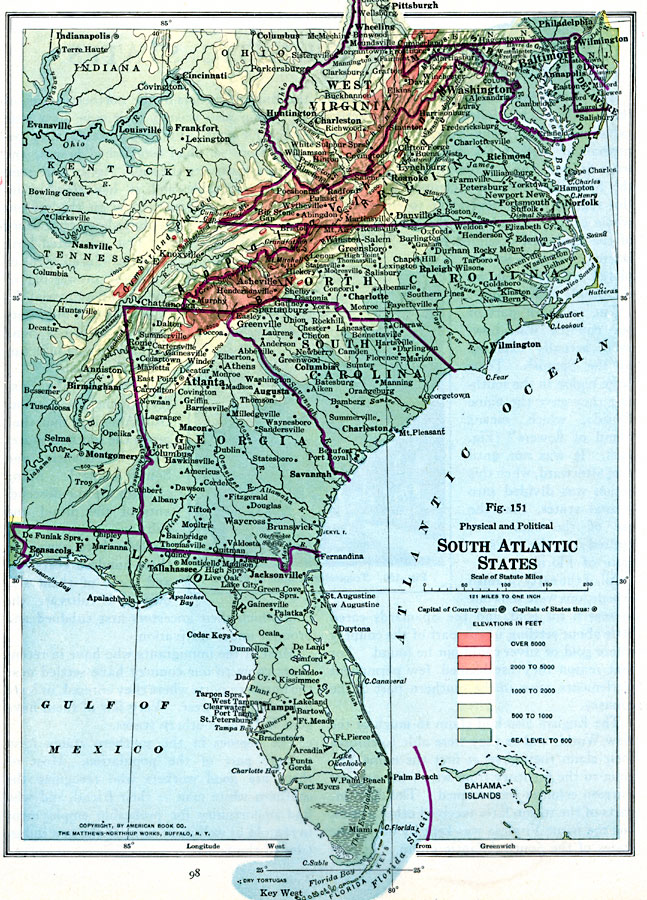
South Atlantic States of Mind

So much to do, to plan this, in order to get the most out of our limited time (last part of May, first few days of June).

The dream list is Richmond, Norfolk, Williamsburg, Charlottesville, Charleston, Savannah, Sea Islands and St. Augustine.

Transportation will be a mixture of train and rental car(s).

How many of these sites we will manage, who knows, really.  But I'm looking up Black history tours and sites, newspapers and radio stations in all of them.  Hoping to find friends along the way to stay with on occasion.

Consider what and what can't be managed, it's more than fortunate that royalty chex arrived ....

It's gonna be HOT, that's all I know for sure at this time.


Monday, February 25, 2013

Elite, Powerful, Wealthy British Families Received Fortunes in Compensation for Abolition of Slavery


Britain's colonial shame: Slave-owners given huge payouts after abolition
 David Cameron's ancestors were among the wealthy families who received generous reparation payments that would be worth millions of pounds in today's money

I ran into this article in the Independent yesterday, while looking up something else.  The database, "Legacies of Slave Ownership,"on which this article is based, will be available to the public here, starting on Wednesday (February 27, 2013). El V thought it mattered enough to make it today's Da List post.

How much did the slave owners get?
The British government paid out £20m to compensate some 3,000 families that owned slaves for the loss of their "property" when slave-ownership was abolished in Britain's colonies in 1833. This figure represented a staggering 40 per cent of the Treasury's annual spending budget and, in today's terms, calculated as wage values, equates to around £16.5bn.
I wonder if this enormous payout of national resources to the sugar baronage, which had so long controlled Parliament, had a relationship to the horrible state of wages and opportunity in England during the 1830's, whether in the rural regions or the industrial manufacture regions. There labor unest led to riots -- riots over the price and availability of the most basic foodstuffs, for only a single example.  Though emigration opportunities had been curtailed, ironically prison transportation of economic protesters, along with so many other sorts of undesirables, increased.

The article is a long one, packed with information.  The two paragraphs below are the shocking conclusion.

Campaigning against slavery began in the late 18th century as revulsion against the trade spread. This led, first, to the abolition of the trade in slaves, which came into law in 1808, and then, some 26 years later, to the Act of Parliament that would emancipate slaves. This legislation made provision for the staggering levels of compensation for slave-owners, but gave the former slaves not a penny in reparation.
More than that, it said that only children under six would be immediately free; the rest being regarded as "apprentices" who would, in exchange for free board and lodging, have to work for their "owners" 40 and a half hours for nothing until 1840. Several large disturbances meant that the deadline was brought forward and so, in 1838, 700,000 slaves in the West Indies, 40,000 in South Africa and 20,000 in Mauritius were finally liberated.
I've never understood when so many felt so much compassion for slave holders losing their forced labor force (whether in Britain or the U.S.) there was so little compassion for those who lives were stolen.  There was enormous discussion here about levels of federal compensation provided the slave holders of the Confederate States of America after the Civil War -- something on which the dismissed "radical extremist emancipators" such as Thaddeus Stevens held the line against providing.  But the forty acres and a mule reparation for the former slaves received little or no serious consideration. What we did do here in the U.S. was compensate the Washington D.C. slave owners for emancipation -- from wiki:
It was called “compensated emancipation.” was a law that ended slavery in Washington, D. C. by paying slave owners for releasing their slaves. Although not written by him,[1] the act was signed by U.S. President Abraham Lincoln on April 16, 1862. April 16 is now celebrated in the city as Emancipation Day.
As mentioned at the top, it was one of those serendipitous moments, encountering by chance, this article when I'd just run into this, concerning John C. Calhoun, and his, by now long-matured strategy to make slavery universal as a system and accepted as right, moral and God's will:
Upon assuming his new office [Calhoun was appointed Sec of State by Tyler in 1844] Calhoun found an unanswered
letter from the British minister in Washington,
who explained that his government, having
abolished slavery in its own empire ( 1833 ) , was ready
to assist in abolishing it throughout the world. Calhoun
wrote and sent a remarkable reply. The United
States, he said, must frustrate the insidious aim of the
British and, to do so, must get possession of Texas.
Otherwise, Texas might be induced to emancipate its
slaves and thus, by setting a bad example and by extending
the free-soil border, might increase the difficulties
of preserving slavery in the United States. But
slavery must be preserved. It was the ideal institution,
for slaves no less than masters. To clinch his point, Calhoun
cited statistics from the latest federal census to
show that feeblemindedness and insanity were more
common among the free Negroes of the North than the slaves of the South.ftn 20 
No matter how long one studies these matters,  how deeply, how broadly one has already delved in these matters, every day still throws up something important about which I, at least, had no idea. Or, another way of putting it might be, one understands every day that no matter how much you know about our European - American centuries of the slave economic system, that was worse than you know or can imagine.

Monday, May 24, 2010

The Bibliographer

This week ye Bibliographer begins compiling our research reading lists.


The first one is for the summer reading in the histories of Baltimore, Norfolk and Charleston up to the commencement of the Civil War. If anyone has suggestions they are welcome. For instance Madison Smartt Bell has written Charm City: A Walk through Baltimore (nonfiction) Crown, 2007. This goes on the list, of course, but as it deals with so much post the Civil War, it can't be as useful as more specificlly historic works will be.

The second list is of primary document depositories, archives and special collections in the region that contain various aspects of the research, such as insurance, licenses, fees and taxes, i.e., the business of the trade.

This is merely to start.  It is going to be a long journey, which includes boots on ground, which we're looking forward to muchly.