LINES OF THE DAY

". . . But the past does not exist independently from the present. Indeed, the past is only past because there is a present, just as I can point to something over there only because I am here. But nothing is inherently over there or here. In that sense, the past has no content. The past -- or more accurately, pastness -- is a position. Thus, in no way can we identify the past as past." p. 15

". . . But we may want to keep in mind that deeds and words are not as distinguishable as often we presume. History does not belong only to its narrators, professional or amateur. While some of us debate what history is or was, others take it into their own hands." p. 153

Silencing the Past: Power and the Production of History (1995) by Michel-Rolph Trouillot

Showing posts with label Historical Scholarship. Show all posts

Tuesday, February 21, 2017

What Is Lost Is Found: A Novel By Walt Whitman

     . . . . Zachary Turpin. a graduate student at the University of Houston found this long lost novel through digital archives.

The New York Times (behind pay wall) opens its story on the discovery like this:
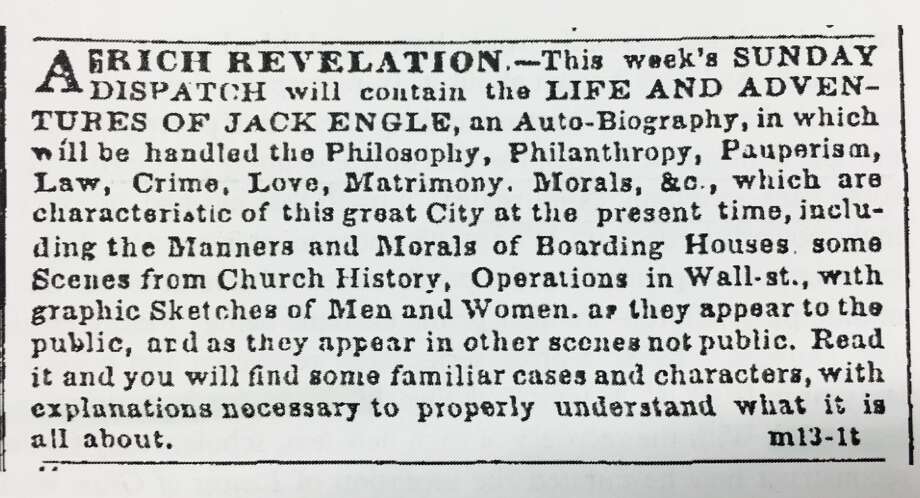
Readers who picked up The New York Times on March 13, 1852, might have seen a small advertisement on Page 3 for a serial tale set to begin the next day in a rival newspaper.
“A RICH REVELATION,” the ad began, teasing a rollicking story touching on “the Manners and Morals of Boarding Houses, some Scenes from Church History, Operations in Wall-st.,” and “graphic Sketches of Men and Women” (presented, fear not, with “explanations necessary to properly understand what it is all about”).
From the NY Times story:
The The 36,000-word “Life and Adventures of Jack Engle,” which was discovered last summer by a graduate student, is being republished online on Monday by The Walt Whitman Quarterly Review and in book form by the University of Iowa Press. A quasi-Dickensian tale of an orphan’s adventures, it features a villainous lawyer, virtuous Quakers, glad-handing politicians, a sultry Spanish dancer and more than a few unlikely plot twists and jarring narrative shifts.
“This is Whitman’s take on the city mystery novel, a popular genre of the day that pitted the ‘upper 10 thousand’ — what we would call the 1 percent — against the lower million,” said David S. Reynolds, a Whitman expert at the Graduate Center of the City University of New York.


Everything about this news is pleasing!

First of all though, as much as we studied Leaves of Grass when I was still at university it was never revealed somehow, whether in class or in critical studies, that this great American poet had ever written fiction at all.  I have learned for the first time that not only did he write fiction, he wrote quite a bit of it.  However, as he turned himself in the poet who would spend his life creating ever more types of Leaves of Grass, he tended to bury or obscure that he had done so. Second, whereas I tended to mine the poet's life and his poetry for historical information on culture and mores of the Civil War era generally and New York City's past, scholars will be mining Jack Engle for years for clues to how he turned himself from prose writer to poet -- and an experimental one at that.
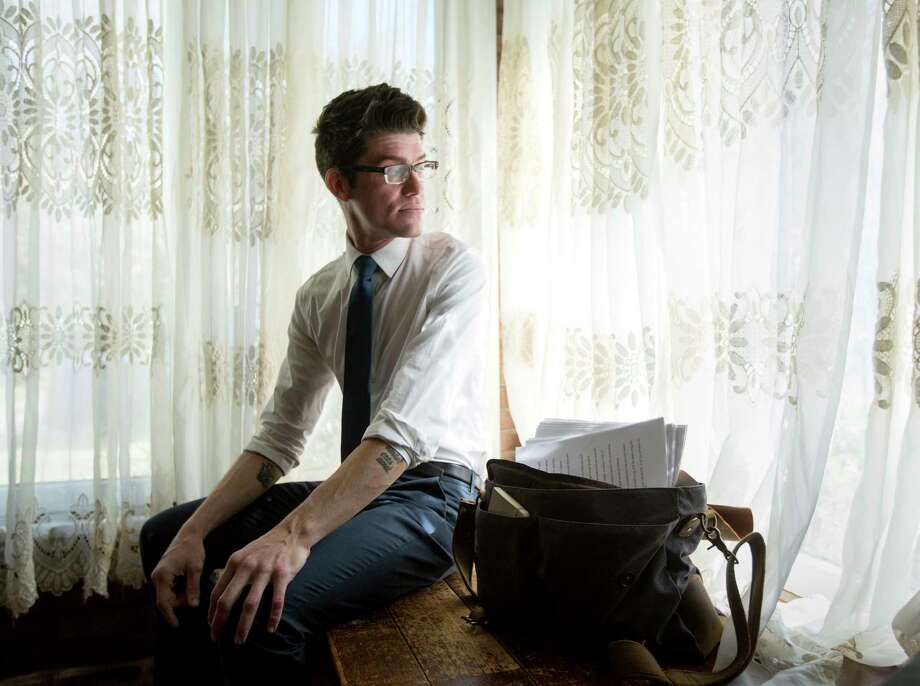
Zachary Turpin

Second,  Turpin discovered this lost work through expert searching of several vast online digital archives that include the Walt Whitman Archive and the Library of Congress.  Any of us can do this now!  It's so exciting for research and scholarship!

I particularly like the Guardian's story about the discovery includes this:
 " . . . "rollicking” anti-lawyer revenge fantasy . . . "

The Life and Adventures of Jack Engle has just been published free online by the Walt Whitman Quarterly Review.

Wednesday, July 30, 2014

Richard Slotkin - Battle of the Crater + Cold Mountain

Commemorating a slaughter 150 years ago, from the NYT's excellent Disunion series, a piece by one of our greatest scholars and historical writers, the estimable Richard Slotkin

My own first understanding of the Battle of the Crater at the Siege of Petersburg, came from reading Slotkin's The Crater: A Novel of the Civil War, published more than three decades ago.  This event has evidently haunted Slotkin all this time, for he published a non-fiction study of this terrible battle in in 2009, No Quarter: The Battle of the Crater, 1864. Today, he observes the anniversary of the meatgrinder for everyone that the Crater was, as well as analyzing the frenzy of massacre in which the confed troops indulged themselves upon the African American troops.

There is another novel I've read, that features the Battle of the Crater.  It's the opening of Charles Frazier's 1997 best-selling novel, Cold Mountain. The senseless horror pushes confederate soldier, W. P. Inman, over the edge. Wounded, Inman deserts, to search for Ada, love, peace, and life, rather than continue killing. The before, during and after of the battle are the opening sequences of the film (2003), directed by Anthony Minghella


It may say something about us (whoever we are), that cold googling images for the film, Cold Mountain, does not bring up a single scene from the battle.  One must specifically request images of the battled from the film, and there are few enough of those.


Most of the images are of a feisty RenĂ©e Zwillenger with a two-barreled shotgun (in the only good role I could ever stand to watch her as an actress -- even though in the novel her character, Ruby, is a woman of color.  Would that have been changed if the film was made today?), dressed in mens clothing, 


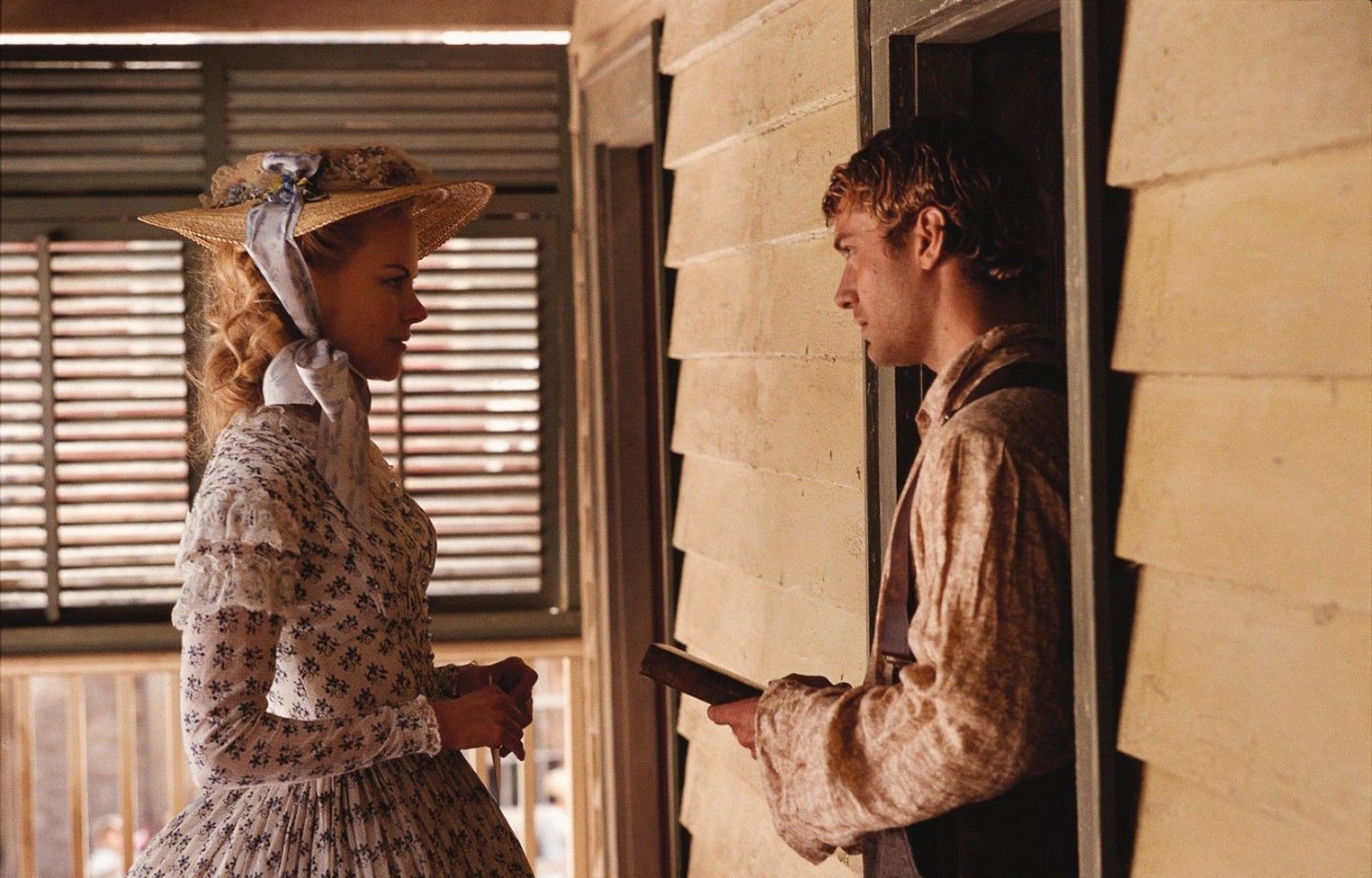
or, in contrast, Nicole Kidman, in frilly southern bell dress.  And, of course, the appealing Jude Law as W.P. Inman.

Disunion
The Battle of the Crater
By RICHARD SLOTKIN    
July 29, 2014 6:33 pm

Disunion
Disunion follows the Civil War as it unfolded.

By the end of July 1864, Union forces were entrenched outside Petersburg, Va., a major city south of Richmond. To break the siege, commanders in the IX Corps came up with a novel idea: A regiment of Pennsylvania coal miners dug a tunnel 511 feet long, right up under a Confederate strongpoint, and packed four tons of blasting powder into galleries at its end. When the mine was touched off it would blow a huge breach in the Rebel lines, through which infantry could attack and seize the high ground that commanded Petersburg.

The so-called Petersburg Mine was an extraordinary technical accomplishment, and its detonation on July 30 produced what was then the largest man-made explosion in history. But federal commanders bungled the infantry attack, which never got beyond the gaping hole left by the explosion. The Union army suffered 4,000 casualties, turning what came to be known as the Battle of the Crater from a spectacular opportunity to capture Petersburg to an unmitigated disaster.

But there is more to the Battle of the Crater than the ironic contrast of technological brilliance with military incompetence. Its real significance lies in its exposure of the depth and complexity of the racial animosities that underlay the Civil War.

Gen. Ambrose Burnside, who led the IX Corps, had planned to use his Fourth Division, which was comprised of nine regiments of United States Colored Troops, to spearhead his assault. Unlike his white divisions, the Fourth had not been weakened by heavy battle losses. Its morale was high, and it would be trained in the maneuvers required to pass the crater and debris field left by the mine explosion and seize the high ground.

Beyond the tactical problems of leading so large an assault, black soldiers and their white officers had to prepare for a combat in which they could expect no mercy if they were captured or left wounded on the field. Col. John Bross, who commanded the 29th U.S.C.T. at Petersburg, told the press, “When I lead these men into battle, we shall expect no quarter, and shall not ask for quarter.”

The Confederate government had declared that officers of the U.S.C.T. would be treated as criminals fomenting slave rebellion, an offense punishable by death. Fear of federal retaliation prevented open enforcement of that policy, but Confederate Secretary of War James Seddon had encouraged field commanders to apply its principles unofficially, “red-handed on the field or immediately thereafter.” Black prisoners not disposed of on the field were treated as slaves: returned to former masters, sold, hired out by the government or set to labor with other slaves on Confederate fortifications.

Seddon’s injunction reflected, and lent official sanction, to the racial animosity endemic to a slavery-based society. If anything, it had grown worse during the war. White supremacy was the social and emotional cement of Southern society, and when internal class conflicts and battlefield defeats shook popular morale in the summer of 1864, Confederate leaders rallied their people by reminding them that a Union victory would enable blacks to break the bonds of subjection that kept them in their place. Black soldiers were the incarnation of that threat, and Southern soldiers affirmed their racial identity by declaring their intention to show no mercy.

Union officers used that fact to their benefit. During their assault training, Fourth Division troops were enjoined to use “Fort Pillow! No Quarter!” as their battle cry. However, for the division’s officers the battle cry was not intended as a command. In the battle itself they took pains to see that their troops did not harm rebel wounded or P.O.W.s. Rather, it was a motivational ploy that reflected their own racial prejudice: They believed that Negroes, as a race, were timid and needed the stimulus of desperation to make them fight hard against white Southerners. That same prejudice would cost the Union dearly when, on the eve of the battle, Gen. George Meade – commanding the Army of the Potomac – forbade the use of the “Colored Division” as the spearhead, because he did not think black soldiers were good enough.

General Burnside went into a funk. Instead of making a new plan, he had the other division commanders draw straws for the mission. Chance decreed that Gen. James Ledlie’s troops should lead – a division unprepared for its assignment and exhausted by weeks of fighting, and whose commander was known to get falling-down drunk when faced with combat.

At 4:45 a.m. on July 30, the earth below the rebel strongpoint bulged and broke, and an enormous mushroom cloud, “full of red flames, and carried on a bed of lightning flashes, mounted towards heaven with a detonation of thunder,” one witness recalled. The explosion blasted a crater 130 feet long, 75 feet wide and 30 feet deep, with nearly sheer walls of jagged clay, “filled with dust, great blocks of clay, guns, broken carriages, projecting timbers, and men buried in various ways.”

The crater itself was an impassable barrier, and there were debris-clogged trenches to either side. The black troops had been trained to avoid the crater and drive for the high ground. Ledlie’s men, abandoned by their drunken general, drifted into the crater and stayed there.

The explosion had killed one-third of the South Carolina brigade defending the strongpoint, but behind it was a labyrinth of communication trenches where rebel infantry rallied. Confederate engineers, anticipating an attack, had planted a ring of artillery batteries on the high ground. They laid down a crossfire of canister shot that pinned Ledlie’s division in the breach. As more federal troops advanced, a terrible logjam formed in and around the crater.

In a last attempt to redeem this disaster, Burnside ordered the United States Colored Troops to attack. After four hours of fighting, the advantages of surprise and shock were lost, and the black soldiers would have to force their way forward through the mass of demoralized whites around the crater. Nevertheless, they accomplished far more than could have been expected: The commanders of the two leading regiments, utilizing their units’ training, improvised a pincer attack that captured 150 prisoners and a clutch of battle flags. The following regiments also worked their way through the mob and (with some rallied white regiments) tried to charge the high ground.

But by now rebel reinforcements had arrived. A brilliantly timed counterattack by Gen. William Mahone routed the attempted federal advance, and most of the federals fled. About a thousand gathered in and around the crater, but their position was untenable: Under crossfire by rifles and artillery, and vulnerable to mortar shells dropped among the helpless, they packed the crater bottom like fish in a barrel. Officers who commanded in the crater testified that black troops were the mainstay of its last-ditch defense, a thin line of riflemen defending the crater berm. One private of the Confederate 12th Virginia gave them the accolade, “They fought like bulldogs and died like soldiers.”

When Mahone’s Confederates finally closed in, the battle degenerated into a combination massacre and race riot. Rebels killed wounded blacks as they retreated to the crater. “The cry was raised that we would all be killed if we were captured among the negroes,” recalled one white soldier; some desperate whites killed their black comrades-in-arms to show they shared the Confederates’ abhorrence of race-mixing.

Finally a call went up: “The Yanks have surrendered.” Confederate troops clambered into the crater, and the first men down, one soldier wrote, “plunged their bayonets into the colored wounded lying there.” Col. John Haskell of Virginia observed, “Our men, who were always made wild by having negroes sent against them … were utterly frenzied with rage. Nothing in the war could have exceeded the horrors that followed. No quarter was given, and for what seemed a long time, fearful butchery was carried on.” Confederate officers eventually stopped the killing, but many black prisoners were murdered as they passed, under guard, through the Confederate reserves. Pvt. Dorsey Binyon of the 48th Georgia regretted that “some few negroes went to the rear as we could not kill them as fast as they past us.” Capt. William Pegram of Virginia took satisfaction in the belief that fewer than half of the blacks who surrendered on the field “ever reached the rear … You could see them lying dead all along the route.” He thought it “perfectly” proper that all captured blacks be killed “as a matter of policy,” because it clarified the racial basis of the Southern struggle for independence.

It is impossible to establish precisely the extent of these killings. In the average Civil War battle the ratio of wounded to dead was 4.8 to one. For black troops at the Crater it was 1.8 to one. Engaged Confederate troops also suffered a two-to-one wounded-to-killed ratio; but those losses include the 278 killed by the mine explosion – an extraordinary loss, beyond what infantry combat could be expected to produce. Thus it seems likely that more than 200 blacks were killed after they had ceased fighting.

Most eyewitness accounts of the massacre were written by Confederates, who saw the killings as something to boast of, consonant with the values of Southern society. Yet at every rank and in every Confederate unit there were also men who were appalled by the murders. Ultimately, moral responsibility for the massacre rests on Confederate leaders, whose racial polemics and military instructions gave official sanction to the motives for massacre, and not those of mercy.

Follow Disunion at twitter.com/NYTcivilwar or join us on Facebook.

Sources: Richard Slotkin, “No Quarter: The Battle of the Crater, 1864”; Bryce Suderow, “The Battle of the Crater: The Civil War’s Worst Massacre,” in Gregory J. W. Urwin, ed., “Black Flag Over Dixie”; Edward Porter Alexander, “Fighting for the Confederacy,” ed. by Gary W. Gallagher; George S. Burkhardt, “Confederate Rage, Yankee Wrath: No Quarter in the Civil War”; Peter S. Carmichael, “Lee’s Young Artillerist: William R.J. Pegram”; Keith Wilson, ed., “Honor in Command: Lt. Freeman S. Bowley’s Civil War Service in the 30th United States Colored Infantry.”

Richard Slotkin is the author of “No Quarter: The Battle of the Crater, 1864” and “Long Road to Antietam: How the Civil War Became a Revolution.” He is an emeritus professor of American studies at Wesleyan University.

Sunday, November 10, 2013

The 11 Nations of North America

In Tufts Magazine, "Up in Arms" by Colin Woodward:
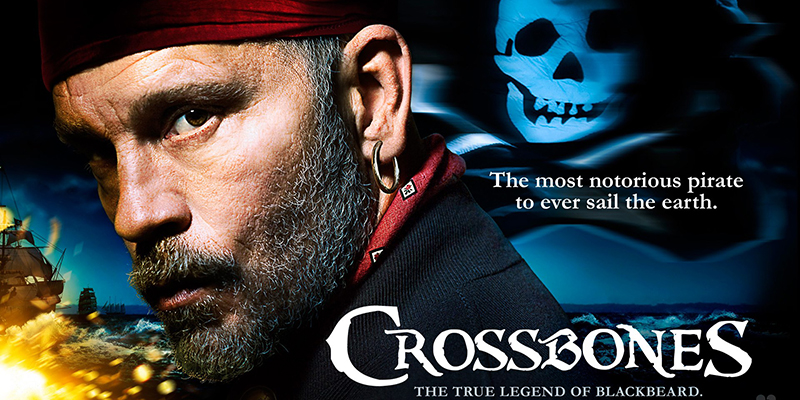
author of American Nations: A History of the Eleven Rival Regional Cultures of North America. An earlier book, The Republic of Pirates,

is the basis of the forthcoming NBC drama Crossbones.


I don't entirely agree with where he makes the contrast between Chesapeake and Deep South, but he's still right.

This is demographic history, now a foundation tool for researching any history, it seems (it even matters when assessing armies -- from where do the rank-and-file come? who are they?  who are the officers?).  It certainly is for the study of slavery.  El V was at many panels about these matters the last three days at the Demographic Conference at Michigan State University.

In Woodward's article he's employing demographics to explore the historical frequency of gun violence in various sections of the U.S.

In any case, this article is an excellent illustration of the truth which is chronology and geography are the twin pillars on which history is built.

Sunday, September 29, 2013

Dusinberre Shows Us How Henry Adams Did It

Part of Dusinberre's study of Henry Adams' Myth of Failure is deconstructing Adams's method as an historian, his influences and his conviction that narrative history must be as much a literary endeavor (recall, Adams also published two novels) as a scholarly one.  Dusinberre shows us how this works in Adams's History.  
[Dusinberre, pp 105-106] " ... Adams set out ... his own -- still primitive -- canons of prose style.  His creed, enshrining force and variety, was stated as explicitly as that of any textbook writer on rhetoric, and one precept might have copied directly from the Anglican bishop:  "Great effects are best produced by lowering the general tone.  Follow Canon I as a rule [the subject should normally precede the predicate], and it becomes easy to make a sensation with Canon III [when accentuation is wanted, begin with the word or idea to be accentuated, even if this is the predicate].  The higher you pitch the key, the harder it is to sing up to it, and the effect no greater." From this elementary tenet Adams progressed during ensuing years to an ever clearer conception of the principles of his craft.  In 1879 he still complained that "the most difficult thing to me is to vary the length of my sentences so as to relieve the attention"; but a decade later, recreating the battle of Bladensburg, he had learned to measure his sentences in proportion to the military force concerned:


Dusinberre then illustrates this rhetorical method of Adams with this bit describing the infamous debacle of Bladensburg from History, 8:140 (citation page will be different in the Library of America edition):
Some Maryland regiments arrived at the same time with [Secretary of State] Monroe.  About three thousand men were then on the field, and their officers were endeavoring to form them in line of battle.  General Stansbury of the Baltimore brigade made such an arrangement as he thought best.  Monroe, who had no military rank, altered it without Stansbury's knowledge.  General Winder arrived at noon, and rode about the field.  At the same time the British light brigade made its appearance, and wound down the opposite road, a mile away, a long column of redcoats, six abreast, moving with the quick regularity of old soldiers, and striking at the American center.
Several short blunt statements that describe the inexperience, confusion and irresolution of the Americans.  What follows is a single extended period that contrasts British experience and organization which allows the conclusion of the British line to flow smoothly through the American defense. Adams does not need to tell us the Americans are disorganized and inexperienced, without even a chain of command.  Adams describes it in the rhythm in which the debacle takes place, within one short paragraph.

We are naturally much concerned with these matters ourselves.  This is particularly so now, that we're so close to concluding this draft of The American Slave Coast in preparation for turning it in next month. * Built up from the first colonial eras through the 1863 Emancipation Proclamation, this narrative study of the domestic slave trade's effect on the making of the national economy -- there's not a nook or cranny of the economy it did not effect, nor any political matter that it wasn't a part of  -- we are deeply concerned the book read as easily and smoothly as possible.  That's what the next round with the manuscript will be focused on, including then, cutting out at least 50,000 words.  This part of the process is in some ways the most enjoyable for me.  In other ways, not -- OUR THOUGHT BABIES!

------

* The reason entries here have fallen way off, as  has reading other people's and commenting. Other than fact-checking and researching I've hardly been online in days.

Wednesday, September 18, 2013

Joy and Delight at Absurd Levels

The arrival of an order of Post It Pads always provokes wide smiles, exclamations (sotto voce) and jumping for joy (restrained to tiny hops in respect for my neighbors).


My supply of of the vital Yellow Sticky Pads had fallen to -- two.  I can go through those in a single day of work when cooking with my research materials.

There is a comfy sense of security in having a few dozen pads, in unopened packets among the supplies. Sort of like for food, a filled freezer, bags of rice and beans, sacks of potatoes, a half dozen parcels of pasta from Raffettos (est. 1906!), some boxes and cans of tomato products and several unopened bottles of olive oil. You know no matter what you can get along for a while. :)

Friday, January 21, 2011

Medieval Battle Field and Warfare

"Nasty, brutish and not that short; medieval warfare was just as terrifying as you might imagine."

An account of the English Wars of the Roses in The Economist Magazine, built around the injuries, including the killing one, to the head of a young soldier in the Battle of Towton, 1461.

Thursday, July 30, 2009

Academic Historical Scholarship vs. Hollywood View of History

What is this controversey about?

"Over the last few weeks, the writers of a pair of Civil War-era histories about the anti-Confederate inhabitants of Jones County, Miss., have been trading barbs in an unusual public spat. It began when the author of one book, rights to which had been sold to Universal Pictures and the filmmaker Gary Ross, discovered that Mr. Ross had spurred the publication of a new and somewhat sexier work on the same subject."


What is meant here, by 'sexier' is that the trade version (which based itself upon the academic work) is this:

“The State of Jones: The Small Southern County That Seceded From the Confederacy,” a narrative history by the Harvard scholar John Stauffer and the Washington Post writer Sally Jenkins. The book, which on Monday was ranked No. 83 on Amazon’s best-seller list, presented Newton Knight, the leader of the renegade county, as a morally driven hero in the mold of John Brown — but whose appeal was enhanced by his romance with an ex-slave who, in the book’s account, became the love of his life as relations with his white wife cooled.


Whereas, the author of the academic history objects:

. . . . She particularly objected to what she saw as the new book’s tendency to romanticize Mr. Knight and his love life, its insistence on the idea that Jones County actually seceded and its attempt to place Mr. Knight at the Battle of Vicksburg — touches that do not hurt the story’s cinematic potential.

“If they had said this was a historical novel, I could understand it,” Ms. Bynum said in a telephone interview this week, referring specifically to the portrayal of Mr. Knight’s relationship with his mistress, Rachel Knight. Ms. Bynum, in her review, pointed to evidence that what she called Mr. Knight’s “philandering” also led him to father four or more children by Rachel’s own daughter.


What makes this situation even more complicated is that the academic historian, Victoria Bynum, published her history with the North Carolina University Press 8 years ago, which press then sold the rights to it to Universal Pictures. This means, if you are educated in such things, that she got NOTHING out of this deal, university presses being what they are. In the meantime a fellow who worked on the script, a Gary Ross, who you all being who you are, may recognize as currently working on the script for Spiderman 4) got a lucrative deal from Doubleday, for his book, which borrows egregiously frolm Bynum'ss, and then changes the facts so far as they are known.

Whew!

More than anything else though, me being who I am, I suppose that what chaps Ms. Bynum most is this change of facts: " ... Mr. Knight’s “philandering” also led him to father four or more children by Rachel’s own daughter." For her it's probably how I feel, for instance, about anyone talking about Jefferson's relationship with Sally Hemmings and neglecting to mention that she was his white wife's sister-and-slave.