LINES OF THE DAY

". . . But the past does not exist independently from the present. Indeed, the past is only past because there is a present, just as I can point to something over there only because I am here. But nothing is inherently over there or here. In that sense, the past has no content. The past -- or more accurately, pastness -- is a position. Thus, in no way can we identify the past as past." p. 15

". . . But we may want to keep in mind that deeds and words are not as distinguishable as often we presume. History does not belong only to its narrators, professional or amateur. While some of us debate what history is or was, others take it into their own hands." p. 153

Silencing the Past: Power and the Production of History (1995) by Michel-Rolph Trouillot

Showing posts with label American History. Show all posts

Tuesday, May 19, 2015

Meandering in History From Daniel Boone to the End of the World

Among the several stanzas in Byron's Don Juan given over to Daniel Boone are


these lines, though Mr. Boone would not have cared for Byron's spelling of his name:

Of the great names which in our faces stare,
The General Boon, back-woodsman of Kentucky,
Was happiest amongst mortals any where;
For killing nothing but a bear or buck, he
Enjoyed the lonely vigorous, harmless days
Of his old age in wilds of deepest maze.

What I like about this statue of Boone at Boone, North Carolina is he's wearing a beaver hat, not a Davy Crocket coonskin or any other kind of fur.  He was adamant about not doing that, despite dressing all the rest of himself as Indians did.  He was appreciative of dogs and they abilities too. Visual depictions of him were more than inaccurate in many ways, even those supposedly made while he was still living.
Even stranger than attempting to hold in mind that Daniel Boone and the signature, sophisticated, cultured, highly educated and cosmopolitan English Romantics had connection is that Gilbert Imlay, who conned Boone of money, land and equipment, was the lover of Mary Wollstoncraft, and fathered a daughter with her, Fanny. As he absconded from the Kentucky frontier and his obligations to Boone, so did Imlay abscond from Mary and Fanny, leaving them alone and penniless. So, then, did Shelly and Mary Godwin, Byron and Coleridge, discuss often a utopian society, they could create in the mode they fantasized would be a Boonian settlement on the banks of some river meandering through the frontier woods that were already long gone.


Daniel Boone was, of course, the model for James Fenimore Cooper's Natty Bumppo - Leatherstocking - Hawkeye.

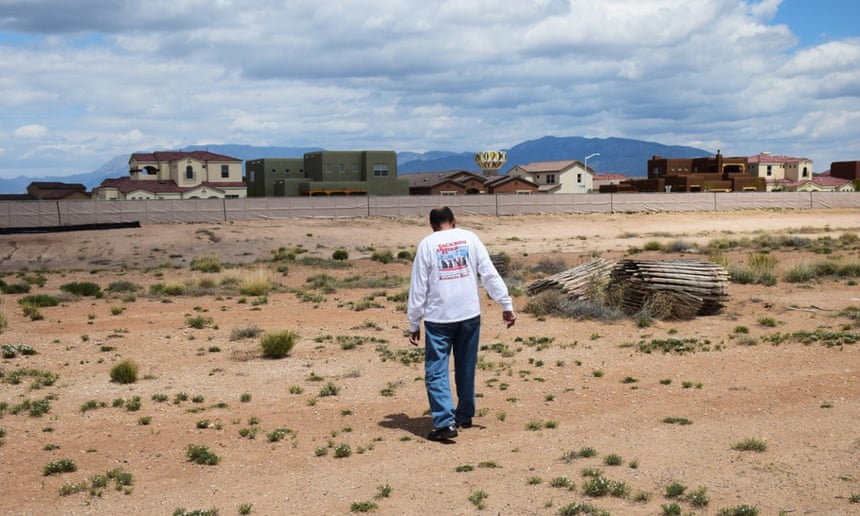
I've been thinking about Daniel Boone as well as Natty Bumppo, and how both of them react to the wanton killing of animals and birds (such as the heart-rending description of the Passenger Pigeon genocide in The Pioneers (1823) ), and First Peoples, by this news of horror coming out of New Mexico, that the British Barclay's Bank wishes to build a whole city of 100,000 in the desert outside of Albuquerque  that will suck up desperately needed water amid warnings of a future megadrought -- water that is already earmarked and fought over.  This is why I have no hope for the future because irrational and stupid greed always trumps anything merely factual and intelligent.

Where this is

Barclays expects to put this


Tuesday, August 26, 2014

On This Day in 1664 New Amsterdam Became New York

It's a summer of significant historical observations.  Today it's Nieuw Amsterdam becoming New York.

It's one of the many fascinating things about living in New City and New York state that the underlying Dutch culture has persisted.


 Peter Stuyvesant Surrenders Niew Amsterdam to the English.
He Wasn't Happy About It.


Not to mention many a legal fundamental, with documents created and executed during the regime of the Dutch, such as land titles (to land stolen from the Natives, of course), wills and many other material and financial property instruments.  We have entire legal libraries filled with these documents here in the city and in Albany.

This provides employment for the qualified.  There are services here that can translate these old Dutch language instruments and docs into English.

Perhaps the most significant contribution the original European settlers of this part of the world is their tolerance of diversity in languages, religions and, most of all, ways of making money.  Nieuw Amsterdam or New York -- this place was never about anything else except making money.  Which explains, of course, why NYC was the center of the New World's overseas slave trading in terms of financing ships, insuring them and so on, for the Caribbean and Brasilian trade.  They dominated in the decades post the War of 1812.  This, despite Rhode Island, who began earlier, started ahead of NYC in the trade, and always Boston was jockeying to seize the number one position for itself.


Wednesday, January 1, 2014

2014, tu es arrivée ...

The new year began with me sleeping until nearly noon.

Then off to the New Orleans gumbo and jumbalaya party uptown, where almost all the guests work with history and / or writing in some form or another, and / or music or other media such films, animation and so on in some way. The guests were as much a variety as the food.  Party made to order for the likes of us, if you ask me.


At one point Our Hostess asked el V to describe our book.  He began with the title: The American Slave Coast: A History of the Slave-breeding Industry.  And from then on everyone present in that part of the apartment hung on every word, and more and more people came from other parts to listen too.  Then all kinds of questions.  People -- and particularly the African Americans -- got out pen and notebooks to write down the title, authors, publisher and pub date.


People seem to want to know this material, are very interested in it..  Which is a very encouraging sign, since this happens everywhere we talk about the book.  But then, we're usually in a situation with people like this, so, who knows?


Sunday, September 29, 2013

Dusinberre Shows Us How Henry Adams Did It

Part of Dusinberre's study of Henry Adams' Myth of Failure is deconstructing Adams's method as an historian, his influences and his conviction that narrative history must be as much a literary endeavor (recall, Adams also published two novels) as a scholarly one.  Dusinberre shows us how this works in Adams's History.  
[Dusinberre, pp 105-106] " ... Adams set out ... his own -- still primitive -- canons of prose style.  His creed, enshrining force and variety, was stated as explicitly as that of any textbook writer on rhetoric, and one precept might have copied directly from the Anglican bishop:  "Great effects are best produced by lowering the general tone.  Follow Canon I as a rule [the subject should normally precede the predicate], and it becomes easy to make a sensation with Canon III [when accentuation is wanted, begin with the word or idea to be accentuated, even if this is the predicate].  The higher you pitch the key, the harder it is to sing up to it, and the effect no greater." From this elementary tenet Adams progressed during ensuing years to an ever clearer conception of the principles of his craft.  In 1879 he still complained that "the most difficult thing to me is to vary the length of my sentences so as to relieve the attention"; but a decade later, recreating the battle of Bladensburg, he had learned to measure his sentences in proportion to the military force concerned:


Dusinberre then illustrates this rhetorical method of Adams with this bit describing the infamous debacle of Bladensburg from History, 8:140 (citation page will be different in the Library of America edition):
Some Maryland regiments arrived at the same time with [Secretary of State] Monroe.  About three thousand men were then on the field, and their officers were endeavoring to form them in line of battle.  General Stansbury of the Baltimore brigade made such an arrangement as he thought best.  Monroe, who had no military rank, altered it without Stansbury's knowledge.  General Winder arrived at noon, and rode about the field.  At the same time the British light brigade made its appearance, and wound down the opposite road, a mile away, a long column of redcoats, six abreast, moving with the quick regularity of old soldiers, and striking at the American center.
Several short blunt statements that describe the inexperience, confusion and irresolution of the Americans.  What follows is a single extended period that contrasts British experience and organization which allows the conclusion of the British line to flow smoothly through the American defense. Adams does not need to tell us the Americans are disorganized and inexperienced, without even a chain of command.  Adams describes it in the rhythm in which the debacle takes place, within one short paragraph.

We are naturally much concerned with these matters ourselves.  This is particularly so now, that we're so close to concluding this draft of The American Slave Coast in preparation for turning it in next month. * Built up from the first colonial eras through the 1863 Emancipation Proclamation, this narrative study of the domestic slave trade's effect on the making of the national economy -- there's not a nook or cranny of the economy it did not effect, nor any political matter that it wasn't a part of  -- we are deeply concerned the book read as easily and smoothly as possible.  That's what the next round with the manuscript will be focused on, including then, cutting out at least 50,000 words.  This part of the process is in some ways the most enjoyable for me.  In other ways, not -- OUR THOUGHT BABIES!

------

* The reason entries here have fallen way off, as  has reading other people's and commenting. Other than fact-checking and researching I've hardly been online in days.

Tuesday, July 2, 2013

Battle of Getttysburg: The Impact of the Weather

Meteorology of the Battle by Rev. Dr. Michael Jacobs.

A Gettysburg man by the name of Rev. Dr. Michael Jacobs, a math professor at what was then called Pennsylvania College, had a strong interest in weather and recorded his observations three times a day, every day, even during the battle. As a result, the "Meteorology of the Battle", was published, and it gives very specific details on the weather at the Battle of Gettysburg and the role it may have played in battle.
The bad weather came after the battle, on July 4th -- though some of the surviving soldiers may have found the rain's coolness a welcome relief after the battle heat of the previous days and nights. But --
Some wounded soldiers had still not been moved from low-lying areas by the Plum Run Creek, however, which overflowed its banks. Those stranded near the flood waters, reportedly all Confederates, drowned.
According to AccuWeather's Vice President of Marketing and Civil War historian Dr. Lee Rainey, an even larger issue that was faced as a result of the rain was the retreat attempts made by the Confederate Army on July 4. 
"They had to move a 17-mile-long train of wagons filled with wounded soldiers over the dissolving dirt roads back to Virginia," he said. "And the rains caused the Potomac River--easily fordable on the march north--to flow so high that the army was trapped on the north side with the Union forces in pursuit. The Confederates dug in for a desperate battle, but in the end were able to escape across the river on the 13th, the day before Meade's planned attack."
Full story here, on the AccuWeather site, with a link to the Rev.'s report.

This being a weather report the Rev. leaves out the 1000 or so free Pennsylvania blacks -- men, women and children -- the army had kidnapped to return to former owners, put in prison or auction off.  The consequences of those few contrabands who were brought back to Virginia and returned to their 'owners' was terrible.

Thursday, June 27, 2013

A Modest Proposal For Graduate Level Early Americanist Studies

This proposal, by a an early American - Independence era grad student, is going to be very popular in this country, don't you think?


Third—and I expect this might be met with less enthusiasm—make Spanish a required language. Colonial North Americanists have a great deal to gain from our Latin American colleagues, scholars grappling with many of the same issues of colonialism, cross-cultural interaction, imperial governance, and social development. So long as much of their literature remains without translations, Spanish will be necessary to prop open the historiographical window.
He goes further than this:
Bear with me. No one wants to make graduate school, particularly the coursework years, even longer. But if Europeanists, Medievalists, Africanists, Asianists, and Latin Americanists can master languages, so can we. Moreover, increased language skills may not only be advantageous, but necessary to maintain an edge in the current academic climate.
The popularity of global and imperial histories has brought more early modern Europeanists to North American shores. What once may have distinguished a colonial American PhD student from a British imperial PhD student, for example, is suddenly harder to define when they’re both working on New York political culture in the 1730s. And if our Europeanist colleagues have the upper hand in languages, they’re going to have a far easier time reading the non-English historiography, engaging in comparative research, and utilizing non-English-language sources. And the imperial turn pulls us too. Early Americanists are more likely to end up in European archives than graduate students of the couple decades past. Even the most eager reader of French is going to struggle in the Archives nationales if the language ability stops there. (Also: if imperial history is here to stay, at least for the foreseeable future, then so too is comparative or entangled history—making languages all the more valuable.)
Languages are not only for those “out-there” historians, the ones working on non-English spaces like the pays d’en haut, Louisiana, or Spanish Florida. Too often we gloss over the multiplicity of tongues within the British Empire and its colonies. Shouldn’t students working on, say, mid-eighteenth-century Pennsylvania have at least rudimentary German? We need to consider: does language ability (or lack thereof) preordain how we approach a topic? Did some earlier historians previously look to Philadelphia rather than to Lancaster or the western frontier because of language limitations rather than the realities of historical action? Foreign languages allow early Americanists to not only look more carefully at frontier, borderland, and “peripheral” histories, but to gain a more holistic view of the early American experience.
The writer has little hope that his proposals will be adopted.  Has there ever been a country that owns a greater horror and rage at learning another language?

Saturday, April 6, 2013

Robert V. Remini Dies

Robert V. Remini, the great historian of Andrew Jackson and the era upon which he stamped his name and outlook, the embodiment of his America, whose footprint upon the nation remains so huge that presidents and want-to-be presidents continue to faintly reflect Jackson's enormous stance, died on March 28.


From the New York Times obituary:

“He was the kind of historian who never believed that his interpretation was the last word,” Mr. Meacham said. He added, “You cannot write about Jackson without standing on Remini’s shoulders.”

For the entire obituary, which anyone interested in American history will find illuminating, it's here. 

Robert V. Remini, Rest In Peace.  You practiced your calling well, very well.  We are all indebted to you.

Saturday, July 7, 2012

History Has Lost A Great Personage

As you can see from the quote at the top of Fox Home, the loss of this great historian feels deeply personal.

Forwarded via Voices From Haiti:

[ " http://www.voicesfromhaiti.com/2012/07/dr-michel-rolph-trouillot-haitis-gold-rush/

Dr. Michel-Rolph Trouillot & Haiti’s Gold Rush
Jul 07, 2012 ~ Written by voicesfromhaiti

Every year at the big award ceremonies there’s a special block of time reserved for stars whose blindingly brilliant lights have been extinguished. A larger-than-life screen usually hangs above the audience. Everyone looks skyward—to view the lineup of mind-blowing talent that once seemed so formidable, if not immortal. As audience members blink back tears, everyone secretly wonders when their turn will come to be “honored” in this way. Will their picture even make it to the sky-screen? Will someone accidentally forget to include them in the lineup? Who will mourn their passing? Will anyone beside close family members even remember their contribution? Will anyone–especially strangers–really, really care?

“Haiti lost one of the greatest men who ever lived,” said Leslie H. of Professor Michel Rolph Trioullot who passed away July 6, 2012. “He is revered among anthropologists worldwide. His book, Silencing the Past, is like a sacred text on college campuses. . .”

M.C. said: “What bothers me about Prof. Trouillot’s passing is that I never had a chance to tell him in person how his writings changed my life. I should have told him that, you know. But I didn’t want to bother him. Iwanted to have something important to say when I approached him. Everyone who knew Prof. Trouillot says he was as generous and giving as he was brilliant. I should have told him that his writing changed the course of my entire life.”

Sabine B. said, “My heart breaks now because Haiti has lost a giant among thinkers. I mourn, also, because there are so many people out there who don’t even know they should be mourning. They don’t even know the real significance of this loss.”

On the other side of the ocean, the island from which Dr. Michel Rolph Trouillot came is busy being reconstructed. Everyone is figuring out ways to harvest fruit from all the trees that have yet to be planted. While all the super-sizing of Haiti continues without a break, while investors rush to scrape the gold mines clean, let us heed Dr. Trouillot’s words and remember not to silence the past. Let us use the ropes of the past to ring the bell of Haiti’s real future.

Remember, also, that Haiti’s greatest treasures reside not in the mines but in the minds of our thinkers, especially our elders. The gold they possess in abundance is available, if we would only ask. First, however, we must recognize, honor, and respect our elders. Respekte grandmoun yo! The treasures they carry inside their heads are priceless. Acknowledge, appreciate, and celebrate our elders now, lest– against their own will–they take all the gold with them.

Rest in perfect peace, Dr. Trouillot. VoicesfromHaiti celebrates your immeasurable contributions to Haiti and the world. We send our sincere condolences to those who have only begun to feel the sting of your passing.

(c) VoicesfromHaiti/Share Widely.

Selected works of Dr. Michel-Rolph Trouillot:

1977 Ti difé boulé sou Istoua Ayiti. New York: Koléksion Lakansièl.
1988 Peasants and Capital: Dominica in the World Economy. Johns Hopkins University Press.
1990 Haiti: State against Nation. The Origins and Legacy of Duvalierism. Monthly Review Press.
1995 Silencing the Past: Power and the Production of History. Beacon Press.
2003 Global Transformations: Anthropology and the Modern World. Palgrave

__________________________________________________

I did not know Dr. Trouillot personally, but I had the good fortune of having my writing appear alongside his in an anthology called Mozayik, edited by another great mind who passed away earlier this year: Roger Savain.

Please visit the following links for more on this national treasure.

Bob Corbett reviewed Silencing the Past: Power and the Production of History in 1996

Nadève Ménard and Régine Michelle Jean-Charles’s invite tributes, recollections, and words you might wish to share about Dr. Trouillot on http://tandenou2.blogspot.com/ " ]

Sunday, June 5, 2011

Television & History -- TNT's *Falling Skies*

When speaking of the 1939 film, Jesse James, Richard Slotkin stated that movies, particularly genre films like westerns, are always commenting on two eras of history: the era in which the film set, and the era in which the film is made.

The sf series Falling Skies debutes this month on TNT, with much Steven Spielberg guidance, and, boding badly, Mark Verheiden who is the fellow muchly  responsible for the mess that was the neo-Battlestar Galactica.

Why 'boding badly?'  Because this concept of Space Aliens Want Earth's High School Kids! is supposed to be inspired by the US War of Independence. 
"He said he suddenly saw the show “as an allegory for the American Revolution: noncombatants against a vastly overwhelming military force,” he said. Originally the series was called “Concord,” after the 1775 battle. (The title changed when the references became less overt in later drafts.)
Mr. Wyle plays Tom Mason, a history professor in Boston whose wife dies during the invasion. (Mr. Rodat said his own wife was a touch annoyed to have been killed off so early in their family’s parallel existence.) Because of his knowledge of military history Mason is appointed second in command of the 2nd Massachusetts, a resistance regiment protecting a group of civilians that includes two of his sons. The third boy has been abducted, and aliens have seared his spine to a “harness,” a many-tentacled metallic slug that appears to lull kids into a supplicant army. ....
Does anyone consider that perhaps a military historian has a different kind of tool belt than an experienced military strategist and leader of men? women? teenagers? in real battles?  And even then, regarding our War for Independence and General George Washington.  He had military experience.  He lost almost all of the battles that he commanded, before fighting the British and after he began fighting the British.  General Grant, on the other hand, got his military experience in the Mexican War, and he not only won his battles for the Union in the Civil War, but devised strategy and tactics.  Later in his life he wrote the most specific and useful history of those battles in his personal Memoirs.  So, it is possible.

Returning to Prof. Slotkin's statement that what we see on screen in genres, particularly if they are supposedly invoking an historical past -- we know by their own words that the historical past the producers of Falling Skies are invoking is that of the Independence era.  But what about the historical moment in which the program is being made?
"But the show’s central relationship is between the professor and Mr. Patton’s gruff, commanding Captain Weaver. “I’m the humanist, and he’s the warlord,” Mr. Wyle said. “I was interested in this idea of hitting the reset button on society, having to start from Square 1. The first season is about negotiating that line between a military dictatorship or a democracy, which is relevant today.”
Why is our only choice a warlord or democracy?  It wasn't in the Independence era -- it could have gone  lot of different directions, and, in fact, we didn't have democracy with a small d until the first Jacksonian election, and even then women and Indians and the enslaved had not place in the democratic process.

Is this true, that this is our only choice, and if we make the wrong choice the invaders of the U.S. will win?  But haven't the invaders already won, since they wiped out all but 20% of the population?  What is the tipping point for loss when an army can not longer fight? Isn't it when something like 15% of their fellows are hors de combat that soldiers lose confidence and the battle's lost?  Who are the alien invaders standing in for? This is sooooooooooooo sf -- why do the aliens only want Our Children? Evidently, by the trailers I've seen, the only surviving children in the surviving 20%  are Our White Children.

The embedded approval of fascism / warlordism in television invasion series like Red Dawn and V has always been there.  This sounds kind of the same, though I do admit I've seen nothing but trailers, so that has to be factored in.

Then, there is this:
“On another level,” he added, “it’s pure escapist entertainment. It’s just fun to watch guys shooting machine guns at aliens."

This series was hot at last summer's Comic Con, so it's been muchly looked forward to by many.

But on another level, some of us are gloomy gusses who persist on raining on Other People's parades and harshing their squee because in this climate "it's just fun to watch guys shooting machine guns at aliens" while providing an either / or binary of dictatorship or democracy doesn't seem like a productive idea, 'entertainment' or not. We're the sort who believe that words and images blasted into our brains matter, otherwise there wouldn't be ad agencies, and elections wouldn't generate so much revenue for them and the media.

We still don't know who the aliens are standing in for. Judging by the rhetoric that's violent, threatening and relentlessly pointed at people like us since the Nixonian era we know it is very likely you and me.

Monday, May 30, 2011

"Cardiogram of the Confederate Nation"

Black Union soldiers, women, children and ministers from war-smashed Charleston S.C., created Memorial Day, as David Blight describes on the second screen/page of "Forgetting Why We Remember", the lead Op-ed article from today's NY Times.  But I the following from the first page, because it goes better with the subject matter of the second op-ed piece in today's NY Times, the Disunion column, described after Blight's article.
"Memorial Days were initially occasions of sacred bereavement, and from the war’s end to the early 20th century they helped forge national reconciliation around soldierly sacrifice, regardless of cause. In North and South, orators and participants frequently called Memorial Day an “American All Saints Day,” likening it to the European Catholic tradition of whole towns marching to churchyards to honor dead loved ones.


But the ritual quickly became the tool of partisan memory as well, at least through the violent Reconstruction years. In the South, Memorial Day was a means of confronting the Confederacy’s defeat but without repudiating its cause. Some Southern orators stressed Christian notions of noble sacrifice. Others, however, used the ritual for Confederate vindication and renewed assertions of white supremacy. Blacks had a place in this Confederate narrative, but only as time-warped loyal slaves who were supposed to remain frozen in the past.

The Lost Cause tradition thrived in Confederate Memorial Day rhetoric; the Southern dead were honored as the true “patriots,” defenders of their homeland, sovereign rights, a natural racial order and a “cause” that had been overwhelmed by “numbers and resources” but never defeated on battlefields.
"Of Monsters, Men — And Topic Modeling" by Robert K Nelson, is the latest Disunion column on the Civil War in the New York Times.
"....“topic modeling” allows us to understand in far greater detail the arguments and appeals that were used throughout the war to convince men to join the army, engaging in the morally difficult task of killing other men, and accepting the terrifying prospect of being killed themselves."
The two forms most employed were patriotic and poetic appeals in which death in service to the cause was described as glorious, bringing immortality, and the diatribes against the North as being monsters, not even true men, certainly not true Americans like the southerners since they were all deformed immigrants [mighty ironic that, since so many in the south were Scots, Irish and Scots-Irish] from ungodly shores, certainly not Christian, so it was right and just and glorious to kill them.

Informative graphs accompany the column.

It would, however, be more informative and interesting to see the results of text-modeling applied to Union paper of record of the era, like the New York Times.

Still, text-modeling is a marvelous new tool in the scholar's money bag, making possible a survey of large amounts of text in a very short time, that we've not been able to perform before.
Memorial Day, you all ~~~~~~~~~~~~~~~~~~

Sunday, May 29, 2011

History

This is the still that the NY Times chose to illustrate their weekend feature on the number of television programs that have run, are continuing, or will be broadcast about the Civil War this year. The feature focuses on individual artifacts of the period, and the stories behind them.


What does this scene, without context or other information, tell you?

Saturday, May 28, 2011

Captain John Smith Is the First Virginian

Professor Lemay says so, right in his book on Smith.  He includes Smith in the mythic American categories of heroes:
"Indian fighters, frontiersmen and gunfighters."
Recall, you all, that 'gunfighter' is something literally created by the movies -- it was nothing out of real life.  It's significant too, that Lemay agrees that Walter Scott's medieval protagonists are in this line, they too were created post the early American mythic prototypes, who were real, like Smith, Raleigh, Drake, Hawkins, all revered in Virginia.

From his book about Smith and the significance of his life and deeds:

"The major mythic hero of the Middle Ages and Renaissance -- and later, as numerous chapbooks, ballads, and Sir Walter Scott's novels testify -- was the chivalric kights, whose heroic battles sometimes occurred in great arenas, with the gentry and aristocracy looking on.  America's indigenous heroes have been Indian fighters, frontiersmen, and gunfighters, such as John Mason, Thomas Church, Daniel Gookin, John Lovewell, Thomas Cresap, and Robert Rogers in the colonial period, and Daniel Boone, Davy Crockett, Kit Carson, Wild Bill Hickok, Wyatt Earp, and Buffalo Bill Cody from the Revolution to the end of the nineteenth century.  Their confrontations usually occurred in isolated wilderness areas or small towns.  Captain John Smith fulfilled the heroic roles of both the European Renaissance and the American frontiersman.  His life documents and illustrates the changing nature of heroic action. ...."
It is of further significance that the images we hold of these heroes from the Revolution to the end of the century, are for the most part, fictional creations, rather than historical.

In this context re-reading Twain's "Essay on Chivalry" is even more illuminating.
_________________

Both of us are feeling poorly still.  El V's gums are all inflamed from the surgery, his sinuses ache, and he's suffering from allergies.  I'm, well, I'm hurtin' like you know what.  It's going to be a quiet holiday weekend here.  Monday, we'll be with friends, but mostly it's going to be reading, writing = working.  It could be worse.

Thursday, May 26, 2011

Captain John Smith by J. A. Leo Lemay &* Homicide*

The American Dream of Captain John Smith (1994 - University Press of Virginia) by Prof. Lemay is the first book written by this American scholar that we've read.  This is the case despite living among his personal library collection -- the first scholars to have that privilege -- and reading many of titles, opening and dipping into many more, and yet not able to fully delve into that magnificent collection.

So, when we returned to NYC from the Fellowship we ordered several of Lemay's books.  This is the first one to arrive.  What a fascinating tale it is too, a tale of swashbuckling heroism of both the European Renaissance and the American frontier.  Smith was a knight and he wore armor.  He wore the iron collar of slavery to the Turks. He fought the Turk in the Transylvanian armies (when the Poles had an empire and fought the Turks, Mongols, Tatars and Russians in the region), slaying three of the Turks' greatest warriors in single combat, then cut off their heads so they might be impaled on poles.  He went to Virginia. He was twenty-six years old.  He returned to England because a careless aide blew off Smith's balls, evidently trying to light a cannon or a musket, as well as the aristocrats of the Virginia Company being dissatisfied with Smith's yeoman practicality of making things work, and making even aristocrats work, while not finding gold, and making friends with the Indians -- and playing the tribes off against each other, being the best friend of each one.  Then he wrote books.  He was an egalitarian and a visionary.  The tales about him, for so long dismissed as tall tale telling are true.  He is the first Virginian, the perfect knight, pure and true.  After him Jamestown fell apart, into starvation, slavery and massacre.  His was the perfect New World binary -- only White Men and Indians; he was untainted by the evil of slavery.  His New World was re-created again in Owen Wister's Virginian, who like Smith, was a natural aristocrat who possessed all the needful skills to survive and thrive, particularly that of effective violence.


I am almost finished watching the first season of Homicide: Life on the Street (1993). Most appealing to this watcher is Crosetti’s conspiracy cover-up obsession with Booth’s assassination of Lincoln.  In ep 7, "In the Rockets Dead Glare," he and his partner, Meldrick Lewis, go to D.C., where Crosetti insists on first stopping at a Chinese restaurant, which, it turns out, is in the building that used to be Mary Surrat's boarding house where many an anti-Union conspiracy was planned.  A secret service agent takes them to Ford’s Theater and shows them around the area, points out the Doctor’s house across the street where the unconscious, bleeding Lincoln was carried. Would this have as much meaning if I hadn’t listened this winter to Manhunt, the book about Booth, the conspiracies, the assassination, Booth's escape, the aftermath, and the hunt for him?  They are showing us in an entertaining and plausible way that Maryland's history is deep.

Homicide's Baltimore is larger and more varied than The Wire's Baltimore, less claustrophobic. It's the Baltimore which I got to know to some degree this year fairly well, thanks to local friend-guides.  It's a city, not a corner, not the dead-enders, despite it being all homicide all the time, even the homicide of a police dog.

What else is particularly interesting about this series, at least its first season, is that the bond among them all as police overides everything else, whether race, gender or class.  There is a single female detective, but she's the younger Melissa Leo -- 'nuff said?  They all smoke, but the struggle is beginning between those who are quitting / quit and those who aren't.  We are seeing demands by the non-smokers for segregated space in the office. 

Rooted in a place and a job of work, even though it wasn't Simon's show in the sense that he didn't produce, direct or write ( he 'merely' wrote  the book from which the show took its title -- and I read the book too around the time it came out), you can see how much this is still in place in Treme, with New Orleans and music in particular. 

The photo is of the plaque on the old fire department building that stood in for the Baltimore Police headquarters in Homicide, down at the waterfront, Fells Point, across from the big park that was the site for the Broadway open markets.  I took this shot at the beginning of December, 2010.

Monday, May 9, 2011

U.S.: the Worst Country to Visit

This morning at the airport, one of our Muñequitos de Matanzas amigos just got busted.

This weekend the group concluded this magnificently successful US. tour with two shows, workshops and etc in NYC (el V cleverly managed to bring up our first load of moving things this weekend to attend!).  They are first Cuban band to tour the U.S. since bushtoo dis-allowed Cuban artists into the U.S. and disallowed U.S. artists to go to Cuba in 2003. N got busted for having a knife in his checked luggage at the airport, a knife you can buy at the counters of liquor stores right here in C'town. But these knives are illegal in NYC. But if you don't live in NYC you don't know that. I don't know that -- but I quit carrying my Swiss Army Knife because it set off alarms everywhere and I tend to visit City buildings regularly, like the court building.

M S Bell got busted walking along Central Park last winter for having one of these – he too, of course, lives in Maryland, where the knives are legal to own and carry on your person. It was sticking out of his pocket, from a chain hooked to his belt. Plainclothes cops tackled him out of nowhere, he fought back so he also got busted for resisting arrest.

So N currently is in Queens lockup. We’re looking for a lawyer. What are they going to do? Deport him? As mi herman cubana says, “The United State is so different since the last time we are here. It is a scary place and no fun. It assaults your dignity relentlessly.”
They are very anxious to get back to Cuba where they have civil rights and are treated with human dignity.

Wednesday, April 13, 2011

Spring Signatures

The Daddy robin redbreast who has claimed my Eastern Shore backyard for himself and his nest-sitting Baby Mama can beat the Daddy robin redbreast who has conquered your backyard!

As perhaps the most unoriginal observation ever, here is a bird paradise. I see more robins here in a single day -- and they are the biggest robins I've ever seen -- than I've seen in all the years put together in NYC.  Here, a backyard, overflowing with varieties of birds and flowers. Cats, squirrels and foxes also.  It smells so good -- if you don't suffer from allegeries like el V, who is suffering worse than he's ever suffered, except on visits to my family farm in the Red River Valley.

Misty and damp today.  Ever greener, every day, along with the brilliant flashes of yellow, fuschia, red, violets everywhere on trees, shrubs and flower beds.  Just returned from a local journalist-historian's lecture on the War of 1812 in the Chesapeake.  It was an excellent presentation, which he and his wife do in the summers on historic replica vessel cruises here on the Chesapeake in the summers.  But ... not a word about the free people of color who were in the U.S. navy or served on other vessels, or those enslaved who assisted the British in return for their freedom.  So I had to say something afterward  during the q&a.  He said this was very important yes, but so many were sold by the British when they took them to Jamaica.  A myth that has been definitively disproved by the very laws in place by Britain at that time, as well as by primary source materials that show where these 8 - 9 thousand freedom earners ended up. But as this was in the morning, and it's only the elderly and people like us who have the leisure to sit in a library and receive a presentation there were actual gasps at this. No one here of the older generations wants to believe 1) that their ancestors' slave would be so treacherous; 2) that the Brits would have kept their promises of freedom.


Fortunately, one of my neighbors was in the audience too (she's also on the BOD of the county historical society and museum), and she jumps in and says, "O Fox, thank you for reminding us that we should stop acting as if the War of 1812 was only white people." So my bad manners squeaked out of that one. I did couch my remarks courteously. He did do a very good job of condensing a very large amount of material into the time slot. And unlike so many tour guides everything he said was correct. But it just left out the color, so to speak, and we really cannot and should not do that any more, ever, in any circumstance, and most particularly the wars of the U.S.A.

Tuesday, March 29, 2011

The Book Of Negroes

The Book of Negroes is the book of the former slaves who worked and fought on the side of the Loyalists, who were transported from the colon ies by the British to Nova Scotia after the war for independence.  This list of names was compiled the British authorities, particularly one fellow in New York City, to counter the Patriots attempting to re-claim their 'property' who had taken the opportunity of freedom promised by the Brits by joining them.

This significant, primary document of the history of people of color in the War of Independence is complete, online now, here.  Just a very short time ago a researcher had to travel to the archives outside of the U.S. where the original, and copies, are stored.

Saturday, March 26, 2011

History Nerds! An Example of What Excites Us!

"Carpentry in the Southern Colonies during the Eighteenth Century with Emphasis on Maryland and Virginia"
Peter C. Marzio
Winterthur Portfolio
Vol. 7, (1972), pp. 229-250
Published by: The University of Chicago Press on behalf of the Henry Francis du Pont Winterthur Museum, Inc.

There were no architects in the colonies at this time, the first decades of the 18th c.  Yet Annapolis has these exquisite edifices of classic Georgian architecture.  How did this happen?  A very old book which is a paeon to the old city (1937) and serves as a popular history and guide to historic Annapolis states that several Annapolis men hied themselves to England around 1730, subjected themselves to the most strenuous training in drafting and all the other associated crafts and skills of building, from assessing the quality of sand and paint, to wood working.  Then they came back and built historic Annapolis.

Well, yes, I believed what he said was true.  But this long ago author provides no references or citations -- this was a book for the popular market.  I also know like anybody else that most crafts were performed by slaves -- the more skilled your slave, the higher the fee for which you could hire him or her out for.  So obviously slaves had to be trained by these architects when they returned, for otherwise there would have been only one or two of these precious Georgian buildings in Annapolis built between the 1730's and 1775, where  there are in fact dozens.  These buildings were fashioned perfectly from design, to framing, to those finishing touches that take the longest, which means ornamental plastering, woodworking and carving of all kinds.  No one man, not even 30 men working alone could do that.  You need a crew.  You probably had to train your crew of slaves in these skills.

Now I have citation documention that proves this was so.  Ha!

How we spend our days, combing indices.

Monday, March 21, 2011

Prosperity: Building the Home of the Brave and Land of the Free

Rockman, Seth. (2009). Scraping by: Wage labor, slavery, and survival in early Baltimore. Johns Hopkins University Press, Baltimore.
At a moment of great entrepreneurial energy and social mobility, prosperity came to Americans who could best assemble, deploy, and exploit the physical labor of others. The early republic’s economy opened up new possibilities for some Americans precisely because it closed down opportunities for others.
. . . the perpetuation of slavery in a place like Baltimore owed less to the actual labor compelled from enslaved workers and more to the fact that plantation purchasers in Charleston, Augusta, New Orleans, and throughout the South were willing to pay hundreds of dollars for Baltimore slaves. Under the “chattel principle” that facilitated the instantaneous conversion of a person into cash, Baltimore slaveholders reaped wealth from slavery that had little to do with urban labor itself.

Other historians have suggested that the “cultural work” of slavery should be considered alongside the actual work that enslaved men and women performed. What slaveholders obtained from their human property was not merely labor, but a way of conceptualizing themselves as “masters,” a vehicle for performing patriarchal obligations to one’s wife and children, a means of class differentiation relative to nonslaveholding whites, a mode of social discipline to keep impoverished European immigrants grateful for their low wages, and a tool for undermining interracial solidarity of working people in general. Slavery sustained, if not promoted, many of the values and practices associated with early republic capitalism, such as the performance of self, the attainment of middle-class standards of respectability, and the pursuit of upward mobility. Seen in this light, slavery appeared worth preserving as a system not merely for compelling labor and accumulating capital, but for its ability to shape the contours of a broader range of social and cultural relations.
Both a property regime and a system of cultural power, slavery was also a labor system that accelerated economic development. Payroll records and job advertisements from Baltimore reveal the ready assimilation of enslaved workers into a fluid labor market. Through the practice of hiring slaves, employers reconciled slavery with the most advantageous aspects of a “free-labor” economy, namely the ability to hire and fire workers at will and to jettison traditional responsibilities of providing laborers with room and board. However, they were not so committed to the free-labor ideal that they sought to abolish slavery or convert all labor relations to a wage basis. There was no need to choose between a labor force entirely of enslaved workers or one entirely of free, self-owned, and legally equal workers. Instead, the system that emerged in Baltimore blurred boundaries between categories of labor, assuring the interchangeability of different workers along a continuum of slaves-for-life to transient day laborers – with term slaves, rented slaves, self-hiring slaves, indentured servants, redemptioners, apprentices, prisoners, children, and paupers occupying the space in between.
Scraping By is an essential text for understanding the equation of labor = prosperity of the earlier decades of the U.S., and how this grew out of the laws and regulations of labor of the colonial eras previously.


Thursday, March 17, 2011

Independence from Britain: Not Always How We Were Taught it Happened

I've returned this week to the meat grinder of the U.S. War for Independence, or the first Civil War, depending on how you want to characterize it.

I'm galloping throughMaya Jasanoff's Liberty's Exiles: American Loyalists in the Revolutionary World (2011) Knopf, NY (she was a Cullman Center Fellow the same year el V was). This is feeding into the other information we've been gathering in this house that houses such a scholarship library of colonial, independence and early republic America.

Along with the deep re-assessment of our colonial and independence era history, just like with the War of Southern Aggression, contemporary scholarship is seeing this history differently from the previous dominant narratives of our past pasts: exceptionalist, triumphalist, unified. This doesn't mean that we can't admire where admiration may be merited, but it means we no longer 'historically disappear' what is in their primary documents, written by themselves about certain matters. These matters are first and foremost, northerner or southerner, slavery, and second, northerner or southerner, the mob action that was organized and run by the economically powerful elite, to make the declaration of independence from Britain.

This history remarkably resembles the tbaggers and neocon tactics, strategies and objectives of today. We dare not say these people don't know their history. They know very well which clauses of the Constitution to leave out of public readings. They, or at least their runners and handlers, have been studying our past and our political history in minute detail since the days of Nixon. They have studied the history of how we achieved FDR's New Deal, workers' rights, labor unions, Civil Rights and the Voting Rights Acts -- the strategies and the tactics. They studied how we got Roe V. Wade.  As consequence their plans are bearing bumper crops of wicked fruit in the efficient rolling back of all these progressive political events. We dare not use the terms 'liberal,' or 'feminist,' for the neocons and tbaggers have made them laughing stocks. Liberal is used now in the context of the set of economic policies known as 'neoliberal.'  We cannot call a lie a lie. We cannot criticize the politicians who we elected on the grounds they were to represent our interests for fear of our own, who, out of their own fear,s lambaste us with, "You are a fool if you think there's no difference between electing a dem or rethug!" when you said no such thing.

Judging by our growing ineffectiveness -- and even seemingly (Obama's administration not rolling back policies of the previous ones regarding our civil liberties, for instance) to counter their narratives and their tactics, it's us, the progressives and dems who don't know or study our history.


In the meantime, it's a beautiful St. Patrick's Day -- a beautiful early spring day.  It seems whether NYC, NO, or here, I live where the community is more than signficantly populated with Irish, and they celebrate!  Tents have gone up.  There will be a parade soon, followed by all sorts of public amusements.

Saturday, March 12, 2011

Emancipating History

"Emancipating History" is the lead feature in today's NY Times Arts section.  The editorial choice of title for the feature is to the point.  The subject is the slavery and slave market museums and exhibits of Charleston, South Carolina, which did not exist twenty years ago. The tourist destination plantations and museums of the Old South erased slaves, slavery and the slave trade from all discourse and reference as effectively as did the antebellum paintings of their plantation home (yes, I have been writing about that very subject this week as part of our book, The American Slave Coast).

I wrote "Mrs Langdon's Diary -- Or -- They Carry It Too Far," set on a South Carolina upcountry cotton plantation, in which the progress of the Civil War was narrated through the contrasting perception of the plantation owner and her oldest slave.  This was for Katharine Kerr's 1996 fantasy anthology, The Shimmering Door. 

The shock I got from the reception of that story by my then SFWA male colleagues remains one of my most vivid recent memories: I was told in no uncertain terms that I was risibly ignorant of history and the Civil War for even suggesting that secession and the formation of the CSA had anything whatsoever to do with slavery. Further, it wasn't concealed by some of them that women were not qualified to engage with the Civil War, or even with history in general.  In any case those slaves were just some long-dead people, a mere sidebar to history, unfortunate perhaps, but without real significance and certainly without agency when it came to that great, grand, glorious striving of marvelous to- always-be-refought battles.* Some of those boy-os now are among the loudest voices instructing other sf/f writers that the Civil War was all about slavery, though others of them have merely gone silent on the subject. Hallelujah, that's how far we've come since then

The credit for that goes to many, many people, many, many of them people of color, who began publishing their research, their own family stories, writing in styless that were reader friendly, in contrast to the demands of academic publish-or-perish texts.  I could run down a bibliography of those publications right here, if I wanted to take the space, for I was there already (and reading all these books as they came out), due to Puerto Rico, the Dominican Republic, Cuba and Haiti, and had already been conducting my own research in these areas -- including West Africa -- since the early 80's.  When one takes on slavery in the New World there is no way to avoid looking at that, then, still, elephant in the North American living room, a slave system that lasted longer than any other in the New World, except Cuba's and Brasil's.  Yes, the USA was the third last nation to give it up.

A few weeks ago, planning an extended field trip to certain places such as Monticello and Charleston, I remarked how all these plantations and museums put exhibitions and information about slavery on top, front and center as an attraction.  I knew from experience that a very short time ago this was not so.  We visited Andrew Jackson's Hermitage several times back in the 80's.  To even whisper the word 'slave' got you an ungentle pursed-lip-flared-nostril reprimand on the order of you having broken wind.  Now the Hermitage has restored the slave quarters, which did not exist during our visits.

Still ... yesterday I had a meeting at the county's historical museum concerning the talk we're giving at their new year's inaugural reception and banquet.  Meeting with the museum's director and curator upstairs for an hour we discussed the local history of slavery in terms of the county families -- their participation in the trade, the number of slaves, which side they took over secession (this is the Eastern Shore, the heart of secession for the state, which in the end did not "go out," as it was spoken of back in 1860 - 1861), how abolitionists were treated, so on.  After that we were brought to meet an elderly member of the board, a gentle, learned, elderly, local origin's, retired economist / professor.  He's been doing a great deal of work in these matters here in terms of numbers of residents of color, free and enslaved.  That there are these long periods during which the numbers of free people of color outnumbered slaves he has given to the difference between slave owners here and those 'down south.' the County's slave owners were kinder, gentler, truly the embodiment of the post-bellum south's golden haze of nostalgia for the patriarchal slavery system.  When I showed him the stat research we'd been doing on the numbers, and our sources for these number, what those numbers show is that the Shore was short on the enslaved because they'd sold them all to traders and speculators in a money-making frenzy -- it was all new to him.  This wasn't information that pleased.

Charleston's Old Slave Mart Museum only opened in 2007. There is still a great deal of work to be done.  But so much progress has been made.  I like to think that we've been part of the cause for that!

This, from the Times feature:

The museum doesn’t pretend to present a history of slavery, or an account of its abolition (though on the second floor, a traveling exhibition purchased from the Schomburg Center for Research in Black Culture, in New York, does address the subject). It simply chronicles the domestic trade. There is nothing here still redolent of such barter —the backyard prison, kitchen and outbuildings are long gone — but it doesn’t matter. The transformation of a slave showroom into a slave-trade museum gives a poignant edge to the account, in which an auction of slaves could resemble a sale of used cars.


The most valuable workers sold for nearly $40,000 in 2007 dollars (a chart of costs is shown). Hundreds of slaves, it is evident, could be worth more than the plantation they worked on. We read, too, that most white Southerners didn’t even own slaves. But slavery’s presence was widely accepted as natural.

Spend an hour here, and it starts to seem all the more remarkable that a museum has not undertaken a more ambitious examination of the subject. That will be one of the challenges for the National Museum of African American History and Culture in Washington, which is scheduled to open in 2015. In the meantime, remnants of slavery’s presence are so prevalent here that it becomes poignantly evident just how major an achievement is reflected by slavery’s enduring absence.
 -----------------------
* This is no joke even now. There have been those who have written angry comments to the Disunion column demanding to know why we're always dragging slavery into every discussion connected to the Civil War.  They want the fun stuff, the important stuff, they want the battles!