LINES OF THE DAY

". . . But the past does not exist independently from the present. Indeed, the past is only past because there is a present, just as I can point to something over there only because I am here. But nothing is inherently over there or here. In that sense, the past has no content. The past -- or more accurately, pastness -- is a position. Thus, in no way can we identify the past as past." p. 15

". . . But we may want to keep in mind that deeds and words are not as distinguishable as often we presume. History does not belong only to its narrators, professional or amateur. While some of us debate what history is or was, others take it into their own hands." p. 153

Silencing the Past: Power and the Production of History (1995) by Michel-Rolph Trouillot

Showing posts with label homo saps. Show all posts

Tuesday, May 19, 2015

Meandering in History From Daniel Boone to the End of the World

Among the several stanzas in Byron's Don Juan given over to Daniel Boone are


these lines, though Mr. Boone would not have cared for Byron's spelling of his name:

Of the great names which in our faces stare,
The General Boon, back-woodsman of Kentucky,
Was happiest amongst mortals any where;
For killing nothing but a bear or buck, he
Enjoyed the lonely vigorous, harmless days
Of his old age in wilds of deepest maze.

What I like about this statue of Boone at Boone, North Carolina is he's wearing a beaver hat, not a Davy Crocket coonskin or any other kind of fur.  He was adamant about not doing that, despite dressing all the rest of himself as Indians did.  He was appreciative of dogs and they abilities too. Visual depictions of him were more than inaccurate in many ways, even those supposedly made while he was still living.
Even stranger than attempting to hold in mind that Daniel Boone and the signature, sophisticated, cultured, highly educated and cosmopolitan English Romantics had connection is that Gilbert Imlay, who conned Boone of money, land and equipment, was the lover of Mary Wollstoncraft, and fathered a daughter with her, Fanny. As he absconded from the Kentucky frontier and his obligations to Boone, so did Imlay abscond from Mary and Fanny, leaving them alone and penniless. So, then, did Shelly and Mary Godwin, Byron and Coleridge, discuss often a utopian society, they could create in the mode they fantasized would be a Boonian settlement on the banks of some river meandering through the frontier woods that were already long gone.


Daniel Boone was, of course, the model for James Fenimore Cooper's Natty Bumppo - Leatherstocking - Hawkeye.

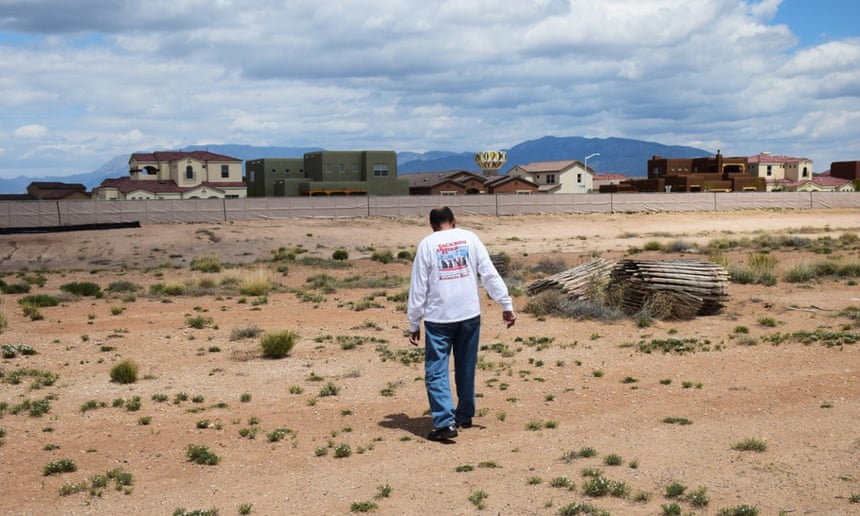
I've been thinking about Daniel Boone as well as Natty Bumppo, and how both of them react to the wanton killing of animals and birds (such as the heart-rending description of the Passenger Pigeon genocide in The Pioneers (1823) ), and First Peoples, by this news of horror coming out of New Mexico, that the British Barclay's Bank wishes to build a whole city of 100,000 in the desert outside of Albuquerque  that will suck up desperately needed water amid warnings of a future megadrought -- water that is already earmarked and fought over.  This is why I have no hope for the future because irrational and stupid greed always trumps anything merely factual and intelligent.

Where this is

Barclays expects to put this


Friday, April 24, 2015

Human Beings Have Always Waged War

Human beings have had armed lethal fighting between extensive groups since at least the Neolithic age.

After learning that anything like an organized and directed effort to collect the injured and dying from the battle field only came into existence during the U.S. Civil War in 1863 -- I wondered, why did it take this long?  War and battles are ancient human activities and it never occurred to anyone previously that maybe those making the wars owed this to those they sent out to be maimed and killed? And no one ever objected before?  Is this actually true?  Didn't the Roman armies have something organized in place for their men after the battle, at least if they won, and weren't in retreat or running away?

The Roman armies and the (very extended, contracted) terms of service provided those whose enlistment was up with land and some bounty, as well as whatever the soldier had managed to put together and not drink away, from booty and sales of captives into slavery. This was a way to reintegrate fighters back into civilian society -- am attempt to give him a stake in it.  But how many armies did this, even after states became the organizing entities?  This, despite knowing that just throwing these men into a civilian condition meant many turned to banditry and other nefarious, plundering, murderous activities to survive?

The NY Times today had a Disunion piece, "When the Soldiers Went Home," focused through individual Union soldiers, who write home with their long lists of anxieties about returning to civilian life after years of war.  Could they do it? So it's not as though people were too ignorant and unsophisticated to think of these things until WWII.


So why did it take us so long to think of either organizing care for the injured, dying and dead after battles?  Including organized hospitals?  Or to think of any assistance to bring soldiers back to civilian life?  We've been fighting wars for millennia, so surely someone had thought about these matters, even if they couldn't or wouldn't solve them?

The Battle of Rocroi (1643) -- Thirty Years War.  The French won the battle, the Spanish lost it.
There were problems that couldn't be overcome in earlier eras, such as burials had to take place immediately, on the field where the men fell, since there was no way to preserve them.  Embalming became suddenly the way of death in the U.S. Civil War, among the Union armies, so the bodies could be sent home via the railroad -- which, unlike wars, was a brand new thing that made it possible to send the bodies homes. Nore were there were states and professional, standing armies, until fairly late in our history. Often the military commander was also the ruler, and he paid the men himself, directly -- and throwing them off when unneeded was sound financial sense from his point of view.  During the Napoleonic wars, the armies facing off were so large, and, like with the U.S. Civil War, the fatalities and injured were so numerous, as in the Peninsular War, even when near hospitals and Church hospices, schools, monasteries, convents and so on, there was no room for all of them.

I've gotten very curious about the rituals of the wounded and killed in war, the treatment of the dead.  That the soldier was no longer of any interest to anyone once the war was over and he was sent home is a persistent theme in folk music and ballads.

Surely there are many out there who are better versed in these matters.  These are the historians of eras about which I know hardly anything, much less the names of the leading scholars who dig granularly into distinct periods and specialize in the warfare.  History -- she is so very large!


Tuesday, April 23, 2013

BBC: Making of Europe Unlocked by DNA

The story's written by Paul Rincon, on the BBC Science  News "page."


A study of remains from Central Europe suggests the foundations of the modern gene pool were laid down between 4,000 and 2,000 BC - in Neolithic times. ....
"What is intriguing is that the genetic markers of this first pan-European culture, which was clearly very successful, were then suddenly replaced around 4,500 years ago, and we don't know why. 
"Something major happened, and the hunt is now on to find out what that was."