LINES OF THE DAY

". . . But the past does not exist independently from the present. Indeed, the past is only past because there is a present, just as I can point to something over there only because I am here. But nothing is inherently over there or here. In that sense, the past has no content. The past -- or more accurately, pastness -- is a position. Thus, in no way can we identify the past as past." p. 15

". . . But we may want to keep in mind that deeds and words are not as distinguishable as often we presume. History does not belong only to its narrators, professional or amateur. While some of us debate what history is or was, others take it into their own hands." p. 153

Silencing the Past: Power and the Production of History (1995) by Michel-Rolph Trouillot

Showing posts with label Civil War. Show all posts

Friday, April 24, 2015

Human Beings Have Always Waged War

Human beings have had armed lethal fighting between extensive groups since at least the Neolithic age.

After learning that anything like an organized and directed effort to collect the injured and dying from the battle field only came into existence during the U.S. Civil War in 1863 -- I wondered, why did it take this long?  War and battles are ancient human activities and it never occurred to anyone previously that maybe those making the wars owed this to those they sent out to be maimed and killed? And no one ever objected before?  Is this actually true?  Didn't the Roman armies have something organized in place for their men after the battle, at least if they won, and weren't in retreat or running away?

The Roman armies and the (very extended, contracted) terms of service provided those whose enlistment was up with land and some bounty, as well as whatever the soldier had managed to put together and not drink away, from booty and sales of captives into slavery. This was a way to reintegrate fighters back into civilian society -- am attempt to give him a stake in it.  But how many armies did this, even after states became the organizing entities?  This, despite knowing that just throwing these men into a civilian condition meant many turned to banditry and other nefarious, plundering, murderous activities to survive?

The NY Times today had a Disunion piece, "When the Soldiers Went Home," focused through individual Union soldiers, who write home with their long lists of anxieties about returning to civilian life after years of war.  Could they do it? So it's not as though people were too ignorant and unsophisticated to think of these things until WWII.


So why did it take us so long to think of either organizing care for the injured, dying and dead after battles?  Including organized hospitals?  Or to think of any assistance to bring soldiers back to civilian life?  We've been fighting wars for millennia, so surely someone had thought about these matters, even if they couldn't or wouldn't solve them?

The Battle of Rocroi (1643) -- Thirty Years War.  The French won the battle, the Spanish lost it.
There were problems that couldn't be overcome in earlier eras, such as burials had to take place immediately, on the field where the men fell, since there was no way to preserve them.  Embalming became suddenly the way of death in the U.S. Civil War, among the Union armies, so the bodies could be sent home via the railroad -- which, unlike wars, was a brand new thing that made it possible to send the bodies homes. Nore were there were states and professional, standing armies, until fairly late in our history. Often the military commander was also the ruler, and he paid the men himself, directly -- and throwing them off when unneeded was sound financial sense from his point of view.  During the Napoleonic wars, the armies facing off were so large, and, like with the U.S. Civil War, the fatalities and injured were so numerous, as in the Peninsular War, even when near hospitals and Church hospices, schools, monasteries, convents and so on, there was no room for all of them.

I've gotten very curious about the rituals of the wounded and killed in war, the treatment of the dead.  That the soldier was no longer of any interest to anyone once the war was over and he was sent home is a persistent theme in folk music and ballads.

Surely there are many out there who are better versed in these matters.  These are the historians of eras about which I know hardly anything, much less the names of the leading scholars who dig granularly into distinct periods and specialize in the warfare.  History -- she is so very large!


Tuesday, July 15, 2014

Back in Time - Monday/Tuesday - El Paso/Marfa

Yesterday we changed time zones again, from MTS, where El Paso - Juarez is located, to CST, where is Marfa. We are in West Texas, on the trans-Pecos, still in the Chihuahua Desert, on a plateau of the Guadaloupe Mountains. At 4,688 above sea level this means we are also in the land where it takes forever for liquids to come to a boil, toast to toast, etc.

A boutique town now, once its population was as large 100,000, once as small as 100, now it's 2,316.


Ranching is one of the primary businesses here, and always has been. One of my


favorite films, Giant (1956), was shot all around here. We had dinner in the very pricey Hotel Paisano restaurant last night, which is where


Elizabeth Taylor, James Dean and Rock Hudson stayed for the entire shoot. It's a splendid building, as are many others, such as the court house. When I'm feeling better, I'll do some exploring.

We're in a lovely house, owned by a gay couple in Chicago. Two bedrooms, two baths -- one of them to die for, which opens out to a small, walled in patio-courtyard, a kitchen to die for, hallways, dining room, living room, with a detached garage and detached laundry house. The front yard is screened from the street and sun with local trees and other vegetation, all of which smell wonderful. Though still an arid climate, it's not as dry here as more northwest where they're undergoing the third year of no rain. We drove twice through rain getting here.

The town is a terrific place for a few days away from it all. We were able to make our usual breakfast this morning before the MP, i.e. Marfa People, came to take Himself away. I made sure he had the sunblock -- but both of us forgot he should have taken his hat. They're shooting outdoors this morning.

In News From Back In Time (yesterday), we achieved Tony Lamas for me at a Tony Lamas factory outlet on the way out of El Paso. It was the fourth place we tried. It was a neverbefore experience, for I haave never before gone shopping with two men. I never shops with anybody, with the exception at times of going with el V and forcing him to get something wear.

PG drove with us -- in fact did the driving -- to Marfa. He got a terrific hat in the same Tony Lamas store. El V restrained himself from getting yet another hat. However, in El Paso, he did buy a pair of fiiiiiiiiiine navy and white spectators, perfect for salsa dancing, and in Juárez, the ugliest, most impractical pair of cowboy boots -- a caricature of cowboy boots one might say. He says they're for one of his Las Vidas costumes; he did wear them at the Museo de la Revolutión performance. PG, as did E, also bought boots in Juárez.

These are stores that men enjoy being in, plus I was very quick, having good idea of what I wanted. I walked into Justin's, Luchese (which two brands I've never liked anyway), see these extravagantly tooled and colored boots for rodeo queens and country star singers, but not for me. The  huge store that sold southwestern Indian jewelry, hats, saddles, belts, serapes, blankets, and you name it.  The other Las Vidas members bought lots of other stuff  there. It was good quality too, but there were no boots, oddly.

We spied the Tony Lamas outlet as we were living the city limits, and PG swerved to the frontage road exit. I have tended to like Tony Lama. I asked for the ladies' section. At first I thought this was going to be another bust. But the lady of the store showed me how to look for what I was looking for, which is PLAIN. I found something in black with a black on black design right away and tried them on. They seemed OK, if a bit large, but then, these are the extreme needle toe design -- i.e. stirrup boots, along with that higher, slanted heel, which, when I find the right pair of these, are the most comfortable foot gear for my back condition.

Walking in such boots isn't the game, but it works for me. The lady of the store returned, and found me another pair a little smaller, very much like the other, only ten dollars more in price. I put on and off both pairs several times, walking around in them. Picked the second pair after much consideration. I also chose four pairs of boot sox.

I asked if the boots could be shipped home instead of me taking them. She brightened right up and said if they went out of state they count as an out of state sale, and thus Texas sales tax isn't charged. 17 dollars shipping UPS. She's not going to send them out until Wednesday, so I'll be sure to be home when they arrive. Seventeen dollars shipping, losing the sales tax, the packing headache, and the extra baggage fee -- I came out way ahead with that.


We celebrated my boots and P's hat at Rudy's. P spied it, and it was gooooooooooood.  Rudy's loves and respects meat and all the associated dishes that go with barbequed carne.  The music was fine. The women working there were smart, competent, bouncy and darned good looking too.  About then I realized I was experienced everything I really love about Texas all at the same time.

This was followed by a chilling experience much worse than returning as citizens to the U.S. from a border city.

On I-10, driving west to east, we were stopped by a check point of Border Patrol - Homeland Security.  The highway was shut down, and the truck weigh station, that still functions as a truck weigh station, is now a Border Patrol checkpoint.  They stop every damned car pretty much to 1) determine whether or not you are U.S. citizen, whether you are carrying contraband, which presumably means human beings as well as botanicals and who knows what else.  They look inside your car, under your car, your car is sniffed by big dogs.  This time we got waved through fairly quickly, and instead of handing over our passports asked if we were U.S. citizens, and didn't bother to listen to P's response.

But what if a passenger doesn't happen to have her passport with her?  How many people never leave their homes without their passports?  I happen to, because I don't drive, and this is my non-controversial I.D. for entering university buildings and libraries.  el V and PG had theirs because we're traveling.  But what if you LIVE in that county?  Would you have your passport?  Well, probably by now you do, because that's how the U.S. rolls now.  That checkpoint announced among many other things that Border Patrol has the right to check any and every vehicle and person within 100 miles of any border.  That's a police state if I ever heard of one.


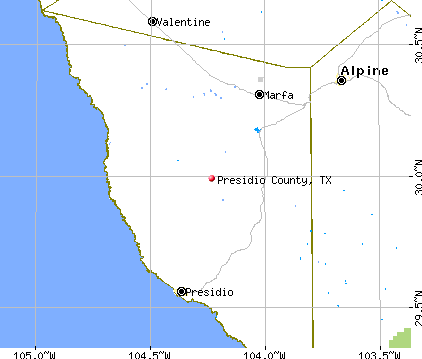
Presidio County

Presidio (derived from the latin presidium) - a fortress established in the southwestern United States by the Spanish in order to protect their missions and other holdings; "Tucson was first settled as a walled presidio" It also can mean a penal settlement or colony.

 Marfa is the county seat for Presidio County, which is located in the stretch of territory that was the disputed boundary of Texas, after the U.S. annexed all the New Mexico, California etc. territory from Mexico in the treaty that concluded the Mexican-American War (1846 1848).

 Texas insisted it all belonged to Texas. The slave power states, including all slavery all the time Texas as Mexico -- Mexico abolished slavery so Texas seceded from Mexico -- Texas a Republic, Texas as a state,  insisted it all should be slave territory. In the meantime the New Mexico Territory, which then included what is now Arizona, California, etc. were determined to be free soil. Thus the Great Debate that went on for four years, until the Great Compromise of 1850, brokered first by Henry Clay and concluded by Stephen Douglas.

Among other key issues somewhat settled by the years of the debate was the admission of the independent Republic of Texas as a state, in 1848, with its southwestern boundary defined partly along here, this stretch known during the Debate as the Trans-Pecos, which separates Texas from Arizona and New Mexico.

For this the United States paid Texas 10 million dollars, or rather, we paid off Texas's international debt piled up while a Republic, which it was unable to pay back. Texas was, of course admitted as a slave state, and voted with the slave power in all things. Thus free soil New Mexico and Arizona . further paid by their statehood being delayed until 1912, in order to keep the slave power states, who all seceded in the end anyway, placated.


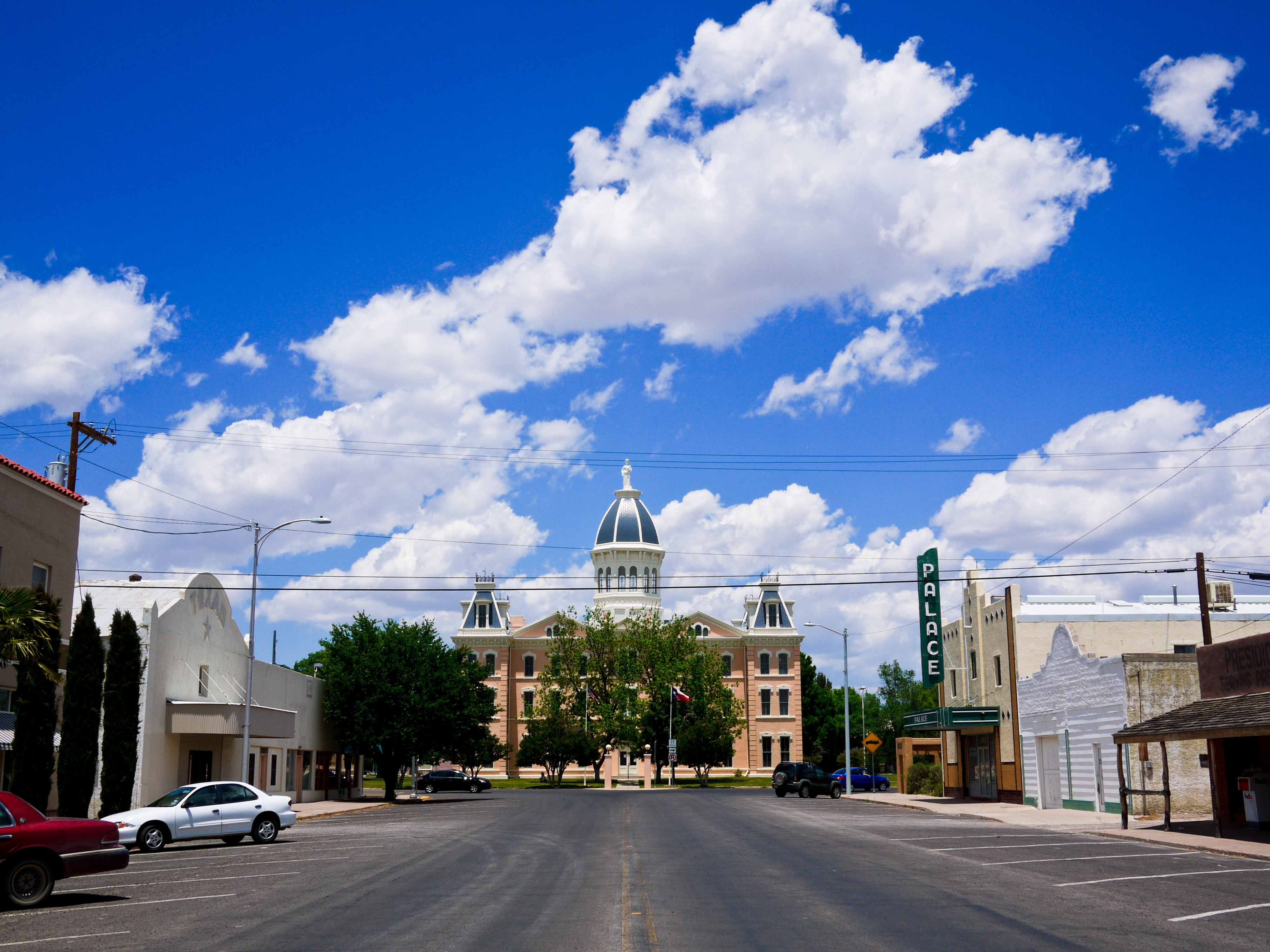
Some of this history is referred to on plaques posted on the Presidio County Courthouse (built 1886).

Marfa Bank
Ultimately Marfa's continued existence is due to being Presidio's county seat. The business of the county's civil and criminal justice is done here; all the decreed administrative apparatus, agencies and so on are here, along with registration for titles for any and all property.  Very much of all of it is owned by the same people that owned the county before it was in the U.S. As this whole region is about ranching and mining, property titles have always been, as they still are, big business. Law offices are ubiquitous, just as they were around the County Courthouse in Kent County's seat, Chestertown -- a big reason that Chestertown survived as well. C'town isn't that much larger than Marfa, but it does have Washington College. Marfa's got tourism, close as it is to the historic Fort Davis and Big Bend National Park, and it gets movie business on occasion: besides the aforementioned Giant, others have had extensive location shooting here such as No Country for Old Men and There Will Be Blood. 

I am very excited to be spending some days here, in the territory that was fought over with so much oratory in the House, for so many years, the object of Henry Clay the Great Debator's last gunfight.

Friday, October 4, 2013

Government Shut Down: Protesters Rally Outside City Hall Beaufort, SC

In the heart of Secessionlandia.  I mean, really.  As a local historian of Beaufort Country wrote in his book, South Carolina, lead by the South Carolina coastal elite planters had effectively seceded by 1850.

This should tell the frackin' House something.

But then, back in the day, it was only the very small number of slave power elite, led by the South Carolinian elite, centered in this region, who pushed through Secession in 1861.

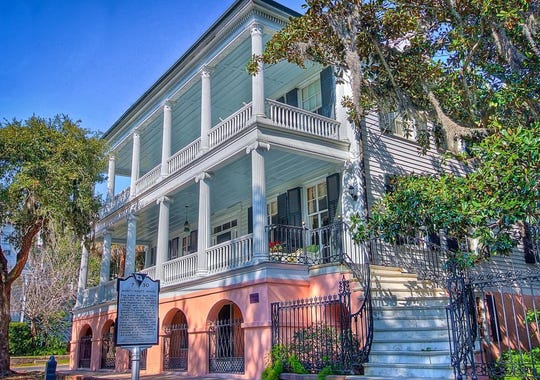
Maxcy - Rhett House, a/k/a Secssion House, Beaufort South Carolina


We were there this spring.  I believe that there are so many government employees in the region, as with Virginia and Texas, just starting with the military, that a protest could take place there.

The states with congressional reps in the House most agin' Big Gummit, are the ones invariably with the most federal employment, spending and earnings, which include those Colorado dorks who refused to vote aid to Hurricane Sandy victims back last year, but demand federal money for this summer's flooding in Colorado.

Sunday, September 15, 2013

The Voyage of the Frolic: New England Merchants and the Opium Trade

The justly famous Baltimore Clippers were purposed originally as privateers in the War of Independence and the War of 1812.


After the Treaty of Ghent, the Clipper design was re-rigged, so to speak, and many were constructed specifically for the African slave trade, which was, yes illegal.

In fact, the Act of 1794 had made it illegal for Americans to build ships for the international waters' slave trade. In the Act of 1794:
"Congress prohibited the use of any U.S. port or shipyard for the purpose of fitting out or building any ship to be used for the introduction of slaves. The law also prohibited ships sailing from U.S. ports from trafficking in foreign countries. Ships sailing from the United States to Africa, even if of foreign registry, were required to "give bond with sufficient sureties, to the treasurer of the United States, that none of the natives of Africa, or any other foreign country or place, shall be taken on board... to be transported, or sold as slaves in any other foreign place, within nine months thereafter." Penalties under the law included fines ranging from $2,000 for outfitting a ship to $200 for an individual working on such a vessel. The act provided that the ships could be confiscated, and half of all fines given to any informants, thus providing an incentive for ship captains and mariners to monitor the activities of anyone they suspected of being involved in the illegal slave trade."
The most infamous of these Baltimore Clippers for the international slave trade was perhaps The Venus. Under false Portuguese registry, papers, flag and false name, la Duqueza de Braganza,* at the end of November, 1838 she left Lagos, Nigeria with 1,150 slaves chained in that terrible spoon fashion below her shallow decks -- meaning you could not even shift to your other side, unless the entire chain moved with you.  The Venus arrived in Havana, January 7, 1839 with 800 + of her 'cargo' still alive.  Many more died quickly thereafter. Further:
"In 1841, the role of the Venus in the illegal transport of slaves from West Africa to Cuba became the focus of a report by President Martin Van Buren to the United States House of Representatives." p.43, Layton, The Voyage of the Frolic. **
A variety of ruses were quite openly employed to pretend these ships were not what they are, were not owned by whom they were owned, were not going to where they were going (think Prohibition and the transport of liquor into the U.S. from Europe and Canada).  After the Brits abolished the African slave trade in 1807 it got more complicated, and even more so when Britain abolished slavery in the West Indies in the 1830's.  But a large number of respected merchant houses, particularly in Boston, continued to finance the ever-evolving Clipper ships' designs for the incredibly lucrative slave trade from Africa to Havana to Brazil.

This was equally true for the opium trade, which was also illegal for Americans, and equally ignored by the great merchant houses who gained tremendous wealth in the China trade, by shipping opium from Turkey and India to China in exchange for those Chinese goods such as silk and porcelain so valued by Victorians in Europe and America.

It is on the American opium trade to China that archeologist Thomas N. Layton focuses in The Voyage of the Frolic: New England Merchants and the Opium Trade (1997) published by Stanford University Press. The opium ship Frolic's last voyage was from Hong Kong to Gold Rush San Francisco in 1850. Possessed of a faulty chart, her experienced captain's vision confused by low mist that concealed reef and rocks, she wrecked off the Mendocino coast. Through the history of this ship, the Frolic, Layton retells the era of the Baltimore Clippers all the way through to their end in that short period of the Tall Ship Clipper 1850 - 1858, when steam and the U.S. Civil War put a decisive end to the Baltimore Clipper ship yards.

Along the way we learn the history of the U.S. involvement in the African slave trade to Cuba and South America and the opium trade to China.  He links the two trades, both illegal, both incredibly profitable, to the accumulation of northern capital that helped drive further technological, commercial and financial developments of the second half of the nation's nineteenth century.

The Frolic's Captain Faucon, was a second generation Haitian, the Fells Point shipyard where she was built was established by a refugee from the San Domingue Revolution, and Frederick Douglass worked there, from whence, employing the papers of a free black seaman, he shipped north to escape his enslavement. 1850 was the year of the Great Debate over the admission of California into the Union, whether as free soil (which the Americans already there voted to be free soil) or a slave state (some fire breathing slave power plantation owners had moved themselves and their slaves to California in attempts to outvote the free soilers. They failed.  Moreover when they brought their slaves to the gold fields they were beaten by the free soiler miners who would brook no competition in their drive for gold from enslaved labor.) Good friends from pre-Gold Rush, sparsely populated California tallow-and-hide merchant ship days, Captain Faucon and Captain Richard Dana (Three Years Before the Mast) both captained ships for the Union naval blockade of the CSA coasts. So here, in one slim, easy reading, deeply researched book, is everything that will make the Civil War in another ten years.***

----------------------
Typing "the Venus Duqueza" into google provides a google book page of  Parliamentary Papers, House of Commons and Command, Volume 49 that describes the illegalities of the Venus in detail.

** This information becomes more pertinent in light of the trial of the Amistad escapees case of 1841 that now Representative, once President, John Quincy Adams argued --  and that Van Buren (1782 - 1862) grew up in a New York state family that owned six slaves themselves. This is one of those turning points in which it becomes more difficult for USians to be neutral about slavery, hardening opinion for or against.

*** To clarify what was asked elsewhere:  These matters are not in The Voyage of the Frolic per se, but I know of these matters taking place at the same time because I have been studying all this for some years. As well, yes, as anyone who even briefly looks into the Baltimore Clippers knows, Howard I Chapelle is the classic researcher, builder and writer in the field. Everyone who writes anything about clippers acknowledges Chapelle, including Layton.

Wednesday, April 24, 2013

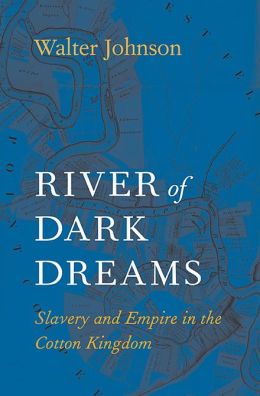
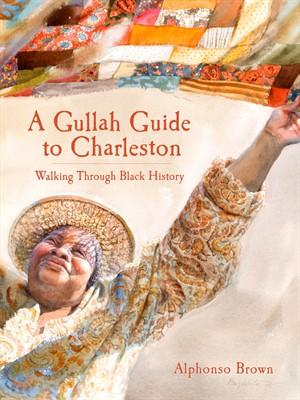
*River of Dark Dreams* *Freedom National* *A Gullah Guide to Charleston*

Arrived via the lovely UPS Person yesterday:

I began reading immediately River of Dark Dreams: Empire in the Cotton Kingdom by Walter Johnson (2013), Harvard University Press. This is the  follow-up to Johnson's essential Soul By Soul: Life Inside the Antebellum Slave Market (1999) Harvard University Press. The focus of River is not on slavery or the slave trade, but on ramifications of King Cotton's reach in the Mississippi Valley, from the technology of steam to the Slave Power's fantasies of global imperialism.

The principal theme of the book is the determination of the powers who ruled the Cotton Kingdom to expand and transform the boundaries of the spaces, geographical, psychological and social, in which all the people within the kingdom of King Cotton were confined. The imagery runs constantly between confinement vs. expansion. When it came to the slaves, one assumes their spatial imagery fantasies ran between confinement and escape.

So far, if I'm understanding Johnson's thesis properly, I'm not sure I entirely buy it.

According to his spatial organization principle, the underlying reason for the Civil War wasn't any of the issues or even the conglomeration of issues we speak of in the lead-up to the Civil War after the Great Debate around California's entering the US as a free state.  These would be the expansion of the Fugitive Slave Act, the roll back of the 1820 Missouri Compromise, the Kansas shooting war, the Dred Scott decision, the caning of Charles Sumner, the righteous urge to abolition, the anger at the Slave Power's determination to expand slavery throughout the U.S. These issues and events sent the Northern abolitionists, particularly those of Boston and Massachusetts, to explore seceeding from the South.  (Recall, that during the War of 1812, New England essentially had seceded from the rest of the country.)

I am far from alone in seeing clearly that the Slave Power was determined to expand outside of the lands won for them by Andrew Jackson, to push slavery and their domination upon every state and territory in the Union. But Johnson sees the goad to do this as not connected to events and devisions within the United States or even North America. That came in retrospect, after Secession and the War took place.  The Slave Power's vision was global, not local.  CSA dreamed a global slave imperium.

In other words, it seems that this historian is, in some ways, in this particular work, dealing in counterfactuals -- what did not happen -- more than in what did happen.

Whether or not Johnson is correct, in the end the military war was fought here, not in the Pacific, not in South America. It was American blood (immigrants' blood in rivers, in the Union forces) that was shed in this  -- starting in Kansas -- not in another part of the world, and fought almost entirely within the geographical "container of the CSA" itself. So in any case, whatever the Slave Power's ultimate goal might have been, it was burned to the ground within its cradle, never to break out, whether north or west, much less to Hawaii, Havana and Honduras.


Which, in history's chronology of these matters brings us to James Oakes' Freedom National: The Destruction of Slavery in the United States 1861-1865 (2013) W.W. Norton & Company.  This tells the story of shifts in emancipation and re-enslavement during the years of the Civil War.  As slaves left the plantations in increasing numbers during the course of the War, free people of color were increasingly forced into taking their place.  Of course, there were not anywhere near the numbers of free people of color to replace the 3,950,528 slaves in place at the outbreak of the Civil War. This book also tells the story of how the Union army attempted to deal with the increasing numbers of contraband negroes, and after the Emancipation Proclamation, inform the slaves of their freedom, as well as other matters. The through theme of this book is that Lincoln, from the moment of his inauguration, began to explore "every political and military means at his disposal to wipe out slavery forever."

You cannot remember the title of this book. Perhaps within Freedom National's pages the reason for this seemingly unfortunate title will be revealed.


In preparation for the upcoming research road trip from the History Press is this conveniently small A Gullah Guide to Charleston: Walking Through Black History (2008), by Alphonso Brown.  Mr Brown is the owner and operator of Gullah Tours, Inc.  We hope to take advantage of his expertise in these matters.


Wednesday, April 10, 2013

*Rise and Fall of the Slave Power in America* by Henry Wilson

I have stumbled into the multi-volume history of The Rise and Fall of the Slave Power in America, by Henry Wilson, published in 1874 - 1875 (author's Introduction 1873).  The dates are important because the work was compiled and written during Reconstruction, and the author was a first-hand witness and participant to much of what he covers.

Contemporary scholarship does challenge some of what he writes of, such as his chapters on the Underground Railroad, particularly in terms of numbers of slaves making their way toward the North Star, and the stations. So it's unfortunate this work was written before Henry Adams, Theodore Roosevelt and others began teaching the methods of history as a discipline (which at least Henry Adams imbibed during his long stays in Europe from practioners there), so there are no sources cited, no footnotes.  But the Abolitionist passion breathes out of every sentence, nor is there any reason to doubt the accounts he provides of individual white people who did help escaping slaves in all the variety of ways open to them.  For one thing, as so much of this action took place across what was then still called the Northern Reserve -- western New York and northern Ohio -- there are many local archives that contain the newspapers, memoirs and other documentation for such events at Case University and other institutions.

Henry Wilson was elected Vice President of the U.S. on President Ulysses S. Grant's ticket.  He served as VP until he died, in harness.


Wilson is a fascinating figure, a life-long Abolitionist from Massachusetts, born in New Hampshire.  He was one of the Radical Abolitionists along with the more famous Thaddeus Stevens.  Like Stevens the winds of scandal blew about Wilson, though of different sorts of scandal than Stevens's.  Much information on Wilson can be found here.

It is good to remember the Aboltiionists, particularly when the Lost Causers who cling to the revisionism of the Civil War insist the war wasn't about slavery, and that the North, as racist as the South, didn't care about slavery.  My response to this supposedly killing argument is, "Remember the Abolitionists."  And nothing created Abolitionists out of northern racists faster than the Fugitive Slave Act.  Wilson documents this consequence in granular detail.

There is nothing like reading the actual words of the people who were participants and witnesses to the history they compile. And, in fact, not all northerners were racists, and nor were most of the Abolitionists. Wilson, for instance, during the war, wrote devastating articles about northern white racism, among other things detailing for publication his argument that members of the Union black regiments were treated as badly as prisoners of war, arguing for equal pay for equal rank for their military service. But then, like Stevens, he was dismissed as a Radical, an outlier, a danger to the Union and the Nation -- as was done in Speilberg's Lincoln with Stevens.

Fortunately, perhaps, Wilson died, before the Corrupt Bargain of 1876 that traded the end of Reconstruction for Hayes's election.

Wednesday, April 18, 2012

Ulysses S. Grant: Learning President Lincoln Had Been Assassinated

"It was the darkest day of my life," Grant told newsman John Russell Young.  "I did not know what it meant.  Her was the Rebellion put down in the field, and starting up in the gutters.  We had fought it as a war, now we had to fight it as assassination."

Recall, there was an attempt on Grant's life as well that night, but the Grants' railroad car door when stopped at Havre de Grace (where I've been -- Maryland), was locked, preventing the assassin getting to Grant.  The assassin  wrote an unsigned note later to Grant, thanking God that he'd been prevented from attempting to kill him. (Julia Dent Grant, The Personal Memoirs of Julia Dent Grant 156-57, John Y Simon, ed. (New York; G.P. Putnam's Sons, 1975).

The Rebellion continues to this day, by many, many other means, but particularly via those hatched in the gutters of mind and media.

Saturday, February 18, 2012

Remedial Course: How Free Market Capitalism Works

To refresh our memories as to exactly how free markets operate on the level playing field of capitalism and government staying out of these matters, let us enter the Way Back Machine to the 18th century. We shall land in the era of what is popularly known in the history text books as the French and Indian War in the New World, and the Seven Years War in Europe. This is roughly 1754–1763, though the struggle of France and Britain to control North America and various parts of the Caribbean, India, etc. was nearly a century-long conflict all together. We are in 1762, in British occupied Havana. Several times during these wars the British also occupied Martinique and other of the French Antilles.


The British re-made the Cuban economy during the very short time they ran things, turning it into a highly competitive slave plantation agricultural mono-economy of sugar. Martinique, Guadeloupe, San Domingue were already sugar plantation powerhouse suppliers -- indeed, San Domingue was the greatest wealth producer in the New World, funding the excesses of the French royals and nobles until their own revolution.

Now to the government staying O-U-T of the free market. The Jamaican and other British sugar plantation power elites of the Caribbean lobbied with every resource they had the members of both houses of Parliament to force Britain to return these islands to Spain and France. These islands' sugar production was now also being shipped to England, creating such a supply that the price plummeted. This was equally true for rum of course, and on a somewhat smaller scale, for coffee and tobacco. Their quality tended to be higher as well, and this was NOT FAIR to the original English sugar barons of the Caribbean. This competition was eating their fine wines, fine homes, fine paintings, fine horses, fine finer finest everything because the competition made their product so cheap they were no longer achieving the magnificent fortunes they were accustomed to whipping out of the lives of endless coerced labor from Africa to their mostly absentee landlorism-administered Caribbean plantations.

In the Treaty of Paris Cuba was given back to Spain (in exchange for the Floridas -- which Andrew Jackson would take in turn in approximately another four decades), and so were the French Antilles returned to France in exchange for its North American (New France) territories.

That's how government makes an even playing field for the free market to do its business fair and square for the ultimate benefit of the consumer.

This was laid out with such clarity of detail at the New York Historical Society's exhibition, "Revolution! The Atlantic World Reborn." We spent most of my birthday afternoon in it, breathless, taking notes like mad, since unlike most museum now, the NYHS still doesn't allow non-flash, digital photography. This exhibit is one of the results we're starting to see of considering the American, the French and the Haitian revolutions as sections of a single wave of historical movement instead of them being considered as separate events with little if anything in common, other than the desire for "liberty" ignited in the "citizens" in France, in an imitation of the real thing that was the "revolution' of the British middle North American Atlantic colonies.

This exhibit has many surprising items that perhaps we might not consider together, at first thought. The second floor galleries of the exhibit proper are many and dense with information and objects. However, there are deeply related off-shoots on the main floor, for instance, including the original written document of the 13th Amendment signed by Abraham Lincoln -- allowing for the final, long-resisted step in the consequences of the San Domingue revolution, recognition of the nation of Haiti by the United States. I admit to feeling a great deal, viewing this actual document on loan from the LOC.

Upstairs the second gallery, "Where the Empires Ended," begins with the various trades going on between the North Americans, particularly those from Rhode Island, with the focus on Paramaribo, Suriname and Haiti, in the late 17th and 18th century. We viewed "Sea Captains Carousing in Suriname," the first genre painting made by a North American, John Greenwood (1727 - 1792). You can take a look at it here.

It was as though we'd gone on vacation, threading our way through these dimly lit galleries, where the real light was focused only on these exceedingly well-chosen objects dramatizing the connections between the slave trade, slavery and trade generally in the New World, colonization and then revolution. Among other things on the main floor were slave badges, that were worn by southern slaves, dating from the 1820's to the latest dated 1860. That says everything about the connections among all these things. We did not have a full revolution here until the Civil War. That was the revolution that changed the way things were done. (Up to a point, at least, and not enough then either, as Slavery By Another Name made so clear.) We felt we'd gone someplace else.

Tired, but exhilarated, we stopped at the NYHS's very nice restaurant and bar (no television! no sports), for wine and appetizers before meeting K and C and P and K for dinner at La Paella. Our barista was very good looking, and an actor, of course, a young fellow born and bred in Yonkers. He asked to be put on da List. He had an audition for another television commercial yesterday -- he's been getting one or two commercials a month lately, so he's a happy man as well as personable, friendly and a very good barista.

It was pouring rain most of the day, but it felt soft -- like a day in the first week of April, thus the silvery rain light of afternoon, the hazy street light of after dark, and the shapes of bare branches of Central Park's trees made it all heart-breakingly lovely.

It was a lovely birthday, one that took us both far away from the classroom. Now, tonight, we all head uptown for salsa in da Bronx.

Tuesday, December 6, 2011

The Atlantic Monthly's Civil War

I have just now returned from a expedition in the rain with the Special Commemorative Civil War Issue of The Atlantic Monthly. They'd just been racked at the local corner newstand store, and were at the very top. I had to ask one of the proprietors to get a copy down for me. When they realized what this is, they re-racked them at eye height. First generation immigrants from Uttar Predesh, asked me about "What is this Civil War?" They are all too familiar with civil wars, of course. But they don't know this one. A fairly long history lesson ensued, since at this hour the store was still empty, as the Lotto buying customers were still some minutes from getting off work and stopping by hoping for a little luck.

This is the first magazine I've bought in years.  It's not only, or solely because because our President has an article in this Civil War Commemorative Issue, though I'm very curious to see what he has written about the ACW.  He may be the first U.S. President to write of this event in -- how long? -- certainly as a sitting POTUS. But there's also a story by Louisia May Alcott included, set in one of the D.C. military hospitals. The offerings out the magazine's archives are priceless.

I've spent a fair amount of time in the Harper's Weekly archives, which during these years published the same bold face names as we see taken out of the Atlantic's archives, but I've not dug much into the Atlantic's.
I'll be sharing this issue with several people. I hope they all return it, so it can be borrowed again.

Saturday, October 29, 2011

We Have It All

Rain, sleet, snow, thunder, wind -- and police brutality:  "Emperors! Beware, Beware, the Praetorian Guard!"

Fortunately we are prepared for this as I spent yesterday scurrying about getting in supplies.  Excellent cold weather comfort food dinner last night, pasta tonight.

We have plenty of work.

Yesterday also brought me American Emperor: Aaron Burr's Challenge to Jefferson, by the handsome, distinguished and o so brilliant and entertaining David O. Stewart -- who will be reading here next month

and

The Children of the Sky by Vernor Vinge, who surely is the equal, if different from, Mr. Stewart.  This is his second Tines world novel, the first, A Fire Upon the Deep, was published in 1993.  Having zipped through the first 100 pages last night before bed, this one may be even more mind provoking than the first.  Built upon the strong foundations of the first Tines' world book, Children is equally strong, but is revealing itself to possess an elegance perhaps the first one did not have, yet the elegance is dependent upon what was made in the first.   Recall, Mr. Vinge, is a retired math and computer science professor, as well as Science Fiction writer.  He's much credited for the concept of the "singularity" -- quoting wiki:

"His 1993 essay "The Coming Technological Singularity", in which he argues that the creation of superhuman artificial intelligence will mark the point at which "the human era will be ended," such that no current models of reality are sufficient to predict beyond it.

Within thirty years, we will have the technological means to create superhuman intelligence. Shortly after, the human era will be ended."

In the meantime this week I've been devoting myself to Charles B . Dew's Apostles of Disunion: Southern Secession and the Causes of the Civil War (2001), in order to get absolutely straight the process of secession -- at least as far as one can get straight such a white hot emotional fury and terror at the curtailing expansion of their wealth and national political domination on the part of the slaveholding class's ruling elite.

Laundry, also.  I am doing it.  le sigh.

Tuesday, October 25, 2011

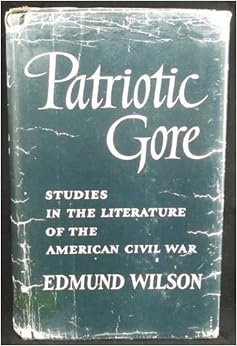
Patriotic Gore: Studies in the Literature of the American Civil War (1962)


Edmund Wilson was a significant literary and social critic in his lifetime -- not to mention a passionate, rejected, suitor of Edna St. Vincent Millay --  but more lately his work has gone into eclipse. As an intellectual who was based (1895 - 1972) in the rise and full flowering of the Modern, his thinking was deeply informed by Marx and Freud, who have also been in eclipse for some decades. Perhaps more to the point right now, in this zenith era of nerd culture, Wilson is most famous for characterizing J.R.R. Tolkien as "juvenile trash" and H.P. Lovecraft as "hackwork."

Despite committing lèse-majesté upon genre fiction,   Wilson did have a keen mind for the excellent in American letters. Yet, re-reading Patriotic Gore: Studies in the Literature of the American Civil War (1962) for the first time since the early 1980's, it's showing itself to be almost an oddity of writing and of literary criticism, for reasons that did not register with me upon that earlier reading.

This oddness begins with the Introduction, in which he flatly states that slavery was merely a demagogic strategy employed by the
Union and the Confederacy both to whip up warring partisanship. However, as he brings us the body of the work, he begins with Harriet Beecher Stowe, and from her procedes to give us writers, who, on both sides, are saying that slavery is the reason for the war.

Then there is his discussion of the figures of the era and their output about the war, which seems to be more about him and his thinking than about them and their thinking. 

And finally, he doesn't include the two writers who really were in the war in its most terrible phase, Louisa May Alcott and Walt Whitman, who cared for the dead, the dying, the maimed and the wounded who are war's great production. He doesn't include any writer that isn't worth looking at, but that he leaves out these two, seems peculiar.

Thursday, September 8, 2011

The Ulysses S. Grant Memorial Sculpture on the Washington Mall

A fairly decent photography guide to this brilliant Civil War memorial sculpture can be found here.  The expressions on the faces of the men, and of the horses, capture the exertion and agony of battle in a succinct manner one might not expect could be done in bronze.

Here's the wiki that describes what we see.

However, this blogger, Aporetic, in his entry, "The Unseen Spectacular," provides a personal reaction to the sculpture. with both the photographs and the description.  It is highly recommended.

Thursday, August 11, 2011

Cultural Mis-Appropriation - Mainstream, *The Help*, Novel and Film -- And Gettysburg

SF/F genre writers and their fanfic writers have been having this discussion for quite some time. With The Help opening tonight here in NYC, this discussion has hit the mainstream. It is around, as seems to happen most often, a white woman writer taking black experience, particularly black women's experience, and making it about her and the white sensibility about what is the real lives of black women -- and thereby also reaping career and profit. Right at the moment on the NYC largest public radio station, the biggest broadcaster of NPR and PRI programming, WNYC, on the Brian Lehrer show this discussion is happening. It might be worth our time to tune it in over the innertubz, particularly the white women who call in about the novel on which The Help is based. They haven't had the advantage of Ally 100 or Mis-appropriation 100, or even Magic Negro 100. They couldn't put down this novel about black maids in Civil Rights era in Mississippi as told by a white woman. "I just loved it gave me a window into a world I never thought about, and how victimized they (meaning the white ladies who employed those maids) were in those days, both white and black." Earlier this week Nelson George wrote about these same issues in the NY Times around this novel and the film, in his article , "Black-and-White Struggle With a Rosy Glow," here.
This is an interesting bookend to that of Ta-Nehisi Coates' meditation on his visit this week to the Gettysburg battlefield, and the history of his thoughts about this battle specifically and the Civil War generally, his thoughts as an African American, whose legacy of these things he puts into this equation:
(White Folks)[Kidnapped+Whip+Rape(Lynch+March+Beatings)]=You


Sunday, July 31, 2011

Family Keeps Secrets About Robert E. Lee?

Today's New York Times excellent Disunion column is about Robert E. Lee "The War Comes Home for Lee," and what happens there when Lee breaks his oath of allegience to the United States and defects to the confederacy.

However, viewed according to the dogma of the neverending inglorious lost causers, this is the history of Arlington:

Arlington = Paradise Lost; Lee = God, treacherously deposed ....

There's an additional fascinating and informative column (unusual for that site that seems to have an ongoing contest among its hacks to throw up the most dum and dummer stuff) running today on salondotcom by a writer who usually gets things wrong, but not today (which show what can be done if a writer does some writerly work instead of hacking hairballs), "The Confederate We Still Don't Know."

All of that column is filled with vital information, but it was in a comment by a reader that the most interesting bit pops up, something I should have realized all along, when it comes to endless litney of the inglorious lost causers and how they didn't really lose, were only dishonorably betrayed by you name it.  This is how it started, and why it was perpetuated.

The comment was written by James Levy and tells you what you need to know, and indeed did know, if you / me (and I hadn't, I am ashamed to say) had thought about it for a second:
But Lee granted many interviews after the war and commented on many things, just not on the record in his own words. He was part of the whispering campaign that followed the war, where everybody and his brother Down South tried to fob off the blame for defeat on someone else. There is a huge historiographical literature on how Lee's staff, Hood, McClaws, Jeff Davis, Longstreet (who became a Republican and was vilified by his former mates), Porter Alexander (more honestly than most), Jubal Early et al., waged an incessant battle to excuse their mistakes, glorify the "Lost Cause", and explain away defeat. The idea that Lee was just some private citizen after April 1865 is not credible.

Friday, June 24, 2011

Andrew Stanton Interviewed About Next Summer's *John Carter of Mars* Film

The interview is in the L.A. Times, 6/16/11 -- but I just saw it now, due to the very long lapses between checking on the progress of this version of an 'old Confederate' soldier's adventures among the people of color on Barsoom, the Planet Red of War.


The most intriguing bit for historical adventure fiction lovers is this:

" ... I know this book was so much the source material, directly or indirectly, for so many things, I got intrigued by the idea of treating it as if it really was the source material in the historical sense of the term. What if this really happened? That kind of opened my eyes. I suddenly had a fresh way to see it. And it goes back, in a way, to the way we take things in when [we were young readers]. When I was a kid I really wanted to imagine it as if it was a real sequence of events that took place on the surface of Mars in another century."
Followed by:

"Yeah, I looked at things like “Apocaplyto” and “Rome” and even things like “Shogun” and “Lawrence of Arabia,” things that as a viewer I could accept as having a level of historical research. They give me a sense of what it would be like in that land and in that age. So then you ask, “Well, what if we just did our Martian research really, really well and treated it as a period film. There are so many times and places in history in our world that I just don’t know anything about, and when I learn about them they’re always fascinating. I don’t need a predisposed interest in them if they are presented well. So we said, “We’ll treat it this way, we won’t treat it like some fantasy being fulfilled by a fan.” We tried to make it feel like we’re going with the story of what really happened. This is how it was, this is how those cultures really existed."
The movie is scheduled to be released a year from now. So, they're not taking it to Comic-Con this summer, which 'fans' are both angered by and feel bodes that the movie is already a deeply troubled dud.

Thursday, June 23, 2011

Marx: Why It Pays to Work Workers to Death

Both works. by Marx, and Cairnes (mentioned below), provide an excellent description of the difference between a society that includes slavery and a slave society that is socially and economically organized by institutionalized slavery -- other than San Domigue, which we all know worked out so well for the slaveholders. Further, that the U.S. slaveholding south is almost the only society historically that was organized economically and socially entirely around slavery. This explains why it took war on San Domingue and in the U.S. to achieve abolition -- which happened nowhere else. That explains why, when the CSA tried to roll as a separate nation, it crashed and burned so completely it took another century to crawl back up -- even though it had instituted a neo slavery almost immediately.

Marx, Capital, v.1:

The slave-owner buys his labourer as he buys his horse. If he loses his slave, he loses capital that can only be restored by new outlay in the slave-mart.

But “the rice-grounds of Georgia, or the swamps of the Mississippi may be fatally injurious to the human constitution; but the waste of human life which the cultivation of these districts necessitates, is not so great that it cannot be repaired from the teeming preserves of Virginia and Kentucky. Considerations of economy, moreover, which, under a natural system, afford some security for humane treatment by identifying the master’s interest with the slave’s preservation, when once trading in slaves is practiced, become reasons for racking to the uttermost the toil of the slave; for, when his place can at once be supplied from foreign preserves, the duration of his life becomes a matter of less moment than its productiveness while it lasts. It is accordingly a maxim of slave management, in slave-importing countries, that the most effective economy is that which takes out of the human chattel in the shortest space of time the utmost amount of exertion it is capable of putting forth. It is in tropical culture, where annual profits often equal the whole capital of plantations, that negro life is most recklessly sacrificed. It is the agriculture of the West Indies, which has been for centuries prolific of fabulous wealth, that has engulfed millions of the African race. It is in Cuba, at this day, whose revenues are reckoned by millions, and whose planters are princes, that we see in the servile class, the coarsest fare, the most exhausting and unremitting toil, and even the absolute destruction of a portion of its numbers every year.”74

/Mutato nomine de te fabula narratur/ [It is of you that the story is told – Horace]. For slave-trade read labour-market, for Kentucky and Virginia, Ireland and the agricultural districts of England, Scotland, and Wales, for Africa, Germany. We heard how over-work thinned the ranks of the bakers in London. Nevertheless, the London labour-market is always over-stocked with German and other candidates for death in the bakeries. Pottery, as we saw, is one of the shortest-lived industries. Is there any want therefore of potters? Josiah Wedgwood, the inventor of modern pottery, himself originally a common workman, said in 1785 before the House of Commons that the whole trade employed from 15,000 to 20,000 people.75 In the year 1861 the population alone of the town centres of this industry in Great Britain numbered 101,302.

“The cotton trade has existed for ninety years.... It has existed for three generations of the English race, and I believe I may safely say that during that period it has destroyed nine generations of factory operatives.” 76

No doubt in certain epochs of feverish activity the labour-market shows significant gaps. In 1834, /e.g/. But then the manufacturers proposed to the Poor Law Commissioners that they should send the “surplus-population” of the agricultural districts to the north, with the explanation “that the manufacturers would absorb and use it up.” 77

Agents were appointed with the consent of the Poor Law Commissioners. ... An office was set up in Manchester, to which lists were sent of those workpeople in the agricultural districts wanting employment, and their names were registered in books. The manufacturers attended at these offices, and selected such persons as they chose; when they had selected such persons as their ‘wants required’, they gave instructions to have them forwarded to Manchester, and they were sent, ticketed like bales of goods, by canals, or with carriers, others tramping on the road, and many of them were found on the way lost and half-starved. This system had grown up unto a regular trade. This House will hardly believe it, but I tell them, that this traffic in human flesh was as well kept up, they were in effect as regularly sold to these [Manchester] manufacturers as slaves are sold to the cotton-grower in the United States.... In 1860, ‘the cotton trade was at its zenith.’ ... The manufacturers again found that they were short of hands.... They applied to the ‘flesh agents, as they are called. Those agents sent to the southern downs of England, to the pastures of Dorsetshire, to the glades of Devonshire, to the people tending kine in Wiltshire, but they sought in vain. The surplus-population was ‘absorbed.’”
___________________________________________________

74 Cairnes, “The Slave Power,” pp. 110. 111.
75 John Ward: “The Borough of Stoke-upon-Trent,” London, 1843, p. 42.
76 Ferrand’s Speech in the House of Commons, 27th April, 1863
77 Those were the very words used by the cotton manufacturers.” l.c.

-------------------------------------------------

For anyone who wants to read all these matters that Marx deals with in his Civil War dispatches and in Capital -- or if one doesn't trust Marx because, well, he's Marx! -- a more easily read work is by J.E. Cairnes M.A., Professor of Jurisprudence and Political Economy, Queen's College, Galway; and Late Whately Professor of Political Ecnomy at the University of Dublin.  Cairnes, who most certainly is not Marx, is, in fact, a writer Marx quotes, including above. In this work Cairnes tries to explain to the English press in particular, how and why they have the American Civil War all wrong:

The Slave Power - Its - Character, Career, And Probable Designs - Being - An Attempt to Explain the Real Issues Involved in the American Contest (1862).  Full text is available for viewing in google books and for pdf download.

Sunday, June 19, 2011

Civil War Project Shows Pros and Cons of Crowdsourcing

It's Juneteenth!

In The Chronicle of Higher Education, by Jie Jenny Zou:

At first the university put the word out to Civil War societies and other historical organizations to recruit volunteers, and some history buffs stepped forward. But traffic spiked suddenly last week, when the project was featured prominently on Reddit, a popular blog in which users post and vote on interesting Internet links. The site received over 32,000 unique hits—30 times its usual traffic for the week—said Nicole Saylor, the head of Digital Library Services at the University of Iowa.


The good news: Volunteers have now completed transcriptions of more than 1,400 documents.

But the rush of users crippled the Web site for a day. “Once the site started to get that much traffic, pretty much you couldn’t get to anything in the digital library,” Mr. Prickman said.

Officials have also learned another drawback of the crowdsourcing approach: So far, staff members are spending more time checking the work of volunteers than they would have taken to do the transcriptions themselves, according to Mr. Prickman.

“I don’t think anyone believes that there’s going to be a wholesale replacement of an awful lot of paid staff labor by crowdsourcing projects,” Ms. Leon said. “It gets the public involved, but it makes new kinds of work for existing staff.”


She also said that projects will have to be marketed in a way that makes it clear that paid staff is not being supplanted by free labor in order for crowdsourcing to be fully embraced by the professional community. Ms. Leon stressed that crowdsourcing in universities is still relatively new and that no project should go untended. “I think the accuracy question and the management burden are a lot,” said Ms. Leon, but “I just think that it’s worth it.”

“We’ve developed a really nice community of folks who are interested in the content and willing to contribute to the work,” Ms. Leon said of the project she is leading. She is also developing Scripto, an open-source tool that will enable others to carry out crowdsourcing transcription projects without investing in costly software.

Friday, June 17, 2011

*The Judges of the Secret Court* by David Stacton

Like so many I was ignorant of the author David Stacton, until John Crowley drew it to our attention.

Stacton's novel of Booth and the assassination of President Lincoln, The Judges of the Secret Court, has been re-released by the NY Review of Books. Mr. Crowley has written the Introduction.. It's reviewed today in the WaPo by Michael Dirda.

It seems that Stacton took the same revisionist stance about the Booth conspirators as Redford did in The Conspirator -- maybe that's where Redford got his ideas that Stanton was a cold-hearted villain and many innocent confederates were hung, whereas in reality Stanton and Seward became close friends, and Lincoln was dear to them both.

Anyone who cares about books and writing applauds when a neglected author gets renewed attention. But I wish it had been a different book of Stacton's the NY Review of Books put out, rather than what -- at least the review suggests -- an apology for Booth's co-conspirators to kill Lincoln, by making them sympathetic victims of the military justice system.

This, please be assured, is in no way a criticism of of the wonderful writer and excellent person that is John Crowley, or anything remotely resembling that.

What it is about is that the focus put upon the trials and sentencing.   I've no doubt that is it very likely there were some, at least, miscarriages of justice, because that is how this nation rolls in response to attacks upon itself.  But focusing on the trials rather than their crime(s) obscures that there was a criminal conspiracy and that many people as well as Booth participated and were guilty of killing Lincoln, that they'd tried to find a way to kill him for many years.

Booth was a Confederate criminal -- not an aberrant, lone madman -- and he did create more than one criminal conspiracy against Lincoln and the Union. This last one involved many people, many of them the same people who were part of his previous unsuccesssful conspitorial attempts. His last one succeeded for the most part, the most important part (one of the conspirators chickened out, and at least one of the other intended victims, General Grant, left town unexpectedly -- but Seward was horrifically attacked; that he lived is a miracle, and also the result of the heroism of several people, including his daughter).


Yet the amount of revisionism around the assassination and the aftermath including the trial and who was guilty, never fails to astonish -- it comes from every side: historians, movies, fiction, text books. It's been so constant since almost the moment of Appomattox, that it's only been in the last decades that there has been a review of all these mythologies, and a push-back by historians. Non-historians have still been flowing with the mythologies, however, until even more recently.

The reasons for this revisionism about all matters to do with the American Civil War are many and, for an historian, no matter how distressing for an historian this is, it is also endlessly fascinating for an historian, filled with many lessons about how history is made.  Those who write the history -- in all and any media -- own it.  But we already know that, right?

Monday, May 30, 2011

"Cardiogram of the Confederate Nation"

Black Union soldiers, women, children and ministers from war-smashed Charleston S.C., created Memorial Day, as David Blight describes on the second screen/page of "Forgetting Why We Remember", the lead Op-ed article from today's NY Times.  But I the following from the first page, because it goes better with the subject matter of the second op-ed piece in today's NY Times, the Disunion column, described after Blight's article.
"Memorial Days were initially occasions of sacred bereavement, and from the war’s end to the early 20th century they helped forge national reconciliation around soldierly sacrifice, regardless of cause. In North and South, orators and participants frequently called Memorial Day an “American All Saints Day,” likening it to the European Catholic tradition of whole towns marching to churchyards to honor dead loved ones.


But the ritual quickly became the tool of partisan memory as well, at least through the violent Reconstruction years. In the South, Memorial Day was a means of confronting the Confederacy’s defeat but without repudiating its cause. Some Southern orators stressed Christian notions of noble sacrifice. Others, however, used the ritual for Confederate vindication and renewed assertions of white supremacy. Blacks had a place in this Confederate narrative, but only as time-warped loyal slaves who were supposed to remain frozen in the past.

The Lost Cause tradition thrived in Confederate Memorial Day rhetoric; the Southern dead were honored as the true “patriots,” defenders of their homeland, sovereign rights, a natural racial order and a “cause” that had been overwhelmed by “numbers and resources” but never defeated on battlefields.
"Of Monsters, Men — And Topic Modeling" by Robert K Nelson, is the latest Disunion column on the Civil War in the New York Times.
"....“topic modeling” allows us to understand in far greater detail the arguments and appeals that were used throughout the war to convince men to join the army, engaging in the morally difficult task of killing other men, and accepting the terrifying prospect of being killed themselves."
The two forms most employed were patriotic and poetic appeals in which death in service to the cause was described as glorious, bringing immortality, and the diatribes against the North as being monsters, not even true men, certainly not true Americans like the southerners since they were all deformed immigrants [mighty ironic that, since so many in the south were Scots, Irish and Scots-Irish] from ungodly shores, certainly not Christian, so it was right and just and glorious to kill them.

Informative graphs accompany the column.

It would, however, be more informative and interesting to see the results of text-modeling applied to Union paper of record of the era, like the New York Times.

Still, text-modeling is a marvelous new tool in the scholar's money bag, making possible a survey of large amounts of text in a very short time, that we've not been able to perform before.
Memorial Day, you all ~~~~~~~~~~~~~~~~~~