LINES OF THE DAY

". . . But the past does not exist independently from the present. Indeed, the past is only past because there is a present, just as I can point to something over there only because I am here. But nothing is inherently over there or here. In that sense, the past has no content. The past -- or more accurately, pastness -- is a position. Thus, in no way can we identify the past as past." p. 15

". . . But we may want to keep in mind that deeds and words are not as distinguishable as often we presume. History does not belong only to its narrators, professional or amateur. While some of us debate what history is or was, others take it into their own hands." p. 153

Silencing the Past: Power and the Production of History (1995) by Michel-Rolph Trouillot

Showing posts with label the Western. Show all posts

Monday, May 18, 2020

Question: What Is Imagination?

     . . . .  Arturo Pérez-Reverte believes  a novel is made of three parts: documentation, imagination and personal experience.

He defines imagination as narrative talent.

Some readers have objected to where this author's own narrative talent and his experience, plus the Muslim and Christian documents he's studied, took him with the great national hero -- who, when the Cid lived, there wasn't even an idea of a 'reconquista', much less a nation called "Spain." After all, even Charlemagne's forays into al-Andulus were mercenary jobs, fighting some Muslim states on the behalf, for pay and booty, other Muslim states.


"El Cid was a guy who, in a turbulent, bloody and uncertain territory, was looking for his life. El Cid was a mercenary!"


Then there is the place of landscape in novel creation.  Though  Pérez-Reverte didn't include landscape in his definition of the parts that make a novel, he puts landscape in the title, "Sidi Un relato de frontera."  He sees Sidi moving in a world that is a John Ford Western, which makes so much sense in so many ways.

Which further explains why there are readers who feel offended by this portrait of Sidi -- they are are rejecting what this novel is, which above all is a novelist's vision. Additionally it appears that many readers were expecting something more along the lines of the Charelton Heston-Sophia Loren 1961 film, El Cid. Sometimes readers adore a novelist's vision of a notable historical figure, as readers adore Mantel's Thomas Cromwell.  Sometimes, as with many Spanish, and Sidi, they do not.  Think of how infuriated so many people in the US were / are. when shown, in a novel, in history, and on screen, that Thomas Jefferson kept an enslaved woman as his concubine for decades, until he died, and fathered several children on her.  It's like that, among a lot of Spanish readers. Reverte tried to create a Sidi who was a real man, not the glorious myth, who has been used as a convenient channel for whichever current political mythology was in fashion at the time.

~~~~~~~~~~

     .... Going back to 'narrative talent' ... would this explain why very young children's lies so often charm and amuse adults? 

Though little children's imagination is lively and vigorous, their experience, like their documentation, is sharply limited.  Since their lies  are transparent, without documentation and experience, "innocent", we tend to enjoy them rather than judge them. Maybe this is part of what Blake was pursuing, in his Songs of Innocence and Experience?


Thursday, September 10, 2015

Longmire Series Rides Again! -: Season 4 Netflix

Longmire was canceled by by A&E after the conclusion of season 3 -- which ended on a cliffhanger.


Netflix, however, bless their hearts! -- picked it up.  Season 4's ten episodes became available to stream today.  The Netflix production also picks up right where the end of season 3 left us.

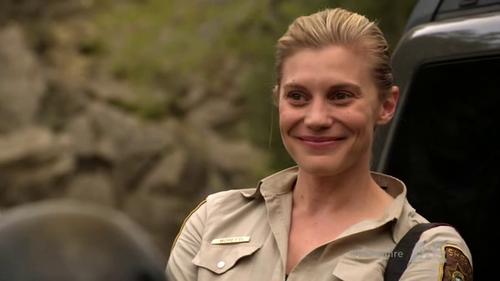
However, the continuing mess the writers were making of the portrayal of Walt Longmire's deputy Vic(toria) Moretti's character is right at the very top of the opening.  It is more than distressing to see the actress, Katee Sackhoff, wasted this way: she's wearing unbelievably tight jeans and boots with really preposterous heels, has her shirt open almost to her navel, and her hair ironed.

She pecks and pats and preens herself over and over, looking in the mirror, carrying a six-pack of beer, and is just "dropping in by chance" on Walt Longmire -- her boss, btw, and much older than she is.  Even her voice is different, higher, all giggly, she wiggles her butt literally.  This is wrong and I hate it and so must most of the women who watch this series.  It's been strongly suggested that the audience for Longmire are more female than male, which is another reason A&E wasn't keeping it around.  Though this article says A&E dropped Longmire even though the audience numbers and ratings were high because -- the audience was too old.

Preview of the season 4's first episode:


Strong positives for everything else. Most of the original cast of characters are


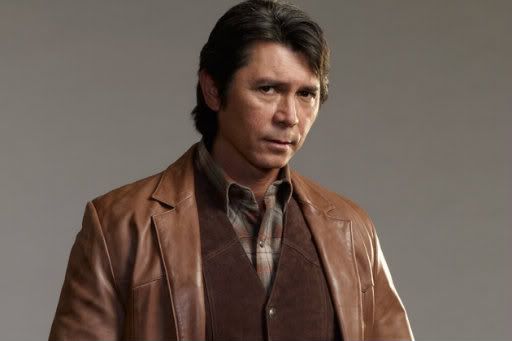
here, including Lou Diamond as the wonderful character, Henry Standing Bear. As well, streaming from Netflix HD, what we see is sharper and brighter and more colorful than from A&E.  It's a beautiful show, set in an imaginary county of Wyoming, but shot on location in New Mexico. The music is better too.

I liked the series very much so I'm glad Longmire is back -- and please, soon, may Vic's character return to the strong, competent and effective deputy with agency and good friend and partner -- not sex kitten --  to Walt Longmire that she was in the first season.

Friday, July 3, 2015

Cherries - The Hermione - The Shepherd's Life

I'm currently eating cherries.


Going down to the South Street Seaport and try to tour the Hermione this afternoon.


Tonight will hear Telmary, "Queen of Cuban Rap" -- there are many Afro-latin elements in her music, including jazz --  at Subrosa


A British title I've wanted since reading about it on the Guardian has recently appeared in the U.S. and I have it: The Shepherd's Life -- the subtitle is different from the British edition's A Tale of the Lake District -- here it's Modern Dispatches From An Ancient Landscape, by James Rebanks.

The author and his family have farmed and raised sheep in the Lake District since the days of the Viking takeover of the region. Despite certain modern equipment, they are still doing basically what their distant ancestors have done. Nor do deep-rooted people want to do anything else. Rebanks found school a complete waste of his time as a kid and left as soon he legally could leave.

But -- at some point he went to Oxford and got a degree and became a writer -- though he's still a farmer and sheep raiser, and identifies himself to himself and everyone else as that. To a great extent publishing his writing and his other activities are driven by his passion to keep farming, retaining his land and remaining on it, and his books, twitter account, directorship of various agencies are the means to do that.


Having grown up in an isolated rural world myself, these matters are of great interest to me, and much of it is entirely familiar and recognizable.

What is vastly different is the place where he, his family and the other families that are farming in the Lake District, who arrived when his did, are farming in a place that is flooded with millions of strangers -- tourists -- who carry on a relationship with the topography entirely divorced from that of the farmers.  This is fascinating material, as he describes and discusses what it means to the future of retaining any ownership themselves of their ancestral homelands. Our part of the world was of no interest to anybody elsewhere, except, perhaps, a few hunters, as we're a principle flyway for migrating birds including geese, and a great producer of ground game birds such as pheasant and grouse.

However, here, where I've been living my adult life, I've seen first hand the deleterious affects of having millions of people flooding into the place where you are struggling to stay and continue the work you love. I've observed it in the Caribbean and all over the U.S., as on the Gulf Coast and in the Mississippi Delta, where conglomerate gambling corporations' casino and development complexes destroy all the local business from fishing and farming to hotels to cafes and restaurants and even live music venues, and obscenely wealthy outsiders gobble up the houses and real estate as in New Orleans. None of these people coming in have any relationship to the place or the people who live there. They don't even see the residents, and they sure as hell don't give a damn about them or their homes, where their interlocking family and community roots descend deep into the mud of the place going back to almost the beginning.

What's odd is in the last ten years I've slowly been changing my opinion about sheep, including understanding that the long held idea that sheep are stupid is not only wrong, but propaganda from this country's cattlemen. Where I grew up bought into this mythology of the Western entirely. Cows good / raised by real men / beef is real food. Sheep bad stupid dirty / raised by dirty foreigners / lamb mutton not real food.

Elkhorn, on the Missouri River, in the North Dakota Badlands
This attitude can be seen, for instance in Theodore Roosevelt's Ranch Life and the Hunting Trail, written about the state in which I was born, where he bought a spread he called Elkhorn, and was a cattleman for some time. He was vehement about the distinction between a cattleman, or stockman, and the run-of-the mill fellow attempting to make a living out of the ground: In Ranch Life he stated that for the sheer, intense pleasure and satisfaction of being the boss of many and much, the king of all he surveys, the only life to rival that of a cattleman's, was that of the plantation owner in the antebellum south. Indeed, he could say that the modern cattle ranching spreads were the new plantations.


This is about as far from the satisfactions and passion of Rebanks and his people as one can get.

Thursday, June 5, 2014

A&E Longmire, season 3, episode one "White Warrior"

A Western, A&E's Longmire is an unpretentious series, featuring Walt Longmire, County Sheriff of the fictional county of Absaroka, in Wyoming. Though Longmire is unpretentious, it isn't simple-minded, and it is gorgeous, shot as it is in New Mexico, with those huge skies and landscapes.  Fox Home has commented on Longmire here, and here, and here. The two previous seasons are available streaming from Netflix.

The new season's first episode, "White Warrior," picked up where the cliffhangers of last year's final episode, "Bad Medicine," left us.  This one had to be particularly difficult to write, because, picking up from last year like that, it not only had, to a degree, resolve those strands, move the story arch-line along, and it had to include all the ensemble regulars for the returning audience, as well as introduce them to those who are tuning in for the first time.

Robert Taylor's Longmire, as the central protagonist, naturally gets just about all the viewing time, but we do find out that Longmire's daughter will be back, though Cady's appearace was so brief as to be hardly there at all.


The scenes of easterner, Deputy "Vic" Moretti, were confined to her attempt to caregive to Walt, which perhaps bodes more of the show was doing to Katee Sackhoff's role last year -- making her more of a girly victim, instead of the strong, smart and o so competent law officer she was in season one, despite this region's being so different from the urban policing she'd done previously. Again the show went with unnecessary sexing Vic up -- having her uniform shirt unbuttone at least one button too many.


Lou Phillip Diamond was as brillant to watch as Henry Standing Bear, already has shown another dimension to his fascinating character.

Branch getting emergency care on the Rez
Poor Branch, played by the actor who was Forest on Buffy the Vampire Slayer, spent most his screen time in a hospital bed.

Longmire in front, walking with the "Ferg"
But Deputy "Ferg" Ferguson got some juicy scenes, that show us he's continuing to grow into his job and the actor into his role.

No more, for fear of spoilers.  Nor can the audience yet have any idea where this season is going to go.  But there was a bit of dialog that sticks in mind, spoken by a Rez policeman to Walt, about some of Cheyenne performing old religious rituals that went something like this: "Think of them as our version of the extreme Christian right."

So, no disappointment for this returning viewer.  It's nice to have this series rolling for summer viewing.

Thursday, September 5, 2013

Longmire season 3

There is going to be a season three.  Longmire was renewed, though evidnetly not until after the last episode aired.

This is good news -- unless they continue season two's trajectory of making Vic become a sex object and girl object in peril, instead of the strong, competent and professional she was in season one.

Don't Do This!

Keep Doing This!


Friday, June 7, 2013

Longmire in the West, Jesse Stone in the East, Sired by The Virginian

Longmire (2012) A&E, Season 1, streaming, netflix.


Based on Craig Johnson's novels that feature Walt Longmire, this is another locale-oriented murder mystery series. Set in Wyoming, it's shot in New Mexico.(Does New Mexico, like Louisiana, provide incentives to Hollywood that Wyoming doesn’t?) The cast is long on an interesting selection of actors from whom, as the series progresses, interesting characters and deepening relationships, emerge.

Walt Longmire is the Country Sheriff of fictitious Absaroka County. Absaroka is home to the small city of Durant. Absaroka contains a Cheyenne reservation, mountains, prairies and national forest, i.e. this is a western, the geography of the ur-Western, Owen Wister’s The Virginian (1902), which declared Wyoming “white man’s country,” the place of national healing and reconciliation, for white men, where, after the Civil War lovely eastern white women learn to submit to manly gentlemen warriors.


Standing in here for the Virginian's Vermont school marm, Molly, is  Katee Sackhoff, Starbuck from BS-Galactica. Vic is Longmire’s young homicide detective, a new hire out of Philadelphia, Vic(toria) Moretti.


Lou Diamond Phillips is owner of the Red Pony bar-restaurant, Henry Standing Bear, Longmire’s Cheyenne friend, his door and his eyes into into the res.


Like Walt and Henry, Branch Connally is locally born and bred. The younger deputy is played by Bailey Chase, who was Graham Miller, Riley’s Initiative buddy on Buffy. Branch’s character is the same irritating mix of upright, confused and dick-headedness that Graham’s was in Buffy. In Longmire, we meet Branch’s family, which makes sense of his character – it’s not a set-up of mean antagonist that you usually get to the older, good and decent man.

Example of guest cast and supporting characters: in the third episode a local drug snitch-informer for Longmire is played by James C. Leary,who was Clem, Buffy’s friendly, floppy-eared, saggy-skinned, poker-playing-with-kittens-as-stakes, Dawn-sitting demon.

Then there was ep. 7, “8 Seconds,” which forefronts a married art gallery dealer and her wealthy beer distributor spouse, named – Sublette! Ha! It turned out that the husband is in the closet, which provoked an attack by a confused boy who discovers Sublette is having an affair with his father ….

The deeper into the series we get, the more involving and deeper it becomes. The smaller supporting roles get breadth, which works in the same way in Robert Parker's Jesse Stone, another successful locale-oriented television adaptation The nine made-for-television movies were produced by, and star Tom Selleck.  Neither of these are quite your usual tv.


As has Jesse Stone,  Longmire has lost his wife before the action begins. Stone’s wife kicked him out; Longmire’s is mysteriously dead, about which he feels guilty for reasons undisclosed. This convenient singlehood allows Longmire, like Stone, to  be broody as well as available for romantic/sexual opportunities. Perhaps because Longmire has a grown-up attorney daughter, Cady, in town, helps. Or, you could say, Longmire has a trio of women who take care of him: Cady, Vic, Ruby, the department's administrator, an older, though not motherly woman, thank goodness.

 Unlike Jesse, Longmire isn’t a drunk. Though Walt drinks, he does not drink to excess – or on the infrequent occasion that he does, he has good reason and handles it responsibly, calling Vic out of hot sex with her husband to drive him home.

I am applauding the writers of Longmire – so far they haven't writen in a hot sex encounter for Walt with a much younger woman in any episode, thank goodness, which we do have in every Jesse Stone episode, many of which come through unintentionally as ridiculousJesse even has a young nun yearning for him, despite having a good thirty-five years on her, who gets a bit jealous of him sexing up non-nuns. The threat of hot sex is always there for Walt, however, if only because Vic and his daughter keep telling Walt there are women attracted to him.

Longmire in the land-locked, mountain and prairie West, Jesse Stone’s on ocean coast Massachusetts, both are equally stunning landscapes. Involving landscape is always a big draw for me -- as long as the characters develop to at least some degee from their place. This can be used in many ways, even in opposition.  Justified has played successfully against that on occasion, bringing in Detroit mobsters who do not know or understand how things work in either Harlan County or Kentucky, which brings them down. Vic's an unwilling transplant to Absaroka County; this is just another in her her husband's constant re-locations as a nabob in the Natural Gas Bidness.. She's a big city girl, who misses a big city police department and regrets not having its resources, like SWAT teams.  Decent Los Angeles Jesse’s been forced to re-locate to a foreign place because he's a drunk and no one else would have him.

Significantly, Walt Longmire’s a believably decent man, who loves his land and community. Walt’s a bit old-fashioned – he won’t have a smart phone. He’s a guardian, aging out of his powers and out of his time, who makes up for this with intelligent and efficient use of what he does have – or what what his team has, such as smart phones. He can still fight like an aroused bear when necessary, but would always prefer not to.

It’s enjoyable to watch this decent, competent, non-flashy Sheriff of Absaroka County.  But then, I do love a good western.


Longmire’s second season began in May, 2013. The new season's episodes can be watched streaming on the A&E site.


Sunday, April 15, 2012

*Conan The Barbarian* 2011 Movie

 I saw this the other day.

It is probably 98% action; what dialog there is, that isn't howls and grunts and snarls, is bombast. (So many villains in movies seem modeled after Jackson’s orcs in appearance, behavior and communication, whether they are supposedly human or not – it’s true in this film as well, with the Big Bad’s henchman who chases Conan and the Virgin, whom after many hours, Conan finally destroys by using him as a message / messenger, catapaulting the ugly hench-bad from the cliffs above to crash into the Big Bad’s bedroom.)
All very well done for what it is, and quite faithful to Howard. But that's why the movie was dull. By the time I found Howard's novels I'd already outgrown flat characters, non-dimensional story, implausible world building and those preposterous monsters, still so beloved by boys of any age who adore that sort of thing.

What I didn't realize until watching this movie version of Howard's Great Hero, is that Hybornia or whatever this S&S world is called, it's still a western. Taciturn protagonist who rides off alone at the end of saving the girl and the 
ranch world from the the banker the EviLe Sorceror-Sorceress. Which makes sense in the context of Howard's Texanhood. It makes even more sense if you've read Larry McMurtry's Walter Benjamin at the Dairy Queen, his collection of essays on what it means to be born into Texas ranching in the era of Howard, which McMurtry was, and grew up with a love of books, learning and writing, whch they both did, I think.

McMurtry was a happier fellow though, from boyhood, than Howard was. If I have this right, Howard was gay, while McMurtry isn't, so that's a big reason right there why McMurtry would have been a happier person in that time of the world, in Texas.

Friday, September 16, 2011

The Joys of A Bookish Life

You know that sudden expansion of everything that happens sometimes when entirely new dimensions open up in an area you know pretty well?  It's like the room in which you are working just got larger, more airy, more filled with sunshine.  Your body feels correspondingly lighter, your heart feels lighter and your mind feels bigger.

I am having a week of this, thanks to Theodore Roosevelt, Owen Wister and Frederic Remington.