LINES OF THE DAY

". . . But the past does not exist independently from the present. Indeed, the past is only past because there is a present, just as I can point to something over there only because I am here. But nothing is inherently over there or here. In that sense, the past has no content. The past -- or more accurately, pastness -- is a position. Thus, in no way can we identify the past as past." p. 15

". . . But we may want to keep in mind that deeds and words are not as distinguishable as often we presume. History does not belong only to its narrators, professional or amateur. While some of us debate what history is or was, others take it into their own hands." p. 153

Silencing the Past: Power and the Production of History (1995) by Michel-Rolph Trouillot

Showing posts with label The American Slave Coast. Show all posts

Friday, June 5, 2020

It Always Comes Back / It Never Changes

     . . . . El V did The World That Made New Orleans Zoom birthday party last night, though as the party giver and her husband, whose birthday it was, are in California, it was afternoon in their backyard for them, and for their friends in their backyards.


It was so good -- for them, for him and thus for me.  Different faces and voices! A chance to talk about something else!  Things felt almost normal again.  This came after the horrors that Wednesday, and yes, mostly yesterday too, were.  I was just sick from it, and then yesterday I was sick from being sick.  The Zoom party pulled me back together. I slept pretty good then, last night.

Every time it seems we're plateauing it gets worse. And again, it is black bodies, black voices, black courage, who are out there, saying and doing what must be said and done, while I remain comfortably in our privileged white isolation.  History continues to go round and round, returning to where it begins.

But, hey, the stock market soars, so all's right with somebodies' world, and so what that the cops who wail on those whose worlds are not all right, and never have been, that's just how it has been, always has been, and always shall be, amen, because it stand between 'Them and the only thing that has value, that we value, OUR PROPERTY.  Never forget that for long periods what was meant by "a man of virtue" was, "a man of property." Property = virtue.  After all Our stock market and Your economy are not one and the same.  [ Current Reading Aloud is Riot. Strike. Riot. (2016) by the insufferable Joshua Clover.  It's stuffed with political economic theory, which he pontificates provocatively, sometimes erroneously, but always with a lively mind.  Like so many works that are published right before a momentous event and change, one cannot help but speculate fruitlessly as to how he might have written it if writing it right now.]

How can one be an historian, an historian of US history and slavery, and not be sick to her stomach? We're right back to where we were in the 1950's, the 1920's, the 1890's, the 1870's and all the years before that to 1619. Mirroring the 1850's this racial hatred too is the wielded means and the presented motivation for a coup on the nation.


So, since we wrote a book about the history of this from the beginning of it in our nation, up until that successful effort to go to war to take over the country for the benefit of the Slaveocracy haters, a group of pastors have asked us to do a Zoom discussion with their congregants about the material in The American Slave Coast, next Wednesday -- a current version of 'getting out of the house'.

     . . . . Here is an interview and photos with our friend K up at Jumel Terrace. It begins with a Forward by the interviewer,  that says better what I am feeling these last days better than I do, and who, being African American, has far greater moral authority and reason to feel and say it:
"I am so tired...."
...The black community’s determination and ingenuity to thrive and prosper in the face of adversity should be seen as nothing new – but it’s the continuous road blocks of systematic racial oppression and suppression that feel very, very old... 


Our dear friend is living right there, in the center of the Harlem Renaissance; his neighbors are their generation of black intellectuals and artists, as were their own parents and their neighbors, going all the way back to before the 1920's. They tend to meet most days and hang out, arguing, discussing and exchanging views, on his front stoop.  I.e. he lives in a real neighbhood, a real community, unlike us, down here which is dead fred, now that the real estate developers drove out our community for the sake of businesses that catered to tourists almost exclusively -- and now there are no tourists, and not even the NYU students.
The truth is – and Thometz knew it – was that he wasn’t going to be selling any of those books, at least not to any walk-in customers in 2015. He saw the bookshop as his own protest, to challenge and confront passersby about race. Situated in a historically-black neighbourhood, he was also aware of the difficulty for locals to accept the idea of a white man owning and selling rare books about black history. “I’m not naïve, I know that there are some people in the neighborhood talking about me saying ‘this white guy thinks he knows everything’. But you know, I understand that. The white people, I don’t understand as well.”

     . . . . This, from today's LRB daily email offering from their archive; the year it was published (2000 -- another age!) I requested the anthology for Christmas, and which shows that even Churchill, in the darkest days of WWII, sought out inspiration from black writers.:
...The Harlem Renaissance has been overlooked in many accounts of American Modernism, but the new Norton Anthology of American Literature gives it a good deal of space....

     . . . . As addendum to our adage from the song we wrote way back in the 1980's, and el V's band performed at CBGB's  "When The Plague Hits the City," -- everybody's disaster is somebody's good luck --  this has been good for book biz, which so very often denies black writers space and support, even while profiting from their suffering.
To paraphrase, my agent was pushing back a meeting necessary for the completion and timely release of my book — which is about how black people can apply the lessons we derive from traumatic experiences to our careers — so that white people could reflect on how to help black people. I countered, insisting that our meeting take place as scheduled because black people’s lives are in danger, and I shouldn’t have to sacrifice momentum on a book written for black people because white people are performing empathy.
     . . . . Everything about the action, thinking, language, rhetoric and behavior of white supremacists and racial injustice never goes away because we, as a nation of white people, cover it up comes back, Part the Umptyth -- shades of the Slaveocracy surveillance and control of the Post Office, monitoring and confiscating and burning any materials that even contained the word, 'slave' -- including novels, and not just Uncle Tom's Cabin, that screed penned by satan.

Law Enforcement Seizes Masks Meant To Protect Anti-Racist Protesters From COVID-19
The masks, reading “Stop killing Black people,” were meant to quell the spread of the coronavirus, which has disproportionately affected Black Americans.
... The Movement for Black Lives (M4BL) spent tens of thousands of dollars on the masks they had planned to send all over the country. The first four boxes, each containing 500 masks, were mailed from Oakland, California, and were destined for Washington, St. Louis, New York City and Minneapolis, where on May 25 a white police officer killed George Floyd, a 46-year-old handcuffed Black man, setting off a wave of protests across the country.
But the items never left the state. The U.S. Postal Service tracking numbers for the packages indicate they were “Seized by Law Enforcement” and urge the mailer to “contact the U.S. Postal Inspection Service for further information.”
And, then, you know, Rand Paul, blocking the anti-lynching legislation in the Senate -- Rand Paul who is such a despicable person his neighbor tried to kill him.  Anyway, shades of the entire history of the USA -- even FDR didn't even dare try for anti-lynching law -- too politically dangerous for him, as he continuously explained to his wife, Eleanor, who just as relentlessly kept pressuring him to do it.
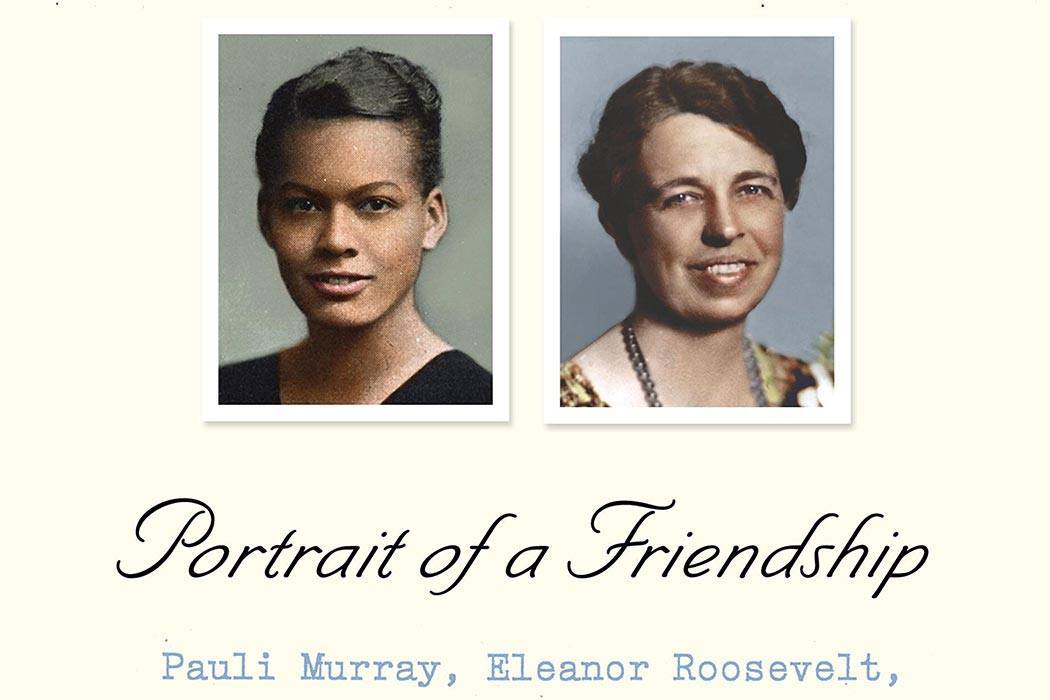

The First Lady lost that battle, but she never gave up her war for equality and against systemic injustice.  We can't give up either. It is our job, our obligation, and, as John Quincy Adams declared, "my moral duty as deemed by Almighty God."


Friday, May 22, 2020

Breathing Lilacs: Tragedy Is Personal

     . . . . The memory of yesterday's scent of lilacs at Washington Square Park lingers. Which brought to mind, then, Walt Whitman's, "When Lilacs Last In the Dooryard Bloom'd", his elegy for the assassinated Abraham Lincoln.  Washington Square Park, though not yet a park* -- all of what was to be known as Greenwich Village -- was Whitman stomping grounds too.


I buried my masked face in them, heedless of the bees -- at least until I noticed them, so entranced I'd been by the strong come hither the blossoms broadcast. That I could smell them so vividly, even through the mask shows 1) the difference in air quality here due to virus; 2) how little the mask prevents air born from coming through. Well yes, the mask is to protect others; it doesn't protect us. O the perfume was heady!  The bees' presence also made me happy.

Did three different class guest spots this last week, including one around The Year Before the Flood: A Story of New Orleans, for a Tulane class.

El V is incredible. His SooperDooperPooter for processing, editing and producing video and film and audio got delivered yesterday, and he had it up and functional before bed! So's he able now to send quickly these enormous files of content to the VIMEO website for sharing with the film maker in New Orleans, with whom he's  working on the Cuban content, among other things. It's so great to have decent tools. To render (this word has a special meaning within this Adobe PremierePro program, which I won't clutter this post with)  his work loads and then send them along used to take something 24 hours, and even the slightest burp in internet service or speed would stop it, and then it would have to start all over from zero, including all the edits, tweeks, synching, volume control, color saturation, etc. Now he can do it in minutes!

Seems last night I got mildly high from the amount of Erica’s THC Soothing Salve, and her Freeze lotion, which I vigorously and lengthily rubbed into both of us last night as both of us have screaming neck and back pain. Felt happy and peaceful, giggled a lot together during Reading Aloud. John Quincy Adams just gets to be more fascinating and enjoyable the older he gets.  

And, just before lights out a friend emailed this Yo-Yo-Ma Book Section link:

https://www.nytimes.com/2020/05/21/books/review/yo-yo-ma-by-the-book-interview.html
Q: What books are on your nightstand?
“The World That Made New Orleans,” by Ned Sublette.
“Barracoon: The Story of the Last ‘Black Cargo,’” the oral history of one of the last known African survivors of the Middle Passage, by Zora Neale Hurston.
The memoirs of Alexandre Dumas, the first volume of which I am struggling through in French.
“Spirit Rising,” by the unparalleled Angelique Kidjo, who recommended the first three titles. She and I are working on a new project that explores some of the less-known intersections between what we think of as Western classical and African music.
What great book company to be in -- Alexandre Dumas! even.  So big shout outs this week from both Rhiannan Giddens (Cuba and its Music) and Yo-Yo-Ma (The World That Made New Orleans) -- and Angélique Kidjo too -- who back when it came out had herself photographed holding up The American Slave Coast!  for Ned's books!

Of course I am ignoring just about everything that isn't part of our own little world -- all too easy to do, when in quarantine.  But mentally ill neighbor across the hall helps keep me grounded in the awareness of other realities, with one request after another: opening cartons, bottles, etc. that she can't because she took much of her medication, fell and hurt her arm and shoulder; cooking for her; providing ear plugs and three phone calls of how to use them >?< in one day; a wash cloth because she doesn't have any; toothbrush and toothpaste, etc. 

That we're having nice days is certainly having an effect upon our mood this week. We're just generally more relaxed and peaceful. For now.

All I can say is, "Thank you lordessa, for B and his weekly supply of cornbread!"

Even the absentee ballot requests for both of us arrived -- finally! -- in yesterday's mail, so I will be able to vote in next month's Dem Pres Nom primary -- from which ballot the Dem party bigwigs including Cuomo have done everything they can to 1) not hold; 2) remove Bernie Sanders.

Also, for a variety of reasons, some of our friends are moving back to NYC . . . .

~~~~~~~~~~~~

*  Fort Green Park was Whitman's park of the heart, from at least the 1840's on.


Saturday, October 28, 2017

Xalapa Seis -- Post Slave Coast Performance

     . . . . Considering the sheer talent and the number of dedicated professionals who have been working since late last winter - early spring on the live American Slave Coast performance with Donald Harrison and musicians, it does seem surprising that last night at the State Theater "Gral. Ignacio de la Llave" was a success.

In any case, everyone involved is happy, pleased and satisfied as to how the centerpiece came off and was received.

Two of our new friends, the Ph.D. candidates who guided us through the Museo de Antropología de Xalapa, made two observations that particularly struck me:

1) "After learning all this about los negroes in the United states, I think I am even glad that it was the Spanish who conquered us and not the British";

2) "This is where all this jazz, these Blues, all this music that we are celebrating here in Xalapa has come from -- tragedy.  We had no idea of any of this."

Now, interviews.  Then the academic presentation.  

Woo -- this altitude is really kicking me.  I feel exhausted all the time, no matter how early I get to sleep and how many hours spent sleeping.


Wednesday, October 25, 2017

Xalapa Cuatro + Reading On Wednesday

     . . . . Yesterday was a four-hour text rehearsal of "The American Slave Coast: A Reading of History With Music, as it is billed hereThis morning we did another four hours.  We'll finally get to have a rehearsal with the musicians, beginning at six this evening.  So that will go, who knows how long.

We're waiting at the moment to have lunch delivered to us in the hotel room because at four PM we have to do a "Conversation" at the university, with Donald Harrison and someone else I do not know, on the musical history connections among Veracruz, Cuba and New Orleans.  We're still working on the slides that go with the Slave Coast theatrical presentation tomorrow night, and trying to prepare for the 4 PM event.  We also have another one, specifically on the history of Slave Coast on Friday.

Navigating between Spanish and English, the Spanish translation and our English version, all of us -- the Director, the actors and el V and me -- attempting to get the words just right, etc., has left me feeling as though my head is filled with heavy rocks, very many very heavy rocks.  Among other trip and fall spots is that our Spanish tends toward the Cuban, and there are locutions and words and pronunciations we are used to that simply don't exist in the Spanish here among the Veracruz intellectual, artistic and university educated -- and vice versa.  Then there are the trip and falls that have to do with English into Spanish and Spanish into English.  It's been a cooperative effort, everyone from the original translator of our text, to the director and the actors and now us, to make it as fresh, lively and accurate as possible.

Everyone is giving at least 110% to our work. And even more. C, the actress who does the "Letter From Virginia", the heartbreaking, accidentally preserved letter to the infamous slave trader, R.C. Ballard, has memorized it.  She's presenting this complicated text as any actress would expect to.  In truth, it is an incredible role for an actress.  (When we did it at Symphony Space in New York a year ago, the readers were musicians, not actors -- and me who is no performer of any kind.) 

Virginia Boyd was light-skinned slave used by the slave trader and his cronies, passed around among them, literally as a sex slave, and by whom she had children.  Something happened -- we don't know what -- and she, who had had a relatively physically decent life, was no pregnant, which was causing trouble for some big white fella, and she's been sent away from the upper south, is now in a Texas slave pen waiting for auction.  She writing, begging to be spared this fate of being sold away with her children where she knows nobody at all -- and to what? a Texas cotton field?  Because she's now past her first beauty's bloom . . .  We don't know what happened.  It's only by an accident of history that this letter exists for us to read, for her name, Virginia Boyd, to be preserved, and for us to speculate about her.

It's incredibly painful to read.  The actress delivers the content in her native Spanish, and all of the terror, anger, incomprehension -- all of it comes through.  My Spanish isn't good enough to follow the words literally, but the actress's skills are so good that I can follow the feelings.  As mentioned -- this is one hell of a juicy opportunity for a professional actress -- which, of course, we'd never thought of previously -- so yah, she wasn't going to waste that opportunity.  Still, its one hell of a thing to see and hear.

     . . . . Not much reading this last week -- we arrived in Mexico last Wednesday!  It was late, and even later when we got into our hotel -- which had lost power, which had made it impossible for the cab driver bringing us from the airport to find it.  That was our first adventure . . . .


The only book I brought with me is Diana Gabaldon's Voyager, which is where the Starz third season now is -- also the volume after which I stopped reading the series.  The caricatures of non-euro people and the preposterous religion and history that takes over -- the author's ignorance of same, is why.  How the television series will handle this -- I hope better than the author did!  But the earlier sections of Voyager -- 1059 pages long, why yes that is correct, the novel is one thousand and fifty-nine pages -- are perfect get-out-of-where-one's-head/back-is escapism.

ETA:  Returned from the 4 PM conversation at 6 PM.  I am missing the music rehearsal of Slave Coast, because my spine went splah with pain in the chairs provided.  Need to sit stretched out now, with feet up and recover, to get through tomorrow's very long day's work and then the performance.

It also turned cold here today -- down into the 40's tonight and as the Conversation was semi-outdoors, despite my jacket, I got chilled.  Nevertheless, I did my best to follow along in the discussions of the 'negros' and their music in the Caribbean and here, in Veracruz and New Orleans in the 18th century -- which is the era in which the principals of Voyager arrive in this part of the world, leaving Scotland behind forever, maybe.

However, in this original time travel romance, it is impossible not to notice, that as long as Claire stays in her own time, Jamie's life reaches equilibrium.  The very moment she arrives back in the 18th century, it's rapine, murder and chaos, and ooops, on the run again!

~~~~~~~~~~~~~~~~~~~~~~~~~~~~~~~~

Fats Domino has walked to heaven.  1928 - 2017.

We learned of this just prior to leaving for the Conversation.

Our guys, playing the Slave Coast music, are all New Orleans musicians who all knew him well.


Friday, October 13, 2017

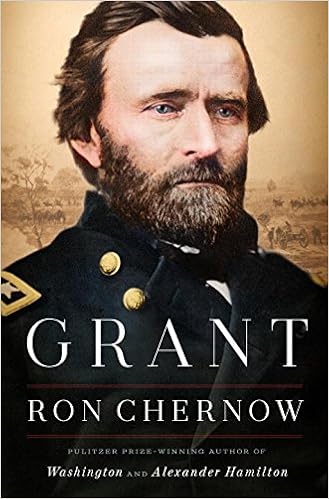
Bill Clinton Reviews Ron Chernow's Biography of Ulysses S. Grant

     . . .  I sent the link to Bill Clinton 's review of Ron Chernow's new biography, Grant, to el V. 


For the reviews in this post I am providing url instead of a links, as these reviews are behind The NY Times paywall:

https://www.nytimes.com/2017/10/12/books/review/ron-chernow-ulysses-s-grant-biography-bill-clinton.html? 

El V's response was dismissive: "It's like Clinton's seeing these ideas of Grant for the first time."

To which I responded, "Clinton is a southerner. When he was growing up, the mainstream, and even scholarly academia hadn't begun to admit and confront that our received history of the Civil War was a falsified, revisionist one. It's even more recently that scholarly academics have begun to view the 20th century accounts of Grant as man, general and POTUS as part of the received revisionist Glorious Lost Cause history, and actively correct it. So yah, it could well be that Clinton is seeing this information of the real Grant for the first time." 

El Vaquero thought that made sense and wondered why it hadn't occurred to him while reading B-linton's piece as it did to me.

Over the years I have read many works about Grant as biography, as general, as president, as writer, etc. This includes the books written by his family. And books about and by his closest associates -- friends, family, politicians, soldiers. Still, I am looking forward a great deal to Chernow's Grant, despite having not time to get to it right now.  As it's nearly 1000 pages long, it's too big to take along to Mexico, to where we go in a few days for the live Slave Coast performance, academic conference etc.  I don't want an e-version since I need the cites and reference pages, as well as the index. Then there are the more than a few reviews that sniff Chernow's book has little or nothing original to say about Grant. But Chernow's an effective word slinger and a conscientious connector of researched historic dots.

Additionally, one does doubt these the reviewers actually have read the whole thing, any more than most of the reviewers of Hillary's book read all her book either (which I have, btw -- it's part of the first draft of this phase of US history, thus essential).

Janet Maslin's New York Times review even claims that Grant is much livelier than Chernow's Hamilton,

https://www.nytimes.com/2017/10/10/books/review-grant-biography-ron-chernow.html

which she complains was "a tough slog." I read Hamilton (2005) back in 2010, and then listened to the audio edition some years later. It seemed to me a quite a felicitous read - listen experience. Like Bill Clinton's review of Grant, Maslin's feels as though she doesn't understand and is unfamiliar with this nineteenth century US history. In the tradition of romperman she pronounces as one encountering this matter for the first time, and therefore believes no one else knows anything about these matters either -- which surely can't be the case for Masilin?  Not only does she call the book an attempt at "a make over for Grant," she says it's "startling" to learn that Grant's victory in the War of the Rebellion didn't end southern white supremacy and hatred! It's an odd tone, particularly for a NY Times reviewer to take on a book about what is so central to our national history -- particularly as the NY Times was part of the recent five year, daily, re-examination of the Civil War on the occasion of its sesquicentennial. One suspects that these reviewers now look at another Big US History work, particularly one that deals with the subject matter that makes the US War of Rebellion and that of slavery and white supremacy, and just -- groan, at the very idea of having another one to review, and so barely skimmed it -- as it's clear, after reading it myself, that most reviewers also at best skimmed Hillary's What Happened.


Surely this large, detailed biography of Grant will teach me something I don't already know.  In any case, there are many positives to have all this factual and honest information about Grant in a single work by an author that people are ready to believe in, even without the massive hit of the Broadway show of Hamllton made of his bio of that fellow. (Not that they have a lot to do with each other, of course, but  it is what we hoped to do with our subjects in Slave Coast.

The thing is that Grant continues to be vilified with lies constantly. Even in the comments to the reviews of Chernow's book, the trolls howl about Grant owning a slave plantation and loads of slaves and hating black people, being a butcher and a drunk, a terrible general, particularly when compared with that saint, Robert E. Lee. It was refreshing indeed to hear Chernow laugh about that in the WNYC interview with him earlier this week.  He said, "Compare for instance, the number of armies that Grant destroyed with those that Lee did. Lee never took out a single army."

Monday, September 11, 2017

9/11 On the Heels of 9/11 + TASC On Television

     . . . . This is a weekend I would like not to experience again.  My stomach is just starting to unclench.  Mostly, relatively, the news is good about our friends in the Caribbean and Florida.  The people who have had it hardest in our circles are the Cubans.  This includes Havana, in which swathes were pummeled by the wind and flooded.  For some time el Malecon entirely disappeared under water, lashed by waves over 36 feet high. This doesn't usually happen to Havana, which is on the north, the Atlantic side of the island.  The juracan usually loses power and / or goes around Havana after hitting the unpopulated  southern, Caribbean coast -- unpopulated for this reason, because this where the storms make Cuban landfall

Today, after spending so much of the previous four days glued to my computer, trawling constantly for updates and news I have a headache, and my skin feels too tight, as if I have a bout of flu coming on. And it is the anniversary of 9/11, which does not help matters.  Gads, I hate this time of the year.  So many anniversaries of catastrophes.

But, for pete's sake, Fox, come on! This is nothing compared to what the people who really went through all this and are now facing trying to put their lives and homes and communities back together.

Still, even though none of this is about me -- who was spared this bullet from barreling right up the Atlantic Coast and hitting my home -- this was welcome news --

     . . . . From CRP's marketing manager:

In the fourth episode of the second season of Tig Notaro’s show, One Mississippi, Tig’s step-father, Bill, has a collection of books he's reading to educate himself more about race in America. Included in the stack of books is Michelle Alexander’s The New Jim Crow, Ta-Nehisi Coates’s Between The World and Me, and Ned and Constance Sublette’s The American Slave Coast.
The book isn’t mentioned by name — he’s listening to the audiobook for The New Jim Crow when the scene happens—but the TASC spine is very easy to spot in the picture I took below.


The American Slave Coast in a scene from the television series, One Mississippi.


We can see it's a recent purchase, because The American Slave Coast is this year's trade paper edition.

Saturday, March 25, 2017

Cuba Libre

     . . . . . Hey there! Maybe . . . you were fortunate missing this expedition, for an expedition is more accurate a description than 'vacation' for the exertion, lack of sleep, constant moving and the misery of spending so many hours in the bus's bad seats and the worse chairs. None of we women avoided the dreaded edema of ankles and calves, and some of the men suffered it too. I'm guessing only one person managed not to get sick in some way or other during this expedition, though  only for a day -- she is tiny, and an old Cuba hand, which may have something to do with it.

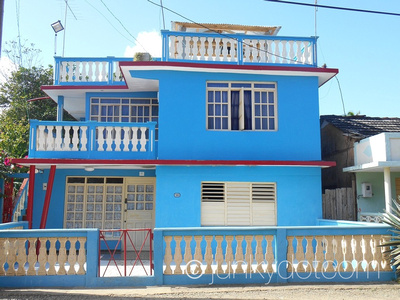
In Baracoa, oldest ville in Cuba and first capital, located in Guantánamo province, we stayed in Casas Particulars, as the single hotels still isn't open for business since Hurricane Matthew tore off the roof.  Baracoa is my favorite place in Cuba. If I lived in Cuba, this is where I want to live. Baracoa is a UNESCO World Heritage Site. 
Most likely the constant movement and lack of sleep did it. The food was of high quality ingredients and well prepared. Still, I quit eating about the last four days because of gippy tum.  I wasn't really sick, just felt awful. Still do, generally.

I got bitten by something the first or second night in. Due to having to move so fast and the dimness of the light in the hotel rooms (hotels very nice!), I didn't notice the big bruise on my neck until my fingers encountered a series of large bumps radiating from my throat and around to the spinal bump below the skull.  I got scared, thinking of eggs laid, etc. But it was a rash (which in Cuban Spanish comes out as 'herpes' thereby scaring me even more) I was told by the clinician I was taken to see, irritated by sweat and my long dangling earrings. Soap and water. I used mouthwash as a disinfectant too, washing it frequently with a cotton swab, since sweat was unavoidable. I put cortisone on it too, though first neosporan.

Our Lady of Assumption Church in Baracoa.  It houses what remains of the Sacred Cross of Parra. planted by Christopher Columbus in 1492 -- but it is made of native Cuban wood, thus not from Europe.  This bit of material history honestly gave me shivers when I viewed it.

This is what remains of a much larger cross.  Over the centuries pieces were taken as holy and material history relics. Now what is left remains on public display but behind a glass enclosure.

My own ankles swelled long before we ever got of the Holguín airport and to the hotel -- recall we arose at 3 AM and then didn't get to the hotel until around 4 PM. This was followed almost immediately by dinner -- with scheduled music at the lovely restaurant, not a group assigned by the state -- and then to another music event -- with those terrible seats. The circulation is cut off for the entire time. This may be where I got bitten, since the tables were on a (beautiful) patio.

By the time we did the reverse trek and B and I got back to Thompson Street -- I've never been so depleted in my life. Not only physically, but mentally. There was never any time to process what we were seeing and hearing. B commented to me on the way home that maybe this time "even el Vaqueor gets it, that he was over-programmed." I was too worn out, hurting and sick to sleep the night we got back. So up at 6 AM -- another night of less than 5 hours of sleep. But by 6:30 PM Wednesday I was O-U-T.  Slowly my bedtime has been inching a little later, every night now.  I may make it to 10 PM tonight!

However, as on the January 2016 Western Cuban music tour,  this was a most splendid and intrepid group of Travelers. They took everything in stride and they loved the music. Their only criticism, if they had any, was, they'd have liked some time off and not such a rigorous and relentless schedule. They were wonderful and they are what made the trip work all the way down the line. I loved them all and enjoyed getting to know them so much. One has tended to forget that our nation is filled with kind, intelligent, decent, generous people who are also fun to hang out with. Just this alone was good for us all.

Nevertheless, I was still astounded at how quickly "the bus" bonded with each other, our guides and the driver -- guide and driver this time calm, patient, cheerful, cooperative and eager about our activities, the opposite of the driver and guide on the January 2016 tour.

B also mentioned during the trek back home that the inability to spend much if any time online with the devices also incited people to interact with each other, the landscapes and experiences much more than if there was constant internet service. I'm not sure, as though not music professionals, (which so many in the January 2016 expedition were).

That we weren't predominately professional music people didn't matter -- as they loved the music and had so much experience traveling in places that aren't always comfy. All have specialties and professions, and whatever was needed at a moment, one of  would probably be able to provide. Some of us are essentially introverts that can find spending every waking moment with other people not always easy, but we all managed that splendidly too, and that has to do with who these people are. We understood each other.

The eastern part of Cuba has been having a terrible drought. Santiago had seen no rain for year. I arrived, however -- and the rains began! Just as on my trip in January 2016, it rained and rained, almost all the time. While on Ned's other two trips with Travelers, during which I stayed home, there was not a drop of rain. So Santiago owes me . . . and it is indeed, by its lights, repaying -- see further down . . .

How quickly the trees, flowers, crops and other botanicals, the whole countryside, responded to even a little rain. The dried out trees began perking immediately, so much so that it was visible at least to me, who recalls what this part of the world usually looks like. By the time we left, the sides of the mountains that were brown as we flew from Ft. Lauderdale into the airport of Holguín, were turning green. Maybe I could hire myself out to drought-ravaged places? But wait! What about my own city and state?

The eastern province, Oriente, has changed enormously. It's still the poorest part of of Cuba, and Guantánamo the poorest of the poor parts. I have been there before though, and to my eyes, it too looked enormously perked up, materially. Additionally, there were things I wanted to buy as gifts, which I've never had the least interest in doing in Havana, and in Holguín particularly, the center of the diversified agricultural region, the airport tiendas were a thousand thousand times nicer -- the departure lounge in every way was nicer -- than Havana's Jose Martí's. Good place to get duty-free. The things I bought outside of the airport are still in Ned's suitcase, as I swapped such things out in exchange for taking all his dirty laundry home -- mountains and mountains of dirty laundry from both of us -- an expedition in a hot, sweaty and rainy-to-monsooning period will do that.

I was so happy finding things for gifts even more, maybe, than my other favorite totally personal bit -- when a brilliant woman from Alabama, who was raised a good deal in San Antonio, and now, among other things runs white water rafting expeditions down the Grand Canyon for challenged people who would otherwise never be able to have such an experience -- blind people, people who can't walk, autistic -- and imagine what kind of organization and back-up there is for this! -- well, Martha and I broke protocol and went and peed in the monte instead of standing in line for the baño, standing guard for each other. We felt like such outlaws. 🚽 Then A bought us beers, applauding our pluck, beers since we'd peed we now dared drink before getting back on the bus -- and the beers were -- Heineken, not the national Bucanero or Crystal. 🍺

El V left us early on Tuesday, the day the rest of us flew back to the US. He's still in Havana; yesterday he had lunch with Pablo Milanés -- a very big deal.

Wednesday, el V and CD were summoned to a meeting with the two women who run the Casas de Cultura of Cuba, and Culture policies and activities in general. These officials are 1000% behind what he and CD are doing with these Postmamboist Music seminars and want more -- he called me from habana vieja's casa de los abanicos where he was replacing my worked-to-death fan. They were laughing, and I would even describe Cd as giddy -- something one doesn't see often. Again as Ben observed on our flights back to NYC we didn't get to see her brilliant, beautiful smile and laugh much this round -- she was far too busy (she's also organizing Cuba Disco, the annual Cuban international music festival in Havana, which is coming right up) and anxious that everything go right -- working working, working, every minute.

I had told them both I was never going back to Cuba -- it's just too physically hard, but from casa de los abanicos Ned chortled, "O yes you are!" Both el V and I are officially invited to a cultural and history conference in Santiago early in July. The conference is going to pay for our airfare and hotel !!!!!!! -- Cuba!!!!! paying for somebody!!!!! -- to do a presentation of Slave Coast.

Well, it will be good preparation for what we will have do for the Vera Cruz performance in October -- in Spanish. And if I didn't go, it would be a dis to those who invited us, and that wouldn't be good for el V. I can't do that. Also, I . . . don't . . . think . . . I have to ride a bus for hundreds of miles . . . . and never get any sleep.

The breadth of music and culture the Travelers experienced -- is not to be compared with anything others get out of going to Cuba, at least in a group. And much of what the Travelers experienced could not be set up for an individual. Without el V and CD, this can't happen. No one can copy his tours. Nobody else knows all the ground, the people and have the connections and experience -- and the trust of everyone involved.

It was so good to be away from everything here.

We all felt that way. While in Cuba no one was impatient to connect when connection was possible. People checked in on their kids and so on when opportunity arrived (kids basically adults, of course, not little kids or infants), but otherwise didn't bother.  Had no interest in the news outside of learning that back home it was snow and deep freeze, while where we were was beautiful and warm.

We regained equilibrium, perspective, sanity and dignity, despite the grueling aspects of the expedition.

Nor could it have happened without such a prepared and passionately involved group of people. I miss them.

El V gets back on Tuesday -- direct flight, no 3 hour layover, only a single security and customs line instead of two, and he's had a week of being able to sleep and not travel, so he'll be rarin' to go.

In the meantime I'm curious about what el V's been up to in Havana.  They -- he and CD -- apparently are doing a smaller group thing for the Rumba Festival in October.  He cannot let this one pass him by as CD got Rumba categorized as a UNESCO world heritage patrimony this year, and she got to rumba via el V.  This will be casas particulars not a hotel -- the rooms are exhorbitant in the hotels -- but also a bus for transport. This would be self-selected set of rumba heads, so it may well work.

That Wednesday meeting with the Directors de Casas de Cultura and Patrimony -- whatever it / they are called -- I can't keep these agencies and the people who run them straight -- seems to be directed toward more actitivies.  Other potential Cuba projects are being thrown at him as well. Who knows?  But unless things go entirely off track in the USA -- always possible -- more Cuba in the future, it looks like.  Nothing could make el V happier.

Wednesday, February 22, 2017

Wednesday With Books -- American Slave Coast & Sanctuary Cities


     . . . . Much, much took place this last week; but the most significant is that boxes of the trade / paper edition of The American Slave Coast: A History of the Slave-Breeding Industry arrived. The official publication date is the first week of April.  Some events have been lined up for that.


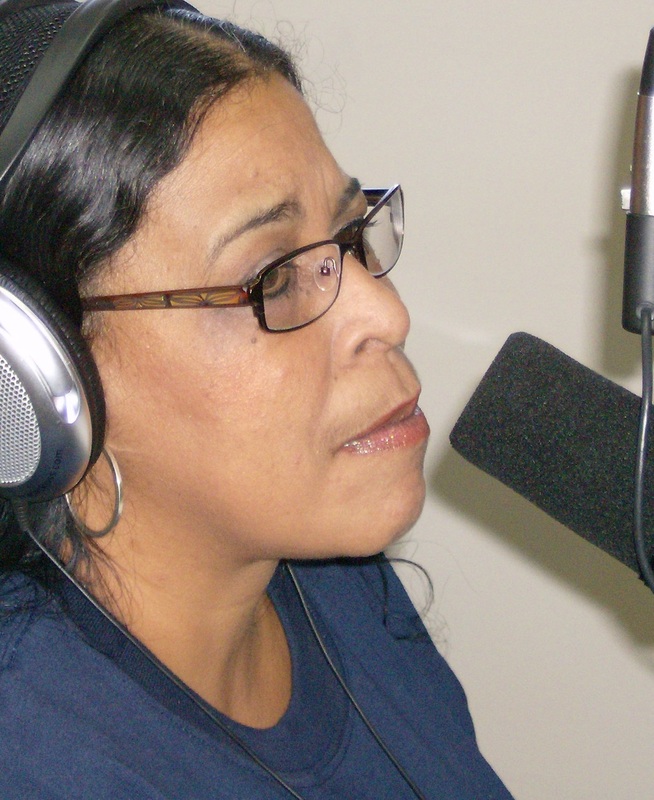
However, this being Black History Month, things are going on this month too.  This evening for instance, we'll again be guests for the third time on "What's the 411" with Sharon Kay's syndicated program. part of the African American Public Radio Consortium (AAPRC) satellite programming options available to public, community & HBCU stations.  "What's the 411" home station is JAZZY 88 WFISK (Fisk University).  It can be tuned in online here.


We're so looking forward to this evening -- Sharon Kay, her staff and her station are are the best at providing the best radio experience for all involved from their guests to their audience.

     . . . .A couple of nights ago, a musician friend, having finally finished reading Slave Coast, met up with us so he could discuss his thoughts about all that text with which he'd spent so much time.  He's on the road constantly, so he downloaded the book to his -- phone!  It took him eight months to read, he said.  Not because he didn't keep at it.  It was that he was constantly leaving the book and following up figures and events that came up in the text to learn about them, having realized he knew nothing about anything that was in the boo -- despite always reading history and thinking he knew the history of the U.S.  He also told us something that we didn't know.  I think he downloaded it from Kindle . . . which has a feature that shows each reader how many other readers have highlighted the same passage that our friend highlighted.  So when he highlighted the passage in which we describe that many of the impulses that led to the declaration of independence from Britain was about protecting slavery -- he learned 70 some other readers had highlighted that passage as well.  Then he went hunting, looking up the various sources that we cited to learn more.


We never were satisfied with how TASC concluded.  But now, since the election of doom, we know how things are playing out, all pulled right out of the past that is so thoroughly covered in the book. Presently, with the anti-immigration ban, it's impossible for me not to recall vividly the 1850 Fugitive Slave Act, which did more to turn more people, more rapidly anti-slavery and actively antagonistic to that law and the people who rammed down everyone else's throats than anything that happened prior to that.  We are seeing much the same thing playing out now in many of our cities that have been designated with sneers as "Sanctuary Cities."  I am far from the only historian to recall this -- I'm seeing the Fugitive Slave Act cited everywhere in all media these days.  So, may I remind us all what the conclusion was for those who shoved it down the throats of all those who didn't agree slavery in the first place?

Full text of the 1850 Fugitive Slave Act here.

Recall that by this time there had been so many generations of systemic rape of female slaves by white men that there was a significant percent of the enslaved population that was effectively white. Their price in the fancy slave market were extravagantly higher than even prime field hands who could reproduce. Nobody could tell they were one-drop, though court proceedings often went on for months attempting to prove that someone who lived white was black. As the provisions of the Act denied anyone claimed as a runaway slave from speaking on her / her behalf or a court hearing, at any time someone could claim your daughter, your son could be grabbed if convenient -- and some were.  So anyone can see how easily these new bans can be turned against anyone the regime finds inconvenient to have going about in the body politic who speaks in disagreement about anything.

What most strikes me right now is how the white supremacist nationalists' apologists are trying to flip the script, and per usual steal what progressives historically have done and pretend their cause is the same thing.*  Sheesh, that is so trashy.  But what would one expect from the likes of their ilks but this?
Anti-sanctuary agitators regularly claim that sanctuary jurisdictions defy federal law, and some (most recently Karl Rove) go so far as to suggest that cities and counties that seek to disentangle themselves from federal immigration enforcement are morally and legally equivalent to the slaveholding South.
Always the repressers, oppressors, abusers demanding they be recognized as victims!

 ---------------------------------------------

*  As per usual, whenever the white supremacist nationalist wants something good they steal it from black people.  Maybe they're doing this in honor of Black History Month?


Friday, January 20, 2017

Friends' Circle

     . . . . An amiga started an e-mail circle last night devoted to sharing carrying on, on this day of catastrophe that will forever live in history -- as long as there's a planet and human history, that is.


     . . . . However, too, none of us seemingly can resist recalling what we were doing on this day 8 years ago, which for all of us was a day of celebration and happiness, for so many reasons. I particularly cherish Chestertown amiga C's recounting of her day 8 years ago, in Annapolis, holding her newborn grandson, first grandchild, in her arms, and watching the events on her daughter's television, weeping with joy for o so many hopeful things.


C's been a private citizen and activist for civil rights for EVERYONE all her life, which, when we recollect this is that Maryland, from where Frederick Douglass escaped the slaver breaker, the state's bastion of slave owners and breeders, staunchly CSA during the war, to where assassin and traitor John Wilkes Booth fled trying to get to Virginia, and white supremacist ever after, means a very great deal.


Eight years ago today we met with some friends here to watch the events in D.C. on multiple big screens, while lunching and sharing champagne toasts, at the music club - restaurant, Sounds of Brasil. It was a standing room only crowd, jubilant, diverse, of every age, gender and skin tone. I recall informing some clueless Euros about African American women and Hats.

     . . . . Today, none of us is watching -- I am not even going thinking of turning on the radio -- everyone is doing everything as normally as possible while also participating in and / or preparing for actos, both locally and nationally. ( C, mentioned above, for instance, leaves tonight for the D.C. Women's March.)  Here, while many are going to D.C. tonight, many others are organizing the final plans for the march to the tower of doom.


     . . . . Yesterday, all over the City groups of young women were postering, picking up posters, marching and in various ways preparing for the actos politicos of today and the rest of the weekend.  It was so heartening!

     . . . . Last night was Symphony Space for a benefit concert of many many musicians, mostly Afro-latin. Everything was donated.  Ticket prices were for a legal defense fund assisting victims of improper arrest and accusation.

    . . . . Today, NYC's all about Denial of Art with artists of every sort participating -- it's heartening to see how many museums and other venues are supporting this.  Among the very first targets of the first 100 days is wiping out the National Endowments for the Arts and for the Humanities (which over the last 10 years has provided us, at least, with about 10% of our income, so yah, we got skin in this game).  Also the privatization of National Public Radio -- which might be more difficult than wiping out the Endowments, as it is financially healthy, due in no small part to inheritances and endowments provided by very wealthy people in the last few years as opposition to faux noose, etc.  Here in NYC our station is owned and licensed by us, the residents -- subscribers, who raised the money to buy the license and frequency from the city, as a not-for-profit.  We've been producing our own programming and are partnered with, among others, both the NY Times and the New Yorker.  The biggest expense is though, of course, "All Things Considered."  But WNYC -- like NPR -- has been expanding its news coverage and investigative journalism for a long time -- locally, nationally and globally -- while everyone else is cutting back.


     . . . . At the moment we're listening the Cuban musicians playing on various videos he and his  Travelers made during the Cuba trips he led last year -- thinking of putting together another video advertising a short (5-day) trip to Havana for the Rumba Festival, as his partner on the ground in Cuba, CD, was instrumental in having UNESCO include Cuban Rumba on its prestigious list of "intangible" heritage.  We're also working on the presentation a producer wants to give to PBS for the live-with-music version of The American Slave Coast.

     . . . . Later, I will listen to the last pages of James J. O'Donnell's (2008) The Ruin of the Roman Empire: A New History while working out.  Then I'll make dinner.  Afterwards we'll meet a couple of friends for a nightcap at the Bistro around the corner.  Then I'll read more of the newly translated into English of Alexandre Dumas's never finished novel about Cardinal Richelieu, The Red Spinx or The Comte de Moret: A Sequel to The Three Musketeers.  I adore Dumas!

     . . . . Share your day with your friends!  Our strength is each other.

Tuesday, January 17, 2017

Book News - Martin Luther King Day Observation - Etceteras


     . . . . It's been busy around here, among the various projects, including the preparations for Saturday, and preparations for the March visit to eastern Cuba with 25 + Travelers.  With each Traveler coming with us that I meet, the more excited for this trip I get.

The weather here has been all over the place, down in the deep freeze back up to balmy, snow and rain, overcast and bright. To make it more interesting, this week our building's furnace quit and we're still without either heat or hot water.

But books and news about them keep on coming.

A few days ago this news was in the Washington Post book section.Sales for all forms of adult fiction declined in 2016 with the single exception of comics graphic "novels." Adult coloring books remain huge sellers, and adult non-fiction sales increased again for the third year in a row.  The demand for audio versions of books continues.

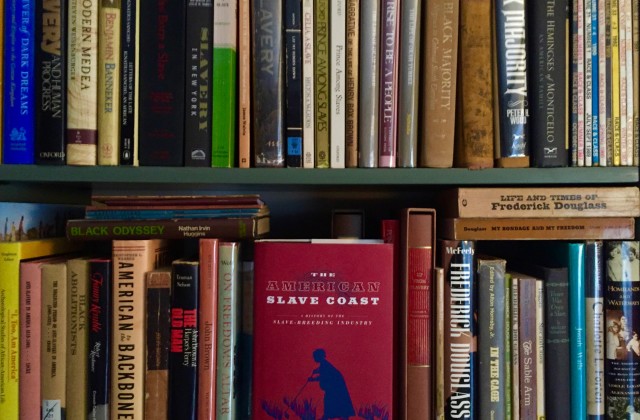
Dear friends' book shelf!
In the meantime, the 70th review of Slave Coast has gone up on amazilla.  We've got several repeat dates for radio and pod cast interviews about Slave Coast next month, Black History Month.  It also looks like the live performance of Slave Coast with Donald Harrison directing the music beds is going to happen this fall as part of the Veracruz annual Jazz festival.  Other venues are trying to find dates and financial support to bring this to their communities.  Other institutions have requested we / Slave Coast participate, be a part of various programs coming up such as workshops and so on.  Also the trade paperback edition of Slave Coast debuts in April!

We've started working on the presentation to PBS for Slave Coast. Argh. How in the world will we raise the money??????

For Martin Luther King's birthday we did a Skype conference with DR, the producer for the Slave Coast on tv project (IF this happens, which is a huge if -- all that money that needs to be raised!).


DR's in France, on his farm in the mountains above Nice, living in a 350 year old stone farm house.* This is how they stay snug and cozy all winter -- when winter begins they crank the heat as high as possible to make the stones of the walls and floor hot. Then they turn down the heat to 'warm.' And the house stays warm all winter. His broccoli and and other vegetables continue to produce all winter.  I wish I was there.  I've been working on the script and various other aspects of the Slave Coast project for DR to present to various people. He reminds me that it would be nicer, i.e. WARMER, working there than here.


Today's drizzle and drear keeps on keeping on. I wish the heat would come back before the end of the day.

Yes, I wish, but I'm not hoping.


----------------------------------------

*  I remain thrilled any time we Skype, being able to see his home and him in real time, despite all this distance between the coast of France and the east coast of the US.  At the same time I can't help but think of how this isn't possible when one of us is in Cuba and the other is here -- and Cuba is only 90 miles south of Miami.

Friday, November 11, 2016

Amsterdam News Reviews Symphony Space Slave Coast Live Performance

Because the video advertisement on the page is so annoying, even though it's from CNN and shows thousands of people protesting the results of the election, I pulled the part of about Symphony Space and Slave Coast from the longer article and c&p ed it here.  The article's  author is the Amsterdam News's editor. Amsterdam News is the longest surviving original African American newspaper in New York City. It is the only Symphony Space performance review, of course, beyond the blog pieces written by white jazz music writers. 


The Amsterdam News Building at 2340 Frederick Douglass in New York has been adorned with some funky new murals as part of the #NotaCrime campaign 

The text came from Ned and Constance Sublette’s book, “The American Slave Coast: A History of the Slave-Breeding Industry” (Lawrence Hill Books). The passages were read by the authors; by vocalist Lezlie Harrison; by musician, vocalist Nona Hendrix; by actor, writer Carl Hancock Rux; by actress Kandia Crazy Horse; and by filmmaker Jonathan Demme. 
The music was composed by the saxophonist Donald Harrison and performed by his versatile quartet of guitarist/banjoist Detroit Brooks, pianist Zacci Curtis and drummer Darryl Staves. 
After reading “The American Slave Coast,” Harrison was inspired to write a composition with an intriguing edge anchored in the blues, and at times his New Orleans roots leaped out. 
For two hours the sold-out audience sat in scary silence as the music consoled them in the midst of being tortured by slavery’s agonizing truths. 
Ned stated, “I knew from the beginning this project needed to be performable.”
“The American Slave Coast” is the 2016 winner of the American Book Awards. Slavery, one of the most horrific crimes on the face of the Earth, is a crucial fabric of America. It is this contemplated abomination that has kept this country racially divided over the past 400 years. 
Last weekend the slavery empire built on terrorism and the torture of Black people, politics and economics traveled through time to sprout the heart-wrenching truth through the words of “The American Slave Coast: Live,”
at Manhattan’s Symphony Space. 
Today, one political candidate is using race as a talking point. But ssshhh! He isn’t using that word. He prefers the phrase “let’s make America great again.” Some folks ask, “Why don’t Black people just get over it? After all, slave masters weren’t really that bad.” 
Perhaps the slave masters they are referring to were former presidents Andrew Jackson, Thomas Jefferson and James K. Polk. Regardless of their presidency, these men were white supremacists who profited from and promoted the selling of African-Americans from birth to adulthood. 
“The American Slave Coast: A History of the Slave-Breeding Industry” is one of the most concise, graphic, historically researched books ever written on the subject. This book should be required reading for Americans, particularly those running for any political office.
By now there are 63 64 reviews of The American Slave Coast: A History of the Slave Breeding Industry up on amazilla.  With very few exceptions all the reviews are four and five stars.  I think, though I haven't looked myself, that the majority of the reviews are 5 stars.

Tuesday, November 1, 2016

Our Remarks for Sunday Night's American Books Awards - Before Columbus Foundation

Dr. Roxanne Dunbar-Ortiz kindly read our words as we could not get to the West Coast within a few hours of the Symphony Space live performance with music event of The American Slave Coast . . .

       . . . .  Dear Dr. Roxanne Dunbar-Ortiz:

Thank you so much for lending your voice on behalf of our work as we happily accept an American Book Award. Your endorsement means a great deal to us.

Please thank Justin Desmangles on our behalf, and of course, the Before Columbus Foundation. We salute the Foundation on the longevity of the American Books Award, whose roster of recipients over the years takes on a historical perspective all its own, and in whose magnificent playlist we are now thrilled to reside.

Perhaps because of the stimulating name Before Columbus, and because The American Slave Coast is squarely in the genre of American history, it took a while for it to sink in for us that this wasn’t a history award but a literary award. Which is particularly gratifying, because we have long read history as literature, and vice versa. Creating historical narratives is inevitably a literary act, and it’s a never-ending task, because people interrogate history differently over time: different moments have different urgent questions, different reference points, different techniques, different sources, different taboos.

Our publisher, Chicago Review Press, published all three of Ned Sublette’s books prior to The American Slave Coast; all four were edited by Yuval Taylor, creating for us a long-term continuity of editor, publisher, and writer that is rare in present-day publishing. This solid editorial support has allowed us to create large historical structures, which goes against the grain of a publishing industry focused on short books and narrow topics. Our book is 265,000 words or so, and weighs 3 pounds in hardback. At first we were apologetic for its length and heft, but in New Orleans a woman said to us, “It takes a book that big to tell our story.”

Quote [from The American Slave Coast's text]:
The American Slave Coast is a history of the United States that takes into account something that everyone in slavery days understood: the workings of the slave-breeding industry, which was a unique creation of Anglo-American entrepreneurship, and which was central to American politics as long as it existed. All of American history looks different once the slave-breeding industry is taken into account, and indeed key events like the annexation of Texas and California are inexplicable without reference to it.

The book became a project in 2010, when Ned was named the Patrick Henry Writing Fellow at the C.V. Starr Center for the Study of the American Experience at Washington College in Chestertown, Maryland, and thanks also to our agent, Sarah Lazin. The argument is a little complicated, but here’s how we tried to explain it in the introduction, quote:

This is a history of the slave-breeding industry, which we define as the complex of businesses and individuals in the United States who profited from the enslavement of African American children at birth. At the heart of our account is the intricate connection between the legal fact of people as property—the “chattel principle”—and national expansion. Our narrative doubles, then, as a history of the making of the United States as seen from the point of view of the domestic slave trade.

It also traces the history of money in America. In the Southern United States, the “peculiar institution” of slavery was inextricably associated with its own peculiar economy, interconnected with that of the North.

One of the two principal products of the antebellum slave economy was staple crops, which provided the cash flow—primarily cotton, which was the United States’ major export. The other was enslaved people, who counted as capital and functioned as the stable wealth of the South. African American bodies and childbearing potential collateralized massive amounts of credit, the use of which made slaveowners the wealthiest people in the country. When the Southern states seceded to form the Confederacy they partitioned off, and declared independence for, their economic system in which people were money. . . .

The conflict between North and South is a fundamental trope of American history, but in our narrative, the major conflict is intra-Southern: the commercial antagonism between Virginia, the great

slave breeder, and South Carolina, the great slave importer, for control of the market that supplied slave labor to an expanding slavery nation. The dramatic power struggle between the two was central to the Constitutional Convention in Philadelphia in 1787 and to secession in 1861.
[End Slave Coast quote.]

      . . . .  For us, writing a book doesn’t end with publication, it merely enters a new phase. In the year since publication, we’ve been on the road when we can be, taking it as many places as possible, and hearing what connections people are making to this history in this age of police brutality, open-carry militias, and mass incarceration. We’ve learned so much about our own book by going around the country during the last year, reading, talking, and listening. We had a tremendous experience last month in Columbus, Indiana, where we spoke to 150 high school students. In doing this, we’ve had the privilege of hearing a cross-section of what people are talking about.

It’s been an uphill struggle trying to get the narrative out there: with a few much-appreciated exceptions, mainstream media haven’t been in a hurry to talk about the slave-breeding industry, but we’ve had wonderful experiences with regional black media, especially AM radio, and independent left media.

Unfortunately, we haven’t been to the West Coast yet, but we hope to remedy that in 2017. We’re at home today, just emerging from our Friday night performance at New York City’s Symphony Space of The American Slave Coast Live, a 2-hour reading of the book with multiple voices and a live score by Donald Harrison and musicians. For two hours, a theater full of people listened and responded to historical discourse. It was cathartic, and we hope to present it in other cities.

At the top of the show’s flyer, we proudly set a banner: AMERICAN BOOK AWARD WINNER. So many people have congratulated us on this award. Our publisher is very happy. We send a profound thank-you to the Before Columbus Foundation, and we feel dumb for not being there to celebrate with you.

Friday, October 28, 2016

E-mailing When Very Very Very Tired

Which Himself was last night after a long long long day at the theater:

Quote:
here's a nice piece about the show in the amsterdam news today and we got a pick in the times. 
we had a music rehearsal and everything is working . . . 
so, the drill for friday: 
be at symphony space at 1. we'll wear clothes, but makeup and hair can wait until after the run-through.

And here I am, really really really planning to train it up to Symphony Space today in the nude. Dang!

OTOH -- seeing one's book's title in the same slug line as the name Zora Neale Hurston is kinda a kick!  :)

Project Americana looks at American culture, history, and politics through the eyes of leading figures in music, literature, comedy, and more. Thought-provoking, insightful, and oftentimes celebratory, this project sets out to honor America’s deep artistic heritage and to draw connections between the past and where we are today.

The Live Musical Reading Event tonight of The American Slave Coast is part of Symphony Space's Americana series.


Sunday, October 23, 2016

L'autumn Est Arrivé


Yesterday I wore my little fingerless woolly mitts for the first time. Carried an umbrella. It was about 45 degrees at 5:30 PM. It had been quite windy and raining off and on for the last day and a half.


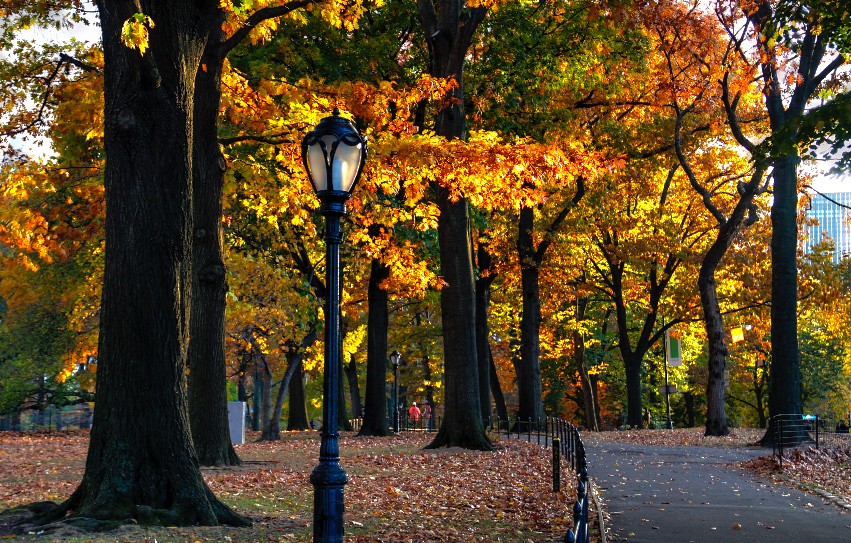
Central Park
Today's bright and sunny, with a high in the low - mid 50's.  Not so windy.

We had rehearsal again.

I have more rehearsal than anyone, because every time el V does a run-through at the time convenience of any of the other readers, I'm there too.

OTO, I need more rehearsal than anyone. But no amount of rehearsal will give me stage presence. This will be obvious surely in the video that is going to be shot of the performance, which, hopefully, can be sent to interested groups and organizations who want to do this in their city.

This was a classic, perfect Sunday afternoon in late October NYC. Just lovely.

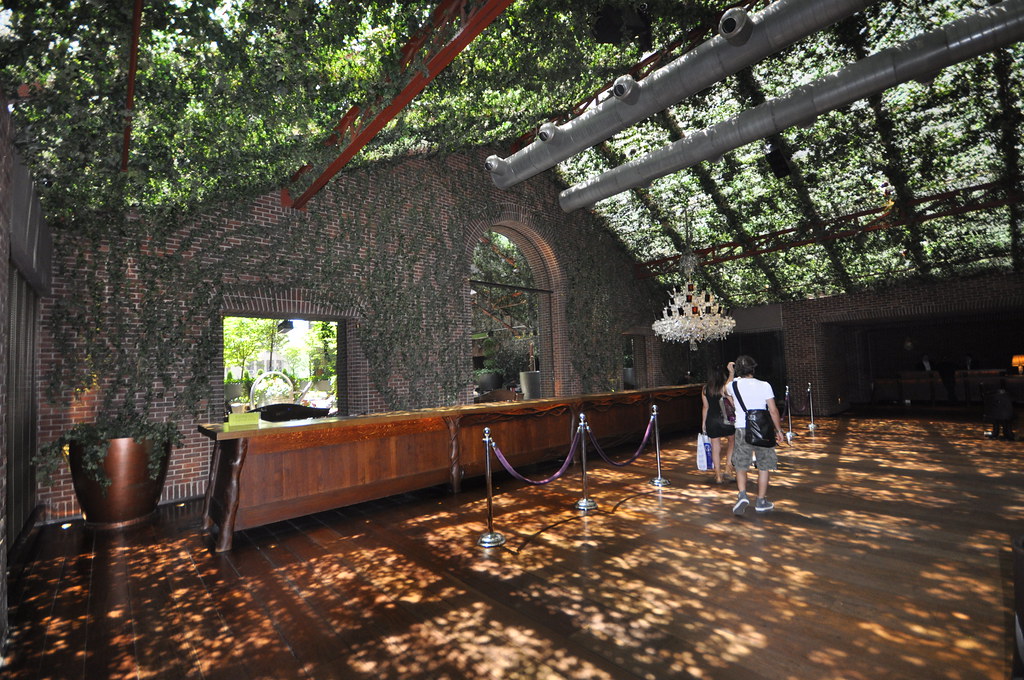
Hudson Hotel Lobby
This afternoon we went uptown, where we met with two of the other readers in one of the Hudson Hotel's spaces to do another through of Slave Coast' s script for the Symphony Space performance Friday night.  It was so pleasant in this hotel where lots of show biz parties get thrown, filled with cheerful tourists and out-of-towners enjoying a New York Sunday afternoon in October.  Both K and L have performed there at different time. We had a good run-through too.

After we broke up, el V and I wandered Central Park. Ended up back down here. Got falafel sandwiches and ate them in Washington Square Park. We haven't done anything like that in years.

During the wanderings nary a sign for either candidate was to be seen anywhere, nor lapel buttons, bumper stickers -- none.  This has never happened here in a presidential election before, methinks.

Relaxing a bit.

Thursday, October 20, 2016

El V Speaketh, er, um, emails?

     . . . . Off to lunch - rehearsal.  It's unsettling for me, because I am the only person involved in this Symphony Space project who not only isn't a professional stage performer, but I'm also the only one who has never had the slightest aspiration to be one.  But everyone is so nice, so talented, I'm sure I'll be fine.

Quote:
You haven't heard much from me lately, because I've been deep in the preparation of The American Slave Coast at Symphony Space a week from Friday. 
Oh, my gosh. We're really doing this. The speakers have begun rehearsing. There are seven of us (see below, but, in alphabetical order of surname besides me and Constance,
Kandia Crazy Horse, Jonathan Demme, Lezlie Harrison, Nona Hendryx, and Carl Hancock Rux), and the energy is so strong. 
It's going to be extraordinary. 
Music. By. Donald. Harrison.
Let me say that again. 
Music. By. Donald. Harrison. 
With a group including Detroit Brooks and Zaccai Curtis.
One performance. 
I want to have people in that theater. We need people to know about The American Slave Coast at Symphony Space. I didn't know they were gonna do this special offer, but suddenly, in a kind of flash-sale promotional move, all seats are $10 until 11 a.m. Friday (28). I tested it and it sure-enough works. 
Tell your friends, and let your media know! If you can't be with us in NYC that night, let your friends know about it anyway. Hell, buy 'em some tickets! Do it today! 
Get $10 tickets with code TEN online, by calling 212.864.5400, or at the box office window. This offer will expire on Friday, October 27th. 


* * *


http://us8.campaign-archive2.com/?u=d521ad7c6bbc721ca0e2cccf9&id=2720269cd7&e

Symphony Space, NYC
October 28
The American Slave Coast
American Book Award Winner
Authors Ned and Constance Sublette are joined by (in alphabetical order of surname): Kandia Crazy Horse, Jonathan Demme, Lezlie Harrison, Nona Hendryx, and Carl Hancock Rux -- masters of film, music, and the written word -- for an evening of creative exploration around the themes in the Sublettes' award-winning book, The American Slave Coast: A History of the Slave-Breeding Industry. The speaking voices are set into saxophonist / composer Donald Harrison's live improvised score, with musicians including Detroit Brooks and Zaccai Curtis.