LINES OF THE DAY

". . . But the past does not exist independently from the present. Indeed, the past is only past because there is a present, just as I can point to something over there only because I am here. But nothing is inherently over there or here. In that sense, the past has no content. The past -- or more accurately, pastness -- is a position. Thus, in no way can we identify the past as past." p. 15

". . . But we may want to keep in mind that deeds and words are not as distinguishable as often we presume. History does not belong only to its narrators, professional or amateur. While some of us debate what history is or was, others take it into their own hands." p. 153

Silencing the Past: Power and the Production of History (1995) by Michel-Rolph Trouillot

Showing posts with label New York. Show all posts

Sunday, February 2, 2020

What I Saw This Weekend

     . . . . I am again a partnered person.

Vaquero returned, his Jet Blue flight took off just 20 minutes ahead of the Jamaican-Cuban-Miami earthquake. We made a date, then, for Friday night, to celebrate reunion. We both were enthusiastically looking forward to viewing two exhibits that had just concurrently opened at the Metropolitan Museum of Art.


. . . The Arte del mar: Artistic Exchange in the Caribbean exhibit was one of those, immediately upon entering the exhibit space, the area right behind one's eyebrows enlarges, engorges with a sense of wonder, surprise, and expectation.
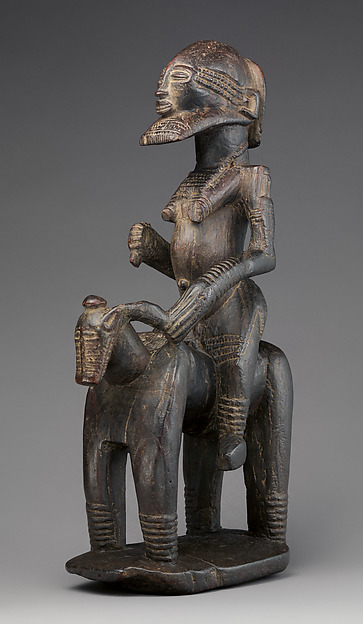
So many of the figures in this exhibit presented to our, NYC 2020, eyes as prominently hermaphroditic -- whether that was intentional was unknown to us, however.

The Sahel: Art and Empires on the Shores of the Sahara exhibit was also spectacular, but we're fairly familiar with these sorts of objects and the history -- not to mention the music.  Also, for me the relationship and history of the horse within these cultures, is an element I've been looking at for decades.

Whereas, in the Caribbean Exchange, the surviving artifacts are few and, apart from Carib and Taino, peoples we've never heard of before. Some of these may well have disappeared even prior to the Colombian Exchange's diseases, enslavement and genocides.  These items presented as mysterious and strange in a way the Malian, Dogan, Niger, Fulani, etc. cultures of the Sahell and West Africa are not.  Due to the literacy of Islam, these are 'historic' cultures. Whereas the items from the Caribbean Exchange cultures are forever unknown to literate history.
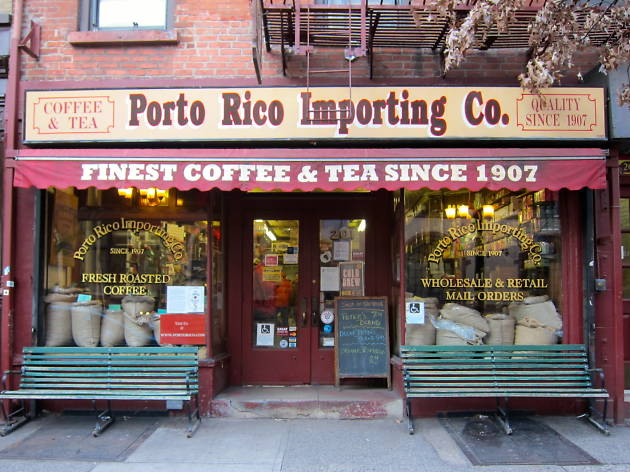


     . . . . Yesterday afternoon’s errands took me around my neighborhood, east and west. Approaching to the place on Bleecker Street where I've been buying our loose tea and coffee, since the branch on my block got rent priced out, I passed one of those tourist souvenir-smoke shops. Just there, a man burst out the shop door, throwing the stand of NYC post cards across the threshold. At first I thought it was an accident, and an asshole who didn't have the social grace to even say he was sorry, to the counter person who was at the other side of the door.  Then I saw the man's  face and the rest of his body. This was someone who was violently out of control, lashing out.  He yelled, “He threatened me! he said he was going to attack me!" he screamed into the faces of the rest of we pedestrians there, our faces and body language registering censure of what he'd done.  He raced down the block, where he met up two others like him, in appearance. If they weren’t exactly homeless, they lived rough lives focused on over consumption of booze and drugs. The took protective formation and ran back to the store, while the first guy continued to shout, “He said he was going to attack me, dirty m-word.”  I didn’t believe him the first time I heard him yell the store person threatened him.  Now I certainly didn’t.  I don’t known how it turned out, for all was quiet ten minutes later. The revolving post card stand was upright in its place, where I've seen it standing, for years and years of walking this block.

Yesterday had been very pleasant. I enjoyed having so many errands to do in the overcast, damp, a little foggy weather.  It felt like April, not February 1. I was shopping again, for food and supplies for two, not just myself, i.e. I was savoring having Vaquero home again.

Then, that.  I chatted with a few others who had witnessed this event.  We began to realize this white guy who caused this ruckus, that not only I reacted so negatively toward, had been trying to get the street on his side, to attack someone, by using a racial slur.  That was depressing as hell, that he thought he could do that.  OTOH, nobody on the street responded the way he wanted.  He only had his two (white) boys at his back.  Nobody else joined in. 

Tuesday, August 26, 2014

On This Day in 1664 New Amsterdam Became New York

It's a summer of significant historical observations.  Today it's Nieuw Amsterdam becoming New York.

It's one of the many fascinating things about living in New City and New York state that the underlying Dutch culture has persisted.


 Peter Stuyvesant Surrenders Niew Amsterdam to the English.
He Wasn't Happy About It.


Not to mention many a legal fundamental, with documents created and executed during the regime of the Dutch, such as land titles (to land stolen from the Natives, of course), wills and many other material and financial property instruments.  We have entire legal libraries filled with these documents here in the city and in Albany.

This provides employment for the qualified.  There are services here that can translate these old Dutch language instruments and docs into English.

Perhaps the most significant contribution the original European settlers of this part of the world is their tolerance of diversity in languages, religions and, most of all, ways of making money.  Nieuw Amsterdam or New York -- this place was never about anything else except making money.  Which explains, of course, why NYC was the center of the New World's overseas slave trading in terms of financing ships, insuring them and so on, for the Caribbean and Brasilian trade.  They dominated in the decades post the War of 1812.  This, despite Rhode Island, who began earlier, started ahead of NYC in the trade, and always Boston was jockeying to seize the number one position for itself.


Saturday, June 25, 2011

A Week To Remember!

We didn’t know that the Gay Marriage Bill had passed.

Instead we were dancing and getting blessed by the Big Chief and others. DH shouted el V out from the stage as the brilliant author of blahblahblah, the greatest underground supporter and facilitator of New Orleans music, culture and history, a great songwriter and musician as well as historion, who has been recorded by Willie Nelson, and should be more foregrounded, blahblahblah.
DH had done the same at the free BAM- MetroTek outdoors show on Thursday, and Thursday night Tito Puento did the same (DH played with Tito in the early 90’s, and one of his young nephews is playing with Tito now). This made el V blush and feel very humble.

After the set we had the great privilege of hanging out with Donald and discussing New Orleans music and African music diapora routes.  Whenever el V and Donald come together they pick up their conversation where it left off the last time.

I used the word 'blessed,' and I mean what the word means. I fancy this is how some people must feel after confession, absolution and Mass – far more clean and whole than they’ve felt in a while. The Indians with Donald gave us everything they had on that small stage of the Jazz Standard. The healing and cleansing power of music -- it's that cowbell/campana, baby, the power of iron, mediating between this and the worlds of the spirits.  I was way overdue.

When we were coming back downtown in the car we’re giving back to K next week, it being Gay Pride Weekend, it didn’t seem unusual to see many gay and lesbian folks reveling all over the streets – it happens every year. But this seemed more wild than usual. But then we met up with some other people to have drinks and talk, and didn’t see the news until very late, when the lightbulbs sparked.

Quite a week, yeah?  Plus mad amounts of Karl Marx, and, the national mythology of regeneration through violence.  I prefer regeneration from a different power of iron, via music and dancing.  We are expecting to be invited to many weddings within the next 18 months or so!  "Cowboys Are Frequently, Secretly," is gonna roll Big Time!

Now we're doing the Saturday night pasta with wine for me and cerveza for el V -- this is going to be one of the spectacular Saturday night pastas -- mushroom ravioli with garlic, shallots, zucchini, olives and pesto. We're listening to jazz from another age, the Great Depression, before WWII, when the Big Bands could still travel to Europe -- odd factoid: in the Great Depression the Jazz 'industry' recovered before the rest of the U.S. economy, partly because they were so popular in equally depressed Europe, and the rivalry for the entertainment dollar was so intense, jazz players and bands got a lot of work -- including on the radio.

This afternoon el V had a las Vidas perfectas meeting -- this Perfect Lives production en español will premiere sometime in December, here, somewhere, I believe.  Old friends working together again, as they did way back in the day in the first runs of Perfect Lives.

Gads, we are so happy tonight.

Funny how getting your savings for summer finally released into your bank account has such an affect on one's outlook, plus, you know, firm conditions for work for the rest of the year .... ....

Wednesday, April 1, 2009

Havana Biennial

The NY Times Arts section does a story on it, as a number of NY galleries and artists have mounted work at the Havana Biennial. The story includes a slide show of some of the works, many of which are displayed outside of a more a traditional museum-gallery-exhibit setting, around Havana. This bienial's theme is “Integration and Resistance in the Global Age.”

"The biennial, which opened on Friday, runs until April 30 and has attracted works from more than 300 artists and 54 countries."

With funds from the Fundación Amistad, a nonprofit organization based in the United States that promotes exchanges and understanding between Americans and Cubans, the Chelsea exhibition includes works by 30 artists from more than two dozen galleries, including Jack Shainman, Loretta Lux, Charles Cowles and Lehmann Maupin.


Among the pieces on exhibit is Doug Young’s “Nuclear Launch Center,” a pea-soup green desk that looks like one from the Arizona nuclear silo. Next to it stands “New Mount Rushmore,” by Long-Bin Chen, made out of New York telephone directories, which adds President Obama to the usual quartet of presidents.

The artist Duke Riley, who arrived in Havana at the beginning of March to organize a St. Patrick’s Day parade, takes a different course. “I like making friends,” he said, “but I also like messing with folks.” An eccentric bon vivant, Mr. Riley is best known
for his commentary on homeland security. (He built a model of a Colonial-era boat said to be the first submarine and was arrested as he floated up to the Queen Mary 2 when it visited New York Harbor.) Here, he organized the parade down O’Reilly Street in Old Havana partly to highlight the role the Irish had in Cuban history, he said, but also to see if it was any more difficult to get permission to march here than in the United States. “Imagine if a North Korean citizen showed up in Washington and suddenly said he wanted to organize a parade to commemorate some random holiday of his choosing,” Mr. Riley said. “How long do you think it would take to get permission?”

It took him a week to persuade Cuban officials to let him have the event. On the day of the parade he put the island’s most famous transvestite, Farah, at the head of the march to see if officials would stop it. They did not, and some of the security guards
assigned to the event actually joined in the dancing when the bagpipes were played.
“It just goes to show that you can have a little fun while you’re trying to push the envelope,” Mr. Riley said.