LINES OF THE DAY

". . . But the past does not exist independently from the present. Indeed, the past is only past because there is a present, just as I can point to something over there only because I am here. But nothing is inherently over there or here. In that sense, the past has no content. The past -- or more accurately, pastness -- is a position. Thus, in no way can we identify the past as past." p. 15

". . . But we may want to keep in mind that deeds and words are not as distinguishable as often we presume. History does not belong only to its narrators, professional or amateur. While some of us debate what history is or was, others take it into their own hands." p. 153

Silencing the Past: Power and the Production of History (1995) by Michel-Rolph Trouillot

Showing posts with label money. Show all posts

Monday, February 28, 2022

Ukraine Isn't Tuning Into New Orleans Right Now, But Russia Hangs In Cuba


     . . . . February ends. Another el sucko de dicko day – with the negative add of it being Monday.  However, here it is nearly the middle of the afternoon and the temperature is 27°, the highest it's been all day.  Russia supposedly in talks but beginning to reduce Ukranian residential areas to rubble, for all that world and his own nation’s opinion have almost moved Putin from a guy you can deal with, a guy you can live with, good for business, into the columns titled Monsters of History, providing moral and other sorts of support to Ukraine's resistance. 

Do any of soch media's newly minted Ukraine experts remember how not so long ago they hoorahrahrawed The Americans as the best thing that ever happened on television and how much they loved, admired, and sympathized with its two primary protagonists, who were planted Russian spies here in the USA to aid, assist and abet in any way they could devise, the downfall of the United States government?  Like a Russian yacht, from the gitgo it seemed more than likely that under the layers of production financing there was a deep connect to Russian money.  If that were suggested though, being in the realm of tinfoil hat delusion, well, one didn't, did one?  

Beyond that, it is still something nearly impossible to understand, why such middle-of- the-road, white, prosperous folks, particularly young males, enjoyed so much identification with these protagonists.  Well, one thing the 2016 campaign and elections and faux noose, and red caps and gerrymandering and hate campaigns against everyone who wasn't white, male and rich, outrage for public health and education and equality and justice and tolerance for all taught us -- why yes Russia has been meddling in everything, including the so-called US government head-up-Putin's ass giving Cuba back to Russia.

Which is taking a dreadful toll on Cubans and Cuba, by the way.  Which if  here was any fabric to spare and accessible on Cuba, we could well be seeing Ukraine flags there too.  But as the Cubans don't even have food, well -- and don't have a Fidel to tell the Russia "Go Fuck Yourself" now, and more porkalotetzy Russian oligarchs and their yachts are arriving every day as more ports close to them -- which means what little food available will be gobbled by the Russians.

We are in awe too, of the acts of courage being taken by Russians against this war, as well as having so much for that of the Ukrainians.  Doubtless one of the most common searches on internet images these days is this.


In the meantime, from From North Dakota's Fargo-Moorhead's InForum -- access to stories by subscription only.

"North Dakota tax dollars are financing Putin's regime in Russia

North Dakota's Legacy Fund is invested in bonds to the Russian government, and that needs to stop immediately."

 Dayem, now whose bright idea was it to do this, hmm? and now much did they get paid? 

~~~~~~~~~~~~~~~~~~~

     . . . . Easy to forget but, hey today is Lundi Gras -- and tomorrow's Mardi Gras.  Eat some damned King Cake you all.


The great New Orleans radio station WWOZ that streams and broadcasts specifically New Orleans music, had about 100 Ukrainians tuning in daily.  As of this afternoon there are only 8 tuning in . . . .

Update:  O my, here it is evening, and those same 8 listeners are still able to tune it – for a half hour at a time, but somehow, they keep returning to hear New Orleans music!

Yes, we tune in streaming from here as well.

Monday, July 5, 2021

Books, There Are Many!

     . . . .  Spending the holiday weekend trying to catch up. It only took until 1 AM from arriving at the Miami airport when They Said get there for the 2:35 PM flight, until into the next day to get home.  At one point the plane even turned around on the runway and went back to the gate and all the passengers deplaned again, and sat in the terminal for hours.  A long, masked day.  But at least Miami Airport had food places and good coffee.   So now we're trying to get ready for Thursday's Zoom Postmambo Meet-up, which is, el V's birthday, and the following Thursday's Postmambo Movie Night, as well as other things.

~~~~~~~~ In the Meantime -- About Money and a Librarian!

     . . . . By chance this spring I've been listening to several books of financial history. which inevitably becomes the history of political and mercantile corruption and crime, financial busts, bubbles, panics and depressions, corruption, wars. Among these histories is Ron Chernow's (1990) The House of Morgan: An American Banking Dynasty and the Rise of Modern Finance.  Needless to say, a great deal has changed in the perspectives of the history of banking and the finance and 'investment' industries that devoured the banking business since the passing of another 30+ decades. This is equally true for the much later books such Liaquat Ahamed (2009) Lords of Finance: The Bankers Who Broke the World.

But even in Ahamad's book, the reader learns, if only peripherally, about Bella da Costa Greene, the Pierpont Morgans's private librarian for their great collections here at the library and museum Pierpont built at Madison Avenue.  

Learning of Bella da Costa Greene, who was born into a black activist family as Jim Crow tighened its noose of the US, and to have her career -- as woman yet! -- had to pass for white, of course this signaled an excellent entry point for an historical fiction for somebody to write (not me).  Evidently others thought a fiction featuring this fascinating figure was something to do too, and did it.


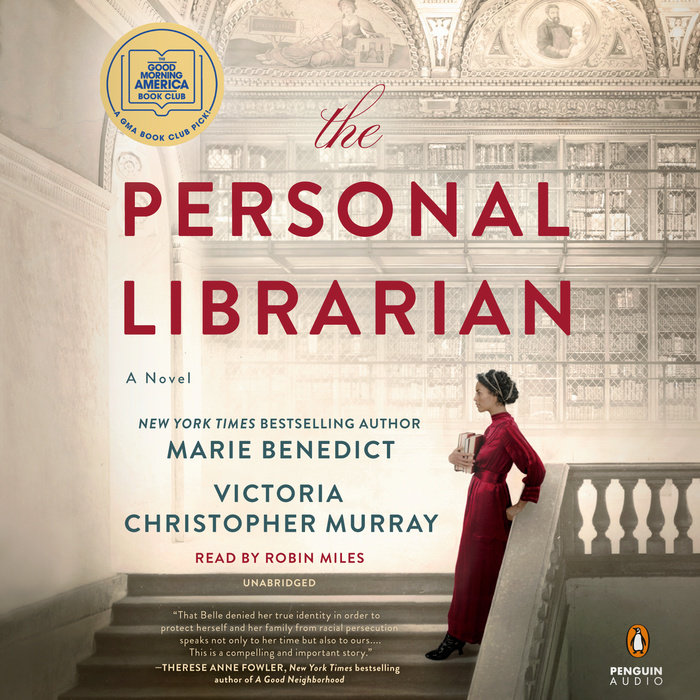
Here in The Washington Post (paywalled) we have an interview with the co-authors of The Personal Librarian, Heather Terrell and Victoria Christopher Murray.


~~~~~~~~  Reading Histories:


    . . . . Chris Wickham's (2009) The Inheritance of Rome: Illuminating the Dark Ages 400 – 1000. This book’s first section covers the same ground, though with a different perspective in some areas, as the also read-aloud, Peter Brown's (1971) The World of Late Antiquity. The perspectives are very different generally, since Wickham’s work is firmly within contemporary data based, statistical, demographic, archaeological, linguistic, etc. work that has changed historiography so much in the last half century. I also relatively recently, i.e. this year, learned a great deal of the late Roman Empire in Douglas Boin's (2020) Alaric the Goth: An Outsider's History of the Fall of the Roman Empire


These histories fit well into June's discussion on Bret Devereaux's blog "Collection" -- The Queen's Latin: Or Who Were the Romans Part I, and so far, Part II Though he does seem (so far) to ignore that Alaric, despite how Romanized in all ways that he was, was refused citizenship, and even advancement beyond a certain level, in the army -- quite like what George Washington with the Brits in the French and Indian Wars. 

What is clear, past, and present, is the two opposing arguments continue about the Roman West vs. East.  Continuity / transition vs. Sharp change / fall? 

Both of these depend on one's perspective as to Western vs. Eastern Empire, Latin Empire vs. Greek Empire -- the same fiber, weave and cloth, or different from the beginning?

I've been reading continuously the newer "Roman" histories for the 'general' reader over the the last few years, such as Adrian Galsworthy's (2016) Pax Romana: War, Peace and Conquest in the Roman World, and James O'Donnell's (2009) The Ruin of the Roman Empire: A New History.*

However, my reading in Roman history is fertile preparation ground for my real recreational historical interest,**  the transition from late antiquity to the middle ages -- Goths! Vandals! Visigoths! Ostrogoths! and mine real favorite, the Merovingians (along with, later, past the scope of this book, the Mongols and Turks)! Franks! Norse! --  which Wickham's book determines to cover in detail. One does have to consider this is 600 years, and the book's less than 700 pages, which might mean a page per year? It doesn't really work out that way, thank goodness, but still, this is Big History, of which, ah-hem,  I'm in favor. And certainly anything Wickham misses here, he's covered in his other works.

The one thing we know certainly is the 6th century was a terrible time into which to be born. One signal that informs us of this: we have less written documentary evidence for the 6th than just about any other century of "Europe" except the 4th. This would explain then, too. why the Western Church possessed more land in "Europe" in the 6th C than it has ever since. But in the last decades we've fortunately been able to learn some of what is not in the tiny written record of documentary history, from historical archaeology.


I'm still waiting for the history of Merovingian Gaul, and Visigothic Spain.


~~~~~~~~~ Reading Fiction

     . . . . It took a long time this year for a novel I wanted to read to show up one way and another.  Fortunately for me I have acquired the final three novels in Andrea Camilleri's Inspector Montalbano series set in the regional of the fictional Sicilian city of Vigatta -- The Sicilian Method (2020) – third to final Montalbano.  The Cook of the Halcyon, and Riccardino are the last two titles, both published in the US in 2021. the Author died in 2019.

Mr. Camilleri prepared years ago for the end of the Montalbano series.

“I finished him off five years ago,” he said in 2012. “That’s to say, the final novel in the series of Montalbano is already written and deposited at the publishing house. When I get fed up with him or am not able to write any more, I’ll tell the publisher: Publish that book.”

Also, the latest Martin Walker’s  a Bruno Chief of Police series set in past and present Provence, The Coldest Case. I've been looking forward to this since finishing up all the previous Bruno novels by the end of last summer.

~~~~~~~~~~Ranking First Half 2021 Reading

     . . . . Now that half of 2021 has passed, I can speak definitely as to which books were my most enjoyable, most informative reading, for the first half of this year:


Robert Irwin's (2018) Ibn Khaldun: An Intellectual Biography;

James Grant's (2019) Bagehot: The Life and Times of the Greatest Victorian;

Marie Favereau's (2021) The Horde: How the Mongols Changed the World;

And already, the history noted above, Chris Wickham's (2009) Inheritance of Rome: Illuminating the Dark Ages 400 - 1000 qualifies.

~~~~~~~~~

* Oddly, as much as I respect and appreciate Mary Beard's work, I find reading her books a chore. Not her fault, but mine.

** Just in case: my professional specialization is the history of the colonial Americans, and the history of the United States, via the lenses of the African Slave Trade and slavery in the Americas, and specifically the slave system of the United States.


Wednesday, April 7, 2021

Let's Read Again Like We Did Last Year ~~

      . . . . Frequently my mind fails to make sense to me. 


 How did I manage to choose Bagehot: The Life and Times of the Greatest Victorian (2019) by James Grant as the audio book to follow Pale Rider: The Spanish Flu of 1918 and How It Changed the World (2016) by Laura Spinney, and The Zealot and the Emancipator: John Brown, Abraham Lincoln, and the Struggle for American Freedom (2020) by H. W. Brands for my workouts?

So far my great take-away is that Bagehot was not only a prototype of what we in later times tend to call a libertarian / neo liberal.  He formalized the concept, and described in detail  the necessity of a Central Bank and its functions for a stable government.  He did the same for Constitutional Monarchy. This while, though they benefit from both, the 'lower orders,' the poor, the uneducated, are incapable of understanding either economics or constitutions, and certainly lack the capacity for making political and governing decisions. Needless to say that women as a class aren't even that much of a consideration, despite his respect for the intellects of many of the women of his acquaintance, including his own mother, who also suffered serious mental illness.

This brilliant fellow, a prodigy already as a very young child, could not add or subtract. Yet his family put him in charge the family banking business, when he hated everything else including the law for which he qualified among his many other professional credentials, realizing he wouldn't be able to pull a Disraeli and move from writing to holding office and becoming Prime Minister. The family business's great fortune is that he seems to have spent more time doing anything but banking, while remaining a writing demon as to output, and a polymath in terms of what he wrote about. Naturally, due to his writing about how to run a country's finances, he got sent to India to put its finances on solid footing.  How more British and Victorian than this may we get?

Bagehot was praised for cool wit and epigrammatic style, which author Grant does his best to exhibit in his own economic writing. Nor did Bagehot stint in praise for himself in his own writing, knowing he knew what others did not, and taking knowingly contrary political positions such as favoring Louis-Philippe's coup against the election and naming himself France's ruler for life. Bagehot inevitably reminds this reader of that thoroughly self-satisfied, thoroughly knowledgeable of his own superiority, that fellow likely only Tories today recall, William F. Buckley.

On the other hand, George Eliot quite adored Bagehot as a thinker and his friend.  But no one has suggested George Eliot didn't have a strong conservative bent herself -- except for herself, of course.

~ ~ ~ ~ ~

Things do roll on, don't they. The period's royalties arrived, and so did spring, while winter, hopefully, is now departed for months.  El V got his second dose of Pfizer this afternoon.  He's currently lying down, but he generally feels sleepy before dinner so it probably means nothing.  I am making dinner, looking forward to my second dose of Moderna late Friday afternoon, and after dinner, I'm particularly looking forward to the HBO Max premiere of  the 4-part Exterminate All the Brutes.

In ‘Exterminate All the Brutes,’ Raoul Peck Takes Aim at White Supremacy

After the success of “I Am Not Your Negro,” HBO gave Peck carte blanche for his next big project. What resulted is a sweeping meditation on colonialism and the nature of truth itself. ... New York Times

Raoul Peck’s four-hour documentary for HBO is a dizzying retelling of the course of colonialism, slavery and genocide. ... New York Times

"....a Radical Masterpiece About White Supremacy, Violence and the History of the West" ... Time

This exploration of the "origin story of white supremacy" features two Revelators who have had deep effect on both el V's and my historical researches and formation of our historical perspective:  


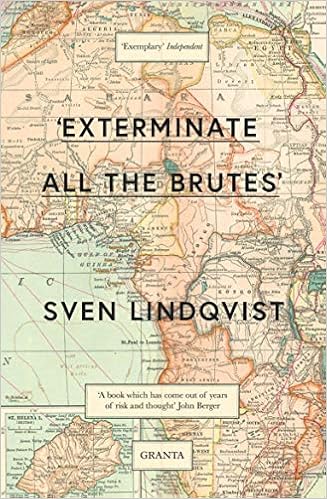
" .... It takes its title from Swedish historian Sven Lindqvist’s ruminative 1992 book about his travels through postcolonial Africa, which in turn wrestles with the source of the quote “exterminate all the brutes”: Joseph Conrad’s immortal novella Heart of Darkness. Peck also draws heavily on historian and activist Roxanne Dunbar-Ortiz’s An Indigenous People’s History of the United States and Haitian anthropologist Michel-Rolph Trouillot’s Silencing the Past: The Power and Production of History. In each episode, he credits himself as having made the series “together with” all three scholars, even though Trouillot died in 2012 and Lindqvist in 2019."

Seeing Roxanne Dunbar-Ortiz involved in this already highly praised non-dramatic, history series, feels particularly personal since she accepted on our behalf and read our "Thank you very much for this honor" for the 2016 American Book Award for The American Slave Coast: A History of the Slave Breeding Industry, as we weren't able to make it out to California for the event.  But it's particularly satisfying because Dunbar-Ortiz is a true pioneer of this kind of work.  When she began, it didn't exist, within or without academia.  Now, because of hers and others devoting their lives to inventing a methodology to study and recover history that has been both disappeared and denied, to see her, at her age, receiving this kind of recognition is truly exciting.

A quote from Michel-Rolph Trouillot is at the top of this Fox Home blog, as it has since the beginning.


Saturday, January 11, 2020

Today's Thoughts Include Edith Wharton

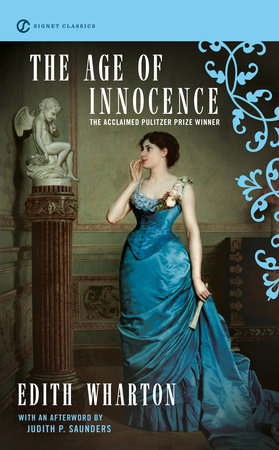
    . . . . Since my first reading of Age of Innocence, accomplished long after its initial publication in 1920, but chronologically set in the author's past of 1870's Gilded age New York, Edith Wharton has  high on my personal canon of fiction that never goes stale, whatever age we are in or whatever age we are when first reading it and re-reading it thereafter.


Devouring Age of Innocence, in which the destruction is merely bitter-sweet, I turned to The House of Mirth, set in the Gilded Age, which was still in effect in 1905, when it was first published. 


O the bitterness, the waste of a life -- a talented, struggling, isolated woman's life -- the sheer awe-fullness of it, eclipsed anything I'd read up that time, other than in George Eliot.  There was nothing warm about the people of this book other than the protagonist's fire to not be what she was condemned to be.


So, these quoted words of Wharton concerning centering a frivolous, useless society in one's writing resonate magnificently in the past, the present, and if there shall be one, no doubt in the future too.

Wharton had already written books including a novel set in 18th-century Italy and a volume on interior design when she began drafting a novel set in the rarefied world of moneyed New York. The challenge, she recalls in A Backward Glance, was to find the gravitas in such a world. “The answer was that a frivolous society can acquire dramatic significance only through what its frivolity destroys. Its tragic implication lies in its power of debasing people and ideals. The answer, in short, was my heroine, Lily Bart.”
Presently we daily witness and experience ourselves, we who aren't members in our neo-Gilded Age class of heartlessly frivolous powerful and obscenely wealthy, the destruction they wreak upon us and the planet.

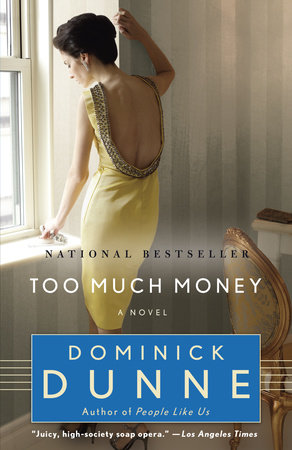
No wonder Dominick Dunne, one of our own literary chroniclers of the descendants of Wharton's people and those who came and come up to elbow them aside, named his novel, Too Much Money (2009), after them.


Saturday, April 23, 2016

Depictions of Slavery and Slaves on Southern Bank Notes and Other Financial Instruments

Stories are all over the "news" media, featuring this history of depicting slaves and slavery on financial instruments issued by southern banks and insurance companies, and then on the so-called currency of the so-called CSA are everywhere now that it was officially announced that Harriet Tubman will take the place of Jackson on the U.S. $20 bill.

Issued by a JoJaw, bank.
There's a great deal of coverage of this matter in The American Slave Coast:  A History of the Slave Breeding Industry, as well as about how Jackson hated currency, hated banks and therefore, managed an excellent job of destroying both -- as well as the national economy.  Killing the Bank of the United States of America, and replacing it with the "pet banks" that printed notes but had no other backing than land fever inflation set off the longest, deepest economic depression the nation ever saw, up to the Great Depression of the 1930's.

What none of the stories mention, however, which is what The American Slave Coast describes in detail, is that slaves literally were antebellum southern states' money -- which was underlined by the CSA putting slaves on its money -- at least on the front; very quickly the CSA 'treasury' couldn't even print anything on the reverse of the bills.  Since slaves weren't money for any other nation, this had a lot to do with why no European nation would support the idea of the CSA as a nation -- which it wasn't.  It was an army, but it wasn't a nation and performed none of the other duties and obligations toward its people that a nation to be a nation must do.

Tomorrow, early in the AM, we're off to Georgia, to do some Slave Coast events and other things.


Friday, December 11, 2015

Dirty and Flea-bitten - The Stuart Restoration

You know, the more one learns of the era and court of Charles II, the more strongly it emerges is a court of slatterns.

Dogs and people pissing and shitting anywhere they pleased, vomiting and farting from their daily excesses. Stinking of sweat and other essences including the excrescences on their mouths, noses and fingers caused by their inveterate snuff taking, drenching themselves in perfumes and oils. Fleas and lice.

The rest of their behaviors mirror their lack of elegance, taste, and interest in the arts, even as the  poor man's monarch, Charlie 2, aped the genuine article in France.

Every Stuart monarch was a disaster, though each of them was a disaster in a different way. Charles II cared far too little about being a monarch and its day-to-day responsibilities and obligations -- perhaps he'd dreamed so long about becoming one but had never dreamed beyond taking back the crown?  But once he received the crown, ruling mattered little to him.  He left all that to his brother and others, while courting affection by giving away what should have been in the kingdom's treasury. Not even his Queen's own properties, not even excluding her personal jewels and furniture, were exempted from his compulsive gifting to his favorites, male and female alike.

What, beyond amusement, interested him at all seems to be going to war with the Dutch to take their conquests in West African and India for his own.  For that he needed a navy, but the responsibility of making one was left to his brother, James.

The two sides of the Elephant and Castle, from Charles II's Royal African Company coin, soon and thereafter commonly known as the "guinea." *  There's a section in The American Slave Coast explicating this, as part of the only goods for which Africans would take in trade for their captives -- which is why it was so difficult for the English colonists to engage directly in the African trade themselves.  As colonists they did not have  the goods that Africans would accept, and as colonists, they were forbidden to manufacture them. Nor were there significant sources of gold and other precious metals in North America, and would not be until the 1848 California Gold Strike after the Mexican-American War.
Thus one cannot be surprised that he and his favorites turned to slave trading to enrich their private purses. The Royal African Company was set up specifically to trade in "negroes" up and down the West African Coast, selling them to the voracious New World markets. It was led by James, Duke of York, Charlie 2's brother.

When it came to the Royal African Company, even Pepys must have felt a bit of queasiness since as often as he mentions talking business there, and on many occasion with the Duke of York himself, in the course of serving his Majesty's navy, he never mentions in his own personal diaries what the purpose of Africa House is.

Anyone wishing to romanticize the reign of Charles II has to scrub and scrub and scrub and white wash and white wash and white wash, while wearing nose plugs and blinders, and then deliberately choose not to read the primary record, to get there.

-------------------------

*   Even now the guinea generates more money: we paid $300 to the British Museum for permission to reproduce the elephant and castle in The American Slave Coast. We had taken the photo ourselves, but it was from a display in the museum.

Sunday, September 7, 2014

Bill Gates Discovers Big History

Bill Gates discovered Big History via dvds he watched while on the treadmill in his private gym.  He's decided to put Big History courses into all the country's high schools.

There are questions anyone should ask about Bill Gates dictating a nation's high curriculum.  He's responsible for the Common Core and other initiatives such as


Microsoft Encarta* that don't seem to have worked any better than anything else in creating an authentically educated population. By now these Big History courses are being taught all over the U.S. and Gates plans to get his plans added to thousands more schools within the next year or so.  However, anecdotally, the students in the university courses that we teach now and again, when asked, can't point to a map and show where a place is, whether in the U.S. or anywhere else, never heard of the Emancipation Proclamation or any of the Presidents, the Mexican War, the War of 1812, etc.

In other words, reading about these courses, students aren't learning actual history: there is no methodology for evaluation of historical actualities.  It's an undisciplined hodgepodge of unproven, if exciting, theories without supporting, discriminating documentation -- rather the way within genres, so much so-called alternate history is written.

Myself, am quite fond of Big History. It's a constant feedback loop, delving into the history of any where, any time and any place -- the local feeding into the larger picture and the larger world's affect upon the ever smaller and more local.  For instance, if one wants to understand the history of cotton's drive of the global economy and how it got to be a part -- and such a huge part -- of the global economy in the nineteenth century, a study of the history of a single Mississippi plantation is where to begin.  This moves one on to transport back and forth between Mississippi and Europe, European capital instruments, and how they flow to Mississippi and so on.  But without looking at both the larger and the smaller, the historian will have a process and a system that's incomplete.

In any case,  el V's books, and now our The American Slave Coast, are Big Histories of their subjects, because that's how I've always rolled -- the interconnections and influences among subjects and events within various time frames. Thus The American Slave Coast begins with Europe's first conscious voyages into what they called the New World.  Africans were on all those voyages, in a spectrum of positions from skilled seamen to those whose condition was that of being enslaved, from the time of Colombo's very first sail.

It is fun reading the description of Bill Gates discovery of Our Favorites: the Annales School of historians.

It's also fun to read how his advisor in these matters, Australian David Christian, began realizing his concepts.

He went through the same process I witnessed el V go through, in his first


attempts to write what became Cuba and Its Music: From the First Drums to the Mambo, which became that book that people are still reading and teaching, precisely because it is a Big History.  It begins with the Phoenicians, and, indeed, that first section remains the most popular part of the book with those who aren't reading for the music only.

Back then El V didn't know what Big History was. He was so frustrated in his attempts to find his way into writing the book.  He kept going further and further back in time. (Though he'd done a great deal of very high quality, professional writing, until then he hadn't written book.)  I gave him a bunch of books from my shelves that he'd never looked at, including Braudel.  That was his eureka time -- a subject's story could be told from before the subject, i.e. Cuban music, existed -- it could and, for full understanding, should be told from the existence of the forces that made the crucible which brought the subject into being.  Fortunately with his Spanish language skills, he was able to dig into Spanish resources that most music writers don't have, and brought those early days of Phoenician traders in Iberia, and the era of the Peninsula's Roman dominance, into -- appropriately for the subject -- throbbing life.

The NY Times Magazine article about Gates and his new philanthropic education mission here.
---------------------

*  Link here to description of Microsoft Encarta at Wiki, which supposedly destroyed Microsoft Encarta. I never found it useful -- too clumsy, and too difficult to extract any useful scope of information.  The same reason e-books are not useful for me: too much time wallowing around swiping, ticking, clicking, going from one place to another, rather than absorbing information, much less knowledge.