LINES OF THE DAY

". . . But the past does not exist independently from the present. Indeed, the past is only past because there is a present, just as I can point to something over there only because I am here. But nothing is inherently over there or here. In that sense, the past has no content. The past -- or more accurately, pastness -- is a position. Thus, in no way can we identify the past as past." p. 15

". . . But we may want to keep in mind that deeds and words are not as distinguishable as often we presume. History does not belong only to its narrators, professional or amateur. While some of us debate what history is or was, others take it into their own hands." p. 153

Silencing the Past: Power and the Production of History (1995) by Michel-Rolph Trouillot

Showing posts with label Women writers. Show all posts

Saturday, January 11, 2020

Today's Thoughts Include Edith Wharton

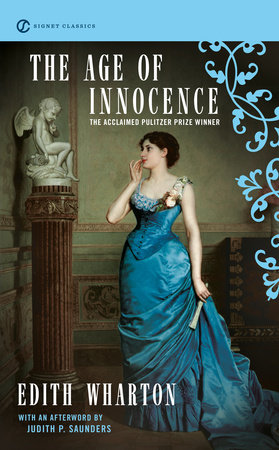
    . . . . Since my first reading of Age of Innocence, accomplished long after its initial publication in 1920, but chronologically set in the author's past of 1870's Gilded age New York, Edith Wharton has  high on my personal canon of fiction that never goes stale, whatever age we are in or whatever age we are when first reading it and re-reading it thereafter.


Devouring Age of Innocence, in which the destruction is merely bitter-sweet, I turned to The House of Mirth, set in the Gilded Age, which was still in effect in 1905, when it was first published. 


O the bitterness, the waste of a life -- a talented, struggling, isolated woman's life -- the sheer awe-fullness of it, eclipsed anything I'd read up that time, other than in George Eliot.  There was nothing warm about the people of this book other than the protagonist's fire to not be what she was condemned to be.


So, these quoted words of Wharton concerning centering a frivolous, useless society in one's writing resonate magnificently in the past, the present, and if there shall be one, no doubt in the future too.

Wharton had already written books including a novel set in 18th-century Italy and a volume on interior design when she began drafting a novel set in the rarefied world of moneyed New York. The challenge, she recalls in A Backward Glance, was to find the gravitas in such a world. “The answer was that a frivolous society can acquire dramatic significance only through what its frivolity destroys. Its tragic implication lies in its power of debasing people and ideals. The answer, in short, was my heroine, Lily Bart.”
Presently we daily witness and experience ourselves, we who aren't members in our neo-Gilded Age class of heartlessly frivolous powerful and obscenely wealthy, the destruction they wreak upon us and the planet.

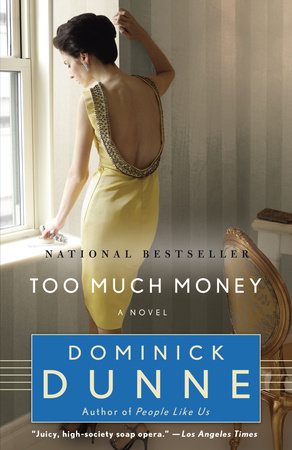
No wonder Dominick Dunne, one of our own literary chroniclers of the descendants of Wharton's people and those who came and come up to elbow them aside, named his novel, Too Much Money (2009), after them.

Tuesday, April 21, 2015

Wolf Hall - "Anna Regina" PBS - Mark Rylance's Cromwell

Mark Rylance's Cromwell was fascinating from the first episode.  By the middle of "Anna Regina", the 3rd episode of Wolf Hall on PBS, he has become mesmerizing.  We can never have enough of looking at him.


The subtilties and range of what Rylance communicates via his eyes and mouth alone, saying nothing, is, at the very least, worthy of all acting awards. Because of the thick, all enveloping masculine fashion of the era, particularly for somber administrative and legal fellows such as Thomas Cromwell, body language is out, so it's all in Rylance's head, so to speak.

The production's parallelisms and foreshadowings are quite faithful to Mantel's novel -- if I'm recalling correctly; it's been some time since I read Wolf Hall and Bring Up the Bodies.

Favorite ones from this episode were his sister-in-law / mistress's off-handed observation that even if /when her husband succumbs to his maladies, because she's Cromwell's "sister" it's illegal for them to marry -- the very argument by which Henry VIII justifies his desire to divorce Katherine.

Another favorite was the sudden irruption of lust-fantasy on Cromwell's part, while conversing amiably with Anne Boleyn, in which his fingers trace around her neck, down between and over, across the high swell of her breasts uplifted by the stays in the bodice of her low cut gown.  Rylance's face remains blank, yet conveys his shock at himself, and even -- maybe? -- a sense of Anne's eventual fate?  or that may just be for us to think of -- all simultaneously.  Also, for the first time, we get a sense of Anne as a beguiling beauty (this is particularly good as earlier in the archery scenes we are wishing someone would give her a time-out, if not a spanking, in response to her total brattiness when her shots didn't go as she wished). This makes for a a special poignancy, when, in another


conversation after Anne is confined to wait out the conclusion of her pregnancy, she says that she's always been desired, but this is the first time she feels valued. All of which we see Rylance taking in, knowing, as do we, just how fragile is her state of value, depending as it does entirely upon what her womb delivers.


So many foreshadowings -- even Anne's coronation ceremony as Queen of England, has her outstretched arms on either side, flat on the cathedral floor, in the pose of her final fate.

It seems that this production cannot do, and has done nothing, not even a tiny detail, wrong!


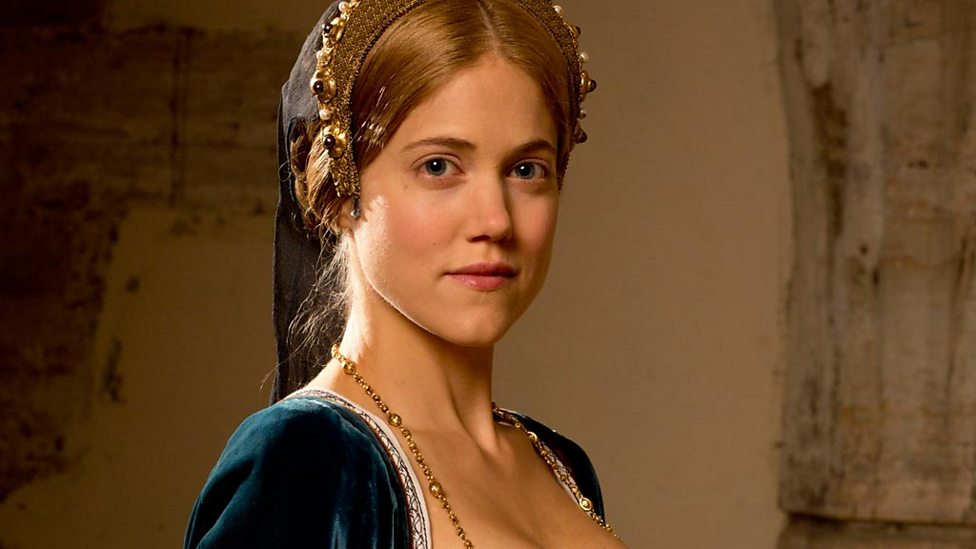
Unexpectedly, so far my favorite character is actress Charity Walkefield,'s Mary Boleyn, speaking only in terms of a character's likeability, of course, as this is Rylance's - Cromwell's show all together.  But the other Boleyn girl has a sprightly good-natured understanding of the world and its matters, and terrific sense of humor.

Wednesday, October 10, 2012

Historical Fiction - *The Dead Are Real* The New Yorker

The title brings up vividly an experience with the Tumba Francesa in Santiago de Cuba. After performing a variety of dance-drum-rhythm dances, the Director, an ancient woman, asked us how we liked it. El V, impressed even more than usual, said something on the order of how alive-O, how much vitality, how not dead and museum quality it was. Her response was, "And the dead, they too were dancing."

The dead are not dead: they are the ancestors. History never goes away.

"The Dead Are Real: Hilary Mantel’s Imagination," by Larissa MacFarquhar, Oct. 15, 2012  (The New Yorker) is an essay about historical fiction.

What is it? Who writes it?

There are so many pithy paragraphs in this essay that any of us who have an interest in historical fiction would be sorry not to have read it.

Here follows a comment which describes my personal vexations with so much that is marketed as historical fiction but is not;:

The reputation of historical fiction is unstable. In the thirties, the Marxist literary critic György Lukács argued that early historical novels like those by Scott, Balzac, and Tolstoy showed that man’s nature was not fixed but transformed over time; thus, they showed that revolution was possible and, in doing so, made it more likely. But these days the historical novel is not quite respectable. It has difficulty distinguishing itself from its easy sister the historical romance. It is thought to involve irritating ways of talking, or excessive descriptions of clothes. 
To often history is employed in fiction  by the sort of people who regard history as "a bathtub in which we all can splash around as we like" -- you can imagine how people for whom history is both profession and passion feel about that!

The past, in fiction, has more prestige than the future, but, as with the future, its prestige declines with its distance from the present. Novels about the past hundred years or so are all right, but once you go beyond the First World War, once you leave indoor plumbing and move into crinolines and wigs, your genre status deteriorates very quickly. A book jacket depicting Henry VIII, or a queen wearing pearls, is off-putting to a certain sort of reader. Why would a writer write about the distant past, that reader might wonder, if not to escape the realist discipline imposed by familiarity? If not to flee to a world blurry enough so that men can behave like Vikings and not seem ridiculous, and ladies can be ladies without being pathetic? And if a writer writes about historically significant people then she is forced into a respectful posture that depreciates her status still further, since it has become one of the hallmarks of literary fiction that its authors regard their characters with something between affectionate condescension and total contempt. 


Tuesday, February 24, 2009

Laura Miller and Elaine Showalter Ask "Why can't a woman write the Great American Novel?"

Either Showalter's book, A Jury of Her Peers: American Women Writers From Anne Bradstreet to Annie Proulx, is remarkably stupid and filled with ignorance, or else Laura Miller's an idiot -- which many people for a long time have stated -- because this is the reason that Miller declares Showalter provides as why women in the United States didn't write Middlemarch:

[ "While English women novelists, even those as poor as the Brontës, had servants, American women were expected to clean, cook and sew; even in the South, white women in slaveholding families were trained in domestic arts." ]

Nevermind for the moment the very many great novels written by women in this country -- Harriet Beecher Stowe, Willa Cather, Edith Wharton, Zora Neale Hurston, Harper Lee, Toni Morrison, Leslie Silko, leap to mind immediately -- and look at the astounding scope and range of each of these writers's body of work, individually and as an eclectic group! -- where the f*ck did either Showalter or Miller get the idea that Austen, the Brontes, Eliot, Gaskell didn't do domestic work, every day, and do it very well? Eliot often spoke with great pride of her domestic skills, even after she employed many servants. She insisted that only someone who knows how to do the work right herself, and has done it, could train a servant and keep a house running as it should.

Did Showalter not read a single biography of any of them? Did she not read their novels, filled with personal knowledge of all the work even middle-class women performed in the home? Not to mention nursing the sick, laying out and washing the dead? One of the lovely things about the recent BBC dramatization of Gaskell's Cranford was that it showed us, as does the text work itself, all these dirty jobs that even genteel, comfortably off women did as a matter of course, every day.

Moreover Harriet Beecher Stowe, even in the early impoverished days of her marriage in the boonies had a domestic servant. She was an ignorant, untaught backwoods young girl, who Stowe had to teach to do everything, while Stowe herself worked at domestic tasks, while pregnant, while working on her first fiction.Cather and Wharton are the writers here who did little or no domestic tasks themselves with their hands. Cather, because her family allowed her privileges that few girls her age had -- she was that exception to the average woman who proves the rule -- and Wharton because she was a member of the American aristocracy and rich.

This ignorance of the basic facts of these writers' lives is inexcusable. This is another of those feminist dilemmas in which one's supposedly feminist friends are a big part of the problem. It's also beyond infuriating.