. . . . Spending the holiday weekend trying to catch up. It only took until 1 AM from arriving at the Miami airport when They Said get there for the 2:35 PM flight, until into the next day to get home. At one point the plane even turned around on the runway and went back to the gate and all the passengers deplaned again, and sat in the terminal for hours. A long, masked day. But at least Miami Airport had food places and good coffee. So now we're trying to get ready for Thursday's Zoom Postmambo Meet-up, which is, el V's birthday, and the following Thursday's Postmambo Movie Night, as well as other things.
~~~~~~~~ In the Meantime -- About Money and a Librarian!
. . . . By chance this spring I've been listening to several books of financial history. which inevitably becomes the history of political and mercantile corruption and crime, financial busts, bubbles, panics and depressions, corruption, wars. Among these histories is Ron Chernow's (1990) The House of Morgan: An American Banking Dynasty and the Rise of Modern Finance. Needless to say, a great deal has changed in the perspectives of the history of banking and the finance and 'investment' industries that devoured the banking business since the passing of another 30+ decades. This is equally true for the much later books such Liaquat Ahamed (2009) Lords of Finance: The Bankers Who Broke the World.
But even in Ahamad's book, the reader learns, if only peripherally, about Bella da Costa Greene, the Pierpont Morgans's private librarian for their great collections here at the library and museum Pierpont built at Madison Avenue.
Learning of Bella da Costa Greene, who was born into a black activist family as Jim Crow tighened its noose of the US, and to have her career -- as woman yet! -- had to pass for white, of course this signaled an excellent entry point for an historical fiction for somebody to write (not me). Evidently others thought a fiction featuring this fascinating figure was something to do too, and did it.
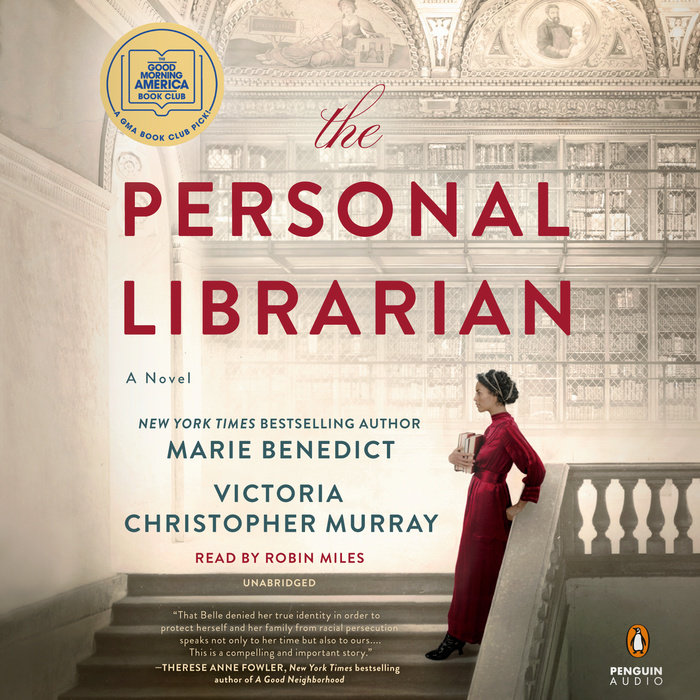
Here in The Washington Post (paywalled) we have an interview with the co-authors of The Personal Librarian, Heather Terrell and Victoria Christopher Murray.

~~~~~~~~ Reading Histories:

. . . . Chris Wickham's (2009) The Inheritance of Rome: Illuminating the Dark Ages 400 – 1000. This book’s first section covers the same ground, though with a different perspective in some areas, as the also read-aloud, Peter Brown's (1971) The World of Late Antiquity. The perspectives are very different generally, since Wickham’s work is firmly within contemporary data based, statistical, demographic, archaeological, linguistic, etc. work that has changed historiography so much in the last half century. I also relatively recently, i.e. this year, learned a great deal of the late Roman Empire in Douglas Boin's (2020) Alaric the Goth: An Outsider's History of the Fall of the Roman Empire.
These histories fit well into June's discussion on Bret Devereaux's blog "Collection" -- The Queen's Latin: Or Who Were the Romans Part I, and so far, Part II. Though he does seem (so far) to ignore that Alaric, despite how Romanized in all ways that he was, was refused citizenship, and even advancement beyond a certain level, in the army -- quite like what George Washington with the Brits in the French and Indian Wars.
What is clear, past, and present, is the two opposing arguments continue about the Roman West vs. East. Continuity / transition vs. Sharp change / fall?
Both of these depend on one's perspective as to Western vs. Eastern Empire, Latin Empire vs. Greek Empire -- the same fiber, weave and cloth, or different from the beginning?
I've been reading continuously the newer "Roman" histories for the 'general' reader over the the last few years, such as Adrian Galsworthy's (2016) Pax Romana: War, Peace and Conquest in the Roman World, and James O'Donnell's (2009) The Ruin of the Roman Empire: A New History.*
However, my reading in Roman history is fertile preparation ground for my real recreational historical interest,** the transition from late antiquity to the middle ages -- Goths! Vandals! Visigoths! Ostrogoths! and mine real favorite, the Merovingians (along with, later, past the scope of this book, the Mongols and Turks)! Franks! Norse! -- which Wickham's book determines to cover in detail. One does have to consider this is 600 years, and the book's less than 700 pages, which might mean a page per year? It doesn't really work out that way, thank goodness, but still, this is Big History, of which, ah-hem, I'm in favor. And certainly anything Wickham misses here, he's covered in his other works.
The one thing we know certainly is the 6th century was a terrible time into which to be born. One signal that informs us of this: we have less written documentary evidence for the 6th than just about any other century of "Europe" except the 4th. This would explain then, too. why the Western Church possessed more land in "Europe" in the 6th C than it has ever since. But in the last decades we've fortunately been able to learn some of what is not in the tiny written record of documentary history, from historical archaeology.

I'm still waiting for the history of Merovingian Gaul, and Visigothic Spain.
~~~~~~~~~ Reading Fiction
. . . . It took a long time this year for a novel I wanted to read to show up one way and another. Fortunately for me I have acquired the final three novels in Andrea Camilleri's Inspector Montalbano series set in the regional of the fictional Sicilian city of Vigatta -- The Sicilian Method (2020) – third to final Montalbano. The Cook of the Halcyon, and Riccardino are the last two titles, both published in the US in 2021. the Author died in 2019.
Mr. Camilleri prepared years ago for the end of the Montalbano series.
“I finished him off five years ago,” he said in 2012. “That’s to say, the final novel in the series of Montalbano is already written and deposited at the publishing house. When I get fed up with him or am not able to write any more, I’ll tell the publisher: Publish that book.”
Also, the latest Martin Walker’s a Bruno Chief of Police series set in past and present Provence, The Coldest Case. I've been looking forward to this since finishing up all the previous Bruno novels by the end of last summer.
~~~~~~~~~~Ranking First Half 2021 Reading
. . . . Now that half of 2021 has passed, I can speak definitely as to which books were my most enjoyable, most informative reading, for the first half of this year:

Robert Irwin's (2018) Ibn Khaldun: An Intellectual Biography;
James Grant's (2019) Bagehot: The Life and Times of the Greatest Victorian;
Marie Favereau's (2021) The Horde: How the Mongols Changed the World;
And already, the history noted above, Chris Wickham's (2009) Inheritance of Rome: Illuminating the Dark Ages 400 - 1000 qualifies.
~~~~~~~~~
* Oddly, as much as I respect and appreciate Mary Beard's work, I find reading her books a chore. Not her fault, but mine.
** Just in case: my professional specialization is the history of the colonial Americans, and the history of the United States, via the lenses of the African Slave Trade and slavery in the Americas, and specifically the slave system of the United States.