LINES OF THE DAY

". . . But the past does not exist independently from the present. Indeed, the past is only past because there is a present, just as I can point to something over there only because I am here. But nothing is inherently over there or here. In that sense, the past has no content. The past -- or more accurately, pastness -- is a position. Thus, in no way can we identify the past as past." p. 15

". . . But we may want to keep in mind that deeds and words are not as distinguishable as often we presume. History does not belong only to its narrators, professional or amateur. While some of us debate what history is or was, others take it into their own hands." p. 153

Silencing the Past: Power and the Production of History (1995) by Michel-Rolph Trouillot

Showing posts with label criticism. Show all posts

Sunday, December 18, 2016

Under The Bright Surface, the Darkness of Jane Austen's Novels's Depths

    . . . .  This is a perceptive essay by a mature reader and literary scholar


Poor Fanny at the bridge of the ha-ha.
who sees a different Jane Austen than did her younger self, one that is far more true to the age in which they were written than the fantasies woven about them these days by so many contemporary female readers.

The author, Mikita Brottman, spends several satisfying paragraphs on Mansfield Park. Something new -- these days, her students, so sensitive to bullying and victimization, feel a deeply personal, sympathetic bond with Fanny Price, so unlike many feminist literary students of my era.

I now see Austen as a very dark writer and Mansfield Park as her darkest work, a book full of sexual repression and unconscious conflict, with no forgiveness or redemption for anyone who dares struggle against the social code. The world of taffeta and lace exists only on the surface; underneath it, these well-bred young women are trapped like rats. 
"Trapped like rats," describes how I've seen almost all the women in Austen's works.
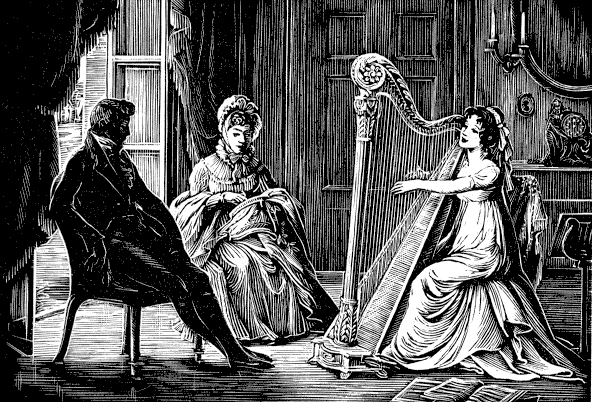
Mary Crawford seduces plays the harp for Fanny's Edmond.
(The single exception may be the most conventional of them all, Emma. But then her cage is the most gilded of Austen's protagonists. She has the least to gain or lose --  by breaking out, with the exception of Mary Crawford, who we are to abhor for stealing Fanny's beloved. *)
At one point, she (Fanny) overhears Maria flirtatiously asking their neighbor, the handsome Henry Crawford, whether he thinks she’s as lively as her sister.
Henry’s reply is ambiguous. “You have a very smiling scene before you,” he observes.
“Do you mean literally or figuratively?” says Maria. “Literally, I conclude. Yes, certainly, the sun shines, and the park looks very cheerful. But unluckily that iron gate, that ha-ha, give me a feeling of restraint and hardship. ‘I cannot get out,’ as the starling said.”
Maria Bertram is using a reference to Lawrence Sterne's 1768 A Sentimental Journey to describe her own condition.  Who would have thought that such a superficial privileged pretty young woman could have the knowledge and the intelligence to see the similarities between herself and this incident in Sterne's novel?  Surely such perceptions are confined to darling, bookish, insignificant perfect Fanny, hmmmmm?
. . . . .To give weight to her feeling of being trapped, Maria alludes to an incident in A Sentimental Journey, Laurence Sterne’s 1768 novel. The narrator, Yorick, is visiting the Bastille, thinking that imprisonment there might not be so bad. The prison, he muses, is just a kind of tower, and is a tower really so different from a house you can’t leave? Suddenly, he hears the same words repeated twice over—“I can’t get out—I can’t get out”—and looking up, sees a starling in a little cage. He tries to free the bird, but discovers the cage is locked in such a way that you can’t open it without destroying both cage and bird. All at once, Yorick is brought back to reality. “Mechanical as the notes were, yet so true in tune to nature were they chanted, that in one moment they overthrew all my systematic reasonings …”
Like the starling, Austen’s heroines cannot get out. . . .
Nor does darling rigidly conventional Fanny object to the consequent very real imprisonment abroad of Maria as punishment for breaking out. But she has the very most to lose by breaking out -- until she does and goes home and consaequently performs a 360, proving her very conventional value to the family whose blood daughter really did break out. Fanny's happy ending is the only happy ending a female can achieve -- doing everything according to society's demands.

Neither Austen nor her readers were about to see things the way we see things these days.  And that world was a dreadful, truly dreadful prison for just about all women.
 “The greatest blessing to every one of kindred with Mrs. Rushworth,” thinks Fanny, “would be instant annihilation.”
What does this say about contemporary young readers, one wonders.  That they adore Fanny for suffering, but have no sympathy for a woman who kicked over the traces of what she was condemned to by family and society?  It's as though we have all gone backwards again as a gender, a society and a culture.

The 19th century illustrations of Austen novels, of course, have helped feed that non-reality based, nursery rhyme - fairy tale perception of subsequent generations of fanciful female readers.
------------------------

Does this not just make you sick?  Mansfield Park and Austen do not deserve this!
*   Only the deluded could really believe that the brilliant, independent Mary Crawford fell even the least little bit for that stick, Edmund.

P.S. Mansfield Park has become my favorite Austen by far.  It shows no mercy.


Wednesday, April 6, 2016

How Not To Describe Fiction Set in Africa

From the UK Guardian, by Ainehi Edoro, "How Not To Talk About African Fiction, " here.

    This is the opening, which, as it should, informs the reader of the theme and the subject of this opinion piece:
The history of modern African fiction is essentially 100 years of branding disaster. In marketing African fiction, the conventional practice among publishers both in Africa and the west has been to simply tag a novel to a social issue. “Such and such a novel explores colonialism.” Done. “So and so offers a searing representation of the scourge of misogyny.” Done. “Corruption takes center stage in so and so’s novel.” Done.
      African fiction is packaged and circulated, bought and sold not on the basis of its aesthetic value but of its thematic preoccupation.
Film (2013) included such high profile actors as Chiwetel Ejiofor and Thandie Newton

Ainehi Edoro's chose as one of her examples of how differently fiction written out of African imaginations and experiences are described on amazilla.  The two novels  are David Mitchell's Cloud Atlas 2004), and Chimamanda Ngozi Adichie's Half of a Yellow Sun (2006).   Both books have been made into films.

Tom Hanks, Halle Berry among other names played multiple roles in this 2012 film. 


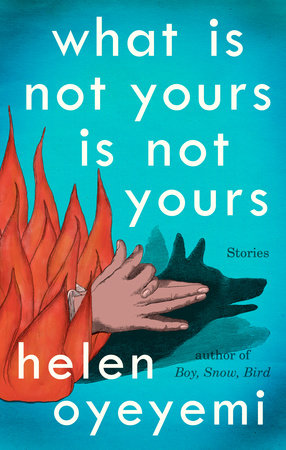
 Edoro concludes with a quote from an interview with Helen Oyeyemi, author of six books, the most recent a collection of her short fiction, What Is Not Yours Is Not Yours (2016).  (NPR review here.)
" [    In a recent interview, Helen Oyeyemi identifies what is really awful about burdening fiction with social issues:
I’m wary of – how do I put it – “getting tagged,” I guess, but I also understand the need to try and do that. When I try to think about my favourite books, I’m still not quite sure how I found them. There needs to be something you can say to people that lets them know that they might like this book, but I sometimes worry that the kinds of things that people say about what I write would not help my books find the readers I intend. I feel like most writers write for people who just read, who would open a book and jump in and see what’s there. But burdening a book with promises that once you’ve read this book, you’ll understand this issue or that issue—it’s not good. [Read more] " ]

Thursday, February 4, 2016

Criticism and Reviewing

A.O. Scott, one of the NY Times's film critics, has published a book about what it is to be a critic, to look at aesthetic or entertainment experiences in a thinking manner: Better Living Through Criticism.  This book about criticism is itself reviewed and critiqued in the NY Times today, by Michae Wood.


Michael Wood, center, announcing 2015 Man Booker Prize Short List for fiction written in English (Marlon James's A Brief History of Seven Killings won the prize.)
Wood, an author and literary academic, writes criticism for many respected publications including The London Review of Books and The New York Review of Books.


Wood explains Scott's interrogation of the role of criticism, defining what criticism is, doesn't so much focus on judging, which inevitably means more negative commentary than positive, but the active experience of thinking about something.

I like this -- particularly the final sentence:
What haunts Mr. Scott’s book, and makes it so satisfyingly inconclusive, is the deceptively simple notion of thinking. Here is where the professional and the amateur meet. “A critic will be no different from anyone else who stops to think about the experience” — whether of watching a movie or reading a novel or looking at a painting or listening to music. When his interlocutor expresses surprise that Mr. Scott has “written a book in defense of thinking,” adding that “Nobody is really against thinking,” the critic says: “Are you serious? Anti-intellectualism is virtually our civic religion."
That sentence feels particularly apropos as the reviewer of Better Living Through Criticism introduces his thinking about the critic's book with Henry James, favorite devil of the anti-intellectual national religion.

I like what follows from this as well:
Henry James wrote that criticism showed the mind engaged in “a reaching out for the reasons of its interest,” and A. O. Scott, a chief film critic at The New York Times, says something similar toward the end of “Better Living Through Criticism,” his lively and argumentative book: “Let’s say that a critic is a person whose interest can help to activate the interest of others.” The difference between the two formulations is important. James’s critic is talking to himself and is not necessarily being paid for his reaching. Mr. Scott’s critic — like Mr. Scott himself — has a job to do and readers to persuade or annoy. 
But the notion of interest brings the two remarks together, and almost casually excludes most of what we often think criticism is. What happened to judging, finding fault, even interpretation? 
Seeking for reasons of interest might involve some of these activities, but it wouldn’t have to, and the shift of emphasis is illuminating. Mr. Scott doesn’t exclude judgment from his inquiry. He says it’s “the bedrock of criticism.” And he reminds us that the job is “not nice. To criticize is to find fault.” (He also thinks that critics are always getting things wrong and devotes a brilliant chapter to how they so consistently manage this.) But bedrock is not soil, and still less is it the plants and creatures that grow on the earth. It may at times be essential to find fault; it is scarcely ever enough.
Another way of putting it is that liking / not liking, popular / not popular, good / bad is not sufficient for reliable or even interesting judgment.