LINES OF THE DAY

". . . But the past does not exist independently from the present. Indeed, the past is only past because there is a present, just as I can point to something over there only because I am here. But nothing is inherently over there or here. In that sense, the past has no content. The past -- or more accurately, pastness -- is a position. Thus, in no way can we identify the past as past." p. 15

". . . But we may want to keep in mind that deeds and words are not as distinguishable as often we presume. History does not belong only to its narrators, professional or amateur. While some of us debate what history is or was, others take it into their own hands." p. 153

Silencing the Past: Power and the Production of History (1995) by Michel-Rolph Trouillot

Showing posts with label Publishing. Show all posts

Monday, May 25, 2020

John Quincy Adams Receives Early Christmas Gift!

     . . . . After several more 1832 entries in which John Quincy Adams flagellates himself for being an insipid poet (frequently following a 5 AM translation out of Hebrew stanzas of the Psalms, which appear to be his life-long project to turn into his own English poetry), a failure as a poet, a silly Diarist, since many men have achieved great things and never kept a diary, and ejaculations that every one of his literary efforts should be chucked into the fire (which they never are), he receives brilliant news!

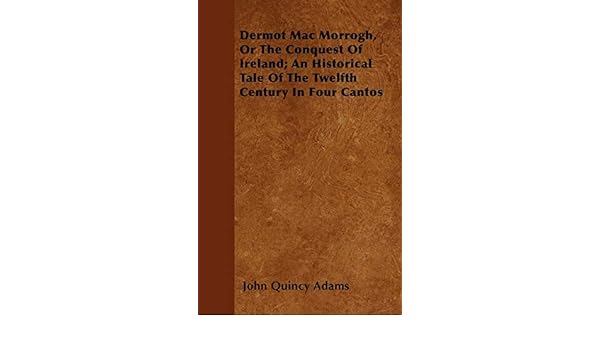
Now, this is news to we readers in 2020 as well, since the Library of America Diaries have not told us that JQ actually submitted Dermot Mac Morragh, or The Conquest of Ireland,* for publication (or as he'd referred to it at the start of the year as "The Tale of Dermot".  But submitted he had, though I do not know any more about that than it went, evidently, to Melvin Lord, "Boston Booksellers, 1650-1860." This bit of information I gleaned from here.

______

Washington, D.C.2 - December 1832
I answered the letter yesterday received from W. L. Stone, and one received this morning from Melvin Lord at Boston.  He says that his edition of the Poem of Dermot is all gone -- That he has no copies left -- This has relieved me from much anxiety -- The puck [sic] of critics are just opening upon it; and if they now destroy it de fond en comble they cannot injure the publisher -- My Shoulders must bear -- I comfort myself with the reflection that Jeffrey in the Edinburgh Review pronounced Byron a Poetaster, and Byron in his English Bards and Scotch Reviewers deals out the same measure to Walter Scott -- I remember too that Byron was dissuaded by a friend from pubishing his Childe Harold, and Scott from finishing his Waverley.  A Poem is at best but a Lottery ticket and if I get a prize barely to repay me the price of my ticket, I must put with it for good luck -- Snow.

Alas, it seems he foretold correctly -- Dermot did not  garner laudatory reviews:
Indeed, it is that short sentence of four words,–By John Quincy Adams,–to which Dermot Mac Morrogh will be solely indebted for all the attention it will receive. Were it not for this magic sentence, we doubt if many readers would get further than the middle of the first Canto; and we are quite certain that none would ever reach the end of the second.
I am still continuing with the 2019 biography of James Monroe.  As I'm now into his administration and JQ has finally arrived back in the US from his appointment as minister to London, to take up his cabinet post as Secretary of State -- these two books are dovetailing seamlessly.  Sometimes I forget from which one I heard a juicy bit. Both are read aloud experiences, JQ with the two of us at bedtime, and the James Monroe from an NYPL audio download to which I listen while working out.

Learning that John Quincy was determined to commit historical fiction is heart-warming, being as good historical fiction was always my own childhood ambition.  This is who the historical Dermot was.

However one gets to know him and his life, John Quincy Adams is worth knowing; and, he becomes more worthy the longer he lives.This cannot be said about most of us.  And certainly not about our own Diaries!
~~~~~~~~~~
*  Dermot Mac Morrogh, or the Conquest of Ireland: An Historical Tale of the Twelfth Century, in Four Cantos by John Quincy Adams (Classic Reprint) is available from Amazilla here.  For some reason this delights me no end! There are even reviews, one of which pronounces Dermot an easy read.

Dermot's full text can be found at this University of Michigan website. As well as the poetry, it begins with JQ's own inevitably prolix Introduction and Description (soon after arriving to take up his post as Secretary of State, it was Congressional Recess.  President Monroe had gone to his Virginia farm for R&R - he wasn't well.  Within two weeks, Adams had drowned him in at least ten multiple-page letters from D.C., about everything.  


Wednesday, April 6, 2016

How Not To Describe Fiction Set in Africa

From the UK Guardian, by Ainehi Edoro, "How Not To Talk About African Fiction, " here.

    This is the opening, which, as it should, informs the reader of the theme and the subject of this opinion piece:
The history of modern African fiction is essentially 100 years of branding disaster. In marketing African fiction, the conventional practice among publishers both in Africa and the west has been to simply tag a novel to a social issue. “Such and such a novel explores colonialism.” Done. “So and so offers a searing representation of the scourge of misogyny.” Done. “Corruption takes center stage in so and so’s novel.” Done.
      African fiction is packaged and circulated, bought and sold not on the basis of its aesthetic value but of its thematic preoccupation.
Film (2013) included such high profile actors as Chiwetel Ejiofor and Thandie Newton

Ainehi Edoro's chose as one of her examples of how differently fiction written out of African imaginations and experiences are described on amazilla.  The two novels  are David Mitchell's Cloud Atlas 2004), and Chimamanda Ngozi Adichie's Half of a Yellow Sun (2006).   Both books have been made into films.

Tom Hanks, Halle Berry among other names played multiple roles in this 2012 film. 


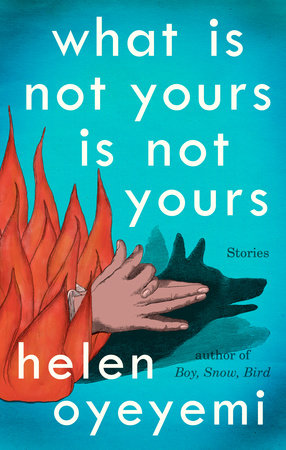
 Edoro concludes with a quote from an interview with Helen Oyeyemi, author of six books, the most recent a collection of her short fiction, What Is Not Yours Is Not Yours (2016).  (NPR review here.)
" [    In a recent interview, Helen Oyeyemi identifies what is really awful about burdening fiction with social issues:
I’m wary of – how do I put it – “getting tagged,” I guess, but I also understand the need to try and do that. When I try to think about my favourite books, I’m still not quite sure how I found them. There needs to be something you can say to people that lets them know that they might like this book, but I sometimes worry that the kinds of things that people say about what I write would not help my books find the readers I intend. I feel like most writers write for people who just read, who would open a book and jump in and see what’s there. But burdening a book with promises that once you’ve read this book, you’ll understand this issue or that issue—it’s not good. [Read more] " ]

Wednesday, March 9, 2016

Reading Wednesday -- Harry Potter

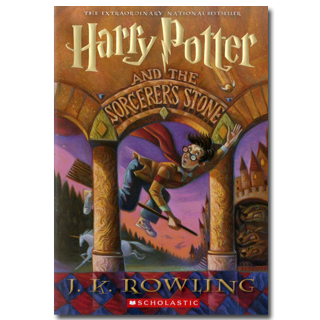
Walking past Scholastic Inc. on Broadway this morning, it occurred to me that the windows of the Scholastic building have never been without a display of Harry Potter books and merchandise since 1998.  Not once.  Not a single day, in now, almost 20 years.


This thought had come to me before reading this story in the UK Guardian this morning about the the cultural appropriation criticism Rowling is currently receiving from U.S. Native American peoples for her first History of Magic in North America set in the history of the Potter Wizard Universe.


I took a Spanish translation of Harry Potter and the Philosopher's Stone, i.e. Harry Potter y la piedra filosofal, to give to a friend's young son on a prolonged stay in Havana 1999-2000.


Monday, February 8, 2016

Chris Jackson and Beyoncé

Chris Jackson, is the co-owner with his now ex-wife Sarah McNally, of Jackson McNally, the first successful NYC indie bookstore to open after amazilla killed all the stores.  He's featured in the New York Times Sunday magazine here.

Chris Jackson and Ta-Nehisi Coates, National Book Awards
At one point in this article, Chris Jackson says this, which is fully sensible:
‘‘The great tradition of black art, generally,’’ he started again, ‘‘is the ability — unlike American art in general — to tell the truth. Because it was formed around the great American poison, the thing that poisoned American consciousness and behavior: racism. And black culture, such as it is, was formed around a necessary resistance to this fundamental lie. That’s the obligation. And this is the power that black art has.’’
This amplifies what he stated above:
This power — the power of the unvarnished truth — is what is at stake when we talk about the problem of exclusion in the world of books. What believable version of American reality can be the product of an industry that, according to a recent survey, counts black people as just 4 percent of its employees? We can admit that race is not our only national reality without denying that it clarifies the workings of — and relations among — the others. A kind of American Rosetta Stone. 
This is the unique claim on the truth that black art can make: It draws its energy from its embrace of hybridity, from a rejection of the illusion of American purity. The joy of expression and the sorrow of experience, properly commingled, might result in something new — and true.
How can that be argued with?  As we all understand that this poison can never be drained from our national expression and attitude until the truth is told, told as matter-of-fact, and starting at the earliest years in our education system, among many other institutionally racist venues.


In many ways, Beyoncé's video for her single, "Formation," dropped for the Super Bowl is saying the same thing.

It can be viewed here on the Rolling Stone site.  Guarantee -- watching it only once won't do.


Beyond that, however, are the reactions particularly of African American women from different entry points, but are saying the same things, but in different ways.

The writing about "Formation" by African American women is filled with brilliant imagery.  Looking at just three different responses to "Formation" illustrates what A.O. Scott is describing when he asked, "What is criticism, what is reviewing?"

Here are three different African American women actively thinking about their experience of "Formation"

In fact, it's bloggers like these who have most impressed me, beyond the video itself.

http://newsouthnegress.com/southernslayings/

https://netarthud.wordpress.com/2016/02/07/black-secret-technology-beyonces-formation/

http://www.theguardian.com/commentisfree/2016/feb/08/beyonce-formation-black-american-narrative-the-margins

Three different approaches, three different 'languages', all of them deeply expressive in their different manners of thinking hard, thinking actively, i.e. critically in response to an experience that was aesthetic, entertaining or political, depending on the approach.  And I'm responding to their language and imagery in response to her imagery (seeming more than to the lyrics, but hey, music video!)  in a very positive way.  I.e. they are persuasive.

---------------------

For some of we white people who have been crowing that the lyrics' referencing of "slayer" and "slaying" is inspired by Buffy -- no, it's not.  This terminology comes from of the early days of hiphop and rap: slaying the competition, rivals, obstacles, whatever, was constant usage long before the Buff was a glimmer in Whedon's eye, and it still is.

Beyoncé proves once again she and Jay-Z are not only the most successful figures  globally in entertainment today, but  likely the smartest business people too.
Beyoncé slayed -- she even slayed football.  She's the winner of the Super Bowl. There's a whole more talking about "Formation" than there is about the game. She certainly substituted white space with space that is fully black matters.

Tuesday, December 8, 2015

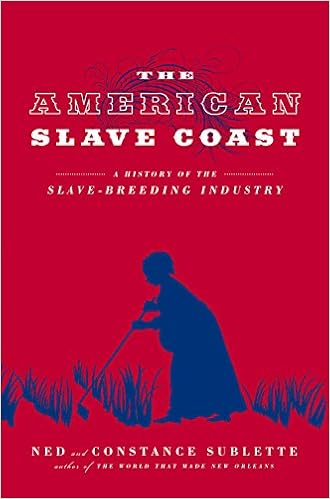
50% Off The American Slave Coast From Chicago Review Press

Chicago Review Press's holiday season half-off their books offer isn't only about The American Slave Coast: A History of the Slave Breeding Industry -- it applies to all Chicago Review Press's books. Single copy orders are fine.


Their Kindle e-book version -- Mobiepocket --  can be bought online as well.

What you need for your book order to be half-off is to enter on the Chicago Review Press site, the code:

HOLIDAY2015
To celebrate the holidays, we are offering a special discount to our Authors, Friends, and Family. 
From November 26 to December 31, Chicago Review Press authors, friends, and family can receive 50% off their entire order at 
www.chicagoreviewpress.com 
when they use the code HOLIDAY2015
This offer is valid online only. Shipping and preorders are not included in this offer.


The CRP has many terrific books that will of interest to any inquiring, interested reader, as well as The American Slave Coast: A History of the Slave-Breeding Industry, The Year Before the Flood: A Story of New Orleans, The World That Made New Orleans: From Spanish Silver to Congo Square, and Cuba and Its Music: From the First Drums to the Mambo.  So check out their online catalog here.

The site is a little slow to load -- at least on my system.  But do not be anxious as it does get there after about 20 seconds. When you arrive at this link, it is our book, but at the top there's a link to their larger catalog too.

Shop away, for yourself, for your family, for your friends.

Happy Holidays!

Wednesday, August 19, 2015

The American Slave Coast Give Away

From the publicist for The American Slave Coast: A History of the Slave-Breeding Industry by Ned Sublette and Constance Sublette:

I wanted to make you aware of a giveaway that Chicago Review Press has set up on GoodReads for The American Slave Coast.
We are offering 10 copies and the giveaway is running Aug 5 through September 15. 
If you would like to share information about the giveaway, here is the link to the giveaway: 
https://www.goodreads.com/giveaway/show/150152-the-american-slave-coast-a-history-of-the-slave-breeding-industry


Friday, August 8, 2014

Bezos vs. Writers

Steve Bezos owns the Washington Post.

After reading the latest updates in the Authors vs. Bezos/amazilla stand-off in this AM's NY Times article, it was interesting to search back to the start as to how the WaPo reports on the matter.


As to be expected, quislings like Alyssa Rosenberg -- who thinks Got is not degrading of women as characters or actresses -- in the WaPo, tells us right up front, right the start of the battle, that amazilla is doing good for writers by holding up authors' books, denying customer service fulfillment on their books, and taking a much larger chunk of writers' earning for itself to fund such things as purchasing the WaPo from where it can further shape public opinion in favor of amazilla -- while still providing no profits to stockholders and investors (other than Bezos, of course).

Some days back science fiction author, Walter Jon Williams, posted a well-thought out desciption of what is the actuality is of the relationship between amazilla and writers, and what amazilla is in reality doing to writers and creatives of all kinds, here.

The argument of Bezos that his exploitation of writers for the sake of his wealth is good for writers is eerily reminiscent of the argument of slaveowners that slavery is an excellent situation for the enslaved, and the only victims here are the slaveowners.


Patrick Henry's Red Hill home
Not to mention how reminiscent is the whining of those who cannot bear to have their convenience and low prices threatened to Patrick Henry's faux sigh that due to the general convenience of slavery, slavery cannot be abolished.


Thursday, March 27, 2014

Ruth's Journey - Prequel to Gone With The Wind

The Margaret Mitchell estate has given its permission for the publication of a prequel to Gone With the Wind, centering as protagonist Mammy from the Georgia writer's Civil War novel that was an updating of Thomas Dixon Jr.'s The Clansman.  Like The Clansman, on which D.W. Griffith based the vile film, Birth of a Nation, the Gone With the Wind novel was the basis of an enormously popular movie.  Unlike Dixon's novel, however, Mitchell's novel still sells in the millions.

Thus sequels -- Scarlett (1991) by Alexandra Ripley, and Rhett Butler's People (2007), by Donald McCaig --


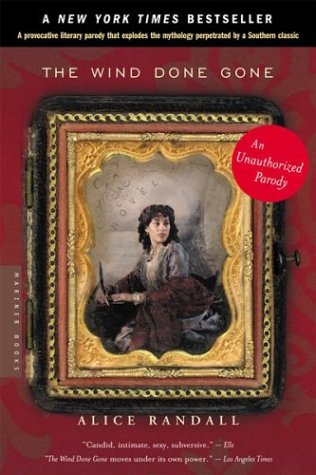
and an unauthorized parody -- The Wind Done Gone (2001), by Alice Randal, told in the antic manner of Kara Walker's silhouettes, in the voice of one of Mammy's children. The parody cause a great deal of controversy as well as a legal case as the Mitchell estate attempted to block the novel's publication.

Now a Gone With the Wind prequel, Ruth's Journey,


suggested and written by Donald McCaig, the author of Rhett Butler's People.


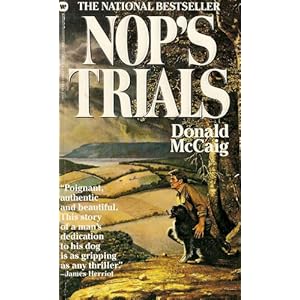
McCaig was a working sheepman on a Virginia farm (though his writing career began as an adman in NYC)  whose first book was about training and working with a sheepdog, Nop's Trials: A Novel (1984), whose sequel was Nop's Hope (1990). He has written other books about dogs, including Mr. and Mrs. Dog: Our Travels, Trials, Adventures, and Epiphanies, just published last year, 20013.*

He has written much else besides, including novels set in the Civil War.  Jacob's Ladder (1998), was awarded the Library of Virginia Fiction Award, the John Eston Cooke Award for Southern Fiction, and the W.Y. Boyd Literary Award for Excellence in Military Fiction.  Canaan (2008) won the Michael Shaara Award for Excellence in Civil War Fiction.

Ruth's Journey will be published in October 2014.  From the NY Times article:

Mitchell was criticized for the one-dimensional nature of many African-American characters in the book, particularly Mammy, who cared for the fiery Southern belle Scarlett O’Hara. An unauthorized parody of the classic novel, “The Wind Done Gone,” published in 2001 over the objections of the Mitchell estate, was told from the perspective of a slave whose mother was Mammy.
Mr. Borland said the new book addresses those criticisms head on.
“What’s really remarkable about what Donald has done is that it’s a book that respects and honors its source material, but it also provides a necessary correction to what is one of the more troubling aspects of the book, which is how the black characters are portrayed,” Mr. Borland said. ....
The first two-thirds of the 416-page “Ruth’s Journey” are in the third person, and the last portion is told in Ruth’s own dialect. 
It seems we are determined to redeem Gone With the Wind from Reconstruction, white supremacy and Glorious Lost Cause revisionism no matter what it takes -- which perhaps will also make even more money for the Mitchell estate, though we are not supposed to think that the publishers are even thinking like that:
Booksellers said the book’s selling power was far from certain.
Sarah Brown, a buyer with Changing Hands Bookstore in Tempe, Ariz., said that, “Rhett Butler’s People” was not a strong seller, but that “maybe people who love ‘Gone With the Wind’ will want to get more of it.”
She added, “I think it will get a lot of press but I don’t think it will be a huge blockbuster.” The book could, however, fit in with popular historical novels told by women, like “The Paris Wife” by Paula McLain or “Z: A Novel of Zelda Fitzgerald” by Therese Anne Fowler, she said. Atria acquired the rights in 2010, after reading about 25 pages and labored to keep it secret while Mr. McCaig worked.

The publishers are really not expecting this novel to sell well and make them money, so they are doing this book surely out of -- what?
The publisher said it would print an ambitious 250,000 copies in hardcover.
--------------------------------

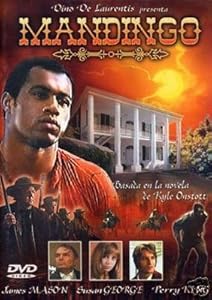
* Another dogman occurs to anyone who studies  these related matters -- Kyle Onstott.  He began his writing career with books about dog breeding -- followed by the 1950's infamous Mandingo - Falconhurst series -- the later ones co-authored by Lance Horner --  set in the 1830's antebellum south.

Recall -- many slave traders of the antebellum south began as horse traders - breeders, or went back-and-forth between the horse dealing and slave trading. Many slave traders, after the war was finished, went back to horse dealing or changed their trade to horse trading.  Not to mention how obsessed the antebellum south was with the "breeding" of everything and everyone.  Even now, people claiming membership in even the local 'old' families, tend to inquire delicately upon meeting a stranger as to the stranger's background, attempting to establish as quickly as possible whether or not this person may be a relative, a distant one or more closely related.


These Onstott novels sold well, and became famous as movies released in the 1970's.  In some ways one might look at Mandingo and Drum as prequels to QT's vile Django, though the details of much of the novels is historically accurate -- though not the slave-breeding set-up -- unlike in the Django movie. There is nothing historically accurate in QT's film.


Thursday, February 6, 2014

The Life & Times of Twelve Years A Slave

Mary Niall Mitchell is Joseph Tregle Professor in Early American History and Ethel & Herman Midlo Chair in New Orleans Studies at the University of New Orleans.  She has published this solidly researched, interesting article on the background of Solomon Northup's book:

All Things Were Working Together for My Deliverance: The Life & Times of Twelve Years a Slave, by Mary Niall Mitchell, in the journal,  Common-place The Interactive Journal of Early American Life.

Mitchell goes into detail, in particular, of the Union soldiers who were stationed in the area of Bayou Boeuf, where was the plantation of the cruel slave owner, Edwin Epps.  Soldiers went looking deliberately for the location and for people who might have -- and did -- know "Platt," the name by which the his captors called him, forbidding him to ever use his own given name.

All the details of the book are verified.


Then, the war was over, and the book disappeared.  It took  the Civil Rights Movement and a married, middle-aged female historian, Sue Eakins, to put it all back together.


At the last minute, a male Ph.D. was poised to take over the entire project, because, well, female and not as good, of course. Dr. Eakins wasn't able to get her Ph.D. until some years later.

A fascinating story in all its aspects, and such an "American" one.

Tuesday, June 5, 2012

*White Collar* Season 3, Disc 1

Season 3 released on dvd today, and the first disc duly arrived in my mailbox from netflix. That doesn't happen very much these days as netflix isn't servicing me the way it used to. But perhaps there weren't so many requests for White Collar as for, say, Boardwalk Empire?

In any case, it's lovely to be back with Neal and Mozzie, Peter and Elizabeth -- and finally, some more Satchmo! I've said this before, but this series shows NYC the most luxe and glamorous place to live and work. I love entering it again. :) Living here is is not the same as this show, needless to say.

The opening of the first episode involves a small plane my dad would have loved, and certainly could have piloted, and even owned. The episode's plot was a twisty one, exactly what one would hope for a season's first episode. The showrunners are continuing to build on strength and charm of the previous seasons* by foregrounding the ensemble character of the show. None of the protagonists, primaries or secondaries, are strong enough to carry a show alone. But all of them playing off each other in the milieu of the frothy escapism that White Collar is what works the show's charm. It's not often you get that as successfully as in White Collar (why yes, Hell on Wheels, I look at you, you wooden mess you -- also, Sherlock writers? check how they do codes right on White Collar).

So I got all wired up after long talk-meet with -- not Editor -- Publisher. It was all good, but whew, these things put my mind in knots and take my feets off ye olde ground! Some Neal and Mozzie and Peter and Elizabeth were just what I needed to get back down to earth. Besides, as has been the case for every sky spectacle this year, I was not able to view the Transit of Venus due to cloud pile-up  -- though many viewers did head for the western edge of our island, particularly the High Line Park, to see what they could see.

And now I'm missing Deborah Harkness at the Algonquin, but that's OK. I'm pretty worn out. And still haven't had dinner.**


-------------------------


* Season 4 of White Collar debuts in July.


** Had dinner now.

Saturday, May 19, 2012

*Twilight* Fall Out

An online sf/f magazine presented a strongly worded negative review of Deborah Harkness's Discovery of Witches a couple of weeks back. Among other criticisms was DoW is merely another version of the Stephanie Meyers's series. As I find Meyers unreadable either as writing or as story, and yet did enjoy Harkness's novel so much that I'm looking forward to the next one, which should be out this summer, I have serveral takes on what this series will or may be. One of these takes became my comment to the SH's review, which included this:
Very clever writers, both Harkness and Collins learned a great deal from Meyers, and then grafted their own strengths on what they learned from Meyers: Harkness her academic Elizabethan era history of science scholarship, and updating to what an older woman finds romantic and sexy, and Collins her background in writing television and theater.

It's interesting in terms of the history of genre fiction to observe Meyers's books, justly or not so excoriated by so many, justly or not so adored by so many, sparking so much successful spawn -- and not least the E.L. James's Fifty Shades of Grey BDSM ladies' porn series, which was created out of Twilight fanfic and further datamining her own and others's fics, and initially self-published, then receiving a print publication for even more money. Like Meyers's books, these writers also have or are having movies produced from their works.

Not to mention the other night at the Aaron Burr exhibition and presentation, the presenter, a middle-aged balding lawyer, at one point said, "I'm one of those who insists you don't have to chose Team Alexander Hamilton or Team Aaron Burr, but rather, a thoughtful, historically informed person will find Hamilton and Burr equally fascinating, each of them with their considerable strengths and their considerable weaknesses, and they were more alike in many ways -- particularly their mutual weakness for the ladies -- than they were different."

Team Edward ... Team Jacob ... yay, Team!

Thursday, April 26, 2012

Publishers Unlocking DRM - Charles Stross Explains


Last week I wondered why publishers didn't Do Something, since it seemed to me that at least the Big 6 Trades have all the wherewithall to Do Something, to combat amazon's monopoly on e-pubs + More, Always MORE, because that's how monopoly capitalism always rolls.

Charles Stross didn't just wonder. He did something, and it seems that mayhap at least one publisher is Doing Something (though Charles says this wasn't his doing).

Read here all about what Charles Stross thinks Macmillan's dropping DRM may mean in the near and later future, particularly for the consumers of genre fiction, who are the largest consumers of epubs.

This is a long blog entry, but all of it is worth reading, as generally is the case with Mr. Stross's Charlie's Diary, because he employs his reason, upon a platform constructed from actual information as so far as possible, and his terrific analytic capacity. Here's a pull - sample of his reasoning:

As noted earlier, consumers change e-reader devices frequently. Within 5 years we will be seeing a radically different electronic landscape. Unlocking the readers' book collections will force Amazon and B&N and their future competitors to support migration (if they want to compete for each others' customers). So hopefully it will promote the transition from the near-monopoly we had before the agency model, via the oligopoly we have today, to a truly competitive retail market that also supports midlist sales.

Plus:

(Why this will support the midlist: currently Amazon have swamped the midlist among ebooks in a sea of self-published rubbish. It's impossible to find anything worth reading in the Kindle store that isn't a very obvious bestseller. This offers an opportunity for specialist bookstores to offer a curatorial role. I believe the voracious genre consumers are picky enough about what they read that they dislike Amazon's slushpile approach, and will preferentially shop in better organized outlets.)
YES!

Thursday, February 23, 2012

Amazon Pulls Over 4,000 Kindle Titles

Including THE BOOKS, thereby significantly reducing our revenue stream.  But how can you allow them to set the price so far below what you can afford to let a book go for, after all the years of uncompensated work that allowed you to be in a position of knowledge necessary to write the book in the first place?

They are still available in other venues, including B&N, and for their Nook.

-----------------------------------------------

Bits - Business, Innovation, Technology, Society
February 22, 2012, 5:37 pm
Amazon Pulls Thousands of E-Books in Dispute

By DAVID STREITFELD

Mark Lennihan/Associated Press

Amazon.com removed more than 4,000 e-books from its site this week after it tried and failed to get them more cheaply, a muscle-flexing move that is likely to have significant repercussions for the digital book market.

Amazon is under pressure from Wall Street to improve its anemic margins. At the same time, it is committed to selling e-books as cheaply as possible as a way to preserve the dominance of its Kindle devices.

When the Kindle contract for one of the country’s largest book distributors, the Independent Publishers Group, came up for renewal, Amazon saw a chance to gain some ground at I.P.G.’s expense.

“They decided they wanted me to change my terms,” said Mark Suchomel, president of the Chicago-based I.P.G. “It wasn’t reasonable. There’s only so far we can go.”

With each side unwilling to yield, Amazon pulled the plug, and all of I.P.G.’s books for Kindle disappeared. The physical books were not affected. A spokeswoman for Amazon declined to comment.

The dispute quickly reignited fears in some corners about the power Amazon enjoys as the shift to e-books accelerates. Amazon is dominant in both the physical and electronic markets for books.

“This should be a matter of concern and a cautionary tale for the smaller presses whose licenses will come up for renewal,” said Andy Ross, an agent and a former bookseller. “They are being offered a Hobson’s choice of accepting Amazon’s terms, which are unsustainable, or losing the ability to sell Kindle editions of their books, the format that constitutes about 60 percent of all e-books.”

Amazon’s decision to remove the digital titles was its most drastic such action since it briefly removed the physical books and the e-books published by Macmillan in a pricing dispute two years ago.

That time, Amazon eventually blinked, ceding to Macmillan and the other major publishers the ability to set their own e-book prices. This time, by selecting a group with less leverage, it may get its way.

“Presumably, this is a move Amazon is planning to make with other distributors and publishers as their contracts come up for renewal,” said Lorraine Shanley, a publishing consultant. Unless there is an outcry, she said, Amazon will not be likely to retreat.

The dispute underlines the escalating struggle between Amazon and publishers and distributors over control of the e-book market.

Margins with physical books were traditionally low, which meant that bookstores, publishers and distributors often did no more than scrape by. When Amazon began, it sold books at deep discounts but still had to depend on the good will of publishers.

With e-books, the situation is more fluid. Readers expect them to be cheaper, which Amazon has been able to encourage because it is now a publisher as well.

Traditional publishers, however, have their own modest margins to worry about. They worry that if e-books are priced too low, the public will devalue their worth, and the publishers might wither away — something, they fear, that would suit Amazon just fine.

The only two essential parties in the reading experience, Amazon executives are fond of saying, are the reader and the author. Middlemen like I.P.G. — one of Amazon’s three “distributors of the year” in 2008 — are seen as dinosaurs in this framework.

Among I.P.G.’s 500 clients are the American Cancer Society, Aptly Spoken Press, Bees Knees Books and Change the Universe Press. Until this week, I.P.G. had 4,443 titles available on Kindle.

Mr. Suchomel said the publishers were solidly behind I.P.G. “They were almost unanimously positive, saying, ‘Don’t change your terms,’ ” he said.

I.P.G. is trying not to inflame the dispute. It declined to say precisely what terms Amazon was seeking, although it told its publishers a deal would have “substantially” affected their revenue. On the home page of its Web site, it referred to the issue briefly and discreetly.

On Amazon, the Kindle button for the I.P.G. titles is gone. The classic groupie memoir “I’m With the Band” by Pamela Des Barres was listed as being available only in paperback and an audio edition. But in what might have been a sly message from Amazon, there was a button to click to tell the publisher you would like to read the book on Kindle.

I.P.G. told its publishers to immediately begin stressing that their books were available in other electronic formats, including from the Amazon rivals Barnes & Noble and Apple. It also told them to contact their local independent bookstores and point out that they could now sell something that Amazon would not.

“They’re trying very hard to look on the bright side and make this a David and Goliath situation,” said Ms. Shanley, the consultant.

Mr. Suchomel said that the next step was up to Amazon. “We’re not going to go back to them and say we changed our mind,” he said.

Sunday, May 31, 2009

Elizabeth Sifton Speaks Re Publishing Industry Woes

In The Nation. Not that any of what she writes is unknown or news around here. Duh.

I have just a bit of a different tilt upon her analysis. It is the sameness, the lack of nurturing of new writers, that will ultimately kill the publishing biz in any form that we have known it all our lives and the lives of our grandmothers too.

Example: The New Fiction shelves at my most commonly visited NYPL branch have fewer and fewer books on them, due to the economic catastrophe that has engulfed every aspect of our lives. However, even so, and previously, there were fewer and fewer books on those shelves that sparked even an iota of interest in this reader desperate for a novel.

She'd read a few chick lits -- even before they were called that and became a forumlaic marketing genre -- and thus had no reason to ever read another one.

Historical novels mostly aren't, but rather literary experiments in consciousness, of which reading a few leaves the reader enthusiastic about Scott and Dumas, Bradshaw and (some) Cornwell with no need for more. (Thank goodness for the novelists who have been coming with historical fiction out of the post-colonial realms, like Marlon James, Vikram Chandra and Amitav Ghosh.)

Then, there are all the novels that would never have been written if someone else hadn't written them. A novel about Daphne du Maurier AND a novel about Rebecca -- Her Own Story are on the shelves. By count, no less than 12 novels ABOUT Jane Austen, the members of her family or about the characters she created in her novels, at any one time sitting on those shelves! Not to mention sf/f and novels ABOUT Jane Austen and / or her characters -- wtf? And that isn't all of the novels about Jane Austen and her family and her characters by any means. The others presumably were checked out. Not to mention Shakespeare and HIS family and even other writers from his period as characters. Stop this, RIGHT NOW!

Then the wereworld detectives -- hundreds of authors are writing those it seems, and they turn out at least 4 - 5 titles a year. Gack.

Thousands of time travel romances to the past of Scotland. Oh, Diane Gabaldon, what hast thou wrought! It's not your fault, and this reader isn't blaming you. But this reader DOES blame the publishers.

You could say I'm complaining that publishers are forcing me to work harder than I like to find a novel that I want to read.