LINES OF THE DAY

". . . But the past does not exist independently from the present. Indeed, the past is only past because there is a present, just as I can point to something over there only because I am here. But nothing is inherently over there or here. In that sense, the past has no content. The past -- or more accurately, pastness -- is a position. Thus, in no way can we identify the past as past." p. 15

". . . But we may want to keep in mind that deeds and words are not as distinguishable as often we presume. History does not belong only to its narrators, professional or amateur. While some of us debate what history is or was, others take it into their own hands." p. 153

Silencing the Past: Power and the Production of History (1995) by Michel-Rolph Trouillot

Showing posts with label economy. Show all posts

Wednesday, July 21, 2021

We Take Refuge Where And When We Can

     . . . . Not been a good month here despite el V's lovely birthday, two superb Postmambo Events, and, additionally, the ophthalmologist monitoring the eye with the damaged optic nerve -- though what's going on can be signs of incipient glaucoma -- found actual improvement from the last check-up.  Maybe it's the new lenses?  Another positive thing is the spectacular greenery and the variety of greens, due to the heat and the moisture. Related to that positive are the flowers, particularly in the community garden that's been allowed to grow as it wants pretty much, without being cut back or off.  The range of vivid blossoms erupting out of the head tall greens is balm to the soul. That's purely personal though. Beyond the purely personal, things are very far away from good.

It's unnecessary for me to provide the details as to why both Haiti and Cuba are tragedies of political history, and our personal histories, that need not have happened, as surely by now all have heard of them and formed opinions, if there is among all and sundry enough interest to even bother forming an opinion -- or learning facts. Climate change feeds into both Haiti's and Cuba's disasters as well as political forces forcing both nations to go without medical supplies and food -- which forces merge into catastrophe for both the island nations. For Cuba certainly, there is no light at the end of the tunnel that begins and ends in Miami. Haiti too, as we've been told that's from where the conspiracy was hatched.

Weather They Sayers announced today our city has the most dangerous air quality of any city on the planet, due to the western US wildfires' smoke blowing right into us. One wishes to wear a good mask if one needs to go outdoors for this reason now too. Rain fell for a little while, so all that particulate from the West and Northwest can be flushed into our gardens, sewers, into the East and Hudson Rivers, the harbor and the ocean.  Like pandemics, climate catastrophe never stays in one place. No man is an island, what affects thee, affects me, and so on and so forth.

Yet despite the experts of many nations begging governments to impose mask mandates in public spaces and limit gatherings, like our own stupid mayor, the politicians and governments everywhere refuse to mandate masking and distance in public spaces now, because THE ECONOMY -- and future office seeking. So -- here we are again, spiking like crazy, including right here, when barely 2 weeks ago, our own zip code and so many others in the city and state were essentially at zero for positive tests, new infections, hospitalizations and deaths. All those anti-vaxxers, enemies of the people, surely are pleased with themselves all over again, as they bring down what's left of a health system. 

Again, with COVID, extreme weather, bikers, skateboarders, stupid tourists, guns/crime/mad/desperate people, mosquitos showing up infected with the Nile Virus, etc. etc. etc., being outdoors means anything but relaxation and refreshment, even at night. In many ways, particularly at night. But for the out-of-control, whether from racist hatred or years of being homeless or the conviction of utter privilege that no laws or regulations apply to ME shoving my Porsche at 90 MPH through the crowded streets and killing people so what? day and night make no difference.

     . . . . Spouses, Lovers, Friends, one way and another, these purely personal relationships are the greatest refuge from the horrors overwhelming our present cursed "interesting times."   About once a week, el V, B and I dine with, and catch-up with, 2 or 3 friends -- all of us vaccinated.  We've been to visit another historian in his Rhode Island beach shack, making us a mini history conference.  At the beginning of August, we will visit one of our terrific Postmambo friends in his beautiful, large old historic house upstate -- with a pool, massive yard and huge screened in annex, where we will have Thanksgiving in August, the Thanksgiving we'd planned for last November, but prudently called off due to Covid spiking, which it continued to do until the blessed vaccines showed up. But we are vaccinated, so we are keeping to the plan made last year to do our cancelled holiday celebration feast with friends this summer. Still, as originally planned, this will be a small gathering of 4 people, perhaps 5, depending on another's work schedule.

     . . . . History provides refuge and escape. One does speculate others too are looking for refuge in the past, thus so very many time-travel series showing up lately -- none of which I have the least inclination to look at even the first episodes.  How fortunate, one further speculates, that it is not possible to subject the present or the past to the pressures of future colonialism for the sake of the yet unborn's survival. The future would have every right to do so, considering how ours and every preceding generation has abused Earth. But alas, we cannot go back in time and save ourselves, since we didn't already do it. Beside, those who benefit would be, as usual the very rich and protected, not the future sort of thee and me -- while the already mentioned 0.01% make massive profit out of our lack of salvation.  Until, perhaps they too, despite anal dildo shaped escape space craft, are crushed by lack of oxygen and water.

Some of these latter sorts are getting spooked by Delta, getting the idea that the economy can tank from it.  This is the only way of course we will ever get a federal mandate anywhere in the world for masking and vaccination.  One does fear it's way too late now.

We continue our own plundering of the Dark Ages with Wickham's The Inheritance of Rome: Illuminating the Dark Ages 400 – 1000. Wickham's thesis of the real changes and transformations of the West in the 5th century was the changes in the signatures of the wealthy and powerful. Free time, leisure, was the signature of wealth and power. Much of that was spent in the luxury of the country villas, where they cultivated the arts and learning, particularly the literary arts, as well as government and administration.  By the end of the 5th C, the signature of the wealthy and powerful were the manly martial arts.  The ruling class no longer affected togas as sartorial signatures of their status, but dressed like Roman army commanders.  However, even more so, the ruling class needed as much land as they could wheedle, conquer or steal. And steal away they did, which went on for centuries, as we know.

     . . . . Television has provided some good historical escape.


Straight-up historical - period scripted drama created in the present:  El Cid, 11th C, Spain and Andalus, season 2; No Sudden Move, 1950's Detroit, scripted now; The Rising Hawk, 13th C, refugeed tribes in the Carpathians invaded by the Blue Horde, scipted now; Borsalino, which was looked at here last time, is another splendid example, scripted at the end of the 1960's, located in 1930's

Women in the past re-created in the present: Miss Fisher's Murder Mysteries (the 1920s, Melborne, scripted in the second decade of the 21st century); Ms Fisher's Modern Murder Mysteries (sequel series scripted in the second decade of the 20th C, set in  1960's Melborne when niece inherits Aunt Fisher's possession and calling) Both of these were eras in which women claimed freedom and rights Horatio had not yet dreamed of. 

The present that is now the past: Bergerac, first season of 9, begins in 1981, on bi-lingual island of Jersey, featuring the young John Nettles who grew up to become Midsomer Murders's Barnaby, scripted then; House of Cards (the original, British version -- forget Kevin Spacey -- scripted then); The Midnight Garden of  Good and Evil, set in the late 1970's, semi-fictional, scripted then, and oops can't forget Spacey coz he's the driver. These three share the commonality of period: late 1970's and the first years of the '80's.

     . . . . Fiction has provided two works of historic escape that eschew cloying froth: Katherine (the Lady Swynford, Duke of Lancaster's mistress, eventually his wife, whose children ultimately ancestored many royal figures, while living in the England of Edward II and Richard and the Bubonic Plagues) by Anya Seton; The Noble Outlaw: Crowner John Mystery Series, Book 11 by Bernard Knight. This is a  series in which it seems to be always cold, always snowing.  "Crowner" in 12th century Essex, is our contemporary "coroner"; author's day job was as coroner.

Monday, May 10, 2021

People Who Don't Work From Home Both Lose Their Jobs and Are To Be Forced to Take Jobs

      . . . .  "It’s Been Hard Not to Roll My Eyes”  and  "Pay A Living Wage Or Flip Your Own Damned Burgers."

....Many of these workers resent that people upset over being asked to return didn’t display the same concern for the safety of those who have been there all along. And they wonder why they’ve been left out of so much of the national narrative about what this year has been like for workers. They haven’t been stuck at home baking bread or going stir crazy from being cooped up with family members; they’re out risking their lives working with the public and/or in close quarters with colleagues every day, and they feel invisible in much of the conversation about pandemic life. More than anything, they’re deeply, deeply exhausted....


Goes right along with this WaPo's story about yet another expanding restaurant owner,  thinking we should all 'weep for me', unable as he and the industry are, at finding enough people to work in their intolerable conditions, for pennies and no bennies. 

The comments, which number, last time looked, hit nearly two thousand, are about 99.09 contemptuous of these guys.


I am particularly am contemptuous because this where the financial speculation industry, capitalists in general and rethugs in particular always point when pronouncing that 'people don't want to work and prefer collecting massive government benefits.  So make unemployment illegal!"  See: South Carolina, etc. Same states passing Jim Crow voting repression laws, who have 'right to work' / no right to unionize laws, etc. Also, recall these are the states that made it illegal for labor, i.e. African Americans, to leave neighborhoods and states and go elsewhere for work outside of sharecropping and domestic work.

https://money.yahoo.com/south-carolina-cancels-federal-unemployment-benefits-212914813.html

https://abcnews.go.com/US/south-carolina-montana-declining-federal-unemployment-funds-huge/story?id=77553102

https://www.cnbc.com/2021/05/07/montana-south-carolina-ending-participation-in-fed-unemployment-programs.html

Why are they weeping though?  They've gotten what they've been howling about for decades: deportation and anti-immigration.  They promised then wages here would go up -- A Good Thing!  Now they have it, and yet, yet, yet, persist in whining ... about wages going up.

In the meantime the restaurant industry, i.e. owners and landlords, has gotten billions in federal  relief. Not to mention whole transfers of public, tax-payer owned property, for absolutely zero payment – nor do they even clean the messes their covid sheds make in the gutters, streets and on the sidewalks, where, of course pedestrians, blind people and people in wheelchairs can’t even navigate a path -- again, capitalism for the poor, socialism for the rich.  This also reminds me a great deal of England and Europe in wake of the 14th centuries first three great waves of pandemic Bubonic Plague, passing laws to keep prices for wages for labor and prices of commodities exactly what they were prior to the Plague, even though so many had died (which contributed greatly to all sorts of social mobility upward for non-aristos in the 14th and 15th centuries).

And ya, there is, and will be, inflation of up the wazoo, due to choked, interrupted, halted supply chains for absolutely everything, everywhere in the world, along with some damned bad harvests due to not only pandemic, but catastrophic weather.  It's going to get quite bad, one may think indeed, if judging by historical periods in which pandemic coincided with bad harvests and labor shortages -- while war continued, unabated.

Homo Saps are too stupid to survive.

~~~~~~~~~~~~~

And GD!  Americans Will Lose Unemployment Benefits If They Turn Down Jobs, NPR SAYS Biden Says, just now.

Except Biden said NO SUCH THING. Not even in the text NPR posts under that headline.  Shame, Shame, SHAME! on NPR.  Gods I loathe NPR.

Biden, in his Monday remarks to reporters, pushed back on the suggestion that funds from the progressive relief package were being abused in any meaningful way and encouraged employers to offer competitive wages to court Americans back into the workforce.

"My expectation is that as the economy comes back, these companies will provide fair wages and safe work environments, and if they do, they'll find plenty of workers. And we're all going to come out of this together and better than before," he said.

"No one should be allowed to game the system."

Biden said that while he took allegations of fraud seriously, the government could not "turn our backs" on those who had lost jobs as a result of the pandemic. He placed the blame for the sluggish state of the national economy on his predecessor, former President Donald Trump, who Biden said "bungled" his handling of the virus and its fallout.

"We'll insist that the law is followed with respect to benefits. But we're not going to turn our backs on our fellow Americans. Twenty-two million people lost their jobs in this pandemic through no fault of their own. They lost their jobs to a virus, and to a government that bungled its response to the crisis and failed to protect them," Biden said.

SHAME, SHAME, SHAME on NPR.


But it's still hard to take, hearing Biden say that anybody offered an appropriate job must take it or lose benefits.  How does he get to decide what is an appropriate offer?  So it will be the chiseling, cruel restaurant owners.  Shame on you too, Biden.

Tuesday, November 29, 2016

Thomas Jefferson and Marie Antoinette (and The Neo-Gilded Age)

   . . . I revisited Nancy Isenberg's White Trash: The 400 Year Untold Story of Class in America (2016) a few weeks ago.  I wanted to see if wanted to revise my iniitial judgment that the book was thematically and argumentatively incoherent too often. I listened to the audio download rather than re-reading the book.

While doing that I was struck in a way I hadn't been during the book read by similarities between Jefferson the Agriculture Philosoph's Monticello and Marie Antoinette's faux rustic village of Hameau de la Reine near to the Petit Trianon in the Park of Versailles. There she and her companions played at being peasants as Jefferson impersonated "gentleman farmer." He was such an 18th century aristocratic fellow (though in a mode that was also peculiarily Virginian).

Isenberg didn't notice these similarities herself. As per usual with White Trash, when the author approaches something revelatory, instead of taking the leap over the walls surrounding the Founding Father of the Domestic Slave Trade and White Supremacy -- she pulls up short and turns to a different topic-- leaving unmined the US's systemic legal foundation of 'race' in the constructing of white divisions of class and poverty.

It was an exciting moment during a visit to th British Museum to spy a first edition on the shelves of the Museum's Enlightment Room.

In the Enlightenment Room, British Musuem -- it's enormous!
Isenberg's chooses excellent quotes from various Jefferson documents and his only book, Notes on the State of Virginia, to illustrate his disdain for farm work, and his disinterest in farming in general. These chosen words suggest strongly that for Jefferson, "farming" for most of his life, was only so much "philosophy" -- fantasy world building that relaxed and entertained his lively mind, resembling closely the role playing of milk maids at Petit Trianon.

Water color of the grounds of Hameau de la Reine village, near Petit Trianon
It wasn't until Jefferson thought of agriculture in the terms of science experiments that he took any personal concern with 'cultivating.' on his own farms (he was a complete failure at it too). This was a deep contrast with Washington's constant concern with farming and how he managed Mount Vernon. Jefferson's exception to his impractical fantasies were his statements that breeding slave women for their "natural increase" must be encouraged as their babies brought more financial value to the estate than the crops brought in.

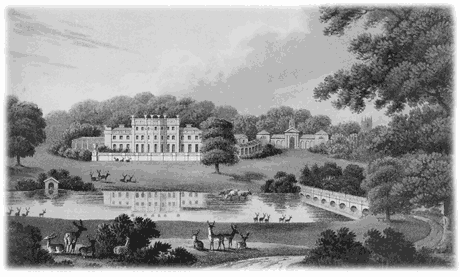
Wotton House, Surrey.  This pdf is a good essay on Jefferson's travels in England (John Adams was his companion):
"A Comparative Study of Thomas Jefferson's Travels to England and Their Influences on Monticello"
Jefferson admired the great estates, parks and gardens he visited during his travels in England (786) and in Italy and France (1787). Lacking the economic resources held by aristos to build such impressive showplaces, of course, he relentlessly mortgaged his slaves, and created an lesser imitation at Monticello with lower quality materials. That showplace of Monticello is an impractical facade, like Marie Antoinette's Petite Trianon peasant village -- a folly, as certain edifaces des amusants erected on estates were called in England -- except, of course, at Monticello, the slaves were real people, and truly enslaved by every legal, religious and philosophic dictum possible to invoke, and ultimately sold away from the bankrupted Master of the Mountain's fantasy world that their bodies, fertility and labor had bankrolled.

Isenberg shows Jefferson's philosophy of agriculture was formed by European models that had not a chance of working in North America -- particularly not in Virginia, for all kinds of reasons. Invoking the gentleman farmer, his preferred term for a farmer was cultivator -- not yeoman, though this is the word everyone uses when writing about Jefferson's fantasies of how the huge swathes of the Louisiana territory was to be populated and organized. A cultivator differed as much from a yeoman as Theodore Roosevelt's stockman differed from a cowboy.  Roosevelt compared the stockman to a southern plantation owner and described a stockman's life as the best life to live -- except that of a southern plantation owner in the antebellum era. Unlike the stockman's whose life was filled with satisfactions and comforts, not least seeing his wealth steadily accrue through the natural increase of his herds and the labor of his hands, the cowboy's life was a hard one, and an economic dead end.

Even as his language for the naming of the newly acquired territory's states could have been used in contemporary (bad) fantasy world-building, it was not the language of sturdy small yeoman farmers: Michigania, Illinoia, Saratoga, and Washington, well, OK, but! -- Sylvania, Chersonesus, Assenisipia, Metropotamia, Polypotamia, and Pelisipia? This was an equally preposterous progression of the fantasy feudal slave state of Carolina designed by John Locke and the Eight Lords Proprietors of Carolina to divide territory into palatinates and baronies, organized under a hereditary aristocracy of margraves, landgraves and caciques. Nor should we forget the proposed Margravate of Azilia as a the buffer zone between Carolina and the Spanish Floridas. Instead of happy serfs however, they would have happy African slaves.

Logo of the Royal African Company

Recall that Locke and these Lords Proprietors were original investors in the Stuarts'  Royal African Company, headed by the Duke of York, formed to enslave Africans and sell them in the New World, in order to fill their always empty privy purses.

What does all this have to do with poor whites and class? Isenberg seems not to know, though this history is included in White Trash, it is presented without any connection to the southern colonies' poor white populations, treated as expendable waste by the small, ever increasingly wealthy elite.  As critics other than myself have noted, Isenberg forgets about her central theme most of the time.

Though White Trash's argument is fairly incoherent thematically, pieces of it are informative. It's disappointing that she wasn't able to pull together the history of white poverty and class into a satisfactory explanation of our cultural, economic and political psyche. But since she couldn't or wouldn't examine and / or reconcile the victimization of poor whites with the victimization of slaves -- or that of Native Peoples either, though they get some mentions, ultimately the book, though an interesting read, isn't as useful as the author expected. It really founders when the author attempts to force New England's ways and mores into her theme? argument? (it's unclear). The points that are to be made are obscure -- again because of how slavery operated in the north, and the differences between north and south in how they profited from slavery are ignored and / or presented in a manner that can only be called murky.

Isenberg is a terrific researcher, but apparently wasn't willing to work-up her analytical skills to spin 400 years of history around a central theme without losing sight of the argument and straying off into dead ends. She founders at the wall of black - white, which always comes up central to the history, no matter what era and which issue. So, once again, African American history gets side-barred and made lesser, even as the historian centers the class system of whiteness as American history. It's an distorted dialectic of class and poverty, which forces the argument into a shallow flat shape, lacking scope and grain. The further the book progresses the more it presents as rushed and unthought-through, as up against a deadline the author resents as too close.

Another aspect of White Trash that confuses whatever the argument Isenberg thinks she's making is that she repeats, sometimes even word-for-word, illustrations.  One example of this is the scene from Harriet Beecher Stowe's novel, Dred: A Tale ofthe Great Dismal Swamp (1856), in which a poor white woman and her children are described -- she uses that same scene word-for-word at least twice -- while missing that the language Stowe has chosen to describe this miserable family is to evoke compassion in the reader, not contempt.


Though written and published before the election, her description of Jackson's political base is the same as that of many descriptions of the orange's political base, and Jackson's braggadocious, impatient, explosive, improvisational character as many describe the orange's character. The politics of resentment come through loud and clear. Though this is of no surprise to anyone who has spent time studying Jackson and the Jacksonian era, it's deeply troubling in its implications for our own immediate future.


Panic of 1837 here we come.   


Then, suddenly, we're past the Civil War, and these same despised people whom the author has claimed did not support either the seccession or the war, and who ere so badly treated by the CSA, are aligned with the planter-political class.

Then we move into the age of eugenics, a/k/a  the Gilded Age, or, as I call it, the Age of Horror, the age that so resembles our own.

She's gone through the Civil War and into this era in which the poor and anyone who isn't male, white and rich are regarded as worthless. Yet, she never explains how and why how these supposed crackers such as James K. Vardeman, whose class is so despised, oppressed and repressed, got wealth, got political power.  In fact they get so much wealth and political power they now run the country.  How did this happen if they are so oppressed? Did the legal system and white supremacy have anything, anything at all, to do with it?

Ultimately the book ignores its own theme and argument.

Friday, March 18, 2016

Pepys, Austen, Marriage and Family Webs of Wealth Aggregation Demonstrated

I remain puzzled that I hadn't previously made the connection from the self-revelations in Samuel Pepys's diaries detailing his highly profitable war profiteering in the King's service during the Dutch-English wars,

with the rise and fall in financial fortunes of Jane Austen's characters in the age of the Napoleonic wars.  It was reading The Love of Strangers  that set off that connection -- in particular the bit about the architect who is a Pepys descendant.

p.52 of Nile Green's The Love of Strangers: What Six Muslim Students Learned in Jane Austen's London (2016) --
... in 1809 an imposing town hall was completed on the High Street. . . . it was designed by the fashionable architect Samuel Pepys Cockerell (1754-1827). A surveyor to the East India Company and a descendant of the diarist Samuel Pepys, Cockerell was a leading  player in the orientalizing fashions of the period.

Sezincote House, Samuel Pepys Cockerell's most famous ediface 
Cockerell is direct proof of what it means to have an ancestor who got a place in a royal office. In Samuel Pepys's case it was the office charged with supplying the King's navy with 'victuals', hemp, lumber, sailors' slops -- and even more significantly, the office in charge of the accounts of taxes and borrowing of the funds to finance all the navy's needs.  Samuel Pepys diaries document from the beginning of his landing this place, he take sharp and quick advantages of the many opportunities to collect 'presents' [bribes] from those anxious to get on the gravy train of contracts to service the needs of King and country.

Pepys starts small.  His 'presents' are provided often as gifts of fine gloves to his wife, barrels of oysters, a silver mug.  But as his abilities, devotion to the work -- especially the keeping of the accounts -- his shrewd, assiduous politicking, buttering up those above him,  the good fortune that his social skills and company are excellent -- people generally like him* -- he gathers power and influence with more important and lucrative matters put directly into his hands.  By the 1660's he's no longer receiving appreciation of gloves and pork and dishes, but cash in larger and larger amounts. In the summer before the Great Fire, the sums are approaching 500 pounds.  This in a time when an annual income of 30 - 50 pounds allowed a London middle-class family to live comfortably.

Pepys doesn't feel secure in his new wealth and position, though he enjoys it and wields it sharply to assist his family.  In the 1666 summer the already-poor and less well-off are bearing the burden of manning and funding the badly handled Anglo-Dutch war. There's already been a long period of plague and many others have and / or are dying of famine. Every able-bodied man that can found is impressed on massive scale into the navy and army, further worsening the condition of already desperate women and children. Pepys is very frightened of a future he thinks he sees coming, particularly as the King and his slovenly, useless courtiers are perpetually broke, yet "pay no attention to business," and there's nothing with which to pay wages, finance the navy or run the war.

At times women riot about food.  They also riot in protest of not being paid the impressment money they were to have for husband and son, or their husbands' back pay, which is months and months unpaid. Mobs pour into the naval office's the inner yard. Women, obviously starving, scream at him outside his office windows.  He's also afraid Parliament, in reaction to the badly performing navy, will do him out of his position in the Navy commission. However, Pepys remains mostly happy and content, satisfied that he's acquired so much wealth that, as he and his wife discuss, they can retire to the country and buy an estate and establish themselves well if he loses his place in the naval office.

Harlestone House, Northamptonshire, which has some of the elements of Mansfield Park's Mr. Rushworth's Sotherton Estate 

This is the template for a Bingley uncle, a Mrs. Elton's brother-in-law, Mr. Weston's purchase of a 'neat little estate', Emma's personal fortune of 30,000 pounds, Mr. Rushworth, Mansfield Park's buffoon, engaged to Maria Bertram, who is so proud of his landscaping 'improvements'. Undoubtedly in the course of the creation of these picturesque landscapes he has displaced many working people and taken arable land out of cultivation.** As well, in the course of these improvements either what had been a common resource of wood and stream was either destroyed or the access to has been removed for the small farmer and poor laborer.

Additionally this re-read for the first time in decades of Raymond Williams's Farnham chapter in his The Country and the City, further pulled it together, particularly this page (110) quoting Cobbett:
[Williams] What was happening meanwhile to the landowners, and to their social structure, as rural capitalism extended? Cobbett looked very carefully at this, and made a familiar distinction between
[Cobbett] . . . a resident native gentry, attached to the soil, known to every farmer and labourer from his childhood, frequently mixing with them in those pursuits where all artificial distinctions are lost, practicing hospitality without ceremony, from habit and not on calculation; and a gentry, only now-and-then residing at all, having no relish for country-delights, foreign in their manners, distant and haughty in their behavior, looking to the soil only for its rents, viewing it as a mere object of speculation, unacquainted with its cultivators, despising them and their pursuits, and relying, for influence, not upon the good will of the vicinage [another term for geographical vicinity, neighborhood, community], but upon the dread of their power. The war and paper-system has brought in nabobs, negro-drivers, generals, admirals, governors, commissaries, contractors, pensioners, sinecurists, commissioners,  loan-jobbers, lottery-dealers, bankers, stock-jobbers, not to mention the long and black list in gowns and three-tailed wigs [i.e. the legal professionals].  You can see but few good houses not in possession of one of the other of these. These with the parsons, are now the magistrates.
[Williams] . . . . What Cobbett does not ask is where the 'invaders' came from.  Many of them, in fact were the younger sons of that same 'resident native gentry', who had gone out to these new ways of wealth, and were now coming back. Yet, 'native' or 'invade', the pressure on rents, and so through the tenant-farmer on the labourer, was visibly and dramatically increasing.  Cobbett shortens the real time-scale, but then sees what is happening as agrarian capitalism extends. . . . .
Williams goes on to connect Cobbett's journalist's vision, his reporting of the country-side, and his advocating on their behalf, to the coming changes to the novel from the 18th century to what will begin emerging in the 1830's. The 1830's are when the novel begins to be the dominant literary form as well as that of popular entertainment. However, in the meantime:
[Williams] But this change in the novel did not happen in Cobbett's time. Through his middle years Jane Austen was writing from a very different point of view, from inside the houses that Cobbett was passing on the road.  When he was writing about the disappearance of the small gentry he was riding through Hampshire, not far from Chawton.  It was also in Hampshire he made his list of the new owners of country-houses and estates, from nabobs to stock-jobbers.  We can find ourselves thinking of Jane Austen's fictional world, as he goes on to observe:
[Cobbett] The big, in order to save themselves from being 'swallowed up quick'. . . make use of their voices [the vote and their relatives and friends in Parliament and government] to get, through place, pension, or sinecure, something back from the taxes [for the wars with Napoleon, including paying Russian and others not to ally with Emperor.]  Others of them fall in love with the daughters and widows of paper-money people, big brewers, and the like; sometimes their daughters fall in love with the paper-money people's sons, or the fathers of those sons . . . . But the small gentry have no resource.
Nor do the wage labourers and agriculture labourers have the privilege of the vote, friends and relatives in places of influence or any other resource to pressure those who are oppressing them.  So they starve at the sides of the roads running past these great estates.

How thoroughly Austen's novels expose the historic political and economic purpose of marriage as survival and increase or loss of influence and wealth!

The more complete our understanding of that world broadens of which she forged her fictions the better we understand how the same factors of wealth, power, influence and politics are in play in our own times.*** 

Which is one of the aspects that make great works of art endure, yes?

----------------------

* On the other hand. the more time I spend with Pepys, the less charming he becomes.  It's not even his profiteering and infidelity -- it's his sexual abuse in particular that spoils his authentic family loyalty, his joy in music and the arts in general, his curiosity to learn as much about everything in the scientific and technological realms, his genuine hard work and general honesty with the King's property.  The turning point came during one of those riots of starving London women needing their husbands' back pay -- they are all gotten away through force of arms.  However, the prettiest one, he holds back and brings into his office.  He gives her money, dismisses her, and swiftly follows in a his coach, picks her up and takes her where they can eff.  He does this with other desperate women too, exchanging assistance for sex.  He even does so with his wife's maid while his wife is in the house. Nor, of course by the rules of the time's engagement for prosperous men, can she object. This doesn't occur to him.

He lecherously speculates about every black' woman he encounters, no matter how virtuous, just assuming she would be willing to accomodate his sexual curiosity, if the opportunity should arise. (Evidently no opportunity to prove him right or false arises.)  He's also an awful hypocrite, preying sexually on every woman who he can buy or persuade, but furiously anxious that some man will have designs on his wife.

** The very kind of opportunities for creating family webs of generationally aggregating wealth and influence deliberately denied to antebellum slaves by the conditions of the slave-breeding economy and slave selling economy. The bottom line of both depended first upon the perpetual, systematic shredding of the African American family. African Americans have not yet been able to catch up, thanks to the legally embedded racial system of ongoing oppression and repression and various sorts of exploitation that still, as a class, plunders their wealth the economic benefit of others.

*** The most desirable marriagable women seeking the best prospects don't have debut balls or Almack's (though they may, and some do, and these balls are becoming more common again), but compete to get into Harvard and go to ski resorts in Vail on vacation. See current studies that documentexogamic marriage has become increasingly rare, in terms of changing class, with the rise of private education in the pre-unversity years and the soaring costs of both. More than ever, for those already in the families of wealth and influence, practice endogamy. For awhile, in the first half of the 20th century this had changed with the massive influx of young women of all classes and background working in business offices of companies and institutions, where often romance blossomed with a young man with prospect or already established.  U.S. movie romcoms particularly glorified this, in the 30's 40's and 50's.

Which makes the reader understand that in terms of the country and city, Jane Bennett and Elizabeth Bennett would never have been able to meet Bingley and Darcy unless they showed up in their less populated (i.e no wealthy rivals) and less formal vicinage.  In other words, it would be highly unlikely their paths would have crossed in London -- and the competition by more prosperous and better connected women to secure their attentions would have been fierce.

Even more unlikely it would be that Elizabeth might have encountered Darcy in the more relaxed sociability of Bath, as who can imagine Darcy in Bath?


Wednesday, March 16, 2016

"Three Around Farnham" - Reading Wednesday

    A discussion in the UK Guardian got me to dig out my well-thumbed, well-scribbled in copy of a cultural-economic study of English literature, which I haven't looked at in a long time.

"Three Around Farnham" is the title Raymond Williams gave the 11th chapter of his classic The Country and the City (1973), a survey the changing attitudes toward country and city in English Literature.

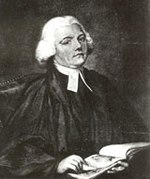
Parson Gilbert White
   The "Three Around Farnham" are writers who lived within the same 30 mile radius around Farnham: Gilbert White (1720-1793). Jane Austen (1775-1817) and William Cobbett (1763 - 1835). What each sees -- and equally significant do not see -- in their shared countryside are vastly different. Williams does a comparison and contrast of these three's vision of the country and its relationship to the city in their time in order to describe the price extracted from the laboring classes.


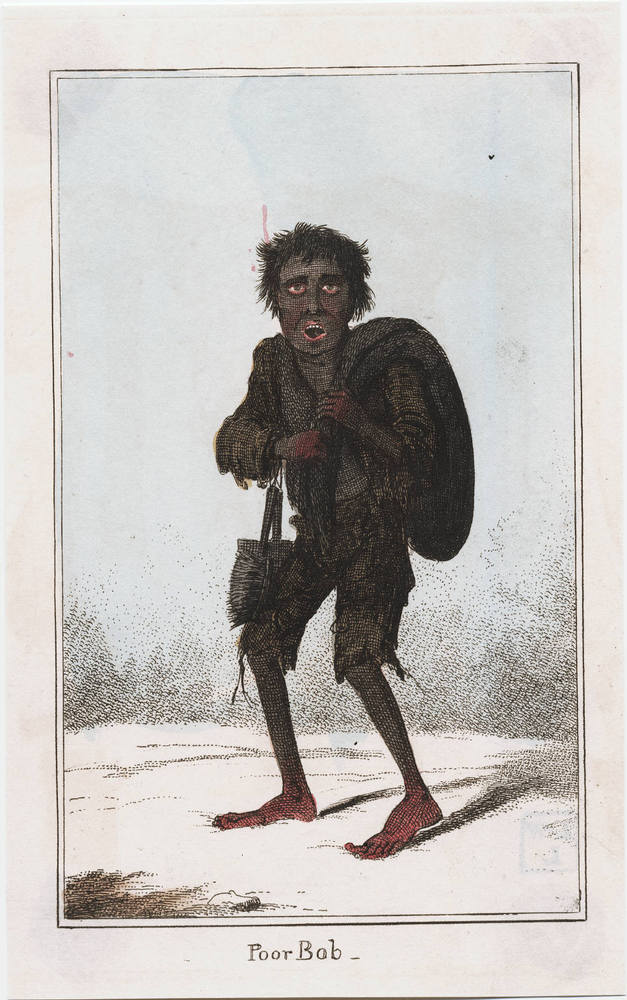
William Cobbett
  The very food that has been plundered from the laborers, by enclosure of public lands and plunging wages has gone to prop up the prosperity of the higher classes during the consolidation of England's Industrial Revolution and colonialism (slavery)-- and decades of nearly perpetual war and the extortionate taxes in money and kind put upon the poor. However, the laboring, voteless, thus non-represented classes, get nothing back from these extortions of land and cash taxation.  Their betters, however, with a vote and members in Parliament get in return other sources of income from government, the army and navy, the church, the law and opportunities for doing business between all these institutions and the colonies.


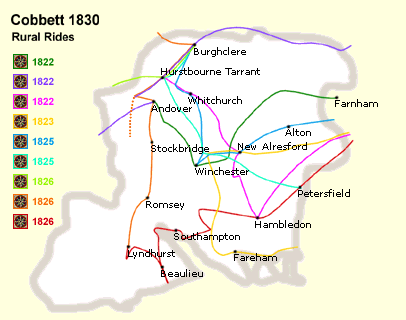
  Read Cobbett's Rural Rides (1830) and look in vain for the country walks of Pride and Prejudice (1813).

   However, the other two knew White's book well, and must have recognized some of what he saw -- White was was a pioneer naturalist / ornithologist. Parson White's The Natural History and Antiquities of Selborne,* or just The Natural History of Selborne (1789).


Cobbett's Rides


While White remains at least a sidebar in most English literature studies that cover the 18th and early 19th century writers now, it was different in the days of Austen and Cobbett.. Austen was a precocious fourteen and living 17 miles away in Steventon the year's White's book was published. Her brother wrote a poem about the book.  On August 31st 1811, when Jane was 36, she dined with White's niece (Rebecca Parker Terry) at Hill House in Alton.

Cobbett, the pioneering social and economic critic of the conditions imposed upon the rural laborer by those who live in the many lovely homes that populate this 30 mile radius around Farnham, refers to White's book in his spoken and written opinions, as can be seen here.

One of Williams's conclusion as to what this means to English literature is expressed by his description of Austen's keen powers of observation, put down in writing within the houses set off from the roads Cobbett rode, observing right on the verge of these same roads that run far off from those houses, the hovels in which the poor attempted to survive rain and cold.

Nevertheless, Williams finds embedded in the familiar texts of her novels, all these social changes, and how the families of all her communities are rising, maintaining, or, as with several figures, as is clearly described in Sense and Sensibility, Pride and Prejudice, Emma, Mansfield Park, and Persuasion, falling.  Those whose fall is staved off, are those whose younger sons find other economic security away from the entailed estates, often in the Church (much like Gilbert White himself), and even the great estates themselves such as Darcy's -- are sustained by other means than the land itself, whether from plantations in the West Indies as with Mansfield Park, or as hand wavium explained in Emma, whose fortune of 30,000 pounds comes "from other sources,"** not her father's small estate itself.

I'd argue further. while Austen tends to be assumed to be always looking inward, and at personal relationships, the relationships themselves are created even, by the social changes that are coming with this consolidation of the Industrial Revolution and imperial power.

------------------------------

Can be found on Gutenberg, here.

**   So somewhere -- and not so long ago in reality -- lands granted by Henry's VIII team in the Dissolution,  a fortune gained from piracy and privateering in Elizabeth's time, or lands achieved during the Commonwealth, or, closer to Emma's era, from manufacture, slavery, or other not so respectable means that about which surely Emma, Tory snob of snobs, would prefer us not to speculate.

Friday, October 2, 2015

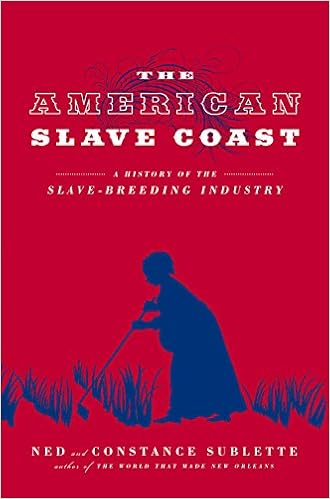
Review -- The American Slave Coast: A History of the Slave-Breeding Industry

BOOKS
People are saying the production and
package of The American Slave Coast
 are attractive and impressive

Photo credit: Lawrence Hill Books,
one of many illos in The
American Slave Coast.


New Book: "America Was Built On Slavery And It Was Much Worse Than You Might Imagine: Slaves as money. A breeding industry. Founding fathers of white supremacy."

By Steven Rosenfeld

Tuesday, July 14, 2015

Thomas Jefferson and Greece's Financial Crisis

In 1803 Thomas Jefferson wrote a letter to William Henry Harrison:

William Henry Harrison, War of 1812
". . .  as the diplomatic crisis leading to the Louisiana Purchase unfolded, Jefferson suggested that if the various Indian nations could be encouraged to purchase goods on credit, they would likely fall into debt, which they could relieve through the sale of lands to the government.3"
So we see the practice of the well-off ensnaring the less rich in a web of indebtedness out of which they cannot extricate themselves other than losing everything they once owned -- even their bodies in many times and places, as in Rome, which demanded people sell themselves and their entire families into slavery to repay the patriarch's loan -- is ancient and well established.

The contemporary Greeks understand this very well.  Over these last days the media has been speaking with Greeks, Greeks who are the average woman in the street sort: small business owners, people who work in restaurants, teach, and so on.  While speaking in English as a second language, these people are articulate and well-informed.  They, their families, friends and communities have been thinking deeply about their condition relative to the EU and their place in it for a long time.

One of their ways of describing what they are subjected to is to compare their situation as a small, poor nation within the Eurozone with that of being Mississippi (the poorest state) in the United States.  To paraphrase generally:

[the United States, a big and powerful single entity includes poor states.  All the states pay taxes to the federal government but the richer ones pay more.  The poorer states receive more benefits in taxes, rather than having everything taxed and taken away from them.  But in the EU, controlled by very a coalition of very rich and powerful nations, with deep ties to the IMF and other international financial interests, the weak and poor are taxed of everything for their own benefit.  We see nothing in return.  it's that the U.S. takes and gives according to need not power that makes it a single nation, in which the people see themselves as citizens of the United States first and citizens of their states second. This allows the system to flourish.  The EU is composed of nations who see themselves first as citizens of their nations and citizens of the EU only as they can benefit from it.  This is not a whole, but a set of conflicting powers, in which the poor are preyed upon by the rich. The rich are not interested in helping the poor but only in exploiting us.  Thus the EU is not a single entity and cannot be, unlike the U.S.]

As things are now in the U.S. and always have been I might takes some issue about the U.S. being a single entity working for the benefit of all.  But I get the point they're making.

One of the primary themes in The American Slave Coast is the division of the colonies, first, during the Constitutional Convention second, and then third in the antebellum era.  The argument, which is not an original one exactly, is that the U.S. could never become a single nation until slavery was taken out.  There were two parallel economies at play all during our history, always in conflict with each other.  A credit, not cash economy, most of the slavery states' wealth was calculated in African American captives -- in whose bodies their credit was calculated.


It was a closed economic system, one in which its wealth could not be used outside itself, i.e. an African American could not be exchanged up north directly for a carriage, but one could do that very thing in the South, including paying one's gambling debts. Thus as a particular form of capitalism, it had to expand or die. It was an enormous drag on the economy and financial systems of the the free soil states, just starting with the stark obstacle that there could be no national system of money.


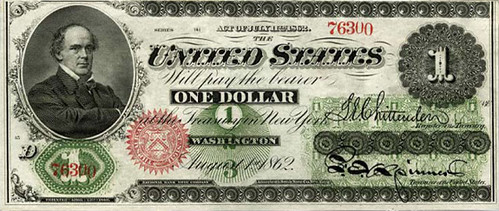
The first thing Lincoln did when Fort Sumter was fired upon -- after calling for volunteers for the army -- was commission Secretary of Treasury, Salmon P. Chase, to create a national currency.  Recall also that Buchanan's southern planter cabinet members and their appointees, as well as the southern senators and representatives stole every bit of specie -- and everything else they could -- from the federal government, even unto an office's petty cash, before decamping to TraitorLandia, where they then competed to become president of the CSA. There was no money at all to run the federal government.


Chase's greenback was the first national currency and it worked.  Even by the end of the war it still retained a bit more than 61% of its value.  We all know what happened with the CSA currency, backed by the wealth contained in the bodies of the captive African Americans . . . .

After the war, the U.S. did have a single currency, and then only was able to become a single nation.* The Greeks understand this, but they feel the EU isn't treating them fairly, which is how the U.S. treats Mississippi.  Recall, Mississippi went from the wealthiest state in the union in 1860, with the largest number of millionaires, to the poorest in 1865.

Will the EU survive?  As we are experiencing yet again in the U.S., we are questioning whether or not we can survive as a single entity, even with our common currency.

-----------------------

* The Southern slaveocracy was anti-paper and banks, as well as anti-city and public improvements, and certainly anti-tax -- and paying fair wages for labor -- and still is, for that matter!

BTW, a former Virginia governor is a blurber for The American Slave Coast!

Saturday, March 7, 2015

I Am A Bad Person + Poldark

For reasons unfathomable to mere mortals, the bare ankle has been a thing these last couple of years, summer and winter, for both male and female.


Having spend most of today, like yesterday, at a history conference on various matters of slavery in the Atlantic world I could not help but notice the Fashionable and Trendy hording upon on the streets and sidewalks, on a weekend, that if still quite cold, is at least sunny (or it was -- there are mutterings on AccuWeather of mixed snow and rain fall later). They are wearing, without sox, stiletto heeled boots, dazzling white $500 sneakers, rhinestone flatties, all kinds of very fine footwear. They also are all looking at their devices, talking, texting, whatever. Four times -- 4! -- I watched these fashionistas walk into the water gathered at most corners, filthy water from melted snow and ice and all kinds of stuff in it. The expressions of shock when that water went over their bare ankles was so amusing I laffed (though politely and hopefully inaudibly behind my gloved hand, of course). Splutters and swears, shrieks and screams, all of which I confess here to enjoying, very much.  I am a bad person, totally lacking in sympathy for my fellow women and men.  Nor do I give a gd. >g<

Now -- Poldark!


Tomorrow night begins the first episode on BBC1 of the remake of the 1970's Poldark series, which I had loved when amiga T and I would watch it in PBS re-runs on Wednesday nights. This one looks scrumptious -- see the trailer above.


Aidan Turner, the actor playing Ross Poldark, was the romantic male lead on the Brit Being Human, and he was why I watched the first two seasons.  Aidan Turner's character managed to be brooding in that dark moody romantic troubled soul way, and yet very charming and very funny too.  He might make a terrific Ross Poldark, though surely one very


different from the original BBC Ross, played by Robin Ellis -- who was also a very satisfactory period drama romantic male lead.

Among the elements that made this series, the original and this re-make, and the books on which they're based, so appealing to me, is that they take place during the Era of Revolution. This is the 1970's when neither British nor American movies and television had yet turned their backs from including any content in the scripted drama that commented on class and political - economic inequity.

The series begins with Ross coming back to Cornwall from America, where he fought for the King against the rebelling North American colonists.  He returns with sympathy for the rebels and revolutionary ideas about class and rank himself.  Recall, he's a Cornish man, not necessarily in sympathy with the King and the House of Lords.  The more I read in this era's history the more aware I am too of how tough the rank-and-file and poor had it in these times of war with France and Napoleon.  Everything was taxed, just for starters.

Being on the coast, as they are in Poldark, there has always been smuggling, doubtless even before the Romans invaded and conquered. But during these decades of war and taxes smuggling everywhere became the biggest business of all, other than army and navy matériel business.  As well, there were years of bad weather, in which crops failed, and business for everything dropped way down, as Europe was increasingly in chaos (though Napoleon as First Counsel, did manage to bring France back to order, including eradicating the bandits).  All of this is in Poldark.  Yum.

PBS, please bring this Poldark to the U.S. audience too!

Saturday, February 21, 2015

Poirot

I love David Suchet's ITV's Agatha Christie's Poirot (1989 - 2013), though it takes a turn around 2008 which is darker and uglier, less a luxe entertainment of justice served and order restored, though not necessarily more realistic. Poirot begins to feel the stress of his years of being the instrument of bringing justice to murder's victims, while his solitude begins to weigh on him. His large eyes -- like those of an owl -- that see in so many directions at once, also well with tears, more than once. In Murder on the Orient Express (2010), which pointedly is located in 1938, though he solves the crime, he cannot force himself be the agent of justice. Even his mustache points, point if not down, straight, not curved upwards in Poirot's signature second smile.


No little provocation for that love is embodied by the design and score of the title sequence. These are a seamless blend of the Poirot period elements (end of WWI, to nearly the outbreak of WWII) signaling sophistication, elegance and glamour. The opening title sequence deconstructs the decorative arts of the historical era that is being recreated. Art Deco and modernist, i.e. both revolutionary while harking back to certain more traditional decorative arts, such as the Asian and Egyptian. All this, plus at the end, a soupcon of occult suggestion. that further plays up the announcement that this program will deliver nothing of the ordinary.


See for instance, the 1993, series 5 episode. “Dead Man’s Mirror” (which is specifically named at the auction as Art Deco) where all these elements of Deco, Egyptian, Modernist etc. roll together seamlessly. The era's class considerations, roll together equally as seamlessly -- which is where Poirot differs so much in treatment from American attempts at these entertainments.

This floats with a buoyancy one would not expect of a series drama centering murder, in the decades that include the Depression and the lead-up to WWII. So we are further promised that we're about to escape into a English world that is as much a fairy tale in a never-never-land -- though without the delicious frou frou -- as are the American Astaire-Rogers madcap song and dance romance extravaganza films, the sets for which also frequently employ extensively Art Deco set design.

The title sequence literally pulls us into the series's escape by centering travel, which, for the elite and privileged who could afford it, had finally become authentically comfortable and easy.  (To learn what travel was like, prior to the age of steam and the innovation of passenger ships, even for the privileged, read the accounts by John Quincy Adams's first voyage to Europe, with his father, John Adams.)

In Poirot's opening sequence, comes first a plane (presented by a rendering influenced by period, industrial design, small enough to be a private plane).* Air travel was just beginning to be common -- again for those who could afford it, the most up-to-date glamorous mode of travel.  The plane pulls along the older form of travel, a train which has first class cars. For only an instant we see "Liner" printed upon the side of something racing along in these transportation scenes, which could mean either the train or that even older luxe form of travel, the first class passenger ship liner.

The 1920's and 30's are the interim between the old world of rigid class definition, in which almost everyone was either a servant or had a servant -- or very many servants -- and the world of reliable factory work, modern housing developments and modern conveniences that made servants too expensive and difficult for nearly everyone. Among many other elements this series is presenting, made from murder mysteries written in those decades, is a milieu that reassures the class elite's anxieties about a changing world, no matter how many of them are murdered by their relatives and lovers. (That supposedly is the attraction of murder mysteries: a bloody destruction of how things are, then, with the revelation of the killer, traditional social order is redeemed and returned.)

This wasn't going to last much longer, babies, and one might guess that Ms. Christie was rather more aware of this than many of her contemporaries.

ITV's Poirot shows up the Downton Abbey crew as fusty and musty as it is. They may pretend they're in the 1920's, but they're still lurching along in the 18th century. The comedy perhaps comes out of knowing that the audience identifies itself primarily as Lady or Countess so-and-so when, in the reality of those days, we'd be the skivvy -- who doesn't even rate her own name, as even ladies' maids in those days were called by their Lady's name.

If I have a criticism to proffer about this long-running series, is that characters who are supposed to be Americans just don't talk like Americans. But then, this is said about Americans who are supposed to be playing Brits on American television too. But it can be grating that British television actors on a British television program, when playing an American default to something that evidently is supposed to be either Southern or Western, and never is either one.

The mouse that runs all through Hickory Dickory Dock is not cute and endearing, particularly as it not quite tracks through a victim's blood.
Quite a few episodes of Poirot I'd not previously seen became available via streaming on netflix, including the brilliant 1995 series 6 episode "Hickory Dickory Dock."  For starters, the episode is seen extensively from the point of view of a mouse, including the opening, as the mouse runs down the clock. One of the suspects is played by a very young Damian Lewis, now Henry VIII in the BBC's Wolf Hall.  It seems too, that Rowling / Galbraith borrowed some of the elements from it -- or from the book? I've never read any Poirot novels, never seen a one around here, and am reliably informed that the book Poirot is very different from the Suchet Poirot. In Galbraith's The Silkworm, a meeting takes place in the venerable Cheddar Cheese pub-bar between protagonist private detective, Cormoran Strike, and Nina Lascelles – a junior editor, whose body language and appearance are perceived by Strike as those of a mouse. The locations of Hickory Station, etc. are also in The Silkworm.

Poirot, the Greatest Detective in the World and the Most Famous, flanked by his friends, decomissioned Captain Hastings and Chief Inspector Japp of Scotland Yard. 

Miss Lemon, Poirot's faithful and extremely competent assistant.
Agatha Christie's Poiret may be perhaps one of the greatest television series ever made, particularly if one's criteria include the design and cinematography. The writing and acting are top-of-the-line, with a fine ensemble cast that one greets joyfully in each episode -- just as their characters do with each when having been separated for long periods by circumstance -- sometimes they've been separated for entire seasons. --, and often not pleasant circumstances. As many of the episodes show, even as Poirot and Company travel comfortably to stay in the most luxe of hotels, to the most ancient of places in Mesopotamia, Rhodes, Egypt, among those unhappy circumstances is time itself. Time just keeps going, with murder and all the other darkness of humanity flowing along its currents from the furthest past into futures that we can barely see, so darkly does the future loom for Poirot's world.

------------------------------

*  See the first Astaire-Rogers movie pairing, before they became the feature marquee attraction, Flying Down to Rio (1933).  In fact, their last film pairing was the 1939 biopic The Story of Vernon and Irene Castle, in which Vernon dies tragically in a training  accident preparing to be a war pilot for the Royal Flying Corps in WWI.  Among others, there is Dorothy Sayers's second Lord Peter Wimsey (1926) Clouds of Witness, adapted for BBC television in 1972.

Thursday, August 28, 2014

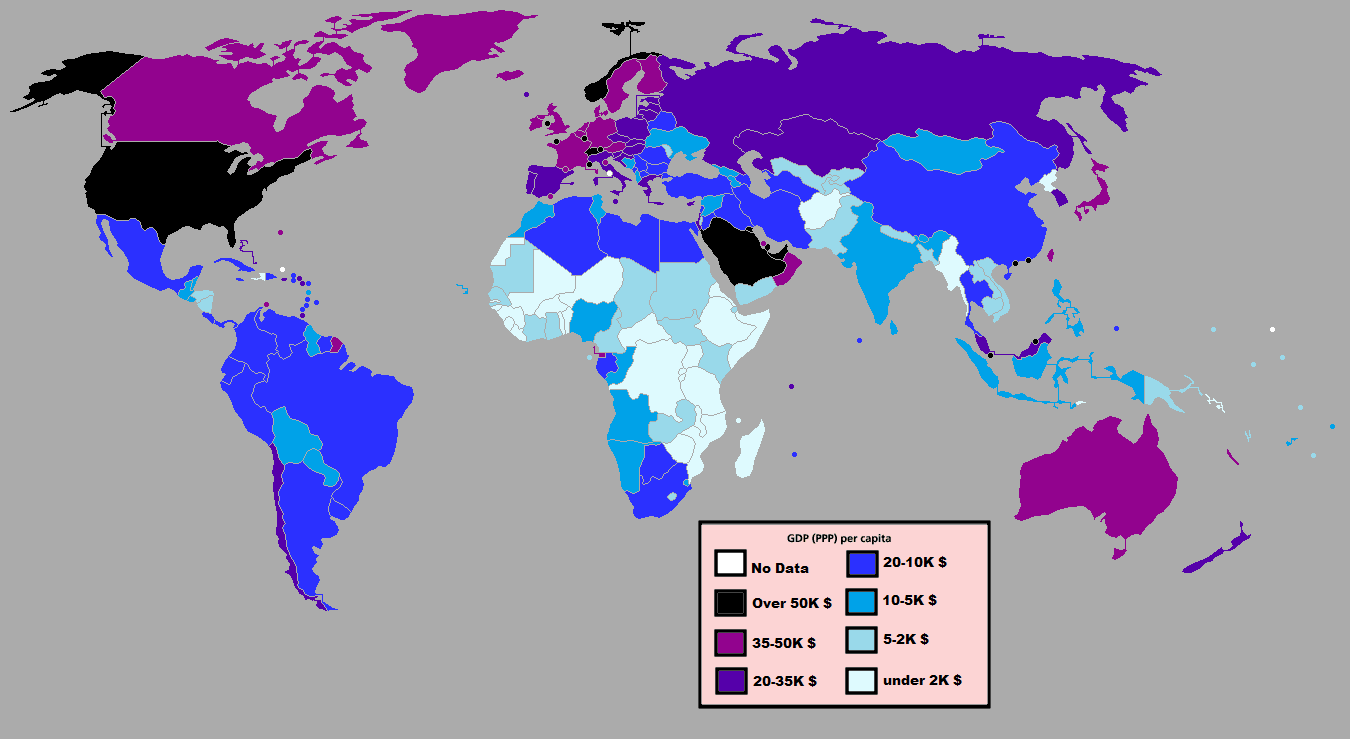
38 Maps That Explain the Global Economy

by Matthew Yglesias on August 26, 2014:

Commerce knits the modern world together in a way that nothing else quite does. Almost anything you own these days is the result of a complicated web of global interactions. And there's no better way to depict those interactions and the social and political circumstances that give rise to them than with a map or two. Or in our case, 38. These maps are our favorite way to illustrate the major economic themes facing the world today. Some of them focus on the big picture while others illustrate finer details. The overall portrait that emerges is of a world that's more closely linked than ever before, but still riven by enormous geography-driven differences.
 One map example, but at the link, the maps are much larger, and easy to read:


Tuesday, August 12, 2014

Continuum - Season 3

As of last night's dinner-preparation hour I'm nearly half way through watching Continuum's third season.


Season 3's plot lines and the characters themselves are complicated.  Part of the complication involves Alec Sadler, one of the three principal characters, being present as two; i.e. one from the timeline (I think ...) we've been in since the beginning of the show, and the other from another timeline branch, and they're existing simultaneously in the same timeline -- though I'm not entirely clear whether this timeline is the series' original timeline.  I may have forgotten some essentials from watching seasosn 2 last year at this time.

This season also began with two of the protagonist-protector from 2077, Kiera Cameron, but immediately one of them is shot dead.  The killed Kiera was the "original" Kiera known from the series's start by her contemporary Vancouver


police force partner and friend, Carlos Fonnegra. That there are / were two Kieras is known to him almost immediately.  He sees this Kiera as different the first one, and isn't sure he either likes or trusts the second one.

Second Kiera doesn't like First Alec or trust him, but seems to like and trust the second one.  Further complications are created by First Alec learning that his first love, Emily, wasn't what he thought she was, while Second Alec, who was the first Alec, traveled back in time a week to save Emily's life, after she's killed in the first timeline. First, now Second Alec, still loves Emily, no matter what.

If others can follow all this with no difficulties they are much better viewers than I am.  In the meantime, as the two Alecs and the Second Kiera dash about, the timelines are getting ever more muddled and history in the past and the future is changing. This further complicates the plots because it's not always easy to distinguish what seem volte faces of characters and their relationships with each other as they seemed previously.

Further we're presented with Kiera's past -- which is still in our future --  beginning when she's still a young girl, and not yet a Protector.  But -- is her time traveling changing her past as well?

Tonight I'll watch the seventh episode (there are thirteen), and will perhaps understand things better.

As well, I am hoping that Alec Sadler, who the series isn't about --

Note: the captions says "the future is in her hands."
it's Kiera's show -- isn't edging the focus from her to himself.  The show couldn't handle two Kieras -- i.e. two supercompetent females leads --  but we have two Alecs, and the Alecs are supergenius-nerds, who are getting at least twice the amount of screen time than previously.

What I'm like most about Continuum, is how well the writers are connecting labor, capitalism, and the corporate state with the police state, in both our present and the future.  Indeed, in Kiera's future, the state has gone full circle in which every person owes a life debt to the state -- which is connected to one's economic status --  which debt gets adjusted in various ways  up and down, including execution when the debt is greater than one's economic value.  This value is assessed by many criteria: treason is of course a debt that merits execution. This sort of conceptualization seems to indicate the writers have carefully read at least the first


sections of David Graeber's Debt: The First 5,000 Years (2011).

So far though, Continuum's writers haven't overtly connected these conditions to so many jobs being performed by robots and other automation,* though it is implied, whenever there are scenes set in a college or university, and the many public protests included throughout the seasons' episodes.  It's this that makes the over-arching time lines of both "present" and future so plausible in Continuum.

Continuum does seem to be asking the important questions, and further inquires, what are the answers, and how can we get to them?

Alas, so far, there's been no hard announcement there's going to be a season 4 of Continuum, though it was scheduled to be made "early in August."

----------------

*  Just this week: room service and check-in desk will be robots:


the Aloft Hotel in Cupertino, Calif,  ... will begin using an R2D2-esque robot for such trips. Fittingly, Aloft’s parent company, Starwood Hotels, tests the latest technology at the Silicon Valley hotel. Guests can enter their rooms with a smartphone app and bypass the traditional check-in process at the front desk.

So very soon now, not even turning your city, your region into an extractive, toxic tourist playground will provide even the most menial of jobs, that are always touted as "jobs creation," and o so good for the economy.

Thursday, December 12, 2013

Colder than "Cold" in the City in which 46% of the Population Live at the Poverty Level, Or Below

I am thinking I may be finally slowly recovering from this sinusitis infection, which I've been suffering from since November 5.

I spent time outside doing various errands in two separate sessions this afternoon. As I've learned, breathing cold air now aggravates the sinus infection (I've never had a sinus infection before, so with no experience I didn't know that at first). Nevertheless, finally, I was able to do outside errands in these below freezing temperatures (no wind though; if there had been, I'd have stayed inside). No matter what I do or don't do there's a crash of feeling really sick with headache, sore throat and exhaustion around 6 PM, and this time was no difference.  However, I ate some gingered soup of rice noodles etc., and felt almost normal again. As consequence I allowed el V to make us reservations uptown, at Camaradas, for Friday night, for dinner with friends, and great music.

Working at feeling better, certainly.

Getting a haircut Saturday, only about 8 weeks late ....

In the meantime, in the waning afternoon light, picking up research books from the library, I saw this:

At taxi shift change time, on the dirty, freezing cement of  BP gas station (which is the only gas station anywhere within many blocks around here by now) a conclave of shoe-removed Muslim taxi drivers and their prayer rugs bowed toward Mecca, performing their prayers. Even if I'd had a camera I wouldn't have been able to photograph that, but I'd liked to. Their prayer mats were the most deep, brilliant colors, such a contrast with the sky turning dusty rose and pastel grey as the sun fell rapidly -- the rose and the golden highlights reflected in all the glass on the northern side of the streets, echoing the yellow taxis gassing up for the changeover.


It's at the side of that non-yellow car that the prayers are held; imagine, ice and 22 degrees ....
We are seeing more and more cultural and spiritual practices that might have been private now, blooming in whatever crack is available within a Manhattan essentially without service facilities. Yes, not even gas stations are around now; the lots sold for yet another luxury boutique hotel or restaurant.  However, the international plutocratic oligarachy slightest needs are diligently and amply tended, thank you Billionaire Mikey Bloomberg.


Example, those who need custom-designed chandeliers for their holiday dinner party table, there are about 10 places to provide the same within about 15 blocks ....

Sunday, December 8, 2013

David Simon: 'There are now two Americas. My country is a horror show'

An edited extract from:
... the creator of The Wire, David Simon, delivered an impromptu speech about the divide between rich and poor in America at the Festival of Dangerous Ideas in Sydney, and how capitalism has lost sight of its social compact.
in the UK Guardian / Observer. It's very strong meat, which will send the usual sorts into frothing vituperation, but hey, Mr. Simon calls 'em as he sees 'em, and he sees via many more perspectives and experiences than the usual frothing vituperators.  For instance, there's this:
You know if you've read Capital or if you've got the Cliff Notes, you know that his imaginings of how classical Marxism – of how his logic would work when applied – kind of devolve into such nonsense as the withering away of the state and platitudes like that. But he was really sharp about what goes wrong when capital wins unequivocally, when it gets everything it asks for.
That may be the ultimate tragedy of capitalism in our time, that it has achieved its dominance without regard to a social compact, without being connected to any other metric for human progress.
We understand profit. In my country we measure things by profit. We listen to the Wall Street analysts. They tell us what we're supposed to do every quarter. The quarterly report is God. Turn to face God. Turn to face Mecca, you know. Did you make your number? Did you not make your number? Do you want your bonus? Do you not want your bonus?
And that notion that capital is the metric, that profit is the metric by which we're going to measure the health of our society is one of the fundamental mistakes of the last 30 years. I would date it in my country to about 1980 exactly, and it has triumphed.
And it's a disaster.


Unless we are among that ever shrinking minority of the global plutocratic oligarchs and their servants,


we are all living Disaster Capitalism now -- combined with the neo-police state of 24/7 surveillance of everyone and everything. Ain't the future grand?