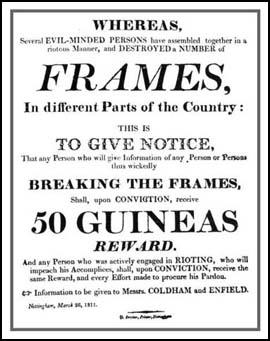
". . . But the past does not exist independently from the present. Indeed, the past is only past because there is a present, just as I can point to somethingover there only because I amhere. But nothing is inherently over there or here. In that sense, the past has no content. The past -- or more accurately, pastness -- is a position. Thus, in no way can we identify the pastas past." p. 15
". . . But we may want to keep in mind that deeds and words are not as distinguishable as often we presume. History does not belong only to its narrators, professional or amateur. While some of us debate what history is or was, others take it into their own hands." p. 153 Silencing the Past: Power and the Production of History (1995) by Michel-Rolph Trouillot
. . . . Beautiful day here.Went to library and TJ’s and the wine store. Got a bottle of bubbly to celebrate when, finally, the official call is made. At 4:49 EST and it still hasn’t been, though everyone knows Biden-Harris carried the day, very slowly, and very carefully. Otherwise the Secret Service wouldn't be hardening the air space and other security over and around Wilmington.
Asshat ‘center Dems’ who lost their campaigns are whine blaming it’s because of AOC, the socialists, the ‘progressives’ and defund the degenerate cops movement. AOC ain't havin' that! She breaks it down, as to what her sorts do and did, and their sorts didn't and won't.
Myself am giving All The Points for the Dems making it through this campaign and election to Stacy Abrams, the Squad, BLM and all the other progressive activists for the Biden-Harris ticket.
Myself am also giving All The Points to OUR WHITE DEM ACTIVIST INDEFATIGABLS of C'town and all the other places like C'town, i.e. ‘white suburban women’ -- who have been knocking their brains out, doing everything to get people of every sector registered and informed and voting, including baking, cooking, driving and poll working, giving money -- and doing it not just this year but all the time, but particularly this year -- they too deserve every bit of thanks and gratitude from the rest of us. They never give up hope and they always remain totally decent and always have a joke and never lose their sense of humor. All of them are totally competent to run everything -- but that's just it, they don't really want to run All the Things! They just want a decent world for everyone and their kids, their grandchildren, the cats and the earth. And that's all they've ever wanted from the gitgo.
Love and congratulations to all of you!
I know it may seem a bit premature, and that's what has become so cool about the Biden-Harris campaign -- they haven't prematurely done anything. Biden projects and expresses calm and patience. He counsels calm and patience. Count every vote he says. That projects confidence (as unlike the desperate flailings of you know whom). Count. Every. Vote. That means not a speck of dirt on which the clowns desperately trying to project their non-existent legal expertise can stand to protest the outcome.
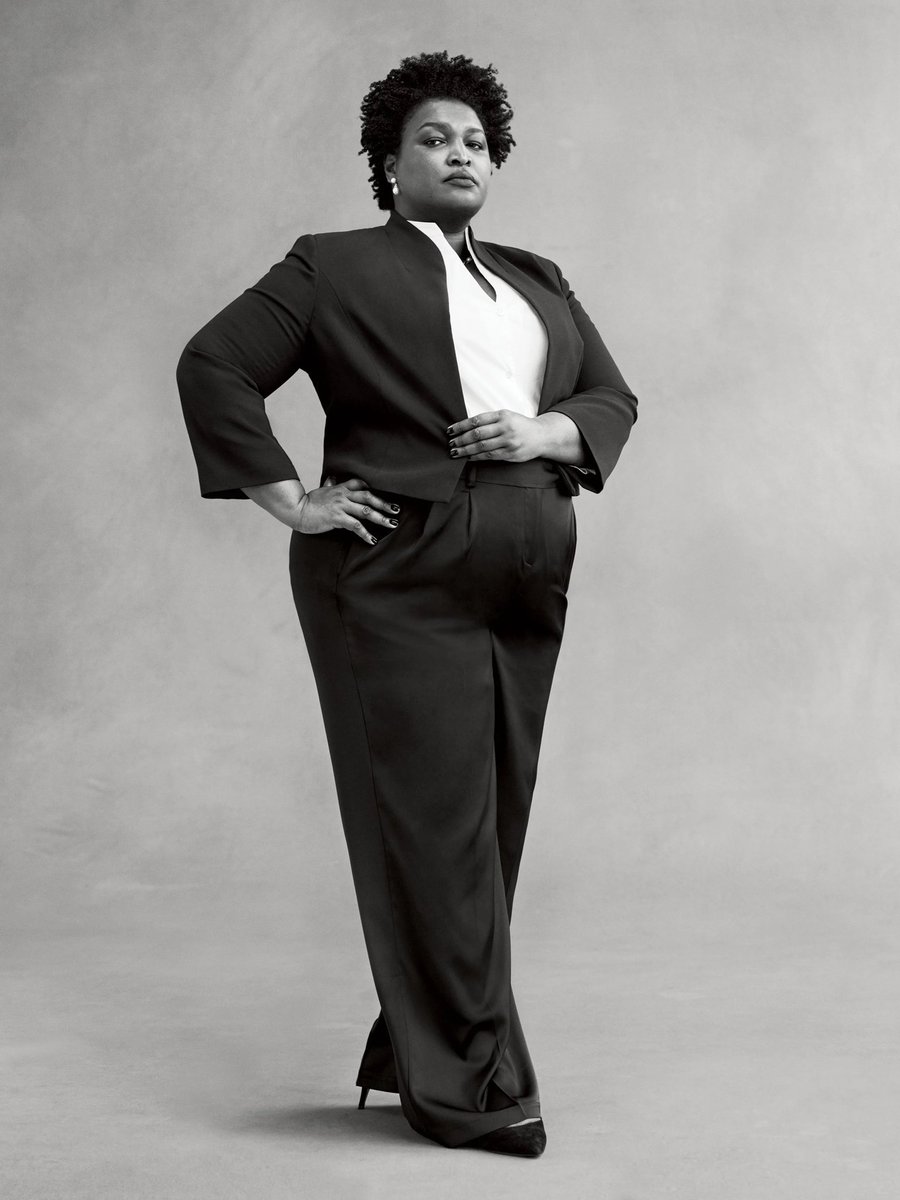
In the meantime, have this photo of Stacy Abrams. Abrams to run the DNC, hmmm?
4:49 – heard the first Friday night scream here. The ‘restaurants’ are already starting to be packed.
Myself, giving myself a treat. I’m having a glass of wine after not drinking any for about 3 weeks; no reason, other than disinclination. But the inclination is now here. Cheers!
. . . . In an entry Elsewheres, I concluded with "Lord. How long. How Long." To my astonishment, people asked what that means. . . . . People with a religious background or any experience of protestant, Jewish, African American recognize it immediately. It's part of US literary tradition by now, in many parts, even recognized within canon. This is the rhetorical Introduction and Refrain of passionate lamentation over inexplicable suffering and oppression, begging an explanation from God, of Why, Lord? why at all? Why to me? to us? and for how long, Lord, will you allow this to go on? Versions of "How Long" are everywhere in the Old Testament, whether in the Book of Habakkuk or the Psalms. It is in protestant hymns and prayers, it is naturally, particularly prevalent in African American religious tradition, whatever the mode of expression, and beyond that has been heard even in pop music made by African Americans and covered by whites, yea, even in the UK -- even when the lamentation is about another band member playing off on the side in secret with another band, as with Ace's one hit wonder.*
So, yes, among the lamentation of African Americans -- and British people of color too, who are at least as religious out of the protestant traditions as in the US, to speak "Lord. How long. How long,' as a response to a white guy doing absolutely nothing for racial justice except to say, ya! go risk your life and health -- go go go! and then demand cookies from god himself (who he is currently referring to as karma points!) for typing that in the comfort of his comfy home and bank account, far far far away from anything remotely threatening, whether the pandemic, eviction, or police brutality, is something very many people immediately 'get', so to speak. But not this tone deaf white guy -- who also poo pooed Covid-19 as a cozy disaster that would over in two weeks. Thus, this traditional African American expression in prayer, in sermon-oratory -- see Dr. Martin Luther King
and music, secular and popular, and has been since the early days of slavery -- is appropriate. How long, Lord, must we put up with clueless complacent white guys typing clueless, complacent words, and then demanding a reward? * Another example of how African American traditions get reworked into commentary upon what is happening right this minute can be heard in the soundtracks to both Coppola's Apocalypse Now, and Spike Lee's imminent release, Da 5 Bloods, which comments on our conditions both back in political and film history -- Vietnam -- and that history commenting on contemporary events.
~~~~~~~~~~~ The BLM Protest movement is indeed global. The monument to African slave trader, Edward Colston, in Bristol, on which Bristol's modern fortune was founded, was pulled down. The protest in London by the US embassy is enormous! https://www.itv.com/news/westcountry/2020-06-07/thousands-attend-black-lives-matter-protest-in-bristol/ https://www.reuters.com/article/us-minneapolis-police-protests-britain/thousands-join-black-lives-matter-protest-outside-u-s-embassy-in-london-idUSKBN23E0A3? https://www.itv.com/news/2020-06-07/more-black-lives-matter-protests-to-take-place-across-the-uk-on-sunday/ With horses featuring in stories about the clashes between cops both here
and the UK, with the horses and the cops in armor, while a pandemic rages, I have no trouble re-visioning the uprisings in the 14th century in England,
particularly the largest, longest one, the Watt Tyler Revolt, or, the Peasants' Uprising, against Richard II -- particularly directed at his uncle, Duke of Lancaster, John of Gaunt -- whose newly built palace, reputed to be the most exquisite in Europe, was not looted, it was destroyed, deliberately, every part of it, from marble wall facings to the smallest bibelot, ground to shards and dust, and then burned. That's how tired the people were of waiting for justice, dignity and food for So Long. So. Long. So. Very. Long.
I love David Suchet's ITV's Agatha Christie's Poirot (1989 - 2013), though it takes a turn around 2008 which is darker and uglier, less a luxe entertainment of justice served and order restored, though not necessarily more realistic. Poirot begins to feel the stress of his years of being the instrument of bringing justice to murder's victims, while his solitude begins to weigh on him. His large eyes -- like those of an owl -- that see in so many directions at once, also well with tears, more than once. In Murder on the Orient Express (2010), which pointedly is located in 1938, though he solves the crime, he cannot force himself be the agent of justice. Even his mustache points, point if not down, straight, not curved upwards in Poirot's signature second smile.
No little provocation for that love is embodied by the design and score of the title sequence. These are a seamless blend of the Poirot period elements (end of WWI, to nearly the outbreak of WWII) signaling sophistication, elegance and glamour. The opening title sequence deconstructs the decorative arts of the historical era that is being recreated. Art Deco and modernist, i.e. both revolutionary while harking back to certain more traditional decorative arts, such as the Asian and Egyptian. All this, plus at the end, a soupcon of occult suggestion. that further plays up the announcement that this program will deliver nothing of the ordinary.
See for instance, the 1993, series 5 episode. “Dead Man’s Mirror” (which is specifically named at the auction as Art Deco) where all these elements of Deco, Egyptian, Modernist etc. roll together seamlessly. The era's class considerations, roll together equally as seamlessly -- which is where Poirot differs so much in treatment from American attempts at these entertainments.
This floats with a buoyancy one would not expect of a series drama centering murder, in the decades that include the Depression and the lead-up to WWII. So we are further promised that we're about to escape into a English world that is as much a fairy tale in a never-never-land -- though without the delicious frou frou -- as are the American Astaire-Rogers madcap song and dance romance extravaganza films, the sets for which also frequently employ extensively Art Deco set design.
The title sequence literally pulls us into the series's escape by centering travel, which, for the elite and privileged who could afford it, had finally become authentically comfortable and easy. (To learn what travel was like, prior to the age of steam and the innovation of passenger ships, even for the privileged, read the accounts by John Quincy Adams's first voyage to Europe, with his father, John Adams.)
In Poirot's opening sequence, comes first a plane (presented by a rendering influenced by period, industrial design, small enough to be a private plane).* Air travel was just beginning to be common -- again for those who could afford it, the most up-to-date glamorous mode of travel. The plane pulls along the older form of travel, a train which has first class cars. For only an instant we see "Liner" printed upon the side of something racing along in these transportation scenes, which could mean either the train or that even older luxe form of travel, the first class passenger ship liner.
The 1920's and 30's are the interim between the old world of rigid class definition, in which almost everyone was either a servant or had a servant -- or very many servants -- and the world of reliable factory work, modern housing developments and modern conveniences that made servants too expensive and difficult for nearly everyone. Among many other elements this series is presenting, made from murder mysteries written in those decades, is a milieu that reassures the class elite's anxieties about a changing world, no matter how many of them are murdered by their relatives and lovers. (That supposedly is the attraction of murder mysteries: a bloody destruction of how things are, then, with the revelation of the killer, traditional social order is redeemed and returned.)
This wasn't going to last much longer, babies, and one might guess that Ms. Christie was rather more aware of this than many of her contemporaries.
ITV's Poirot shows up the Downton Abbey crew as fusty and musty as it is. They may pretend they're in the 1920's, but they're still lurching along in the 18th century. The comedy perhaps comes out of knowing that the audience identifies itself primarily as Lady or Countess so-and-so when, in the reality of those days, we'd be the skivvy -- who doesn't even rate her own name, as even ladies' maids in those days were called by their Lady's name.
If I have a criticism to proffer about this long-running series, is that characters who are supposed to be Americans just don't talk like Americans. But then, this is said about Americans who are supposed to be playing Brits on American television too. But it can be grating that British television actors on a British television program, when playing an American default to something that evidently is supposed to be either Southern or Western, and never is either one.
The mouse that runs all through Hickory Dickory Dock is not cute and endearing, particularly as it not quite tracks through a victim's blood.
Quite a few episodes of Poirot I'd not previously seen became available via streaming on netflix, including the brilliant 1995 series 6 episode "Hickory Dickory Dock." For starters, the episode is seen extensively from the point of view of a mouse, including the opening, as the mouse runs down the clock. One of the suspects is played by a very young Damian Lewis, now Henry VIII in the BBC's Wolf Hall. It seems too, that Rowling / Galbraith borrowed some of the elements from it -- or from the book? I've never read any Poirot novels, never seen a one around here, and am reliably informed that the book Poirot is very different from the Suchet Poirot. In Galbraith's The Silkworm, a meeting takes place in the venerable Cheddar Cheese pub-bar between protagonist private detective, Cormoran Strike, and Nina Lascelles – a junior editor, whose body language and appearance are perceived by Strike as those of a mouse. The locations of Hickory Station, etc. are also in The Silkworm.
Poirot, the Greatest Detective in the World and the Most Famous, flanked by his friends, decomissioned Captain Hastings and Chief Inspector Japp of Scotland Yard.
Miss Lemon, Poirot's faithful and extremely competent assistant.
Agatha Christie's Poiret may be perhaps one of the greatest television series ever made, particularly if one's criteria include the design and cinematography. The writing and acting are top-of-the-line, with a fine ensemble cast that one greets joyfully in each episode -- just as their characters do with each when having been separated for long periods by circumstance -- sometimes they've been separated for entire seasons. --, and often not pleasant circumstances. As many of the episodes show, even as Poirot and Company travel comfortably to stay in the most luxe of hotels, to the most ancient of places in Mesopotamia, Rhodes, Egypt, among those unhappy circumstances is time itself. Time just keeps going, with murder and all the other darkness of humanity flowing along its currents from the furthest past into futures that we can barely see, so darkly does the future loom for Poirot's world.
------------------------------
* See the first Astaire-Rogers movie pairing, before they became the feature marquee attraction, Flying Down to Rio (1933). In fact, their last film pairing was the 1939 biopic The Story of Vernon and Irene Castle, in which Vernon dies tragically in a training accident preparing to be a war pilot for the Royal Flying Corps in WWI. Among others, there is Dorothy Sayers's second Lord Peter Wimsey (1926) Clouds of Witness, adapted for BBC television in 1972.
Last night I began to read Charlotte Bronte's second published novel, Shirley (1849). It seems the perfect novel to carry me through the change of seasons from summer to autumn, both long enough while engaging enough, with several themes. Not the least of Shirley's engagements is that it presents dilemmas and problems for all the readers -- and even scholars -- who are insistent upon presenting Charlotte Bronte and her protagonists as feminist and politically liberal.
Shirley, though classified as a social novel, is neither feminist nor liberal, particularly in its outlook of Yorkshire textile laborers particularly, or the lower classes in general. This may explain why Shirley is so unpopular generally with not only Bronte-ists, but those who study the history of the novel in English -- so much so that a surprising number of those who are well educated in The Novel, are unaware that Charlotte Bronte wrote this novel.
The edition I chose to read was not my falling apart Penguin copy acquired a millennium ago while an undergrad, but a newer Penguin edition with an introductory essay (2006) by the excellent Bronte scholar, Lucasta Miller.
The other primary reason I chose Shirley is that as well as being classified as Bronte's only social novel, it is considered an historical novel. The novel's chronological location is specifically told the reader on page 1 as, "eighteen-hundred-eleven-twelve." I.e., we're in my favorite war (speaking historically), the War of 1812. Britain, like Napoleon, had levied an embargo upon trade with "America" (which included grabbing every U.S. ship they encountered -- if they could) thus the Yorkshire textile manufacturers, like so many other industrial employers, had closed their mills or greatly reduced activity and workforces.
The narrator so informs us, in a one-sided explanation, on page 25, second
chapter, as spoken by the half French-Antwerpian, Robert Moore, owner of the Hollow's mill:
"I am very rich in cloth, I cannot sell; you should step into my warehouse yonder, and observe how it is piled to the roof with pieces. Roakes and Perason are in the same condition: America used to be their market, but the Orders in Council have cut that off."
This is the period of the Luddite uprisings, as the manufacturers like Roger Moore, with the capital to do so, are installing more efficient machines that require fewer workers.
Bronte expands on the Orders in Council and unemployment on page 29-30:
"The 'Orders in Council,' provoked by Napoleon's Milan and Berlin decrees,* and the forbidding neutral powers to trade with France, had, by offending the Americans, cut off the principal market of the Yorkshire woollen trade, and brought it consequently to the verge of ruin. Minor foreign markets were glutted, and would receive no more: the Brazils, Portugal, Sicily,**were all overstocked by nearly two years' consumption. At this crisis, certain inventions of the north, which, greatly reducing the number of hands necessary to be employed, threw thousands out of work and left them without legitimate means of sustaining life. A bad harvest supervened. Distress reached its climax....
This is the first time I've undertaken a Shirley re-read since having lived in New Orleans and on the Chesapeake, major grounds and objectives for the Brits in the War of 1812.
As for the plan that was to be a reading transition from one season to another -- well, Climate Change evidently made another plan. When I left for the libary before 10 AM the temperature was 64 degrees. Big brown leaves were being blown off the plane trees in droves. This is like no August I've experience here ever. The long term weather forecasts are saying we're going to continue with temperatures generally lower than usual, November is going to be wet, and winter will began early and be close to the brutal thing is was last go-round. I'm going to be extra-careful not to catch a sinus infection in November or break my elbow in January as I did last time.
----------------------
* Napoleon's monstrous egomania and British arrogance were equally responsible for the embargo. All nations' trade was caught between the hammer and tongs of the British and French navies. Indeed, when Denmark insisted on her right to continue trading as she wished, and an ally with Britain against the French, the British navy shelled Copenhagen, burning much of it to the ground, in 1807.
** Not to mention being under siege in one way or another, as with Sicily to where the King of Naples had fled, and Portugal, as part of the very long and brutal Peninsular campaign -- Bronte is frequently hazy, to put it generously, with her information about many aspects that she mentions regarding trade, the military and politics, despite her passion when younger for heroes such as Wellingon and Napoleon. Her forte is the personal, always.
Additionally she was writing this some decades after it took place; she was born when it was all over, in 1816. Thus Shirley gets classified by some as an historical novel. I'm not sure I agree, however, any more than I can think of Middlemarch as an historical novel. Though set in the 1830's of the Reform Movement bills, Eliot, born in 1819, was more than old enough, particularly with her father profession and their common interest in public issues and politics, to remember the time well. As well, the Reformist movement returned to the public stage in 1860.
I had to retire about 10:30 PM-- so tired. But the election had been called. I didn't dare believe it. At some point later in the night el V whispered in my ear, "Obama's still won the election. You can keep dreaming." This was a reference to the nightmares I had during the bush-cheney years, of bush and cheney personally bombing my city, my childhood farm, raping and torturing me.
I am thrilled that we get to have the FLOTUS for four more years!
It was so good that the President won this one. He earned it. Look how loose his suit is on him. He's skin and bones, he's worked so hard and slept so little. May he and the FLOTUS get some private just them together time very soon.
Now it's snowing, and I must go out and get more supplies as we're no where, not even anywhere, in replenishing all the things we've lost, and what I've used up cleaning up.
Just back from outside, porting in more supplies. The wind is getting very strong. And this year, finally, I thought I'd gotten el V kitted up for Weather -- new coat, gloves, everything, even boots -- his African all weather, water-proof, all terrain boots. Well, no. He doesn't know what he did with them. They're here, he assures me. In the apartment. He just has no idea where. He is also too under deadline hell to search them out He looks at me hopefully. "You are so good at finding things I've lost," the look says. But not today.
There's is no way to deny it longer. I am sick.
It's a good thing I've got a fat biography of Jefferson Davis to read and take notes on, as well as a terrific French Revolution era historical - fantasy novel (no, not that preposterous thing just out from Fantasy publisher): The Stockholm Octavo by Karen Engelmann (2012), HarperCollins. As well netflix is sending me, finally, the English mini series made from the Victorian historical novel, The Crimson Petal and the White. Then, there's the third season of Treme to catch up with, hooray!
Vulpine, canine, feline, porcine & equine avatars. Gone to heaven Gone to hell Gone to jail Gone to work Gone to school Gone to lunch Gone to bed Gone to bad Gone to pee Gone to earth. Gone Gone Gone. Fox's earth is Blue Gotham City. Shorter sojourns are spent in other, more dangerous, locations.