LINES OF THE DAY

". . . But the past does not exist independently from the present. Indeed, the past is only past because there is a present, just as I can point to something over there only because I am here. But nothing is inherently over there or here. In that sense, the past has no content. The past -- or more accurately, pastness -- is a position. Thus, in no way can we identify the past as past." p. 15

". . . But we may want to keep in mind that deeds and words are not as distinguishable as often we presume. History does not belong only to its narrators, professional or amateur. While some of us debate what history is or was, others take it into their own hands." p. 153

Silencing the Past: Power and the Production of History (1995) by Michel-Rolph Trouillot

Showing posts with label African slave trade. Show all posts

Sunday, June 7, 2020

Lord. How Long. How Long. In the UK Too

     . . . . In an entry Elsewheres, I concluded with "Lord. How long. How Long."  To my astonishment, people asked what that means.   

  . . . . People with a religious background or any experience of protestant, Jewish, African American recognize it immediately.  It's part of US literary tradition by now, in many parts, even recognized within canon.  This is the rhetorical Introduction and Refrain of passionate lamentation over inexplicable suffering and oppression, begging an explanation from God,  of Why, Lord? why at all? Why to me? to us? and for how long, Lord, will you allow this to go on?

Versions of "How Long" are everywhere in the Old Testament, whether in the Book of Habakkuk or the Psalms. It is in protestant hymns and prayers, it is naturally, particularly prevalent in African American religious tradition, whatever the mode of expression, and beyond that has been heard even in pop music made by African Americans and covered by whites, yea, even in the UK -- even when the lamentation is about another band member playing off on the side in secret with another band, as with Ace's one hit wonder.*


So, yes, among the lamentation of African Americans -- and British people of color too, who are at least as religious out of the protestant traditions as in the US, to speak "Lord. How long. How long,' as a response to a white guy doing absolutely nothing for racial justice except to say, ya! go risk your life and health -- go go go! and then demand cookies from god himself (who he is currently referring to as karma points!) for typing that in the comfort of his comfy home and bank account, far far far away from anything remotely threatening, whether the pandemic, eviction, or police brutality, is something very many people immediately 'get', so to speak.

But not this tone deaf white guy -- who also poo pooed  Covid-19 as a cozy disaster that would over in two weeks. Thus, this traditional African American expression in prayer, in sermon-oratory -- see Dr. Martin Luther King


and music, secular and popular, and has been since the early days of slavery -- is appropriate.  How long, Lord, must we put up with clueless complacent white guys  typing clueless, complacent words, and then demanding a reward?

* Another example of how African American traditions get reworked into commentary upon what is happening right this minute can be heard in the soundtracks to both Coppola's Apocalypse Now, and Spike Lee's imminent release, Da 5 Bloods, which comments on our conditions both back in political and film history -- Vietnam -- and that history commenting on contemporary events.


~~~~~~~~~~~

The BLM Protest movement is indeed global. The monument to African slave trader, Edward Colston, in Bristol, on which Bristol's modern fortune was founded, was pulled down. The protest in London by the US embassy is enormous!

https://www.itv.com/news/westcountry/2020-06-07/thousands-attend-black-lives-matter-protest-in-bristol/

https://www.reuters.com/article/us-minneapolis-police-protests-britain/thousands-join-black-lives-matter-protest-outside-u-s-embassy-in-london-idUSKBN23E0A3?

https://www.itv.com/news/2020-06-07/more-black-lives-matter-protests-to-take-place-across-the-uk-on-sunday/

With horses featuring in stories about the clashes between cops both here 


and the UK, with the horses and the cops in armor, while a pandemic rages, I have no trouble re-visioning the uprisings in the 14th century in England,


particularly the largest, longest one, the Watt Tyler Revolt, or, the Peasants' Uprising, against Richard II -- particularly directed at his uncle, Duke of Lancaster, John of Gaunt -- whose newly built palace, reputed to be the most exquisite in Europe, was not looted, it was destroyed, deliberately, every part of it, from marble wall facings to the smallest bibelot,  ground to shards and dust, and then burned.  That's how tired the people were of waiting for justice, dignity and food for So Long. 

So. Long.  So. Very. Long.

Wednesday, May 18, 2016

Admiral (2015)

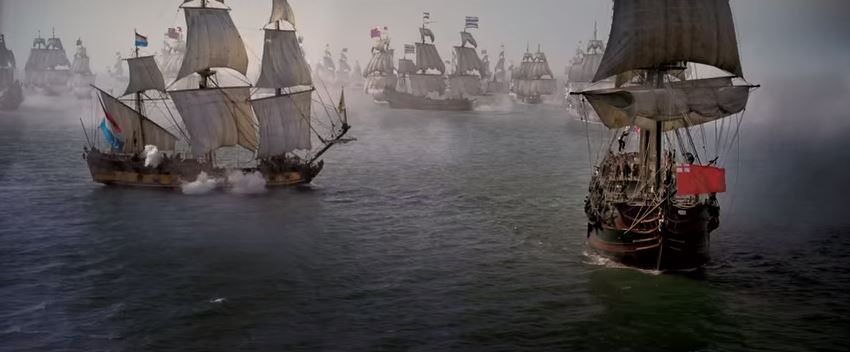
English title: Admiral - Dutch title: Michiel de Ruyter (2015) Dutch film about their great hero of the Anglo-Dutch naval wars of the 17th century, Michiel de Ruyter.  I watched this via netflix streaming.

Michiel de Ruyter painted by Ferdinand Bol in 1667
Admiral was an admirable distraction from my congestion and coughing last night. O, those ships were gorgeous. But it does seem the writers could have done a bit more to identify the causes for these conflicts beyond Charlie 2 being such another feckless Stuart of the fully feckless Stuart dynasty. It would have been nice if the English adversaries at sea, such General Monck (made Duke of Albemarle), had been identified. As Walter Jon observed, this isn’t a film that is likely to appeal to anyone who isn’t interested in the history of the matter or in pitched naval battles per se. 

That said, it was a terrific pleasure to watch de Ruyter's fleet's invasion via the Medway River, which concludes with the burning of the English fleet anchored off Kent at Chatham -- particularly if one recalls those entries in Pepys's diary, where he views the aftermath with the Duke of York and other notables.

This was the Embarrassment of Riches century for the Dutch. Global marine trade had made them even more wealthy than their previous control of Europe’s textiles trade and manufacture. They were also aggressive privateers, successfully taking the mercantile ships of the French, Spanish and English, all of whom had designs on protestant Netherlands’ territory on the Sea, and their global trade dominance. 


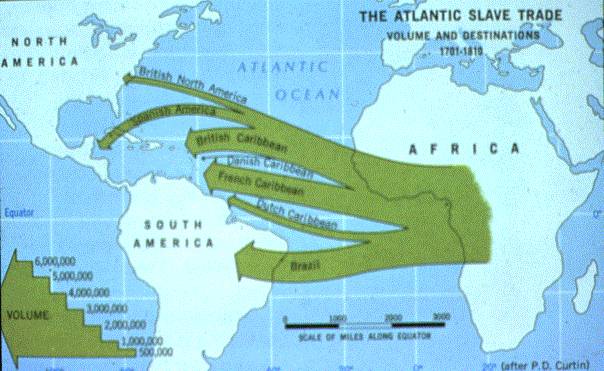
Beyond this, however, slavery in the new world and the Dutch slave trade out of Africa to supply slaves to Caribbean and North American colonies This is a huge economic resource over which the Dutch and the English are fighting now — control of the slave entrepots on the West African coast, above the Portuguese controlled Kongo. The Dutch first managed to push the Portugese out of the upper coasts pretty much all the way down to the equator by then. Now it was the Dutch and English fighting for control. Charlie II and his cronies had started the Royal African Company specifically to get into the African slave trade and thus Charlie could have some cash to jingle in his always cash-poor privy pockets.

The English ultimately won this one, initiating the gloriously wealthy-from-the-slave-trade-18th-century for Liverpool, Bristol, London and to a degree some other British cities, particularly in Scotland. Beyond the sale of bodies of Africans themselves, the African slave trade required so much out of which to get fabulously wealthy, from ships and financing, to insurance, to all those shackles and manacles, supply, etc.  There were no qualms in England for supplying these services to the British slave trade – though this was also the century in which the movement to abolish the African trade got started and the century in which slavery as a condition in the British Isles was abolished.

None of these matters concerning the African slave trade rivalry or any of the European powers, including the Dutch, are matters for this film.  This is just background information that I brought to the watching of it, and which made it work for me.  So did memories of reading about the aftermath the defeat of the conjoined French and English naval invasion in a volume of Dumas's Musketeers chronicles, and with the Spanish invasion in the Altriste novels,  1672 was called in Dutch history, "rampjaar" -- the Disaster Year.  Among other things the Dutch deliberately broke their dikes in the Spanish held territory and flooded out everyone, citizen and invader alike.  The Spanish soldier's point of view of the aftermath is admirably brought to life in the historical novel series, Las aventuras del capitán Alatriste by Arturo Pérez-Reverte via his novel (1968 in Spain; 2007 in U.S.), Sun Over Breda.  As this is about the Dutch, however, the rampjaar is dealth with via time lapse from an ever higher altitude camera so we see no details of that horrific period.

Nor is there any mention in this film that attempts to deal with the Anglo-Dutch wars how the Dutch traded the Nieuw Amsterdam colony to England. These are the sorts of things that only somebody like me though, would be thinking about while watching this lush action-adventure, that is mostly on the sea.


There was probably another reason why the English — or at least the Lords — were so hot to go to war with the Dutch during Charles II’s reign. So many of the protestants in the reigns of both the Catholic supporters, Kings James and Charles I were given refuge in the protestant Netherlands, from where they plotted to take down the crown and, from which others escaped their majesties’ pursuit to the New World — from where they returned in droves to support Cromwell and the execution of Charles I — and, of course, get places in the administrative structure and return of their properties.  Charles II and the other returned-to-power nobility had not forgotten any of this.

Like the slave trade which the Royal African Company was about (though he writes so often about going the Company’s house ‘on the king’s business”, this was something else that Pepys was too discreet to put details down on paper, even in his own most private diaries.

The Admiral film presumes its Dutch audience knows all these historical matters. Its focus is Dutch political conflicts between the Republic and the forces that want a king* like other European nations -- as well as on the several great battles that Michiel de Ruyter won for them.

Warning: there is a prolonged sequence of horrific violence that includes the torture and mob dismemberment of Michiel de Ruyter's patrons, Johan and Cornelius de Witt, brothers.  Johan had been the prime minister of the Dutch Republic for 20 years, and successfully brought them through the wars -- not least by backing commoner Michiel de Ruyter over his aristo rivals.

------------------

*  They got as their king, the Dutch stadtholder William III of Orange-Nassau (William of Orange), who had married James II's daughter, Mary Stuart. Not long after he invaded England, bloodlessly dethroned his father-in-law -- the final feckless Stuart, in what is known as "The Glorious Revolution" of 1688, and took the crown for himself. Along the way, William betrayed many, as royalty, would-be and otherwise, does.

Saturday, July 18, 2015

The Atlantic Slave Trade in Two Minutes

Animated graphic depicting the African slave trade, part of Slate's ongoing series. Based on the Eltis and Richardson database, with proportional-size dots for the number of kidnapped people per ship, it depicts the movement of 20,528 voyages in two minutes. Who went where, when, seen as a flow.

This makes clear how few Africans were brought to Colonial and U.S. shores, in proportion to those taken to the Caribbean and Latin America.

By the way, briefly after the end of the War of Independence, and then particularly after the War of 1812, a huge percentage of these captives were brought to the Caribbean and South America on ships flying the U.S. flag and carrying U.S. papers.


Tuesday, April 14, 2015

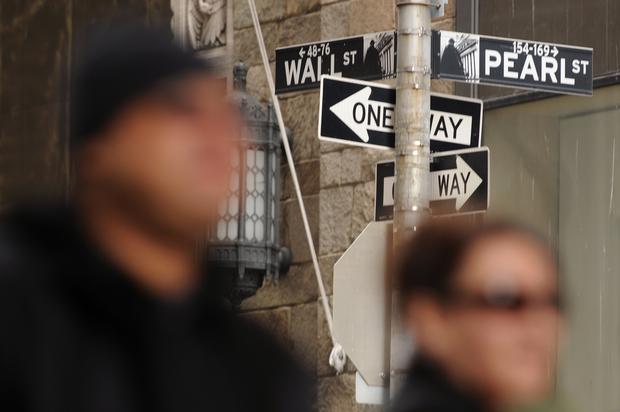
New York City To Acknowledge Slave Market At Wall and Pearl + The Murder of Lincoln

The Dutch built their Manhattan settlement, New Amsterdam, on the island's tip. In this oldest part of New York there are 38 historical markers and plaques, sculptures and statues such as the bronze commemorating Peter

Peter Stuyvesant, known as Petrus, served as the last Dutch Director-General of the colony of New Netherland from 1647 until it was ceded provisionally to the English in 1664, after which it was renamed New York. 


Stuyvesant.  What most visitors and residents don't realize is, besides founding New Amsterdam among their other activities in the early colonial era, the Dutch traders, among the first Africa-New World slavers and traders brought the first slaves to North America and the English colonies such as Virginia.

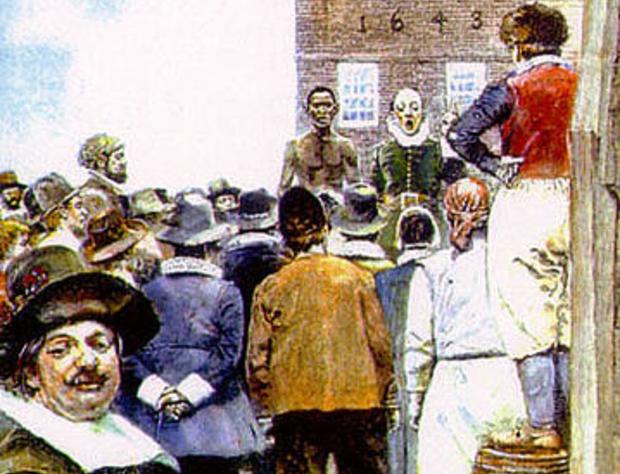
Harper's Magazine illustration of the New York City slave market in 1643.
New York's largest and longest operating slave market was located on the East River, at the corner of Pearl and Wall Streets. It began operating in the 1700's, long after the Dutch had ceded its North American colonies to the English, including the renamed for Charles II's brother, New York City.  Not incidental to this story, King Charles II was part of two royal African companies of merchant adventurers, whose aim were to fill the king's coffers with profits made by capturing Africans and selling them in the new world. Wresting domination of

Catherine of Braganza, Charles II's Portuguese, Catholic queen, controversial with her subjects and still controversial in New York City today, due to her connection with the African slave trade.
the African slave trade from the Portuguese and Dutch was a large motivation for Charles II's wars with the Dutch and his marriage to Portugal's royal daughter, Catherine of Braganza.

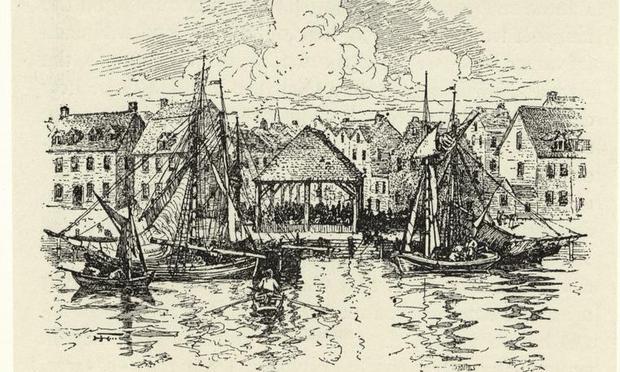
An historical drawing of the spot where New York City's 18th century slave market was located.

New York City's slave market existed at the corner of Wall and Pearl Streets from 1711 to 1762. "Slavery was introduced to Manhattan in 1626." The date is important because it's less than two years after Dutch settlers first arrived at the tip of what is today known as Manhattan. That means white Europeans and enslaved Africans arrived in New York — then called New Amsterdam — at essentially the same time.

To the many downtown historical markers, this summer the City is adding a marker that acknowledges the slave market. At this time the plan is to unveil the marker on Juneteenth (June 19), also known as Freedom Day, which dates to the emancipation of African-American slaves in Texas and throughout the Confederate South. "The marker will be freestanding and located in a pocket park on the northeast corner of Wall and Water Streets, a block from the historic location of the slave market."

Chris Cobb, an independent scholar who contributed research to the historical marker, testified at a City Council hearing last year about the legacy of slavery in New York. Cobb pointed out that the city directly benefited from the business. "It was a city-run slave market because they wanted to be able to tax every person who was bought and sold there," he said. "And the city hired slaves to do work like building roads."
One of the many reasons to have a public reminder of this slave market is because

New York and other northern cities accrued vast wealth from slave labor and profited for centuries from dealings in the slave trade. Africans who passed through the Wall Street slave market contributed to the prosperity of some very famous companies, some of which are still around: Aetna, New York Life and JPMorgan Chase, to name a few. Various units of these and other financial companies bankrolled southern plantations, insured slaves as property, and used slaves as collateral for loans.
Rioters subjected black people, including children in an orphanage to the most brutal violence: torture, hanging, and burning for three days in July, 1863.  Lincoln had to sent Union troops to the city to quell the violence.
This also explains why New York City, as opposed to the state at large, was such a hotbed of copperhead and other anti-abolitionist and emancipation action, including riots in which free African Americans were killed in large numbers, and why it hosted so many secessionist spies and plotters during the Civil War.

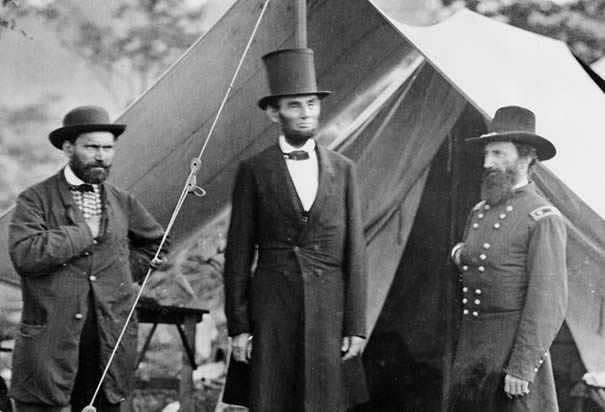
Acknowledging how thoroughly slavery and the slave trade are embedded in all our national history in all parts of the nation helps explain too, the murder 150 years ago today, of President Lincoln by Booth, only 5 days after Lee surrendered to General Grant at Appomattox.


Lincoln's murder was a true, national, tragedy.