LINES OF THE DAY

". . . But the past does not exist independently from the present. Indeed, the past is only past because there is a present, just as I can point to something over there only because I am here. But nothing is inherently over there or here. In that sense, the past has no content. The past -- or more accurately, pastness -- is a position. Thus, in no way can we identify the past as past." p. 15

". . . But we may want to keep in mind that deeds and words are not as distinguishable as often we presume. History does not belong only to its narrators, professional or amateur. While some of us debate what history is or was, others take it into their own hands." p. 153

Silencing the Past: Power and the Production of History (1995) by Michel-Rolph Trouillot

Showing posts with label U.S history. Show all posts

Sunday, January 31, 2021

February, Black and Red: Black History Month and Valentine's - But Not Yet

     . . . . Storm barreling down on us, They Warn, bringing 12 - 14 inches of snow and wind / gusts reaching 45 mph, beginning this evening and continuing into Tuesday.  And cold, which it already is and has been, for days.  Did I mention cold?  The wind will make the cold felt even more so.  As this storm will delay vaccine deliveries, distribution and administration even more, it will delay other deliveries too, as to our supermarkets.  It covers midwestern regions on one of the divided atmospheric branches, and the mid-Atlantic, into New England and beyond.  Hope everyone has a enough milk on hand for all the hot tea, hot chocolate and coffee we'll be drinking. 

~~~~~~~~

Let's begin with good stuff.  Since my photo archive is now available on the desktop, I get to choose a screen wall paper photo to replace that hideous bloat of HP's umbrella display  Ultimately I picked a photo of part of the battlement and tower complex around the Avignon Palais des Papes by night. Such happy memories flooding through the mind's eye, browsing through the archive of photos from Southern France.


~~~~~~~~   

A darling GameStop story!

 ....The fifth grader was gifted 10 GameStop shares, each at $6.19, as a Kwanzaa present from his mother in December 2019. She bought the stock simply because her son liked to buy video games at the store and she wanted to teach him a little about the stock market.

In a matter of minutes this week, Jaydyn Carr became an unexpected beneficiary of the market mayhem, as his $60 stake in the video game retailer grew to $3,200....

....When Carr bought the 10 GameStop shares in 2019 as a Kwanzaa gift, she certainly did not anticipate the value would one day spontaneously soar, she said. Her sole intention in purchasing the stock was to teach her then-eight-year-old son about Ujamaa, which means, “cooperative economics.” It’s one of the seven principles of Kwanzaa.

“The goal was to ensure he knows the value of a dollar and how to manage money,” Carr said, explaining that Ujamaa is the idea of sharing wealth, while also strengthening personal finances and self-reliance....

The story has a more than happy ending too!

~~~~~~~~~

Black Lives Matter has been nominated for the Nobel Peace Prize.  It already has won Sweden's Olof Palme human rights prize for 2020.

~~~~~~~~~

I just finished with The Habsburgs: To Rule the World (2020) by Martyn Rady

Perhaps the favorite thing I took from this book was hearing monasteries referred to as "prayer factories."  
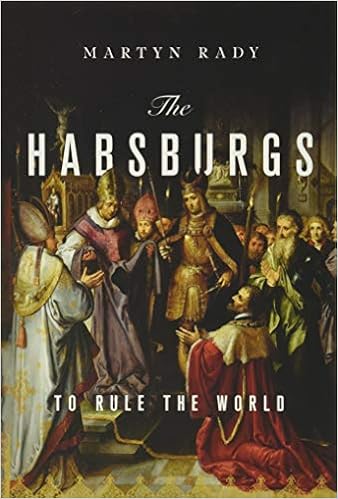


Among the vital information is Austria and the Habsburg's deep involvement and facilitator of the eastern African slave trade to the Ottomans, and the western Atlantic slave trade, via Portugal, to the New World.  In case one isn't aware of how this landlocked empire could do such a thing, here is the explanation (this era has long been one of el V's favorite go-tos when it comes to the history of Cuba and Latin America, by the way.

Charles V, who became King of Spain in 1516 and was elected emperor in 1519, had as his motto “plus ultra”, meaning “still further”. In the 16th and 17th centuries Habsburg power spread across the globe, with the dynasty establishing a presence in sites from Brazil, Mexico and Peru to Goa, the Philippines and Taiwan, at the same time as their forces fought for dominance against those of the Ottoman sultans to the east. In 1700 Habsburg power came to an end in Spain and its associated territories, but the central European branch of the family would remain a pre-eminent force for two centuries yet.

~~~~~~~~~

The Dig takes place in 1939, at what becomes called the site of Sutton Hoo.  Watched while WWII era pop musics played on a radio in the other room leaked into the headphones through which I was hearing the film.

We travel to the dead, and the dead travel to us.  Time slips when we confronted palpable evidence of the past such as fingerprints in paint, paint applied by the hands thousands of years ago. 

We begin with images of Ancient Egyptian rulers' images in a book read by one of the protagonists. We conclude with the reburial of the excavation of the anglo-saxon ship to protect the dig site from WWII's aerial blitz.  Throughout is threaded the child's enthralled imaginative play with space travel. The child effortlessly holds the past, the present and future simultaneously. The site's invading Saxons' ship enthralls him as much as his imagined space invaders' ships, while he carries the present-day concern for his mother's ill-health, and those whom loves are called to fight the nazis.  Invasion, past, present and future, all at once.

The scripted drama gives us the heroes of archaeology, those who have been lost and written out of the discoveries. The vast inequalities of social and class division, the imposed hierarchy imposed upon the site, mirror those of society at large, past and present. This is a story of some of those and how they are the ones who made the Sutton Hoo discoveries: the non-wealthy, those lacking formal academic bestowed degrees, women, those who are classed as "merely laborers,", yet without whom nothing can be done, whenever then is, whenever now is, whether building the pyramids or rediscovering them. These who tend to be forgotten or written out of history even as they were the history movers and shakers.


Even entire groups who historically were movers and shakers, creators of history that we study, can be written mostly out. Merovingian!  They said the word Merovingian and Merovingians!  Merovingian objects in grave ship's burial chamber.  Now this is unlikely to have had the same electrifying effect on other watchers -- see, written out of history -- but it sure did on this one, a Merovingian watcher if there ever was one.  

Now I want a cat or dog, so I can name him or her Basil Brown. after the character played by Ralph Fiennes.  I will call dog or cat, Baz.

~~~~~~~~~

Now, coming to the history of the United States: as part of leading the therapeutic treatment for the Members hunted and threatened during the armed 01/06  Insurrection,  Nancy Pelosi has requested each one to write an essay detailing their experience of that day. 

“Be your own historian, be part of writing the history of this, because there’s nobody who can be a better validator of what happened in your experience than you,” Pelosi said . . . .

Pelosi leading trauma therapy for the members in the 01/06 armed attack insurrection.  Part of this is having each one write an historical essay of their experience.  

Among other news is there's a bullet shortage as reported to us by friends in places like New Orleans.  When they went to get ammo, after going through the paper work for legal purchase, registration and concealed carry, they went to the places where one buys ammunition.  They are out of supply.

One does fear very much the next armed attack in D.C. will be during the impeachment trial.  This shyte ain't over; the shooting civil war is just getting going.

And it's still January!


Wednesday, September 2, 2020

Poets As Bookends: Lowells - Longfellow

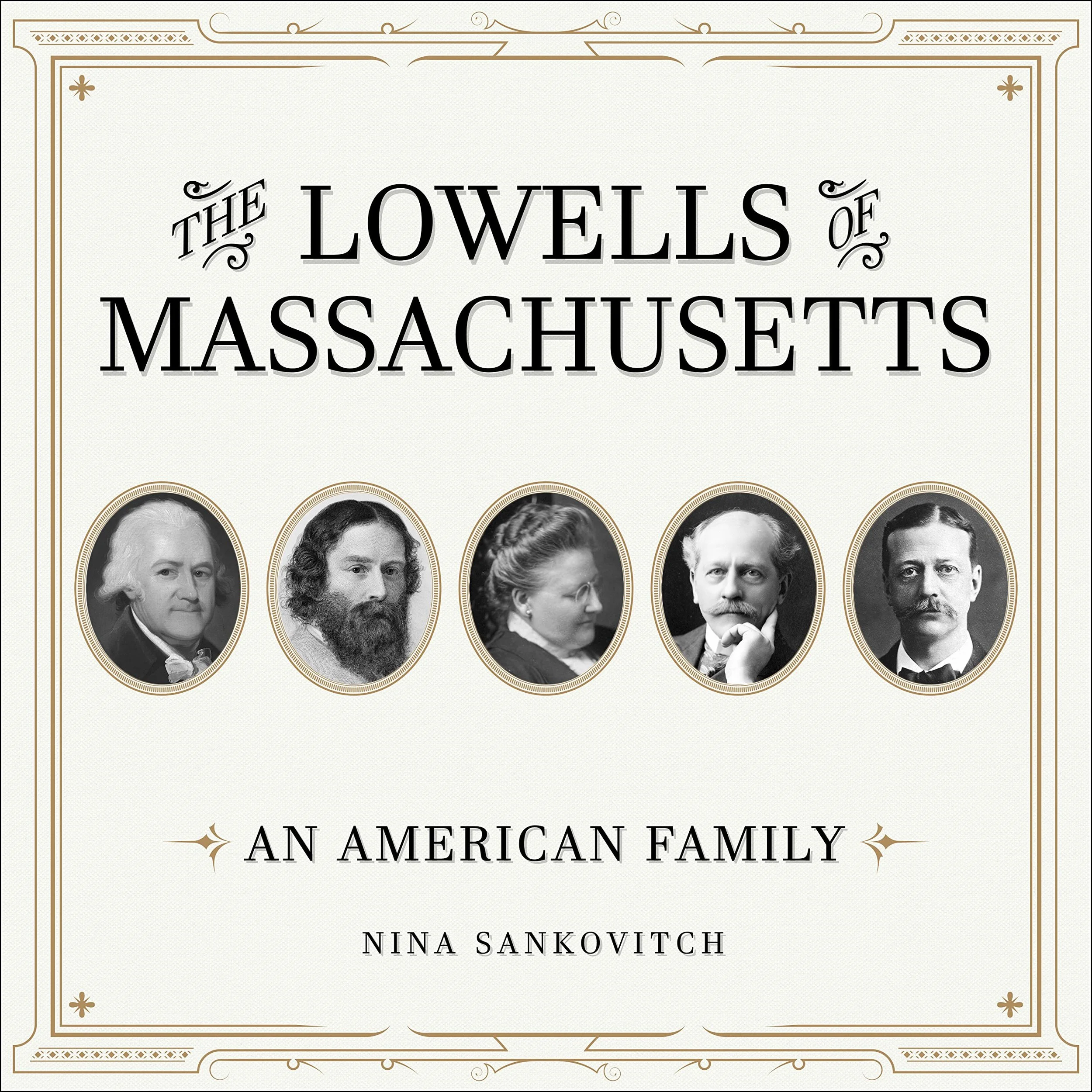
     . . . .The Lowells of Massachusetts: An American Family (2017) by Nina Sankovich.


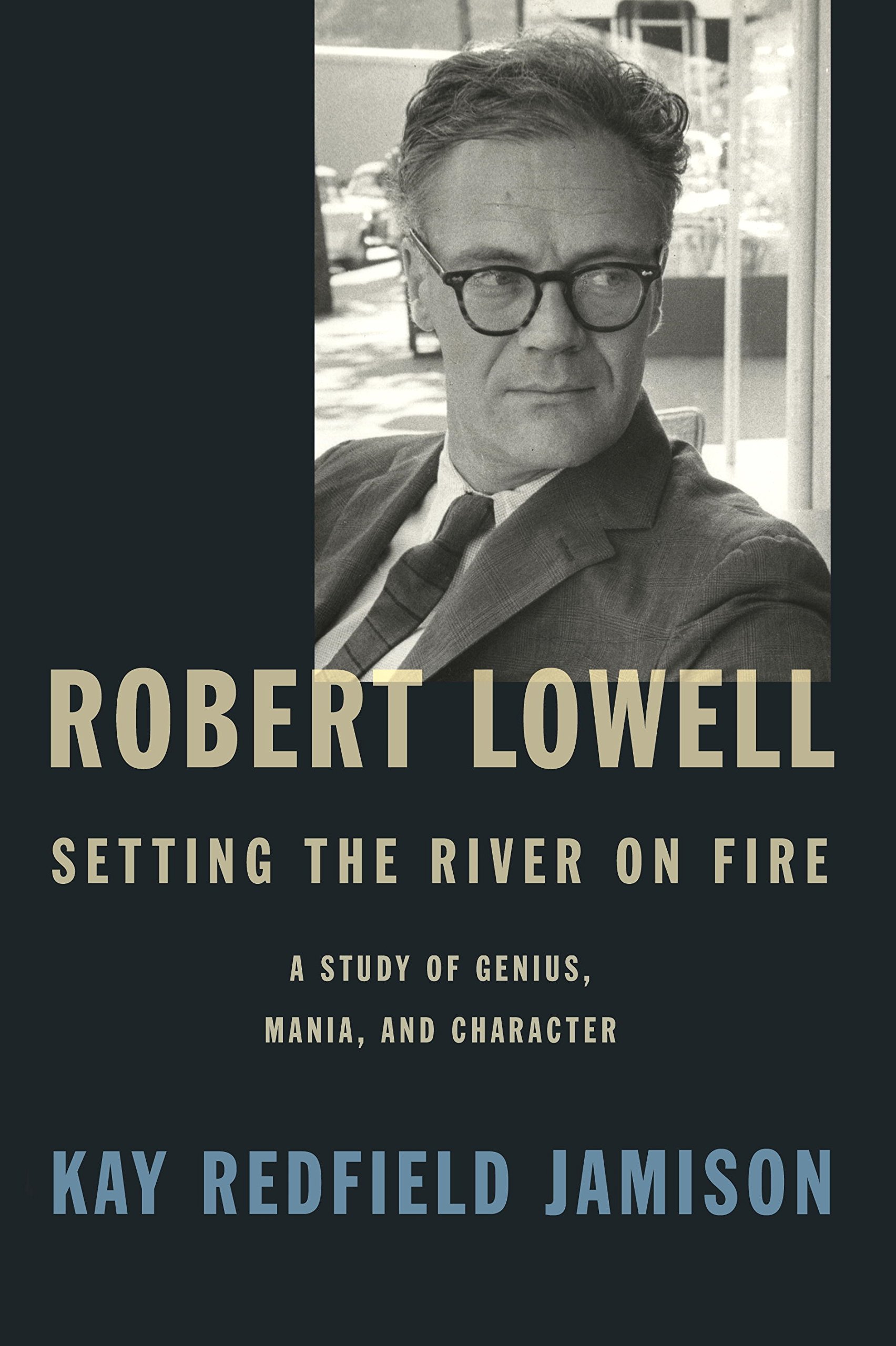
Another engrossing book about famous New England families. I will continue to enjoy this one until the 50’s I suppose and that Robert Lowell, who may have been bi-polar but was also a cruel and nasty person. From the very first Lowell in America in the 17th C, Percy Lowell, they were versifiers, even if Percy tended to do it as hymns.  It's a bit disconcerting how poetry, the desire to practice it, and then practicing it, like James Russell Lowell, ran through the various branches and generations, since so many of those individuals also suffered from afflictions that darkened the mind. James Russell Lowell's mother fell deeply into a depression when her daughter died.


But poetry continued to matter to educated readers, all the way through the era of that Robert Lowell then, 
a/k/a 'Cal' by those who knew him from early years, because he was like Caligula.

John Quincy Adams's life-long desire and dream was to possess the power of a great poet of genius. Yet he recognized that his every effort not only fell far short of genius, but fell far short of the quality he was thought he was creating while in the exhilaration of composition. He had the brilliance though to recognize this, even though he never gave up. This always warms me about JQ, among the many elements of his character that are so far from the received wisdom that JQ was a dull and dreary, dry fellow.

If it was true that the Lowells spoke only to Cabots, it's a wonder they intermarried with them, because in Boston, it was said further, that the Cabots spoke only to God. They also intermarried with the Lodges. There are so many Lowells and Lowell Cabots and Cabot Lowell Lodges, they usually have the same first names too, so I’m having a hard time with who is who.  Longfellow makes a cameo appearance only in this time of public admiration and sales of poets' works. Fanny, Longfellow’s wife, whose father got vastly wealthy working with the Lowells in their mill and factory ventures, isn’t mentioned at all.

This quick overview of 4 centuries of Lowells does make clear the division that rose among Lowells by the 1840’s and 50s, and why it came about. The wealthy Lowells (such as Fanny's father) wanted no interference with slavery and the south. They tried always to shut down talk and literature of abolition. Their mills thrived the south's cheap slave produced cotton for the tariff protected textiles they produced.  After the initial success of the Lowell mills, during which the farmers' daughters labor force were well-paid, well-treated, well-housed and well-fed, they became like their southern cotton suppliers and cut wages, created dangerous working conditions, increased the hours, overcrowded the dirty and vermin-infested houses,  and relied on punishment to speed up work.

The poor Lowells, however, were anti-slavery activists. Before the Lowells who got crazy rich from the Lowell factories, the Lowells all had tended to anti-slavery from the first days they arrived in the colony.  Judge  Lowell who, using the template of the Someset Decision by Judge Mansfield in England prior to Independence, declared it wasn't possible to keep someone enslaved who is brought into Britain. John Adams called these cases "The Freedom Cases"  this lawyer Lowell argued for -- and conducted successfully within Massachusetts, arguing that since in England a slave brought to free Britain could no longer be enslaved, and as Massachusetts was part of Britain, a slave brought to Massachusetts couldn't be a slave either.  This couldn't have worked in Virginia courts Virginia juries.

But the best part of this story of Judge Lowell is that it divided him from his family and community because he began as a Loyalist in the agitation that led up to the colonies declaring for independence, during the Stamp Act etc..  Because of the Somerset Decision he was sure that Britain was fair-minded and would decide in favor of the colonists' distress swiftly and effectively. He was shunned by family and community -- and lucky not to be tarred and feathered, stoned, or beat up, or his home burned, which happened to many who were labeled Loyalists.  That didn't happen, and he returned to the family as a full-blooded Patriot, who helped write Massachusetts' constitution, that overtly prohibited slavery within her borders.

Among the multitude of fascinating anecdotes the author has culled from the cache of Lowell letter quite lately discovered is this on. It was customary for upper, ruling caste, wealthy, Bostonians to send their girls and young ladies to the Ursuline convent in Charlestown for education. One of them, who would marry into the Lowells, experienced the terrifying end to this convent. The good men of Boston mobbed the convent because the Irish Catholics and the nuns had WHITE Puritan girls chained in the basement and whipped them and did Other Worse Things.They burned it to the ground. The nuns and their students fled out the back for their lives, hiding in fields of the farms, and gardens of the houses around the convent -- utterly terrified. Thus we see Pizzagate is baked into the USA DNA.

In These Times the most compelling section of The Lowells is the War of 1812, the "southern war", the "slaveholders' war", they called it - which indeed it was.  Lowells were passionate for quite some time about persuading New England to move to secede from the Union and join with England, becoming a new country of new New England.  I confess while reading this, I rather wished they'd been successful. For once I could appreciate the pleasure of alternate history, and this is the only spot in our history where it looked almost plausible, where everything else that came before would have had to change first. Even So, we'd still have had a war about slavery, for the South would never have remained within its borders, and neither would have "New England".

~~~~~~

* Whereas, these same men didn't give a fig about the girls and young women who, not classified as white, who really were confined and chained in basements or sheds or barns or prisons, and whipped, and experienced Other Worse Things.

Tuesday, April 14, 2015

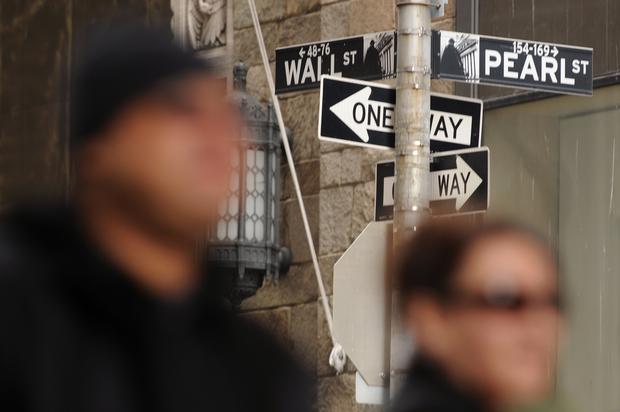
New York City To Acknowledge Slave Market At Wall and Pearl + The Murder of Lincoln

The Dutch built their Manhattan settlement, New Amsterdam, on the island's tip. In this oldest part of New York there are 38 historical markers and plaques, sculptures and statues such as the bronze commemorating Peter

Peter Stuyvesant, known as Petrus, served as the last Dutch Director-General of the colony of New Netherland from 1647 until it was ceded provisionally to the English in 1664, after which it was renamed New York. 


Stuyvesant.  What most visitors and residents don't realize is, besides founding New Amsterdam among their other activities in the early colonial era, the Dutch traders, among the first Africa-New World slavers and traders brought the first slaves to North America and the English colonies such as Virginia.

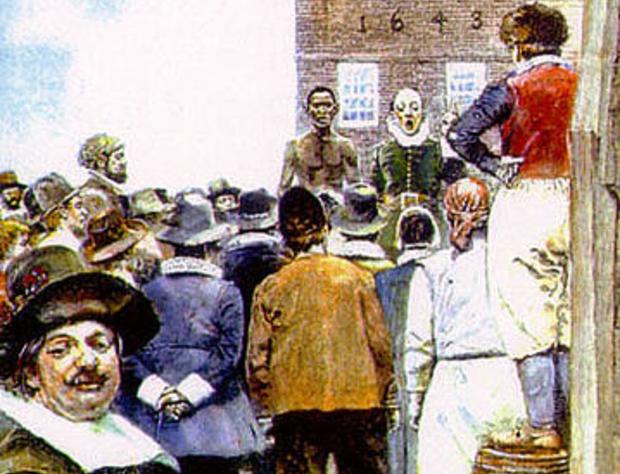
Harper's Magazine illustration of the New York City slave market in 1643.
New York's largest and longest operating slave market was located on the East River, at the corner of Pearl and Wall Streets. It began operating in the 1700's, long after the Dutch had ceded its North American colonies to the English, including the renamed for Charles II's brother, New York City.  Not incidental to this story, King Charles II was part of two royal African companies of merchant adventurers, whose aim were to fill the king's coffers with profits made by capturing Africans and selling them in the new world. Wresting domination of

Catherine of Braganza, Charles II's Portuguese, Catholic queen, controversial with her subjects and still controversial in New York City today, due to her connection with the African slave trade.
the African slave trade from the Portuguese and Dutch was a large motivation for Charles II's wars with the Dutch and his marriage to Portugal's royal daughter, Catherine of Braganza.

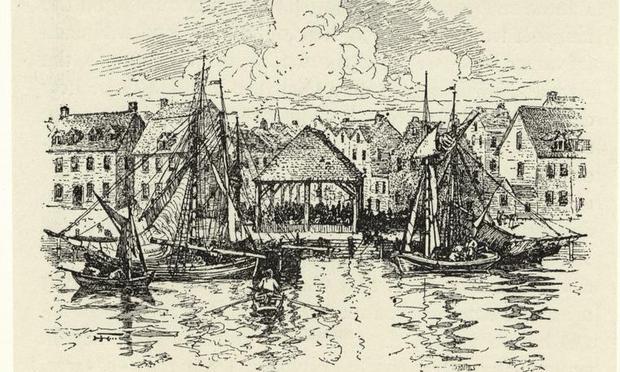
An historical drawing of the spot where New York City's 18th century slave market was located.

New York City's slave market existed at the corner of Wall and Pearl Streets from 1711 to 1762. "Slavery was introduced to Manhattan in 1626." The date is important because it's less than two years after Dutch settlers first arrived at the tip of what is today known as Manhattan. That means white Europeans and enslaved Africans arrived in New York — then called New Amsterdam — at essentially the same time.

To the many downtown historical markers, this summer the City is adding a marker that acknowledges the slave market. At this time the plan is to unveil the marker on Juneteenth (June 19), also known as Freedom Day, which dates to the emancipation of African-American slaves in Texas and throughout the Confederate South. "The marker will be freestanding and located in a pocket park on the northeast corner of Wall and Water Streets, a block from the historic location of the slave market."

Chris Cobb, an independent scholar who contributed research to the historical marker, testified at a City Council hearing last year about the legacy of slavery in New York. Cobb pointed out that the city directly benefited from the business. "It was a city-run slave market because they wanted to be able to tax every person who was bought and sold there," he said. "And the city hired slaves to do work like building roads."
One of the many reasons to have a public reminder of this slave market is because

New York and other northern cities accrued vast wealth from slave labor and profited for centuries from dealings in the slave trade. Africans who passed through the Wall Street slave market contributed to the prosperity of some very famous companies, some of which are still around: Aetna, New York Life and JPMorgan Chase, to name a few. Various units of these and other financial companies bankrolled southern plantations, insured slaves as property, and used slaves as collateral for loans.
Rioters subjected black people, including children in an orphanage to the most brutal violence: torture, hanging, and burning for three days in July, 1863.  Lincoln had to sent Union troops to the city to quell the violence.
This also explains why New York City, as opposed to the state at large, was such a hotbed of copperhead and other anti-abolitionist and emancipation action, including riots in which free African Americans were killed in large numbers, and why it hosted so many secessionist spies and plotters during the Civil War.

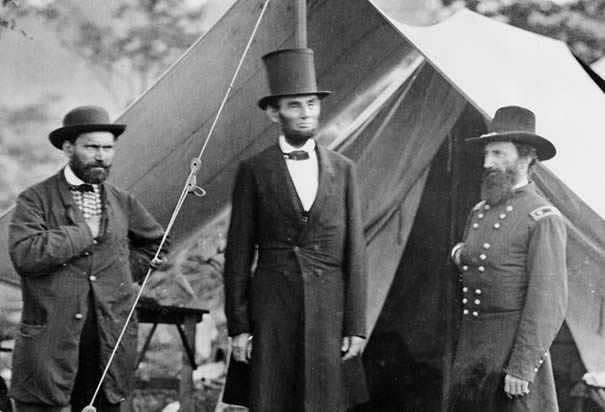
Acknowledging how thoroughly slavery and the slave trade are embedded in all our national history in all parts of the nation helps explain too, the murder 150 years ago today, of President Lincoln by Booth, only 5 days after Lee surrendered to General Grant at Appomattox.


Lincoln's murder was a true, national, tragedy.


Wednesday, October 23, 2013

Book Reading Wednesday - Fanny by Edmund White

Edmund White has written some of my most satisfactory reading experiences of both fiction and non-fiction. Published in 2003, I missed Fanny, doubtless because I had begun the classwork for acquiring my MLS for Information and Library Sciences. I was doing no recreational reading in those years which included a leave of absence from the program to move to New Orleans for the Rockefeller Foundation Award at the Stone Center at Tulane University. There I read for a long research project conducted as an independent study with one my MLS professors, and after that I read nothing but materials connected to both The World That Made New Orleans andThe Year Before the Flood. So, yes, I missed even the news this novel had been published.

Yet, Fanny is filled with all 'my stuff,' so to speak: English Victorian fiction and history; biography; a New Orleans just recently possessed by the Americans; Lafayette's final triumphant tour of a U.S. initiating Jacksonian democracy; a visit to Point Breeze, the estate of of Napoleon's brother, Joseph, who retired himself and very large fortune from France and Europe to New Jersey*; the conditions of slavery through the eyes of someone not of the U.S. -- and how very quickly she adapts to the convenience. This is a fictional biography, narrated in first person, by Frances Trollope, who wrote one of the classic works of earlier America, referred to by all and sundry, English or American, who wishes to write of early America, 


Domestic Manners of the Americans (1832).  It contained some quite unattractive truths about us, highliighting particularly the obsessive masculine habit of spitting tobacco anywhere, everywhere, all the time.**
Frances Trollope wrote other works of non-fiction and well as many novels.  Among her children was the novelist,Anthony Trollope. She is at least partly the model of the novelist forever seeking 'puffs' for her books in Anthony Trollope's novel, The Way We Live Now, considered among his best works. 

However, the real focus of White's Fanny, is not Fanny Trollope, but her friend,


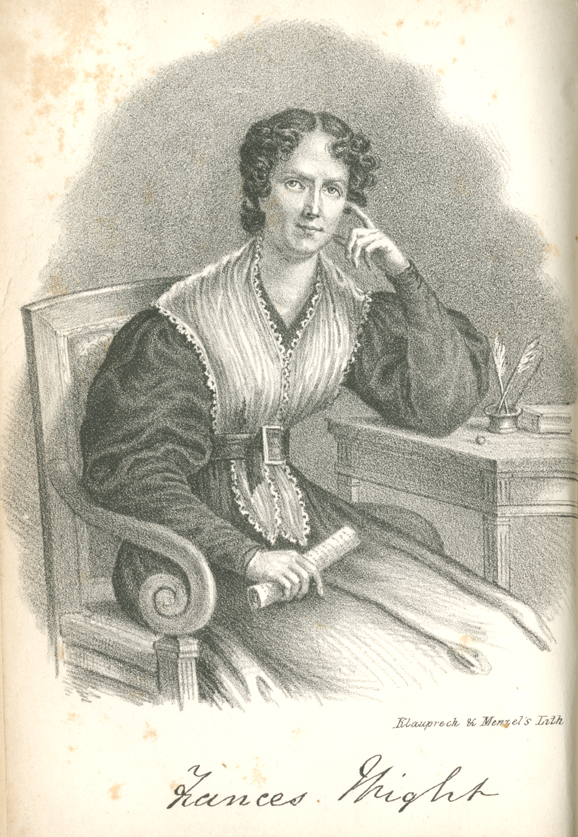
Fanny Wright. Wright's career as a public intellectual - social reformer -- to be such as a woman was a rare thing in those days -- was made initially with her book,


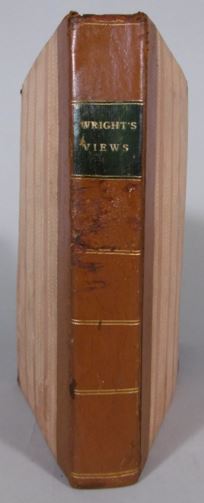
Views of Society and Manners in America (1821). Wright was the one who got Francis Trollope to America to participate in the preposterous utopian Nashoba Commune in Tennessee, from which Mrs Trollope and the children she'd taken with her (Anthony was left at home to starve with his mentally incompent father) was fortunate to escape finally, still alive, but barely.

White's Frances Trollope is revealed as a keen observer of very much, while remaining extraordinarily blind about certain matters most personally close to her.  It's a tour de force of a novel in the sense of observation, sensibility and voice. I enjoyed this very much.  But then, as mentioned above -- this is all my stuff.  

-------------------------------------
*   Joseph financed his move to Breezy Point with the sale of the works of art he plundered from Spanish palaces, castles, monasteries and town halls; his wife, Julie Clary, by marriage with Napoleon's brother, was named Queen consort of Spain and the Indies, Queen consort of Naples and Sicily, and the Comtesse de Survilliers. Her sister, Désirée Clary, six years younger, became Queen of Sweden and Norway when her husband, Marshal Bernadotte, was crowned King Charles XIV John of Sweden (Charles III John of Norway). Their brother, Nicholas Joseph Clary, was created 1st Comte Clary and married Anne Jeanne Rouyer. It paid off very well to marry a Bonaparte.

**  Other Europeans remarked particularly on this habit as well, including famously Charles Dickens in hisAmerican Notes concerning his 1841 visit to the U.S., and his consequent novel, Martin Chuzzlewit, which took on particularly U.S. copyright violations of writers like himself.

Saturday, August 17, 2013

Revolution - The Monroe Republic

Two of the pillars of politics are history and geography.  History is also formed in large degree by geography.  Thus, the Monroe Republic of NBC's Revolution doesn't make sense.  For that matter, neither does the rest of Revolution's Central North America's map.  This really screws with the watcher's immersion into the series.


From the Revolution Wiki:
As indicated by a map in Monroe's office, the Monroe Republic controls the northeastern United States, with its northern border at the Great Lakes and the Saint Lawrence River, its western border on the Mississippi River, its eastern border at the Atlantic Ocean, and its southern border at the Ohio, Tug and Roanoke Rivers.
The Monroe Republic consists of the entirety of the states of Wisconsin, Illinois, Michigan, Indiana, Pennsylvania, New York, Vermont, New Hampshire, Maine, Ohio, Connecticut, West Virgina, Rhode Island, Massachusetts, Delaware, New Jersey, and Maryland, most of Virginia and part of North Carolina north of the Roanoke River. The Canadian provinces of New Brunswick, Nova Scotia and Quebec south of the St. Lawrence River are also part of the Republic.
The capital is located at Independence Hall in Philadelphia, Pennsylvania. The walls around the city are thirty feet high, with machine gun emplacements. The only other entrance is through the old SEPTA tunnels, but they are heavily mined. Monroe's main research and development center is at Willow Grove, Pennsylvania, where he keeps a fleet of at least six UH-1 Iroquois helicopters. It seems Monroe has another base in Boston as mentioned by Neville.

In terms of internal commerce, trade and communications, it would be the Mississippi River that any so-called expansionist Republic located in the Northwest would be concentrating on -- not the South.  In any case, this sort of military dictatorship seems far more likely to have grown out of South Carolina -- which you damned well know would have given its name to its "state" -- at least calling it the Palmetto Republic. South Carolina and the associated heart of the former Confederacy has deep background in all these matters, including militias -- see "well-regulated militia" going back to early colonial times, which were all about keeping the enslaved down on the plantations and not plotting revolution.

All the big military bases and armories are located outside of the northeast, which for obvious reasons was always heavier on shipping than army or air force (though it does have West Point -- but Bass and Miles are marines): U.S. navy, including particularly subs, merchant marine, Annapolis, Game & Fish, fishing fleets, ye olden whalers, cargo ships, packets and so on.  The northeast made its living from manufacturing, agriculture, the carrying trade, which the antebellum south so resented (see Erie Canal's great $ucce$$) and finance. In later eras add communications and media.  Virginia and South Carolina in particular always sucked off Big Defense for their economy, i.e. other region's taxes.

Without electricity now, no planes to drop bombs, so all those muchly deserted forts and naval bases all along the Atlantic coast and the Gulf would matter again. Weren't all the google whizzes living in California?  South Carolina is where Bass and Miles were when the Big Dark rolled over the globe.  Why would they go up north to make their own country, when they were in the middle of everything they needed to dominate their world, including their men already used to obeying them? In the very first ep, as they return to base, Bass already has the Monroe brand on his wrist, which lets him on base even though he was off it without his papers. (A mystery, unless the Unquitable Duo had already been planning some sort of coup?)

The more you look at the premises the more they make no sense.  Especially as this 'northeast' looks so southern -- because, hey-ho! -- that's where the series is shot, in North Carolina.  This could so easily make sense though, if the writers and show runners had basic economic historical and geographical information on how our nation came into being and what it did in all those decades before the Big Dark.  It would have made the series so much stronger, and a lot more interesting.
But no, all we want is a lot of blowing up stuff, particularly helicopters.  You really think the audience will buy that those notoriously crashy machines could just be expertly flown and operated after 15 years of no maintenance, no pilot maneuvers -- and all that ammo would just so easily work?

And -- what about climate change?  Just because it all went dark, doesn't mean that tornadoes, wildfires, droughts and floods, blinding blizzards and hurricanes stopped happening.

But it's television folks, so all we need is big blowups, shootouts and smashing each other in the face, along with ridiculous prolonged faux emotional dialogues between figures who never change how they look, who can't quit each other.
And really, who thought that naming states "The Plains Nation" and "The Wasteland" -- regions chock a block with military bases -- were good ideas?  It's also likely that Canada and Mexico have some ideas about all this too ....

Tuesday, May 21, 2013

Virginia Smells Good

Virginia's air is perfumed.

Often overcast, humid and since Sunday afternoon, warm, often raining, the air is oxygen rich.

Since C'town, we've visited significant sites on the Historic Bancroft Slave Breeding and Trading Industry Tour in Alexandria, Richmond, on the James River plantations and Monticello. Bancroft's Slave Breeding and the Slave Trade in the Old South  (1931), the classic work of stats breaking out year-by-year, decade-by-decade, state-by-state, the natural increase and the de-population of the upper south and the un-natural increase of African Americans then in the lower and western south, has been serving as guidebook.  It still works ....

Today is our last in Virginia. We spent the night in a non-chain lovely old place called the English Inn in Charlottesville.  We had a ridiculous dinner with our historian friend who lives here.  Due the controversy around his Master of the Mountain, he was surprised to learn it's in the Monticello gift shop bookstore after all.  We are being taken on a tour of UVA in a short time.  Then we will hit the road, going along the James river to the founding site of Jamestown (where there isn't anything really, just the sight, then  Williamsburg -  William and Mary.

As another friend says, who builds the amplifiers for telescopes such as the Very Large Array, who grew up here too, "If it wasn't for the knucklehead, this would be paradise on earth."


O, and yes.  The cicadas are out at Monticello.

Wednesday, January 30, 2013

Swash and Oratory, Struggles for Power: 1809 - 1853

Before going to sleep I Iive so intensely in this smaller United States of Clay and Co. that it's not unusual to dream about it.

These biographies ande political histories that I've been reading of the giants who bestrode the U.S. in those decades devote many pages to describing their journeys.

They are always traveling because it is a new country, straining at its seams to become always larger, with more opportunities for these ambious individualists to become very rich very fast. They are always traveling because they are politicians -- not just back and forth between their home states and D.C.. Their lives are campaigns: for their re-election (not that either Jackson or Clay had to worry about re-elections during their political careers), throwing their support to the election of this one and that one, the defeat of those others, for their causes and against the issues of others. Thus the journeys recounted in so much detail -- who they meet with, what goes on at the continual dinners -- feasts they'd be called in the high medieval and renaissance eras of the monarchies, serving the same purposes as the feasts of those other eras on another continent -- and what the local and national papers write about these meetings -- and the speeches. Always giving speeches, though Jackson doesn't much -- partly due to his messed up mouth and toothlessness, partly it's because while he was more fearsome to his reluctant troops, he didn't have the gift of oration in this Age of Oratory and Rhetoric. Jackson has his surrogates though, including his newspapers and his cadres of editors and writers -- Buchanan wanted so much to be one of his surrogates, but he no more than Jackson could move and shake audiences with his words, whether written or spoken.

Travel was difficult, painful, lengthy and dangerous. During the course of the era of Clay and Jackson there are transportation as well a communications improvements, but the Improvements are a huge political issue: Clay's American System of federal and local funding and support of improvements vs the Calhoun philosophy that not only are such public works unconstitutional but are a plot against the Slave Power by the North. Gag Rule and Nullification for the Slave Power! Bridges, Canals, Roads, Rail for the North. They steam frequently to the Caribbean, for vacations from their exertions, to recover from their many and varied maladies, to Cuba in particular, which helps power the Slave Power’s ambition to annex Cuba to expand slavery.

Then they're always sick with something, including for some of them, old wounds, from fighting Indians, rom duels, or accidents suffered while traveling. Every one of them could ride a horse, spending days in the saddle, covering hundreds of miles between home and the ferry or boat -- and finally steamboats -- that will take them to D.C.

Reading about these vital figures who left footprints in our national history so big that contemporary politicians are still pretending to fill them is as colorful and exciting as reading the best of historical fiction. But like you, probably, as a woman I wouldn't want to live then, particularly not as a woman of color.

Thursday, October 13, 2011

Off With Their Heads! Screamed the Red Queen

So this is how it ends. As soon as there was actual media attention, and the attention showed that there were millions of people who are impacted by this long corruption of collusion between the corps and the politicians, and damned angry about it – out they go. It was OK as long as everyone laughed at them. But when it could not longer be denied they had some influence and attention – off with their heads! as screamed the Red Queen!

Sunday, September 25, 2011

More FollowUps to the Wall Street Protests

El V made the protests the point of da List today -- and by golly even WNYC has a story on it -- on its website, and another, earlier one -- but the story was not on their broadcast news. The commentary is bitter and angry with WNYC's coverage that is also slanted to make the protesters look violent and stupid -- commentary by people who were there yesterday, as bystanders, accidentally. Again, the NYC cops went out of control.

From da List:
[ " The slogan is, "We are the 99%."

Do not worry about these protests, capital. At least for now. Y'all can go back to figuring out how best to short-sell the euro. As Cuban dictator Gerardo Machado assured the National
City Bank of New York back in the 1920s, "there will be absolute guarantees for businesses . . . there are sufficient forces to repress all disorder." But that was before the crash.

We first became aware that the Occupy Wall Street protests had achieved some kind of traction when one day last week the noise was audible from our home as the march moved down along the channels permitted by the police, from Union Square to Wall Street. But we couldn't immediately find out what it was.

If thirty people dress up and call themselves a tea party, the national media is there. The Occupy Wall Street protest, now in its second week, has mostly been in a news blackout. Until people got arrested it didn't count, but the arrest of at least 80 people yesterday has been hard to ignore, and if the movement can keep it up and make good on its claim to spread the protests to other cities, it will get even harder to ignore, though of course what makes the "mainstream media" the mainstream media is what they choose to ignore. (In this connection, I note that the MSM's copious face time given to the most extreme of right-wingers essentially confers mainstream status on them.)

Our useless public radio station, WNYC, ran a brief article on their website yesterday that, with only a couple of pictures, appeared to depict the protestors as old-school communists. The comments were more informative than the article, as per:

>I was there yesterday with my daughter and I saw no signs about socialism. I just saw police out of control. The police blocked the traffic with their plastic fence. I saw the police sweep up 12th Street between University and 5th, at around 3pm, telling
all the shopowners and restaurants on the south side of the street to lock their
doors. They then circled people on the south side sidewalk with the plastic
fence they carried and started arresting everyone. Their intention was to arrest
everyone on the block. If any investigator/reporter wants to know the truth just
ask the commercial tenants on the south side of 12th Street about the
premeditated police mass arrest action. The people on the sidewalk were not
obstructing anything. I had nothing to do with the people on the sidewalk or the
police. I was just walking in my neighborhood with my daughter. I stood on the
12th street north side sidewalk watching all of this. When I asked a police
officer why they were arresting everyone on the south side he told me to go home
or else I would also be arrested. That is exactly what I saw and heard.

In the case of the New York Times, a particularly smarmy
article by Gina Bellafante, higher-listed on their website than the
factual-reportage article, focuses on the clueless to tut-tut the young
protestors' lack of political knowledge. Her lede was a 37-year-old woman
stripping to her panties in public. (What's the difference between the Times
and a tabloid? A tab would have had a picture.) Yes, we have a problem with
political education in this country -- and with any kind of education, as anyone
who teaches undergraduates can tell you. But for me, it's hard to see the Occupy
Wall Streeters (who are mostly considerably younger than 37) as any less
informed than the people who dress up as Uncle Sam and claim social security is
a Ponzi scheme. Those people are in general treated quite respectfully as a
legitimate slice of public opinion -- and they won't get pepper-sprayed by the
police, either.

Perhaps revealing a gap in her own political education,
Ms. Bellefante writes dismissively of "the opportunity to air societal
grievances as carnival." But carnival and political consciousness have a long
history of intertwining, and this movement is at least groping toward
a political consciousness. Some of the people who have
put themselves on the line here seem to have a clear idea of what they're
doing. Granted, convulsive destruction of property gets more respect from
journalists, to say nothing of self-immolation.

New York mayor Michael Bloomberg, an assiduous defender of the interests of his class, has a horror of the -- he's referred to it more than once -- and the New York police are experienced practitioners of kettling. This week, the preferred police tactic is netting. They use big orange nets -- day-glo orange, the color of repression -- to cordon off protestors as if they were schools of tuna, fencing them in and holding them. Then, if is any indication, they pepper-spray those caught in their web. Granted, that's pretty lightweight compared to, say, this video from Syntagma
Square in Athens on June 29.

As you might imagine, the people arrested and those around them are social media-izing like crazy. (I saw a new word, when someone was encouraged to keep up the "retweetage.") One aggregator is http://www.reddit.com/r/occupywallstreet/ ,, and there's a live streaming camera plus chat at http://www.livestream.com/globalrevolution . A number of videos and stills are posted at https://occupywallst.org/ A national-protest website is http://occupytogether.org/ A "we are the 99%" poster is downloadable at http://www.occupytogether.org/posters/OccupyTogether_poster01.pdf

Demonstrators a Sotheby's auction on Thursday, protesting Sotheby's union-busting against the IBT 814 Art Handlers Union. And according to, there was a moment on Thursday when Occupy Wall Street and a march in support of Troy Davis converged in the street "in a cathartic and compelling moment that the police did not expect. More than a thousand people were now overrunning the streets of lower Manhattan, and they were able to push their way on to Wall Street together."

The Times article by Colin Moynihan below might leave you with the impression that the arrests yesterday did not involve tasering, tackling, and punching, but check this video (in which "Justice for Troy Davis" signs are visible) . . . " ]  {I quoted from it in the previous post}