LINES OF THE DAY

". . . But the past does not exist independently from the present. Indeed, the past is only past because there is a present, just as I can point to something over there only because I am here. But nothing is inherently over there or here. In that sense, the past has no content. The past -- or more accurately, pastness -- is a position. Thus, in no way can we identify the past as past." p. 15

". . . But we may want to keep in mind that deeds and words are not as distinguishable as often we presume. History does not belong only to its narrators, professional or amateur. While some of us debate what history is or was, others take it into their own hands." p. 153

Silencing the Past: Power and the Production of History (1995) by Michel-Rolph Trouillot

Showing posts with label archeology. Show all posts

Sunday, January 31, 2021

February, Black and Red: Black History Month and Valentine's - But Not Yet

     . . . . Storm barreling down on us, They Warn, bringing 12 - 14 inches of snow and wind / gusts reaching 45 mph, beginning this evening and continuing into Tuesday.  And cold, which it already is and has been, for days.  Did I mention cold?  The wind will make the cold felt even more so.  As this storm will delay vaccine deliveries, distribution and administration even more, it will delay other deliveries too, as to our supermarkets.  It covers midwestern regions on one of the divided atmospheric branches, and the mid-Atlantic, into New England and beyond.  Hope everyone has a enough milk on hand for all the hot tea, hot chocolate and coffee we'll be drinking. 

~~~~~~~~

Let's begin with good stuff.  Since my photo archive is now available on the desktop, I get to choose a screen wall paper photo to replace that hideous bloat of HP's umbrella display  Ultimately I picked a photo of part of the battlement and tower complex around the Avignon Palais des Papes by night. Such happy memories flooding through the mind's eye, browsing through the archive of photos from Southern France.


~~~~~~~~   

A darling GameStop story!

 ....The fifth grader was gifted 10 GameStop shares, each at $6.19, as a Kwanzaa present from his mother in December 2019. She bought the stock simply because her son liked to buy video games at the store and she wanted to teach him a little about the stock market.

In a matter of minutes this week, Jaydyn Carr became an unexpected beneficiary of the market mayhem, as his $60 stake in the video game retailer grew to $3,200....

....When Carr bought the 10 GameStop shares in 2019 as a Kwanzaa gift, she certainly did not anticipate the value would one day spontaneously soar, she said. Her sole intention in purchasing the stock was to teach her then-eight-year-old son about Ujamaa, which means, “cooperative economics.” It’s one of the seven principles of Kwanzaa.

“The goal was to ensure he knows the value of a dollar and how to manage money,” Carr said, explaining that Ujamaa is the idea of sharing wealth, while also strengthening personal finances and self-reliance....

The story has a more than happy ending too!

~~~~~~~~~

Black Lives Matter has been nominated for the Nobel Peace Prize.  It already has won Sweden's Olof Palme human rights prize for 2020.

~~~~~~~~~

I just finished with The Habsburgs: To Rule the World (2020) by Martyn Rady

Perhaps the favorite thing I took from this book was hearing monasteries referred to as "prayer factories."  
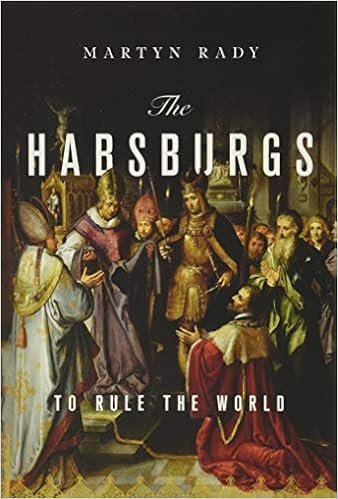


Among the vital information is Austria and the Habsburg's deep involvement and facilitator of the eastern African slave trade to the Ottomans, and the western Atlantic slave trade, via Portugal, to the New World.  In case one isn't aware of how this landlocked empire could do such a thing, here is the explanation (this era has long been one of el V's favorite go-tos when it comes to the history of Cuba and Latin America, by the way.

Charles V, who became King of Spain in 1516 and was elected emperor in 1519, had as his motto “plus ultra”, meaning “still further”. In the 16th and 17th centuries Habsburg power spread across the globe, with the dynasty establishing a presence in sites from Brazil, Mexico and Peru to Goa, the Philippines and Taiwan, at the same time as their forces fought for dominance against those of the Ottoman sultans to the east. In 1700 Habsburg power came to an end in Spain and its associated territories, but the central European branch of the family would remain a pre-eminent force for two centuries yet.

~~~~~~~~~

The Dig takes place in 1939, at what becomes called the site of Sutton Hoo.  Watched while WWII era pop musics played on a radio in the other room leaked into the headphones through which I was hearing the film.

We travel to the dead, and the dead travel to us.  Time slips when we confronted palpable evidence of the past such as fingerprints in paint, paint applied by the hands thousands of years ago. 

We begin with images of Ancient Egyptian rulers' images in a book read by one of the protagonists. We conclude with the reburial of the excavation of the anglo-saxon ship to protect the dig site from WWII's aerial blitz.  Throughout is threaded the child's enthralled imaginative play with space travel. The child effortlessly holds the past, the present and future simultaneously. The site's invading Saxons' ship enthralls him as much as his imagined space invaders' ships, while he carries the present-day concern for his mother's ill-health, and those whom loves are called to fight the nazis.  Invasion, past, present and future, all at once.

The scripted drama gives us the heroes of archaeology, those who have been lost and written out of the discoveries. The vast inequalities of social and class division, the imposed hierarchy imposed upon the site, mirror those of society at large, past and present. This is a story of some of those and how they are the ones who made the Sutton Hoo discoveries: the non-wealthy, those lacking formal academic bestowed degrees, women, those who are classed as "merely laborers,", yet without whom nothing can be done, whenever then is, whenever now is, whether building the pyramids or rediscovering them. These who tend to be forgotten or written out of history even as they were the history movers and shakers.


Even entire groups who historically were movers and shakers, creators of history that we study, can be written mostly out. Merovingian!  They said the word Merovingian and Merovingians!  Merovingian objects in grave ship's burial chamber.  Now this is unlikely to have had the same electrifying effect on other watchers -- see, written out of history -- but it sure did on this one, a Merovingian watcher if there ever was one.  

Now I want a cat or dog, so I can name him or her Basil Brown. after the character played by Ralph Fiennes.  I will call dog or cat, Baz.

~~~~~~~~~

Now, coming to the history of the United States: as part of leading the therapeutic treatment for the Members hunted and threatened during the armed 01/06  Insurrection,  Nancy Pelosi has requested each one to write an essay detailing their experience of that day. 

“Be your own historian, be part of writing the history of this, because there’s nobody who can be a better validator of what happened in your experience than you,” Pelosi said . . . .

Pelosi leading trauma therapy for the members in the 01/06 armed attack insurrection.  Part of this is having each one write an historical essay of their experience.  

Among other news is there's a bullet shortage as reported to us by friends in places like New Orleans.  When they went to get ammo, after going through the paper work for legal purchase, registration and concealed carry, they went to the places where one buys ammunition.  They are out of supply.

One does fear very much the next armed attack in D.C. will be during the impeachment trial.  This shyte ain't over; the shooting civil war is just getting going.

And it's still January!


Friday, January 29, 2021

It's Still Goin' On! The January That Refuses To Take Its Leave

      . . . . Every day and every night gets colder.  Every morning I wake up to a temperature lower than the one with which we got up yesterday.  We're now in the zone of below freezing day and night, and at night, way below freezing, though we haven't yet hit single digits.

The insurrection continues, with threats to the lives and well being of various Democrats in the House and Senate, even made by members of the chambers out loud and in public -- not to mention everywhere else. They are intent in bringing this all down and establishing an authoritarian white supremacist, radically religiously intolerant nationalism instead.

Chaos with vaccines here and everywhere else, when it comes to manufacture, administration and distribution. 

Still engaged in transferring / copying data to the Desktop. This doesn't mean I've been laggard about it, rather there's a lot of other things more urgent to do all the time, and once a day's rota of those tasks have been completed, I'm not in the mood to keep watch on whether a data base has paused its download, completely downloaded, or whether it has transferred / uploaded successfully to the Desktop.  I am looking forward to having this finished though, so I can change the display on the desktop screen to one of my own photos.  But right now One Drive is uploading all the files and folders to itself from my hard drive, so this computer hardly functions.  But it should, considering how much bandwidth we have and the speed measurement.  But there ya are -- still stalling out.

Why yes, one can find oneself really hating computers and the digital universe.

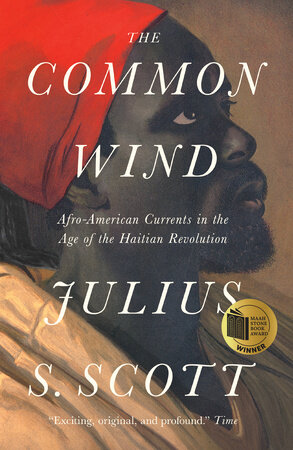
As always, the end of the day, is good part of the day!  We've embarked upon a new book, The Common Wind: Afro-American Currents in the Age of the Haitian Revolution (2019), by Julius Scott.  Incorporating content from his dissertation, Scott wrote it after receiving his doctorate from Duke in 1989. It didn't find a publisher though, until recently. 


As seen in the Penguin-Verso press release, among the book's admirers are quite a few scholars I also admire deeply, such as Marcus Rediker:

ABOUT THE COMMON WIND

Winner of the 2019 Stone Book Award, Museum of African American History

A remarkable intellectual history of the slave revolts that made the modern revolutionary era

The Common Wind is a gripping and colorful account of the intercontinental networks that tied together the free and enslaved masses of the New World. Having delved deep into the gray obscurity of official eighteenth-century records in Spanish, English, and French, Julius S. Scott has written a powerful “history from below.” Scott follows the spread of “rumors of emancipation” and the people behind them, bringing to life the protagonists in the slave revolution.

By tracking the colliding worlds of buccaneers, military deserters, and maroon communards from Venezuela to Virginia, Scott records the transmission of contagious mutinies and insurrections in unparalleled detail, providing readers with an intellectual history of the enslaved.

Though The Common Wind is credited with having “opened up the Black Atlantic with a rigor and a commitment to the power of written words,” the manuscript remained unpublished for thirty-two years. Now, after receiving wide acclaim from leading historians of slavery and the New World, it has been published by Verso for the first time, with a foreword by the academic and author Marcus Rediker.

Tonight, it's The Dig, a Netflix film that released today.


The Dig is a drama film directed by Simon Stone, based on the 2007 novel of the same name by John Preston, which reimagines the events of the 1939 excavation of Sutton Hoo. It stars Carey Mulligan, Ralph Fiennes, Lily James, Johnny Flynn, Ben Chaplin, Ken Stott, Archie Barnes and Monica Dolan.

If you are not familiar with Sutton Hoo, here is the website for what is still and active dig, as well as museum.

As mentioned above the cold here is severe and evidently plans to be in residence in our region for quite some time, at least into next week.  There is going to be a lot of snow too, it seems, starting sometime Sunday? all through the mid-Atlantic. Have no idea how much we should expect here.  But as cold as it is, we may get more snow than rain this round.  This is the weather for which was made the Finnish wool cape el V brought back to me from a European tour some years back.  It keeps me comfortable when the steam heat hasn't kicked in for a while.  Excellent for watching 'tv'!

Saturday, November 25, 2017

Eurasia, Winter, the Ottomans: History and Archeology, Television and Books

     . . . . El V's enthralled with Barry W. Cunliffe's Steppe, Desert, and Ocean: The Birth of Eurasia (2015). 


It's lavishly illustrated with the most helpful maps possible, many photographs and other illustration, index, etc.  It's not quite a coffee table book, but its glossy paper, luxurious spacing and layout and dimensions does quite resemble more a deluxe museum catalog of a distinguished exhibit than a non-fiction hardcover.


Sir Barrington Windsor Cunliffe CBE FBA FSA

A Humanities Network review that hits the book's talking points can be read here.  

It goes well with the two books I read this year by Jack Weatherford -- The Secret History of the Mongol Queens (2010) and Genghis Khan and the Making of the Modern World (2004). 

     . . . . It goes well too with the Turkish period series I began early this year and still haven't finished watching. One cannot and should not binge anything this long. I'm finally to episode 66, and it's still season 1 of Resurrection: Ertugrul (2014 --76 episodes in all).  The time period is the 13th century and the pressures from the Mongols are pressing hard on all nomadic peoples and everyone else, north, south, east and west, including Seljuk Turks (Salah ad-Din's people, falling into eclipse at this point), Arabs, Roman Christians, and Byzantine Christians -- none of which like each other and are in serious conflict.  The only uniting pressure for many of them is Islam.

Ertugrul is the legendary warrior who supposedly united and founded the peoples who became known as the Ottoman Turks, by re-uniting the Seljuk and the Oghuz Turks, was father of the equally legendary forefather of  Suleiman the Magnificent, whose grandfather, Mehmed the Conqueror, took out, finally, after many failed Ottoman attempts, Constantinople, in 1453.  Thus the Turkish television series' title, presumably -- resurrection of the Turks via union, which held back the Mongols, and defeated the European Christians, and the Greek Christians, to become the great Ottoman Empire which ruled the region for at least 500 years.

Season 2 of Ertugrul is also available on netflix (so far, I believe there are 3 seasons), again of 76 episodes.  So I could keep watching this for another year -- and probably will.  Among its many charms is seeing the western perceived exoticism of this eastern world through its own eyes.  It's great fun too, to see these palaces as filled with secret passages and vicious political assassinations as the romances.  It's stuffed with romance of story and character as well as the romance of its poetry, which runs through the cultures of all the peoples in this series -- and which illustrates from another angle than my grad courses in medieval and comparative literture courses how much Courtly Love and the Romances of the medieval world acquired from interaction with the Arabic cultures, particularly from Moorish Spain. The Pyrenees between Aquitaine and Al-andalus. 


Also, the horses are magnificent. (Cunliffe's book focuses a great deal on horses, of course!) How could I resist Ertugul, who confides at length to his lovely horse, all the doubts, fears and yearnings which he cannot express even to his loyal beyond death warriors?

El V says, "We're getting our winter on. Last winter: the Merovingians.  This winter: the steppes."

Ya, I say, "As winter disappears with the melting of the ice caps in Antarctica and the Arctic and the end of the glaciers. Winter, the primary fact of life since the beginning of life, of so many, including my own entire life until leaving the northern midwest, is rapidly becoming an exotic fantasy."

At least we still have books . . . .

Sunday, June 19, 2016

The Coughing Regression Again + Dyckman House + Reconstruction


 I went uptown to Innwood Thursday to attend beloved friend C's presentation at the historic Dyckman Farm House museum on 205th St. on the Dyckman family and the first excavator / archivist of the associated Old Nagle Cemetery,  Reginald Pelham Bolton. Dyckman House is the last surviving Dutch-style and built farm house on Manhattan Island. As the original owners of the farmstead were very respectable, decent persons, there is little to say about them as people, or about their descendants who bought back the property after the previous, Independence era generation had fled New York for England, as they were Loyalists, not Patriots. But Bolton now -- there is a fellow! 


Dyckman Farmhouse 19th century
Dyckman House Currently
 
  C was both informative and entertaining.  She's spent over a year going through the untouched archive / collection of artifacts Bolton collected, sorting, organizing, tagging and photographing all the items. What a material historian she is -- as well as a terrific artist of fabric and costume.

I'd had a bad night of coughing, but once I got up it went away again, and I felt much better.  I'd been looking forward to this outing so much, the first really, since The Coughing began.  Alas 2/3 of the way through the professional archeologist's part of the program talking about the history of urban archeology and the archeology of this area of Innwood / Manhattan. Coughing began.  I had to flee the backyard veranda where the presentation was taking place.

K (C's husband), concerned, followed. I'd expected the Cough to recede, and it finally did. After the event wound down I went with C and K and a new friend of theirs, who I took to as much as they have, to a nearby three block row of Inwood's hispanic nouvelle restaurants and bars  Some coughing ensued not much though.

But by the time I got back home downtown, The Coughing was fully back. I coughed all night, all the next day, all the next night and now it is three days without sleeping and I'm melting down.  Full reset of it, all right. Nothing much helps. I've seen a doctor. He shrugged, told me rest and take lots of liquids and wait it out. Taking those horrible Ricola drops is about all I can do.  As usual, they make my mouth taste awful, food taste awful, and kill my appetite -- though not hunger, just any impulse to try and eat anything. Between hunger and sleeplessness I'm a mess all right.

A state of mind that reflects the state of mind with which I've learned about the systematic process of rewriting the history of slavery, the Civil War, Reconstruction and everything before and after. The blame for an enormous part of this history revisionism has to be put squarely upon the decision-makers of the North and the Republicans, starting with the new history textbooks created after the war to service the growth of federally mandated national public education.

Since the textbooks were for every region of the U.S. the editors didn't want to antagonize any Southerner, and particularly the southerners on the education committees, so slavery was written out of the basic school room histories at all levels of education.  Already by the late 1870's people who had lived and fought and lost people to the way, northerners, were writing with shock that the generation that was following them was ignorant of the whole business -- that many of the youth in their communities seemed not to even know there had been a war, much less why there had been one.

 Despite the many letters to the editor in newspapers across the land, the op ed pieces, articles in the magazines and journals, nothing was changed.  Sound familiar?