LINES OF THE DAY

". . . But the past does not exist independently from the present. Indeed, the past is only past because there is a present, just as I can point to something over there only because I am here. But nothing is inherently over there or here. In that sense, the past has no content. The past -- or more accurately, pastness -- is a position. Thus, in no way can we identify the past as past." p. 15

". . . But we may want to keep in mind that deeds and words are not as distinguishable as often we presume. History does not belong only to its narrators, professional or amateur. While some of us debate what history is or was, others take it into their own hands." p. 153

Silencing the Past: Power and the Production of History (1995) by Michel-Rolph Trouillot

Showing posts with label Race. Show all posts

Tuesday, November 29, 2016

Thomas Jefferson and Marie Antoinette (and The Neo-Gilded Age)

   . . . I revisited Nancy Isenberg's White Trash: The 400 Year Untold Story of Class in America (2016) a few weeks ago.  I wanted to see if wanted to revise my iniitial judgment that the book was thematically and argumentatively incoherent too often. I listened to the audio download rather than re-reading the book.

While doing that I was struck in a way I hadn't been during the book read by similarities between Jefferson the Agriculture Philosoph's Monticello and Marie Antoinette's faux rustic village of Hameau de la Reine near to the Petit Trianon in the Park of Versailles. There she and her companions played at being peasants as Jefferson impersonated "gentleman farmer." He was such an 18th century aristocratic fellow (though in a mode that was also peculiarily Virginian).

Isenberg didn't notice these similarities herself. As per usual with White Trash, when the author approaches something revelatory, instead of taking the leap over the walls surrounding the Founding Father of the Domestic Slave Trade and White Supremacy -- she pulls up short and turns to a different topic-- leaving unmined the US's systemic legal foundation of 'race' in the constructing of white divisions of class and poverty.

It was an exciting moment during a visit to th British Museum to spy a first edition on the shelves of the Museum's Enlightment Room.

In the Enlightenment Room, British Musuem -- it's enormous!
Isenberg's chooses excellent quotes from various Jefferson documents and his only book, Notes on the State of Virginia, to illustrate his disdain for farm work, and his disinterest in farming in general. These chosen words suggest strongly that for Jefferson, "farming" for most of his life, was only so much "philosophy" -- fantasy world building that relaxed and entertained his lively mind, resembling closely the role playing of milk maids at Petit Trianon.

Water color of the grounds of Hameau de la Reine village, near Petit Trianon
It wasn't until Jefferson thought of agriculture in the terms of science experiments that he took any personal concern with 'cultivating.' on his own farms (he was a complete failure at it too). This was a deep contrast with Washington's constant concern with farming and how he managed Mount Vernon. Jefferson's exception to his impractical fantasies were his statements that breeding slave women for their "natural increase" must be encouraged as their babies brought more financial value to the estate than the crops brought in.

Wotton House, Surrey.  This pdf is a good essay on Jefferson's travels in England (John Adams was his companion):
"A Comparative Study of Thomas Jefferson's Travels to England and Their Influences on Monticello"
Jefferson admired the great estates, parks and gardens he visited during his travels in England (786) and in Italy and France (1787). Lacking the economic resources held by aristos to build such impressive showplaces, of course, he relentlessly mortgaged his slaves, and created an lesser imitation at Monticello with lower quality materials. That showplace of Monticello is an impractical facade, like Marie Antoinette's Petite Trianon peasant village -- a folly, as certain edifaces des amusants erected on estates were called in England -- except, of course, at Monticello, the slaves were real people, and truly enslaved by every legal, religious and philosophic dictum possible to invoke, and ultimately sold away from the bankrupted Master of the Mountain's fantasy world that their bodies, fertility and labor had bankrolled.

Isenberg shows Jefferson's philosophy of agriculture was formed by European models that had not a chance of working in North America -- particularly not in Virginia, for all kinds of reasons. Invoking the gentleman farmer, his preferred term for a farmer was cultivator -- not yeoman, though this is the word everyone uses when writing about Jefferson's fantasies of how the huge swathes of the Louisiana territory was to be populated and organized. A cultivator differed as much from a yeoman as Theodore Roosevelt's stockman differed from a cowboy.  Roosevelt compared the stockman to a southern plantation owner and described a stockman's life as the best life to live -- except that of a southern plantation owner in the antebellum era. Unlike the stockman's whose life was filled with satisfactions and comforts, not least seeing his wealth steadily accrue through the natural increase of his herds and the labor of his hands, the cowboy's life was a hard one, and an economic dead end.

Even as his language for the naming of the newly acquired territory's states could have been used in contemporary (bad) fantasy world-building, it was not the language of sturdy small yeoman farmers: Michigania, Illinoia, Saratoga, and Washington, well, OK, but! -- Sylvania, Chersonesus, Assenisipia, Metropotamia, Polypotamia, and Pelisipia? This was an equally preposterous progression of the fantasy feudal slave state of Carolina designed by John Locke and the Eight Lords Proprietors of Carolina to divide territory into palatinates and baronies, organized under a hereditary aristocracy of margraves, landgraves and caciques. Nor should we forget the proposed Margravate of Azilia as a the buffer zone between Carolina and the Spanish Floridas. Instead of happy serfs however, they would have happy African slaves.

Logo of the Royal African Company

Recall that Locke and these Lords Proprietors were original investors in the Stuarts'  Royal African Company, headed by the Duke of York, formed to enslave Africans and sell them in the New World, in order to fill their always empty privy purses.

What does all this have to do with poor whites and class? Isenberg seems not to know, though this history is included in White Trash, it is presented without any connection to the southern colonies' poor white populations, treated as expendable waste by the small, ever increasingly wealthy elite.  As critics other than myself have noted, Isenberg forgets about her central theme most of the time.

Though White Trash's argument is fairly incoherent thematically, pieces of it are informative. It's disappointing that she wasn't able to pull together the history of white poverty and class into a satisfactory explanation of our cultural, economic and political psyche. But since she couldn't or wouldn't examine and / or reconcile the victimization of poor whites with the victimization of slaves -- or that of Native Peoples either, though they get some mentions, ultimately the book, though an interesting read, isn't as useful as the author expected. It really founders when the author attempts to force New England's ways and mores into her theme? argument? (it's unclear). The points that are to be made are obscure -- again because of how slavery operated in the north, and the differences between north and south in how they profited from slavery are ignored and / or presented in a manner that can only be called murky.

Isenberg is a terrific researcher, but apparently wasn't willing to work-up her analytical skills to spin 400 years of history around a central theme without losing sight of the argument and straying off into dead ends. She founders at the wall of black - white, which always comes up central to the history, no matter what era and which issue. So, once again, African American history gets side-barred and made lesser, even as the historian centers the class system of whiteness as American history. It's an distorted dialectic of class and poverty, which forces the argument into a shallow flat shape, lacking scope and grain. The further the book progresses the more it presents as rushed and unthought-through, as up against a deadline the author resents as too close.

Another aspect of White Trash that confuses whatever the argument Isenberg thinks she's making is that she repeats, sometimes even word-for-word, illustrations.  One example of this is the scene from Harriet Beecher Stowe's novel, Dred: A Tale ofthe Great Dismal Swamp (1856), in which a poor white woman and her children are described -- she uses that same scene word-for-word at least twice -- while missing that the language Stowe has chosen to describe this miserable family is to evoke compassion in the reader, not contempt.


Though written and published before the election, her description of Jackson's political base is the same as that of many descriptions of the orange's political base, and Jackson's braggadocious, impatient, explosive, improvisational character as many describe the orange's character. The politics of resentment come through loud and clear. Though this is of no surprise to anyone who has spent time studying Jackson and the Jacksonian era, it's deeply troubling in its implications for our own immediate future.


Panic of 1837 here we come.   


Then, suddenly, we're past the Civil War, and these same despised people whom the author has claimed did not support either the seccession or the war, and who ere so badly treated by the CSA, are aligned with the planter-political class.

Then we move into the age of eugenics, a/k/a  the Gilded Age, or, as I call it, the Age of Horror, the age that so resembles our own.

She's gone through the Civil War and into this era in which the poor and anyone who isn't male, white and rich are regarded as worthless. Yet, she never explains how and why how these supposed crackers such as James K. Vardeman, whose class is so despised, oppressed and repressed, got wealth, got political power.  In fact they get so much wealth and political power they now run the country.  How did this happen if they are so oppressed? Did the legal system and white supremacy have anything, anything at all, to do with it?

Ultimately the book ignores its own theme and argument.

Friday, February 27, 2015

Interstitiality of Racism, Bigotry, Criminality, De-personification and Literature

What has helped provide this week's warmth, life's snap and crackle that keeps us keeping on, is our Vanderbilt amiga being here. She's so frackin' brilliant! It's a terrific mind-workout challenge being with her, so stimulating, so interesting and I always learn something, see things in new ways.

Her capacity for using the professional languages designed to exclude, designed, even, to identify, those who are designated as expendable, extraneous, less than "human," is superb. She exposes the interstitiality among the professional languages, where the boundaries between religion and literature dissolve into the languages of case law and incarceration.  Further, this is enabled by the formulized rituals of the legal system to debase the body, and remove it entirely from the person's own control. When a person cannot control even her own body for a movement or a moment (i.e. as with slavery), there is no more personhood.

Angola Prison Plantation work gang 2014
The complete control of the body means complete control of the mind. I saw all of this in operation in how Monticello's master, more than any other plantation I've visited, implemented physical control via surveillance, and even minute arrangements of situation and organization. This includes armed guards, no different in operation and effect than at the contemporary Angola Prison in Louisiana, which I've also visited. Angola is deliberately kept as an antebellum plantation, with the cotton and other crops planted, cultivated and harvested, mostly by hand.  I felt the same creepy, oppressive, desolate depression at Monticello as I did at Angola. The entire antebellum south was a gigantic prison complex of interlocking systems designed to keep the captives incarcerated.  It started all over again, then in the Jim Crow era, where armed white men rode the roads and guarded the train depots to keep the labor force from escape to Chicago, New York, California.

CD exposes the ritualistic racism that further allows while obscuring, how our legal system and the others deliberately create classes of those who are slotted for de-personification.  It begins with the body, and the body then takes care of the mind.  This is the judicial system, the prison system -- and I will, as will she, insist this is what the plantation - slavery system of the colonial America and the antebellum era was deliberately created to be. However, without a foundation for thinking of, manipulating other human beings, as less, as like animals, i.e. not human, founded in the languages of sacred texts and "national "literature", we could not get from the conception of God's creation to society's throw-aways .

I'll go further than this, and insist that without that de-personification there is no control of not only the "poor" and others designated as social waste, but no control by the elite over labor and the wealth labor's production creates. We see this taking place now, not only in prisons, immigration agencies and other apparatus of state control, but in work.  See: the wildly expanding use of "employee monitoring," that tracks every single move an employ makes.  Its at the point that the UPS truck drivers are even monitored as to how they get out of and into their trucks.  There is a right way, which doesn't waste seconds, and all the other ways are wrong because wasteful, getting the driver called into the office for a talking to and warning that if s/he doesn't shape up getting in and out of the truck they will be fired.  See:
 Esther Kaplan uncovers many of these disturbing and intrusive behaviors, which inform hiring and firing decisions, and can push employees to their limits, in her article for Harper's, "The Spy Who Fired Me."
Exploring / exposing these matters from this perspective is fundamental to understanding the horrors of the world we're in. We'll never be able to make a more humane world without understanding this monolith that is sitting upon ever more shoulders, oppressing, repressing, denying our worth, our right to even "be."

I sit during her lectures, breathless and scribbling..

Among other things she does, CD works with prisoners in Nashville State Prison. She repeats that the men she's working with know all this better than anyone. They have a language themselves, that addresses, describes and embodies the ritual of humiliation, denial of personhood and exclusion as social waste.

And there, if I'm understanding CD correctly, is the only opportunity for all the rest of us, who as a class is growing globally every day, to push back, by understanding, taking into ourselves, the conceptual language of those who have been ostracized from "society."  I.e. it's another place to dissolve boundaries between us and the rulers.


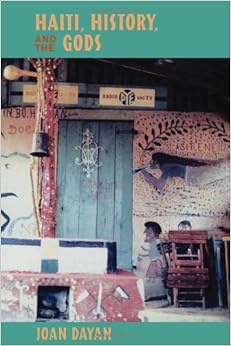
CD first began this kind of work in Haiti.  Haiti, History and the Gods is a seminal work for examining the kind of society in which we are currently living, that has declared open season on young, unarmed black men, and the bodies of all the rest of us as well.

Thursday, November 25, 2010

Pulp History

 ... the brother and sister team of David and Margaret Talbot, save the gore for print. They are the mild-mannered creators of a new book series called “Pulp History,” rip-roaring nonfiction tales with enough purple prose, gory illustrations and va-va-va-voom women to lure in even reluctant teenage male readers.
Here's a sample:

In “Shadow Knights: The Secret War Against Hitler,” one of two books in the series that Simon & Schuster released last month, a British spy named Harry Rée wrestles with a Gestapo agent: “He gouged at one of the man’s eyes, but it wouldn’t come out. He tried to bite off his nose, but it was too tough. Then Ree shoved his forefinger into the German’s mouth, between his teeth and cheeks, and pulled up hard. The man squealed in pain and sent Ree flying over his head.”


David Talbot created Salon dot come back in the '90's.  Margaret Talbot writes for The New Yorker.  They promise that their books are historically factual and do show the evils of colonialism, racism, the dishonesty of politics, the factual horrors that history so often is.  Nevertheless, here's this:

Their 160-page book, “Devil Dog: The Amazing True Story of the Man Who Saved America,” follows the exploits of the most decorated Marine of his day, Smedley Darlington Butler — a name too good to be false. Mr. Talbot first came across this forgotten hero in another book’s footnote.

The cover, drawn in bold colors, depicts Butler with a gun in one hand while in his other he holds up the Statue of Liberty — depicted as a bosomy redhead — who has fainted. Other illustrations reflect the same bawdy sensibility. In one, a voluptuous naked black Haitian woman dances in a voodoo ritual in front of a roaring bonfire and a beheaded dog. The style matches the pulp novels that were popular with American readers during the Marines’ long occupation of Haiti that began in 1915. The back cover promises, “Unbelievable and ALL TRUE!,” and “Devil Dog Will Knock You Out!
OK.

Now why is it that what I see here is cynical dorkdongs devoutly believing they are entitled to sell history the way everythig else is sold, by the exploitation of women's bodies and sexuality the bodies and sexuality of people of color, the suffering of untold numbers presented as a comic book in order to make the buckola for themselves and their upper-middle-class children -- while devoutly, smugly congratulating themselves as doing good in the world.

Why yes, their pretense that they are bringing history to kids, when, as the article makes clear, this is an enterprise that is geared to creating fictional television and movie franchises, is disgusting and an insult to the many people who work so hard to write history that is accessible to the non-specialist.
Full story here.