A question: would there have been a Breaking Bad without the Coen Bros. Fargo?
Is the total sad sack, Jerry Lundgarde, who remains a loser
the father of the total sad sack Walter White, who become a king of crime in a sad sack turn-around?
Yah, one is set on blizzard-swept northern prairie and the other in the southwest desert, both equally filled with bleak desperation for many.
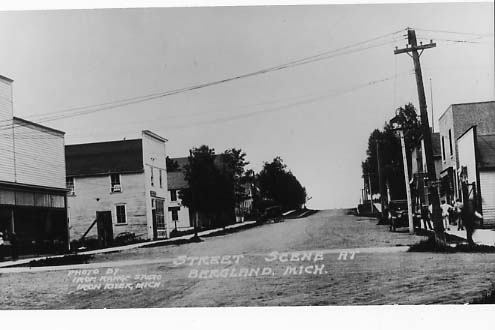
Personally, I gave up on Breaking Bad early on, disliking it very much. However, I kept watching the film, Fargo, and now the television series, because there is nothing I know as deeply in my dna as this:
or this:
Tuesday, December 9, 2014
Monday, December 8, 2014
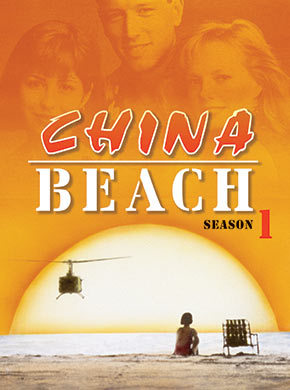
China Beach, Season 1 (1988) ABC
China Beach had four seasons. Only season one (1988), composed only of six episodes including the pilot, seems available from netflix.*
It stars Dana Delany.
The location of the series is the Da Nang evacuation hospital and R&R center, at My Khe, nicknamed by the occupying forces, "China Beach." However, the locations for the video shoots were in California and Hawaii.
Inevitably, China Beach got associated with with the eternally beloved series, Mash (1972 - 1983) -- which was transferred for television from the original setting Altman's 1970 Mash, which was intended to be read by all as Vietnam, not Korea. It was savage, and most savage of all to women.
China Beach is dark, less satirical, very cynical and, while sharp and witty, unlike Mash, this series is not a comedy. Nor is it a "war" series. The fighting, the consequences of which the hospital and the shipment center of dead bodies deal with most days and nights happens off screen.
Most of the focus is on the women at the hospital base, who are there to clean up the messes made by and of men, whether of their bodies, their lives, their quarters, and war – while also providing all emotional support, nurture and healing -- and of course, entertainment and recreation. Who thinks of doing any of this for them? Generally speaking, tentatively and experimentally, only each other.
These experiences of the women who worked the bases as nurses, administrators, services personnel, such as the young Vietnamese woman at the community center which the Red Cross My Khe director, Lila, is attempting to build, are based on the book Home Before Morning (1983) written by former U.S. Army Nurse Lynda Van Devante. They too have PTSD. Lynda Van Devante died in 2002.
While anti-war in Vietnam protest is full blown, and both protest and the war are highly criticized at the hospital, on the base, and among the men as irrational, useless and terrible waste, feminism has not yet raised its terrible head in the military.
This dark cynicism about war and the top-bottom military organization made this series, while popular with critics, unpopular with viewers ....
The episodes are written with the multiple characters in the traditional manner of network television, following each character's various fracas, conflicts and problems, as well as their shifting relationships with each other. However, there is arc in the telling over the season, as well as nuance and dimension in the conflicts that weren't as expected from a television series then. So, like Homicide, Xena and Babylon-5, China Beach too, might be one of the early indicators that a new golden age of television was dawning.
The penultimate episode of China Beach is titled "Brothers." It principally creates a denoument of two of the characters' through-lines of the season.
Beckett is the African American grunt in charge of the base's GRU -- Graves Registration Unit. His job, dealing hands on with the dead, makes him a pariah among those who go in country. Even his shadow falling on them might put them next in the body bag shipment home. Isolated mostly by the other soldiers, he has come to commune with "my men," the dead. The other principal arc is that of Cherry, the wide-eyed, blonde from Iowa, a Red Cross volunteer, who serves doughnuts in the canteen and talks to the men back from in country -- the young women who have volunteered for such jobs are called "Dolly Girls." She came to Vietnam to find her missing older brother, whom she has hero-worshipped all her life.
Through Beckett we can figure out how humanity gets religion from death and the dead, transmitted from those who live with them, who take on the dead's terror and taboo. Beckett walks through worlds. When some of his "brothers" attempt to recruit his dead as transport for heroin, he won't do it, no matter how much he's appealed to in the name of brotherhood. "My men don't want this." They aren't going to participate in the killing of other brothers, in the burned over ghettos of back home.
Cherry's wide innocent eyes see the the truth, faces it with courage, that her beloved brother has become a criminal, preying on everyone, via violence and his enterprise of guns, drugs and whores. The episode is powerful, not sy sll sentimental. There's not closure. Nor is there redemption for dealers or for Cherry's brother. There's no punishment either, other than the hell of their own heads. Both of these men, who don't know each other, have made by the corrupt enterprise that this war is, but they also made their choices to wallow in the filth, as much as Beckett and Cherry have made their other kinds of choices..
The vast amount of the series’s budget spent on music permissions.
Worth it though, particularly for the title cut – “Reflections,” the first single released as Diana Ross and the Supremes, in the Summer of Love, July 24th, 1967. "Reflections" is also notable for being the first time Motown incorporated a bit of the psychedelic touch, as heard in the opening bars. Highly effective – every time the opener comes on my screen, I get a lump in my throat. But the series, like the song, never ever overdoes psychedelia, slang or any of the 60's, or uses them in a cliched manner. The reality everyone is in, there in one of the armpits of the world, is already sufficiently irrational.
The audio values of the China Beach production are brilliant -- loudness of the insect and amphibian life after dark, the churn and thud of choppers, screech, wail and thunder of various weaponry, the constant thump of fans, dehumidifiers, generators, and if, a character is lucky, a whistle of an air conditioner, are as omnipresent source audio as are the hit songs of the day spontaneously sung acapela, out of radios, on tapes, by cover entertainers, and, when the troops are lucky, the actual performers, such as Nancy Sinatra.
This season one of 6 episodes, including the pilot, make for a coherent and satisfying arc themselves, and are more than worth watching. I sure wish I could see the rest of the other seasons.
It stars Dana Delany.
The location of the series is the Da Nang evacuation hospital and R&R center, at My Khe, nicknamed by the occupying forces, "China Beach." However, the locations for the video shoots were in California and Hawaii.
Inevitably, China Beach got associated with with the eternally beloved series, Mash (1972 - 1983) -- which was transferred for television from the original setting Altman's 1970 Mash, which was intended to be read by all as Vietnam, not Korea. It was savage, and most savage of all to women.
China Beach is dark, less satirical, very cynical and, while sharp and witty, unlike Mash, this series is not a comedy. Nor is it a "war" series. The fighting, the consequences of which the hospital and the shipment center of dead bodies deal with most days and nights happens off screen.
Most of the focus is on the women at the hospital base, who are there to clean up the messes made by and of men, whether of their bodies, their lives, their quarters, and war – while also providing all emotional support, nurture and healing -- and of course, entertainment and recreation. Who thinks of doing any of this for them? Generally speaking, tentatively and experimentally, only each other.
These experiences of the women who worked the bases as nurses, administrators, services personnel, such as the young Vietnamese woman at the community center which the Red Cross My Khe director, Lila, is attempting to build, are based on the book Home Before Morning (1983) written by former U.S. Army Nurse Lynda Van Devante. They too have PTSD. Lynda Van Devante died in 2002.
While anti-war in Vietnam protest is full blown, and both protest and the war are highly criticized at the hospital, on the base, and among the men as irrational, useless and terrible waste, feminism has not yet raised its terrible head in the military.
This dark cynicism about war and the top-bottom military organization made this series, while popular with critics, unpopular with viewers ....
The episodes are written with the multiple characters in the traditional manner of network television, following each character's various fracas, conflicts and problems, as well as their shifting relationships with each other. However, there is arc in the telling over the season, as well as nuance and dimension in the conflicts that weren't as expected from a television series then. So, like Homicide, Xena and Babylon-5, China Beach too, might be one of the early indicators that a new golden age of television was dawning.
The penultimate episode of China Beach is titled "Brothers." It principally creates a denoument of two of the characters' through-lines of the season.
![]() |
| Michael Boatman plays Beckett on China Beach |
Through Beckett we can figure out how humanity gets religion from death and the dead, transmitted from those who live with them, who take on the dead's terror and taboo. Beckett walks through worlds. When some of his "brothers" attempt to recruit his dead as transport for heroin, he won't do it, no matter how much he's appealed to in the name of brotherhood. "My men don't want this." They aren't going to participate in the killing of other brothers, in the burned over ghettos of back home.
Cherry's wide innocent eyes see the the truth, faces it with courage, that her beloved brother has become a criminal, preying on everyone, via violence and his enterprise of guns, drugs and whores. The episode is powerful, not sy sll sentimental. There's not closure. Nor is there redemption for dealers or for Cherry's brother. There's no punishment either, other than the hell of their own heads. Both of these men, who don't know each other, have made by the corrupt enterprise that this war is, but they also made their choices to wallow in the filth, as much as Beckett and Cherry have made their other kinds of choices..
The vast amount of the series’s budget spent on music permissions.
Worth it though, particularly for the title cut – “Reflections,” the first single released as Diana Ross and the Supremes, in the Summer of Love, July 24th, 1967. "Reflections" is also notable for being the first time Motown incorporated a bit of the psychedelic touch, as heard in the opening bars. Highly effective – every time the opener comes on my screen, I get a lump in my throat. But the series, like the song, never ever overdoes psychedelia, slang or any of the 60's, or uses them in a cliched manner. The reality everyone is in, there in one of the armpits of the world, is already sufficiently irrational.
The audio values of the China Beach production are brilliant -- loudness of the insect and amphibian life after dark, the churn and thud of choppers, screech, wail and thunder of various weaponry, the constant thump of fans, dehumidifiers, generators, and if, a character is lucky, a whistle of an air conditioner, are as omnipresent source audio as are the hit songs of the day spontaneously sung acapela, out of radios, on tapes, by cover entertainers, and, when the troops are lucky, the actual performers, such as Nancy Sinatra.
This season one of 6 episodes, including the pilot, make for a coherent and satisfying arc themselves, and are more than worth watching. I sure wish I could see the rest of the other seasons.
----------------------------
* Might this have something to do with Time-Life having issued the entire run of China Beach, thus locking up the rights?
Labels:
feminism,
pop culture,
Television,
U.S. culture,
Vietnam war,
violence. U.S. history,
Women
Thursday, December 4, 2014
Waiting For the Morning Train: An American Boyhood by Bruce Catton
Waiting For the Morning Train: An American Boyhood, is Mr Civil War Centennial Bruce Catton's memoir. Written, probably, at the end of the 1960's, as it was published in 1972, when Mr. Catton was six years from his death in 1978, it is firmly grounded in the 19th century, as he was born in 1899.
This must explain, at least partly, why these words so resonate with me -- because though born much, much, much later, due to where I was born, I too am at least knee deep in the 19th century:
What he says in that last chapter resonates deeply with me on an emotional level. However, this does not obscure that his sympathy for the Indians comes out of his own sense of being out of place in his time. But unlike Henry Adams, who became mean and bitter about it, Catton chooses to smooth out the edges of his temporal alienation by waving a worn velvet cloak of words that are in the cadences of purple nineteenth century prose, an elegiac confetti that are to signify the author's dignity, courage and honor. He chooses "the figure of the Indian" as his conveyance for his own sense of displacement, while in truth he's been blessed with every advantage Native Americans have not had for centuries. He can do this because, as he makes clear in preceding pages, the Native Americans of his part of Michigan at least are not now and never have been a threat, so effectively had the tribes been beaten down and degraded by the turn of the 18th into the 19th centuries. They are no threat to him.
In contrast, as he will get to, mostly by ignoring them as he does in his histories of the Civil War. the "Black Man" is still a threat as the events of the Civil Rights era shows. This is why, perhaps, Catton was able to ignore the place of African Americans and slavery in great epic of the Civil War?
---------------------------
* That I know who Lewis Cass is, without looking him up, shows how many years I've been studying history. Woo.
![]() |
| Benzonia, Michigan, where Catton grew up |
This must explain, at least partly, why these words so resonate with me -- because though born much, much, much later, due to where I was born, I too am at least knee deep in the 19th century:
.... There is a story, probably apochryphal but significant none the less, about a United States Senator who was running for re-election a few years ago. According to this story, the Senator got to a small north country town one evening to make a campaign speech, and just before he was led into the hall where the speech was to be delivered the local party chairman gave him a briefing about the issues that were on people's minds locally.
"You'll notice, at the back of the hall, quite a few Indians," he said. "it would be helpful if somewhere in your speech you could say that you are fully aware of their problem and that you will do your best to solve it."
The Senator promised that he would do this. Then -- moved by simple curiosity -- he asked: "By the way, what is their problem?"
The local man looked at him wide-eyed.
"What's their problem? he repeated. "God damn it, they're Indians!
Yet the Indian was incidental. It was the earth and the fullness thereof that mattered. It passed into American hands just as the tools to exploit it were being perfected -- the tools and the driving urge to use them -- and the men who held the tools moved in as if they had to get the job finished before nightfall. They succeeded (at any rate, recognizable nightfall has not come) and in about a century the job was done. The trees had gone to build homes for half of America, the copper had gone to serve the new age of electricity, and if the iron lasted longer it had been moved south by millions of tons, in a progress as inexorable as the Sleeping Bear's ponderous drift to the eastward, to make railroads and machinery and skyscrapers and weapons; and the land was left bruised and scarred, with the radar domes to indicate that the age of applied technologies advances by geometrical progression.
So we live as the Indians of Lewis Cass's time lived * between cultures, compelled to readjust ourselves to forces that will not wait for us. There is no twentieth-century culture; the twentieth century is simply a time of transition, and the noise of things collapsing is so loud that we are taking the prodigious step from the nineteenth century to the twenty-first without a moment of calm in which we can see where are going. Between nineteenth and twenty-first there is a gulf as vast as the one the stone-age Indians had to cross. What's our problem? We're Indians.
![]() |
| The frontispiece photo of Catton in the 250 copy limited edition of Waiting for the Morning Train |
In contrast, as he will get to, mostly by ignoring them as he does in his histories of the Civil War. the "Black Man" is still a threat as the events of the Civil Rights era shows. This is why, perhaps, Catton was able to ignore the place of African Americans and slavery in great epic of the Civil War?
---------------------------
* That I know who Lewis Cass is, without looking him up, shows how many years I've been studying history. Woo.
Labels:
historians,
U.S. Civil War,
U.S. culture,
U.S. History,
writers
Tuesday, December 2, 2014
The Civil War, Reconstruction, Race, Reunion, Glorious Lost Cause, Jim Crow and beyond.
The American Slave Coast's subject is the economy and the slave breeding industry, which the War of Southern Rebellion definitively ended. Thus the ways in which the National Conflict per se enters The American Slave Coast are via self-emancipated who emerged on the scene almost simultaneously with the firing on Fort Sumter, the two emancipation proclamations and the ways in which the battles, self-emancipation and the proclamations disrupted both the breeding and the trade. This, though neither were completely ended until the fall
of Richmond -- and even then, the biggest slave trader was trying to get on the train with a coffle of his merchandise to do ... what? and do it ... where?
However, surely, in interviews and q&as after presentations questions that involve any and all of the above will be asked, so one needs to have something, hopefully intelligent and not error-filled, with which to respond.
Ever since some years ago, when I began looking at these matters, the more I've learned, the more I am amazed by the deliberation and consciousness with which the secessionists constructed the War into the revisionist Lost Cause, and how soon it began -- even before Appomattox -- with direct turn arounds by personages such as Jefferson Davis, suddenly saying the war isn't about slavery, when all along they howled how they would shed every drop of blood to preserve -- and expand, this godly system.
What astonishes me most is how northern and Union historians, journalists, scholars, publishers, and researchers of all sorts -- and politicians! -- went right along with it, all through the north and the west. Many of the secessionists of means moved trans Mississippi and North between 1866 and 1880 -- particularly the wealthy and powerful secessionists. The poor yeoman farmers who bore the brunt of the blood and privation of the rich man's fight, were also too poor to move.
What's equally amazing, is how organized and cooperative the slave power was countering the historical histories and recollections coming from the Union side of the conflict, swiftly founding publications than never before existed, publishing histories, articles, recollections, and even fiction, as well as sentimental, nostalgic, elegies to the faux slave holding south as it never was. They also swiftly created memorabilia collections -- and put up those massive CSA monuments all over the secessionist territory. The reason for my amazement is, because, reading the accounts of the war from the perspective of
the south, as with McPherson's latest, Embattled Rebel: Jefferson Davis, Commander-in-Chief, it was clear the secessionists weren't able to organize even putting uniforms on their troops, couldn't cooperate in terms of distribution of supplies, or even troops, and hated each other, everyone refusing to take orders or fight for any other state. The war really should have been over by 1862 -- and likely would have been if the Union hadn't lost the Battle of Fredericksburg, and thereby acquiring huge amounts of everything Lee didn't have, from shoes to food, to ammo and weapons. But then, it should have been finished by the end of 1863, but Jeff Davis insisted that the CSA would either prevail or burn down the house.
Who financed these journals, papers, historical societies, monument efforts and so on, because somebody had to -- and the south in general was flat broke, and lumbered with debt, without any credit at all.
One answer to that question is Bernard Mannes Baruch -- a son of an immigrant physician to South Carolina, Simon Baruch, who married a southern belle. The family moved north when Bernard was 10. When he became a plutocrat, Bernard Mannes Baruch financed one of the largest southern women's organizations that placed confederate monuments all over the states that seceded. This history of the benefactor of Baruch College is very well concealed -- not even his father's name is named, though it is in a variety of histories that deal with Jewish immigrants in the antebellum and war eras of South Carolina.
![]() |
| Gettysburg, 50th Anniversary Reunion |
Saturday, November 29, 2014
This Shit Ain't Over!
The Absolute RIGHT Line of This Week That Is Almost Was.
George Clinton and P-Funk, to a huge, densely packed house, at least 2/3 African American of all generations (including the babies of GC's granddaughters who came long dancing with their mamas deep into the show):
"This shit ain't over!"
If anything that's what Ferguson showed this nation this week.
George Clinton and P-Funk, to a huge, densely packed house, at least 2/3 African American of all generations (including the babies of GC's granddaughters who came long dancing with their mamas deep into the show):
"This shit ain't over!"
If anything that's what Ferguson showed this nation this week.
Friday, November 28, 2014
Freezing Last Night + Poussin - The National Gallery
Puddles left over from the nor'easter were forming a few crystals by the time we got home around midnight from the Film Forum where we and a couple of friends watched The National Gallery. But our bulging bags of leftovers sent home with us did not freeze, though they were cold.
The National Gallery was interesting enough that el V neither left nor complained, which never, or hardly, ever happens with him and movies. (We also found parts of it funny enough to laugh out loud, to the great bewilderment of the rest of the audience. But then, we laughed all the way through Henry Adams's histories of the Jefferson and Madison administrations too.) That he el V was able to sit through so is because it's a documentary about the operation of the National Gallery of Art (London), not a dramatic, narrative fiction film.
Clearly, however, the word had come down from somewhere or other, as could be deciphered via the business meetings the camera attends, that the mission operative words for the NG that year 2011 -2012 (the year of their blockbuster Leonard da Vinci show) was "narrative" and "storytelling." So the staff, tour guides and art historian lecturers constantly emphasized to the attendees, art students, tourists, school children etc., that art tells stories. Alas, the stories the staff told them the art told were awful! -- and sometimes just stupid.
There's a Velázquez ("Jesus With Mary and Martha") about which the lecturer complacently intones the forefront women are to be 'read' as Mary and Martha -- when it's clear that Mary is with Jesus in another room.
What likely is actually going on in the foreground, as one will know who was brought up female, which the lecturer certainly was not, to housekeeping, is the older woman chiding the younger kitchen maid that if she doesn't take care of the fish right now instead of pounding the garlic the fish are going to go bad. One can read this too, as the kitchen maid is also trying to listen to Jesus, but unlike Mary, the maid of a lower class, a worker in the household, is not allowed to listen. The lecturer ignored entirely that Velázquez tipica of the forefront scene opening via a mirror, a window, another painting, to an entirely other scene in the background with the other action with Mary listening to Jesus speak on the spiritual matters that he later tells Martha are "the best part" of leading one's life, rather than bustling about making dinner. (I've come to have sympathy for Martha over the years that I didn't have back when I was a young girl and obviously took Mary's part, because that's what I would have done ....) Gads, I love Velázquez's work!
One wonders ... how a few of the staff, particularly the woman who was their publicity and marketing person, felt when they saw themselves after the film was finished. That woman -- if there was a villain in The National Gallery, it was her -- she really thought it would be great for them to be an endorsing sponsor of some huge sports event, though she couldn't ever articulate in what way being part of the world that is all about sneakers commercials would help bring positive awareness to the Gallery. Nor did she ever shut up, or listen -- and repeated herself endlessly. Anything she said, she said nineteen times at least without taking breath.
One also got the impression that everyone who is a Gallery expert art historian staff member, who is British, had the same training somewhere, because they all used their arms and hands in their presentations as if they were attempting to fly, constantly touched themselves everywhere. It was a relief to hear a voice that was American or German -- or even, I think, Geordie, as they didn't have these distracting and irritating mannerisms that ended up dominating their presentations rather than the information ,or the painting they were talking about, dominating. In contrast, the experts such as the restorers and so on, when they spoke, and they were as articulate as the art historians, when they used their hands, they were doing something real, with tools.
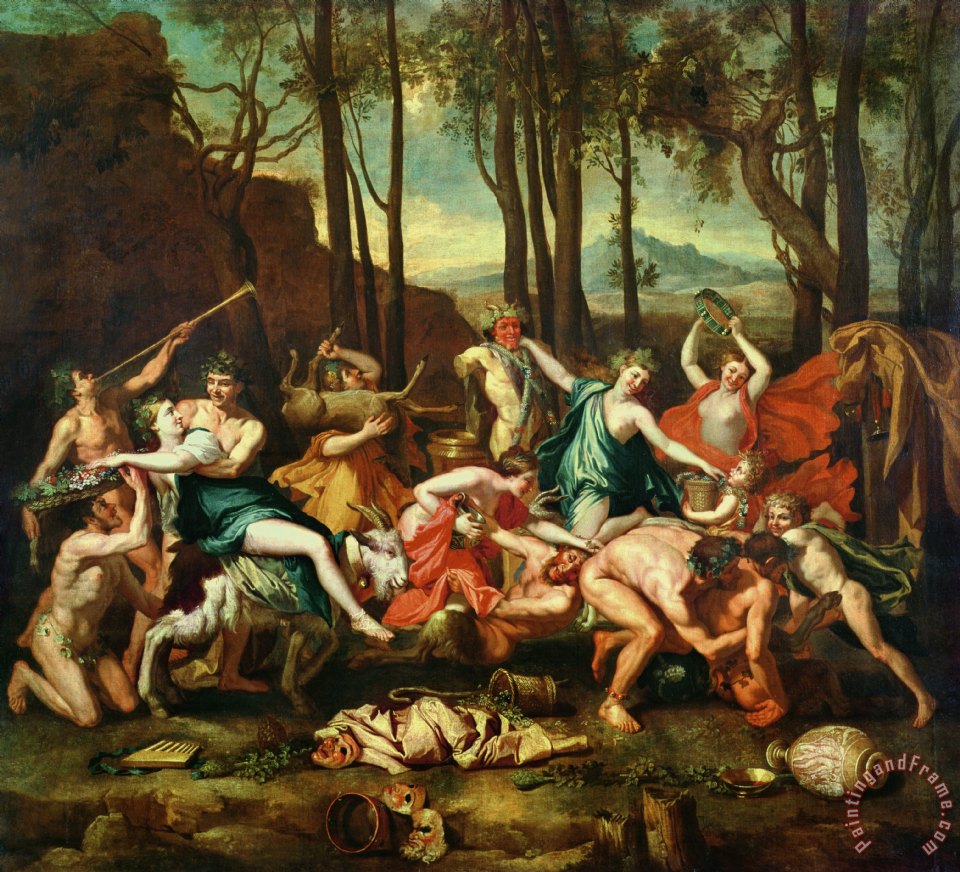
It was fun for me, because I'd been reading all about Poussin in Anthony Blunt: his lives (2001), that Poussin, and particularly his "The Triumph of Pan"
were among the arts works looked at. I loved understanding the snark the lecturer was making about Blunt -- if you knew that background, that Blunt, a commie spy exposed in 1979 by Thatcher, had made his art history career via Poussin, who was very poorly regarded until Blunt, with the help of better, German, experts, bootstrapped himself to social and professional success with his championship of Poussin. In fact, it was because Blunt was one of the Brits who managed to create the whole discipline of art history in England that I've been reading the book.
It was the varieties of intense knowledge and information that we hear described and witness going into restoration, cleaning, and so on, even putting up an exhibit, that were most fascinating. We also appreciated that the expert talking heads, particularly when they are witnessed talking with other experts from other subjects, such as musicology, for instance, how many ways art matters beyond "ART," to other creative and scholarly disciplines, such as history, archeology, fashion, religion, politics and even economics.
At one point, a lecturer to a school group of early teen kids, made a point of saying all this -- the National Gallery itself and the contents of its collections -- had been made possible by the founders' money made from the slave trade. It was a short, quick disquisition, that made the important checks that making money from the slave trade didn't mean only by going to Africa, taking captives, and selling them in the New World: it was insurance, shipbuilding, supplying, money invested from plantations in the New World in English manufacturies and so on. (Nobody did use the term capitalism though.)
The documentary also spends some time with all the many other activities that an art museum sponsors and nurtures. There are art classes taught in touch and spoken word for those with vision impairments. Art classes in drawing. Poets, speaking their work. Musicians playing among art works. Dancers, dancing in front of Titians, which were part of a series that supposedly are Titian's response to Ovid's Metamorphoses (which, like so many of that sort of performance left me scratching my head, wondering why that with that? what did it matter?) Yet, an art museum shouldn't be confined to what is hanging static in space, should it? So, why not?
The art with which we spend most of the film's running time is from the 16th and 17th centuries. So much so do we live in that, for us, now, timeless past of masterpieces, that, when close to the end, we see a small burst of late 19th century painting, they strike you with their full shock of the new and the modern. We've suddenly reentered our own world of the 21st century, which, far from being timeless, is imbued with the sense of time running out.
This is a video documentary: HBO is among the funders, as well as is participation of a large number of English and French television networks, and from the U.S., PBS and Sundance.
Video is the perfect means for working in an art museum, as the objects are already optimally lit for showing, so little or no lighting is needed for video shooting. Film, however, would demand lighting, and the lighting would burn out the objects. Art is concerned with light and angle and dimension and color as fundamental creative principles. Thus, The National Gallery is a gorgeous viewing experience, which is as it should be.
Tonight: George Clinton and P-Funk at B.B. King's.
The National Gallery was interesting enough that el V neither left nor complained, which never, or hardly, ever happens with him and movies. (We also found parts of it funny enough to laugh out loud, to the great bewilderment of the rest of the audience. But then, we laughed all the way through Henry Adams's histories of the Jefferson and Madison administrations too.) That he el V was able to sit through so is because it's a documentary about the operation of the National Gallery of Art (London), not a dramatic, narrative fiction film.
Clearly, however, the word had come down from somewhere or other, as could be deciphered via the business meetings the camera attends, that the mission operative words for the NG that year 2011 -2012 (the year of their blockbuster Leonard da Vinci show) was "narrative" and "storytelling." So the staff, tour guides and art historian lecturers constantly emphasized to the attendees, art students, tourists, school children etc., that art tells stories. Alas, the stories the staff told them the art told were awful! -- and sometimes just stupid.
There's a Velázquez ("Jesus With Mary and Martha") about which the lecturer complacently intones the forefront women are to be 'read' as Mary and Martha -- when it's clear that Mary is with Jesus in another room.
What likely is actually going on in the foreground, as one will know who was brought up female, which the lecturer certainly was not, to housekeeping, is the older woman chiding the younger kitchen maid that if she doesn't take care of the fish right now instead of pounding the garlic the fish are going to go bad. One can read this too, as the kitchen maid is also trying to listen to Jesus, but unlike Mary, the maid of a lower class, a worker in the household, is not allowed to listen. The lecturer ignored entirely that Velázquez tipica of the forefront scene opening via a mirror, a window, another painting, to an entirely other scene in the background with the other action with Mary listening to Jesus speak on the spiritual matters that he later tells Martha are "the best part" of leading one's life, rather than bustling about making dinner. (I've come to have sympathy for Martha over the years that I didn't have back when I was a young girl and obviously took Mary's part, because that's what I would have done ....) Gads, I love Velázquez's work!
One wonders ... how a few of the staff, particularly the woman who was their publicity and marketing person, felt when they saw themselves after the film was finished. That woman -- if there was a villain in The National Gallery, it was her -- she really thought it would be great for them to be an endorsing sponsor of some huge sports event, though she couldn't ever articulate in what way being part of the world that is all about sneakers commercials would help bring positive awareness to the Gallery. Nor did she ever shut up, or listen -- and repeated herself endlessly. Anything she said, she said nineteen times at least without taking breath.
One also got the impression that everyone who is a Gallery expert art historian staff member, who is British, had the same training somewhere, because they all used their arms and hands in their presentations as if they were attempting to fly, constantly touched themselves everywhere. It was a relief to hear a voice that was American or German -- or even, I think, Geordie, as they didn't have these distracting and irritating mannerisms that ended up dominating their presentations rather than the information ,or the painting they were talking about, dominating. In contrast, the experts such as the restorers and so on, when they spoke, and they were as articulate as the art historians, when they used their hands, they were doing something real, with tools.
It was fun for me, because I'd been reading all about Poussin in Anthony Blunt: his lives (2001), that Poussin, and particularly his "The Triumph of Pan"
were among the arts works looked at. I loved understanding the snark the lecturer was making about Blunt -- if you knew that background, that Blunt, a commie spy exposed in 1979 by Thatcher, had made his art history career via Poussin, who was very poorly regarded until Blunt, with the help of better, German, experts, bootstrapped himself to social and professional success with his championship of Poussin. In fact, it was because Blunt was one of the Brits who managed to create the whole discipline of art history in England that I've been reading the book.
It was the varieties of intense knowledge and information that we hear described and witness going into restoration, cleaning, and so on, even putting up an exhibit, that were most fascinating. We also appreciated that the expert talking heads, particularly when they are witnessed talking with other experts from other subjects, such as musicology, for instance, how many ways art matters beyond "ART," to other creative and scholarly disciplines, such as history, archeology, fashion, religion, politics and even economics.
At one point, a lecturer to a school group of early teen kids, made a point of saying all this -- the National Gallery itself and the contents of its collections -- had been made possible by the founders' money made from the slave trade. It was a short, quick disquisition, that made the important checks that making money from the slave trade didn't mean only by going to Africa, taking captives, and selling them in the New World: it was insurance, shipbuilding, supplying, money invested from plantations in the New World in English manufacturies and so on. (Nobody did use the term capitalism though.)
The documentary also spends some time with all the many other activities that an art museum sponsors and nurtures. There are art classes taught in touch and spoken word for those with vision impairments. Art classes in drawing. Poets, speaking their work. Musicians playing among art works. Dancers, dancing in front of Titians, which were part of a series that supposedly are Titian's response to Ovid's Metamorphoses (which, like so many of that sort of performance left me scratching my head, wondering why that with that? what did it matter?) Yet, an art museum shouldn't be confined to what is hanging static in space, should it? So, why not?
The art with which we spend most of the film's running time is from the 16th and 17th centuries. So much so do we live in that, for us, now, timeless past of masterpieces, that, when close to the end, we see a small burst of late 19th century painting, they strike you with their full shock of the new and the modern. We've suddenly reentered our own world of the 21st century, which, far from being timeless, is imbued with the sense of time running out.
This is a video documentary: HBO is among the funders, as well as is participation of a large number of English and French television networks, and from the U.S., PBS and Sundance.
Video is the perfect means for working in an art museum, as the objects are already optimally lit for showing, so little or no lighting is needed for video shooting. Film, however, would demand lighting, and the lighting would burn out the objects. Art is concerned with light and angle and dimension and color as fundamental creative principles. Thus, The National Gallery is a gorgeous viewing experience, which is as it should be.
Tonight: George Clinton and P-Funk at B.B. King's.
Wednesday, November 26, 2014
Thanksgiving - Lincoln
One thinks of Lincoln and the Civil War at Thanksgiving.
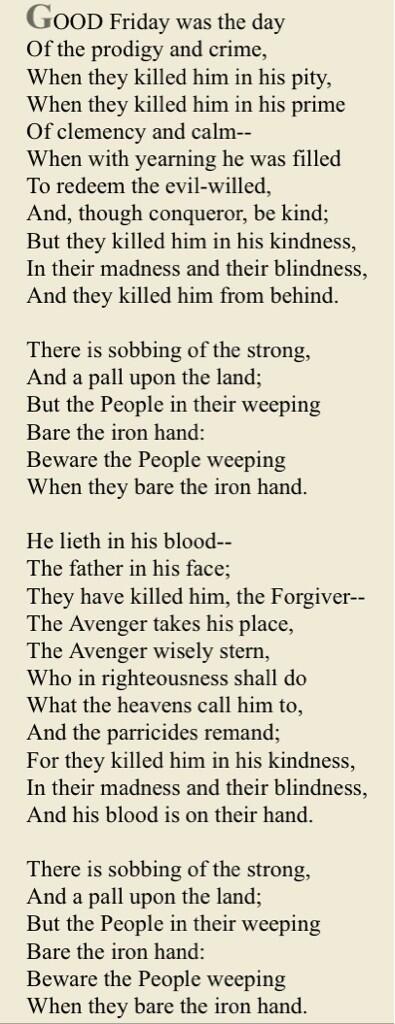
Until only a few days ago I was ignorant of this poem.
"The Martyr"
GOOD Friday was the day
Of the prodigy and crime,
When they killed him in his pity,
When they killed him in his prime
Of clemency and calm--
When with yearning he was filled
To redeem the evil-willed,
And, though conqueror, be kind;
But they killed him in his kindness,
In their madness and their blindness,
And they killed him from behind.
There is sobbing of the strong,
And a pall upon the land;
But the People in their weeping
Bare the iron hand:
Beware the People weeping
When they bare the iron hand.
He lieth in his blood--
The father in his face;
They have killed him, the Forgiver--
The Avenger takes his place,
The Avenger wisely stern,
Who in righteousness shall do
What the heavens call him to,
And the parricides remand;
For they killed him in his kindness,
In their madness and their blindness,
And his blood is on their hand.
There is sobbing of the strong,
And a pall upon the land;
But the People in their weeping
Bare the iron hand:
Beware the People weeping
When they bare the iron hand.
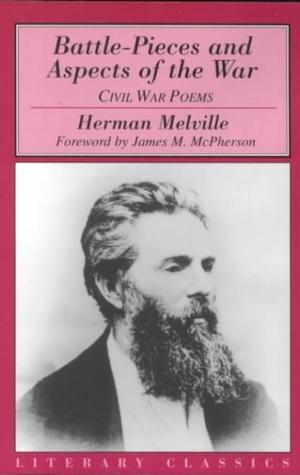
"The Martyr" was originally published in Battle-Pieces and Aspects of the War. Herman Melville. New York: Harper & Brothers, 1866.
The poet's grief and bewilderment still weep and bleed in these lines.
Why did this happen? Madness and hatred and evil the poet says. Poets can use those terms, historians cannot. Except when it comes to acts of violence such as presidential assassinations and school shootings -- then everyone from police to journalists to historians rush to say, "This is the act of a lone madman."
Yet before and during the war, as well as after, even historians such as Henry Adams characterized the secessionists as mad men, filled with evil, because the secessionists' hatred was so inexplicable to the rest of the country.
But if John Wilkes Booth was "merely" mad, then certainly were all the fire eating secessionists, including those plotting to burn down NYC, Chicago and other northern cities, and take them over then, with a coalition of northern Democrats and southern secessionists come down from their refuge in Canada back in the fall of 1864.
So, what drove all these people insane? It could only be centuries of living in a society that was made of slavery and white supremacy.
Until only a few days ago I was ignorant of this poem.
"The Martyr"
GOOD Friday was the day
Of the prodigy and crime,
When they killed him in his pity,
When they killed him in his prime
Of clemency and calm--
When with yearning he was filled
To redeem the evil-willed,
And, though conqueror, be kind;
But they killed him in his kindness,
In their madness and their blindness,
And they killed him from behind.
There is sobbing of the strong,
And a pall upon the land;
But the People in their weeping
Bare the iron hand:
Beware the People weeping
When they bare the iron hand.
He lieth in his blood--
The father in his face;
They have killed him, the Forgiver--
The Avenger takes his place,
The Avenger wisely stern,
Who in righteousness shall do
What the heavens call him to,
And the parricides remand;
For they killed him in his kindness,
In their madness and their blindness,
And his blood is on their hand.
There is sobbing of the strong,
And a pall upon the land;
But the People in their weeping
Bare the iron hand:
Beware the People weeping
When they bare the iron hand.
"The Martyr" was originally published in Battle-Pieces and Aspects of the War. Herman Melville. New York: Harper & Brothers, 1866.
The poet's grief and bewilderment still weep and bleed in these lines.
Why did this happen? Madness and hatred and evil the poet says. Poets can use those terms, historians cannot. Except when it comes to acts of violence such as presidential assassinations and school shootings -- then everyone from police to journalists to historians rush to say, "This is the act of a lone madman."
Yet before and during the war, as well as after, even historians such as Henry Adams characterized the secessionists as mad men, filled with evil, because the secessionists' hatred was so inexplicable to the rest of the country.
But if John Wilkes Booth was "merely" mad, then certainly were all the fire eating secessionists, including those plotting to burn down NYC, Chicago and other northern cities, and take them over then, with a coalition of northern Democrats and southern secessionists come down from their refuge in Canada back in the fall of 1864.
So, what drove all these people insane? It could only be centuries of living in a society that was made of slavery and white supremacy.
Labels:
American Literature,
holidays,
U.S. Civil War,
U.S. slavery
Subscribe to:
Posts (Atom)