LINES OF THE DAY

". . . But the past does not exist independently from the present. Indeed, the past is only past because there is a present, just as I can point to something over there only because I am here. But nothing is inherently over there or here. In that sense, the past has no content. The past -- or more accurately, pastness -- is a position. Thus, in no way can we identify the past as past." p. 15

". . . But we may want to keep in mind that deeds and words are not as distinguishable as often we presume. History does not belong only to its narrators, professional or amateur. While some of us debate what history is or was, others take it into their own hands." p. 153

Silencing the Past: Power and the Production of History (1995) by Michel-Rolph Trouillot

Showing posts with label the South. Show all posts

Tuesday, April 26, 2016

Columbus plus Slave Coast plus Cuba

Columbus, Georgia is interesting, past and present! I could easily spend lots of time here. It's a good place to live.

This city on the border of Alabama, where the last battle of the Civil War was fought -- after the surrender at Appomattox -- is a wealthy city and always has been.

The Chattahoochie River
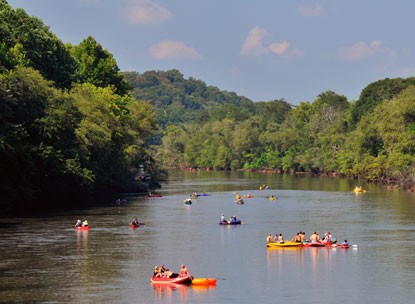
 The Chattahoochee River runs all the way down to the Gulf up from high up in the Georgia Blue Ridge Mountains. The river's fall line is here at Columbus.  Thus, with this outlet to the Gulf, the spot was a natural place to establish a market city for the receiving of goods, including slaves for sale, and for sending cotton to market.  The river made dams easy to construct for cotton and textile mills and other industry powered by steam.  As a fair economic anomaly in the antebellum states with manufacture and business, African Americans, slave and many free, were skilled artisans who worked in various industries, not in the cotton fields.  At the outset of the War of Southern Conquest Columbus was one of the few industrial centers in the confederacy. It's mills and factories provided uniforms for the army (never anywhere close to enough), boilers and other iron work for the ships, including the iron clads, and the Slidell ships that preyed on Union mercantile shipping.

Typical Chattahoochie River activity these days.
After the war the city's economy recovered very quickly, and now there's container ship loads of wealth washing about Columbus from Coca Cola (the family who sold it to the Atlanta owners still retain very lucrative interest in the business), Aflac auto insurance (this city is all about servicing automobiles) and the processing of credit card transactions.  However, many of these private very wealthy individuals eagerly and generously give money to the university and many other productive institutions and projects for Columbus -- which makes this a pleasant place to live.

The River Walk below the arts campus of Georgia State University in Columbus. The Dillingham Bridge (1910 - 19120 connects Columbus, Georgia and Phenix City, Alabama.  The engineer of the Bridge was African American.  The bridge's location is part of the site of the last Civil War battle.
Even the weather at the moment is more than pleasant: currently it is hot in the day and sunny, balmy at / after sunset. (In NYC it's miserable, chilly and raining. Gonna be like that there through the weekend. However, in another week or so, it's going to be brutally hot here, so there's that.)

The Slave Coast event today was held one campus -- there are at least two campuses, within walking distance of each other. Working here has to be great, and being a student as well. Due to the wealthy people mentioned above, and hte very many scholarships and programs they fund, there is a large diversity of students and programs.  They are very strong in both the technologies and the arts, both of which are very well-funded.

We were slotted into the main humanities Schwob Library. The presentation was was well attended, by people from the community, faculty and their students, heads of various areas of the library and the history dept. and some friends drove over from Atlanta to hear us.  The event concluded with interesting and smart questions, and a great deal of commentary about the capitalist system, which demanded the shredding historically of the black family, preventing any aggregation generationally of resources, wealth and influence, in contrast with the owners of the black families. The white family networks continued to inter-marry with each other in the southern and northern branches, getting richer, better connected and more powerful in every generation.  This means that whenever an individual family member had difficulties there was a large safety network to hold that person up (which allowed for southern families in these networks to re-establish their positions quickly after the War of Southern Aggression concluded).  Black families did not have this.

We would have participated ourselves more in the discussion if we'd gotten any sleep over the last three nights.

After being taken to lunch we were given a guided tour of the city's history past and present, and the university's history (founded in 1958), past and present.

Less positively, the Georgia governor is about to sign into law the right to open carry on Georgia campuses. Not in fraternities, gyms, housing or anywhere else except -- the libraries and research facilities and classrooms.

The state as a whole didn't want this, but the NRA swooped in with freight loads of money and sponsored 'their' guys in the legislature and got it. 19 states now, where the NRA has done this.

Tonight's going to be an early one thank goodness, as we excused ourselves early from dinner.  We've eaten all too well and too much over the last three days -- southern food and southern company is irresistible, but we had to leave.

We were planning to take a leisurely, winding route back home, but it turns out we have to get back home as soon as possible since Ned's going to Cuba again for 8 days, early on the 3rd, and things have come up over night re TASC, including a request to be interviewed for a new ESPN program featuring -- get this! us!? -- sports -- race and culture, debuting May 17th. The hostess of this new program wants to interview us about Slave Coast issues in connection with the reboot of Alex Haley's Roots, which premieres on the History Channel May 30. She wants to do this interview asap.

We're spending tomorrow night in Athens, as tomorrow we're being hosted for lunch by this fellow: scroll down to "Charles Peters" . . . and having dinner with an anthropologist at the university who has been doing a lot of work with the Georgia ring shout groups.

This means we can't be get home until later, on Friday night. Laundry and other preps for Cuba where Himself's running a conference on Cuban music and it's future and influence in the world at large must be raced through between Sat. - Mon.

Also, I have to watch the whole reboot of Roots by Monday.

Saturday, March 5, 2016

Pat Conroy Dies

In some ways his books were my introduction to South Carolina, starting when he began publishing them.  As with so many readers certainly, that


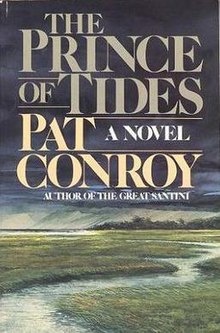
Prince of Tides (1986) contained the ambient charm of South Carolina -- for WHITE readers -- his work provided me with regional and thus exotic description of place and time, particularly that of coastal SC.


I read intently his book describing his experiences teaching on an isolated Sea Island school of all black kids. {c&p from Wiki}:
The Water Is Wide is a 1972 memoir [1] by Pat Conroy and is based on his work as a teacher on Daufuskie Island, South Carolina, which is called Yamacraw Island in the book. The book is sometimes identified as nonfiction[2] and other times identified as a novel.[3]

As this region of the U.S. is the cradle of secession and slavery is God's will by GAWD, it was particularly interesting he was very young then, and it was the Civil Rights and Vietnam era.  I didn't read The Water is Wide though, until I had all that history about SC and the slavery of the coast and the Sea Islands rice plantations. Anyone who possesses this historical information sees  Beaufort (site of what is known as "Secession House" the mansion built by Barnwell Rhett and his fire eating secessionist brothers; there's even an inscription they put on the basement walls that boasts, "in this house the first meeting of Secession was held")  and the Sea Islands with very different eyes than do snow birding tourists,

I'm looking forward to being down there again at the end of May.

Wednesday, June 3, 2015

Reading Wednesday: The Most Southern Place on Earth

The previous week contained very little reading due to being on the move almost all the time one wasn't asleep: research plus the travel time, meeting up with friends and concluding with the annual Caribbean Studies Association conference. Next year this unfortunately acronymed for USians -- CSA for many of us immediately means the Confederate States of America -- meets in Port-au-Prince, in a tourist hotel bubble surrounded by direst poverty.  You cannot go wondering about outside if you don't know your way around the local landscape, cultural, political and economic.

One wonders how this location will work out. There was a great deal of controversy this year, we learned, about holding the conference in New Orleans, as New Orleans is not part of Caribbean geography, as anyone who has looked at a map knows. This latter has been, of course, an argument we have been making for over 20 years now.  Though, as our plenary pointed out, "Caribbean" is a terrific brand.  As el V put it, 'Nobody was going to spend millions of dollars to create a movie franchise called Pirates of the Gulf of Mexico."  (Just like Cuba, Havana and New Orleans are all also excellent brands.)


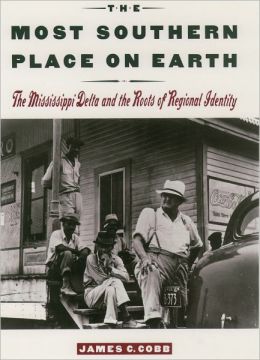
Being so occupied, the only book I read in, the reading limited to the flights to and from NO, and in Breaux Bridge for an hour before bed, when the internet got knocked out from a lightning strike, was The Most Southern Place on Earth: The Mississippi Delta and the Roots of Regional Identity (1992; Oxford University Press) by James C. Cobb. This is one of the seminal works that explains the contemporary south by viewing the economic and cultural history of this place, a rough triangle between the lower Mississippi River and the Yazoo River.

The green is the Mississippi Delta.


It is not the Mississippi River delta -- which tends to confuse those unfamiliar with deep south geography. the Mississippi River delta is way down further south. "Delta" here means this particular locale within the state of Mississippi. Or, as author/ historian David Cohn wrote in 1935:

Peabody Hotel 1886

"The Mississippi Delta begins in the lobby of the [Memphis] Peabody Hotel and ends on Catfish Row in Vicksburg. The Peabody is the Paris Ritz, the Cairo Shepherd's, the London Savoy of this section. If you stand near its fountain in the middle of the lobby... ultimately you will see everybody who is anybody in the Delta..."
This region is peculiar even within the milieu of the rest of the deep south, and even the state of Mississippi itself. This was a re-read; the first reading was before the March 2014 sojourn there. It was valuable for that sojourn to have read it before spending boots on the ground time there, but even more valuable to read again after having done so. All the markers that Cobb hits in The Most Southern Place on Earth are still present to be read, in the other deep south states, like Alabama and places in Mississippi, as Biloxi.


Africatown in Pritchard (where settled the descendants of the last slave ship, the Clotilda, from Africa to land on U.S. shores in 1860, brought as deliberate provocation to war, settled after the Civil War) outside of Mobile, remains as shocking in its tumbledown, malnourished poverty in May, 2015 as it was in May, 1910 or 1930 or 1940.

Katrina made all of it worse, as it's obvious no FEMA monies got trickled down to any of these Africatowns in the deep south, though of course the fracking so-called presidential library of Jefferson Davis got 10 million federal FEMA dollars and the mansion which a wealthy widow gave him, Beauvoir, received 4 million FEMA dollars for repairs after Katrina.  But the homes of the poor black citizens of Mississippi and Alabama -- nada.  You can see this, with your own eyes. They can't even hide it.  But nor do they care obviously, as the stars and bars flies over all the Welcome to Mississippi rest stops . . . .

Among the elements that Cobb works in so cogently within his main threads of white supremacy, labor economics and political dominance of the ruling Delta planter aristocracy is the development of the Blues -- why the development of the Blues, and their significance, in this particular region.  He provides maps that coordinate the birth places and earlier years of a legion of legendary Blues


musicians, which run up and down the Mississippi and cluster with the density of cotton bolls in the Delta. One chapter devoted particularly to the Blues is titled, "The Blues Is A Lowdown Shakin' Chill," one of the Blues classics particularly


attributed to the legendary Robert Johnson.  I had skipped ahead to that chapter on this re-read, in the hour before meeting up with friends and dinner, and then going out to hear contemporary Blues-man, Brother Tyrone at the Ooh Poo Pah Doo Bar, which  is named after the 1960 hit by the owner's father, the late R&B legend Jessie Hill.

The thickest number of blue markers of Blues musicians's birthplaces or place of early prominence is at the top, left. This is the  Mississippi Delta.  As Chicago, for obvious geographical reasons was a primary destination for Mississippi's black labor's outward migration, this explains why Chicago also is historically an important blues scene -- and later, for rock 'n roll.
All this history is chilling, but the hardest to deal with as an historian, perhaps, is chapter 12, "Somebody Done Nailed Us On the Cross". This is the chapter that describes how the power of the Delta capitalists was retained, regained and expanded into contemporary times, to remain entrenched in conscious white supremacy and denial of any economic opportunity -- and came via the federal tax dollars of the whole nation, poured into the Delta in order to provide aid and assistance for the Delta laborer to raise out of poverty -- stayed in the pockets of the planter class aristocracy. This is supremely depressing reading for all of us who wish to turn around the injustices of economic, political, social oppression, as can be understood from this, the last paragraph:
As was often the case with American assistance to other nations, in the Delta aid offered in the name of economic rehabilitation and human uplift was routed, in the interest of political expediency and stability, through those at the top of the region's socioeconomic structure.  As a result, the story of the interaction of agricultural, civil rights, and social welfare policy in the Mississippi Delta is especially instructive. Regardless of region, nation, or hemisphere, when economic reform proceeds under safeguards against redistribution of wealth or power, social and political rights will prove difficult to extend and dangerous to exercise.  Meanwhile, whether its story is told in the smudged ledgers of the landlord or the antiseptic memoranda of the bureaucrat, the phenomenon of economic and sociopolitical dependence is likely to remain as real and debilitating as ever.
The lesson is that neither assistance nor reform can happen from "inside" or from the top down via the ruling establishment.

Frequently Cobb draws understanding from the Delta's white supremacy wealth and power's support by the federal government, used by it to maintain black labor poverty and powerlessness, that this process isn't limited to one place in the United States, or to the klepto governments abroad.  This is a deliberate cooperation between one power and another power, united to keep the flow of wealth concentrated in a few hands while keeping oppressed and helpless the rest. The local power achieves wealth, and in return they provide the government the order of local stability.  (The Civil Rights era blew this out of the water for a while.)  More than once Cobb suggests -- back in 1992! -- that this process will spread out of the Delta to affect the rest of the United States in the near future, because that is how power and capitalism operate.

In other ways though, reading The Most Southern Place on Earth for the first or repeat experience, is exhilarating.  Cobb is a fine historian and an equally fine writer. The book is dense with information about the evolution of the planters' ruling class that adjusted to every change from Emancipation through Reconstruction, Jim Crow, FDR and the Civil Rights era to maintain its supremacy, while the laboring class, both poor white and black, always did worse. It's a brilliant study, particularly how the planters such as the Percys were able to divert any and all federal funds for "relief" during the New Deal to themselves, just as they did later with the Food Stamp program. But they were doing this even before Appomattox.

This is a book worth reading even if the south isn't a particular interest of the reader's, if the reader is at all interested in changing the way things are right now as fewer people own more and more of the wealth and the rest of us are left holding the bag.

One thing Marx wasn't able to foresee -- though Cobb was already getting glimmers of it -- that capital would reach a pinnacle of power in which it didn't need human labor at all.

I need to read this one next:


Then I'll be ready to backtrack to an earlier historian, C. Vann Woodward, and his Origins of the New South, 1877–1913 (1951), The Strange Career of Jim Crow (1955) and The Burden of Southern History (1955).  Woodward, a Bancroft Prize winner, one of the most influential of historians, who died in 1999, did not like the direction the younger, 'new' historians such as Cobb were going.  He tended to quite sneer at them in fact, particularly Cobb's breaking the ground in terms of southern economic-political history, by declaring the biggest change came in the New Deal era, not the Reconstruction and Jim Crow eras.

Which is why my method is to read the more contemporary historians in a subject before the older ones.  It makes it easier for me to glean what is still worth learning from the earlier studies, because I won't need to fulminate about -- o dear what you got wrong! If one denies oneself digging into earlier works there's a great deal worth knowing that one misses.

Thursday, May 28, 2015

Comin' In to New Orleans, the Twin Span and Radio

Did it again today, just as we did in August of 2004, moving to New Orleans for the Tulane 2004-2005 academic year: up and over the Twin Span, local music


blasting out of the radio, clouds, rain and sun all around us at the same time.  Ay-up, back again in one of the places we feel at home.


Historic District, Mobile


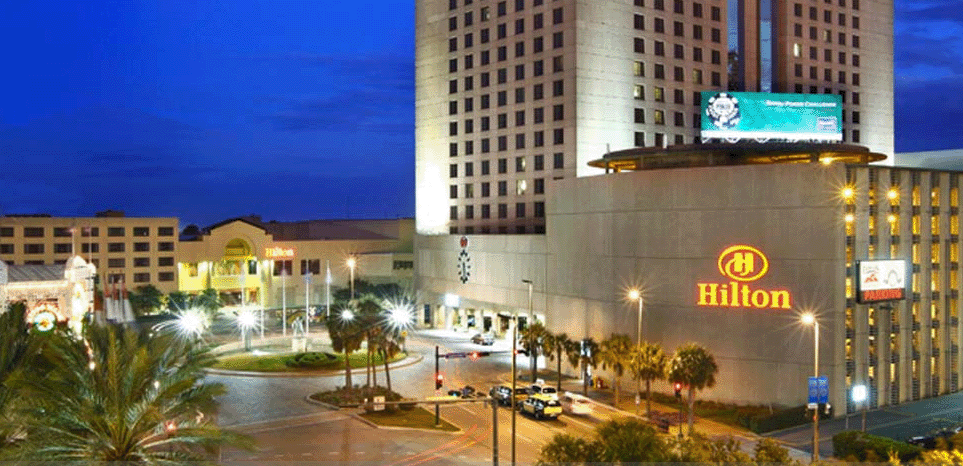
Spent the last few days, first in Acadiana, then over to Mobile, and now back to NO for the Caribbean conference that's been going on all week.  El V's doing the Plenary tomorrow AM around 9:40, so here we are, in a Hilton conference/convention hotel, on Poydras and Riverwalk.


On to a friend's for dinner soon, then to Ooh Poo Pah Doo for Brother Tyrone, soon after back here to rest up.


The theme this week has been thunder storms, hard rains, lightening, tornadoes everywhere, though not as badly further west, thank goodness.  Another theme


was bridges, looooong bridges, including the 26 mile long bridge crossing the Atchafalaya Basin - River (the place where the Mississippi down here really wants to be, instead of at New Orleans, and will get there, sooner rather than later, probably).  It poured rain, thundered and lightninged the whole time we crossed it the first time -- in the dark.  It did the same the second time we crossed it in the second so-called daytime.  Lights on because it was dark, and the water falling from the sky, blown by the wind, and the spray from trucks took out visibility.

Saturday, November 15, 2014

General W.T. Sherman - Front Page News Again

150 years after Sherman began his infamous-in-some -quarters, March to the Sea -- out of Atlanta to Savannah -- Atlanta has put up an historical marker commemorating his conquest of the city with additional facts about what his army did and did not burn.


A journalist from Atlanta reports on the reaction in Atlanta to the placing of this Historical Marker and the information it provides in the New York Times:  "150 Years Later, Wresting With the Revised View of Sherman's March."

 One of the marker’s sentences specifically targets some of the harsher imagery about him as “popular myth.”
“ ‘Gone with the Wind’ has certainly been a part of it,” W. Todd Groce, the president of the Georgia Historical Society, which sponsored the marker, said of regional perceptions of Sherman and the Union Army. “In general, we just have this image that comes from a movie.” [The burning in the novel and film of Gone With the Wind was the first burning of Atlanta, set by General Hood's and General McPherson's troops as they retreated from Atlanta.*]
While many of Atlanta's residents -- perhaps most, as Atlanta's population is 50.1 percent African American --  have no problems with this Marker, as one would most certainly expect, those, like the leadership of the Sons of the Confederate Veterans, O! so most certainly do!
The marker near the picnic tables at the Jimmy Carter Presidential Library and Museum is the fruit of a reassessment of Sherman and his tactics that has been decades in the making. Historians have increasingly written that Sherman’s plan for the systematic obliteration in late 1864 of the South’s war machine, including its transportation network and factories, was destructive but not gratuitously destructive. Instead, those experts contend, the strategy was an effective and legal application of the general’s authority and the hard-edged masterstroke necessary to break the Confederacy.
They have described plenty of family accounts of cruelty as nothing more than fables that unfairly mar Sherman’s reputation.
“What is really happening is that over time, the views that are out there are being challenged by historical research,” said John F. Marszalek, a Sherman biographer and the executive director of the Mississippi-based Ulysses S. Grant Association. “The facts are coming out.”
To that end, the marker in Atlanta mentions that more than 62,000 soldiers under Sherman’s command devastated “Atlanta’s industrial and business (but not residential) districts” and talks of how, “contrary to popular myth, Sherman’s troops primarily destroyed only property used for waging war — railroads, train depots, factories, cotton gins and warehouses.”
Sherman’s aggressiveness, the marker concludes, “demoralized Confederates, hastening the end of slavery and the reunification of the nation.”
The marker, placed in Atlanta at a time when more and more of its residents are not natives of the area, drew relatively little criticism ahead of its dedication on Wednesday morning, Dr. Groce said. But some say its text is an inaccurate portrayal of history that amounts to an academic pardon for a general some believe committed acts that would now be deemed war crimes.
That these were Sherman's objective and strategy were on his March to the sea are not news to anybody who has read any honest account of the campaign -- or, even read about his Meridian, Mississippi campaign.

In Georgia he did specifically target certain plantations such as Howell Cobb's -- he who was one of the fire eaters who structured secession, while holding federal office, was briefly VP of the CSA, and who had stolen the federal government's gold before leaving D.C., and his post as Secretary of Treasury under the slave power's stooge president, James Buchanan.  Cobb only lived after that long to see the defeat of his darling CSA, dying in 1868. His son got it up and productive again -- with African American labor -- within a year or two of the end, with the help of northern investment. That's how much these ilks actually suffered.


I am breathless at the speed with which Sherman accomplished his objective. He would make Julius Caesar, Henry II and Richard I proud.

His army started out 150 years ago today, November 15, and he presented President Lincoln with Savannah as a Christmas gift, the city having surrendered to him on December 21 -- however he arrived there on the 10th.  That's less than a month of marching -- what one can do without the cumbering supply line, living off plundering the land -- and most of all, having an ever-growing auxiliary of eager, enthusiastic free people, who know the land and have the skills to create roads through swamps in rain and snow.


Sherman's army did not burn Savannah.  However, unlike Savannah, but like Atlanta, in the final act of the Western Campaign, Columbia did not get off so easily when the Union arrived there in January. The capital of the heart and south of secession, South Carolina, as in Atlanta (and again, soon with Richmond) was set on fire by the retreating CSA forces under the command of the oft-removed by Davis, General Johnston.  As with the state as a whole, with Columbia, Sherman did not restrain his troops from their own revels of destruction amid the fires already set.

This is when South Carolina suffered for her secessionist sins, as earlier, did Mississippi.  Though, as with Mississippi, the balance sheet of destruction is more than evenly divided between the destruction caused by CSA loyalists and foragers and the Union forces.  At least the Union forces fed the starving women and children -- the CSA forces were the ones plundering everything they could from the families of the poor men fighting at the orders of the rich men who made the war.

Sherman would continue his successful military career, doing his best to remove the Native Americans from the way of the transcontinental railroads, by assisting with the slaughter of the great buffalo herds.

*  See more about this in this week's NY Times Disunion column, "Who Burned Atlanta?" by Phil Leigh.

Thursday, October 9, 2014

Not The Best of Days Or Night Either

Over the weekend a very close friend and colleague collapsed.  He was diagnosed with a non-infectious form of meningitis.  He's been in a medically induced coma ever since.  This has depressed el V as much as would be expected.

Yesterday, before going to the hospital to sit with R, I sliced open my left forefinger while washing el V's tea pot. A chunk had broken out of the rim, which I hadn't noticed until the blood rushed out.


Sat with R for a while. El V played him some music that he knows R likes and R waved his foot when el V addressed him, to say what he was going to play.  The doctors had expected r would have died by now. The meningitis infection had indeed spread into his brain.  He's a tough bird, all right.

After leaving the hospital I went to get my annual flu shot -- and unlike previous flu shot this one hurt and hurt worse as the night went on and hurts like heck this AM.  I Feel draggy and tired, and my throat is scratchy.  I've never had this kind of reaction to a flu shot before.

It's a kinda dark day.  Well, honestly no, it's not at all.  It just feels that way. Weather yesterday was very nice, and warm -- though windy, which may be the real culprit responsible for the sore throat. Today is nice too, but not as warm.

I'm doing the acknowledgements in preparation for really getting The American Slave Coast: A History of the Slave Breeding Industry out of the house. I should be happy -- particularly as writing thank yous is such a pleasurable part of of making a book. Instead, I feel, depressed.


Maybe it's due to having spent these last weeks studying the slave trade in American Indians, particularly that engaged in by colonial South Carolinians.  The numbers from the Mississippian culture tribes populating what would become the antebellum Cotton Kingdom are mind-boggling. That so many survived for Andrew Jackson, later, to wage a war of extermination against them for more decades, should put down for once and for the lie justifying the land thefts by the invaders settlers because "there was nobody there and those who were weren't making use of the land anyway".  The decades' long depopulation of these lands via slave trade mirrors in every way the methods used in Africa, just as Jefferson Davis's CSA government, right down to naming the president's house in Richmond, "the White House," mirrors that of the Union.  Of course, there were significant differences too -- slavery, no draft, no interstate cooperation, invasion of other lands for conquest to spread slavery, etc.


I've been listening to interviews and talks by David McPherson this last week, promoting his new biography, 
Embattled Rebel: Jefferson Davis as Commander in Chief (Penguin). These have reminded me of that mirroring I'd noticed between the two capitals of the U.S. War of Rebellion (to employ General Grant's nomenclature for it).  It was so extensive that both commanders in chiefs' families lost a dear child while in their White Houses.

McPherson approaches his subject non-polemically. So much so, the study comes across as detached from the matters at hand, which, so far, has left me, at least, wondering why he bothered?  McPherson hasn't had anything new to add to the tale of Jeff Davis, the never reconstructed, never asking pardon, representative par excellence for the Glorious Lost Cause -- which Jeff Davis did so much to create as a polemic that ruled our historic thinking about the war of southern rebellion until the last three decades or so.

Studying these matters within this current political climate of, at best, irresponsible rhetoric, incompetence and corruption is enough all by itself to depress a person.  It doesn't need a flu shot reaction or even the imminent, projected death of an old friend to provoke it.

Wednesday, October 1, 2014

Nashville Season 2

Ah! Completed my TASC task!

Re-watching season 2 of Nashville (season three opened a week ago tonight) on dvd, wearing tight-fittin' jeans and cowboy boots. Skinny jeans are still the thing, in July I got these terrific boots in Texas and netflix has season 2 on disc, so here I am. Add an oversize wine goblet with a splash of wine in it, and I'm good to go with this series that seamlessly does soap opera, within a fantasy country music milieu while somehow managing to get just right both how awful lot of what it is to be in the business, and how glorious too.


But then, country music as content, talent and business has always been a-boil with the real life staples that are the staples of soap opera: family, long-hidden secrets, racism, substance abuse, sexual abuse, infidelity, religious belief, pregnancies that shouldn't happen, homophobia, crime, hysterical adulation, sin and redemption, blind patriotism, guns, violence -- and some of the most beautiful voices, talented musicians and best writers the nation has ever had.

This is the Nashville that slowly evolved in the wake of the Outlaw movement in country / western music, with Willie, Waylon and the Boys back in the 1970's. Slowly, from rock and jazz, inclusion of more complex percussion and even horns got acceptable. The CSA flags started to stay home. The audience was smoking pot with enthusiasm This was the era in which the trad country audience opened up a bit -- BEFORE REAGAN and HIS MINION FROM HELL, LEE ATWATER, set it all backwards again.

As Nashville shows too, Country now can deliver Big Spectacle like the stadium giganormous pop music global stars such Beyoncé, and the grandmother of live performance lip synching, Madonna. In this contemporary post-niche climate, country, like everything else, markets acts as 'tween, teen, 'adult', romance, church, etc. Nor can one ever forget its audience is the most conservative right wing, wingnut, music audience in the world, and will lynch its heroes in a hot minute the minute the heroes step out of the lines drawn for them.

And its rapacious business devours its young and vulnerable -- men as well as women.


No Spoilers Here!

In season 2, the smart, tough but insecure and self-destructive Juliette Barnes, gets Dixie Chicked. Whether or not fans of the television series wish to admit it, what happened to that character is pitch perfect. Except, on television it was started by a jealous rival, not the government, as happened with the Dixie Chicks.

Scarlett O'Connor is another of those massively talented young women, so


insecure, and now, self-destructive because the work that is the making of what everyone can see will be / can be a glorious career doesn't allow for enough sleep, doesn't allow for hanging with friends or finding True Love.  Scarlett's "So Lonesome I Could Cry".


And Rayna, the Established Beloved Star, is beset by troubles from all fronts. However, she's talented, beautiful, sexy, smart, a loving mother, and charming as only an indulged, wealthy southern belle can be charming.


That Connie Britt has an opportunity in most episodes to demonstrate just how charming over that will of steel Rayna James is, is one of the great charms of Nashville -- even more that its never milked, sometimes it goes by in the subtle flutter of eyelashes in a moment.

However, true villain, Jeff Fordam, President of Edgehill Records, without soul or art, is invulnerable to Reyna, no matter how charming. So far, both Rayna's and Juliette's wily survival intelligence have allowed them to escape every undermining ambush Jeff's set for them.

Scarlett though -- she's not so wily, nor so tough. My heart bled for her in season 2. Was there ever a Scarlett less like her namesake, Scarlett O'Hara?

The men of Nashville:

Avery -- redemption.  Gunnar -- frustration.  Luke -- personification of masculine success.  Will -- a liar.  Deacon -- personification of how charming southern manhood can turn in a moment to dead-eyed violence.  Teddy -- a real creep.

The relationships among all these characters form and dissolve into one another like the patterns made in a kaleidoscope.  Like the songs on a Country album going from Saturday Night Honky Tonk Love to Sunday Morning Remorse, one right after another, each one feeling as authentic as the previous one.

The writing for Nashville is as strong as the music, which is very very strong.  The songs written for the series and performed on the episodes ar -- my opinion! -- superior to most of the songs by actual Nashville artists.  I liked season two very much while watching it.  But being able to see the episodes back-to-back, and without those awful commercials, allows for one to really see how skillfully everything has been done.  Even elements that viewers including myself didn't much care for while the season was running, make a lot more sense, and are a lot stronger without those long seasonal interruptions, not to mention the commercial interruptions and the week-long breaks.

Season three has begun, which is an excellent thing in this crisis-driven, fracked out old world.  Gonna listen to some Hank Williams now.

Wednesday, September 3, 2014

Reading Wednesday: The American Slave Coast + Memoirs of A Fox-Hunting Man, Tuchman, Faulkner & Willam Alexander Percy

This is the week of the final read-through, revisions, fact-checking, etc. of The American Slave Coast: A History of the Slave-Breeding Industry.  This is adding to the current seasonal dissonance created first by the hottest weather of the entire summer, because, while this week is the start of everything new for so many as classes resume here in NYC in every level from pre-K to university, we are finishing a multi-year project. Or, at least, finishing this aspect of the project -- we're working on a presentation of some of the material complete with musicians, singers and other readers ....

Yesterday was the first real scorcher of this year, with temps in the high 90's as well as very high humidity. The copy shop to which I took the thumb drive to print out, yet again, the first chapters of TASC, had a line out into the street of anxious NYU kids, purchasing the spiral bound class packets that their professors had put together and the copy center had xeroxed and assembled, to be paid for with NYU's own cash card, which each student presumably is issued (NYU has its own currency, i.e. on that card).

I was so glad to not be a student, teaching or, worst of all -- a freshman!

It was very hot and stuffy in that little Asian-owned copy shop, the only one left in the neighborhood, staffed by brilliant young Asian girls -- who, by now, must as sick of seeing me come in with that thumb drive to have these pages once again printed out, as I am about doing it. It will be interesting to see, when we add up all the expenses for doing this book, how much we've spent on copying the drafts over the years.  The first year, of course, we didn't spend any money ourselves, since we could copy at the Center in C'town.

This was in every way a very expensive book to write,* even if we don't add in the cost of the extensive travel research we did, including going to England. Still, though some of the travel costs were off-set by paying gigs, this was no small sum. There is also the payment for permission to use certain illustrations -- as well as having again to re-purchase Photo Shop (though now Photo Shop no longer sells the program at all -- it only rents) to process our own photos and to restore the very poor quality of period newspaper advertisements and other illustrations.

Just the cost of living while doing this book, which has increased every few months -- well, that's why it's taken so long. There wasn't much time to just work on the book. There was all the other work taken on to support ourselves in the meantime.


All the while, even now, we keep learning more history instrumental to the founding causes as to why the Southern United States, of all the New World economies that included slavery, was the only one to be a slave society, its economy based on womb enslaved into perpetuity. It wasn't an accident by any means.The intention and the perspective which allow such an inhumane blindness to humanity and civil rights was embedded in the founding fathers of the Southern states even before the first settlements of Virginia and Carolina were founded.

As back home in Britain, their thinking was formed so much by their handling of their Irish plantations, so they expanded this immediately to enslavement for profit (as opposed to labor per se) of the natives. The native tribes, of course, as the African peoples in Africa, were in perpetual rivalry and conflict with each other, so they were ready at all times to betray each other and sell each other to the Carolinians, who were assiduous and methodical in collecting slaves from the natives and selling to the Caribbean colonies.

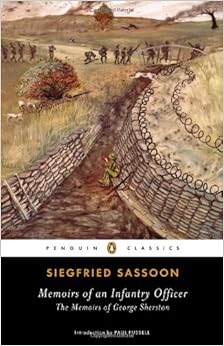
As always, reading of the brutality of our nation's founding centuries, it's quite a dissonance to switch the heart of British civility, as with Siegfried Sassoon's first volume of changed-names memoir of growing up into and out of World War I.  I began reading Memoirs of A Fox-Hunting Man, in the fall of 2011. I'd had the book on my shelves for years already. I was provoked finally into reading it by my experiences with the Eastern Shore fox hunting clubs.  However, the sheer uselessness of the narrator, Sassoon's fictionalized Sherston-self, as a callow, blind and selfish boy and youth (his own characterization of his younger self), and his entire class-ridden culture on the threshold of WWI, provoked


impatience, while the tiny font and skinny trim of my Faber and Faber paperback, and my worsening vision, provoked annoyance -- so, I put it down. Over the years I would read a chapter every few months, but never making any real progress with the work. However, re-reading / listening to audio versions of Barbara Tuckman's The Proud Tower and The Guns of August, made the last half of the Memoir so interesting -- or maybe he was old enough now? children and adolescents aren't generally very interesting reading for me -- I finished it over the weekend.

As well, I kept thinking of  Sassoon's Memoirs while this spring reading the history of Faulkner's and William Alexander Percy's Mississippi -- Mississippi with which I found myself so involved this year, historically, geographically, politically and culturally.  Both Americans, Faulker and Percy, both aristos in their worlds as much as Sassoon was in his, had very different wars than Sassoon -- yet, for all three of them, their wars were shaped by their being embedded in their world's ruling classes, where everyone knows everyone or at least their uncles and aunts, and make the path clear for these nephews, cousins, school friends' sons. So there are many parallels. While Faulkner never wrote a memoir of his war, he did return to it constantly in his fiction and his (fictionalized) presentations of himself.  Percy did as well, in his poetry, though not so much, and more so in his own memoir,


Lanterns on the Levee.

Picking up Memoirs of A Fox-Hunting Man last week, this time I found it fascinating and finished it in a few nights reading.  The war looms every more largely in the second half, until finally, slowly, o so slowly, the real thing comes, and finally, Sassoon is taken by war, months after he joins up. He loses the men whom he loves, who may well have been his lovers. Whether or not they were physical lovers doesn't matter to us. In any case, the various loves in their various way, were were profound and complete. Finally, the war devours him, ending, for him at least, forever, the very England of the golden days of following the hounds in comaraderie of class, prosperity and family.  The blinders of class and comfort through which Sherston had so happily seen nothing of the world but his own very narrow matters, have been shattered forever, with the shattering of his health and his youth.

The second volume in The Complete Memoirs of George Sherston is Memoirs of 


An Infantry Officer, the third, when he's in hospital and treatment for shell shock,


is titled Sherston's Progress.

---------------------

* During the course of the years (beginning in September, 2010) working to create The American Slave Coast, el V and I both used up two computers. We're finishing it, both us on computer 3 -- though yes, both of us initially, began with machines that were unstable in the way computers warn you that necessary replacement looms.

Saturday, June 28, 2014

Faulkner -- The South -Writing History in Fiction

Faulkner on writing in the South, a 1000 word introduction for a special 1933 edition of The Sound and the Fury, five years after its initial publication. From the first volume of Joseph Blotner's massive Faulkner: A Biography (Random House 1974, pp. 810-11).
"Art is no part of Southern life," he wrote.  He described how it was different in New York and Chicago.  The reason was simple: the latter two -- representing the East and the Middle West -- were young and vigorous, whereas the South was "old since dead ... killed by the Civil War."  The "new South" was not Southern at all but merely a land of immigrants trying to remake the South along Northern lines.  "Yet this art, which has no place in Southern life, is almost the sum total of the Southern artist.  It is his breath, blood, flesh, all."  He went on from there to the most conscious scrutiny of Southern writing he had ever attempted.
"Because it is himself the Southern is writing about, not about his environment; who has, figuratively speaking, taken the artist in him in one hand and his milieu in the other and thrust the one into the other like a clawing and spitting cat into a croker sack.  And he writers. We have never got and probably will never get, anywhere with music * or the plastic forms.  We need to talk, to tell, since oratory is our heritage.  We seem to try in the single furious breathing (or writing) span of the individual to draw a savage indictment of the contemporary scene or to escape from it into a make-believe region of swords and magnolias and mockingbirds which perhaps never existed anywhere.  Both of the courses are rooted in sentiment, perhaps the one who writes savagely and bitterly of hte incest in clayfloored cabins are [sic] the most sentimental. Anyway, each course is a matter of violent partizanship, in which the writer unconconsciously writes into every line and phrase his violent despairs and rages and frustrations or his violent prophesies [sic] of still more violent hopes.  That cold intellect which can write with calm and complete detachment and gusto of its contemporary scene is not among us; I do not believe there lives the Southern writer who can say without lying that writing is any fun to him.  Perhaps we do not want it to be."
Residents of Lafayette County, out of which Faulkner imagined his Yoknapatawpha County

Blotner, p. 831; February 1934; Faulkner letter to his publisher, Harrison (Hal) Smith:


" .... "I believe that I have a head start on the novel," he began.  "I have put both the Snopes and the Nun ** one aside.  The one I am writing now will be called DARK HOUSE *** or something of that nature.  It is the more or less violent breakup of a household or family from 1860 to about 1910.  It is not as heavy as it sounds.  The story is an anecdote which occurred during and right after the civil war; the climax is another anecdote which happened about 1910 **** and which explains the story. Roughly, the theme is a man who outraged the land, and the land then turned and destroyed the man's family.  Quentin Compson, of the Sound & Fury [sic}, tells it, or ties it together; he is the protagonist so that it is not complete apocrypha.  I use him because it is just before he is to commit suicide because of his sister, and I use his bitterness which he has projected on the south in the form of hatred of it and its people to get more out of the story itself than a historical novel would be.  To keep the hoop skirts and plug hats out, you might say." *****
In my mid-twenties I was fascinated by Faulkner's fiction.  I read and re-read all the great American novelists with profound wonder and care. The Novel!  it was my grande amor, to which I'd faithful to death and after! Slowly, fighting it every realization along the way, I gave into despair about these 20th century white male writers, because they depressed me with their unexamined presumptions about women. Faulkner, as much as Fitzgerald and Tennessee Williams is responsible for the crazy women who populate southern fiction. Then, to my terror, all fiction, with a few exceptions began to read increasingly repetitive, predictable, complacently stuck on adolescent matters, nay, even infantile obsessions.

Finally, in these days, slowly I’m creeping back into some of joy and admiration of fiction.  It seems to have begun with Fitzgerald, and then Faulkner.  Perhaps it's because I came to them more in terms of historical fiction (as with Faulkner) and in terms of history embedded in fiction (as with Fitzgerald).  As well, since my mid-twenties – the South has become the center of my scholarship. Mastery of a variety narrative approaches is as essential for a writer of history as it is for a writer of fiction.  It always pays to study the best.

Life takes you places you never expected, which perhaps is why we remain reluctant to leave it.

----------------------

* He evidently didn't think Jazz qualified as musical art, much less all the other forms of southern black music with which he was more than familiar, both in his home region and from the time he spent in speaks in Memphis and New York.  He'd spent a lot of time in his youth dancing to W.C. Handy playing live, with his band, in Oxford.  He attended a lot of dances, and by all accounts, if he wished to dance, he danced well.  He was a musical person.

**


The Nun refers to Requiem for a Nun (1950) the sequel to Sanctuary (1931). It was in Requiem for a Nun Faulkner wrote what may be the most famous line of American literature, maybe even the requiem for the fate of the nation, as we repeat endlessly our cycles of psychic bigotry and violence, as well as the economic cycles of boom and bust: “The past is never dead.  It’s not even past.” There are those who would argue that the most famous line in American Literature comes from Gone With the Wind, and will quarrel over which one that is, whether, "My dear I don't give a damn," or "I'll think about it tomorrow."

*** THE DARK HOUSE is what will become Absolom, Absolom! (1936).

**** 1910 is years after Faulkner was born (1897), which makes even more interesting he might think an historical novel is.  One aspect of Faulkner's genius in terms of narrative capacity as a novelist was how he could sail around in his history. Characters and events in single works, in his short fiction as well as his novels,  emerge out of a variety of temporal locations: before the Civil War, during the Civil War, and return to the present, i.e. the present in which he the author was putting these words on paper.  This is not easy to do, particularly not with narratives as multiply populated as Faulkner's are. He groped intensively for years as how to accomplish this. It was the tools of  modernist narrative, forms with which he grew up, in fertile collision with the local language and oral storytelling modes with which he also grew up, that made works such as The Sound and the Fury successful and enduring.

*****  It’s interesting to see contemporary Mississippi novelist, Greg Illes, working in the post-Faulknerian south now, attempting to bring to light the non-dead past of the Civil Rights era sins, crimes and evil. These are the matters of a trilogy Illes is writing. The first volume, Natchez Burning, was published this year. The Bone Tree and Unwritten Laws will follow. As Natchez Burning's  as protagonist, Penn Cage, is Mayor of Natchez, it seems likely the two sequels will also feature that center of true historical evil, Natchez. Judging by the material of the first installment this trilogy appears to follow the arc from the JFK assassination to that of Martin Luther King, or maybe Bobby Kennedy as well.  The perpetrators are a coalition of the New Orleans – Miami mob and bigoted corporate interests, employing generationaly violent criminals,  sharpshooting Mississippi lowlifes – “white trash”.  Freedom Summer in Mississippi is the sort of material Illes may be working with.

What for me, at this time, is most interesting about Faulkner the man as well as his fictional world, is that, unlike Natchez, Yoknapatawpha County is not part of the Delta, center of Mississippi aristocracy past and present. This mattered very much to Faulkner, a part of his sense that most southern fiction was phony, and his determination to show the real South, through hisknowledge of his own country and people.

Monday, August 12, 2013

Why Europe Would Not Ally With the CSA: Repudiation of Bond Investment Debt

What is impossible to understand is why the five states that flat out repudiated that debt to European investors, the heart of secession and the CS, seemed to have no memory of doing this.  So, until the very bitter end, they still expected that Europe would come in on their side against the Union.  Now European nations were not, and did not, recognize the CSA as a nation for many reasons, but this debt repudiation, which directly did great damage to many banks and families in England and Europe, had not been forgotten. This is what they could expect from a want to be nation like the secessionist states. Yet,  DeBow even, with all his spewing of numbers and facts and stats never ever mentioned this huge Southern scandal of the 1840's, to which Mississippi was central.


There are many articles and books on the Mississippi Repudiation of the 1840's, but for some reason not many Civil War historians bring it up.

The primary reason Mississippi refused to repay her debt was that it would mean a tax; at the time Mississippi was the wealthiest state, but most of the white population were slave owning planters -- an enormous part of the population was made up of slaves, who did not own anything.  Mississippi was not going to tax her own.  Let the feds -- i.e. other tax payers -- pay for her debt or the hell with it.

An entertaining account is here.
In 1840, the state of Mississippi defaulted on interest payments on $2 million of Planters Bank bonds and $5 million of Mississippi Union Bank bonds. About the same time, seven other states and one territory (later granted statehood) defaulted on their debts, as did the Republic of Texas (later annexed as a state).
Most states later reconciled with their creditors; for example, they resumed interest payments and funded interest arrears. Not Mississippi.
Mississippi proceeded to repudiate both issues of bonds, and, further, to undermine the private debts owed to its state-chartered banks.
Back then, nations that defaulted on their international debts put themselves at the risk of invasion. In the sovereign debt-repayment literature, such invasions, and threats to invade, are called gunboat diplomacy.
In an 1843 debate between a probond Mississippi Democrat and an antibond Democrat, the antibond Democrat spoke of British cruisers off the state's shore. At this point, a member of the audience spoke:
Sir, in that event I join my countryman who opposes the payment of the bonds. My sword … sir, the last drop of my blood, shall be spent in resisting the demand. My state, sir, may she be always right, but, right or wrong, the state, sacred, intangible and profane, forever.
In the United States, states are sovereign. They are the final authority when it comes to their debts. So, states seemed immune to invasion for nonpayment, since the US Constitution requires the federal government to defend the states. But, again, in 1843, a Whig and former president, John Quincy Adams, offered a resolution in the US Congress that would deny Mississippi the protection of the federal government if the state was invaded by its creditors.
In the event of such a war, the State involving herself therein will cease thereby to be a State of this Union, and will have no right to aid in her defense from the United States, or any one of them.
A hundred years later some of the European creditors were attempting to collect what was owned them.

Thursday, June 13, 2013

Is It Always Culture vs. Progress?


Campanella votes that it is all good, because we're still moving.  He concludes:

As for our "Big Issue," I suggest that progress does not destroy culture; on the contrary, it breathes new life into it. Culture is ever-experimenting, evolving, discarding, borrowing and inventing. It's in a state that a physicist might call "dynamic" rather than "static equilibrium." Static equilibrium is what keeps a chair upright. Dynamic equilibrium is what keeps a moving bicycle upright. A moving bike stands up because it's making progress, not despite it; it only falls down when it stops. So too, I believe, culture.
 We have two centuries of evidence demonstrating that the progress and conflict currently dominating headlines not only do not threaten the culture of New Orleans, but rather promise to enrich it.
Richard Campanella, a geographer with the Tulane School of Architecture, is the author of "Bienville's Dilemma, Geographies of New Orleans," and other books, as well as an upcoming (2014) cultural history of Bourbon Street. He may be reached at rcampane@tulane.edu or richcampanella.com.