LINES OF THE DAY

". . . But the past does not exist independently from the present. Indeed, the past is only past because there is a present, just as I can point to something over there only because I am here. But nothing is inherently over there or here. In that sense, the past has no content. The past -- or more accurately, pastness -- is a position. Thus, in no way can we identify the past as past." p. 15

". . . But we may want to keep in mind that deeds and words are not as distinguishable as often we presume. History does not belong only to its narrators, professional or amateur. While some of us debate what history is or was, others take it into their own hands." p. 153

Silencing the Past: Power and the Production of History (1995) by Michel-Rolph Trouillot

Showing posts with label war. Show all posts

Wednesday, April 19, 2023

Chevalier - Not Recommended

     . . . Chevalier was a great disappointment for many reasons.  Its fast and loose playing with the known facts of Joseph Bologne, Chevalier de Saint-Georges's biography, and of history even -- Marie Antoinette did not give him his title, that was Louis XV -- are only the beginning.

It's such a shame that this man, who I first learned of via reading letters of (later to be President) John Adams, who was so accomplished, who did so very many important things, just starting with music composition and musicianship, was reduced to an affair with an aristo.

 He is the most accomplished Man in Europe in Riding, Shooting, Fencing, Dancing, Music. He will hit a button on the Coat or Waistcoat of the Masters. He will hit a Crown Piece in the Air with a Pistol Ball.

 Recall, that among his many achievements, he successfully led an all-black regiment in the French army -- until, Napoleon erased all Black people of achievement from their positions and out of history, particularly those of military achievement, not least, Alexandre Dumas's father. 

La légion de Saint-George


This film is the equivalent of making a film of the life of Frederick Douglass, and reducing everything he did and created to the single matter that he married a white woman.

Additionally, thereby, the filmmakers chose to navigate precariously closely those waters on which sail a mainstay of porn, the enslaved black stud and the white lady.

I am not the only person to feel this way.  For a single example our (Black, Haitian) friend who is a symphony orchestra director, composer and conductor, who has been conducting performances of the Chevalier's music in many cities, just HATES this film.  He, like el V, is particularly outraged by the cutting game between the Chevalier and Mozart that opens the film -- this is something Blues musicians only began, here, in the USA.  As per usual, movies, particularly made by Americans, cannot imagine a Black experience that isn't African American.  Moreover, it seems that the two composer/musicians were friends, not rivals, with Mozart even living in the Chevalier's house for a short time. But then, movies/tv very, very, VERY seldom know who and what musicians -- or artists generally -- are -- musicians particularly.  Really, as Joseph and Amadeus were about the same age, it is far more likely they joyed to make music together than tried to cut each other down.  Musicians really like to do that, you know?

The positive for the film is several really fine female actors with juicy roles, even though the characters' depictions are either utterly fantasy or historically wrong for the time -- or non-existent. The exception to this might be the Chevalier's mother. 

However, if only inadvertently, the above does point to the essential truth of  success in which Napoleon was tutored by those who survived both the Revolution and the Terror, into the Directorate, that in France, "Women are politics."  Alas one of the ways this point is made is the filmmakers claim that Marie Antoinette was the reason there was a French Revolution.

Sunday, February 26, 2023

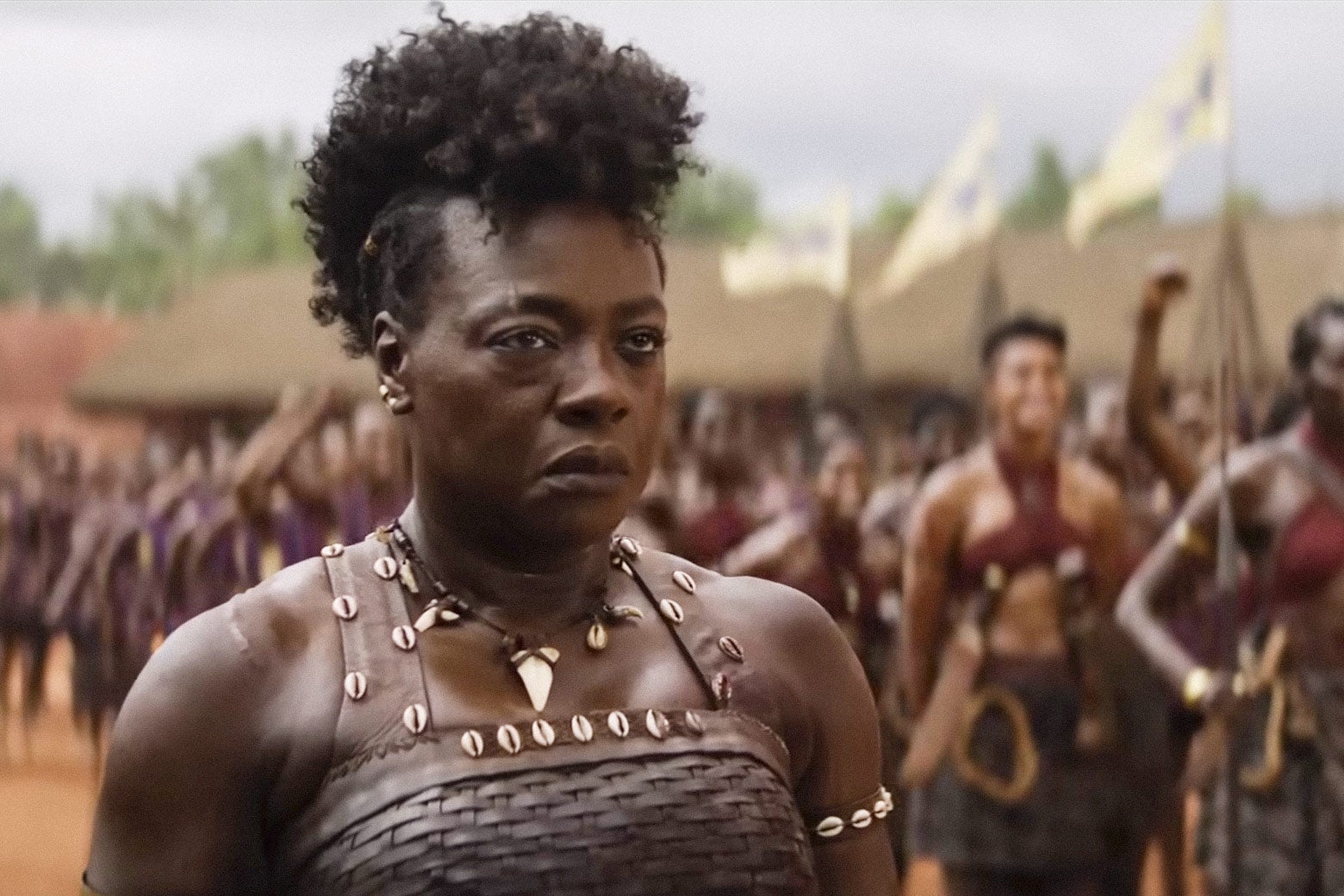
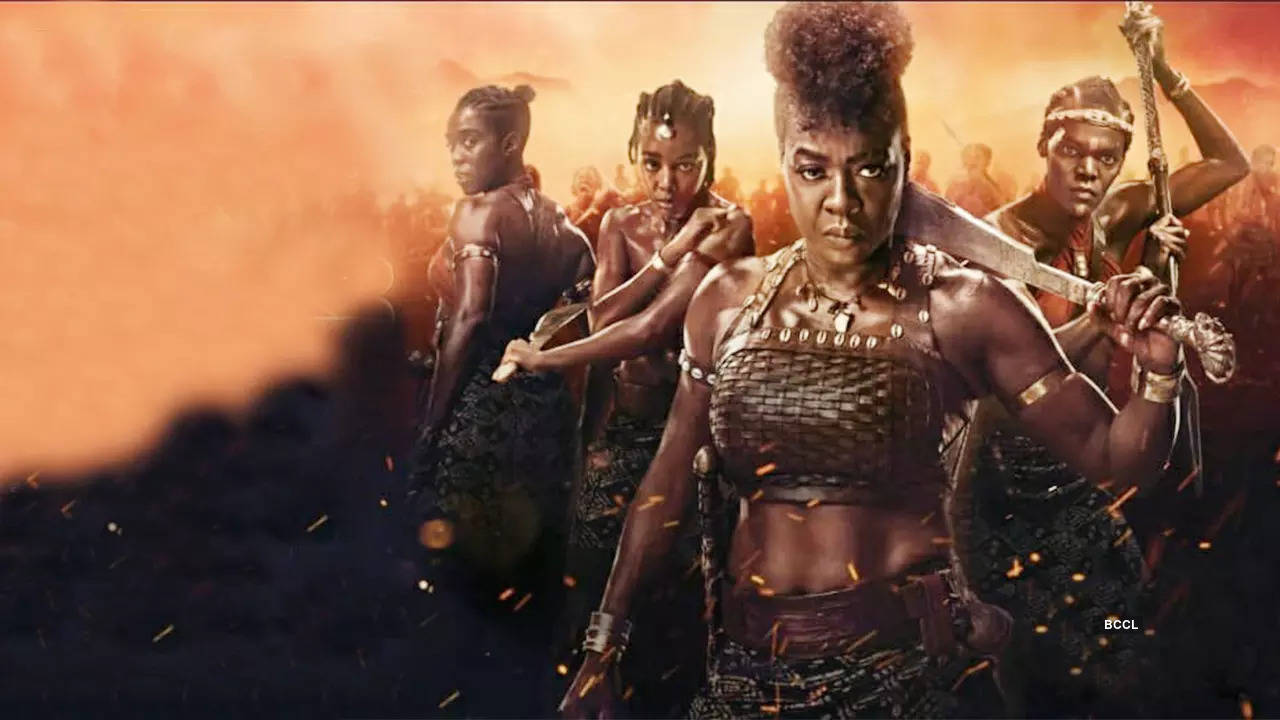
The Woman King

     . . . .  The Woman King (2022) on Netflix. 


The film has been shut out from all the awards and their categories – too womanly. All the criticisms that declared it ignored or distorted Dahomey’s slaving of Africa must be from those who don’t know this history. just heard something somethingv from somebody somewhere. This slave or be slaved history is central to the narrative. That criticism seems to be pushing the relentless attitude that Africans remain ahistorical until white historians inform them of their own history.

The people of Dahomey/Ouida and Oyo knew why this condition was in place, and how it happened, and who was benefiting as well as how much Africans of every group were exploited and plundered as entire peoples. Those who benefited were the  Europeans and USians, as well as the Islamized tribes working in concert, such as the Fulani and the jihad of the time against the Oyo Empire, which too, was all about the riches from supplying the European slavers. 


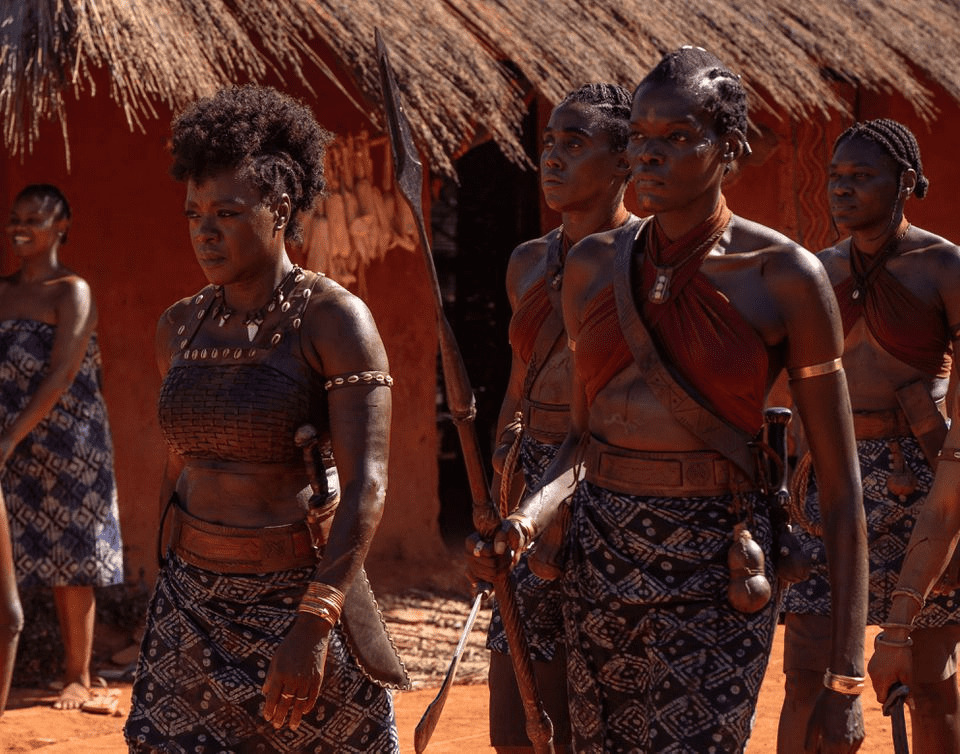
The Agojie commander, Nanisca, played by Viola Davis, is brilliant, as advisor, general and warrior who is at the prime of her strength, but whose body is scarred and has aches and pains from so many wounds, whose heart and mind carries just as many scars and pains. As right hand to the king Nanisca is expected to have wisdom as well as battle skills. And she does; Nanisca sees the future, not only of her own Dahomey, but all of Africa, being slaved and enslaved by the Europeans.  She has this vision, but how to change matters so they – and other kingdoms – stop slaving themselves and each other, and instead create wealth and prosperity through other means. Ah, that is very difficult, not only to do, but to even envision, much less convince others to do, such as the 'nobles' and queens of the Dohomean king's palace.  Slaving is embedded throughout the continent as economy, offense and defense, and status.

The milieu of this woman army is a fascinating, welcome contrast with both Wonder Woman’s Greek vase and statuary fantasy landscape, superhero comic girlhood training, and with the super hero Afro Futurism of Wakamba. Those superhero comix adaptations are slick, smooth, cheesy and tacky when viewed in company with what we see here, as the film reaches to recreate the dust, mud and natural world of historic reality, including how women are physically, who have been trained from youth to be "Agojie",  warriors who command armies, who fight, kill and are killed – or are captured. Taking a famed Agoji ewarrior is a coup indeed.


As an army of warriors these women claim physical space in a way one never sees women who are to be good, traditional women do.  They claim physical space in the same matter-of-fact, unconscious way that men do. They walk differently, sit differently, move and are still, differently from traditional women. These women are like men, while – and this is what is so brilliant in the acting, one would never mistake them for men, ever.  They are fully womanly, women like all women, but who have all the masculine space and entitlement – except to have partners and children. 

Dahomey's indigenous religion is depicted in a most matter of fact manner.  This is what we know in the US as Vodun, as it was imported via slavery to San Domingue/Haiti, Bahia in Brasil, and to the US, via French slave owners who refugeed to Cuba. and, when Spain and France went to war, to New Orleans.  The altars where our figures meditate and meet on occasion are as much natural parts of their world, as the lands outside the walled city and palace. 

What follows is me interpolating, because I've not encountered this in any of the books I've read. However, presumably, such effective warriors and commanders must be prevented from having their own children because – in the end – even these women must be ultimately subservient to male power – the king.  A successful, brilliant commander, to whom the army is devoted and loyal, a woman with her own children might well be interested in taking the throne herself, or for her children, instead of merely serving a king's wishes and status.*  Indeed, the film includes the oral tradition that at least once Dahomey was ruled by a Woman King commander of an army of women warriors.

There was not, cannot be a happy ending for the slaving Kingdom of Dahomey, despite winning all the battles ... but happiness is allowed. Around the 2/3 point, the story line includes that of a mother and daughter finding each other, in this time when vision tells them both, the world will not get better. Yet, Viola Davis is recognized by the King again, as his chief advisor, no matter what his wives and courtiers want.  She may end her life free and honored, but we can almost sure thing bet her daughter's life is going to be even more difficult than hers, as the French become determined to take out the Dahomey kingdom, and are horrified by the women who go to war.

This film mesmerized me from start to finish, which I can’t say about hardly any film, television series or novel these day

*  There are many instances in history across the world where a ruler's successful military leader has taken power for himself and his family, so one will speculate!

Monday, August 16, 2021

Vacation, Friends, Delta, Postmambo, NOLA Reconnect, Books, TV, But In The Beginning We EAT!

      . . . . It's been a long time, so much going on, but in the end, IT'S ALL ABOUT AUGUST, which is all about -- 


CORN ON THE COB & HERITAGE TOMATOES!  Am I right or am I right? Reveling and gorging, with the best pots of beans, salads and sausages.  What a month this has been for eating, which has all been done at home, or even the first week, spent  at our Saratoga's friend's house. Delta made sure of that. We were not then and are not not now though, in the least deprived staying away all together from restaurants again.  So much delight in getting our produce and other foods at the Green Markets (and O! the green markets up Saratoga way!), and then, cooking together, as B and S and I did each day, with much lubrication provided by Host S's wine cellar, B's brought-alongs, local beers from the Saratoga Minogue's Beverage Center, and any and all music anyone could possible desire or have a yen to hear.


     Every second of Saratoga was more than splendid, even while asleep. The nights dropped into the 50's.  We slept with windows open.  The air was fresh and good smelling, any time day or night. The weather was just what one wanted for an August NYC getaway.  Then we came home, to roaring surges of Delta, and fearing yet again They will steal Thanksgiving and the rest of the holidays from us.


Back in the City though, and back in our grooves. Every time we think, "Well, maybe we don't need any more Postmambo Movie Nights, or any more NOLA Reconnect events, because people will be going out now -- well, no.  Our Host S provided such a moving tribute to how important these Postmambo activities and events have been for him in the pandemic.  Postmambo and his dog -- his gf lives in another town, and has a full-time job, so he's alone mostly.  Imagine, being up there, snowed in, blizzards howling round these past two winters.  "Some very dark days," he said, and said nothing else.  It was kind of emotional for me to be watching Summer of Soul from Harlem, 1969 (film July 2021), and Leningrad Cowboys (1993, Helsinki) films in company with him, el V and Ben, people who have attended to many music events together over the years, and now doing it only by screen again, thanx to jerkwaddies who won't wear masks or get vaccinated, and watching in the same place Steve is when doing NOLA Reconnect and Postmambo.

~ ~ ~ ~ ~

READING

Non-fiction

El V and I continue bedtime read-aloud of Chris Wickham's The Inheritance of Rome: Illuminating the Dark Ages 400 – 1000 (2009); I continue for myself with Judith Herrin's Ravenna: Capital of Empire, Crucible of Europe (2021), 


both of which go so well with the content in the review of The Selected Letters of Cassiodorus: A Sixth-Century Sourcebook (2020) translated and edited by M. Shane Bjornlie, in the latest London Review of Books.  Cassiodorus -- bridge between Late Antiquity Rome and the following eras of murdrous kinglets, want-to-be emperors, etc.  Also the surviving literature, with emphasis on 'surviving', as it seems the 5th century is where everything changes and transmutes, assisted later by whatever literary focus Charlegmagne's scriptors possessed, thus what was lost. Reading this is far more interesting to me probably, than reading the book itself, as I'm not a Latin scholar.

Fiction

The Germans of antebellum New Orleans, how much have we thought about them?  Of course Germans arrived in New Orleans in the 1830's and 1840's as they did in so many cities here, such as St. Louis, progressive labor and political activists, bringing the information, messages and means of Revolution -- and then fleeing from the failure to overset the crowns and oppressions of Old Europe's old Empires and Kingdoms.  They also brought their arts and culture, as we see here in this astonishing work, The Mysteries of New Orleans by Baron Ludwig von Reizenstein, translated and edited by Steven Rowan (2002).  It was originally serially published in 1854 and 1855, and then unavailable until 'rediscovered' in 1990. Why did it disappear? From the opening paragraph of the "Preface and Acknowledgments":
This edition began as a whim and ended as an obsession.  The memory of Reizenstein and his notorious book was preserved primarily by J. Hanno Delier. [ftn.1] It has long been known that Ludwig von Reizenstein wrote a book about New Orleans which offended the taste of its time and was quickly withdrawn from circulation; more could not be said. It is safe to assume that the book, Die Geheimnisse von New Orleans, remained unread for more than a century until 1990, when I managed to reconstruct almost of it from the microform files of the Louisiana Staats-Zeitung . . . .
We learned of this work via last week's NOLA Reconnect session which focused on the Spanish language newspapers of New Orleans.  However, as the featured scholar of the non-English newspapers of New Orleans's history further informed us, there were others, not just French, which we expect, of course, and Spanish, which still too few people think about, as for some reason the deep Spanish history and roots of New Orleans remains overlooked by American History (particularly by those who have positioned themselves as gatekeepers as what the narrative of US history is supposed to be).  German and Italian were among those publications in other languages.


As this cover art for the 2002 translation informs us, among the culture and traditions the Germans gifted to Victorian USA, is the gothic manner and sensibility.  Not only did that map finely upon New England's (think, Hawthorne), but so obviously, once one's attention is caught, with that of the most 'gothic' city of the nation, New Orleans. Late nineteenth Century New Orleans author, Lafcadio Hearn, with a tessara of backgrounds, wasn't New Orleans's sui generis. 

Three times a week, I am most satisfactorily re-immersed in the first novel of Sharon Kay Penman I had ever read, When Christ and His Saint Slept (1994).  am not re-reading the novel though, I am listening to it.  Be assured, this is a wonderful book to accompany 2 1/2 hour workouts!


This is a lively novel, deeply researched, which makes understandable to a non-scholar how and why the nineteen-year bloody tragedy, known as the Anarchy, descended upon 12th C England and her people after the death of King Henry I. Since I first read When Christ and His Saints Slept, I have learned a very great deal about everything even remotely connected with these years, and not only in England. I confess this has allowed for an even greater pleasure in the narrative, and admiration for Penman.

As is Penman's manner, the women are half of the principal characters, starting with Empress Maud, also named Matilda, daughter of King Henry I, to whom he bequeathed his crown, and Matilda, the queen of the usurping successor, Stephen, Henry’s nephew, and Maud's cousin. In many ways, as Penman shows the succession of back-and-forth battles, the successes and failures on both sides, this is as much a women’s war as it is that of their lords.  As women, they have to fight on multiple fronts, not only battlefields.

The set pieces of terrible violence make the suffering of the average Englander clear, as, per usual, lords and their ladies are spared the worst, except on the battlefield, and even then they can often be ransomed instead of just killed. That this civil war indecisively juttered on for nineteen years, despite so many furious, grim and grisly military encounters, leads the reader to consider, perhaps, most of the protagonists lacked any talent for strategy or for building coalition.  All of the men appear to be more than competent warriors, but as war commanders and statesmen, maybe not?  This includes Empress Maud-Matilda too. We see at each turn that failures emerge out of character defects of all the protagonists. Medieval nobles and royals were the not trustworthy or faithful to anyone, much less their inferiors, despite chivalric pretense, which was viewed as weakness if / when a figure practiced such behavior outside romances.

The blood of William the Bastard runs fast and thick in the veins of all the protagonists, that wild, fierce, cruel, violent and stubborn heritage, that cannot brook any thwarting of their will from any quarter, that will never compromise or negotiate. With Henry II’s coronation, Henry I’s grandson, and an Angevin – Plantagenet as well, this was the blood that would rule England and remained convinced for centuries their divine right to rule France as well. The more I read along in this novel, the more I see the same kinds of arrogant treachery and punishment, such as a willingness to use starvation and destruction as weapons upon one’s own people England that the Normans wreaked upon the English in the years and decades after Hastings – the plundering, and the theft too. The English did the same in France in the 14th Century during the Hundred Years War. Plantagenets Edward III and his son, the Black Prince, are historically (in?)famous for what came to be called chevauchée, but that sort of warfare was not by any means a new addition to tactics and armaments. It took until the 15th century before that Plantagenet blood was replaced in England’s royalty – though the desire to rule France as well continued through the 16th Century, with or without blood heritage of the Bastard and the Angevins.

One inevitably considers: if in 1066, Harold and his army hadn’t been so exhausted at Hastings, having just fought and won a previous hard pressed bloody battle against the Danes hundreds of miles away, from which they force marched immediately back south to take on the Bastard, mayhap England might have remained firmly within the North Sea and Scandinavian sphere of influence, and not have gotten pulled into those of France and Europe. How much blood and treasure England would have been spared, perhaps, if that hadn't happened. Yes, that would be a big alternate history, That Penman did not write alternate history, but did her best to bring us in a readable narrative what we think we know, I am deeply grateful.


Thursday, October 12, 2017

Reading Women Wealth and Art -- and Reading Women, Poverty and Catastrophe

     . . . . I have finished reading Donna M. Lucey's (2017) Sargent's Women: Four Lives Behind the Canvas.  


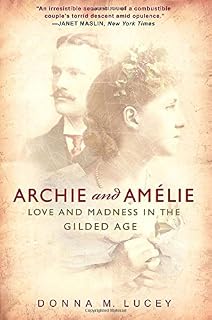
One of the four figures profiled in Sargent's Women is Elizabeth Winthrop Chanler. Elizabeth was one of the siblings in the tragic Chanler family, among whose possessions is the New York fiefdom of Rokeby, as the Chanlers were among the heirs to the unfathomably vast Astor family fortune. As Archie Chanler was Elizabeth older brother, she also figures largely in a biography I read last month, Lucey's Archie and Amélie: Love and Madness in the Gilded Age (2005). 


     . . . .Amélie Rives (Chanler) of Virginia, a member of the southern aristocracy born in the decade after the abolition of slavery, was a manic pixie dream girl before Zelda Fitzgerald's time. One of the great propagandists for the revised history of the War of the Rebellion, she found her métier to fame, and  thus, ultimately fortune in marriage to an Astor heir, by writing scandalous-for-the-time sexual fiction.  Good grief, on one page the author describes a man breathlessly kissing his inamorata's knee! 


Worse! the inamorata likes it! Adding to her ever lengthening tail of scandal Amélie painted herself.


She reproduced her self-portrait as a post card which she sowed broadcast across the lands!


Sargant never painted Amélie, though he did paint, as mentioned initially, Amélie's sworn enemy, her husband's sister Elizabeth.


     . . . .The first of Sargent's four women Lucey presents to us is Elsie Palmer, the oldest daughter of US railroad magnate, General (one the side of the Union) William Jackson Palmer.  Elsie ultimately married L.H. Meyers, author of the 1930's trilogy, The Root and the Flower, a philosophical-mystical-historical-fantasy set in the Mughal India of Emperor Akbar (where Meyers  never set foot).  I've been reading this for months, becoming too impatient to ever continue beyond a few pages every time I open the huge volume. Myers, ultimately finding this world far too unsatisfying in comparison with how it should be, killed himself.

As we can see from her subjects, Donna Lucey has a fondness for the more colorful figures out of the Gilded Age's obscene plutocracy. Being plutocracy heirs, the sorts of women Sargent's portraits have immortalized, his subjects don't generally merit book-length biographies, thus Lucey's decision to do four of them in a single work.  For example two of Sargent's women, Elsie Palmer and Elizabeth Winthrop Chanler, are remembered only for being one of the Great Artist's portraits, and the relationships with the men who made the money -- or, in Elsie's case, her author-husband who married her father's money.

For Lucia Fairchild Fuller, the one of them, who from early on, was actually poor, due to her father's bad business decisions which lost him his wealth, and her richer siblings' meanness, Lucey makes a convincing case that she should be better remembered than she is. This seems an odd decision on Lucey's part, as Sargent didn't paint Lucia, but her sister, Sally Fairchild, one of the greatest beauties of her day. However, Sally not only did not accomplish anything, she never even married a famous / rich fellow, despite many proposals early on. So, around the portrait of Sally, Lucey constructs the truly interesting story of the unpainted sister, Lucia Fairchild, who was a successful artist in her own right. Lucey made the right decision -- it is a fascinating story, that ends in untimely death, due to Lucia's overwork supporting a family of feckless husband and loving children.  But there is also a great deal of joy and fun in her life too, which the author describes in telling detail.

Isabella Stewart Gardner's home, now the Gardener Museum, from the outside, 

Inside the Gardner Museum
As well, the other exception to non-accomplishment among these four women is Isabella "Belle" Stewart Gardner, the woman who gave us the justifiably famed Gardner Museum in Boston. What a story!  What a character!  I had no idea. Over the years, due to the location of the Gardner Museum, I had a presumed idea in mind of who Isabella Stewart Gardner had to be: earnest, learned, proper, civic-minded as so many of the women we meet in the Boston of Louisa May Alcott. On the contrary, Isabella Stewart Gardner was a personage for whom "banned in Boston" might have been coined to describe her.  Banned in Boston but this flamboyant, vital woman, with exquisite taste and a brilliant eye for great art, wasn't slightly discommoded, and hardly noticed -- no matter though, Boston noticed her.  Perhaps that's why the author, in her illustration to Sargent's Women, included two "Belle" two portraits by Sargent -- he painted her twice!

It is impossible to unpick these women from their age, meaning the power and wealth of the men who were their fathers, brothers and husbands.  None of them would be remembered today without that wealth.  The wealth was staggering, almost beyond imagining, if some of them, such as J.P. Morgan and Gardner hadn't left behind the tangible results of some of what they spent that wealth on.  Ultimately, this knowledge and the descriptions of this milieu and these people left me rather more than uncomfortable, despite that some of them have left us museums and the objects in them. At what price to thousands and thousands and thousands?  And the staggeringly plutocratic oligarchies of today aren't even doing that. 

Perhaps I understand the suicide of L. H. Myers, poor Elsie Palmer's husband, better than I thought.  He turned communist, by the way, before he killed himself.


     . . . . From these portraits of a self-enclosed world of indescribable wealth, luxury and indulgence lived securely away from the era's indescribable poverty I turned to Omar El Akkad's terrible dystopia of environmental failure, constant war and terrorism, American War: A Novel (2017).  It is the story of the making of a terrorist in the third US Civil War between Red and Blue.  Part why this future USA is suffering constant warfare and terrorism, refugee and relocation camps, punishment camps like Guantánamo and Abu Ghraib, is because it is in the interest of the other nations to keep the USA occupied with itself.  They send huge container ships filled with supplies to keep the Red rebels eating enough  to reproduce. They employ coteries of people who hunt likely recruites for a range of terrorist actions.  The refugee camps and prisons are among their most effective tools in the creation of such terrorists.  Massacres help too.

This making of terrorists, and what it is like to live this way, without occupation and future, in the ugly squalor of the degraded environment and Climate Crash,  is what the author is most concerned with -- because this is how the US has been making terrorists for generations. The author's text doesn't soft pedal this in the least.

Beyond that, since it is still the North vs South, oddly the author never mentions the history of slavery, white supremacy, just old hatred with a new flag.  He does say that the new hatred is deeply rooted in the old history -- which is described as the days of glory, chivalry and magnolias.  I'm still mulling whether or not this is successful. In the new hatred the south seems to have replaced racism with the Red nation's determination to keep on the fossil fuel teat vs the north and the rest of the world having moved far beyond that power source long ago.  It just seems -- stupid.  OTOH, keeping the old war alive as we have since 1865 due to outraged white supremacy and defeated slaveocracy is certainly stupid.  As we see every single day now, there are no limits to moronic hatred, belief and behavior.

Saturday, November 15, 2014

General W.T. Sherman - Front Page News Again

150 years after Sherman began his infamous-in-some -quarters, March to the Sea -- out of Atlanta to Savannah -- Atlanta has put up an historical marker commemorating his conquest of the city with additional facts about what his army did and did not burn.


A journalist from Atlanta reports on the reaction in Atlanta to the placing of this Historical Marker and the information it provides in the New York Times:  "150 Years Later, Wresting With the Revised View of Sherman's March."

 One of the marker’s sentences specifically targets some of the harsher imagery about him as “popular myth.”
“ ‘Gone with the Wind’ has certainly been a part of it,” W. Todd Groce, the president of the Georgia Historical Society, which sponsored the marker, said of regional perceptions of Sherman and the Union Army. “In general, we just have this image that comes from a movie.” [The burning in the novel and film of Gone With the Wind was the first burning of Atlanta, set by General Hood's and General McPherson's troops as they retreated from Atlanta.*]
While many of Atlanta's residents -- perhaps most, as Atlanta's population is 50.1 percent African American --  have no problems with this Marker, as one would most certainly expect, those, like the leadership of the Sons of the Confederate Veterans, O! so most certainly do!
The marker near the picnic tables at the Jimmy Carter Presidential Library and Museum is the fruit of a reassessment of Sherman and his tactics that has been decades in the making. Historians have increasingly written that Sherman’s plan for the systematic obliteration in late 1864 of the South’s war machine, including its transportation network and factories, was destructive but not gratuitously destructive. Instead, those experts contend, the strategy was an effective and legal application of the general’s authority and the hard-edged masterstroke necessary to break the Confederacy.
They have described plenty of family accounts of cruelty as nothing more than fables that unfairly mar Sherman’s reputation.
“What is really happening is that over time, the views that are out there are being challenged by historical research,” said John F. Marszalek, a Sherman biographer and the executive director of the Mississippi-based Ulysses S. Grant Association. “The facts are coming out.”
To that end, the marker in Atlanta mentions that more than 62,000 soldiers under Sherman’s command devastated “Atlanta’s industrial and business (but not residential) districts” and talks of how, “contrary to popular myth, Sherman’s troops primarily destroyed only property used for waging war — railroads, train depots, factories, cotton gins and warehouses.”
Sherman’s aggressiveness, the marker concludes, “demoralized Confederates, hastening the end of slavery and the reunification of the nation.”
The marker, placed in Atlanta at a time when more and more of its residents are not natives of the area, drew relatively little criticism ahead of its dedication on Wednesday morning, Dr. Groce said. But some say its text is an inaccurate portrayal of history that amounts to an academic pardon for a general some believe committed acts that would now be deemed war crimes.
That these were Sherman's objective and strategy were on his March to the sea are not news to anybody who has read any honest account of the campaign -- or, even read about his Meridian, Mississippi campaign.

In Georgia he did specifically target certain plantations such as Howell Cobb's -- he who was one of the fire eaters who structured secession, while holding federal office, was briefly VP of the CSA, and who had stolen the federal government's gold before leaving D.C., and his post as Secretary of Treasury under the slave power's stooge president, James Buchanan.  Cobb only lived after that long to see the defeat of his darling CSA, dying in 1868. His son got it up and productive again -- with African American labor -- within a year or two of the end, with the help of northern investment. That's how much these ilks actually suffered.


I am breathless at the speed with which Sherman accomplished his objective. He would make Julius Caesar, Henry II and Richard I proud.

His army started out 150 years ago today, November 15, and he presented President Lincoln with Savannah as a Christmas gift, the city having surrendered to him on December 21 -- however he arrived there on the 10th.  That's less than a month of marching -- what one can do without the cumbering supply line, living off plundering the land -- and most of all, having an ever-growing auxiliary of eager, enthusiastic free people, who know the land and have the skills to create roads through swamps in rain and snow.


Sherman's army did not burn Savannah.  However, unlike Savannah, but like Atlanta, in the final act of the Western Campaign, Columbia did not get off so easily when the Union arrived there in January. The capital of the heart and south of secession, South Carolina, as in Atlanta (and again, soon with Richmond) was set on fire by the retreating CSA forces under the command of the oft-removed by Davis, General Johnston.  As with the state as a whole, with Columbia, Sherman did not restrain his troops from their own revels of destruction amid the fires already set.

This is when South Carolina suffered for her secessionist sins, as earlier, did Mississippi.  Though, as with Mississippi, the balance sheet of destruction is more than evenly divided between the destruction caused by CSA loyalists and foragers and the Union forces.  At least the Union forces fed the starving women and children -- the CSA forces were the ones plundering everything they could from the families of the poor men fighting at the orders of the rich men who made the war.

Sherman would continue his successful military career, doing his best to remove the Native Americans from the way of the transcontinental railroads, by assisting with the slaughter of the great buffalo herds.

*  See more about this in this week's NY Times Disunion column, "Who Burned Atlanta?" by Phil Leigh.

Wednesday, September 3, 2014

Reading Wednesday: The American Slave Coast + Memoirs of A Fox-Hunting Man, Tuchman, Faulkner & Willam Alexander Percy

This is the week of the final read-through, revisions, fact-checking, etc. of The American Slave Coast: A History of the Slave-Breeding Industry.  This is adding to the current seasonal dissonance created first by the hottest weather of the entire summer, because, while this week is the start of everything new for so many as classes resume here in NYC in every level from pre-K to university, we are finishing a multi-year project. Or, at least, finishing this aspect of the project -- we're working on a presentation of some of the material complete with musicians, singers and other readers ....

Yesterday was the first real scorcher of this year, with temps in the high 90's as well as very high humidity. The copy shop to which I took the thumb drive to print out, yet again, the first chapters of TASC, had a line out into the street of anxious NYU kids, purchasing the spiral bound class packets that their professors had put together and the copy center had xeroxed and assembled, to be paid for with NYU's own cash card, which each student presumably is issued (NYU has its own currency, i.e. on that card).

I was so glad to not be a student, teaching or, worst of all -- a freshman!

It was very hot and stuffy in that little Asian-owned copy shop, the only one left in the neighborhood, staffed by brilliant young Asian girls -- who, by now, must as sick of seeing me come in with that thumb drive to have these pages once again printed out, as I am about doing it. It will be interesting to see, when we add up all the expenses for doing this book, how much we've spent on copying the drafts over the years.  The first year, of course, we didn't spend any money ourselves, since we could copy at the Center in C'town.

This was in every way a very expensive book to write,* even if we don't add in the cost of the extensive travel research we did, including going to England. Still, though some of the travel costs were off-set by paying gigs, this was no small sum. There is also the payment for permission to use certain illustrations -- as well as having again to re-purchase Photo Shop (though now Photo Shop no longer sells the program at all -- it only rents) to process our own photos and to restore the very poor quality of period newspaper advertisements and other illustrations.

Just the cost of living while doing this book, which has increased every few months -- well, that's why it's taken so long. There wasn't much time to just work on the book. There was all the other work taken on to support ourselves in the meantime.


All the while, even now, we keep learning more history instrumental to the founding causes as to why the Southern United States, of all the New World economies that included slavery, was the only one to be a slave society, its economy based on womb enslaved into perpetuity. It wasn't an accident by any means.The intention and the perspective which allow such an inhumane blindness to humanity and civil rights was embedded in the founding fathers of the Southern states even before the first settlements of Virginia and Carolina were founded.

As back home in Britain, their thinking was formed so much by their handling of their Irish plantations, so they expanded this immediately to enslavement for profit (as opposed to labor per se) of the natives. The native tribes, of course, as the African peoples in Africa, were in perpetual rivalry and conflict with each other, so they were ready at all times to betray each other and sell each other to the Carolinians, who were assiduous and methodical in collecting slaves from the natives and selling to the Caribbean colonies.

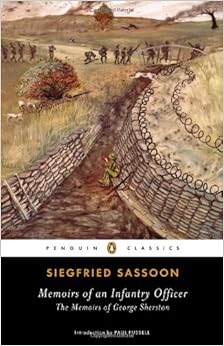
As always, reading of the brutality of our nation's founding centuries, it's quite a dissonance to switch the heart of British civility, as with Siegfried Sassoon's first volume of changed-names memoir of growing up into and out of World War I.  I began reading Memoirs of A Fox-Hunting Man, in the fall of 2011. I'd had the book on my shelves for years already. I was provoked finally into reading it by my experiences with the Eastern Shore fox hunting clubs.  However, the sheer uselessness of the narrator, Sassoon's fictionalized Sherston-self, as a callow, blind and selfish boy and youth (his own characterization of his younger self), and his entire class-ridden culture on the threshold of WWI, provoked


impatience, while the tiny font and skinny trim of my Faber and Faber paperback, and my worsening vision, provoked annoyance -- so, I put it down. Over the years I would read a chapter every few months, but never making any real progress with the work. However, re-reading / listening to audio versions of Barbara Tuckman's The Proud Tower and The Guns of August, made the last half of the Memoir so interesting -- or maybe he was old enough now? children and adolescents aren't generally very interesting reading for me -- I finished it over the weekend.

As well, I kept thinking of  Sassoon's Memoirs while this spring reading the history of Faulkner's and William Alexander Percy's Mississippi -- Mississippi with which I found myself so involved this year, historically, geographically, politically and culturally.  Both Americans, Faulker and Percy, both aristos in their worlds as much as Sassoon was in his, had very different wars than Sassoon -- yet, for all three of them, their wars were shaped by their being embedded in their world's ruling classes, where everyone knows everyone or at least their uncles and aunts, and make the path clear for these nephews, cousins, school friends' sons. So there are many parallels. While Faulkner never wrote a memoir of his war, he did return to it constantly in his fiction and his (fictionalized) presentations of himself.  Percy did as well, in his poetry, though not so much, and more so in his own memoir,


Lanterns on the Levee.

Picking up Memoirs of A Fox-Hunting Man last week, this time I found it fascinating and finished it in a few nights reading.  The war looms every more largely in the second half, until finally, slowly, o so slowly, the real thing comes, and finally, Sassoon is taken by war, months after he joins up. He loses the men whom he loves, who may well have been his lovers. Whether or not they were physical lovers doesn't matter to us. In any case, the various loves in their various way, were were profound and complete. Finally, the war devours him, ending, for him at least, forever, the very England of the golden days of following the hounds in comaraderie of class, prosperity and family.  The blinders of class and comfort through which Sherston had so happily seen nothing of the world but his own very narrow matters, have been shattered forever, with the shattering of his health and his youth.

The second volume in The Complete Memoirs of George Sherston is Memoirs of 


An Infantry Officer, the third, when he's in hospital and treatment for shell shock,


is titled Sherston's Progress.

---------------------

* During the course of the years (beginning in September, 2010) working to create The American Slave Coast, el V and I both used up two computers. We're finishing it, both us on computer 3 -- though yes, both of us initially, began with machines that were unstable in the way computers warn you that necessary replacement looms.

Monday, May 5, 2014

Today We Observe These Events

Bungle or Necessary? As the War is understood in terms of class, and at least as importantly, in terms of military weapons, battlefield, offensive and defensive engagement.


Today the Independent, a long discussive article, in observance of the commencement of WWI.


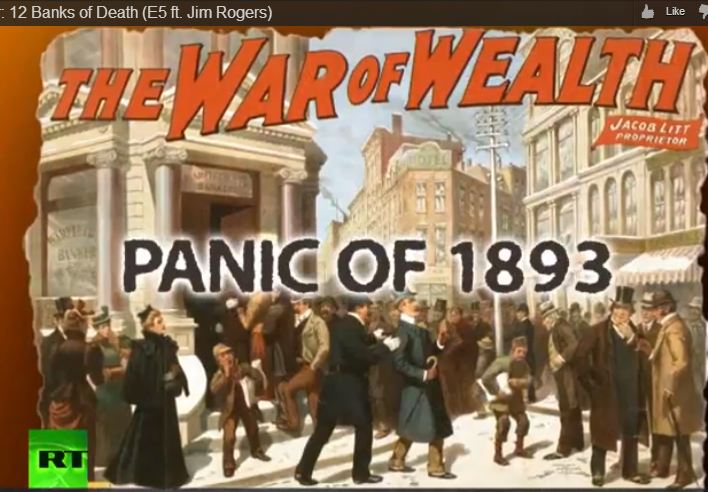
As well, today is the anniversary of the 1893 Wall Street crash.


And, of course, the Cinco de Mayo Battle of Puebla, 1862, in which the Mexican forces defeated the invading French army of Napoleon III (nephew of Napoleón I), hoping to rule through the Austrian puppet, Maximilian I -- and incidentally defy the U.S. and the Monroe Doctrine. He wasn't as successful with this strategy as was his uncle.

Saturday, May 31, 2008

Why I Want to Teach Anthropology at the Army War College

What Would Smedley Butler Do? By BRIAN McKENNA

[ Today anthropologists are busy at work for the CIA and Pentagon. The CIA recently funded an effort - the Pat Roberts Intelligence Scholars Program - to train up to 150 analysts in anthropology, each of whom receive a $25,000 a year stipend, tuition support, loan paybacks and other benefits with the proviso that they work for an intelligence agency for 1 ½ times the period covered by financial support. These are secret scholar-spies circulating in our anthropology departments. They cannot reveal their funding source. Then there are the Cultural Operations Research Human Terrain Teams in which the military actively recruits anthropologists to provide counterinsurgency data for its occupying armies. As private contractors anthropologists can make up to $300,000 a year for their service. ]

[ My first days of classes at the US Army War College would be dedicated to Smedley Butler. He'd no doubt place education - truthful military education with all its contradictions- at the forefront of social life, most especially in the military itself! Ultimately the military rests on well-trained soldiers who have the capacity to make ethical judgments. Here he is on war:

"War is just a racket. . .It is conducted for the benefit of the very few at the expense of the masses. . .There isn't a trick in the racketeering bag that the military gang is blind to. It has its 'finger men' to point out enemies, its 'muscle men' to destroy enemies, its 'brain men' to plan war preparations, and a 'Big Boss' Super-Nationalistic-Capitalism." Butler is one of only two Marines ever to hold double awards of the Navy issue Medal of Honor. Butler laid his reputation on the line with this searing 1933 speech. "It may seem odd for me, a military man to adopt such a comparison. Truthfulness compels me to. I spent thirty-three years and four months in active military service as a member of this country's most agile military force, the Marine Corps. . . .I helped make Mexico, especially Tampico, safe for American oil interests in 1914. . .In China I helped to see to it that Standard Oil went its way unmolested. . . .I suspected I was just part of a racket at the time. Now I am sure of it. Like all members of the military profession, I never had a thought of my own until I left the service. My mental faculties remained in suspended animation while I obeyed the orders of higher-ups. This is typical with everyone in the military service." ]