LINES OF THE DAY

". . . But the past does not exist independently from the present. Indeed, the past is only past because there is a present, just as I can point to something over there only because I am here. But nothing is inherently over there or here. In that sense, the past has no content. The past -- or more accurately, pastness -- is a position. Thus, in no way can we identify the past as past." p. 15

". . . But we may want to keep in mind that deeds and words are not as distinguishable as often we presume. History does not belong only to its narrators, professional or amateur. While some of us debate what history is or was, others take it into their own hands." p. 153

Silencing the Past: Power and the Production of History (1995) by Michel-Rolph Trouillot

Showing posts with label French Revolution. Show all posts

Wednesday, April 19, 2023

Chevalier - Not Recommended

     . . . Chevalier was a great disappointment for many reasons.  Its fast and loose playing with the known facts of Joseph Bologne, Chevalier de Saint-Georges's biography, and of history even -- Marie Antoinette did not give him his title, that was Louis XV -- are only the beginning.

It's such a shame that this man, who I first learned of via reading letters of (later to be President) John Adams, who was so accomplished, who did so very many important things, just starting with music composition and musicianship, was reduced to an affair with an aristo.

 He is the most accomplished Man in Europe in Riding, Shooting, Fencing, Dancing, Music. He will hit a button on the Coat or Waistcoat of the Masters. He will hit a Crown Piece in the Air with a Pistol Ball.

 Recall, that among his many achievements, he successfully led an all-black regiment in the French army -- until, Napoleon erased all Black people of achievement from their positions and out of history, particularly those of military achievement, not least, Alexandre Dumas's father. 

La légion de Saint-George


This film is the equivalent of making a film of the life of Frederick Douglass, and reducing everything he did and created to the single matter that he married a white woman.

Additionally, thereby, the filmmakers chose to navigate precariously closely those waters on which sail a mainstay of porn, the enslaved black stud and the white lady.

I am not the only person to feel this way.  For a single example our (Black, Haitian) friend who is a symphony orchestra director, composer and conductor, who has been conducting performances of the Chevalier's music in many cities, just HATES this film.  He, like el V, is particularly outraged by the cutting game between the Chevalier and Mozart that opens the film -- this is something Blues musicians only began, here, in the USA.  As per usual, movies, particularly made by Americans, cannot imagine a Black experience that isn't African American.  Moreover, it seems that the two composer/musicians were friends, not rivals, with Mozart even living in the Chevalier's house for a short time. But then, movies/tv very, very, VERY seldom know who and what musicians -- or artists generally -- are -- musicians particularly.  Really, as Joseph and Amadeus were about the same age, it is far more likely they joyed to make music together than tried to cut each other down.  Musicians really like to do that, you know?

The positive for the film is several really fine female actors with juicy roles, even though the characters' depictions are either utterly fantasy or historically wrong for the time -- or non-existent. The exception to this might be the Chevalier's mother. 

However, if only inadvertently, the above does point to the essential truth of  success in which Napoleon was tutored by those who survived both the Revolution and the Terror, into the Directorate, that in France, "Women are politics."  Alas one of the ways this point is made is the filmmakers claim that Marie Antoinette was the reason there was a French Revolution.

Saturday, January 21, 2023

Experimenting with Fones - They Are Called Smart But They are Very Stupid

      . . . . Written on my fone.  Sort of. It's hard figuring out how to get the type size right.  Among other things. And figure out what it will look like on a different screen than a fone screen. So after this paragraph, I gave up, and posted from my desktop.

In the meantime, it's cold and dismal here, as it has been for a while, but it isn't raining today, which is an improvement, but still not a delight.  What also isn't delightful is attempting to revive my small travel laptop, which was on its last legs before the pandemic locked us all down.  But I can't write on either the tablet or fone -- I tried to write and post via the tablet earlier this month, but it didn't work. But I didn't have time to just hang out alone anyway.  But it will be different this time as we will be there earlier than the Travellers and depart later, as el V pulls things together beforehand such as, read a bit further below, and be sure everybody has been paid, etc. afterwards.  Nothing for me to be bothering my head with.

Trying to wrap the mind around going to New Orleans again, not tomorrow, but the next Sunday. The actual Postmambo "For the Funk of It" is February 1st - 5th -- people go home the 6th, so I shall have down time, solitary time, for a couple of days before and after the Travellers arrive and when they depart. 

The kick-off "For the Funk of It" is in the
 Louisiana State Bank building,


which Benjamin Latrobe was working on, before he died of Yellow Fever in 1823.   Recall, Latrobe was the architect of the Washington D.C.
 
We will have dinner in the courtyard first, then there will be a concert in the whispering gallery, a short, original piece, designed for a single performance, essentially composed by the Haitian director/conductor of the 
Symphony Orchestra of Loyola University, Dr. Jean Montès. El V and Jean bonded almost immediately upon sight.  The music, instruments and vocals will be provided by a small group that includes members of the transplanted Haitian group, Ram.  El V's going to conduct, because directly after the rehearsal on Monday, Jean has to fly to Charleston, S.C. to direct a concert of the music of -- the Chevalier de Saint-Georges! Nobody knows what that music actually sounded like. That transplanted Haitian, Jean, is conducting the Charleston concert is all the more interesting.  Like Jean, like the group, Ram, the Chevalier was a mixed race fellow, born in the French Caribbean -- Guadeloupe (which is fascinating as I had the privilege of learning back in the last decade).  Like the Chevalier too, Jean and Ram had to leave the French Caribbean due to political and racial violence.

As the film, Chevalier, released in September at a Canadian festival last year, dramatizes, Saint-Georges was a  flamboyant figure: a gallant, a swordsperson, a spy, and soldier, as well as gifted musical artist.  The film will be released here in the US in April.  Alas, I'll probably not see it, as I'm still not going to movie theaters.


Tuesday, March 23, 2021

The Last Libertines

      . . . . We've been having some nice weather again, finally, this week.  It is much appreciated.  But now NOLA Reconnect 2 finished, we wonder how we will be making money for awhile.  We can't travel, that's for sure, for a very long time, whether we are vaccinated or not.  By which I mean, we can't take Travelers to experiences in Cuba or Haiti until ... when?  Even when we can, from now on, having plans in place for dealing with Travelers who may become ill with Covid, have to be part of work.  And in the meantime, who knows when Cuba will be able to re-open to the US?  So far the administration, doubtless concerned with myriad other equally pressing crises and concerns, hasn't rolled back the roll-back of the monster previous, though it was announced it would.

So, I read, traveling into the past.

Benedetta Craveri, (2016) The Last Libertines; New York Review of Books.


Until the last chapter, titled simply, "1789", we are in ancien régime France.  So much disappointment among the aristos, for all the luxury and leisure.  At least they ate and drank well, and were clothed in the finest of fabrics, unlike the non-poetry writing poors.

What I got from the book’s murky language – murky perhaps, due to translator, perhaps, due to French names and titles of people whom mostly we in the USA have never heard of  -- was a better sense of what drew so many younger  members of this generation of aristos to the North American colonial War of Independence, and later, to support France’s Revolution. This generation of ancient French landed, aristocratic groups, were outraged that the loss of the Seven Years War had never been avenged,  France had never regained her New World territory and both Louis XV and Louis XVI never did make war on Britain, no matter how often they began gathering troops to do so.

This is the class whose raison d’etre for existence was the glory of war, going back to the Merovingian eras, whether or not they actually could fight. Additionally, they, as that class always did, chafed under the absolutist authority of the King. After all Versailles, as we know, was built and organized by Louis XIV, for that very purpose, to keep these families under his thumb, terrified as his minority years had been by the Fronde. This was the series of 17th C French civil wars (1648-1653), within the larger Franco-Spanish war that began in 1635, attempting to overthrow Louis XIII’s monarchy, and that of his mother’s regency with Cardinal Mazarin. These anti-monarchal insurrections original intent was to protect the aristocratic families’ ancient liberties from royal encroachments. The Libertines were among the highest-ranking members of this class’s generation who thought they'd welcome a new Fronde.

But this 18th C group of aristocrats were essentially play acting in their private edifice of political-philosophe theater, just as it immersed itself in other sorts of private theatricals, put on by themselves for each other.  Marie Antoinette adored theatricals, so, see, for a single instance, the support they provided Beaumarchais’s satire of their very class, The Barber of Seville. This is how the Revolution got supported by this young bunch.

They coupled their frustrations to their Romantic idealism that supported the New World independence movement in which there were no royals or nobility, a war in which someone with ability, though poor, could become an officer. That promotion was possible without family, riches or blood -- and the 'natural nobility' of General Washington, whom they all adored -- impressed them enough they Romanticized the utterly over-taxed and utterly unprivileged of France, who were bearing the brunt of famine and rising prices due the sheer financial catastrophe that were the policies of Louis XVI financial ministers and advisers.  They seemed to miss that thousands, millions, of them, were very angry and filled with hate for their sorts, who casually oppressed and humiliated them as a matter of naturally entitled course. And there were only 700,000 of them in contrast to the millions of the third estate.

The portrait in these pages of Queen Marie Antoinette is mostly unsympathetic, though the author says the queen matured in the years shortly before the Revolution and changed into a more responsible and politically savvy mind.  After France restored the monarchy, the portrait of the Queen was burnished the class’s survivors into an innocent martyr, almost a second Virgin Mary. But for most of her life as Louis XVI’s wife and queen, she made enemies within that class, which had a great deal to do with their support of Thermidor.  She pushed her favorites into high, lucrative offices, and cut out everyone else. This was a world where all honors, power and financial preferment came through the favor of either the King or Queen – not merit, not in the least.  So even within the military, by class, nurture and tradition, always loyal to the King, officered entirely and only by this class, there was much frustration.  Yet the author fails to make these figures interesting, for the most part. They are not sympathetic sorts for my kind (though for some of the women, I can feel to a degree, and I do admire some of the art, while shuddering at the layers upon beribboned layers of ostentatious ornamentation of the clothes), though it does seem the author quite admires them.

There are errors of fact. Talleyrand never came to North America with the French during the War of Independence (he came as an exile for a short time during Washington’s presidency). France did not exchange San Domingue for Curaçao in the settlement of the Seven Years War. Or did the author claim it was exchanged for Guyana? Trinidad? both undeveloped at this time.  This claim was buried in sentence nearly a paragraph long and difficult to parse, so I don't remember, other than the shock because if India was the jewel in Victoria's crown, San Domingue was the financial jewel that provided the French government a shockingly large amount of its income.  Benjamin Franklin was not sent to France by the Continental Congress in 1766 – there wasn’t a Continental Congress then, or even a movement for independence. That’s just a few mistakes within the history that I know very well.  What errors there are in the French history and biographies that I don’t know well, or not at all – we only guess.

Beyond that, the chronology is all over the place, which makes for a choppy text, as opposed to one that can be smoothly followed, as to who is who, when and where. This is particularly so as the narrative is supposedly about how this group of men, and the women they bedded, frequently even bedded at the same time, came to grief, their world destroyed, by the French Revolution, but we spend at least as much time in the era of King Louis XV, as we do with King Louis XVI and his queen, Marie Antoinette. It's not at all that the author should have left out the material from Louis XV's reign -- it's that as it is structured, it is hard to follow and gain the points the author's trying to make.

The most interesting section, because most vivid, with open spaces, as opposed to the claustrophobia of châteaux and palaces, was that of the Comte Louis-Philippe de Ségur and his diplomatic service as ambassador to Catherine the Great. Their’s was the great spectacle of a journey across the wintery expanses of Russia to Tartarine Ukraine, and then the Crimea, which her general, lover, minister, friend, advisor, Potemkin, had recently conquered for her from the Turks. This is a landscape and action, of immense caravans of coaches for the court, coaches each as large and lavish as a small palace, surrounded by the 30,000 at least, cavalry and more infantry, more likely to be found in great historical fiction that real life – and make Cleopatra’s barges, and the journeys up the Nile, look small and a bit tawdry.

Finally, comes 1789.  Most of the personages described in The Libertines, survive, often just barely, prison and the Terror, and then Napoleon.  Some – do not.  None of them have the lives they led before the great change, this authentic, anti-monarchy and aristocratic revolution. For quite some time, some of them retained their privileged ignorance of what all those words were really saying and the actions really meant. For some time, many of them seemed to think the Revolution was staged particularly for their benefit and amusement – and under their direction, because, after all, that how things were always done.  Down with the King! Up with the ancient families!

Instead, they had to comfort themselves with writing their Memoirs and hoping they would sell well.


Sunday, August 9, 2015

Reading A Thatcherite - Napoleon Bonaparte

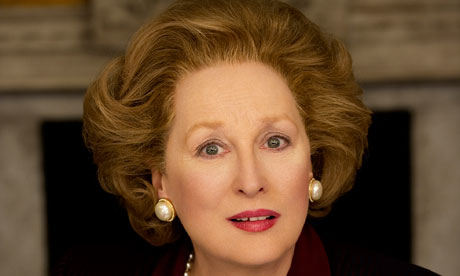
Huh. This doesn't look like Merryl Streep.

I have on hand Napoleon: A Life (English publication title, Napoleon The Great) by Andrew Roberts (2014).

This isn't the first biography or study of Napoleon I've taken on by any means.  But it is the first one to be published since the massive publication of all of Napoleon's correspondence; the past editions left out a third of the letters for various political or axe-grinding reasons. It is also the first work on Napoleon written by a self-proclaimed Thatcherite.  On his wiki and other sites, Robert refrains from mentioning any other reason for his conversion to Thatcherism other than he agreed that the UK had no reason to join the European Union and / or change it's own currency.  From early in his adult life he has always been deeply embedded in the UK's upper echelons of the business and financial communities -- he's currently married to the CEO of "the Brunswick Group LLP and a Governor of the South Bank Centre." 

Roberts is a prolific and most successful historian - journalist.  For all his publications and many honors and dignities received, including several BBC programs made from his books go his wiki here.  

There's a lot here to make me skeptical about his work.  On the other hand, he has a deep and authentic knowledge about the man and the era via his previous works, all of which are mostly well received.

As far as this bio of Napoleon, the reviews are mixed.  Several have mentioned that Roberts has allowed his hero-worship of the man spoil his interpretation and perceptions.  For my own most important concerns around Napoleon, which is slavery, the slave trace, the Saint-Domingue slave uprising, Toussaint, the Caribbean wars with Britain, the sale of the Louisiana Territory, and the earlier accompanying matters of the Revolution's and Directory's relationships with and treatment of the very young United States -- there's hardly anything. This isn't unusual in studies of Napoleon, particularly those by British writers.  They got their own ass kicking in Saint-Domingue and don't like thinking about that much.  They also overplayed their hand with the U.S. in this era, which led to the War of 1812, which wasn't good for Britain in the end.  And most of all the Brit historians lurve Rear-Admiral Nelson, Trafalgar, the Peninsular War and Waterloo. So there ya go -- no Saint-Domingue or Louisiana or the U.S.

But this sort of thing reminds us how basic it is to research to read only a single work by a single writer, and that we need to read many works by many writers from different political and social perspectives -- and from different eras.

I don't think there's need to question Roberts on the facts of the matters -- it's all about the spins he gives them.  So I like to compare and contrast.

I do respect and profoundly admire what Roberts has accomplished in his life's works.  There are thousands and thousands of works on Napoleon alone, many published even when he was alive -- and he's read enormous numbers of them. His french must be perfection, which I envy!  I also envy him his resources: he's personally visited, in company of experts, over 50 of the 63 battle grounds where Napoleon personally commanded.