LINES OF THE DAY

". . . But the past does not exist independently from the present. Indeed, the past is only past because there is a present, just as I can point to something over there only because I am here. But nothing is inherently over there or here. In that sense, the past has no content. The past -- or more accurately, pastness -- is a position. Thus, in no way can we identify the past as past." p. 15

". . . But we may want to keep in mind that deeds and words are not as distinguishable as often we presume. History does not belong only to its narrators, professional or amateur. While some of us debate what history is or was, others take it into their own hands." p. 153

Silencing the Past: Power and the Production of History (1995) by Michel-Rolph Trouillot

Showing posts with label West Africa. Show all posts

Sunday, February 26, 2023

The Woman King

     . . . .  The Woman King (2022) on Netflix. 
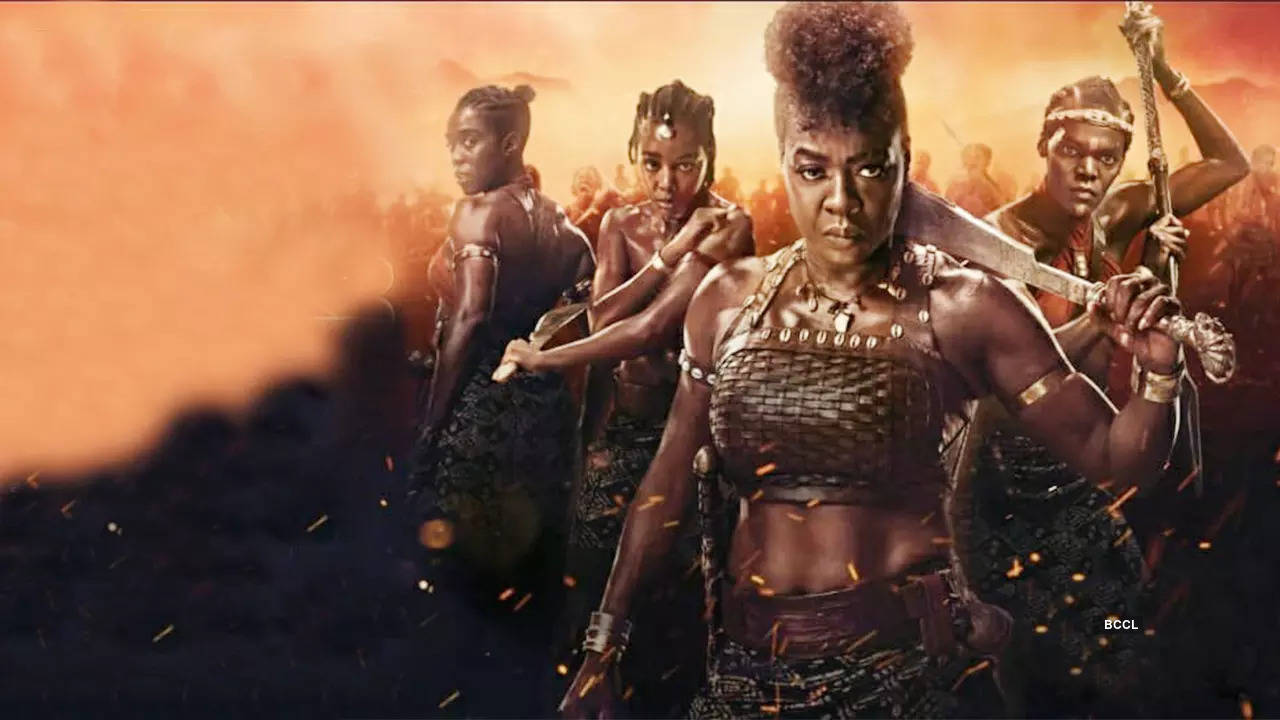


The film has been shut out from all the awards and their categories – too womanly. All the criticisms that declared it ignored or distorted Dahomey’s slaving of Africa must be from those who don’t know this history. just heard something somethingv from somebody somewhere. This slave or be slaved history is central to the narrative. That criticism seems to be pushing the relentless attitude that Africans remain ahistorical until white historians inform them of their own history.

The people of Dahomey/Ouida and Oyo knew why this condition was in place, and how it happened, and who was benefiting as well as how much Africans of every group were exploited and plundered as entire peoples. Those who benefited were the  Europeans and USians, as well as the Islamized tribes working in concert, such as the Fulani and the jihad of the time against the Oyo Empire, which too, was all about the riches from supplying the European slavers. 
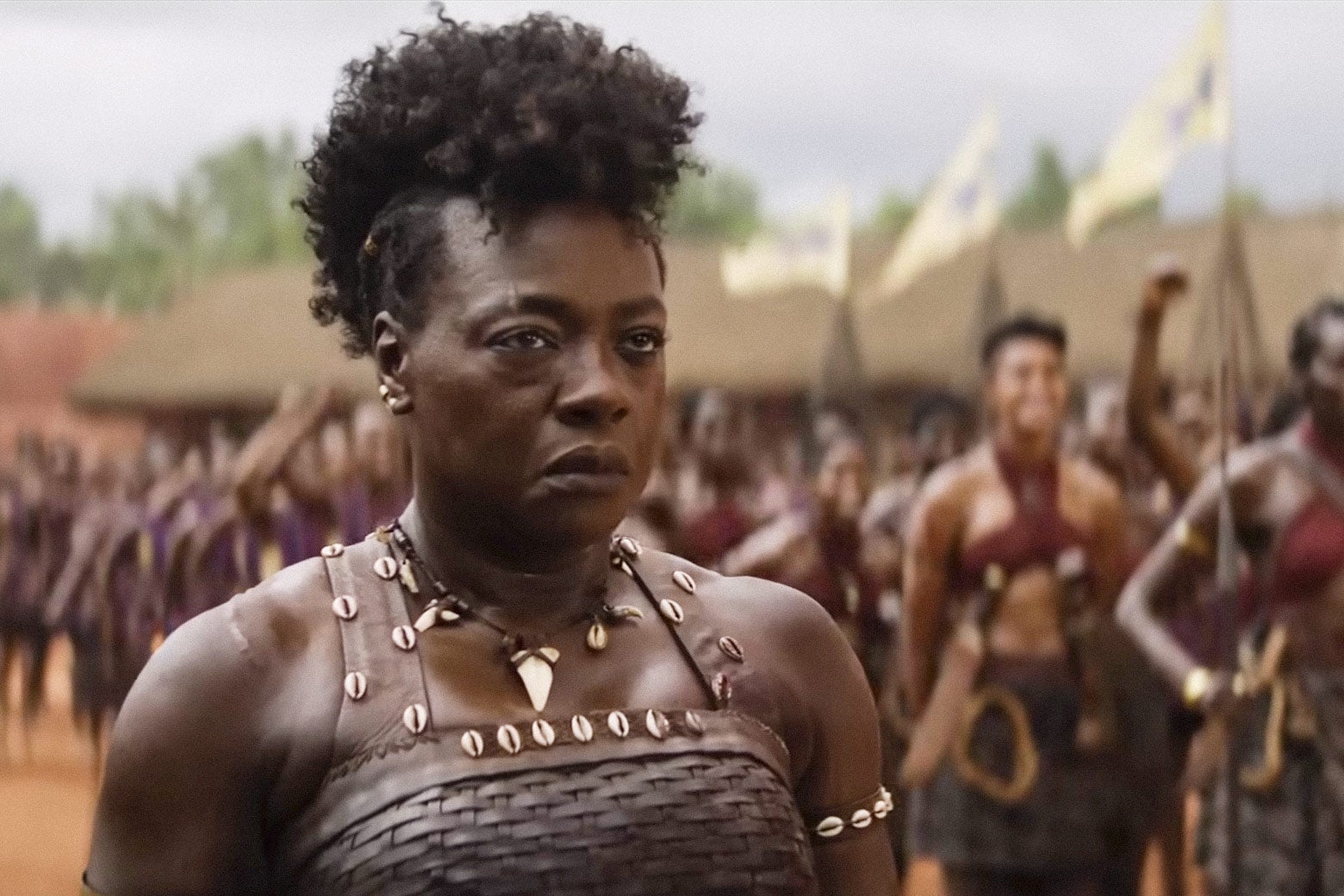


The Agojie commander, Nanisca, played by Viola Davis, is brilliant, as advisor, general and warrior who is at the prime of her strength, but whose body is scarred and has aches and pains from so many wounds, whose heart and mind carries just as many scars and pains. As right hand to the king Nanisca is expected to have wisdom as well as battle skills. And she does; Nanisca sees the future, not only of her own Dahomey, but all of Africa, being slaved and enslaved by the Europeans.  She has this vision, but how to change matters so they – and other kingdoms – stop slaving themselves and each other, and instead create wealth and prosperity through other means. Ah, that is very difficult, not only to do, but to even envision, much less convince others to do, such as the 'nobles' and queens of the Dohomean king's palace.  Slaving is embedded throughout the continent as economy, offense and defense, and status.

The milieu of this woman army is a fascinating, welcome contrast with both Wonder Woman’s Greek vase and statuary fantasy landscape, superhero comic girlhood training, and with the super hero Afro Futurism of Wakamba. Those superhero comix adaptations are slick, smooth, cheesy and tacky when viewed in company with what we see here, as the film reaches to recreate the dust, mud and natural world of historic reality, including how women are physically, who have been trained from youth to be "Agojie",  warriors who command armies, who fight, kill and are killed – or are captured. Taking a famed Agoji ewarrior is a coup indeed.
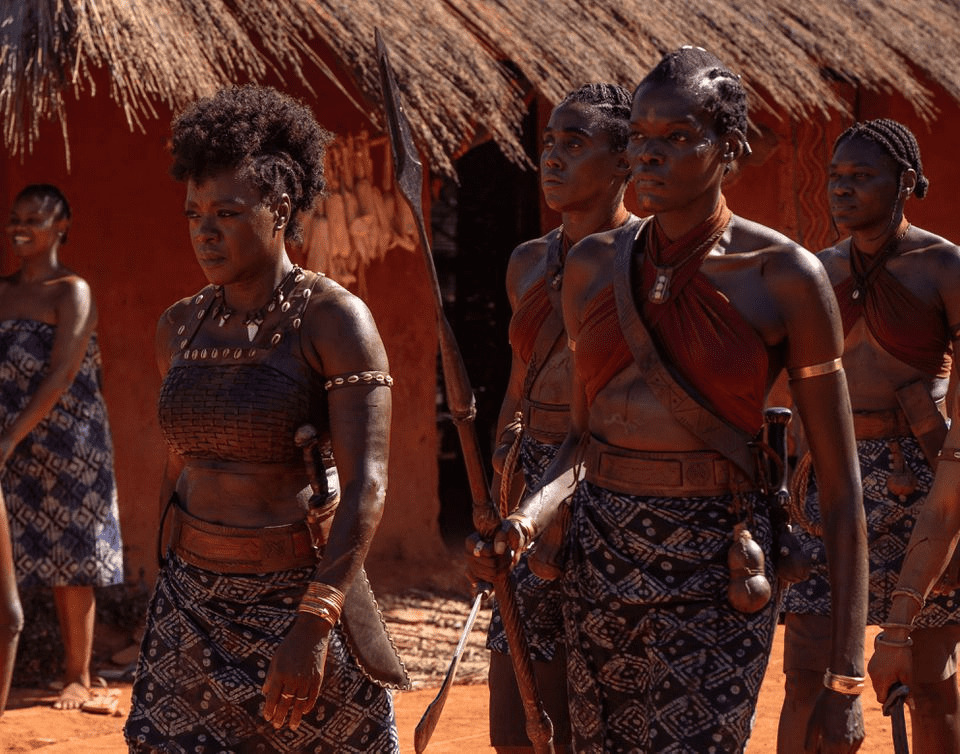


As an army of warriors these women claim physical space in a way one never sees women who are to be good, traditional women do.  They claim physical space in the same matter-of-fact, unconscious way that men do. They walk differently, sit differently, move and are still, differently from traditional women. These women are like men, while – and this is what is so brilliant in the acting, one would never mistake them for men, ever.  They are fully womanly, women like all women, but who have all the masculine space and entitlement – except to have partners and children. 

Dahomey's indigenous religion is depicted in a most matter of fact manner.  This is what we know in the US as Vodun, as it was imported via slavery to San Domingue/Haiti, Bahia in Brasil, and to the US, via French slave owners who refugeed to Cuba. and, when Spain and France went to war, to New Orleans.  The altars where our figures meditate and meet on occasion are as much natural parts of their world, as the lands outside the walled city and palace. 

What follows is me interpolating, because I've not encountered this in any of the books I've read. However, presumably, such effective warriors and commanders must be prevented from having their own children because – in the end – even these women must be ultimately subservient to male power – the king.  A successful, brilliant commander, to whom the army is devoted and loyal, a woman with her own children might well be interested in taking the throne herself, or for her children, instead of merely serving a king's wishes and status.*  Indeed, the film includes the oral tradition that at least once Dahomey was ruled by a Woman King commander of an army of women warriors.

There was not, cannot be a happy ending for the slaving Kingdom of Dahomey, despite winning all the battles ... but happiness is allowed. Around the 2/3 point, the story line includes that of a mother and daughter finding each other, in this time when vision tells them both, the world will not get better. Yet, Viola Davis is recognized by the King again, as his chief advisor, no matter what his wives and courtiers want.  She may end her life free and honored, but we can almost sure thing bet her daughter's life is going to be even more difficult than hers, as the French become determined to take out the Dahomey kingdom, and are horrified by the women who go to war.

This film mesmerized me from start to finish, which I can’t say about hardly any film, television series or novel these day

*  There are many instances in history across the world where a ruler's successful military leader has taken power for himself and his family, so one will speculate!

Wednesday, June 1, 2016

Roots Television Series Reboot & The American Slave Coast

Soraya Nadia Macdonald's interview of us re The American Slave Coast is up a ESPN's The Undefeated in connection with the Roots reboot.

I watched the Roots reboot last month via the screener stream.

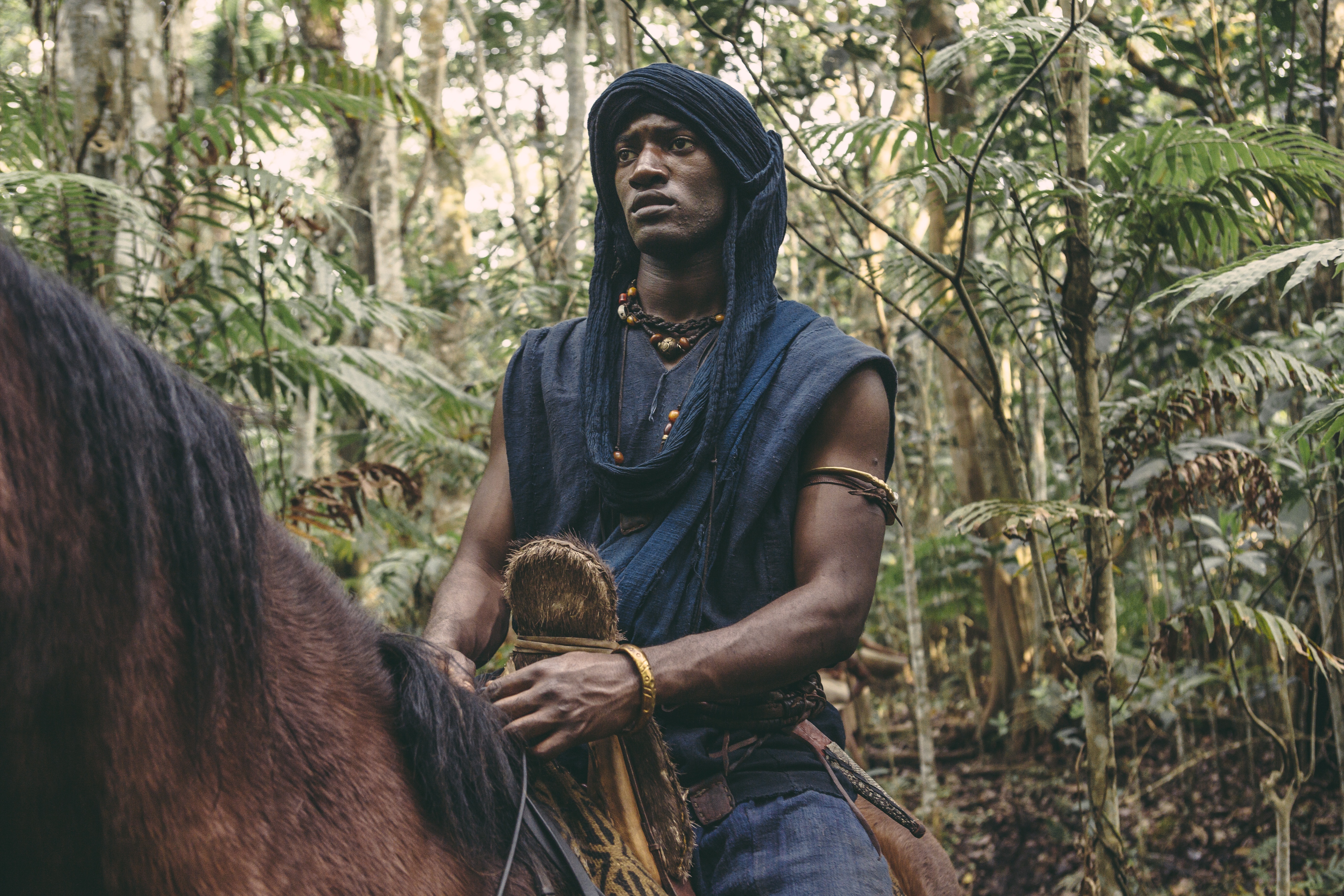
The first episode, filmed in South Africa -- which is not the same landscape as the Gambia, from where Kunta Kinte supposedly came from, but what the heck) is the best.  It's quite different from the beginning of the 70's Roots. This time is shows the European slave trade within the context of  West Africa after at least two centuries of European meddling in African politics to make exploitation easier for them. Slavery is just at the point -- the end of the 17th century, the start of the 18th --when it becomes the atmosphere all West Africans breathe, the and primary business of Africans from rulers to hunters. Personal feuds play a role,  war and political ambitions play roles. Still, at this moment, the community of Kunta Kinte's family is an extremely rich one in terms of spiritual practice, culture and sense of who we / me are in the world. There's even a bit when young Kunta wants to go to university -- Timbuktu, and needs to persuade his father that the expense is worth it.


I.e. Kunta comes from a sub-Sahellian aristocratic family ( which conveniently feeds into the feel-good myths that my ancestors were Egyptian pharaohs, Fidel stole all my Cuban family's plantations / business, in my former lives I was very rich, very beautiful,  and ruled multitudes).  Kunta's literate because his family practices Islam as well as their 'traditional' religion. We see him becoming well-trained in warrior skills included training, riding war stallions and fighting from horseback. Then, due to a feud, comes the capture by African slave hunters, followed by white buyer, branding and the slave ship.


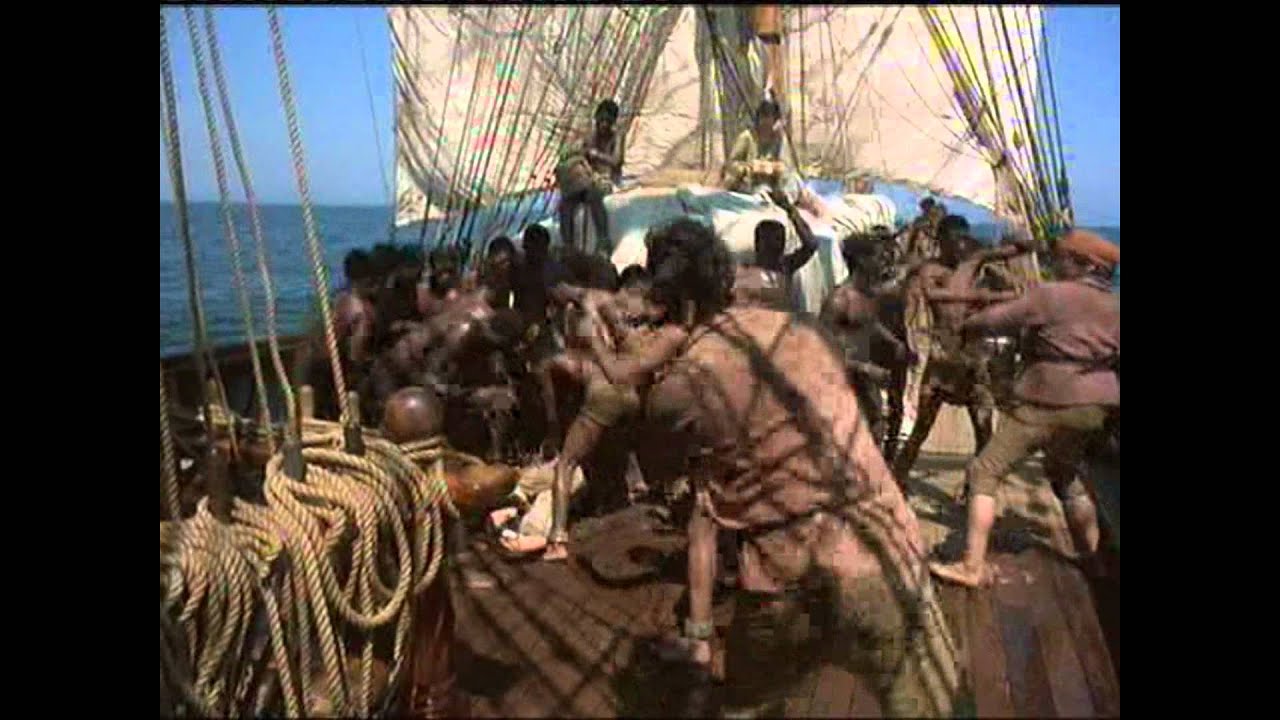
The slave ship sequences are horrendous, far more so than in the 70's Roots. It felt as if the producers had gone to the International Slavery Museum in Liverpool, spending a lengthy period in the slave ship acoustic exhibit -- and took to heart the horrible groans, moans, shouts and other sounds -- all against the constant roar of the ship's hold, where they are shackled, pushing through the tons of water.  Nothing is softened in this sequence, as in the 70's Roots, in which the white captain has a tortured conscience, instead of, as in the reboot, the captain raping a 'girl' every day.  There is the seasickness, the filth, the disease, the madness, the suicides and even a failed rebellion. Some viewers may stop watching at that point because, "I don't need to see people vomiting on themselves -- it makes me queasy enough to vomit myself."  But this is as close to the real representation or the true horror that a slave ship was as it gets.  I admit to adverting my own eyes at times during the slave ship experience. Even so, I must defer to William Wells Brown's words, which are my bottom line on movie and television depictions of slavery:  "Slavery has never been represented; Slavery never can be represented."


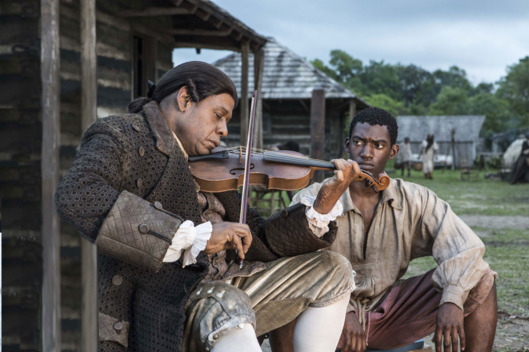
The Fiddler is a figure usually much absent in these depictions.  It's Fiddler's capacity to entertain with servility that has provided him a relatively soft and secure condition (portrayed in by far the finest acting in this series, by Forest Whitaker.  His Fiddler breaks the viewer's heart, or at least this one's (Kunta's character does not, despite the obvious intention of the series that he do so).  Music plays a big role in the continuity of the family narrative and the background in this Roots (which was missing from the 70's Roots) and is well-done.

Adult Kizzy, played by Noni Rose

Ben Vereen plays Chicken George
Slaveowner (the villain played naturally by Jonathan Rhys Myers who successfully has played so many bad men, including Henry VIII) Tom Lea's pathetic desire to have Kunta's daughter, Kizzy, acknowledge his initial physically violent rape and his further constant coerced sexual use of her as something she values in some way is rather the heart of the rest of this section of the Roots reboot. In certain ways the complicated relationship of Tom and his son by Kizzy, Chicken George, is a transference of this desire of Tom's, that his exploited slave "love" him. This is entirely believable.  They both love the birds and the sport of fighting cocks.  But just like Tom with his slaves, even George who is his own son, the cocks are lovingly tended and trained, and then thrown out to kill or be killed for Tom's purse.

Evidently there was no narrative way around what happens in this same sequence, since Haley wrote it in his novel and it was in the first Roots series as well, the preposterous situation is retained that George, given to an English lord as payment of a debt, remains a slave in 1800's England, when slavery was abolished on the island effectively in 1772.  Haley claimed historian status, but demonstrated here and in other parts, that he didn't do basic research.

When George returns decades later to Georgia and Tom's plantation, the non-historic / factual contrivances get much worse. The final episode is the Civil War and the aftermath. It turns ridiculous -- the Kinte men galloping, walking by foot, back-and-forth between Tennessee and Georgia, the whole family moving to Tennessee en masse without any white people harassing, robbing or even killing them.*

Nevertheless, with all its flaws and serious errors, like the first Roots, for people who haven't thought about and know nothing about this central history of the U.S., this series might hit their consciousness like a bomb, which can only be good for us all.
-----------------------------

*  At this point Roots becomes as nonsensical as Underground , which in 1857 -- the Fugitive Slave Act era, a group of enslaved people, including small children and infants, run from interior Georgia, overland 6 - 8 hundred miles to "the north,"  via a fantasy "underground railroad."

This is not where or how the so-called underground railroad operated, for obvious reasons of geography and distance. Not to mention the many other preposterosities in the series, many of them obviously included as tasteless, non-factual, leering pandering to an audience's pornographic  fantasies about antebellum slavery,.

Monday, August 18, 2014

An African City -- Anyone Who Hasn't Watched

Anyone who hasn't yet watched An African City, should do so immediately.

It is a series of 10 episodes, generally around 14 minutes long, made for the web, featuring 5 young, ambitious, highly educated, upper class, privileged, well-off, diasporic women who grew up in Europe or the U.S., who have for various reasons returned home to Accra and their families, in Ghana.


The clothes alone are worth putting in the time.  But there's more to it than that.  Dialog is snappy, things can get very funny, the women are beautiful.

Some have objected to An African City being called the African Sex and the City, but it is Sex in the City in Accra, intentionally so, complete with the voice-over. However, I am not certain that certain elements are intentional, such as in all or nearly all episodes, short as they are, one of the women will at least verbally 'mean girl' it over a class 'inferior.' On Sex and the City, any character who behaved that way would be recognizable as a Bad Person, not a heroine or protagonist.  If this is intentional, this is presenting a modern African city as a real place, not an exotic fairy tale location, and I applaud the producers, director and writer.

It's interesting from several different directions, not only those of women's friendships, romance, sex, and fashion.  In some ways the most interesting aspect is that the central character, the voice-over narrator is, in the series, the daughter of Ghana's newly appointed Minister of Energy. Think about that .... It's quite like having Dick Cheney, your father, and you too are in the oil business, appointed Vice President in charge of regulating oil sales and military actions. Ghana has lots of oil ....

That's the class level of these women, the sort of class out of which comes Lupita Nyong'o, who played Patsy, in 12 Years a Slave.

They are not like thee and me ....

This is something I find very interesting about this series: how the international obscenely wealthy, no matter what religion, skin color, etc., have far more in common with each other than with thee and me.

I'm not quite sure the series intends to show us this.
Accra, and increasingly in cities like London, NYC, etc., the divide of the citizens are those at the level of wealth of these women, those who serve them, and nothing in-between, with a huge class of starving at the bottom. Lessons for us in the U.S. from this series.

The women in Sex and the City were never anywhere close to the level these women exist on -- but Mr. Big was, and that was the huge attraction of him for Carrie Bradshaw.  Equally telling, for the SatC friends, as for the An African City friends, going to Dubai, that arbitrarily constructed city-size shopping mall-playground for the international wealthy, is one of their criteria of Best Times Evah -- and puleeze, have somebody else pay for the trip and the acquisitions!

The first five episodes are on Free Hulu, and all ten are on YouTube.