LINES OF THE DAY

". . . But the past does not exist independently from the present. Indeed, the past is only past because there is a present, just as I can point to something over there only because I am here. But nothing is inherently over there or here. In that sense, the past has no content. The past -- or more accurately, pastness -- is a position. Thus, in no way can we identify the past as past." p. 15

". . . But we may want to keep in mind that deeds and words are not as distinguishable as often we presume. History does not belong only to its narrators, professional or amateur. While some of us debate what history is or was, others take it into their own hands." p. 153

Silencing the Past: Power and the Production of History (1995) by Michel-Rolph Trouillot

Showing posts with label the War of Southern Aggression. Show all posts

Sunday, August 23, 2020

As He Said: "The Past Isn't Even Past"

     . . . . Most of our current crises are connected to this nation's founding history in genocide and African slavery -- economically, politically and socially, even down to emergency natural disaster crews. 

As we all know, the vast majority of our vast incarcerated populations are of color -- and poor. Now many local California politicos and pundits -- and the state fire fighting agency --  are bitterly criticizing the state for giving prisoners early release due to the hotspotting prisons are for outbreaks of covid-19.  Guess what?  The state's fire fighting agency, underfunded by the taxpayers and the politicians, depend instead on what is essentially slave labor -- which for the moment at least it does not have so our homes burn.  How much you want to bet California doesn't make this mistake again?

We all benefited, we benefit even now, from this nation's history of  slavery and perennial racial injustice to African Americans and Native Americans, even if we are more recent immigrants, whether we are white or not. 

We are seeing it so clearly with our dependence upon the poor and of color as the real line of disaster fighting -- and just to get groceries, to get medical care.* Because, you know, we believe don't need to pay them even a living wage.


Really, who believes in their heart that $1 - $2 a day for fighting these wildfires is pay?  particularly for those whose lives and health are at such a high level of risk? Plus, we all know too, these firefighting prisoners are legally prohibited from getting jobs as professional fire fighters because that means paying salaries and benefits. It's so much more practical and tax saving to just refresh the prison population constantly.  Keeping people who have served their sentence from getting real jobs is an effective method of ensuring that constant refreshment.

We all benefit, then and now, who aren't African American, who aren't Native American.

The brilliant light of 19th Century literature in this country couldn't have happened without the resources of slavery.  Longfellow's wife, recall, was vastly wealthy, like all those Boston cultural luminaries were -- allowing them to dedicate their lives to art and culture. There were so many who had that wealth resource that within 3 centuries of first colonization the US there were enough heirs of such wealth to support a leisure class that supports the arts and literature.

Where did much of that wealth of New England and the North, like NY, come from?

As with Longfellow's wife, her father owned the vast wealth creating textile factory complexes such as his Lowell, MA.  Those textiles were produced from the slave-grown cotton.  Much shipping and insurance and banking in so many ways out of slavery -- even after the African slave trade to the the US was abolished, even after slavery itself supposedly was abolished.  

Immediately after the war those wealthy northern and New England movers and shakers headed south** and allied with the great pioneers of neo-slavery, sharecropping, such as the Percys of Greenville, Mississippi (Walker Percy's family -- which was why he could live and write without a job.)


It is nearly impossible to look at even the brilliant light elements of our past and not see it rooted in and shadowed by slavery and genocide -- including the massive removal out of "Dixie" to make that vast territory safe for slavery. 

This morning there's a Marine Dem retweeted on Bill Gibson's Twitter feed, who warns us from where he lives within a huge maga country enclave, that 'they' hate 'us' with almighty passion, they are voting.... it's all about white vs everyone else -- and women. If you can only get it by giving over all power to the insane, and destroying what's left, and dying too, so be it. Long rage the covid-19 hoax! as proclaimed by a relative undergoing chemo for cancer in a rally in a waiting room of fellow unmasked cancer victims.

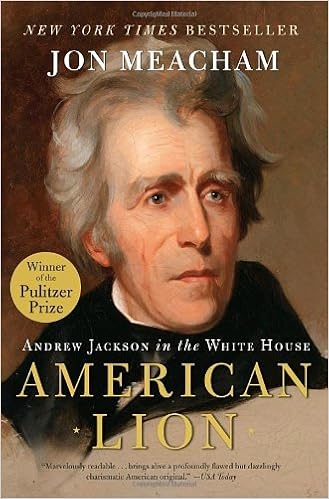
It merges well with Jon Meacham on the history of the revisionist Glorious Lost Cause history of the War of the Rebellion -- which began immediately.*** 

https://www.nytimes.com/2020/08/23/books/review/lost-cause-meacham.html?

[....]Here, then, was the ur-text of the Lost Cause, of the mythology of a South that believed its pro-slavery war aims were just, its fate tragic and its white-supremacist worldview worth defending. In our own time, the debates over Confederate memorials and the resistance in many quarters of white America, especially in the South, to address slavery, segregation and systemic racism can in part be understood by encounters with the literature of the Lost Cause and the history of the way many white Americans have chosen to see the Civil War and its aftermath.

To Pollard, the Southern side had fought nobly for noble ends. “The war has left the South its own memories, its own heroes, its own tears, its own dead,” he wrote. “Under these traditions, sons will grow to manhood, and lessons sink deep that are learned from the lips of widowed mothers.” Pollard declared that a “‘war of ideas,’” a new war that “the South wants and insists upon perpetrating,” was now unfolding.

And in many ways it unfolds still. The defiance of federal will from Reconstruction to our own day, the insistence on states’ rights in the face of the quest for racial justice and the revanchist reverence for Confederate emblems and figures are illuminated by engaging with the ethos of which Pollard so effectively wrote. He enlarged on his thesis in “The Lost Cause Regained,” published in 1868. Pollard wrote that he was “profoundly convinced that the true cause fought for in the late war has not been ‘lost’ immeasurably or irrevocably, but is yet in a condition to be ‘regained’ by the South on ultimate issues of the political contest.” The issue was no longer slavery, but white supremacy, which Pollard described as the “true cause of the war” and the “true hope of the South.”

The Civil War, then, was to be fought perennially....

We're already fighting our second civil war -- but while they are using their guns and everything else already, we insist on pretending it hasn't happened yet and it won't happen because we are going to win (one) election.  Which latter is in NO WAY assured of happening either. They certainly are doing everything, including shooting, to make sure it doesn't happen.

~~~~~~~~

*  For a breathtaking account of earlier dependence on coerced African American labor  even when slavery supposedly was over, see John M. Barry's Rising Tide (1997) for how the Walkers did it in their Yazoo Delta Kingdom in the Great Mississippi Flood of 1927.

*One of the most well recognized among those even now, is J.P. Morgan.  Not to mention all the racial injustice placating D.C. and presidents such as Theodore Roosevelt did for them, helping make labor laws and court cases go away, as he did for the Walkers with whom he happily went hunting.

***  In truth, though Meacham doesn't mention it, the revisionism began at least as soon as Vicksburg fell, with Davis and others suddenly dropping 'slavery' from their cause for fighting -- though it was top and center in their constitution as a 'nation' and the secessionist state constitutions, and in their many other printed works before and after secession.

Wednesday, April 8, 2020

Reading Wednesday; The Mysteries of History

     . . . . I have started reading two novels.  

Death of a Fox (1971)  is an historical by late Texas poet, novelist, literary critic and Literature professor, George Garrett.  It is the time of the second treason trial of Sir Walter Raleigh (in his trial records, spelled 'Ralegh') under James I. The Norfolk Mystery* (1990) by Ian Sansom -- a different Sansom than the author of the wonderful Shardlake Henry VIII era legal thrillers. It too is an historical, set as it is in 1937.

     . . . .I have also been wonderfully occupied by amigo Ted Widmer's new book, Lincoln On The Verge: Thirteen Days to Washington (2020)  He tells the story of the lead-up to Lincoln's fraught journey from Springfield, Illinois, to D.C. in time for the inauguration. Lincoln had to cope with the plethora of southern plots to take the Capitol, destroy the Capitol, plunder the Capitol, but their determination to kill him because he had no right to be President.  The Presidency of the USA was the property of the slaveocracy and that was that.  It was a very difficult, dangerous and fearsome time, and the rail journey to get him to D. C. was no different. Beyond that, though, as his seemingly round-about rail transport helped knit the remaining Union together by showing himself to hundreds of thousands of wildly enthusiastic voters, these people nearly killed him.  Literally.  It's a most interesting work that illuminates in small details so much most of us never knew about these perilous days before Lincoln ever got to Washington.  Ted has further illuminated the pages with period photographs of the landscape, the town and cities where the Lincoln Special traveled.

Along side these account, Widmer provides a parallel account of Jeff Davis's own fraught journey to his phony inauguration -- fraught for the South really didn't have railroads -- none connected from where he started to Mobile, where the CSA located its first capital. Wherever JD stopped he promised his people that Chicago, New York and all those cities were soon to be ghost towns, and they'd all return to the bucolic golden days of yore when everybody knew their place and South ruled unopposed.  Also gonna take the Caribbean, Mexico and who knows else to build the grrrrrrrrrrrrrrrrrrrr8st nation evah!

The book itself is a most handsome object, the end papers alone keeps the reader involved for long minutes at a time, tracing the journey and the formidable figures associated with Lincoln's time.

~~~~~~~~~~~~~

And further, alas, I must mention this again -- if I see one more person smugly, without even thinking about what s/he is repeating, to this catastrophe as a cozy disaster, I swear, Imma virtually itch slap 'em into kingdom come.  To even think this at this point reveals not only tone deafness, but an unexamined racist and class attitude -- not to mention sexist  attitude -- all the women and others penned up with their abusers with nowhere and no way of escape???????  what the eff are you thinking?  You are NOT THINKING.  Anyone who says this better stay far the eff from me.

And trust me, unlike the that sub sf/f genre popular in the late 1950's, 1960's -- there isn't going to be a happy ending with the cavalry riding in on well supplied helicopters to bring your isolated communities back into the light of supreme fantasy competents running the national governments. The same people who got us here are in charge and will still be in charge.

Also it looks as though all those people cozy disasterites don't see, the people who keep them cozy with stocking, deliveries, medical care, fire fighting, transportation, sanitation, etc. are getting sick in large numbers.  And a lot of them have little to eat, no money, and go home to way too small house filled with way too many people and have to then make dinner for those locked up kids.  Have a plumbing problem? See how quickly your cozy goes away.

~~~~~~~~~~~~~~~~

*  It's dark, mordant satire, and savagely funny.

Friday, October 13, 2017

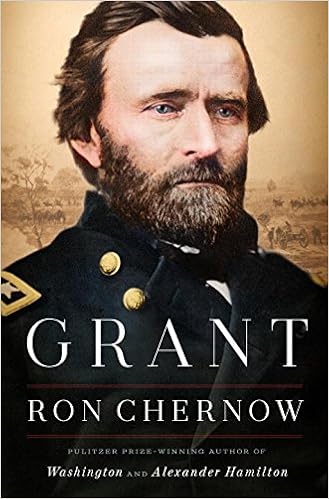
Bill Clinton Reviews Ron Chernow's Biography of Ulysses S. Grant

     . . .  I sent the link to Bill Clinton 's review of Ron Chernow's new biography, Grant, to el V. 


For the reviews in this post I am providing url instead of a links, as these reviews are behind The NY Times paywall:

https://www.nytimes.com/2017/10/12/books/review/ron-chernow-ulysses-s-grant-biography-bill-clinton.html? 

El V's response was dismissive: "It's like Clinton's seeing these ideas of Grant for the first time."

To which I responded, "Clinton is a southerner. When he was growing up, the mainstream, and even scholarly academia hadn't begun to admit and confront that our received history of the Civil War was a falsified, revisionist one. It's even more recently that scholarly academics have begun to view the 20th century accounts of Grant as man, general and POTUS as part of the received revisionist Glorious Lost Cause history, and actively correct it. So yah, it could well be that Clinton is seeing this information of the real Grant for the first time." 

El Vaquero thought that made sense and wondered why it hadn't occurred to him while reading B-linton's piece as it did to me.

Over the years I have read many works about Grant as biography, as general, as president, as writer, etc. This includes the books written by his family. And books about and by his closest associates -- friends, family, politicians, soldiers. Still, I am looking forward a great deal to Chernow's Grant, despite having not time to get to it right now.  As it's nearly 1000 pages long, it's too big to take along to Mexico, to where we go in a few days for the live Slave Coast performance, academic conference etc.  I don't want an e-version since I need the cites and reference pages, as well as the index. Then there are the more than a few reviews that sniff Chernow's book has little or nothing original to say about Grant. But Chernow's an effective word slinger and a conscientious connector of researched historic dots.

Additionally, one does doubt these the reviewers actually have read the whole thing, any more than most of the reviewers of Hillary's book read all her book either (which I have, btw -- it's part of the first draft of this phase of US history, thus essential).

Janet Maslin's New York Times review even claims that Grant is much livelier than Chernow's Hamilton,

https://www.nytimes.com/2017/10/10/books/review-grant-biography-ron-chernow.html

which she complains was "a tough slog." I read Hamilton (2005) back in 2010, and then listened to the audio edition some years later. It seemed to me a quite a felicitous read - listen experience. Like Bill Clinton's review of Grant, Maslin's feels as though she doesn't understand and is unfamiliar with this nineteenth century US history. In the tradition of romperman she pronounces as one encountering this matter for the first time, and therefore believes no one else knows anything about these matters either -- which surely can't be the case for Masilin?  Not only does she call the book an attempt at "a make over for Grant," she says it's "startling" to learn that Grant's victory in the War of the Rebellion didn't end southern white supremacy and hatred! It's an odd tone, particularly for a NY Times reviewer to take on a book about what is so central to our national history -- particularly as the NY Times was part of the recent five year, daily, re-examination of the Civil War on the occasion of its sesquicentennial. One suspects that these reviewers now look at another Big US History work, particularly one that deals with the subject matter that makes the US War of Rebellion and that of slavery and white supremacy, and just -- groan, at the very idea of having another one to review, and so barely skimmed it -- as it's clear, after reading it myself, that most reviewers also at best skimmed Hillary's What Happened.


Surely this large, detailed biography of Grant will teach me something I don't already know.  In any case, there are many positives to have all this factual and honest information about Grant in a single work by an author that people are ready to believe in, even without the massive hit of the Broadway show of Hamllton made of his bio of that fellow. (Not that they have a lot to do with each other, of course, but  it is what we hoped to do with our subjects in Slave Coast.

The thing is that Grant continues to be vilified with lies constantly. Even in the comments to the reviews of Chernow's book, the trolls howl about Grant owning a slave plantation and loads of slaves and hating black people, being a butcher and a drunk, a terrible general, particularly when compared with that saint, Robert E. Lee. It was refreshing indeed to hear Chernow laugh about that in the WNYC interview with him earlier this week.  He said, "Compare for instance, the number of armies that Grant destroyed with those that Lee did. Lee never took out a single army."

Friday, August 11, 2017

Black Nerd Problems GOT + Slavery Fanfic - Make Alternative America Great Again!


     . . . . This recap of Got's season 7, episode 4 is wonderfully funny. It goes beautifully with Leslie Jones's hilarious "Game of Jones Thrones" with Seth Meyer.


 Link to Jones Thrones -- The G-OT- Is MEEE is here.
Brienne asked her how she learned that shit, and Arya hit her with “No One.” I wasn’t ready, fam. I just wasn’t. Also, NEITHER WAS SANSA. My god, Sansa look like she just showed up to the city wide science fair with a potato clock. That shit was rouuuuugh. Jon got fucking murdered, but became King in the North. Bran got paralyzed, but became an Omega Level Mutant. Arya has had to run to every corner of the continent and lost her sight to become Agent 47. And Sansa was betrothed to not one but two monsters, got brutally assaulted, and gained a stalker so that she could fill out TPS reports on grain inventory. That’s fucked up man. Everybody else went away to college and became experts in their field while Sansa rotted away at a terrible MFA program and left with a degree she ain’t gonna do shit with and even more student debt. Life ain’t fair, yo.


What Black Nerd says about D&D's HBO slavery fanfic is penetratingly wise, rather than comic.  It goes well with Ta-Nehisi Coates' piece on Confederate in the Atlantic and the radio interview with the #noconfederate activists -- links to both these are here. 


Let’s not stand on ceremony here: as great as Benioff and Weiss are as visionaries, their blind spots as two cis white men shows up too often for me to be comfortable for a show with slavery as a major component of the story. The gratuitous display of sexual assault (well past showing how brutal the world is), and the reluctance of having any pivotal POC character or venturing into the very natural lines they have drawn around color (the Unsullied army is almost, if not all, POC as former slaves, but is only explored as a class differentiation) gives me little confidence that this will be a new awareness taken on with this new venture. There aren’t many scenarios I see this working: 
- Slavery is minimized and a smaller part of the plot: So… we minimizing slavery now? Yeah, no.
- Slavery is more than just Black people in this alternative world: So… we just minimizing Black slaves as a narrative on some all slaves matter stuff? Nah.
- The flip of that being Black people or other POC own slaves as well: Sigh, come on, man.
These are all alternatives to the possibility that it’s not just a continuation of slavery from the very real world brought into a modern era. Even if these cats have the tools to do this, then Game of Thrones has been a terrible dress rehearsal because we haven’t seen it.
The only way this holds any significant interest for me is if there is a slave revolt in the first episode and the third civil war is about the Black people taking over the America. Das it
. Make Alternative America Great Again. 
. . . . this has a lot to do with agency. About who gets to tell who’s stories. Would I feel differently if Black creators were behind this show? Probably. Not like, Lee Daniels though, but still. These stories can exist in the world, either based on real life narratives or alternate universes, but the voice and the trust in the identification of the producer counts for something. Handmaiden’s Tale, Underground, shows like those, where the writer reflected the identity of the marginalized people in those stories, relays a faith that those characters will be handled with a caring and understanding befitting the human portrayal we expect. Game of Thrones is excellently written and thematically beautiful, but it is also spectacle. It is decapitations and rape and little girls burned alive. I’m fatigued on stories of a time period (or time period carried over, in this case) that attempts to justify racism and racial violence as a tool of the day, but I’m also fatigued on the spectacle of “back in the day” racism. There’s no reason to have confidence this won’t continue under Benioff and Weiss, and they have had several years with the highest visibility prove otherwise.

Friday, July 21, 2017

Ammunition -- Surely They Are Laughing All the Way to the Bank - HBO Confederates

     . . . . Even on the ASOIAF forum HBO's announced next project with D&D alternate history in which the southern antebellum slaveocracy successfully seceded has set off a sh*t storm, on the order of "Bad Idea or Worst Idea?" with loads of people weighing in with all the cliched, stereotypical expected responses, which basically say --
Woo! slavery's so haut!
It's just entertainment what's your problem?
How can you condemn something that hasn't even been written yet?
The Civil War wasn't about slavery.
Antebellum slavery couldn't industrialize because it was a feudal system not a capitalist system.
The north didn't care about slavery.
There were very few abolitionists (and evidently, judging by these comments, not a single person of color -- or white woman -- was in favor of abolition or against slavery, and this was wholly a white man's war).
Why not just have let 'em have their part of the country and all would have been fine.
Slavery would have just withered away.
Blahblahblahblah.
To be able to combat these idiocies coolly and effectively, one needs to be armed -- and trust me, those thoughtlessly regurgitating these cliches are not.  One must point out particularly what the slavocracy's objectives were (number 1: expansion of slavery) there are a few books one can read to make one competent. One should read them too,  because what most people think they know about antebellum slavery, "the underground railroad," abolition and the roots of the War of Southern Aggression are at best out-dated (such as slavery was a feudal system), and at worst,  just wrong (the north didn't give a damn about slavery).

For example, Eugene Genovese's thesis that slavery was feudal not capitalist, has been dismantled by vast scholarship in the last twenty - thirty years. Enormous amounts of scholarship has gone into the history of antebellum slavery in all its aspects since the Civil Rights Movement, and historians everywhere have been reaping the benefits of this in the last 2 - 3 decades.  The same is true for the war effort itself.

Here is a very short list of books than anyone who wants to speak of the system of antebellum slavery and The War of the Rebellion should read:


Narrative of the Life of Frederick Douglass, an American Slave. Written by Himself;
Behind the Scenes: Or, Thirty Years a Slave and Four Years in the White House by Elizabeth Keckley (Keckley was the US's first African American 
couturier -- right before secession she dressed both Mary Todd Lincoln and Varina Davis. She became socially isolated Mary Todd Lincoln's White House confidant. the book is a mixture of authentic memoir and fiction;
Crucible of Command: Ulysses S. Grant and Robert E. Lee--The War They Fought, the Peace They Forged  by William C. Davis;
General Lee's Army: From Victory to Defeat by Joseph Glatthaar;
This Vast Southern Empire: Slaveholders at the Helm of American Foreign Policy by Matt Karp;
The American Slave Coast: A History of the Slave-Breeding Industry by Ned and Constance Sublette -- which runs down in a chronological, fast-reading narrative the latest scholarship about slavery in North America from the earlier colonial era to Emancipation, including the influence and effects the system within the larger European and hemispheric historical context, but the focus is on the economics of the enslaved bodies themselves -- without which the South had no wealth;
Bound for Canaan: The Epic Story of the Underground Railroad, America's First Civil Rights Movement by Fergus M. Bordewich;
Our Man in Charleston: Britain's Secret Agent in the Civil War South by Christopher Dickey -- an interesting contrast to how the Union State Department was seeing the situation with England in particular through the experiences of the US minister's mission to Saint James;
Mary Chesnut's Civil War; the carefully edited after-the-fact diary of a the wife of the South Carolina senator James Chestnut Jr., until secession, after which he served as an aide to Jeff Davis and a brigadier general in charge of South Carolina's reserves (though not seeing action, of course, being such a slavocracy nabob);
The Free State of Jones by by Sally Jenkins and John Stauffer -- Mississippians (the state with largest number of millionaires in the country prior to Emancipation) who were neither segregationists nor secessionist, nor were they nabobs -- they suffered and they resisted and fought back.
The Education of Henry Adams by Henry Adams.  He writes of his first hand experiences at the highest levels of England's and France's government during the first years of the war, as private secretary to his father, Francis Adams, as minister to Saint James.
Two things we must never forget about antebellum slavery and the War of Southern Aggression /K/ A it's official name in the records of the United States, The War of Rebellion: African Americans played an immense role in abolition and emancipation.  Escaped slaves and free people of color founded newspapers, wrote books, spoke at endless meetings, organized a relief and assistance for those who managed to escape.  They labored endlessly to keep the issues of the Fugitive Slave Act and Dred Scott in the forefront of progressive minds.  Here we see the first nexus of authentic cooperative action -- not just words! -- of black and white, male and female. Never underestimate the power of people with god-given mission for moral improvement (look at how the evangelicals etc. have managed to just about disappear not only abortion, but any woman's reproductive health care from so many places in this nation, even though it is all legal).

And we must never forget that while the north for the most part, as well as the Union, when the time came, though deeply white supremacist, was also deeply antagonistic to slave labor, for it undercut wages across the board for everyone (as keeping the wages of Haitians at a few cents an hour is the benchmark for wages throughout the hemisphere currently)-- as well as threatening having work at all.  With this half of the 19th century receiving boatloads of immigrants every day, the competition for jobs was fierce.

Having slavery forced upon free soil states was not in their interests -- just as the Fugitive Slave Act was antithetical to their interests, economically, politically, and socially.  Anyone could point to your daughter and son, declare her, him a runaway slave and there was no legal recourse -- and you were supposed to help them.

Don't forget by now there was a large percentage of legally enslaved who had white skin, blue eyes and blonde hair, thanks to generations of white men raping African American women for both fun and profit -- every slave child born provided the slave owner with at least another $50 of credit, in a culture that didn't have money per se, only credit, vastly based in the bodies of their slaves.

So skin color was not a final defense by any means -- nor was an accused runaway allowed to have or speak a defense!  People in the north did not like this.  This brought more people into the anti-slavery factions than anything else, and did it so fast the south couldn't believe it was happening.

You have to know all this and much more besides, and know it inside and out, viscerally, before you can write successfully about anything to do with the history of the war, slavery, and what happened. And the more one knows -- seeing from the benefit of hindsight-- the more one knows it couldn't have happened any other way.

What cannot be white washed away in any kind of entertainment is that slavery = rape and every kind of violence perpetrated on people who have no legal right to object or fight back. Which is why so many can't seem to let it go (see above -- slavery's haut! How dare you object to what turns us on?).  They want and revel in with all their being, the joy of feeling dominant, doing whatever they wish (or their fantasy surrogates do to women and others whatever they wish), to deliberately make people suffer both physical abuse and emotional abuse.

We see this particularly in the many stories or program that involves artificial intelligence / androids. There is no fun in hurting and degrading a sentience that doesn't feel abused and degraded, that in really has no free will or feeling. Thus all the plot lines is giving the androids a/is actual humanity or having them develop it -- so they can feel humiliated and degraded. (A rare exception to this is Ex Machina, an adroid who does feel outrage, but is also entirely sociopathic, lacking all the human feelings and values -- just like slave owner.  She gets hers, and is now unleashed upon the world of poor unsuspecting male victims. O noes!)

We say, for the sake of the story, so people can have identification with the characters we have to give them human feelings.  I.e. we need that dominance from built in abuse.  Which is why this will not help and will make things worse.  D&D have a track record, and that track record is out there for all to see and read.

Entertainments have civic, ethical, social, political and historical responsibilities too.  To say "it's only for fun," -- just think about what that fun consists of.

Then there's this, that so many of us find the entire concept sickening on so many levels, delights the ilks that are D&D -- it means they won, which is supremely depressing.

Thursday, July 20, 2017

Shame on HBO -- Morally and Historically Reprehensible

     . . . . The same untalented, ethically, socially and historically ignorant sexist and racist team that brought you limitless gratuitous graphic scenes of female nudity, rape and torture to HBO via Got, now presume to bring the the same, now set in an 'alternate' historical time line in which slavery remains legal because the CSA successfully seceded.


Just for that latter, a "successful" secession has Andrew Jackson spinning in his monument.  He didn't squash Calhoun, South Carolina and Nullification in 1832 for morally bankrupt 21st century media to make it entertainment.  See the Nullification Proclamation By Andrew Jackson, President of the United States, to South Carolina, here.

NY Time pay wall so the url rather than a link is provided:

https://www.nytimes.com/2017/07/19/arts/television/hbo-confederate-game-of-thrones.html

     . . . . In any case, the south couldn't have successfully seceded because Lincoln and many coalitions behind  him wouldn't allow it. As Jackson knew, neither division would have stood long before England and France picked both of them off. As it was during the first three years of the War of Southern Aggression a faction in both England and France did their best to help this along.  Also because the whole point of secession was to provoke a war with the non-slavery forces so the slaveocracy could then take over the entire nation -- they didn't want to be left alone with their peculiar institution.  Their objective was to aggressively force their peculiar institution upon all by the force of arms.  There is a reason that the U.S. Civil War's official name in the government records is "The War of Southern Aggression."

So Grant whipped Lee's army, and the CSA melted because it was essentially nothing but the Army of Northern Virginia, never a functioning nation. If you don't believe me, read some contemporary


military histories of the Virginia campaign by military historians, such Crucible of Command, and Lee's Army. Among the reasons the CSA was never a nation is that the CSA power elites didn't believe in government in the first place, and couldn't work together any better or effectively than the people in the White House right now do. 


Killing black people at whim with impunity, raping black women anywhere anytime at whim without repercussion, raping black children without even being socially ostracized, torturing and incarcerating at will, using as unpaid labor black people who are prisoners of the entire slavery system, in an what has to be (speaking from historical evidence), an all white country, since slave labor makes immigration unattractive if not downright impossible, since color-coded slave labor fills all the labor slots from housekeeping, to hair stylist to mechanic, to street cleaner, miner, etc . -- in our current climate in which lynch nooses and random, arbitrary of killing of African Americans and threats to do so happen all the time -- can anyone with any sense of artistic talent and social conscience really think this thing which didn't happen and couldn't have happened is a good thing for popular entertainment and the nation? 


This is the height of irresponsibility, as a member of our civic, economic, social and political polity. Media and entertainment does shape all these matters.  Historical accuracy, even in entertainment, is civic responsibility. Ask the  historic slaveocracy that blamed Harriet Beecher Stowe and Uncle Tom's Cabin for the Civil War.

Shame HBO and everyone involved, shame, shame, shame.