LINES OF THE DAY

". . . But the past does not exist independently from the present. Indeed, the past is only past because there is a present, just as I can point to something over there only because I am here. But nothing is inherently over there or here. In that sense, the past has no content. The past -- or more accurately, pastness -- is a position. Thus, in no way can we identify the past as past." p. 15

". . . But we may want to keep in mind that deeds and words are not as distinguishable as often we presume. History does not belong only to its narrators, professional or amateur. While some of us debate what history is or was, others take it into their own hands." p. 153

Silencing the Past: Power and the Production of History (1995) by Michel-Rolph Trouillot

Showing posts with label revisionism. Show all posts

Friday, October 13, 2017

Bill Clinton Reviews Ron Chernow's Biography of Ulysses S. Grant

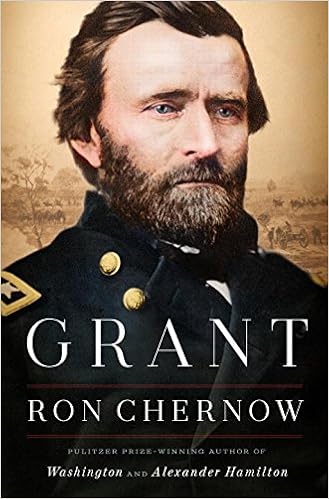
     . . .  I sent the link to Bill Clinton 's review of Ron Chernow's new biography, Grant, to el V. 


For the reviews in this post I am providing url instead of a links, as these reviews are behind The NY Times paywall:

https://www.nytimes.com/2017/10/12/books/review/ron-chernow-ulysses-s-grant-biography-bill-clinton.html? 

El V's response was dismissive: "It's like Clinton's seeing these ideas of Grant for the first time."

To which I responded, "Clinton is a southerner. When he was growing up, the mainstream, and even scholarly academia hadn't begun to admit and confront that our received history of the Civil War was a falsified, revisionist one. It's even more recently that scholarly academics have begun to view the 20th century accounts of Grant as man, general and POTUS as part of the received revisionist Glorious Lost Cause history, and actively correct it. So yah, it could well be that Clinton is seeing this information of the real Grant for the first time." 

El Vaquero thought that made sense and wondered why it hadn't occurred to him while reading B-linton's piece as it did to me.

Over the years I have read many works about Grant as biography, as general, as president, as writer, etc. This includes the books written by his family. And books about and by his closest associates -- friends, family, politicians, soldiers. Still, I am looking forward a great deal to Chernow's Grant, despite having not time to get to it right now.  As it's nearly 1000 pages long, it's too big to take along to Mexico, to where we go in a few days for the live Slave Coast performance, academic conference etc.  I don't want an e-version since I need the cites and reference pages, as well as the index. Then there are the more than a few reviews that sniff Chernow's book has little or nothing original to say about Grant. But Chernow's an effective word slinger and a conscientious connector of researched historic dots.

Additionally, one does doubt these the reviewers actually have read the whole thing, any more than most of the reviewers of Hillary's book read all her book either (which I have, btw -- it's part of the first draft of this phase of US history, thus essential).

Janet Maslin's New York Times review even claims that Grant is much livelier than Chernow's Hamilton,

https://www.nytimes.com/2017/10/10/books/review-grant-biography-ron-chernow.html

which she complains was "a tough slog." I read Hamilton (2005) back in 2010, and then listened to the audio edition some years later. It seemed to me a quite a felicitous read - listen experience. Like Bill Clinton's review of Grant, Maslin's feels as though she doesn't understand and is unfamiliar with this nineteenth century US history. In the tradition of romperman she pronounces as one encountering this matter for the first time, and therefore believes no one else knows anything about these matters either -- which surely can't be the case for Masilin?  Not only does she call the book an attempt at "a make over for Grant," she says it's "startling" to learn that Grant's victory in the War of the Rebellion didn't end southern white supremacy and hatred! It's an odd tone, particularly for a NY Times reviewer to take on a book about what is so central to our national history -- particularly as the NY Times was part of the recent five year, daily, re-examination of the Civil War on the occasion of its sesquicentennial. One suspects that these reviewers now look at another Big US History work, particularly one that deals with the subject matter that makes the US War of Rebellion and that of slavery and white supremacy, and just -- groan, at the very idea of having another one to review, and so barely skimmed it -- as it's clear, after reading it myself, that most reviewers also at best skimmed Hillary's What Happened.


Surely this large, detailed biography of Grant will teach me something I don't already know.  In any case, there are many positives to have all this factual and honest information about Grant in a single work by an author that people are ready to believe in, even without the massive hit of the Broadway show of Hamllton made of his bio of that fellow. (Not that they have a lot to do with each other, of course, but  it is what we hoped to do with our subjects in Slave Coast.) 

The thing is that Grant continues to be vilified with lies constantly. Even in the comments to the reviews of Chernow's book, the trolls howl about Grant owning a slave plantation and loads of slaves and hating black people, being a butcher and a drunk, a terrible general, particularly when compared with that saint, Robert E. Lee. It was refreshing indeed to hear Chernow laugh about that in the WNYC interview with him earlier this week.  He said, "Compare for instance, the number of armies that Grant destroyed with those that Lee did. Lee never took out a single army."

Tuesday, December 2, 2014

The Civil War, Reconstruction, Race, Reunion, Glorious Lost Cause, Jim Crow and beyond.


The American Slave Coast's subject is the economy and the slave breeding industry, which the War of Southern Rebellion definitively ended. Thus the ways in which the National Conflict per se  enters The American Slave Coast are via self-emancipated who emerged on the scene almost simultaneously with the firing on Fort Sumter, the two emancipation proclamations and the  ways in which the battles, self-emancipation and the proclamations disrupted both the breeding and the trade.  This, though neither were completely ended until the fall


of Richmond -- and even then, the biggest slave trader was trying to get on the train with a coffle of his merchandise to do ... what? and do it ... where?

However, surely, in interviews and q&as after presentations questions that involve any and all of the above will be asked, so one needs to have something, hopefully intelligent and not error-filled, with which to respond.

Ever since some years ago, when I began looking at these matters,  the more I've learned, the more I am amazed by the deliberation and consciousness with which the secessionists constructed the War into the revisionist Lost Cause, and how soon it began -- even before Appomattox -- with direct turn arounds by personages such as Jefferson Davis, suddenly saying the war isn't about slavery, when all along they howled how they would shed every drop of blood to preserve -- and expand, this godly system.

What astonishes me most is how northern and Union historians, journalists, scholars, publishers, and researchers of all sorts -- and politicians! -- went right along with it, all through the north and the west. Many of the secessionists of means moved trans Mississippi and North between 1866 and 1880 -- particularly the wealthy and powerful secessionists. The poor yeoman farmers who bore the brunt of the blood and privation of the rich man's fight, were also too poor to move.

What's equally amazing, is how organized and cooperative the slave power was countering the historical histories and recollections coming from the Union side of the conflict, swiftly founding publications than never before existed, publishing histories, articles, recollections, and even fiction, as well as sentimental, nostalgic, elegies to the faux slave holding south as it never was. They also swiftly created memorabilia collections -- and put up those massive CSA monuments all over the secessionist territory. The reason for my amazement is, because, reading the accounts of the war from the perspective of


the south, as with McPherson's latest, Embattled Rebel: Jefferson Davis, Commander-in-Chief, it was clear the secessionists weren't able to organize even putting uniforms on their troops, couldn't cooperate in terms of distribution of supplies, or even troops, and hated each other, everyone refusing to take orders or fight for any other state.  The war really should have been over by 1862 -- and likely would have been if the Union hadn't lost the Battle of Fredericksburg, and thereby acquiring huge amounts of everything Lee didn't have, from shoes to food, to ammo and weapons.  But then, it should have been finished by the end of 1863, but Jeff Davis insisted that the CSA would either prevail or burn down the house.

Who financed these journals, papers, historical societies, monument efforts and so on, because somebody had to -- and the south in general was flat broke, and lumbered with debt, without any credit at all.

One answer to that question is Bernard Mannes Baruch -- a son of an immigrant physician to South Carolina, Simon Baruch, who married a southern belle. The family moved north when Bernard was 10. When he became a plutocrat, Bernard Mannes Baruch financed one of the largest southern women's organizations that placed confederate monuments all over the states that seceded. This history of the benefactor of Baruch College is very well concealed -- not even his father's name is named, though it is in a variety of histories that deal with Jewish immigrants in the antebellum and war eras of South Carolina.

Gettysburg, 50th Anniversary Reunion 
I'll be reading these histories for at least a year, as I try to prepare myself to answer questions about how all this got transmuted into the Glorious Lost Cause in which both sides were right and a tragedy of white brother against white brother, about disagreements about tariffs and states rights but not slavery at all o no! but now that we spilled all the blood for nothing we're whole and good, had perfected democracy and were prepared to take our place on the global stage as the best, most exceptional and triumphant of nations in all history.