LINES OF THE DAY

". . . But the past does not exist independently from the present. Indeed, the past is only past because there is a present, just as I can point to something over there only because I am here. But nothing is inherently over there or here. In that sense, the past has no content. The past -- or more accurately, pastness -- is a position. Thus, in no way can we identify the past as past." p. 15

". . . But we may want to keep in mind that deeds and words are not as distinguishable as often we presume. History does not belong only to its narrators, professional or amateur. While some of us debate what history is or was, others take it into their own hands." p. 153

Silencing the Past: Power and the Production of History (1995) by Michel-Rolph Trouillot

Showing posts with label literary history. Show all posts

Friday, November 11, 2022

Keepin' the Home Fires Burning

     . . . . Could this actually be a week in which decent people can have some joy?  The retreat from Kherson, inflation seeming to have hit peak, our midterms giving us the "Something not turning as out as bad as it could necer felt so good."

Somehow, the three feel related, along with the outcomes of both Colombia's and Brasil's presidential elections. Even so, I'm probably centering, wrongly, the US here?

OTOH, covid infections are increasing like mad here.  Glad I did the late autumn hair stylist visit early.  Also we are going back to NO next week.  Back in time for Thanksgiving with some friends -- who had covid, but are over it  But we won't have the usual second Thanksgiving we usually have with other friends, as they both have covid presently.  Pax is doing its job, but as one is so run down from years of caregiving and job, and the other is still recovering from emergency brain surgery, it's not so easy.

Another amiga has been subjected to round after round of chemo since June/July. She and I have email discussions about the books and television likes we have in common. The latest was around learning we both had liked The Peabody Sisters: Three Women Who Ignited American Romanticism (2005) by Megan Marshall, is another of those biographies that work beautifully for me as well. I've read it, in fact, three times. 


Sophia Hawthorne was one of the sisters. She spent her life in Boston being sick, unable to walk or do housework.  The only treatment that worked for what ailed her was spending the winter in Cuba on a hacienda.  The further her ship got from the Boston, the better she felt, until, by the time she reached Cuba, she was quite, quite well.  She adored spending her mornings a-gallop on spirited horses of her host, across the river valley fields. Then, returning to Boston, the closer her ship got to US shores, and the closer to Boston, the more unwell she became.

 Reading this in the biography back then, sent me looking for Sophia's journals, and I found some material that el  V was able to use in his Cuba And Its MusicSophia Hawthorne was as racist and non-condemning of slavery as she could be, without coming right out and saying she believed slavery was a positive institution, but she was observant, so there were bits that were of use. Her remarks on the enslaved form part of the unlovely picture of our nation's history of Black hatred. 

I want to blame her husband, since Sophia's sisters were quite concerned with slavery and abolition.  Nat. Hawthorne, though, was quite a piece of work. All his life he was in bromance with Franklin Pierce, and, even, quite possibly, his lover.  Hawthorne wrote Pierce's presidential campaign political bio for excellent pay, received sinecure government posting from Pierce, was with him on his deathbed -- he asked for him, not Sophia -- was totally in the slaveocracy's pockets.  Hawthorne was vocally anti-abolitionist, and decisively told people discussions of slavery were boring and a waste of time, and he didn't care about slavery one way or the other.  Quite out-of-step with fellow Concordians.  Though Sophia's Cuban trips began before she knew Hawthorne, of course, so it was more like-to-like than caused by Hawthorne. My, this book, and the experience of it, like everything before 2016 and covid feels far, far away in time.  


Coincidence: as I finished Sister Novelists, another biography of sisters appears --a new book about the Grimkés: The Grimkes: The Legacy of Slavery In An American Family, by Kerri Greenidge.  It seems to be a study intended to debunk their reputations as anti-slaverites -- the review I read suggests they profited immensely from slavery.

So, this morning, receiving the news the library had The Grimkés available, I dashed off to the library to pick it up, because it wasn't raining much, despite we being in Tropical Storm Nicola predicted wind and rain. I knew it was Veterans Day, but didn't stop to think this is a holiday and the libraries are closed.  Duh.  I'm smart that way.  Though I was wearing the rain-snow-storm boots I got last week, so I'm not so dumb that way!  Had on rain coat and carried umbrella too.  Which was good because the storm hit hard as I was returning home, due to the fog and heavy cloudfs, dark came even earlier than the roll back of EDST makes it. We're currently in fog, as well as dark, since the temps are fairly warm -- in the 60's. Well stocked with what we need, and even what we want, we are happily cozy and comfortable.  How lucky can we get?

The week was quite lively, while we ignored the pre-election and pre-results backbenching with all our hearts.  El V did another Postmambo Zoom last night, this time with live guest and his film,  from Lome, in Togo, Africa.    He also went out to several music gigs, and we taught two classes.  

Hope the internet stays on -- it's gone out twice now in less than 24 hours.  If no problems I plan to watch more Crown, season 5, 2022. This is the season to turn the mythologies of Di and Charlie inside out. The first two eps dull and dreary.  The actor doing Di is lacking in all that made cameras and screens bewitched by her.  We see her being acidly mocking and mean, o so not quite subtly (due to the bile and acid of bulimia?). It got interesting in the 3rd episode which was generally only about the Al-Fayed family and the man who was the Duke of Windsor’s valet until death – Fayed sr. hires Black Barbadian, Sydney Johnson, whom the Duke had taught everything that makes an English gentleman.  According to the show, Johnson was the one who advised Al-Fayed to buy palace estate, Villa Windsor, decaying on the outskirts of Paris – and Harrods Department Store, then finally buy some position in a most prestigious equine something or other so he can sit next to, and, finally, meet and speak with the Queen. Queenie’s not about to allow this unworthy vulgarian colonial his reward. She and her Equerry send Diana instead. The Princess insults him, and they get along famously.  Di and Elizabeth are equally nasty in this sequence. Later, at E’s court, the members eagerly check with each other as which possessions in the Villa belong to Them/the Crown/ -- and they go over the lists with the same avid attention any grocer would go over his delivery lists and invoices.  The Court looks small and grasping, petty and avaricious. And, always, deadly dull.

The other character is Charles (now Kingwingy Charles III). Played as he is by Dominic West – as Charlie then as now lacks all charisma, electricity and interest, whilst West can’t help splattering it everywhere just standing around -- this doesn’t work. Can you imagine The Wire's Jimmy McNulty having a temper tantrum over a ... pen?  No, we cannot, but Charlie did. Immediately on being king, even not yet crowned. 

If Charlie was in the least like West’s presentation, none of the messes would have happened in the first place.

So, history's revisionism continues apace, even revisionism of what we've 'always known' because we were there.  Ha!


Thursday, August 20, 2020

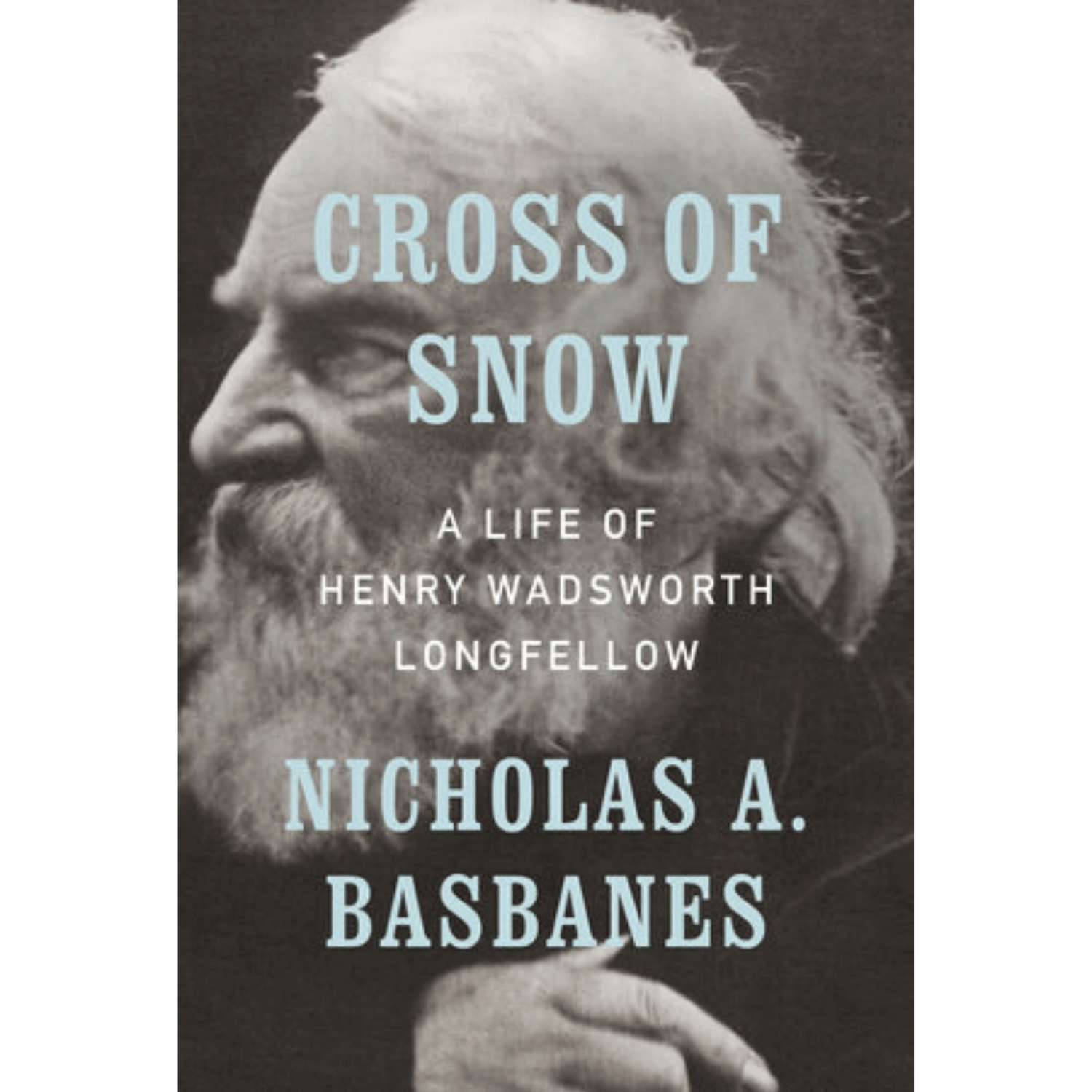
Basbanes, Nicolas A. (2020) Cross of Snow: A life Henry Wadsworth Longfellow


     . . . . Basbanes’s book overflows with interest for the literary, material and political historian of the US in the 19th C. The interest begins right at the start of the Introduction, in which Longfellow’s trajectory and fate are traced within the literary ‘canon’ critical establishment within, and without, academe.  Ten years ago surely, I would never have guessed that Longfellow would be rehabilitated as worthy by serious literature, but he has been.

All lives have tribulations, at least back before the medical advances of the later 20tht century.  Still, a very few led golden lives, and were also decent human beings, whom it was a joy to know, despite losses of loved ones to disease and childbirth.  Longfellow suffered grief due to losing those he loved, early in their lives, such as his first wife.  But still, like Walter Scott, he lived at time when it was nearly paradise for prosperous white men.

The story begins in Portland, Maine; of which Longfellow was a life-long proud and loyal scion,  presenting a cultural history of New England through his life time. Though not born into it, he joined that generational education-prizing Bostonian wealthy cultural and literary elite, which meant then, the literary elite of the nation. Our first recognized commerical publishers and editors were his friends before they became publishers, like Ticknor and Fields. To have all doors open to one at all times, wealth is very much the key. Longfellow’s father-in-law was the vastly wealthy fellow who pulled off industrial espionage, i.e. theft of propriatory information and design, from the textile factories of England, to institute the factories of Lowell, MA. Marrying into serious money is always a good move that improves life, even when already a popular eligible bachelor, a successful prof at Harvard, and published, prosperous money-making author.


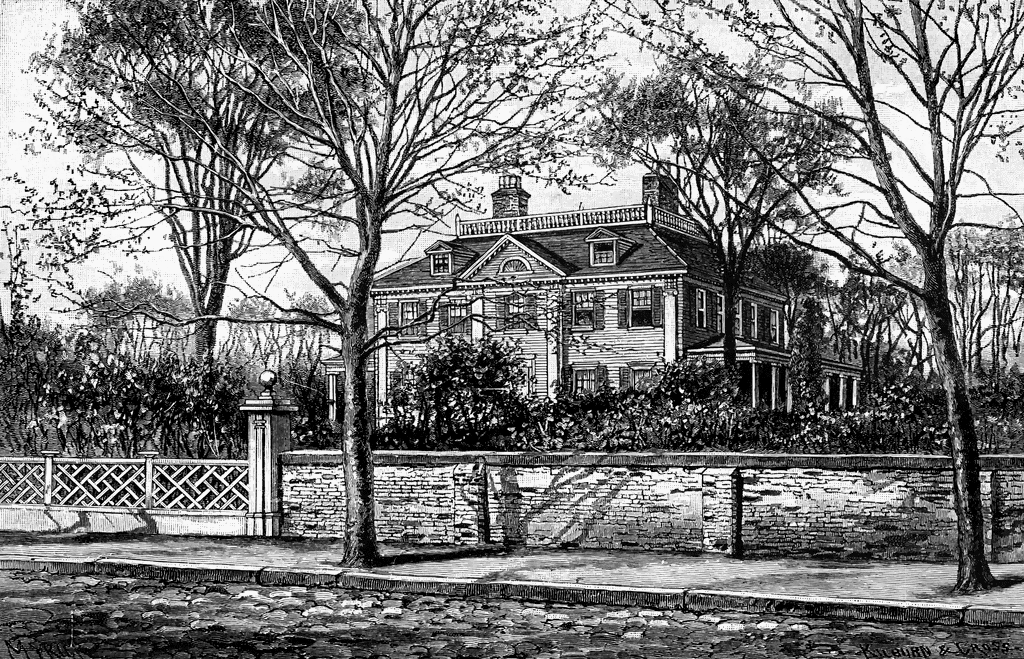
Craigie House, bought by Longfellow's FIL when he married Fanny. Washington bivouacked there. I always have imagined the Lawrence mansion in Louisa May Alcott's Little Women looking exactly like this.

Politically, Longfellow was mildly centerist all his life, which didn’t prevent a close life-long friendship with radical abolitionist-to-be, Charles Sumner. Nor did it prevent him from writing the lines that concluded his very popular, The Building of the Ship (published 1849), that made President Abraham Lincoln weep:

Thou, too, sail on, O Ship of State.

Sail on, O Union, strong and great!

Humanity with all its fears,

With all the hopes of future years,

Is hanging breathless on thy fate!

I confess, that in These Times, particularly after watching the Democratic Nominating Convention these last three days and hearing non-insane people speaking to a national audience, the lines make me weep too, as we all hardly even dare for “hopes of future years” in any way that we have known in the past.

Cross of Snow,  like such earlier biographies that have so delighted me, such as The Peabody Sisters:Three Women Who Ignited American Romanticism by Megan Marshall. Sophia Peabody was so much more interesting before she married Nathaniel Hawthorne, who was a Bowdoin schoolmate and later friend too, of Longfellow. Or, The Beechers by Milton Rugoff, an examination of the family. These provide the deeply engaging immersion that does a really fine historical family saga, such as that of Winston-Graham’s Poldark Saga.  

These kinds of books are inspiring, antidotes to the gorge of disgust, revulsion and despair about the USA and its history engendered by all these criminals in the news these days. They remind us there is a side of light after all to our past, that shone brilliantly in many locations -- in great opposition to the dark of Slaveocracy and those who made the War of the Rebellion -- and the Slaveocracy's descendents, these monsters from Lovecraft who are about nothing but ugly, hate, murder, pillage and destruction.

Friday, April 10, 2015

What Romantic Art Means - "Critique of Reason"

This is a "sweeping, 300-piece survey of the movement at the Yale University Art Gallery."  The majority of the pieces were produced by English artists as it's a collaboration between the Yale University Art Gallery and the Yale Center for British Art.
 
The first major collaborative exhibition between the Yale University Art Gallery and the Yale Center for British Art, The Critique of Reason offers an unprecedented opportunity to display together treasured works from both museums’ collections. The show comprises paintings, sculptures, medals, watercolors, drawings, prints, and photographs by such iconic artists as William Blake, Théodore Géricault, Francisco de Goya, and Joseph Mallord William Turner. The broad range of work selected challenges the traditional notion of the Romantic artist as a brooding genius given to introversion and fantasy. Instead, the exhibition’s eight thematic sections juxtapose arresting works that reveal the Romantics as attentive explorers of their natural and cultural worlds. The Critique of Reason celebrates the richness and range of Yale’s Romantic holdings, presenting them afresh for a new generation of museumgoers.
 
Since seeing the film, Mr. Turner, last year, Romanticism has again been much on my mind, and wondering how much, if any impact it had upon the thought of the new United States and her political - intellectual classes.
 

The War for Independence has been profiled as a product of the Enlightenment, without considering that continental and British Romanticism might have had equal or even contradictory influence. For instance, see the successive religious waves of  The Great Awakening, and their huge footprint in American history.

Wednesday, December 10, 2014

Death of Tolkien's Smaug Inspired By Longfellow's "Hiawatha"

From the UK Guardian, in the Books section:


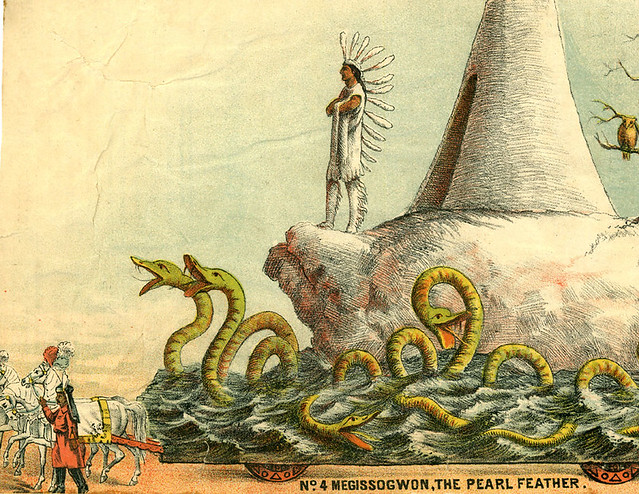
Hiawatha faces Megissogwon, manito (spirit) of wealth, who is impervious in his shirt of wampum, the hard shell beads once used as currency. After a day-long battle, Hiawatha has only three arrows left. Victory appears impossible until --


Suddenly from the boughs above him
Sang the Mama, the woodpecker:
‘Aim your arrows, Hiawatha,
At the head of Megissogwon,
Strike the tuft of hair upon it,
At their roots the long black tresses;
There alone can he be wounded!’

And so, thanks to a bird’s revelation of his fatal vulnerability, another monstrous symbol of material wealth is brought down by a bowman almost at the end of his arrows.
Huh.


There is much more background to this, and how it was discovered, here. The discussion in the article of the relationships among Hiawatha, the Kalevala and Tolkien's epic are illuminating.

The 
Guttenberg "Hiawatha" here.

See 
Jeff Thompson's National Geographic illustrations of Hiawatha and Megissogwon here.

I love this convergence of the Eddas, The KalavalaHiawatha and The Hobbit's Smaug so much -- particularly, as the article's author notes, that both Longfellow and Tolkien were language professors.

Friday, October 3, 2014

Elizabeth Gaskell's Home Reopened

Victorian novelist, Elizabeth Gaskell is the author of works that still appeal today to certain sorts of readers (including myself): North and South, Wives and Daughters, Cranford. These three have been adapted as eminently watchable television series.


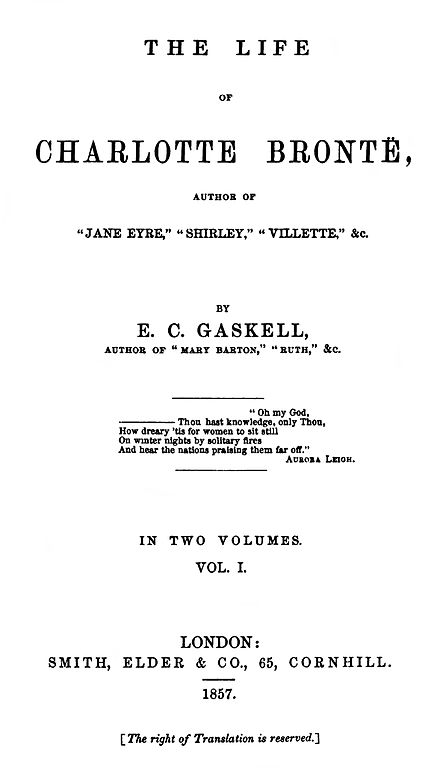
Further, many lovers of the history of the novel in English are grateful to Mrs. Gaskell for writing the posthumous biography of her dear friend, The Life of Charlotte Brontë (1857 -- first edition).

However, not everyone is / was pleased with this biography, particularly once the previous century's second-wave feminism emerged.  21st century's fannish approaches to literary criticism, reviewing, writing and reading particularly perceive Gaskell's biography as a repellent sanitation of Brontë, patron saint of victimized women of passion in possession of the specialness gene.

Plymouth House,  121 Upper Rumford Street, to which the Gaskells moved in 1842 from a slightly smaller house in the same district, in which they'd lived since 1832.

Plymouth House today, restored.


Could this sort of feminist quarreling have contributed to the 20-year struggle to preserve and restore Gaskell's home? Having re-read Gaskell's biography of the author of Jane Eyre several times at different periods of my own life, it feels to me as though the writer of the linked-to essay is willfully misreading the work -- in order to view Ms Brontë through her own lens of desire that reduces all literature and other entertainments to "doing it!" fast and furious and often, preferably with the ripping of the clothes off. But that's why we keep writing about these writers, because we have different perspectives.

Plymouth House is located in Ardwick, which by the mid-nineteenth century, had become a "pleasant and wealthy" suburb of Manchester, Manchester, which was a cradle of English industrialization. This proximity to the horrors to which factory workers were subject provoked Gaskell' s sensibility to write with such sensitivity on what were then called social subjects, as with her successful novel, North and South.

Complete story in the Manchester Evening News, here.

And more here in the UK Guardian.


Wednesday, November 27, 2013

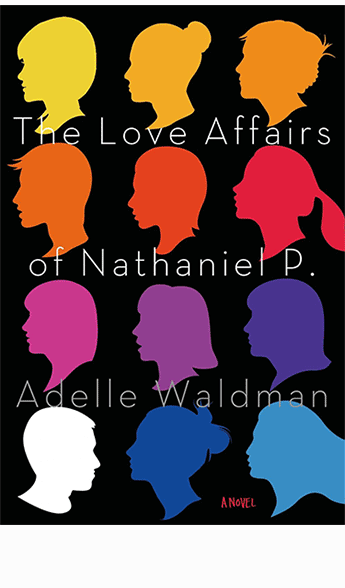
Reading Wednesday: The Love Affairs of Nathaniel P; The Pursuit of Love; Longbourn

I read two whole novels!

The Love Affairs of Nathaniel P is a new novel (2013), while The Pursuit of Love (1945) is older than I am. I've also read Pursuit more than once before.  I'll say it right here at the top that I enjoyed very much reading the older novel again, while feeling rather bored by the new one, despite how self-consciously Adelle Waldman is heiress to narrative techniques refined by that contemporary of Nancy Mitford, Virginia Woolf.

I'll begin with the new one.

Natty P is the narrator of this description of a group of  New Yorkers maybe three of four years ahead of Lena Denham's cohort.  Natty P's people rotate in various degrees of intimacy within the larger constellation of the intersecting publishing vectors: reviewers for online zines like Gawker, editorial assistants for magazine like Vogue, novelists with first contracts. All of them intend to be published authors.

One and all they have graduated from programs at no lesser institution than George Washington University (though Harvard is by far the top of the list to name-drop as alma mater, and is name dropped on every page; Natty P graduated Harvard). Often they were recipients of prestigious literary prizes awarded by a program at that institution like this one.  Yet even the poet of the novel, winner of a Stanford undergrad poetry prize, cannot find a job in NYC's publishing world worthy of her. The job market into which they graduated is unfair. Whether there were ample entry level jobs out there or not, these individuals do not think they should have to be in them. Those positions are for those who didn't go to Harvard.

One and all name check Italo Svevo (James Joyce who?) as their benchmark when assessing the brilliance of new acquaintance, or deciding someone might be worthy to have sex with. As well as quantifying the endless varieties of their brilliance, they minutely categorize everything else about themselves and each other -- including the toilet paper, and, toothpaste they buy and why.  (Fascinated by them yet?) They hold in solidarity the conviction of personal exceptionalism, yet  they are consumer driven lemmings, dashing in waves here and there according to what the media market orders them. They don't seem to have any fun other than on occasion feeling they've out-mot juste-ed a friend.

Described in detail as it may be, they aren't interested much in sex either, other than as score-keeping. This is the saddest part. No matter how well suited a woman might be for Natty P, he will soon see her physical flaws, and that's it. No one is physically perfect enough in their eyes for sex and love, including themselves. They are dreary, predictable and dull, hypnotized by the surperficial markers corporations have told them are identities. 

Note: not a single character of color or anyone of any other class (such as those who don't go to Harvard) inhabit this world or enters their consciousness. Occasionally they see a poor person or a hardworking immigrant in the cold and they examine their vague feeling of guilt, and that takes care of that by providing them a sense of themselves as sensitive and compassionate. All of them have families well-heeled enough they can always go back home. Nevertheless they carry with them a sense of being victimized by society.  For example one of them carries a chip that he doesn't like to examine much, but does like the tongue going to an infected tooth -- that he wasn't born a WASP.  Yet he feels he is infinitely superior because WASPS are shallow and boring.

It's a beautifully written novel.  However I cannot tell whether the author's intended take-away of these people is what I did take away: useless creatures, who are neither provocative or entertaining, with whom I'd never want to have a beer or a flute of champagne. I may be out-of-step generationlly though. Perhaps like Lena Dunham's writer character Hannah in Girls, who thinks she might be "the voice her generation, or a voice of a generation," Adelle Waldman is the voice of her generation. Waldman's generation thinks so, having declared this the greatest novel so far of the 21st century, and the shoe in for the  fiction Pulitzer and National Book Awards. 

After that meticulous assault in granular detail by the most minutely trivial of the terminally predictable it was a joy to sail upon the astringent waters of  the old book's characters forthright self-regard. They came up in a hard, hard school.  


One of the primary differences is that while the characters of Natty P are mediocrities who strive mightily to believe in their genius and  uniqueness, the incestuous communities of Mitford's Pursuit are fascinating and entertaining (at least, at a safe distance). Monsters some of them are in the habituation of their generationally inherited comfortable complacency about their class privilege. But their steely determination to do what they mean to do, damn the torpedoes, the public opinion of their peers, or the Nazis, are figures who lead lives larger than the average. Compared to the Natty P pipsqueak generation, there were giants walking the earth in the days of the Mitfords.

Making up an untitled trilogy, The Pursuit of Love was followed by Love in a Cold Climate (1949) and Don't tell Alfred (1960). All three novels are narrated by Fanny, a cousin of the semi-fictional Alconleigh Radlett family. The first two are set after WWI, and run into WWII. Don't Tell Alfred is set mostly in France, after the war. Mitford's splendid at committing in print what some of her contemporary writers called the "posh aesthetic" -- a cold cruelty of which the era's Bright Young Things were enamored.  It's the sort of thing the Natty P literary lights so aspire to toss off, but they fall so short as to not be on the playing field.

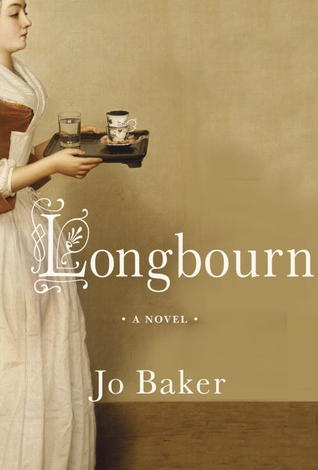
Current novel reading-in-progress is yet another Jane Austen - Pride and Prejudice spin-off, Longbourn (2013).*


This one is a cut above of the usual attempts that bite Jane Austen's superlative works.  It focuses the working class, particularly the female servants who empty the Bennets' chamber pots, launder their menstrual napkins, scrub their mud-caked petticoats and skirts. They do this in winter, with chilblained hands, in thee summer in sweat soaked bodices. They cook, clean, listen to the whines, cater to the tantrums, and serve, twenty-four hours a day, seven days a week. They cannot expect better either, not in this world of too many women (due to the wars), few jobs and less opportunity for upward mobility.

There is a melodramatic secret in the center of the book, which the reader sees coming from very early on. Since I've identified the looming secret, know its solution too, there isn't much incentive to keep reading. I already know what it would be like living below stairs in the Bennet household, having read many histories of the condition. Indeed, I thought of it even before reading such works, a farm girl imagining that house filled with women having their periods at the same time, and what this would mean for laundry ....   Language usages and ways of seeing and thinking from our own era creep into the text more often than the author seems to have noticed too.

-----------------
* Earlier this month I tried to read Joanna Trollope's Sense and Sensibility (2013), the first in the series by famous authors to write contemporary versions of Jane Austen's works.


It was a ridiculous effort -- yet I have read many of this author's own novels with pleasure.  It's just not possible to recreate in contemporary terms the dilemmas facing women of the English class-based early 19th century.  I wish They wouldn't do this.  But Jane Austen makes money, so let us come up with every permutation to wring dollars / lbs out of her, since few contemporary novels sell as well as Austen's do.

There's a reason for that.  Austen wrote novels out of her own mind, creation and experience.  Most writers now are biting what came before or what someone else is currently doing.  Imitation of a novel does not a novel make.

Sunday, November 24, 2013

Robert McCrum's 100 Best English and American Novels: #10

This week is number 10, The Narrative of Arthur Gordon Pym of Nantucket by Edgar Allan Poe (1838).  Last week, number 9, was Thomas Love Peacock's Nightmare Abbey (1818). McCrum is progressing chronologically in his list, starting from the earliest to the latest.  His first title then was Pilgrim's Progress (1678).

This is the first American novel on his list and it is Poe's only novel. That seems to be the only reason McCrum picked this one for the honor of being the first Yank title. One thinks this because the below-pulled quote from McCrum's column cites almost entirely poets, who admire Poe's poetry -- and lordessa help us, supposedly Poe's dipsomaniacal, tubercular, impoverished peregrinating (short) life.

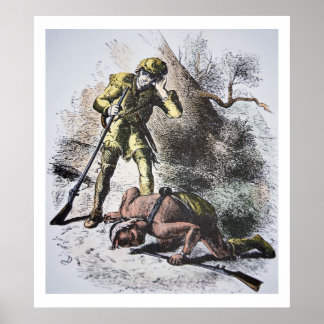
James Fenimore Cooper's The Last of the Mohicans was published in 1826. One can argue that Last of the Mohicans and its sibling work featuring Natty Bumpo the white forest runner - scout, sharpshooting friend of Indians, had at least as great influence on contemporary and subsequent writers both in the U.S. and Europe. This continued through the 19th century, into the 20th, and today, at least continues in Europe. Unlike Poe's short fiction and poetry, outside of other writers, literary historians and critics,


Poe's The Narrative of Arthur Gordon Pym of Nantucket is little known, and less read. I read it as part of my self-directed education program in the history of the novel, but I've had no urge to re-read it since.  I never even bother to think about it unless involved again with some aspect of literary history, such as defending the greatness of Moby Dick, whereas I refer in my thinking to Cooper constantly for so many reasons, from the history of the nation regionally, politically and culturally, to the history of the movies and television.

He begins his argument with this:
But it was Edgar Allan Poe, born 1809, who signals the beginning of what would become a great Anglo-American literary dialogue. Poe was original in ways that Irving and Fenimore Cooper never were. As well as being the first American writer to attempt living exclusively by his pen, he is also the archetype of the romantic literary artist. Henry Miller, Jack Kerouac, William S Burroughs, and even Hunter S Thompson all owe something to Edgar Allan Poe. His nomadic, boho style and tortured, exigent career continue to exercise a powerful allure on any young American writers who see themselves as outsiders. In Britain, among later Victorian writers, Wilde, Stevenson, Swinburne and Yeats all responded to his unique imagination.
However, Cooper and Irving were making a living entirely by writing before Poe failed spectacularly to do, thus I'm not swayed by his arguments. Even so, I find them, like the weekly column thought provoking about the novel.  And I really enjoy having this opportunity to explore contrasting viewpoints about the history and influence of the novel in the U.S. and England.