LINES OF THE DAY

". . . But the past does not exist independently from the present. Indeed, the past is only past because there is a present, just as I can point to something over there only because I am here. But nothing is inherently over there or here. In that sense, the past has no content. The past -- or more accurately, pastness -- is a position. Thus, in no way can we identify the past as past." p. 15

". . . But we may want to keep in mind that deeds and words are not as distinguishable as often we presume. History does not belong only to its narrators, professional or amateur. While some of us debate what history is or was, others take it into their own hands." p. 153

Silencing the Past: Power and the Production of History (1995) by Michel-Rolph Trouillot

Showing posts with label history of the novel. Show all posts

Tuesday, February 25, 2014

Historical Fiction -- The So-Called Sixties!

On her excellent  blog, Reading the Past, Sarah Johnson describes herself as:
Reference librarian, readers' advisor, avid historical fiction reader, NBCC member. Book review editor for the Historical Novels Review, Booklist reviewer, and NoveList contributor. Winner of ALA's Louis Shores Award for book reviewing (2012). Blogging since 2006.
She frequently hosts guests, who write about various aspects of historical fiction. Her recent guest is Richard Sharp, with an essay about which perhaps not that many authors have contemplated previously, The Sixties: The New Frontier for Historical Fiction. Sharp's essay is of interest equally to the historian as it is to the novelist.

In the last few years I've seen the occasional feature show up in a variety of venues that regularly discuss fiction, describing why it's not possible to write the Great American Novel of the 60's.  The reasons given is that supposedly all the aspects of that era were covered beyond extensively in the contemporary journalism and sociology of the time -- the time that also hosted the "new journalism" that employed the techniques of fiction for big feature stories.*

Sharp thinks otherwise, since he's not thinking of the Great American Novel, but rather of dealing with the profoundly various matters that collectively we think of as "the 60's" in terms of writing historical fiction.
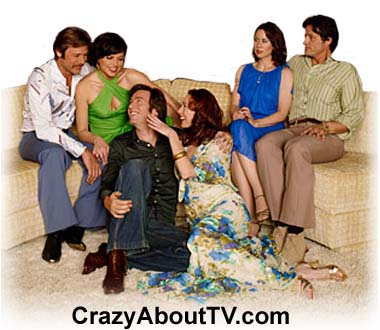


For me, so far, the best fictional treatment of the period isn't a novel at all, but the short-lived CBS television series, Swingtown (2008),that starred the wonderful Molly Parker (whom most of us came to via her role as Alma Garret on Deadwood) -- and -- which you can see clearly from the clothes and hair, it was set in the early 70's.  This seems to me to be what has happened with most of the fiction, whether on the page or on the screen -- it's really set in the 70's, not the 60's themselves, which were in so many ways, a very different set of very brief years: 1965-1966 -- 1969-1970.

While Swingtown gave the adults most screen time, it wouldn't have mattered, I wouldn't be remembering it with such vivid detail if it hadn't provided equal respect to the children of these suburban couples, and their reaction to the political and social upheaval of the era. Even more convincingly the children range in age groups from adolescents down to middle-school, to toddlers and babies. Each age cohort experiences and perceives the upheavals in a different way.

The upheaval contained and compressed in that brief half-decade was like bomb going off throughout the U.S.  -- so much so that my own parents divorced and re-married other people, in a rural world where nobody got divorced, NOBODY, ever  -- and particularly not upstanding community and church members who were my parents! In the context of who they were, where they came from, and where they remained, what my parents and the people they remarried did was far more of a revolution than anything most people under thirty did in that brief half-decade.

I still haven't read a single novel set in the era that is in the least convincing though.

------------------------

*  My personal opinion about this is profoundly affected by how much of that was written by ignoramuses, who, one would think, as adults, should really have known better.


To get a sense of what I mean, just watch - listen to the insulting inanities the so-called reporters and journalists throw at the Beatles and Bob Dylan, in the television and film clips of the era, or in Pennebaker's 1967 documentary of the Baez-Dylan tour, Don't Look Back, 


and even in the Beatles' Help! (1965). In fact, that's pretty much the premise on which Help! is hung. It's a mystery how these artists managed not to start shooting into the press pool.

In the meantime this enforces another of my deeply held opinions that for history, popular music is the treasure chest for historians, cultural or otherwise to dig into, as well as for fiction writers.

Sunday, November 24, 2013

Robert McCrum's 100 Best English and American Novels: #10

This week is number 10, The Narrative of Arthur Gordon Pym of Nantucket by Edgar Allan Poe (1838).  Last week, number 9, was Thomas Love Peacock's Nightmare Abbey (1818). McCrum is progressing chronologically in his list, starting from the earliest to the latest.  His first title then was Pilgrim's Progress (1678).

This is the first American novel on his list and it is Poe's only novel. That seems to be the only reason McCrum picked this one for the honor of being the first Yank title. One thinks this because the below-pulled quote from McCrum's column cites almost entirely poets, who admire Poe's poetry -- and lordessa help us, supposedly Poe's dipsomaniacal, tubercular, impoverished peregrinating (short) life.

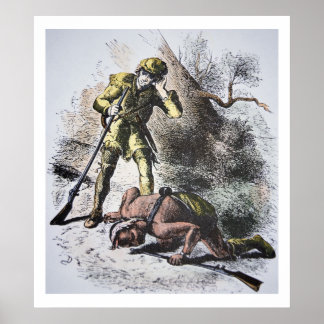
James Fenimore Cooper's The Last of the Mohicans was published in 1826. One can argue that Last of the Mohicans and its sibling work featuring Natty Bumpo the white forest runner - scout, sharpshooting friend of Indians, had at least as great influence on contemporary and subsequent writers both in the U.S. and Europe. This continued through the 19th century, into the 20th, and today, at least continues in Europe. Unlike Poe's short fiction and poetry, outside of other writers, literary historians and critics,


Poe's The Narrative of Arthur Gordon Pym of Nantucket is little known, and less read. I read it as part of my self-directed education program in the history of the novel, but I've had no urge to re-read it since.  I never even bother to think about it unless involved again with some aspect of literary history, such as defending the greatness of Moby Dick, whereas I refer in my thinking to Cooper constantly for so many reasons, from the history of the nation regionally, politically and culturally, to the history of the movies and television.

He begins his argument with this:
But it was Edgar Allan Poe, born 1809, who signals the beginning of what would become a great Anglo-American literary dialogue. Poe was original in ways that Irving and Fenimore Cooper never were. As well as being the first American writer to attempt living exclusively by his pen, he is also the archetype of the romantic literary artist. Henry Miller, Jack Kerouac, William S Burroughs, and even Hunter S Thompson all owe something to Edgar Allan Poe. His nomadic, boho style and tortured, exigent career continue to exercise a powerful allure on any young American writers who see themselves as outsiders. In Britain, among later Victorian writers, Wilde, Stevenson, Swinburne and Yeats all responded to his unique imagination.
However, Cooper and Irving were making a living entirely by writing before Poe failed spectacularly to do, thus I'm not swayed by his arguments. Even so, I find them, like the weekly column thought provoking about the novel.  And I really enjoy having this opportunity to explore contrasting viewpoints about the history and influence of the novel in the U.S. and England.