LINES OF THE DAY

". . . But the past does not exist independently from the present. Indeed, the past is only past because there is a present, just as I can point to something over there only because I am here. But nothing is inherently over there or here. In that sense, the past has no content. The past -- or more accurately, pastness -- is a position. Thus, in no way can we identify the past as past." p. 15

". . . But we may want to keep in mind that deeds and words are not as distinguishable as often we presume. History does not belong only to its narrators, professional or amateur. While some of us debate what history is or was, others take it into their own hands." p. 153

Silencing the Past: Power and the Production of History (1995) by Michel-Rolph Trouillot

Showing posts with label nineteenth century. Show all posts

Thursday, August 20, 2020

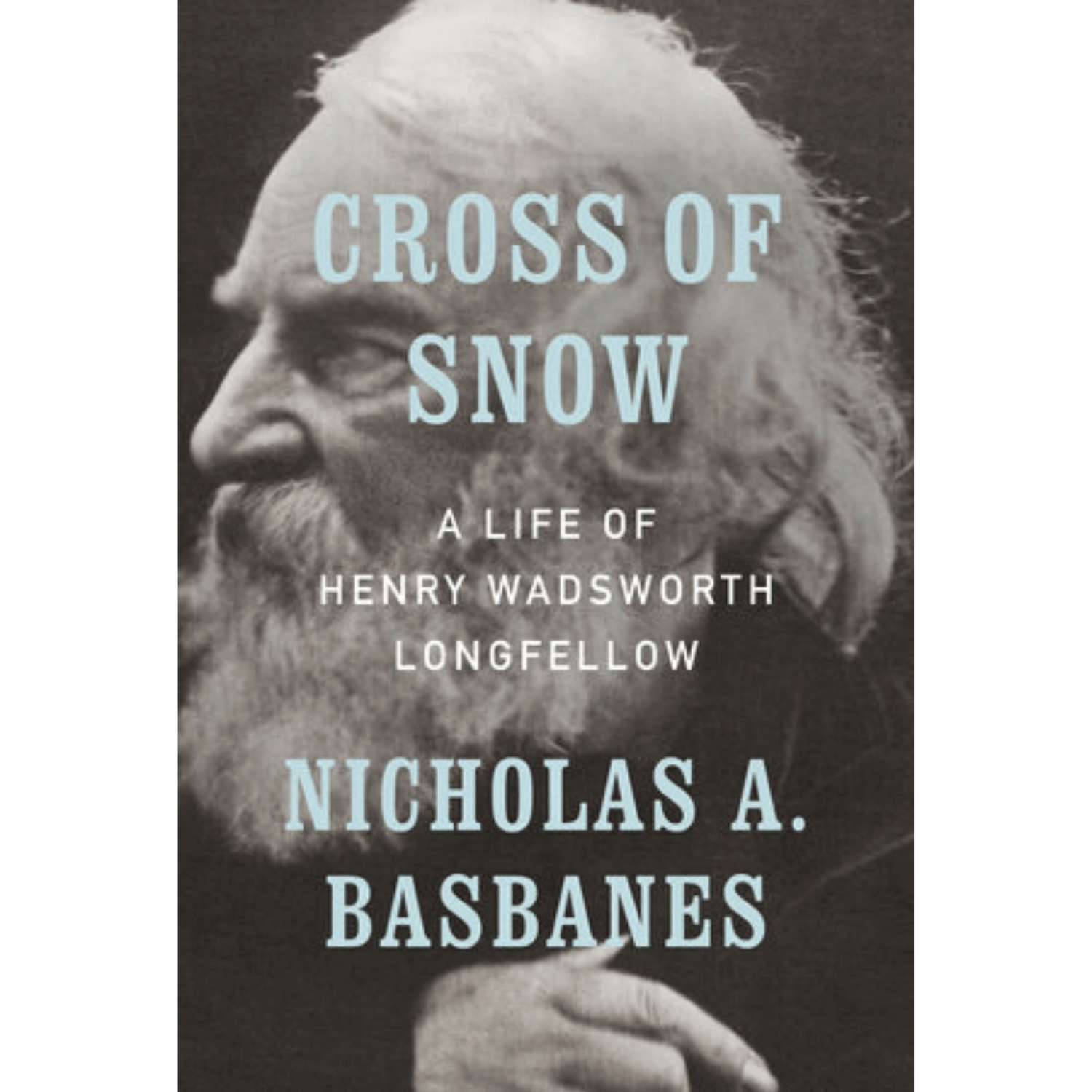
Basbanes, Nicolas A. (2020) Cross of Snow: A life Henry Wadsworth Longfellow


     . . . . Basbanes’s book overflows with interest for the literary, material and political historian of the US in the 19th C. The interest begins right at the start of the Introduction, in which Longfellow’s trajectory and fate are traced within the literary ‘canon’ critical establishment within, and without, academe.  Ten years ago surely, I would never have guessed that Longfellow would be rehabilitated as worthy by serious literature, but he has been.

All lives have tribulations, at least back before the medical advances of the later 20tht century.  Still, a very few led golden lives, and were also decent human beings, whom it was a joy to know, despite losses of loved ones to disease and childbirth.  Longfellow suffered grief due to losing those he loved, early in their lives, such as his first wife.  But still, like Walter Scott, he lived at time when it was nearly paradise for prosperous white men.

The story begins in Portland, Maine; of which Longfellow was a life-long proud and loyal scion,  presenting a cultural history of New England through his life time. Though not born into it, he joined that generational education-prizing Bostonian wealthy cultural and literary elite, which meant then, the literary elite of the nation. Our first recognized commerical publishers and editors were his friends before they became publishers, like Ticknor and Fields. To have all doors open to one at all times, wealth is very much the key. Longfellow’s father-in-law was the vastly wealthy fellow who pulled off industrial espionage, i.e. theft of propriatory information and design, from the textile factories of England, to institute the factories of Lowell, MA. Marrying into serious money is always a good move that improves life, even when already a popular eligible bachelor, a successful prof at Harvard, and published, prosperous money-making author.
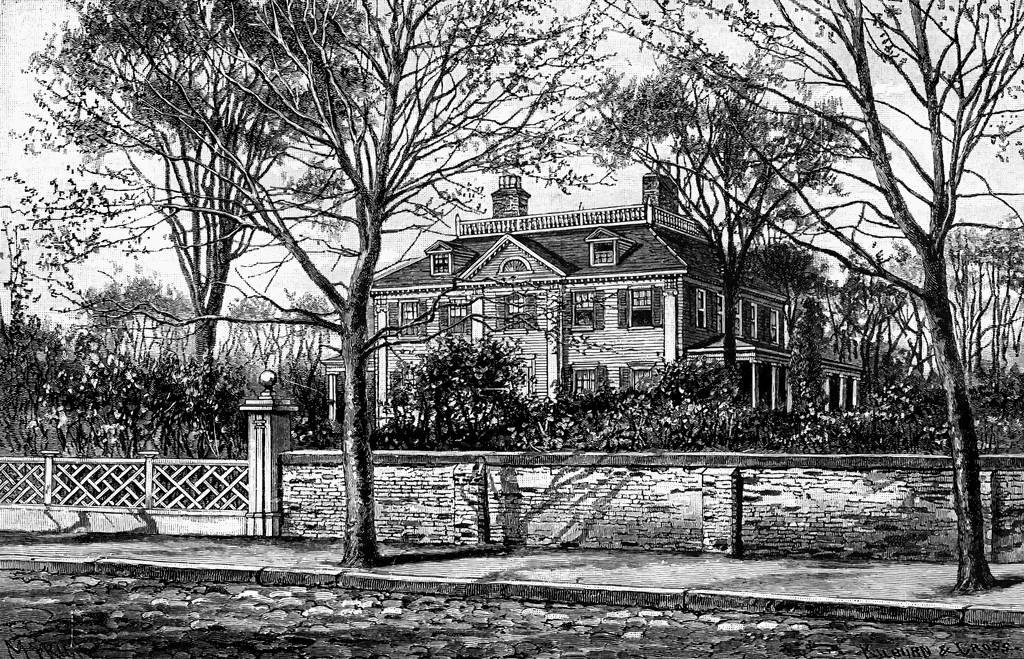

Craigie House, bought by Longfellow's FIL when he married Fanny. Washington bivouacked there. I always have imagined the Lawrence mansion in Louisa May Alcott's Little Women looking exactly like this.

Politically, Longfellow was mildly centerist all his life, which didn’t prevent a close life-long friendship with radical abolitionist-to-be, Charles Sumner. Nor did it prevent him from writing the lines that concluded his very popular, The Building of the Ship (published 1849), that made President Abraham Lincoln weep:

Thou, too, sail on, O Ship of State.

Sail on, O Union, strong and great!

Humanity with all its fears,

With all the hopes of future years,

Is hanging breathless on thy fate!

I confess, that in These Times, particularly after watching the Democratic Nominating Convention these last three days and hearing non-insane people speaking to a national audience, the lines make me weep too, as we all hardly even dare for “hopes of future years” in any way that we have known in the past.

Cross of Snow,  like such earlier biographies that have so delighted me, such as The Peabody Sisters:Three Women Who Ignited American Romanticism by Megan Marshall. Sophia Peabody was so much more interesting before she married Nathaniel Hawthorne, who was a Bowdoin schoolmate and later friend too, of Longfellow. Or, The Beechers by Milton Rugoff, an examination of the family. These provide the deeply engaging immersion that does a really fine historical family saga, such as that of Winston-Graham’s Poldark Saga.  

These kinds of books are inspiring, antidotes to the gorge of disgust, revulsion and despair about the USA and its history engendered by all these criminals in the news these days. They remind us there is a side of light after all to our past, that shone brilliantly in many locations -- in great opposition to the dark of Slaveocracy and those who made the War of the Rebellion -- and the Slaveocracy's descendents, these monsters from Lovecraft who are about nothing but ugly, hate, murder, pillage and destruction.

Saturday, July 1, 2017

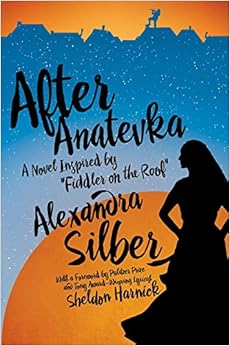
Alexandra Silber's Upcoming Novel Tells of Life 'After Anatevka'

     . . . .  This novel, which tells the story of Fiddler on the Roof's Hodel, Tevye's daughter who chooses to follow her the radical socialist lover, Perchik, to a work camp in Siberia instead of immigrating out of Russia with her family. It's one of the most heartbreaking moments in theater history, or so it is to me, who let us not forget, doesn't know much about theater, and is generally uninterested in musicals.  But Fiddler on the Roof is one of those exceptions.


Information about Alexandra Silber and her need to write this novel here -- in her acting career she has played the roles of both of Teyva's daughters.

Silber picks up  Hodel' story when she arrives at the work camp.  It's brutal, as these things were.

This is a novel I wish to read, even though Kirkus, among others, have been fairly snooty about it.

The New York Times wrote about this last year (pay wall, so here's the full url)

https://www.nytimes.com/2016/06/30/books/for-fiddler-actor-turned-novelist-a-journey-from-stage-to-page.html


Wednesday, August 5, 2015

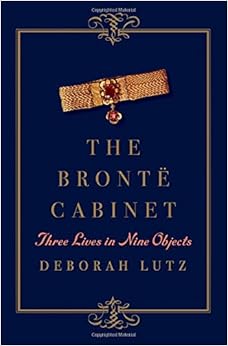
Reading Wednesday - The Brontë Cabinet: Three Lives in Nine Objects

The Brontë Cabinet: Three Lives in Nine Objects (2015) W.W. Norton

English professor Deborah Lutz applies contextual historical material culture to illuminate the lives and works of the Brontës via, as the title so speaks, nine material objects that have survived since their deaths.

The chapter titled "Death Made Material" centers the amethyst bracelet that features on the book's jacket, worn by Charlotte, made from "the entwined hair of Emily and Anne."  The bracelet was made most probably by a professional "hairworker," a profession that employed thousands in 1830's and 40's Britain.

Mourning jewelry as part of the grieving process was only part of what hairworkers provided, but objects incorporating a beloved dead person's hair was the largest part of the profession.

Manuals for how people could and prepare the hair in their own homes and incorporate it into other objects, such as keepsake portraits of the dearly departed, drawn landscapes and tableaus incorporating graveyards and other melancholy signatures were available and popular.


As would be the case with this sad though very talented family, much of The Brontë Cabinet deals with illness, death, grief and mourning. However it also retrieves the economic and social constructs around the matters of women who write professionally, household pets and genteel women's letter writing -- which latter brings us to the development and history of mail, the penny post, Valentines and other matters.

The author, not needing to, doesn't mention that as much as hairworkers, letter writing and the post office are dead letters now.  That, though not expressed, says more about how distant in time now the Brontës are, than anything else.  Yet their work endures, and we remain as fascinated by anything that had physical contact with this family as the celebrity seekers in their own time, As the author does point out this determination to own something of figures that impact their fans is as old as saints' relics and this is anything but a dead matter.

Often, as with many Brontë collections the relics need not even be authentic. What matters is what the possessor believes s/he possesses.