LINES OF THE DAY

". . . But the past does not exist independently from the present. Indeed, the past is only past because there is a present, just as I can point to something over there only because I am here. But nothing is inherently over there or here. In that sense, the past has no content. The past -- or more accurately, pastness -- is a position. Thus, in no way can we identify the past as past." p. 15

". . . But we may want to keep in mind that deeds and words are not as distinguishable as often we presume. History does not belong only to its narrators, professional or amateur. While some of us debate what history is or was, others take it into their own hands." p. 153

Silencing the Past: Power and the Production of History (1995) by Michel-Rolph Trouillot

Showing posts with label genre fiction. Show all posts

Monday, December 27, 2021

It's A Mystery, Yet Not A Crime!

      . . . . Who knows why I haven't  posted in two months?  I don't.  However, unlike this one, there are many mysteries and crimes that are engaging and entertaining.

The Word Is Murder (2017); The Sentence Is Death (2018); A Line To Kill (2021)

This is good, O, very good -- Anthony Horowitz has a series, three so far, which is consciously rather Watson and Sherlock in the present day, so it's Hawthorne and ... ta-Dah! Horowitz.  

This should not work, it should be insufferable at the very least, as character wingman, Horowitz, is portrayed by himself, the writer, as himself, a fabulously successful television writer and writer of novels. Got that?

Horowitz the author doesn't describe himself as character Horowitz as wildly successful, though Horowitz the character does refers frequently to his own / Horowitz the author's works, wildly popular television series such as Foyle's War and Midsomer Murders, to not quite as successful novel, The Silk Road (one of his novels featuring Sherlock Holmes), to the wildly popular Alex Rider YA series -- which became also a wildly successful television series.

Here equally are references to detective and crime fiction by many other writers, past and present. 

One guesses then, this is why this series works, The references to Horowitz's own and others' fictions and television programs is about what is operationally effective in these works, in terms of character, plot, what audiences want, expect and like in a crime and mystery, whether fiction or ‘true crime’. Not least audiences want appealing, interesting locations, or least a milieu which the audience isn’t likely to inhabit itself. An example would be the stews of Ian Rankin’s Edinburgh Rebus series. 
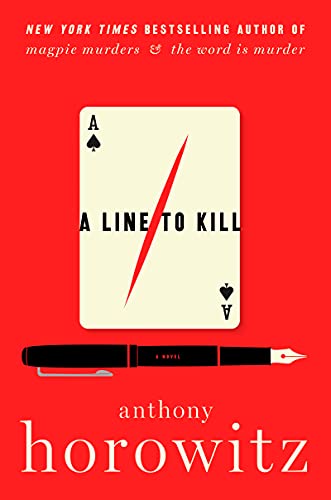


So, in A Line To Kill, we are on the Channel Island of Alderney, picturesque but certainly a distance from a reader like myself, who, previous to such crime series, only sense of the Channel Islands -- Jersey, Guernsey, Alderney -- was these are breeds of dairy cattle common even in the USA. Nor more did we know anything about other island groups that are part of the UK, such as the Shetland Islands. But that has changed, due to crime fiction and teleision.

Within author Horowitz's novel, the author and character draw our attention to what author Horowitz knows we know, such as Ann Cleeves's Perez novels set on Shetland Isles, both wildly successful as novels, and a very successful television series. But even more so for A Line To Kill, for instance, there are references to an older, but also very successful television series, Bergerac, which takes place on Alderney’s neighboring island of Jersey. Then, to convolute even more so (beware writers looking to have fun with their own work!), Bergerac’s title character is played by the young John Nettles, who portrays Chief Inspector Barnaby in the television series Midsomer Murders, which may be the most popular scripted crime drama on British television, for which author Horowitz -- and character Horowitz, have written many of the scripts. How meta can we get? 

Yet! Beyond even that, Alderney has hundreds of nazi built fortifications and other WWII left overs from the nazi occupation, including mass grave sites from the four labor camps, thus character Horowitz thinks of the not as wildly successful television series in the UK, but much more liked in the US, Island At War (in which, let us not forget, how perfectly Lawrence Fox played a callow nazi officer ....). 


One of those nazi era Alderney artifacts plays a part in the plot.

These observations by character Horowitz, are always in the context of what Investigator Hawthorn is doing or not doing, or not telling, character Horowitz, etc., and the emotional and professional cost this is to the character writer/narrator, who is supposed to portray this up-and-coming famous, infallible detective. These observations contribute to the portrayal of the writer's character as writer, whose job it is to be a writer / novelist, at least of the sort of writer author/character Horowitz is.

First and foremost, despite whatever joy of inspiration may or may not manifest now and again, this is a job of work, and often, not that pleasant.  It's even more of a slog when this latest project is utterly adored by his publishers and readers who want more More MORE of it (see: Agatha Christie and Poirot, or even Doyle and Sherlock).  These days character Horowitz's job is shadowing Private Investigator Hawthorne on a case and then writing it up the case’s investigation as a book targeted to mass audience.  Which is the job that author Horowitz has given to character Horowitz, yes?

These books are a hoot, their cleverness quite entertaining, and no more taxing to the brain than watching Midsomer Murders, which Horowitz the author made into one of the most successful television programs of all time. Again, here we have a wildly successful set of novels, by Carolyn Graham, turned into a wildly successful television series, author shouted out by character Horowitz. 


I wish to give further credit to Horowitz: these are books I'd recommend to anyone who wants to write genre fiction of any sort.  Horowitz illustrates, without telling us, that one must study, really study, the masters, past and present, to know what one is doing. In no genre is it more fundamental than in crime and mystery to know the genre is which one is writing, and understand every nut and bolt of fabrication, why it is there, how it got there, and how it fits with all the other nuts and bolts. This leads to the understanding that the writer must also know a vast deal more than even this, to construct a satisfying work of crime and mystery.  This is particularly so for mystery writers who wish a career in writing crime and mystery for television.

So, well, maybe these books aren't for everyone, but they sure do work for me. Ha!



P.S. for another wildly successful crime / mystery series, which is also a wildly successful television series --  see: Andrea Camilleri's Comisario Montalbano series. In fact, it's in fact two television series, including the non-novel prequel series spun off, Young Montalbano.
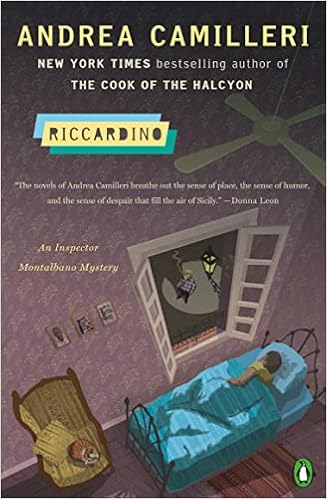


This year, Camilleri died of being 87 years old. Camilleri had squirreled away a manuscript of what was to be the final novel in the series, to be published only after he died. I have just read this novel, Riccardino (2021), #28 in the Inspector Montalbano series.

By sheer coincidence, in Riccardino, character Montalbano in the novel has also had a television show made from his life and cases by 'The Author', who presumably is Camilleri. Novel Montalbano seeks to escape the direction of both The Author and the television series Montalbano, i.e. the created character is intent on out-smarting the creator of the television version of himself the character, and The Author of the television version. But whereas Horowitz's Horowitzs refer to other crime series and protagonist such Christie's Poirot, or Rankin's Rebus, Camilleri/Montalbano references, among others, Pirandello’s play, Six Characters In Search of An Author.  This had many previously ardent Montalbano readers feeling betrayed and disappointed . . . .  In many ways Riccardino leads one to think this is how Camilleri handled his resentment of a character and series that too many, from his publisher, to his family's inheritance, to his readers and watchers, would not allow him to leave behind and move on. Again, see: Christie and Doyle!

~~~~~~~~~~~

     . . . . NYC got Omicron for Christmas, shutting us down within three day at the start of Christmas week, so, no, we hadn't a Merry Christmas.  But we did have a sweet, lovely and loving one.  Also a delicious one. It's been fairly wintery too -- with days like today, where we stay right in the mid 30's, even, possibly, a bit of snow flurry. Any snow in our era of  Climate Catastrophe -- which gave us more and longer strings of days more spectacularly beautiful than ever experienced living here -- would be a bit of Holiday miracle. Who knows?  Not I!


Wednesday, October 20, 2021

Crime In Our Hands (Books), Crime On Our Screens (TV)

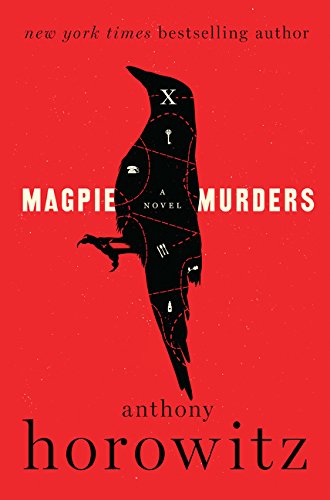
     . . . . Horowitz, Anthony. (2016 in the UK, 2017 in the US) Magpie Murders.


In some ways this is an odd, if clever, duck of a crime novel that is two novels in one.

There is The Magpie Murders itself, the last novel by Alan Conway, a best selling crime author whose series features Atticus Pünd, a detective much like Poirot, though German, not Belgian, and rather younger than Poirot, having gone through internment in a nazi death camp. His rescue by the British allowed him to remove to England, thus the series's plots are set in the 1950's. The second, the framing novel, is set in our present, narrated via Susan Ryland, the verging on middle-aged editor of Conway's Atticus Pünd series.

Throughout the two novels, past and present, do homage to the golden age of British crime fiction divas such as Christie and Allingham. They also reference constantly the crime novel series that Horowitz has been instrumental in producing, adapting and writing series for television, which are many, and all of which I've watched, just starting with Agatha Christie's Poirot, Foyle's War and o my, but not only! -- Midsomer Murders!  To be sure, the opening chapter of the framed Conway novel feels right out of the opening shots of the pre-Neal Dudgeon Barnabys of Midsomer Murders, with a pan of the village and the character-suspects

Magpie Murders was a thoroughly engaging whodunit until -- soon in the second section of the framing novel, with us back to Susan Ryland's pov and narration. It sags then, going on too long, and ultimately the solution of the crime within it and who did it, is as unsatisfying as the one at the conclusion of the framed Atticus Pünd Magpie Murders. 

.... Horowitz first developed the concept of Magpie Murders during the first season of Midsomer Murders, which premiered in 1997. He has stated that he wanted the novel to "be more than just a murder mystery story" and to be "a sort of a treatise on the whole genre of murder mystery writing. How the writers come up with the ideas; how these books are formed."[1] ....

It is that indeed, which is entertaining and even useful in itself for anyone who likes to read and watch such series, and anyone who wishes to read them.  Additionally, the book is as overstuffed as candied fruit in a Christmas fruit cake with real life best selling crime series writers’ and reviewers encomiums to Pünd, such as Ian Rankin, Ann Cleeves, etc.  Does one need to say Horowitz is adapting this novel for Britbox and PBS? 


.... In July 2020 Deadline announced that PBS’ Masterpiece would adapt the novel into a six-part drama series and air it in the US, and will air the series on BritBox in the UK.[12] ...

This Horowitz guy, never stops writing!  Check it out here.

~~~~~~~~~~~~~~~

     . . . . And yet more village crime!

In For A Murder - W Jak Morderstwo in Polis (2021) Netfix Poland Original.

It revolves around a murder that takes place in a small town in Poland and Magda, a resident in the neighbourhood takes it upon her to investigate the case and solve the murder. However, when the case draws back to some past incidents, the events that follow seem to get complicated.

An updated, Polish Agatha Christie given the screen treatment we know so well by now from Brit tv, like Midsomer Murders etc. and by now later updates such as the Daniel Craig Knives Out.   We even begin with long tracking shots of a lovely youngish blonde woman, riding a bicycle on lovely wooded tracks, getting lovely veg and fruit and honey from the street market, returning home to cute kids in a lovely house. But the husband, nope, not so much . . . 


The W/V necklace we see here is significant to the crime and mystery In For A Murder.


I enjoyed this very much, not least because of its location, which isn't either England or the US,


 in the same way I so enjoy Candice Renoir, the French policier featuring a blonde verging on middle-age detective who is a divorced mom, kind of messy, anxious about her weight, but not that much! brillian  -- and whose smile should be registered as a dangerous weapon.  She turns that smile on someone and any resistance goes out the door.


Wednesday, March 24, 2021

Reading and Listening: Black Nerdom

      . . . . In a sad way, because in this absolute white supremacist historical nation, the common denial that this subject even exists is as normal as mass gun fire massacres. But though I am anything but a nerd of any kind, much less one who is Black, I still feel a sense of personal skin in this game. 

This is due to an incident that happened at the last sf/f gathering I attended, which happened to be a reading, in the early aughts of this, the 21st Century.*  A White man, ended threatening me with rape and murder because he insisted that Black people did not and never did have anything whatsoever to to do with sf/f and its peculiar** visions of the past or the present or the future. He slammed a chair on a table when I tried to draw attention to Afro Futurism and African American musical vision in funk, jazz,  including as early with, but not limited to, Sun Ra.


 He screamed I was a liar, that I'd made-up Afro Futurism.  There was no such thing, and certainly not in Science Fiction and Fantasy.  For one thing HE had never heard of it, and he knew science fiction and fantasy inside out,  because he was now 50 and had been reading it all HIS life.

Alas, we are certainly still holding on with fang and claw to that peculiar* white version of sf/f -- and all the other related pop cultural expressions and experiences.


Long read article in the New York Times Magazine.  As the NYT is paywalled, here is the url:

https://www.nytimes.com/2021/03/24/t-magazine/black-nerds-culture.html

The Black Nerds Redefining the Culture by Adam Bradley

"By pushing back against centuries-old stereotypes, a historically overlooked community is claiming space it was long denied."

The piece is a fine run-down of pop culture sf/f nerdom and Black expression.  However, this is my favorite part, which is equally essential information for White nerds who are BLM allies:

....A BRIEF HISTORY of Black nerds dates back to before the Revolutionary War, to Phillis Wheatley, the young Black woman born a slave who was the first person of African descent to publish a collection of English poetry — only to have to prove her authorship, as well as her knowledge of the works of Homer, Ovid and Virgil, to a panel of “the most respectable characters in Boston,” as the 18 white men described themselves in a note “To the Public” that introduces her “Poems on Various Subjects, Religious and Moral” (1773). The Black nerd also lives in the pages of Charles W. Chesnutt, whose short-story collection “The Conjure Woman” (1899) reads like a late 19th-century iteration of Peele’s “Get Out,” where the resources of the Black imagination overcome the sunken place of white mythmaking and domination. And it lives in Ralph Ellison’s “Invisible Man” (1952), whose nameless Black male protagonist is a self-described “thinker-tinker” writing the story of his life from his underground lair fitted with precisely 1,369 light bulbs; even the novel’s title evokes H.G. Wells’s science fiction classic “The Invisible Man” (1897), repurposing invisibility as a metaphor for the erasure of Black identity under the racist white gaze....


Alas, unmentioned are two early expressions -- these would be very early even if the author was White -- of sf/f imaginings, Iola Leroy, or Shadows Uplifted (1892) by Frances E. W. Harper, and, even prior to the War of the Rebellion and abolition, Blake; or The Huts of America: A Tale of the Mississippi Valley, the Southern United States, and Cuba (1859) by Martin Delany.


(Anyone who knows me or el V can see why this discovery excited us so much.  Ha!)

~~~~~~~~~~~~~

In the meantime, even though The American Slave Coast has been out of print in print for months, due to the covid-19 aggravated shortage of print and production plants, Robert Christgau was moved to give the book his current Substack space, And It Don't Stop.  He told us yesterday, when informing us it was going up, that he'd been working on this 'stack' for weeks.  It also took him years to read Slave Coast because the content is so painful to read.  But it is a permanent, large, part that is our nation's history. 

~~~~~~~~~~~~~

*  This incident had a great deal to do with my removal of self from the field.


** See the classic history by Kenneth E. Stampp, The Peculiar Institution: Slavery in the Ante-Bellum South (1956). The book was revelatory still at the end of the 1980's when I read it first.  It is still most worth reading, particularly if one is beginning a program of self-education into these matters, in hopes of being a better informed ally of BLM.


Wednesday, December 23, 2020

Gilded Age Adventure Fiction: Allan Quatermain

     . . . . Haggard, H.R. (1887) Allan Quatermain, second volume, sequel to King Solomon’s Mines (1885). I’ve read King Solomon’s Mines, of course, and She, and maybe another Haggard novel, but if I had read Allan Quatermain it was long enough go that I have recalled nothing.

The series of narratives that are Quatermain’s memoir cover 50 years of the life of a fictional representative of those imperial stalwarts the Empire hatched in their thousands for a couple of centuries out via the English public school system, to fill the needs of the East India Company, the British army and the douty UK middle class. They were as much glorified by Kipling, as the grunt in his writing, and writers in the same mode as Haggard. 

This universal admiration for this dream ideal alpha (white) male, has Quatermain resembling Kipling in a way that at the time, Kipling couldn't imagine. Quartermain's  loss of his dearly beloved only son, Harry, is the motive for this novel. Harry died in a smallpox hospital where he was a physician. Quatermain blames himself, because though very well off financially, he wanted his son to stand on his two feet without dad’s financial support, to toughen up, be a real man, which Harry did, refusing to go home to daddy when the smallpox epidemic raged. Quite like Kipling's pushing of his son inexorably to join up to fight in WWI, and who, to Kipling's shock and grief was killed.

Colonial Brit Imperium superiority is on display on nearly every page of Quatermain, with long lectures on what makes an admirable man and the general inferiority of non-whites, unless exceptions out of a warrior 'race' such as the Zulu. 

It’s also broadly accepted that ‘white’ ultimately means British, only. Other Europeans, whether German, French etc.(Alphonse in Allan Quatermain is nothing but a list of ticked off boxes of French coward, fool and ignorance), included to show their inferiority as buffoonish figures of diversion and exploitation, at best, as well as targets of physically brutal abuse, as well as verbal contempt. This mode was eagerly displayed by other adventure genre writers, from Edgar Rice Burroughs, and continued to proliferate within the sf/f fields, including the buffoon as alpha male writer, John Norman and many others, even now. 

What makes Haggard exceptional among many genre adventure writers though, is his inclusion and featuring, women of agency who are strong enough to rescue themselves -- though not even their courage, proven ability and his admiration can stop Quartermain from mansplaining to them what a real woman is, and how to be/come that.  Worse, in Allan Quartermain, the girl child who rescued herself with tremendous courage and presence of mind, the reader is carefully informed that for the rest of her life, she was 'nervous' and subject to great starts and frights 

Theodore Roosevelt admired Haggard the writer enormously, writing him a letter saying so. He wished very much they could meet. They did have friends in common. The adventures and hardships of our heroes in Allan Quatermain are astonishingly similar to what’s in River of Doubt: Theodore Roosevelt's Darkest Journey (2005), which I read earlier this year. It seems a miracle that Roosevelt did not die – many times – on that terrible journey in the Amazon. Nor was it entertainment, not a novel for boys (which books TR loved), but what really happened, to real people.

Original British P-1885 Martini-Henry MkIV Rifle Pattern A


By the by, the Allan Quatermain narrative mentions several times the Martini-Henry rifle which came in, in 1871. Could the martini cocktail, supposedly invented in 1887, have gotten its name from the Martini Henry rifle, an brought into the British Army then? Martini–Henry rifles were used throughout the British Empire for 47 years.

The Martini-Rossi vermouth was created earlier, in the mid-1800’s, from which some think the cocktail derived its name.  It's not far from the favored gin-and-tonic of the Raj and African colonies to a martini, stirred, not shaken.


Wednesday, December 2, 2020

Covid-19 Vaccination(s) Comng Soon To An Undisclosed Location Near You! / Reading Wednesday

      . . . .  Governor announced vaccine arrival in our state  by December 15th, so surely to all the other states too?

The sooner the better, but there's a really long time to go, a really long time.  Also, recall, it seems no matter which Big Pharma created the vaccine one is to receive, two shots are necessary to be protected (nobody knows for how long the protection will be effective, but most likely we'll have to do this at least every 12 months).

Governor Andrew Cuomo announced today that New York's first Pfizer vaccine delivery is expected to come on December 15th, and will be enough doses for 170,000 New Yorkers. [Which means, since each vaccination to be effective must be administered twice, for about 85,000 NYers.]

A second round of 170,000 doses of the Pfizer vaccine, which will constitute the second dosage for those designated people, will arrive 21 days later. The state is expecting additional allocations of the Pfizer vaccine, as well as the Moderna vaccine, later in the month or in early January as well.

Cuomo added that by the end of December, the Trump administration suggests there will be enough to vaccinate another 20 million people with two dosages across the country, making up 6% of the population of the United States.

Per CDC recommendations, New York's vaccination program will prioritize healthcare workers and residents of nursing homes and other long-term care facilities in phase one. There are approximately 85,000 nursing home residents and 130,000 nursing home staff members in New York, so the first round of vaccines will not cover all of those people. Cuomo hopes that the second round of vaccines later in the month will at least cover that entire group of 210,000+ people....

Keep in mind, please, this date is for arrival of vaccine -- though since it seems necessary it needs to be kept super-cold, They should probably being going to work immediately.

But will they?

 So it not only does distribution mean jabbing people, but paperwork so they can be jabbed three weeks? two weeks? later, again.  Records must be kept!  Recall, my state is still counting ballots from the election last month.  Among the multiple, well, to be honest, uncounted, problems -- piles of ballots from who knows where because the yellow stickies fell off.

~~~~~~~~~~~~~~~~~~

It's Reading Wednesday Somebody/ies Say!  Here is a novel I would recommend for those who are interested in King Arthur and historical fiction set during the Dark Ages.  (Which of course I am interested because so little has been known about these years, but, thanks to archeaology and relentless scholarship, we discover a little more history all the time.

The Lost Queen (2018) was the first installment in Signe Pike's projected trilogy.  The Forgotten Kingdom (2020) is the trilogy's middle volume, and writer's second novel. Unlike many middle volumes, this one is more compelling in terms of both character and action, than the first one.  The writer writes vivid descriptions of the natural world of the setting -- as much as possible she's visited her sites, and what remains of them. The result is that I felt I was seeing what the characters are described as seeing. It is composed around the Arthurian origin mythologies that are centered location-wise in what we now call Scotland -- north of The Wall. The chronology is the later 6th century; the Romans are gone, Angles are 'invading', and to my personal historic thinking, Europe and England already have had nearly a century of the Dark Ages.* The Christian persecutions of the Old Religions in the region has been well underway for decades already. Considering this isn't the Victorian re-imagining of the age, as in Idylls of the King, well, yes, this books does contain brutal, bloody, cruel and abusive scenes.  It wouldn't be right if it did not.  Some victims survive, some do not, and others survive but are forever affected. The writer has good instincts, to do justice, but not dwell or revel.  

*    Why do I persist in calling the eras from late in the 5th Century to maybe the 9th Century and Charlemagne, the Dark Ages? It'such an old-fashioned way to view history, mostly considered out of date for any up to date medieval historian -- rather like maintaining the War of the Rebellion of the USA's 19th century wasn't caused by the issue of slavery, or that Rome 'fell' in the 5th century.  I keep calling these years the Dark Ages  because it was in the 5th century that Christianity became definitively official state religion of Rome, East as well as West, the plagues and famines which came relentlessly, until quite some time later, by which time the 'classical' or 'pagan' worlds had been erased for practical purposes, i.e. official, state, political, legal, religious monopoly by the Church., and things started to get crazy due to Christians determing intolerance of anything not determined by authority -- which led to many slaughters of each other, as well as of 'pagans and all the other Others.

These two Romes did build out from all the classical Roman political and administrative structures -- thus to my mind Rome didn't fall either, buy that didn't stop the Dark Ages of plagues, wars, famines and many other catastrophes. What was left was a shell within which cruel intolerance festered -- kind of like the restaurants here that now rule the streets -- they have been built out of the far more stable structures of the indoor restaurants.  Indeed, they have come to be called, "Streeteateries," (even a step down from 'eateries,' a designation NY food reviewers are fond of) --  and are hit by cars -- frequently.  Still as that was still Rome, people still eat and drink in these flimsy pretenses of fine dining.

Wednesday, April 4, 2018

The Punishment She Deserves, by Elizabeth George

     . . . . Elizabeth George is the author of the  very popular, long-running Inspector Thomas Lynley series. We first met the Inspector in 1988. The 20th Inspector Lynley has just been published this year.   I've read them all.


Lynley's an aristo turned stalwart of the New Scotland Yard, who has had a colorful variety of experts on whom he's drawn for his cases. These councilors, professional, domestic, and social, included a love interest who wasn't interested in him for a long time, but almost always featured one of the most original of side-kicks, Detective Sergeant Barbara Havers. The action of the novels came to be increasingly located in places with which the average reader -- particularly a non-UK reader -- was not likely to be familiar. This 2018 installment of 680 pages take the reader to a guidebook tour of the medieval college town of Ludlow, Shropshire.

The book is titled (stet lower case) the punishment she deserves; A Lynley Novel.  But 300 pages in, we've hardly seen Lynley. Yet we've had 300 pages of a character this reader at least has never liked, or even found interesting, the very nasty Isabelle Ardrey, who is an alcoholic, a bad alcoholic, and her plan to drive Barbara Havers out of the service, by either fair or foul means.

I have always loved Havers, but she's constricted in this novel as far as personality is concerned, by Isabelle, and Chief Hillier, who is also kind of an aristocrat, though he doesn't have the ancient title that Lynley does. They both have circumscribed her agency. This unholy alliance of Isabelle and Hillier is also targeted against Lynley, despite Lynley, when working particularly with Havers, having racked up a long record of successfully closing cases.  It doesn't help matters that Lynley -- while we readers told him to KNOW BETTER! -- had a nasty affair with Isabelle, which her nastiness and drinking ended.  But ultimately, as from the beginning of her appearance about three books ago in Lynley and Havers lives, Isabelle is just nasty -- never interesting.

George gives her readers a pile-on of detail of Ludlow, of what the characters think, do, and particularly what they eat and drink, but even her long-term primaries don't come to life in the punishment she deserves.  Nor do the new-for-this-novel supporting characters -- we can't tell them apart or remember their names  -- not even the long term favorites such as smart, charming, nice cookie, Dorothea, who is Lynley's assistant and who will drag Havers into a more presentable, more social life, no matter what --  nor does Ludlow for that matter.  We've had 300 pages of a 680 page novel, in which nothing has yet happened.  This isn't interesting, even though supposedly nothing happens because drunk and mean girl Isabelle, and Hillier, don't want anything to happen.  We don't even know who the 'she' of the title refers to, or what the deserved 'punishment' is for.

Past 300 + pages in, Lynley enters.  Things move more quickly, but what happens is that Havers backtracks him through everything either she, or Ardrey, or she and Ardrey, looked at, the people they talked to, etc. in the previous 300 + pages.  Of course, without Ardrey's treacherous, impatient, distracted, selfish, drink addled, nasty interference, we, like Lynley and Havers learn more, but we still haven't a clue as to who the she is who should be punished, and for what. There are still 380 pages to go when Lynley truly enters, yet even now, he's not really present.  He's following Havers.  The only reason for including him in this novel seems to be to keep Havers from sabotaging her chances of keeping her job -- and his -- with the Yard.  However, we have no idea why he even wants to keep this job considering all he's been through, and his seemingly zero interest in resolving whether or not a crime has taken place, or interest in anything else either. As every character in every novel makes clear, Lynley doesn't need to work for a living.

Each of the Lynley novels since 2003 Place of Hiding has gotten longer, more tourist guidey -- and ever less interesting.  One feels that this yet another successful character in which the author lost interest, because she fan serviced a romance, a romance that ultimately killed  -- well, won't say for spoiler reason -- but also Lynley himself, because the writer lost her own love affair with her character.  That happened because the author is that good of a writer, and once things took a certain course, other things had to happen and she wasn't going to deny it. 

Also, the world of 1988 is so different from the world of 2018, and not just in the UK or the US. 

It's time to let Lynley go, despite fans.  His world is finished.

BTW, the television adaptations of the Lynley novels have very little to do with the novels and have not served Lynley well.

Wednesday, January 20, 2016

Reading Wednesday - The Company: A Novel of the CIA by Robert Littel

The Company: A Novel of the CIA (2002) by Robert Littell is a very long novel -- 884 pages. The narrative begins immediately in post-WWII Germany, and is populated by thinly disguised real life figures and others such as Kim Philby who are not disguised at all. These figures were by-and-large extremely colorful people, judging by the many other non-fiction accounts I've read of these same years, people, events and matters. Yet in this novel they described, speak and think in remarkably in the same monotone, making for remarkably dull reading. Fortunately I was feeling unwell enough not to care about that.

The Company was turned into a television three hour minseries in 2007.  As mentioned, the novel is 894 pages, while the miniseries is only three hours.


Thus the miniseries concentrates on the beginning, with the CIA's recruitment of three of the protagonists', the disasters that the U.S. made of the Hungarian revolt, and the mess of the Kim Philby and his own  group of traitors to Britain and the U.S., who eventually defect to safety in the Soviet Union.  It's a slick and sleek production, not much resembling the liquor-bloated, rumpled appearance of government-employed D.C. males post WWII and the 1950's. Also, more heroic . . . .

I began reading  The Company on January 1st in Miami. I barely finished last night what felt like an endless slog through the hardly fictionalized material from non-fiction books, and from other novels movies and television series, as well as well as Norman Mailer’s Harlot’s Ghost, a novel just as long, but much more interesting and well written.


While still in Cuba (sick as I was, I stayed in most nights while the fellow Travelers were cavorting with Music and El Ron) I reached the thematic and narrative center of the novel.  Naturally, this would be the Bay of Pigs debacle, the run-up to the inevitable catastrophe itself, and the surprisingly little effect it has on thinking and operations afterwards at the highest military, executive and espionage in D.C.


This was the only section of The Company that had any kind of fictional kick for me, probably due to being in Cuba while reading it. But even for the author of this book, which appears to be a sort of admonishment of the US and the CIA, Littell's Cuba of 1960-1961 looks remarkably like the Cuba of 2000 - 2003, not at all like the Cuba of 1960-1961.  Littell seems to have not figured out that Cuba wouldn’t be looking the same in 1960 as it did in 2000 whenever, before the bushwahs put the hammer down on the Clinton's administration's People-to-People, etc. 1960's cars rusting old junkers in 1961? Not likely. (And not now either, as they've all been retrofitted in the last 3 - 5 years with diesel engines, painted, re-upolstered and make huge profits for the owners as taxis for US tourists with more money than sense or information.)

After the rescue of one of our central protagonists from the sea off the baie des Cochons, we skip past the Missile crisis and the JFK assassination, with the exception of a suggestion that Cubans were executing mafiosi in revenge for the failed Bay of Pigs invasion -- WHAT????? The general consensus is that it was the mafia that whacked JFK in revenge for not getting Cuba back, and particularly for allowing Bobby the Attorney General to prosecute them for a variety of crimes including tax evasion, when they had understood that they'd have immunity for helping old Jack Kennedy get JFK elected in the first place.

The subject of The Company is the long conflict between the US and the Soviets, as played out via their Great Game of espionage and counter espionage. Thus the novel concludes with the Afghani civil war (1989-1992), which contributed so much to the financial dissolution of the Soviet Empire.

Though it is a novel there appears no imaginative leap that another incarnation of Mother Russia and strong leader that could be a global player and a threat to the United States.

As with the 19th century Cuba filibusters sponsored by the southern fire eating secessionsists, the 20th century  Pentagon, the Oval Office, Capitol Hill and the CIA, when it comes to Cuba and Vietnam, it seems even in fiction D.C. cannot learn anything from past errors, but, rather, insist on making the same ones over and over again, far into the future.


Wednesday, July 15, 2015

Reading Wednesday - Traitor's Blade by Sebastien De Castell

Traitor's Blade (2014) is the first installment of a fantasy series with the serial title, Greatcoats, that is inspired to a degree by Dumas's famous Musketeers.  Nor does one need Dave Duncan's blurb to know that fine Canadian author is also an influence. The second volume, Knight's Shadow, appeared earlier this year.


Traitor's Blade reads like what it is, a first novel.  As a first effort any intelligent reader -- particularly any reader who has also published -- will give the poor proofreading (such as "waste" for "waist") a pass, since genre publishing doesn't usually shell out for professional proofreaders -- or even copy editors.

A good copy editor or line editor though, would have helped Traitor's Blade become the better book that it is trying to be. An editor would have helped the author to smooth out his uneven tone which lurches between what so many mistake as Dumas-style wit and banter, and meaningful yet clumsy metaphysical speculation on the nature of being and nothingness. A good editor would have recognized the author loads too many fight scenes at the front, abruptly introduces magic, then disappears it again for most of the book until suddenly -- magical creatures! An editor would have informed the author that his big reveal is buried. Though Falcio seems to know what this all about, there's so little time provided to the reveal of the big reveal the reader is left scratching her head as to what actually happened and what it means.

The narrative does move quickly, but necessary transitions have been omitted, which screws with pacing and rhythm.

Another way of putting it is that Traitor's Blade needed another revision.

Some of these problems are inevitable with a first person narrator, who emotes like someone who has read the addresses of Vlad Taltos often and uncritically, yet who is admirably attempting to hit those notes of tension, high stakes, peril, courage and justice that combine so pitch perfectly in BBC / America's   


The Musketeers (season 1, 2014; season 2, 2015 -- the very best adventure television ever! with the best coats! horses! leather! and steel!). The voice of the narrator hasn't yet been fine tuned to the story being told, or the voices of the other characters.  Voice is hard!

Doing the Dumas affect effectively in English is also difficult.  The French language tends to lend itself to that affect of effortless ballon that English doesn't -- which perhaps


explains why the language of ballet remains French. English language genre writers often seem to equate the tone of cynicism and sarcasm with the light-footed repartee and wit in which a Dumas veils his concerns with justice, loyalty, honor and courage.

Justice, loyalty, honor and courage are what Traitor's Blade is about.  So much so that Falcio, our narrator and protagonist, informs the reader early on that the great difference between his kind -- the King's Greatcoats (read musketeeers) and knights (read the Red Guards) is that he and the Greatcoats are about justice, which is for all, no matter what class and station, while knights are about honor, which is about themselves. This is the primary reason I am looking to find De Castell's second novel, since its title, Knight's Shadow, suggests in this book the author may be exploring that conflict more deeply. That's interesting, and not something we've seen much of lately in fantasy fiction.

The voice may not be quite as fresh as it will be, and it is not yet trained, but the mind behind the creation isn't going to be satisfied to writing to formulae.

Or so it seems to this reader.

P.S. The jacket copy bio's tone doesn't well serve Sebastien De Castell, who it seems to this reader, is on the brink of having a fine writing career.  Yah, it's a genre thing but really, he is an adult.  His book, which wrestles with adult matters -- and so few do these days --  proves it.

Charoite in rough state.
Charoite polishes up into lovely jewelry and other pretty items.


P.P.S.  The author's choice, to name Greatcoat's quest, the King's Charoites, is a happy one. In New Age parlance, chariotes' energies can promote physical and emotional healing, help overcome obsessions / addictions and channel other positive transformations when worn on the body. Their shades of violet are lovely.


Wednesday, May 6, 2015

Reading Wednesday - A Crown for Cold Silver

A Crown for Cold Silver (2015 - Orbit) by Alex Marshall (a pseudonym) begins as a comic parody of grimdark fantasies.  Grimdark burlesque, because what else can a reader take away from these lines straight off the first page?

First sentence:
"It was all going so nicely, right up until the massacre."
Second sentence begins with the invocation of the thoughts of a Sir Hjortt, who hollers at an innocent little village:
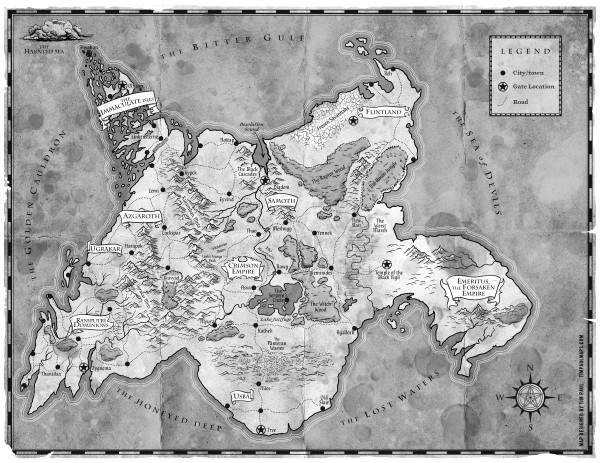
"I am Sir Efrain Hjortt of Azgaroth, Fifteenth Colonel of the Crimson Empire  . . . "
 yadda yadda yadda. Followed by:
"In the names of the Pontiff of the west and the Queen of the Rest . . ." 
 and somebody called Queen Indsorith.

What kind of name is Hjortt? try it out on the tongue sometime, and dang doesn't it come out as something close to fart? soon followed by a tipica grimdark litany of preposterous mashed-up naming (such as even the title of the book!), titles, places, demons, animals, thrown on the page at random:  Azgaroth, Crimson Empire, Immaculates, weirdborn, Crimson Codices, Chainwitch, owlbats, the Cobalt General, the Five Villains, Fallen Mother, horned wolves, sun knives, etc, as well as every possible diversity of gender and match-up that can be thought of  among a variety of species and demons, religions and


cultures assembled from those in Europe and Asia -- hey, we are diverse! No faux European medieval - Renaissance fantasy for us!  But worry not -- there are no full-blooded characters here either, just the expected grimdark cutout placeholders, who, you know, are subverting the genre.

From the start then, present is the signature grimdark authorial self-congratulation of her/himself's witty cleverness (Some Have Said  author's editor has confirmed Alex Marshall is male).  See! my many references to the names of metal bands!  And like metal bands' "music" arrangements, lyrics and presentation, the text is bloated with faux portent, pretension and self-complacent superiority.

As well, readers see present from the first line, parody or not, the signature of grimdark, which is grimdark protagonists just cannot shut up and their narrators just cannot resist commenting. Protags and narrators talk-talk-talk everyone to death, most of all the reader.  A Crown for Cold Silver's protags and narrator are no different in this than it is in its authorial self-congratulation of her/himself's witty cleverness.

In case the reader misses the joke of parody/burlesque of grimdark self-inflation, the book is tricked out with an epigraph from Goya and his Los Caprichos:
"Friendship is the daughter of virtue. Villains may be accomplices but not friends."
The reader cannot help but connect this epigram to the title's inclusion of "cold silver" which recollects Judas sell-out of Jesus for thirty pieces of silver.  Beyond that too, this is one of the many textual moments that provokes the reader into believing the author keeps falling into being a better writers than s/he intends for this particular work.

None of this will come to the eleven-year-old male mind of a certain sort -- who will  more than likely take this book seriously and love it -- except -- O! NOOOOOOOOOOOOO!  the Cobalt General is an old lady. NO NO NO NO! O, author, so sly, so delighting in "grimdark subversion". . . .

--------------------------

BTW, Cold Silver also mocks Steven Brust's Vlad Tatlos Dragaeran series and the Khaavren Romances. So much to mock, so little time, one imagines Marshal thinking as s/he frantically types so many words: Burnished Chain, dunecroc, Diadem's Central Chainhouse Known as the Dens, Diadem's Jewel, Black Pope, Almighty Matron, godguana and etc.

Question: is it possible to mock what was already a mockery?

Wednesday, April 29, 2015

Reading Wednesday - Personal - A Jack Reacher Novel

I spent most of the day getting to, waiting around in and coming back from a hospital appointment.  The moment I began the trip up to the hospital I pulled the latest Jack Reacher novel, Personal (2014), from my bag and began reading it. It took only two sentences and I ask myself, "Did Lee Childs write this?"  Because though the signature pacing of a Childs's Reacher novel was there from the first two sentences, the voice, the tone, even the vocabulary and smart ass cracks, were off the Reacher mark from what my mind's ear had become accustomed over the course of 18 Reacher thriller novels.  The timing and rhythm is also just a bit off.


That nagging sense that this wasn't really Childs's Reacher was sustained all the way through the day of reading, and only increased as I reached the conclusion It is pacey!).

It has not been unknown for a very successful writer to employ sub-writers to follow plot and character instructions, and then run it through his own word processing program to put on the finish.  I can't help but wonder.

Also, whoever did write the text: be it known to you that women don't say nylons and haven't worn nylons in decades. We say, and we wear, tights, leggings, stockings and / or panty hose. Even female military personnel who wear skirts do not wear nylons these days.

Unless we're church ladies of as certain age in the upper midwest, of whom there naturally aren't that many left, we don't carry purses, but we do carry satchels, totes, even computer bags and cases, or tablet folders, etc. (neither men nor women carry brief cases much anymore since the portable digital device revolution), handbags or bags -- see: handbags, designer.*  Go into any place that sells such things and the signs are "Handbags and Accessories."

As well, to write,  " . . . she wore good shoes . . . " doesn't tell us a damned thing about the woman's character, but goes along with the writer's ignorance of putting her into nylons.

That kind of block clunk dumb kicks me out of the story. Among other things it broadcasts the male author's underlying contempt for women and the very many women who buy his books. This is particularly evident when it's the male author's male character telling us what a woman is like.  Worst of all, all through the books the writer / Reacher makes such a huge deal out of what an authority he is about women, including what they wear, which is part of the reason he's had so many really fine women over the decades (he ages but the fine women he has stay the same age more or less). What he does sound like to a female reader who has ears is an old guy, ogling women 30 - 40 years younger than he is, which, by the way is kind of the situation here.  Need it be mentioned that always these women throw themselves at him?

Feh.

-------------------

*  See, first paragraph above as first person (anecdotal) proof of this assertion.  I wrote "bag" without even thinking about it, without explaining, because just about every person inhabiting the universe that reads Jack Reacher novels knows what I mean.  Millions and millions and millions read Jack Reacher novels, at least half of them female.

Wednesday, April 15, 2015

Reading Wednesday - C.S. Harris - Who Buries the Dead, A Sebastian St. Cyr Mystery

This is the tenth title (March, 2015) in C.S. Harris's  Georgian - Regency Sebastian St. Cyr murder mystery series.  Sebastian, the Earl of Devlin,  and his wife, Hero daughter of Lord Jervis, most trusted and ruthless keeper of the reign's secrets and dirty tricks performer to the mad king's and his son, were seen a the very end of the previous installment as brand new parents. Who Buries the Dead picks up soon after that perilous birth, which Hero barely survived.


C.S. Harris is a New Orleans novelist.  She began publishing this series with What Angels Fear in November, 2005. Presumably she was dealing with the end tasks of publishing a book in the aftermath of Hurricane Katrina. Since then, these ten St. Cyr novels have appeared on a yearly schedule. This is particularly admirable considering that surely, though Harris may not suffered as terribly as so many others from New Orleans's Katrina tragedy -- let us say no New Orleanian escaped from the long, on-going experience and aftermath without being seriously affected.

Over the course of these ten years and novels  the reader has learned quite a bit more about Sebastian and his highly fraught past. We're now at the point where we know as much about Sebastian's past as he does. From now on, we readers, like his wife Hero, if more information is revealed that may solve the mysteries of his past, will be learning it with him.

Each novel follows the same structure.  Each novel includes scenes in which Sebastian and members of his family have encounters in which the secrets of Sebastian's birth are either never mentioned, or are addressed obliquely.  Often the encounters are hostile, despite his father, Lord Herndon's, efforts to mend fences. The same with Sebastian's meetings with Lord Jarvis, his most implacable antagonist -- who clearly knows more about Sebastian than most -- and who is the father of his dearly, deeply loved wife, Hero, and, now, also one of his son's grandfathers.

The series isn't entirely even, meaning not all of them are equally engaging, partly because of the formulaic structure.  Which nonengagement then might be just me, because I don't like formula much in my fiction.  Repetition of character and event irritate, do not comfort, me.

That said,  for me, Who Buries the Dead is up to the best of the series.  Both Jane Austen and her brother, Henry, who, in this novel, is still with the bank he joined, are ancillary characters. Austen is visiting her brother, Henry, in London to help care for his wife, Eliza, who is confined to home by the illness which will soon kill her. This is a period in which Sense and Sensibility and Pride and Prejudice have been published, and, thanks to the Regent, are the rage of ton reading.  (There are those who will have a knowing smile reading this, as Austen herself used 'ton' only once in her own fiction.)  Names and events encountered by Austen in connection with Sebastian's murder investigation reference those of Austen's later novels, Emma, Mansfield Park and Persuasion, though the author has very wisely chosen not to replicate any of the characters or plots of these books.


Who Buries the Dead is centered around Jamaican slave plantations, and the execution of Charles I. For more fact-checking The American Slave Coast, these last  three weeks I’d done more granular delving into the lead-up, execution and  aftermath of Charles I's execution, in Rebellion: The History of England From James I to the Glorious Revolution (2014) by Peter Ackroyd,  and (Lord) Charles Spencer’s Killers of the King: The Men Who Dared to Execute Charles I (2015).

However, it was purely by chance I picked up Who Buries the Dead last week, nor did I have any idea that Charles I's remains were the central axis of Harris's novel. The reading of these two works of Stuart history -- "that most hapless of British dynasties", as the historian Robert Tombs declares them to be in his The English and Their History (20014), made the enjoyment of this St. Cyr Mystery greater, not less.

Monday, October 6, 2014

Peter Lovesey: Peter Diamond, The Stone Wife + The Last Detective

Surely readers who enjoy mysteries, policiers, and other fiction within thus general genre, have long known of Peter Lovesey.  I'm the outlier, who didn't until his latest installment in the Peter Diamond series was published this fall.  I


read a review of The Stone Wife,it sounded the kind of mystery I'd enjoy because the reviewer mentioned that Lovesey stuffs these novels with literary allusions,


and the location is Somerset, Avon and the city of Bath. The Stone Wife's nests of plotting are built around Chaucer, and his best-known character, the Wife of Bath.

Diamond is old-fashioned, far from the haunted, past-obsessed, old rock/jazz/classic music fan, alcoholic, poetry writer, aristo that have become the formulaic patterns of homicide investigators -- not to mention the number of Regency aristos uncovering their peers' secret evils, or the troops of troubled honorable Victorian investigators uncovering the dastardly deeds of the Empire's upper classes. * Lovesey has his own Victorian investigator Sergeant Cribb, btw.

"Gum shoe," is how corpulent, rumpled Diamond thinks of himself.  I think of him as "bull dog."  Perhaps even the classic English bull dog, as he's so retro. He gets an idea in his head about who did it and he won't let go until he gets a confession that indeed that's who done it. This gets him in trouble.


There are twelve Peter Diamond titles between The Stone Wife (2014), and the first Diamond, The Last Detective (1991). It's my current work-out book, so I hear installments one day of The Last Detective, and then the next night I read the next pages of The Stone Wife.

A great deal has happened to the world, to Bath, to Diamond during the course of the intervening twelve novels.  That I don't know the details isn't detracting from my enjoyment in either novel.

The Last Detective is set in the 1980's.  Jane Austen is a huge plot device.  Bath is no longer to be referred to as the Town of Bath, but the City of Bath. Computer database access, DNA testing as part of any forensics investigation are entering policing like a tidal wave, accompanied by official policies to prevent police violence and harassment, racism and sexism. How Somerset and Avon's Detective Superintendent Diamond, views these protocols can be inferred from the title, The Last Detective. Well into the 21st century, judging by The Stone Wife, Diamond remains an unreconstructed police of the old school.

Lovesey has written other mystery series -- all together he's published more than thirty books, despite beginning his writing career later than many successful writers do. He's won several crime fiction awards.  His Victorian London plain clothes Sergeant Cribb became a television series in 1979 - 1981.

--------------------------

*  Though let me haste to say I have enjoyed these detectives very much, from Rebus, Dalgliesh and Lynley, not to mention Jane Tennison and Vera Stanhope.

American writers who happen to be women seem to do this differently, as with with Baltimore's Laura Lippman's Tess Moneghan, or Montreal's Louise Penny's Chief Inspector Gamache)

Sunday, May 11, 2014

Crime Fiction Is Always About the Past

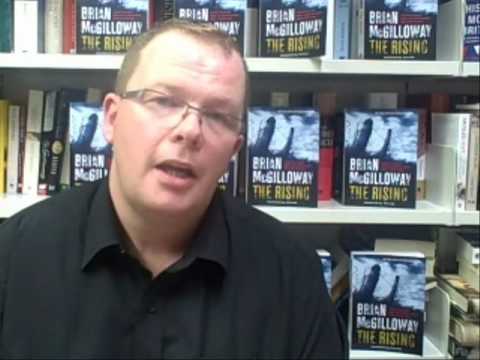
Irish crime fiction writer, Brian McGilloway, nailed it perfectly, when interviewed by the UK Guardian, about the crime fiction set in Northern Ireland:

" ...  issues of right and wrong and how the past impacts on the present.
"Crime fiction is always about the past: it begins with a dead body and the detective has to go back to work out what happened. The whole genre is about starting at a point in time and then tracing back to work out where it all went wrong."

This explains why crime fiction, like historical fiction a genre with a vast variety of sub-genres, including crime investigators from all eras, appeals to so many historians. I had noticed quite some ago that crime fiction is sort of universal genre solvent -- it dissolves successfully into every other form of fiction there is, and this must be why.


Thank you Mr. McGillowy!


Thursday, January 23, 2014

Imperial Adventure Fiction -- Is It Historical Fiction?

Robinson Crusoe (1719) is influenced by perhaps mostly true tales and events that took place in the 17th century.

Treasure Island (1881 - 83) takes place in the 18th century.


However, Kim (really all of Kipling's work) She, King Solomon's Mines, The Four Feathers and King of the Khyber Rifles are set in the present in which they were written -- when the sun remained very high in Britain's colonial sky.

Thus it feels incorrect to include works like the top two into a critique of "Imperial Adventure Fiction."

However, it can be useful in a critical way to think of what makes a work historical fiction, since many works of consciously historical fiction are very much adventure fiction too, as opposed to categorized as the author of the linked-to article does, as "imperial adventure fiction."

Further, the author's incorrect when she says that people don't read any of these books any longer.  They've never lost popularity with a certain segment of the public -- that same public that has never lost its passion for Sherlock Holmes.*  That all of these works have been filmed and televised many times would tell us this, with the exception of King of the Khyber Rifles.  Myself have re-read all these titles several times, but never re-read Talbot Mundy -- he's not as exciting a writer as the others perhaps?


For me personally, however, the greatest colonial fiction to come out of the UK is that of Paul Scott's The Raj Quartet (1965 - 75), which as Jewel in the Crown, was perhaps the most popular BBC series of all time. It begins in 1942 and concludes with shortly after Independence.  There is adventure.  It is historical.  But composed so early after the events that are the novels, not historical fiction -- and it does seem to be the very antithesis to the colonial thesis that is Kim.

-------------------

* Would the hardly submerged subtext about Britain's anxieties about her colonial empire and the invasion of the Other (Brasilian wives -- always bad news!) in Doyle's work explain why so many readers who adore the Sherlock Holmes canon, have continued to read these books too?  The only real rival to Holmes might be the character of Kim?