LINES OF THE DAY

". . . But the past does not exist independently from the present. Indeed, the past is only past because there is a present, just as I can point to something over there only because I am here. But nothing is inherently over there or here. In that sense, the past has no content. The past -- or more accurately, pastness -- is a position. Thus, in no way can we identify the past as past." p. 15

". . . But we may want to keep in mind that deeds and words are not as distinguishable as often we presume. History does not belong only to its narrators, professional or amateur. While some of us debate what history is or was, others take it into their own hands." p. 153

Silencing the Past: Power and the Production of History (1995) by Michel-Rolph Trouillot

Wednesday, April 22, 2015

By Way of Reading Wednesday and Earth Day - Jan Morris

Jan Morris has long been one of my favorite writers who explores time and spirit within ancient, rooted places.  She has had a long career as a novelist, journalist and 'place' writer; Morris tends to object to the catch-all term, 'travel writer' applied to what she does, which is staying in a place, not moving from place-to-place.  If there is any writer who appreciates this planet and the vast cultural variety that earth's places have produced, it's Jan Morris.


Fortuitously there's a new interview with her up on the Guardian, that provides a verbal portrait of this very sharp, penetrating, sympathetic, observant human being.  It can be found here.
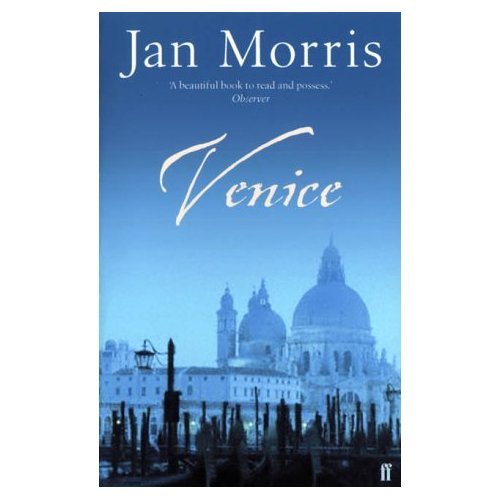

I first discovered her when reading as many histories of Venice as I could find and had time for prior to my first visit there -- not el V's first visit, of course.

This 2006 edition of Last Letters from Hav
has an introduction by Ursula K. Le Guin.


In certain circles her novel located the imaginary small country and its same-named capital, and Last Letters from Hav (1985) and the sequel section, Hav of the Myrmidons of the 2006 reprint, is her most admired book. When asked here about Venice's influence on these two books she says:

Do you see your novel Hav as a fictionalisation of your experiences in Venice?

"No, unless subconsciously. I think places like Trieste, Beirut or Danzig were probably more in my mind when I threw myself into that fantasy, but most of it was, as far as I know, pure invention – ooh, but now I do distinctly remember plucking an electric ferry-boat directly and shamelessly from the harbour of Bergen, in Norway, and depositing it in Hav … Forgive me!"


As to the flavor of that insignificant but most important place on earth to those who live in Hav, here's a bit from a Guardian review by Ursula K. Le Guin of the 2006 imprint:
When Last Letters from Hav was published (and shortlisted for the Booker prize) in 1985, Jan Morris's well-deserved fame as a travel writer, and the unfamiliarity of many modern readers with the nature of fiction, caused unexpected dismay among travel agents. Their clients demanded to know why they couldn't book a cheap flight to Hav. The problem, of course, was not the destination but the place of origin. You couldn't get there, in fact, from London or Moscow; but from Ruritania, or Orsinia, or the Invisible Cities, it was simply a matter of finding the right train.
However, Le Guin's recognition that Hav inhabits the imagined geography of Ruritania, doesn't prevent her from understanding where else, and perhaps more importantly, Hav is located -- including within time, within history:
Probably Morris, certainly her publisher, will not thank me for saying that Hav is in fact science fiction, of a perfectly recognisable type and superb quality. The "sciences" or areas of expertise involved are social - ethnology, sociology, political science, and above all, history. Hav exists as a mirror held up to several millennia of pan-Mediterranean history, customs and politics. It is a focusing mirror; its intensified reflection sharply concentrates both observation and speculation. Where have we been, where are we going? Those are the questions the book asks. It poses them through the invention of a place not recognised in the atlas or the histories, but which, introduced plausibly and without violence into the existing world, gives us a distanced, ironic and revelatory view of everything around it. The mode is not satiric fantasy, as in the islands Gulliver visited; it is exuberantly realistic, firmly observant, and genuinely knowledgeable about how things have been, and are now, in Saudi Arabia, or Turkey, or Downing Street. Serious science fiction is a mode of realism, not of fantasy; and Hav is a splendid example of the uses of an alternate geography. If, swayed by the silly snobbery of pundits as contemptuous of science fiction as they are ignorant of it, you should turn away from Hav, that would be a shame and a loss.

This capsulates the admiration of this work of Morris's  I felt from the moment I encountered it in the 1980's (when, perhaps not coincidentally I also discovered Fernand Braudel magnificent, ground-breaking histories of the Mediterranean regions and their hinterlands). This also explains why it feels on Earth Day, as we admit slowly to ourselves that our efforts on our planetary home may well have made it unhabitable in the not at all distant future, Hav is a read for today.

Tuesday, April 21, 2015

Wolf Hall - "Anna Regina" PBS - Mark Rylance's Cromwell

Mark Rylance's Cromwell was fascinating from the first episode.  By the middle of "Anna Regina", the 3rd episode of Wolf Hall on PBS, he has become mesmerizing.  We can never have enough of looking at him.


The subtilties and range of what Rylance communicates via his eyes and mouth alone, saying nothing, is, at the very least, worthy of all acting awards. Because of the thick, all enveloping masculine fashion of the era, particularly for somber administrative and legal fellows such as Thomas Cromwell, body language is out, so it's all in Rylance's head, so to speak.

The production's parallelisms and foreshadowings are quite faithful to Mantel's novel -- if I'm recalling correctly; it's been some time since I read Wolf Hall and Bring Up the Bodies.

Favorite ones from this episode were his sister-in-law / mistress's off-handed observation that even if /when her husband succumbs to his maladies, because she's Cromwell's "sister" it's illegal for them to marry -- the very argument by which Henry VIII justifies his desire to divorce Katherine.

Another favorite was the sudden irruption of lust-fantasy on Cromwell's part, while conversing amiably with Anne Boleyn, in which his fingers trace around her neck, down between and over, across the high swell of her breasts uplifted by the stays in the bodice of her low cut gown.  Rylance's face remains blank, yet conveys his shock at himself, and even -- maybe? -- a sense of Anne's eventual fate?  or that may just be for us to think of -- all simultaneously.  Also, for the first time, we get a sense of Anne as a beguiling beauty (this is particularly good as earlier in the archery scenes we are wishing someone would give her a time-out, if not a spanking, in response to her total brattiness when her shots didn't go as she wished). This makes for a a special poignancy, when, in another


conversation after Anne is confined to wait out the conclusion of her pregnancy, she says that she's always been desired, but this is the first time she feels valued. All of which we see Rylance taking in, knowing, as do we, just how fragile is her state of value, depending as it does entirely upon what her womb delivers.


So many foreshadowings -- even Anne's coronation ceremony as Queen of England, has her outstretched arms on either side, flat on the cathedral floor, in the pose of her final fate.

It seems that this production cannot do, and has done nothing, not even a tiny detail, wrong!


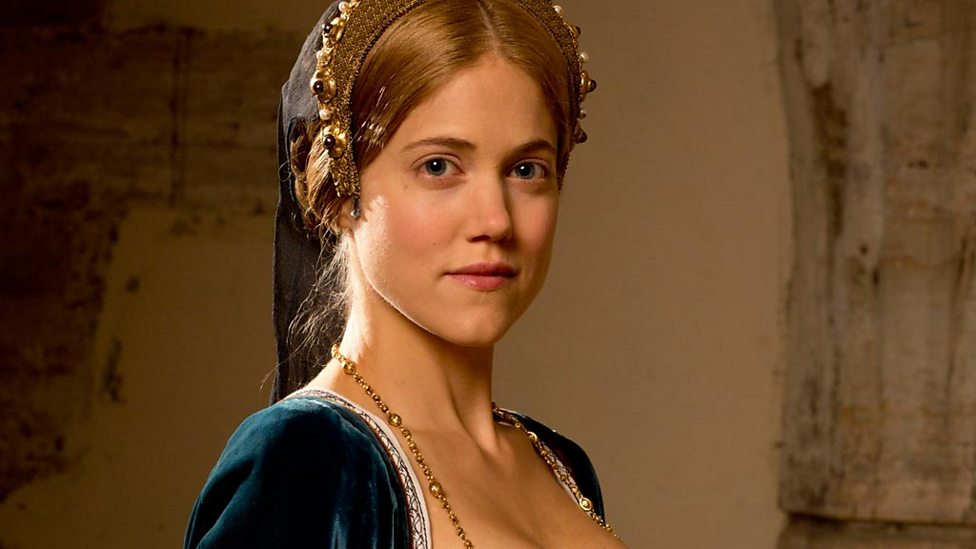
Unexpectedly, so far my favorite character is actress Charity Walkefield,'s Mary Boleyn, speaking only in terms of a character's likeability, of course, as this is Rylance's - Cromwell's show all together.  But the other Boleyn girl has a sprightly good-natured understanding of the world and its matters, and terrific sense of humor.

Saturday, April 18, 2015

In Honor Of Spring - Rosemary & Thyme

Rosemary & Thyme was a three-season 2003 - 2006)  ITV mystery series featuring two professional gardeners who are also good friends.  In the second season they even travel to jobs in Europe.

My reason for watching has nothing to do with the thin and even at times silly crime plots and villains, but for the scenes of the yards, lawns, gardens and parks in which Laura and Rosemary work

In honor, then, of the many women who garden, those I know and those I don't, here is Rosemary & Thyme opening theme:


Friday, April 17, 2015

History Channel Vikings, Season 3 - Episode 9, "Breaking Point"

We didn't exactly see that coming, but we are not surprised either. For fear of spoilage, that's all I'll comment about that.


To whom or to what is the episode's title, "Breaking Point", referring or pointing at? 

Things did break for Odo, Emperor Charles and Paris, and for Ragnar, certainly. 

Presumably, when / if the Lothbrok familia gets back to Kattegat, everything will break for Aslaug and all those who did not go to Paris.

Those for whom nothing broke, who still live or who died within their viking code, were Rollo and Earl Siegfried. 

But what about King Ecbert, Judith and Æthelwulf?  Ecbert has gone full over to the creepy side, and it is -- slimey. Whatever did the Mighty Kwen Merican Princess put in the drinks of both Ragnar and Ecbert -- or was it when she peed on them?  though we never saw her pee on Ecbert, of course -- to make them go so weirdly off the the mindsets they had when we meet them?  This isn't satisfactory character development writing, for either man, whether viking or christian.  But then, religion isn't exactly a rational experience, is it. Yet I used to enjoy Ecbert, though without trusting him a minute, and would still if he hadn't revealed that he's creepy.


Earl Siegfried you are surely laughing and drinking in Valhalla surrounded by admirers giving you backslaps for what you pulled.  That joke had to more than make up for dying without a weapon in hand. I just wish we'd gotten to know you more, so that it mattered to us you died, so that we were invested in you getting into Valhalla.

By the way, Ragnar, when you told everyone what is what:
I did not become earl because I aspired to be one. It came about because of other people’s actions. And I did not become king out of ambition, but once again I had no choice, as a result of other people’s actions. But nonetheless I am king. King Ragnar! That is my name! King Ragnar. What does a king do, Bjorn?
He rules.
Very good, Bjorn. He rules. And as a ruler I have the last say. Me! Not you, not you, not you, and not you. You’ve all had your ideas and they have all failed! I will not. Now, with no more discussion. We shall meet the Franks tomorrow.
you know what I say?  That's what all rulers say.  O no, I don't want to rule, other people made me do it.  Yet you all insist on your ruler prerogative of telling everyone what to do.  So, spare me that part, OK? And don't speak to me again about how all you really want is to be a simple farmer.

All this season has been about religion and power. My take-away from season 3 is that religion and power are not a very attractive team to drive story-telling. Maybe the final episode next week will pull out season 3, but so far, it ranks rather seriously below the first two seasons, and certainly far below the kick-ass that season 2 was. There's been little given to us in season 3 to invest in, whether as story-line or character. A great battle episode is not enough, neither is this episode's spiked spool of death -- it's not even essential -- to make a good season, but story-telling and characters are. There's been no story here.

But then power tends to accrue in the hands of the aging, and the aging tend to be more interested in religion, and Ragnar's aging rapidly. Ragnar pissed blood in the previous episode from the beating he took in that losing battle to break into Paris.  He's pissing even more blood in "Breaking Point."


Rollo -- all our hopes now depend on you.

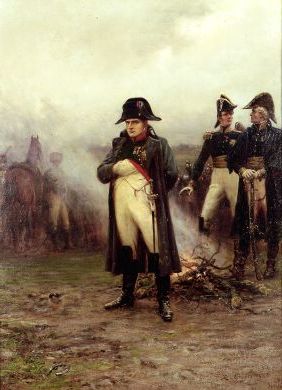
Andrew Jackson, Talleyrand, Napoleón

I suppose Napoleón is a fascinating fellow.  What he did, the havoc, game-changing, and bringing the changes around to, not even a monarchy embodied in the body of the divinely appointed sovereign, but an imperium, the closest model of which would have been the Roman Empire of the Caesars.  Like Augustus, he re-wrote and remodeled every part of administration from jurisprudence to the military.

Why did Napoleón stick his hand inside his uniform?  Dang, every military fellow, and those who liked to ape pretensions to military background for over a century was painted and / or photographed with his hand inside his clothes -- fondling their manly chest hairs?
That he appointed  members of his family as monarchs of the territories surrounding France  -- not principally for la belle France's defense as declared in his public announcements of the appointments -- but in order to be recognized as a dynastic ruler equal to the ancient houses such as  Bourbon, Hapsburg and   Romanovs is interesting.  But it still, a megalomaniac is a megalomaniac, and inflated egoist narcissists  in the end are inflated egoist narcissists, and ugly dangerous people, whether their fields of operation are limited to one's family or are expansive as a continental theater.


But Talleyrand now ... the fellow, once in Church orders, in the government of Louis XVI, run to American self-exile from the Revolution that had turned to the Terror, returned to France when the Directoire to become France's Foreign Minister, surfed successfully all the waves between that, the Consulate and throught the zenith of Napoleón's imperium, then falling out and again in exile, this time in England, to return again triumphantly as one of the four major players at the Congress of Vienna -- now that is a fascinating human being. Perhaps not a good one or an admirable one, but fascinating -- and more than a survivor, a success, until the end of his days.

And by all accounts, excellent company, which by most accounts, for any length of time, Napoleón most certainly was not.  Charismatic he was for long periods, but not good company: he lacked manners and courtesy, he was cruel and impatient, and loved hurting people by pinching them violently for extended minutes, leaving bruises and on occasion, blood -- even when not angry.

Talleyrand was a remarkably clear-sighted pragmatic realist. An egoist too, no doubt, but he wasn't a megalomaniac.  In the end, he was more successful than Napoleón, whose second coming transformed to defeat and ended his not that many more days in prison-exile.

One of Andrew Jackson's duels historically imagined.  This one was about a horse race.
Where on the scale between these two would fall Andrew Jackson? He sure was a megalomaniac in so many ways, see the Bank of the United States, hard money, the English, Indians, etc. He too was charismatic, and his manners with women at least, frequently were noticed as exquisite. Women flocked to Jackson, even those politically opposed to him, as they flocked to Talleyrand.

People like speculating how Jackson the military leader would have stepped to Wellington's game (another egoist! -- whose manners with women were anything but good), but what would have been more likely if San Domingue's revolution had not put a decided end to Napoleón's plans for the New World, is how Napoleón would have stepped to Jackson's, facing off as they'd have done in the Floridas and Louisiana territories.

Run-ons, are us today, as getting ready for a Harvard visit takes most of my attention!

Wednesday, April 15, 2015

Reading Wednesday - C.S. Harris - Who Buries the Dead, A Sebastian St. Cyr Mystery

This is the tenth title (March, 2015) in C.S. Harris's  Georgian - Regency Sebastian St. Cyr murder mystery series.  Sebastian, the Earl of Devlin,  and his wife, Hero daughter of Lord Jervis, most trusted and ruthless keeper of the reign's secrets and dirty tricks performer to the mad king's and his son, were seen a the very end of the previous installment as brand new parents. Who Buries the Dead picks up soon after that perilous birth, which Hero barely survived.


C.S. Harris is a New Orleans novelist.  She began publishing this series with What Angels Fear in November, 2005. Presumably she was dealing with the end tasks of publishing a book in the aftermath of Hurricane Katrina. Since then, these ten St. Cyr novels have appeared on a yearly schedule. This is particularly admirable considering that surely, though Harris may not suffered as terribly as so many others from New Orleans's Katrina tragedy -- let us say no New Orleanian escaped from the long, on-going experience and aftermath without being seriously affected.

Over the course of these ten years and novels  the reader has learned quite a bit more about Sebastian and his highly fraught past. We're now at the point where we know as much about Sebastian's past as he does. From now on, we readers, like his wife Hero, if more information is revealed that may solve the mysteries of his past, will be learning it with him.

Each novel follows the same structure.  Each novel includes scenes in which Sebastian and members of his family have encounters in which the secrets of Sebastian's birth are either never mentioned, or are addressed obliquely.  Often the encounters are hostile, despite his father, Lord Herndon's, efforts to mend fences. The same with Sebastian's meetings with Lord Jarvis, his most implacable antagonist -- who clearly knows more about Sebastian than most -- and who is the father of his dearly, deeply loved wife, Hero, and, now, also one of his son's grandfathers.

The series isn't entirely even, meaning not all of them are equally engaging, partly because of the formulaic structure.  Which nonengagement then might be just me, because I don't like formula much in my fiction.  Repetition of character and event irritate, do not comfort, me.

That said,  for me, Who Buries the Dead is up to the best of the series.  Both Jane Austen and her brother, Henry, who, in this novel, is still with the bank he joined, are ancillary characters. Austen is visiting her brother, Henry, in London to help care for his wife, Eliza, who is confined to home by the illness which will soon kill her. This is a period in which Sense and Sensibility and Pride and Prejudice have been published, and, thanks to the Regent, are the rage of ton reading.  (There are those who will have a knowing smile reading this, as Austen herself used 'ton' only once in her own fiction.)  Names and events encountered by Austen in connection with Sebastian's murder investigation reference those of Austen's later novels, Emma, Mansfield Park and Persuasion, though the author has very wisely chosen not to replicate any of the characters or plots of these books.


Who Buries the Dead is centered around Jamaican slave plantations, and the execution of Charles I. For more fact-checking The American Slave Coast, these last  three weeks I’d done more granular delving into the lead-up, execution and  aftermath of Charles I's execution, in Rebellion: The History of England From James I to the Glorious Revolution (2014) by Peter Ackroyd,  and (Lord) Charles Spencer’s Killers of the King: The Men Who Dared to Execute Charles I (2015).

However, it was purely by chance I picked up Who Buries the Dead last week, nor did I have any idea that Charles I's remains were the central axis of Harris's novel. The reading of these two works of Stuart history -- "that most hapless of British dynasties", as the historian Robert Tombs declares them to be in his The English and Their History (20014), made the enjoyment of this St. Cyr Mystery greater, not less.

Tuesday, April 14, 2015

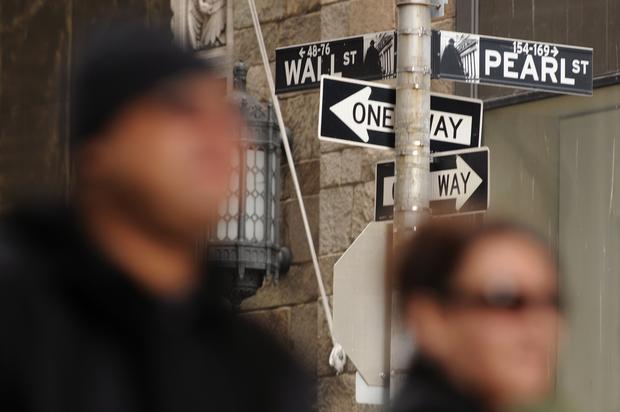
New York City To Acknowledge Slave Market At Wall and Pearl + The Murder of Lincoln

The Dutch built their Manhattan settlement, New Amsterdam, on the island's tip. In this oldest part of New York there are 38 historical markers and plaques, sculptures and statues such as the bronze commemorating Peter

Peter Stuyvesant, known as Petrus, served as the last Dutch Director-General of the colony of New Netherland from 1647 until it was ceded provisionally to the English in 1664, after which it was renamed New York. 


Stuyvesant.  What most visitors and residents don't realize is, besides founding New Amsterdam among their other activities in the early colonial era, the Dutch traders, among the first Africa-New World slavers and traders brought the first slaves to North America and the English colonies such as Virginia.

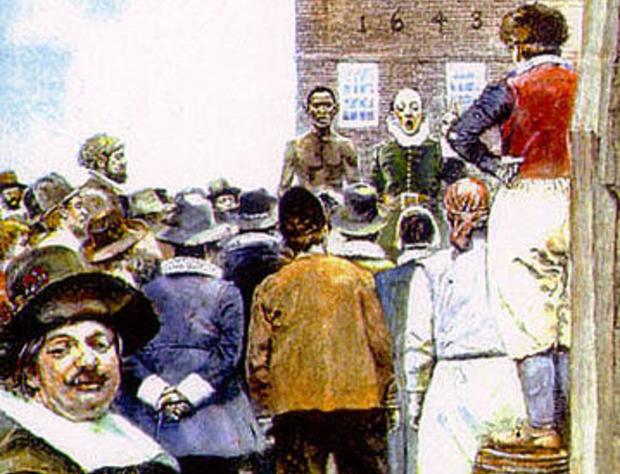
Harper's Magazine illustration of the New York City slave market in 1643.
New York's largest and longest operating slave market was located on the East River, at the corner of Pearl and Wall Streets. It began operating in the 1700's, long after the Dutch had ceded its North American colonies to the English, including the renamed for Charles II's brother, New York City.  Not incidental to this story, King Charles II was part of two royal African companies of merchant adventurers, whose aim were to fill the king's coffers with profits made by capturing Africans and selling them in the new world. Wresting domination of

Catherine of Braganza, Charles II's Portuguese, Catholic queen, controversial with her subjects and still controversial in New York City today, due to her connection with the African slave trade.
the African slave trade from the Portuguese and Dutch was a large motivation for Charles II's wars with the Dutch and his marriage to Portugal's royal daughter, Catherine of Braganza.

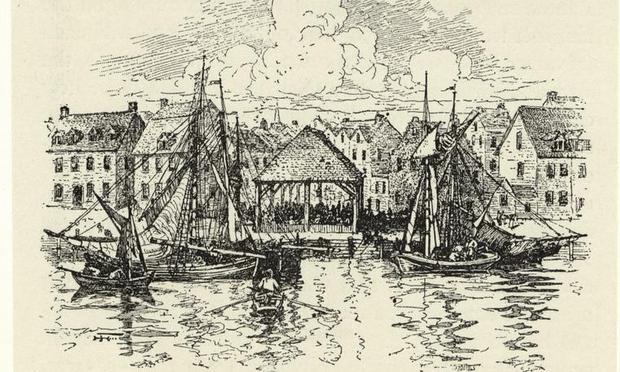
An historical drawing of the spot where New York City's 18th century slave market was located.

New York City's slave market existed at the corner of Wall and Pearl Streets from 1711 to 1762. "Slavery was introduced to Manhattan in 1626." The date is important because it's less than two years after Dutch settlers first arrived at the tip of what is today known as Manhattan. That means white Europeans and enslaved Africans arrived in New York — then called New Amsterdam — at essentially the same time.

To the many downtown historical markers, this summer the City is adding a marker that acknowledges the slave market. At this time the plan is to unveil the marker on Juneteenth (June 19), also known as Freedom Day, which dates to the emancipation of African-American slaves in Texas and throughout the Confederate South. "The marker will be freestanding and located in a pocket park on the northeast corner of Wall and Water Streets, a block from the historic location of the slave market."

Chris Cobb, an independent scholar who contributed research to the historical marker, testified at a City Council hearing last year about the legacy of slavery in New York. Cobb pointed out that the city directly benefited from the business. "It was a city-run slave market because they wanted to be able to tax every person who was bought and sold there," he said. "And the city hired slaves to do work like building roads."
One of the many reasons to have a public reminder of this slave market is because

New York and other northern cities accrued vast wealth from slave labor and profited for centuries from dealings in the slave trade. Africans who passed through the Wall Street slave market contributed to the prosperity of some very famous companies, some of which are still around: Aetna, New York Life and JPMorgan Chase, to name a few. Various units of these and other financial companies bankrolled southern plantations, insured slaves as property, and used slaves as collateral for loans.
Rioters subjected black people, including children in an orphanage to the most brutal violence: torture, hanging, and burning for three days in July, 1863.  Lincoln had to sent Union troops to the city to quell the violence.
This also explains why New York City, as opposed to the state at large, was such a hotbed of copperhead and other anti-abolitionist and emancipation action, including riots in which free African Americans were killed in large numbers, and why it hosted so many secessionist spies and plotters during the Civil War.

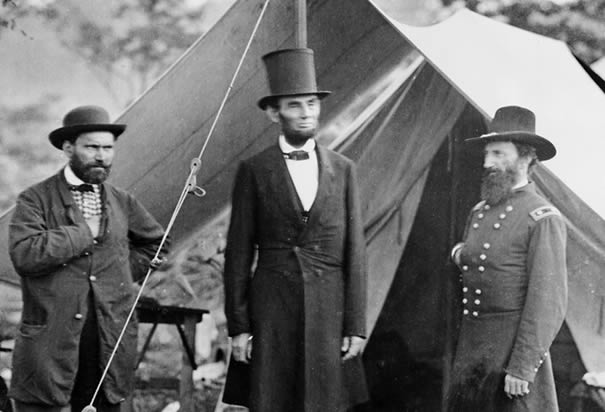
Acknowledging how thoroughly slavery and the slave trade are embedded in all our national history in all parts of the nation helps explain too, the murder 150 years ago today, of President Lincoln by Booth, only 5 days after Lee surrendered to General Grant at Appomattox.


Lincoln's murder was a true, national, tragedy.