LINES OF THE DAY

". . . But the past does not exist independently from the present. Indeed, the past is only past because there is a present, just as I can point to something over there only because I am here. But nothing is inherently over there or here. In that sense, the past has no content. The past -- or more accurately, pastness -- is a position. Thus, in no way can we identify the past as past." p. 15

". . . But we may want to keep in mind that deeds and words are not as distinguishable as often we presume. History does not belong only to its narrators, professional or amateur. While some of us debate what history is or was, others take it into their own hands." p. 153

Silencing the Past: Power and the Production of History (1995) by Michel-Rolph Trouillot

Showing posts with label vikings. Show all posts

Friday, April 28, 2017

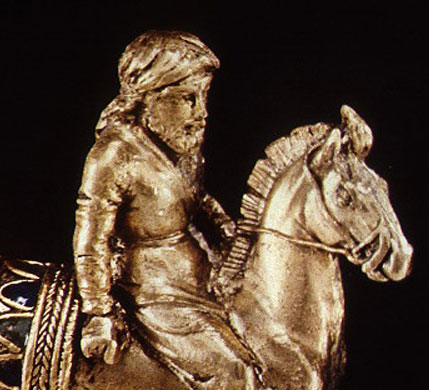
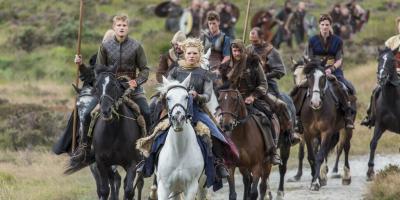
Scythians, Vikings and Their Horses

     . . . . Guess what boys and girls? Those Scythians, you know those nomadic horse-riding, horse centered culture people,   


who hunted and battled from horseback, ate their meat, drank their milk (and sometimes their blood) for thousands of years, from China and Siberia to the Black Sea and beyond? 


Scythian horse and trainer.


Guess what -- they had breeding programs for their herds! Who would ever have guessed that people who lived for thousands of years by, for and around the horse would ever think of that.


Scythian saddle.


Do we all think it, well, just happened, that these rode, hunted, fought, ate, herded, conquered, with the horse, and created war chariots to be pulled by horses, and invented stirrups? Because we know people who weren't able to spend their lives playing computer games and taking selfies of themselves eating cookie dough to post on FB, where also people post real time murders, rapes and tortures, and have all their personal information sold to anyone who wants to pay -- the ancient people couldn't possibly be so self-aware, intelligent, creative and inventive as to constantly, consciously improve the ways the horse could serve them, century-after-century.

Read about it here in the NY Times Science section (pay wall!).

Actually it is nice that this history of the nomadic herding horse peoples can be confirmed by DNA investigative tools.

It must have been the tone of the article that set me off? That breathless, hoo boy!, hey nobody ever thought about this before and look what these guys found!


This older NY Times article is also interesting if one is interested in horses (which I am).  Then there were the Vikings and horses. We tend not to associate the Vikings much with horses, but they knew their way around equines just fine, breeding and raising horses that suited their needs. Hey -- these are my people (along with the Poles, who know a whole lot about breeding and training horses too).

This NY Times article suggests that it was a mutation in Icelandic horses during the Viking age that ultimately allowed for the 'amble' gait in horses. Not all horses can do this. What particularly interests me is that the Vikings traded these horses all over Europe -- and, into the Middle East. I keep thinking of horses with coats that allow for survival in a nordic, Icelandic climate, who can amble, finding homes in Damascus and Jerusalem.

Icelander horse performing the tolt - Tolt is "Even 4-beat rhythm with long strides in front and behind, elegant lift and action of the front legs, movements extremely flexible and supple, excellent speed."
Then there's this even older NY Times article. As well as a mutation gene allows for horses that can amble, there is a mutation gene for pacing.  As with the amble gait gene, not all horses have the pacing gene. Both qualities have become embedded in certain varieties of horses by deliberate breeding. What particularly interests me is that many horses in possession this gene that allows for an amble or for pacing, find it difficult to transition from that to a trot or gallop, or at least to do so smoothly. Smooth transition of gaits is a big part on what horses and their riders on show are scored on. That this information has been discovered now allows breeders, owners and trainers to do testing on potential candidates for various events and racing.  If that gene is missing there is no point in spending time and money training this horse, so it can be sent off for another career.*

A video of Icelandic horse round-up:


----------------------

*  Hopefully another career, and not to the dog and catfood factory . . . .


Friday, April 17, 2015

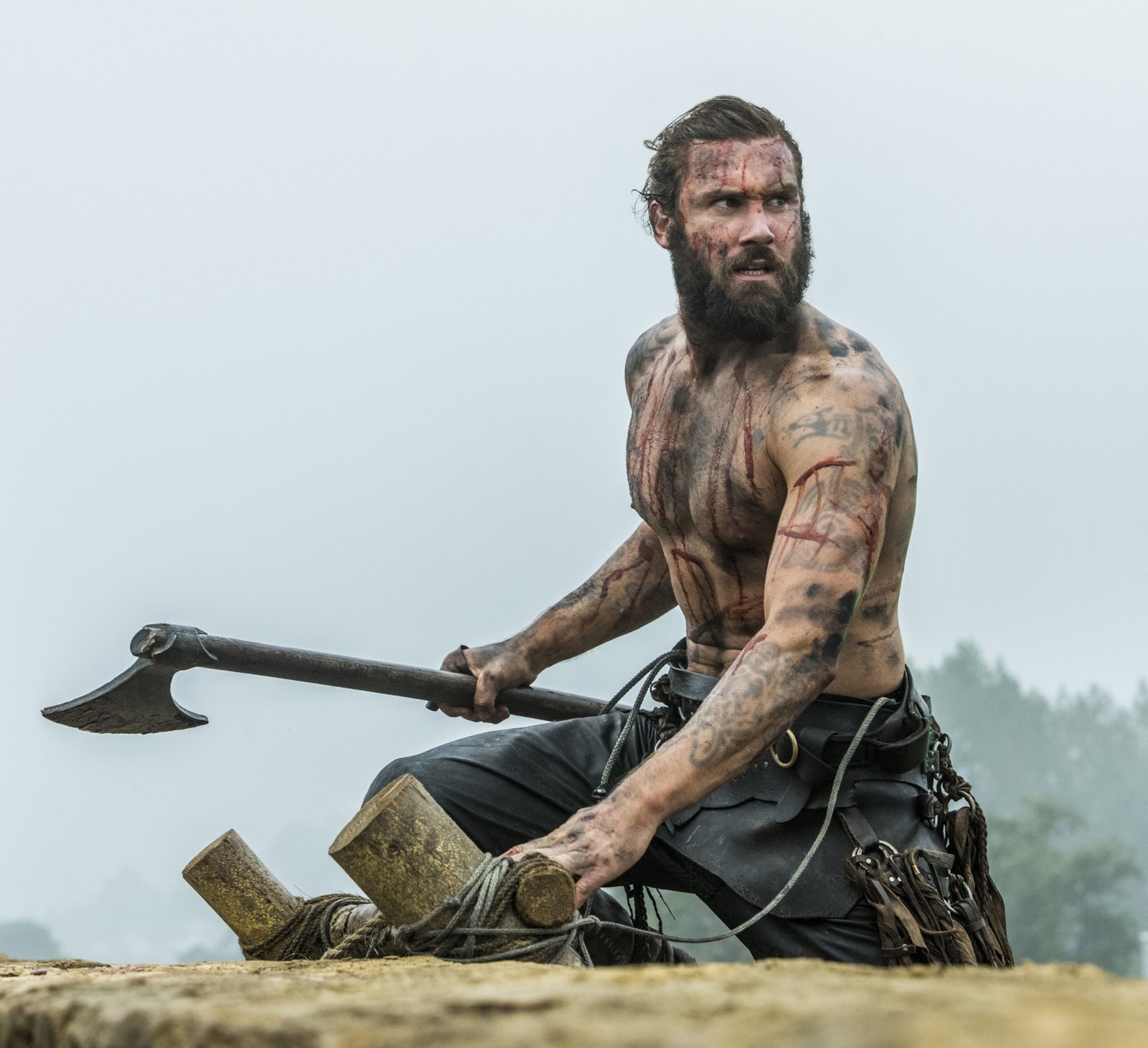
History Channel Vikings, Season 3 - Episode 9, "Breaking Point"

We didn't exactly see that coming, but we are not surprised either. For fear of spoilage, that's all I'll comment about that.


To whom or to what is the episode's title, "Breaking Point", referring or pointing at? 

Things did break for Odo, Emperor Charles and Paris, and for Ragnar, certainly. 

Presumably, when / if the Lothbrok familia gets back to Kattegat, everything will break for Aslaug and all those who did not go to Paris.

Those for whom nothing broke, who still live or who died within their viking code, were Rollo and Earl Siegfried. 

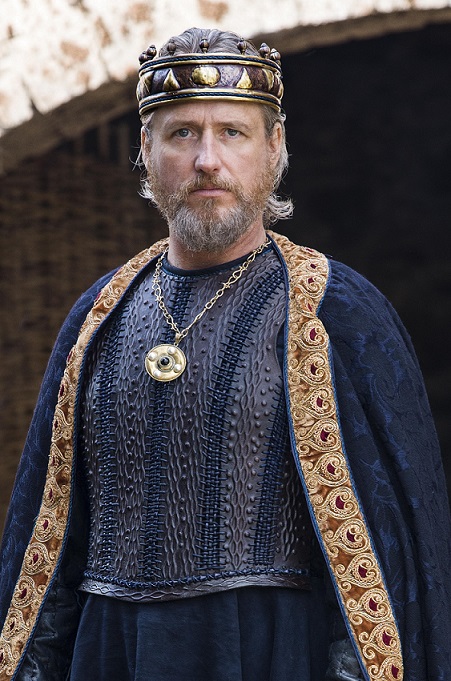
But what about King Ecbert, Judith and Æthelwulf?  Ecbert has gone full over to the creepy side, and it is -- slimey. Whatever did the Mighty Kwen Merican Princess put in the drinks of both Ragnar and Ecbert -- or was it when she peed on them?  though we never saw her pee on Ecbert, of course -- to make them go so weirdly off the the mindsets they had when we meet them?  This isn't satisfactory character development writing, for either man, whether viking or christian.  But then, religion isn't exactly a rational experience, is it. Yet I used to enjoy Ecbert, though without trusting him a minute, and would still if he hadn't revealed that he's creepy.


Earl Siegfried you are surely laughing and drinking in Valhalla surrounded by admirers giving you backslaps for what you pulled.  That joke had to more than make up for dying without a weapon in hand. I just wish we'd gotten to know you more, so that it mattered to us you died, so that we were invested in you getting into Valhalla.

By the way, Ragnar, when you told everyone what is what:
I did not become earl because I aspired to be one. It came about because of other people’s actions. And I did not become king out of ambition, but once again I had no choice, as a result of other people’s actions. But nonetheless I am king. King Ragnar! That is my name! King Ragnar. What does a king do, Bjorn?
He rules.
Very good, Bjorn. He rules. And as a ruler I have the last say. Me! Not you, not you, not you, and not you. You’ve all had your ideas and they have all failed! I will not. Now, with no more discussion. We shall meet the Franks tomorrow.
you know what I say?  That's what all rulers say.  O no, I don't want to rule, other people made me do it.  Yet you all insist on your ruler prerogative of telling everyone what to do.  So, spare me that part, OK? And don't speak to me again about how all you really want is to be a simple farmer.

All this season has been about religion and power. My take-away from season 3 is that religion and power are not a very attractive team to drive story-telling. Maybe the final episode next week will pull out season 3, but so far, it ranks rather seriously below the first two seasons, and certainly far below the kick-ass that season 2 was. There's been little given to us in season 3 to invest in, whether as story-line or character. A great battle episode is not enough, neither is this episode's spiked spool of death -- it's not even essential -- to make a good season, but story-telling and characters are. There's been no story here.

But then power tends to accrue in the hands of the aging, and the aging tend to be more interested in religion, and Ragnar's aging rapidly. Ragnar pissed blood in the previous episode from the beating he took in that losing battle to break into Paris.  He's pissing even more blood in "Breaking Point."


Rollo -- all our hopes now depend on you.

Friday, April 10, 2015

Vikings - Season 3, Episode 8 - See Paris and Die - NO SPOILERS

Vikings' "To the Gates!" may be the best, and certainly among the very best, prolonged battle scenes put up on screen.*  It's certainly the best ever made-for-television battle.


Even knowing some of the historical background on which the last episodes of season three are drawing there were moments when it was impossible to not to think:
"See Paris -- and Die."
Those were deeply disturbing moments.

Now Ragnar knows the weak places and strong places of Paris's defenses.  He knows how the Francia soldiers fight, and their variety of weapons.  He's got a sense of the commander who directs the defense.  He also knows how much religious faith matters in the battles. However, Ragnar's lost . . .  how many men?

O Lagertha!  At least you promised to kill him . . . sometime . . . .
A very great deal happens in this episode beyond the hewing, hacking, bleeding, burning, drowning and dying, but I will not speak of them for fear of spoiling.**


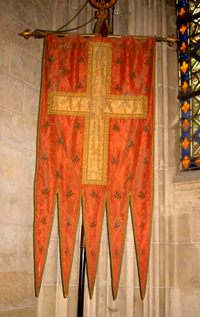
However, this can't be a spoiler, or much of one anyway: The writer(s) made magnificent use of the Oriflamme, as it played such a big role in some of the wars and battles of the English-Normans and France at times during the Plantagenet reign.  Which means descendants of the Norse will still be dealing with the banner of St. Denys in the 11th, 12th and 13th centuries.  Not the same banner-textile, obviously, after hundreds of years, but there's always an Oriflamme since about the 6th century.  In terms purely of the episode the Oriflamme's presence underscored how much this season has been about conflicting religions and how these conflicts inevitably play out by fire and sword.

The last two episodes, judging by this one, will be killers.

------------------------


*  Among these very best battle scenes this watcher would include more than one battle and siege from the 1961 film,  El Cid (this film also has the best castles).  Recall too, there was no blue / green screen or CGI then.  Every once in a while, in the days before digitization and dvds and streaming and all the other ways we revel in our watching now, El Cid would show up in a local art theater.  This film was done in the days of cinemascope and alas the days of theaters with one of those screens made for that were long gone before I got to learn of El Cid.  But I have watched in theaters like the Film Forum several times.

**  One of these involved the Francia princess, Gisla, daughter of Charles the Bald (who is not historically an emperor though they call him that in Vikings) whom I always wish to call by her historic name, Judith.  But there's already Judith in the series. She's not used in her historical position either, since by the historical record, Judith was Æthelwulf's second wife, and she had no children by Æthelwulf', or anyone else .  However, when it comes to the liberties Vikings takes with history, this doesn't bother me.  First because Ragnar himself probably didn't exist outside the sagas, but rather was a composite figure.  Which is why the timeslips don't generally bother me either.  Sagas didn't necessarily progress in any careful linear narrative line in which every point between getting between A and G is described much less even mentioned.

Friday, April 3, 2015

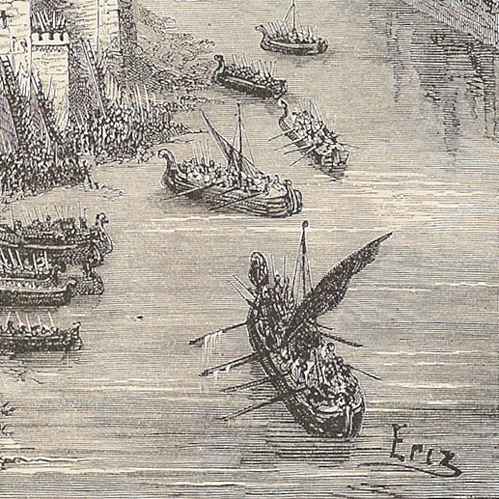
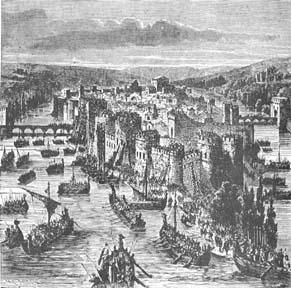
Vikings - Anniversary of Paris 845 Siege 'n Sack

In the 9th century, 845, when Paris was part of the kingdom given to Charles the Bald, one of Charlemagne's grandsons.*  I don't know though, exactly when 

Charles the Bald enthroned.

Easter took place in 845, but the siege began in March.

It surely has delighted the History Channel's Vikings team to begin their interpretation of the Siege of Paris with episode 7, which broadcast last night, three days before Easter.


As well as extracting an enormous weight of silver, the Vikings' siege of 845 taught Monsieur Bald to build fortified bridges leading up to, into, the city.


Nevertheless this was not the end of invasions from the Norse, attacks on Paris 
and danegeld (or, gafol, in 11th century sources).  For that matter this wasn't the first invasion of the Norse into Francia, but this one really brought the gafol home!

---------------------

*   Fans of the History Channel's Vikings series (of whom I am one), please take note this sentence in the above-link to the history of the siege:  
In March 845,[5] a fleet of 120 Danish Viking ships[1][6] containing more than 5,000 men[7] entered the Seine under the command of a Danish chieftain[8] named "Reginherus", or Ragnar.[1] This Ragnar has often been tentatively identified with the legendary saga figure Ragnar Lodbrok, but the historicity of the latter remains a disputed issue among historians.[5][7]

Friday, May 2, 2014

Vikings - History Channel - Season 2 - Ep. 10 , "Lord's Prayer"

That was one suspenseful, tight-tensioned finale.  Usually I'm more than excellent at calling plot lines long before they are on screen, but this time, I couldn't. This is a large part why I love this show -- I don't know!  I am frequently surprised, and almost always in good ways, with the notably unfortunate exception of whacky sex-obsessed Mercian Princess Kwenthrith.  Fortunately, we do not see see her or any Saxons, unless Athelstan counts, or England in this, Viking's season two final episode.  It's about the Northmen taking care of their home business.
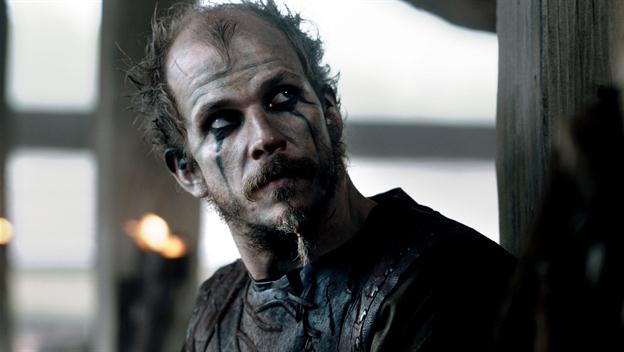
Floki named his daughter Angrboda, after Loki's first wife, mother of monsters. He sends his beautiful daughter and wife Helga back home, out of Kattegatt. Something bad is coming.  Soon.  So, it seemed it was all over, that Floki honestly was on the dark side. 

He proceeds then to shoving a psychotropic mushroom into the very wounded from last week's disastrous-Horik-battle-loss Rollo's mouth -- what was that about? Seemingly, to get Rollo back in his head and start working on getting fit from being nearly dead. But we don't know, really.

Floki continues to be busy.

He secretly gives mushrooms to Torstein, one of Ragnar's most loyal and fierce warriors. And Torstein dies. So why didn't Rollo die?

Floki and Ragnar sure did play a loooooooooooooong game, and they played it so well. We've seen how very cunning Ragnar is, and his capacity for the waiting game as part of his long game -- which is why Horik lost that battle last week, because unlike Ragnar he could not wait -- that we believe with no trouble at all that the seeming duplicity was Ragnar's strategy all along. 

Athelstan and Ragnar in a pretty place to recite "The Lord's Prayer"
Ragnar's determination to learn about Christian practices, even a prayer, is part of his determination to learn other languages, so he doesn't need to rely on interpreters. However, Ragnar didn't wish to conclude the Lord's Prayer with its proper conclusion:

And forgive us our trespasses,
As we forgive them that trespass against us. 
And lead us not into temptation, 
But deliver us from evil. 
For thine is the kingdom,
The power, and the glory,
For ever and ever.
Amen.

Ragnar has no intention of forgiving anybody directing evil against his family.

Nor is it clear whether Floki's disdain for Athelstan is real or also part of the game?  Athelstan fought again, and was there, with the Ragnar family in the Hall where Horik's world ends. It's this sort of ambiguity I can live with, particularly when it is Floki - Loki.
Two arrivals by water, both of them boding extreme ill for Kattegatt and Ragnar's people. With the arrival of Horik's family I knew the king's plot was nearly at the boil now, because why else would he bring his family there?  (Even so, it still made no sense for him to bring his family to a slaughterhouse, even if he expected to be the chief executor.)

Between the first and the second water-brought visitors was an impressively shivery short bridge scene on the beach. Lagertha and Aslaug stand shoulder to shoulder looking at the storm raging in the sky and beating at the water.  Aslaug says, "The gods are coming."  Those two were planning something, certainly, but what? Don't you just love women like them?*

After the storm two ships beached, stopping the heart, filled with warriors -- or were they mercenaries -- greeted by Horick's still-unnamed, and, now, never to be called by name ever, son. O dear, one thinks.  Jarl Borg's invasion reprised.

But -- in the Great Hall, where Siggy was to murder Aslaug's sons, is revealed, one-by-one the whole Ragnar family, minus poor Rollo -- who did manage to do his bit despite nearly being dead, perhaps due to the mushrooms Floki gave him. Siggy's one of them so the ability to breathe resumes. The tension rebuild immediately -- what else was going to happen beyond Horik getting his?  Who else will die?  His queen was dead already.
Lagertha was terrifying in the icy fury in her combat with Warrior Queen Gudrun -- is that her name? The actress does this so convincingly -- not every actress could pull that out of her, one thinks. I don't know, of course -- but just for instance, say -- Glenn Close can, but Lena Headey cannot -- she manages uber-whine-bitch fine, but this, she cannot do, it seems, or at least isn't allowed to.

Lagertha and the others fighting with her walked away from Horik's terrified children and their maids. How refreshing -- some mercy for the innocent, like Siggy wasn't killed when her husband was. But -- all those sisters, his daughters that Horik joked he could marry to Ragnar's sons, who he was all the while planning to kill, ended up dead. His warrior lady queen had plotted with Horik to murder all of Ragnar, Lagertha and Aslaug's children, so they reaped what they sowed.
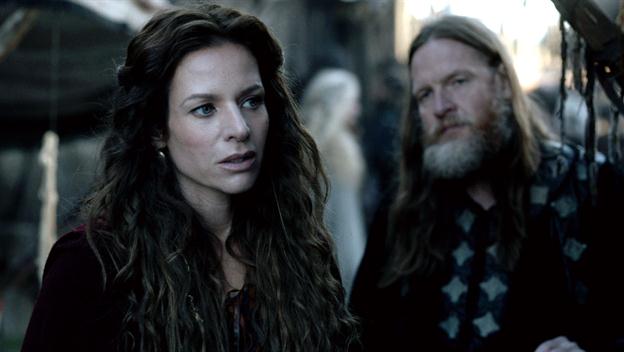

When Horik gave Siggy a special dagger and told her to kill Ragnar's younger sons with it, it was impossible not to hope that Siggy would not carry through with that because it was in her eyes how much she hated Horik for how he'd humiliated her -- nor did she believe he'd marry her -- and -- she'd be only second wife -- he was humiliating her casually yet again. What I'm not sure of is whether Siggy was part of Ragnar's long game all along, that she'd deliberately set herself at Horik to spy on him?  Or was this part of Siggy's attempt to figure out her new life?  I kept thinking of that scene some episodes back, when she'd been talking - plotting with Horik at a feast, and afterwords asks Floki if he can keep a secret, and Floki said it was impossible, while you knew his eyes had penetrated effortlessly what she'd been on about with Horik.  

The end of Horik is brutal and somewhat prolonged.  Yet it is satisfying within the milieu -- almost all those whose deaths Horik had planned -- these are all people he knew and ate with -- give him a cut, and then depart, leaving the king alone with Ragnar. Ragnar does not hold back.  However the writers and photographers do, for which they are highly, highly praised.  We know exactly what is happening, but there is no wallowing in it, and we are not pushed into participating.

We'll ne'er know ye name, o only son of Horik!
Was Horik's son saved for the blood eagle, or even for what Floki said he'd do to the person who had poisoned Torstein?  Floki's reaction to Torstein's death seemed excessive even for Floki, even when at the time the audience does not know Torstein was not dead, which flipped the thinking again to: "Is this a Ragnar plot?"


As part of Floki's busyness, he sneak-follows Bjorn everywhere, even when Bjorn and Porunn have sex after a somewhat bloody bout of foreplay. This echoes the walk Ragnar did last week with Athelstan out of camp to where he was safe from assassination by a Horik man. Or so it is understood, once we learn that Floki's doing this to keep Bjorn safe, rather than killing him, as Horik had ordered Floki to do.


So, we conclude the season with Bjorn taking up the mystical sword (where did that come from?) and Ragnar looking filled with years -- and holding this sword, which is a symbol of something, kingship? That Bjorn handled this sword first, is this a portent of the inevitable, generational changing of the guard?
Great finale -- terrific season!
I've noticed today some are saying they knew what was happening all along, so this was a weak finale. They also are disappointed that at least one of the principals did not die in the course of this season, which makes the series too predictable. But by now now we're so used to principals getting written out a series with a Big Death Not Expected, that that is the predictable thing.  So those critics are wrong! :)

I have hope next year's will be as good as season two was. If they rid is of sex-crazy Princess next time around, or have her fall on her head and get sane, then I can be entirely satisfied.

Edited to add there is an interview with the show's creator and writer, Michael Hirst in which he tells us:

1) Horik's son is saved by Ragnar, though all the girls were killed by their slave girls -- which I say is a very bad idea and will end badly -- why not save girl and marry her to one of his sons?  much safer.  Also -- the toad's name is Erlendur.

2) We are not seeing the same version of Vikings that is seen in Europe -- which has more scenes and is longer.  Which explains why we slide over so many things, seemingly.

3) Next season Ragnar goes to Paris.

4) Horrible Princess Kwenthrith is going to be around.  I hope she eats Erlendur.

----------------------------

*   Probably every watcher's favorite bit from last night's final episode came when Horik's Queen Gudrun? asks Lagertha how she became an eorl in her own right, and Lagertha says, "I put a knife in my husband when he tried to put himself in me." The two women laugh great bonding laughter. So ... what happens later is even more surprising.

Saturday, April 26, 2014

Vikings - History Channel - Season 2 - Ep. 9 "The Choice"

The great battle between Ragnar and King Horik's alliance and the alliance of King Ecbert and King Aelle predicted for this week's Vikings episode, "The Choice," took place.  It was awful


Ragnar -- Horik! because he's an old school sort of warlord, who will not listen to the class inferior but o so cunning Ragnar -- lost.  But this wasn't the most distressing thing that happened, even though the loss included a nearly dead Rollo. It is nearly 100% certain now that Floki's plotting with Horvik to take down Ragnar -- Floki, whose skills and dependable loyalty have been instrumental in the preservation of Ragnar, his people and his lands.

Gods and goddesses' behaviors reflect  the universality of humanity. So, unmotivated as Floki's turn against Ragnar may appear to the audience, it is understandable. Most people share the experience of losing friends, friends who were long-time dear friends, for whom good turns were done when possible, without even thinking about it. All sincere questions to learn if something offensive took place, so an apology can be made and and change behavior are rebuffed. It's difficult not to start thinking these 'friends' were hypocrites all along, who were in the relationship only for what they got out of it, and now they no longer feel there is anything left worth bothering with. There are friends who were there when things didn't go well, but when things started to break positively again, they dropped the friendship. So on and so forth. So Floki, self-identified with the trickster god Loki, is a great addition to the story that Vikings is telling. The sagas and myths are filled with inexplicable betrayals, because sometimes human beings take mean and petty glee in destruction, just as other humans will be loyal through torture and death.


King Horik asks Loki leading questions about Ragnar's first-born son, Bjorn, who is turning into a great warrior.  He compares Bjorn to Baldur. The upshot is the esteem in which Bjorn is held by everyone annoys both fellows no end.  Not for a particular reason -- there's no suggestion that Floki believes Bjorn is unworthy of such esteem, but it persistently annoys him, an annoyance rapidly growing, just as his annoyance with Ragnar's success is growing.  According to folklore, a scorpion must sting something, even if only itself. (One does notice, however, that nobody is esteeming Horik's son -- nobody even bothers to call the toad by name, including his father and Floki.)


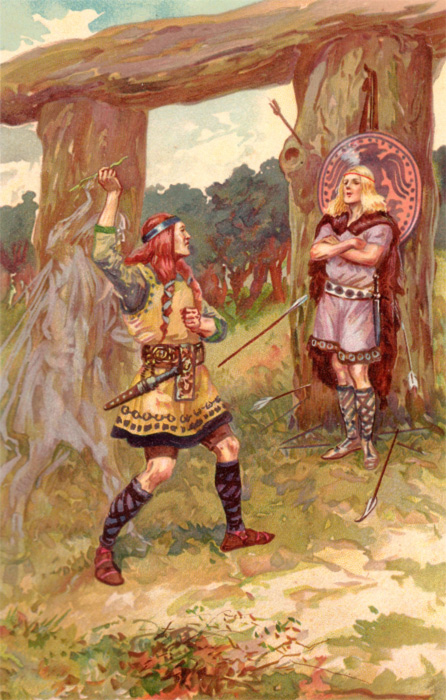
In nordic mythology, Loki's grand inquisition to discover whether there was anything that hadn't sworn not to harm Baldur learned was the mistletoe. Mom Goddess Frigg didn't bother to get a promise from Mistletoe, so insignificant it was. Loki was the one who put mistletoe in the hand of blind Hod, in order that he too could pay honor to Baldur and participate in the game of throwing deadly things, with all the deadly things changing trajectory to not harm Baldur. Sometimes Loki learns of the mistletoe from Frigg herself, and sometimes it's by going through the whole of heaven, earth and hell and asking every damned thing and creature. With myths there are always more than one version.  But it does seem agreed that Baldur's death is the first step on the way to Ragnarok. A foreshadowing of Ragnar's downfall, somehow accomplished through Bjorn?

The Mercian Princess Kwenthrith was even more impossibly implausible this week.  If a woman wants to command an army she doesn't go among hired mercenaries and grab their dicks, in public, under the eyes of two supposedly allied kings and their entourages.*  That she managed to murder her brother strains belief. This woman's too whacko in all the wrong ways to be a successful murderess, much less a successful ruler.  In the meantime King Ecbert and King Aelle have their bargain to partition Mercia between them, so, one wonders if hiring norse mercenaries is part of King Ecbert's long plan to take over Mercia for himself alone, and squeeze out Aelle.  I am thinking of what is in the The Tale of Ragnar's Sons (translation here of the Edda).

In presumably at least one of the choices of the episode's title, Athelstan and Ragnar are reunited;  Athelstand chooses Ragnar and the norse over King Ecbert and Wessex. That's how much Princess Kwenthrith must have scared him last week!

What does Athelstan have that everybody loves him (except Floki)?  He's interested in everyone, and non-judgmental of anyone but himself. Despite becoming an effective warrior, he is fundamentally gentle. Two words say it all: Athelstan is lovable, he's trustworthy, in a time and place that bristles with deceit and betrayal.  I was surprised he went back to Kattegatt with Ragnar, but it's plausible.

Athelstan, Ecbert and Ragnar are all three exceptional men in their age, and exceptional in the same ways.  Athelstan is the bridge between Ragnar and Ecbert. Neither of these two are self-conflicted, whereas, Athelstan is.


Continued from last week, Princess Aslaug made another classy move, worthy of a Princess -- as opposed to Princess Kwenthrith. She freed Porunn.  Moreover she does it right, she gave Porunn some coin and a new dress, so she had the means to support herself as a free person, as slaves have nothing of their own to bring to freedom, even names as slavery was / is practiced in many places -- which allows her to be a socially recognized partner to Bjorn.

Aslaug's been growing up and into the place to which she was born, woman of the ruling class.  Lagertha was an excellent role model for her, as it seems Eorl Lagertha is for so many young women who encounter her now.  It's too bad there were no reaction shots of Lagertha to the news that Princess Aslaug freed Porunn from her status as a bondswoman.  Could this have been some kind of domestic rivalry to show these young women that there are others sorts of power and woman can wield, and freeing worthy young women are among them?  As Porunn wasn't Lagertha's property she wouldn't have been able to free the girl that Bjorn is, at least currently, besotted by.

In fact, this is one way that extended families are made, which also make for kingdoms. Lagertha and her son are still as much a part of Ragnar's clan as Aslaug and her sons.  And it is the two women here, Lagertha and Aslaug, who are making this decision, not Ragnar.  It was another choice, in an episode titled "The Choice."

One of the best aspects of Vikings are the relationships among the women, how their connections among each other shift, change, and develop.  Even Lagertha and Aslaug's relationship which began as rivals in connection with Ragnar, has developed beyond that, which is not about their relationships with Ragnar, per se. Very few movies, novels or television series even think of respecting female characters this way. There's limited menu for roles inhabited by women at all, and women's relationships with each other that don't depend upon the central male protagonist are nearly non-existent.

One more episode to go.  What will happen in the finale?

----------------------


* Did get a kick though, out of King Ecbert's knowing and even amused expression as Princess Kwenthrith acted out as if she were in an MTV video instead of a battle to own her kingdom.  King Ecbert always surprises me, in good ways.  Aelle, one way or another, should be very careful.


Saturday, April 19, 2014

Vikings Season 2 - HBO History Channel - Ep 207 Blood Eagle & Ep 208 Boneless

As much has been going on in the saga world of legendary Norse warrior Ragnar Lothbrok, his family, relatives, friends, allies and enemies as has been going on over here in real world. In Nuestra Casa, thank goodness, it's been art, scholarship, music and friends


But in Kattegatt, it was cutting out an enemy's lungs, the "Blood Eagle" in the title of last week's episode, while Jarl Borg still lived. If Borg wanted to get to Valhalla, he could not make a sound while this lengthy, excruciating death was in process. One has the sense hope drugs were involved to make his heroic sacrifice possible, for it was in every sense a ritual death, dedicated to Odin, even though it was carried out upon the man who betrayed Ragnar and tried to kill him,  his family, and stole all his lands. When one of Borg's hands slips from the beam simulating an outstretched wing, Ragnar carefully replaces it, to make the sacrifice perfect.  

One sensed that mass of bread or whatever it was brought to Jarl Borg in his prison by Ragnar's son, Bjorn, was not really bread, and the passionate haste with which Borg snatched it was more from relief than because he was famished. We've seen drugs involved in two ritual deaths already, the handmaid who volunteers to go with Eorl Haraldson on his funeral ship was both drunk and drugged, and the sacrifices at Uppsala were given a potion.

King Horik revealed himself the rat we know he is.  Ragnar is skinning and gutting a rat -- evidently just for something to occupy his restless hands -- when King Horik arrives in his Hall.  Horik coerces Siggy, whose choices of powerful men with whom to ally herself have a way of backfiring, to have sex with his son -- while he watches.  He visits Jarl Borg in his cell, bringing him the skull of his dead wife and the mendacious assurance that Ragnar will rescind his Blood Eagle. When Hork enters Borg has been holding a sort-of pet rat.  In both these sequences we know who the rat in the scene really is. 


In Wessex, the rescued Athelstan is King Ecbert's new,favored librarian-scribe-confident and advisor in all things nordic. Athelstan suffers from hallucinations, most of them most unpleasant. Rescued by Ecbert from the cross on which he was hung, while arrows were shot into him, Athelstan could be having post traumatic episodes -- the crucifixion might have resurfaced memories of the terrible scenes of the sacking of Lindisfarne where Ragnar captured him. Then, one does wonder if the hallucinations are Upssala drug-induced triggers, for back in season 1 when Ragnar was going to sacrifice Athelstan there, Floki gave him something psychotropic (on which it seems everyone there was tripping).

So -- two tortures last week.


And there are two weddings!

One in Wessex between King Ecbert's son, Athelwulf -- who seems a good bloke --  and King Aelle's daughter, Judith -- who seems a nice enough girl --  and the other in Kattegatt -- Floki marries Helga, pregnant with his child.  Floki's also pregnant with a non-previously perceived antagonism toward Ragnar.  Like the universal trickster's dark side, as we see with Elegba, Loki or Iago, Floki's dark or twisted side is becoming dominant (and woo, has he imbibed in psyhotropic drugs over the years!).

In any case, one wedding looks like loads of fun and we know which of the two weddings does not look like any fun at all -- though the two principals are old enough, and seem to like each other well enough, which is much better than nothing.  But the one that was not fun was for political and military alliance: not only to fight off viking incursion, but to carve up Mercia, a larger, neighboring kingdom.  Certainly this alliance shall fare no better than the alliance among Ragnar, Borg and Horik has? -- the ways of ambitious and powerful men being what they are, of whatever religion or land, bent as they are on betrayal and back-stabbing.


With the loss of Borg's lungs last week, so were Borg's ships and men. This week Ragnar gains ships and fighting men because Lagertha has become Eorl in the place of her sadistic stupid insane husband.  She brings Ragnar what he needs, including herself among the counted warriors for the invasion of Wessex. I personally believe she's doing this for the sake of her son Bjorn, not Ragnar, but Ragnar's manly self-regard doesn't consider this, seemingly. He's surely believes she still loves HIM even though he threw her over for a royal baby-production machine.  Anyway, he thinks he should be able to have them both as his wives, and what Ragnar wants is how it should be in the devious mind of Ragnar. 

This week's episode, "Boneless", shows Rat's back-stabbing tactics.  It's one way to become king and stay king -- connive to divide your rival from his support network. King Horik scope for this is far greater than poor Jarl Borg's ever was -- all he managed to do was suborn Ragnar's brother Rollo, and that, only for a time. Horik's playing Siggy, Floki -- and even it, seems, Lagertha.Rollo, having learned his lessons (as well as having an historical destiny of his own in the offing) isn't playing the game though.  Besides he knows that Horik has sexed Siggy. Rollo may have forgiven Siggy (they aren't married), but he's unlikely to forget it happened -- certainly no so far as to betray his brother Ragnar again.


Shortly before the gathered invasion fleet sails out of the Kattegatt fjord, Aslaug has another baby, another boy. This one has legs that are withered and misshapen, probably due to the very difficult birth. In the end Ragnar cannot kill / expose the boy anymore than Aslaug would, even though that's the regulation for imperfect babies. Ivar the Boneless.  He too has a destiny.


A previously unknown character invades Ecbert's court, shortly before the viking fleet invades Wessex. This is the Princess  Kwenthrith of Mercia, who, has not only killed her own brother in a civil war, but is Princess of the kingdom King Ecbert and King Aelle have agreed to divide up among them. The watchers are immediately on the team of Ecbert and Aelle to do this because for some reason the writers wants us to be. Not only have they made Kwenthrith a vegetarian, she's witchy, creepy and sexually insatiable. She talk talk talks of her appetites and experiences in public -- raped by her brother when she was twelve! A BAD WOMAN, unfit to rule a kingdom. As unlike Lagertha as you can get, Only one woman at a time, if any at all, can be allowed to be strong and wise and worthy of running things. I'm not believing in her character as presented to us.  Hate this character, in a negative, not good, way. Such frackin' cliche, wildly implausible in her milieu, at least to someone like me for whom this era is not an historical specialty.

Athelstan -- still having hallucinations -- even one about the horrible Kwenthrith -- mattered to everybody in this episode.  Ragnar nearly wept with relief learning certainly that Athelstan is still alive.  This is sort of curious since Ragnar was planning to sacrifice him at Uppsala, until told Athelstan didn't believe properly so couldn't be a proper sacrifice.


Bjorn didn't do much, beyong fight training, continuing to be in lust love with the slave, Porunn and worrying about how he'll handle himself in a battle. There was another thing though about Bjorn -- Lagertha sees him with Porunn.  Fearsome Mother asks, "Who are you?" meaning Porunn.  Bjorn answers, that Porunn is a serving woman, a slave, and "I'm in love with her." He takes Porunn's hands and walks off.  There's the teensiest hint of a smile on Lagertha's mouth.  Why? if there is a smile, is she smiling?  That Ragnar's first born, warrior NOW son, is confident enough in himself to tell his mother that he's in love with a low-born, nay -- a slave and not be embarrased?  When his father chose to throw off his middling born shield maiden wife in favor of a woman born royal, and who gives him son after son (I still blame Siggy -- or the sweating plague -- for that). But I got the sense that Lagertha approves .... (Can be wrong!)

This week's episode was much a set-up episode for this season's last two, in which surely there will be the battles that so many watch for (I'm not one of those -- I've seen how shield walls work now, and I appreciate knowing more now than before). Horik made sure there would be battles. The rat's son reveals himeself to be a creepy toad in his own right, not just as an obedient son doing as his father tells him. 

With all those sons Ragnar Lothbrok has brought into the world, does the world need him any longer?  He's sown his seed adequately. How will all those boys manage with each other as they grow up and need lands, ships and compete for warriors and girls?  

Not that I want to see Ragnar go -- he's a terrific character.  But lately we haven't much seen him being himself -- more as others around him react to the fact of him. All this could go so many ways.  We are content knowing there is a season three already given the go light, so there will be more. 

--------------------

* It's possible that Ragnar is cognizant of what Horik's doing (that rat he skinned and disemboweled last week!).  Ragnar being a cunning sort, may have made a strategy with his family to play along  -- meaning Rollo, Lagertha and Bjorn. And then, gut. Ragnar's got his own men, his ex-wife's men, his son and his brother at his back.  Horik's only got his own creepy son, as well as his own men, of course.

I kind of think Floki's antipathy is real though -- as identified as he seems to be with the Norse trickster god, Loki.

Friday, March 7, 2014

Vikings - "Invasion" - Season 2, Ep. 2

The second episode takes place four years after the events in the first episode.

In this episode, Athelstan, Ragnar's captive Christian priest, wins an arm ring.


This is one of the reasons Vikings is such a pleasurable watch. That the enslaved Christian priest from the first series was turning himself into a Norseman was not surprising, and certainly plausible, considering how young he was when captured.  But that he would / could turn himself into a fighting man good enough for the shield wall, and to win a ring -- it is believable in the way it is played, yet it was a surprise.

Some were disappointed with the first episode of this season because there was a sole scene of battle, and it was very much done behind the shield wall. Instead of limbs and heads flying everywhere and sprays of blood -- though there were buckets of blood -- there wasn't enough of it. They called the domestic and political scenes boring and unnecessary.

These complaintants are on the other end of the fan spectrum from those who want only romance-sex-domestic scenes. Fans, who demand only their idea of the "good parts" in entertainment, spoil the whole kettle. For a stew to be good to excellent, it needs a variety of ingredients, in proper proportion. If there's a single ingredient -- why bother cooking or writing? With a single element the narrative lacks a story. What there is instead is repetition, the same thing again and again, without a narrative arc, without conflict, tension and surprise. That's the structure, such as it is. of porn.

On the other hand, surely in the Hall, when the troubadors sang in the softer 12th and 13th centuries, a contingent at least of the knights got very tired of the Guinevere, Arthur and Lancelot courtly love triangle -- let's get back to a fight!


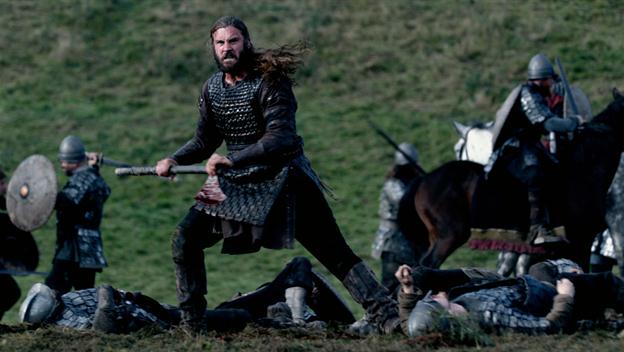
The battle in the second episode, "Invasion," ( this time a fleet of Norsemen sailed to invade England, with the idea of perhaps staying a while rather than doing a hit and sail home) was outstanding, partly due to its staging.  Whether or not it was authentic, that's for people who know a great deal about military history to judge. But it looked like a realistic depiction of how a shield wall can function defensively and offensively, and even do both simultaneously, especially when surrounded by forces on all sides.  When the wall opens and the melee begins -- such a close entanglement of fighting men and weapons, so close that distinguishing friend and foe isn't hard, but avoiding striking your friends seems almost impossible. The action looked like early European manuscript illustrations of such battles: all participants locked together, heaving, swaying in one bristling mass over bloody ground, stabbing, thrusting and hacking.

The second reason this battle was so impressive is that important things happened during it, beyond winning or losing. It was a very hard battle for both sides. Ragnar and King Horrick's forces were up against equals, King Ecbert's battle-hardened soldiers, with good armor and weapons. More than once it looked as though the Norsemen would succumb. One of the reasons Ragnar and Horrick's side prevailed was at a crucial moment, Athelstan, the former priest, hurled himself out of the wall to King Horrick's assistance. In another he took out a soldier about to end Ragnar. Athelston well earned his arm ring (awarded for battle courage and effectiveness).


In the four years since Lagertha left Ragnar, and his son Bjorn chose to go with his mother, the two seem to have disappeared. Ragnar wishes his son Bjorn was here to go raiding with him.  Aslaug's little boys are too young. Still, Ragnar continually remarks that fathers are jealous of sons' strength and fame, even as the father's own fame begins to be forgotten and his strength droops.

Hopefully these missing characters will return in future episodes. For one thing, Lagertha is too interesting and finely done to jettison.


Though in these four years Princess Aslaug has presented Ragnar with two sons, and has another one on the way, it's her turn to be afflicted with Ragnar's roving eyes, which appear to be lighting even upon serving wenches, barely above the station of a slave -- or out of childhood.  It's difficult to sympathize with Aslaug, since, unlike Lagertha, she's uninteresting.
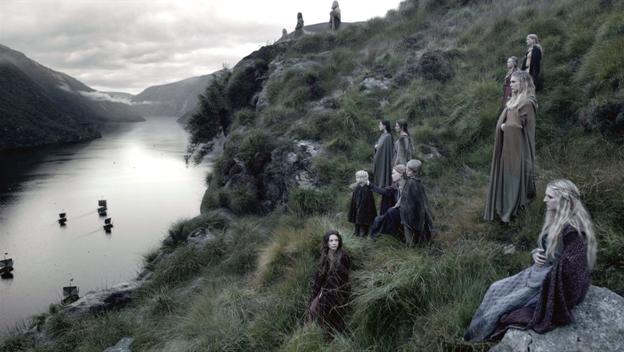

The suspicions about Eorl Haroldson's widow, Siggy and what her agenda may be don't go away.  Last season, while Ragnar was far away, covorting with Aslaug, Lagertha lost the child she was carrying. Did Siggy have something to do with the miscarriage? Siggy, partnered with Ragnar's less than loyal brother, Rollo, asked Lagertha for her friendship, which open-hearted Lagertha gave.  Yet, made widow, losing her status, Siggy isn't necessarily wishing the best for Ragnar, and by extension, his children. This time it's Aslaug, the ruler's consort, who reached out in friendship to deposed Siggy. Can any good come of this?  But, Aslaug, more sophisticated than the straight-forward, straight-seeing, straight-talking common-born Lagertha, will surely have her own agenda.

Ragnar, surrounded by all these women whom he insults and humiliates at will, should perhaps reconsider his behaviors. More than one of them can use battle weapons and at least one of them has a deep understanding not only of politics but of herbs, potions and poisons.


Now we are waiting to see what romanized, blonde, well-bathed and groomed King Ecbert of Wessex will do.

Saturday, March 1, 2014

Vikings - History Channel - Season 2

The television series Vikings returned for a second season Thursday night, on the History Channel. It was a deeply satisfying opening episode -- though perhaps not so much for those who haven't seen the first season.


Vikings is a dramatic series, as opposed to the channel's generally poor history documentaries, which often are neither factual nor interesting, or so have complained many people who watch the channel. But in 2012 the History Channel experimented with Hatfields and McCoys, its first dramatic miniseries.  It did well in the ratings -- I liked it too (though the West Virginia and Kentucky counties were remarkably free of any nonwhite residents).

In a discussion Elsewhere, Vikings watchers who think this television series is one of the best things going at the moment, have asked, "How did the History Channel manage do this right?"

They did it right because the History Channel essentially didn't do it. MGM and Michael Hirst did it, both experienced and professional at creating period spectacle.  Hirst (The Tudors is among his previous credits) produces and writes much of Vikings

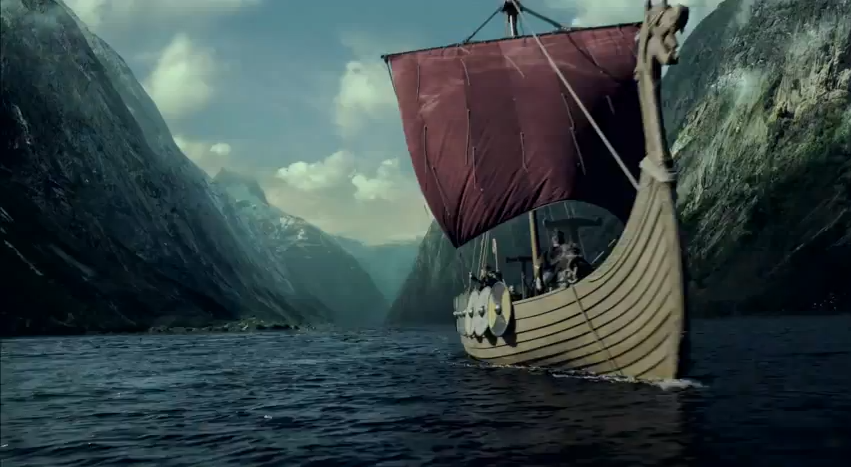
The show is a class production in every aspect, from the opening credits (visuals, lyrics and the musical composition) to cast, script, locations and set dressing. It's gorgeous and majestic as the mountains and fjords, as indifferent as the sea and sky, warm and intimate as fire and wool, as real as friends and sword.

Hirst based the characters and the story arcs loosely on the saga of Ragnar Lodbrok -- From wiki:
It follows the exploits of the legendary Viking chieftain Ragnar Lodbrok and his crew and family, as notably laid down in the 13th century sagas Ragnars saga Loðbrókar and Ragnarssona þáttr, as well as in Saxo Grammaticus's 12th century work Gesta Danorum. Norse legendary sagas were partially fictional tales based in Norse oral tradition, written down about 200 to 400 years after the events they describe. Further inspiration is taken from historical sources of the period, such as records of the Viking raid on Lindisfarne depicted in the second episode, or Ahmad ibn Fadlan's 10th-century account of the Volga Vikings. The series is set at the beginning of the Viking Age, marked by the Lindisfarne raid in 793. 
I re-watched the first season on dvd, prior to the new season's first episode broadcast. While last year I enjoyed the first season, this re-watch, without commercial interruptions, two - three episodes at a time, revealed the production to be even better than I'd initially thought.


A re-watch underlines Vikings's strong contrast to the HBO Got series. It's particularly different in the attitude with which an historic people's violence is depicted, and the attitude of fantasy writers toward the violence attributed to fantasy cultures -- a fantasy that yet is declared to reflect the realism of a medieval time. The violence in Got is purely for entertainment -- or perhaps, secondarily, it is there to be shoved into the audience's face -- take that! -- so the writers of Got can snicker at how much that can shove in a gullible face. Mostly gratuitous, unrooted in real world consequences, Got's violence is nearly always coupled with sexual violation-humiliation in some way (see Brienne, Maid of Tarth, gnerally, for instance, and Brienne particularly with the bear). Got wallows, when it comes to Theon Greyjoy,  in snickering, sickly, creepy gratuitous torture -- entwined with sexual snickering, sickly, creepy, immature emotional sickness. I recently clocked those scenes of Greyjoy's season 3 torture -- they are the longest scenes in the episodes. Instead of story line, plot development or character, the producer-writers prefer prolonged, close-up of some hunan beings rejoicing in doing the worst things they can think of to another human being's body -- for our and their entertainment. I also kept count in one season 3 episode of the number of times the word "rape" was used -- it was the favorite noun in that episode.  In the world of Got there's no joy of any kind.

For lovers of the shield wall, we see it, often; it's even more terrifying than Bernard Cornwell's Uhtred's description in the Saxon Chronicals
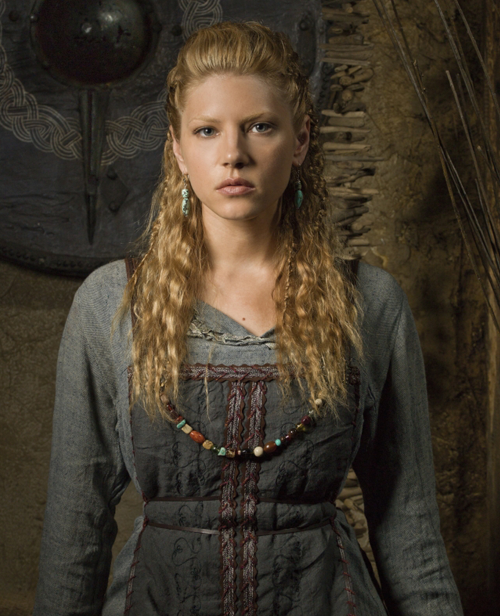
Vikings is different. Battles, violence, vengeance, torture and rape happen, among these people for whom a fatal world view is their culture. There is battle joy and there are the consequences; torture is not acceptable except within well defined circumstances that everyone understands, and rape (of non-slaves) is not only not acceptable, it's illegal. Indeed two dumbeffs think they shall rape Lagertha, a mother and wife, who was and still is a shield maiden; she makes short order of them -- yet it's not an occasion of celebration, but one of relief. Her 12 year old daughter is with her .... Lagertha is one of the favorite characters on Vikings -- fierce in love and hate, fair in judgment, wise, capable of strategic planning and behavior, womanly and a warrior.

There is a whole cast of fascinating characters, among whom is the protagonist and Lagertha's husband, Ragnar -- as dark as he can be, and even as shyte-eating as he is at one point in season 2 opening episode.  In other words, he's an authentic human hero, who lives bigger than life, yet is not one of the gods to whose allegiance he is sworn -- and with whom he will bargain.

One may wonder about some things: did men use cosmetics for ornamentation as much as for ceremonial purpose or cutting sun glare? Those hair styles -- are they authentic?  Were couples in this time and place open about inviting a third into their marital embrace? Most of all: were these sea-faring people so ignorant at the close of the 8th century of knowledge that there were lands in the west?

Nevertheless, Vikings convinces the audience that these people took great joy in living, in their friends and family, good food, songs and stories, that they enjoyed their curiosity about other lands and gods, and they loved beauty for its own sake. t It gets us to believe in their battle joy too, rooted as it is in their belief system which never forgets that death is always on its way.

So, for those of us who love historical fiction, Vikings is the best thing on television this spring.

Thursday, February 27, 2014

Vikiings -- My People -- History Channel

Vikings, season 2, tonight!

Beats you know what all to hell.

Their gods were all about Hel.


My people.