LINES OF THE DAY

". . . But the past does not exist independently from the present. Indeed, the past is only past because there is a present, just as I can point to something over there only because I am here. But nothing is inherently over there or here. In that sense, the past has no content. The past -- or more accurately, pastness -- is a position. Thus, in no way can we identify the past as past." p. 15

". . . But we may want to keep in mind that deeds and words are not as distinguishable as often we presume. History does not belong only to its narrators, professional or amateur. While some of us debate what history is or was, others take it into their own hands." p. 153

Silencing the Past: Power and the Production of History (1995) by Michel-Rolph Trouillot

Tuesday, December 6, 2022

So Much Happens On The Weekend

       . . . .  At the Friday evening start of the weekend, one can learn one is going to Spain for two weeks in March: Madrid, Toledo, Sevilla, Granada, Cordoba and Cadiz.  We are going with another couple, one half of which is the director-son of Arturo O'Farrill's Afro-Latin Jazz Orchestra, which is all about performing, and who is the head of the Board of Arturo O'Ferrillo's Afro-Latin Jazz Alliance, which is all about schools, teaching, training and bringing up young performers, outreach into the communities and the communities that may not know about them or the musics. 


Ha! You didn't think going to Spain was vacation did you?  No, this is prospecting Afro-Latin groups and musicians in Spain, for alliance and performance.  The Board also voted yes to ally with Postmambo Seminars, in order to do Postmambo Gotham next summer.  Thus, as one does, Friday night we went to the best Spanish restaurant in the area to celebrate with dinner and one of the wonderful wines that we don't find anywhere else here, certainly not in the wine stores.

The next day, el Vaquero said he wasn't feeling so good, which is fairly usual for him when waking up.  Yet he researched, chose the itinerary, and booked the flights and purchased the tickets. We did the usual Saturday night of him making pasta while listening to Phil Schaap on WKCR, which began long before Phil died. (WKCR runs the recorded shows Phil made over the decades in the same time slot every week.)

Sunday he felt worse, tested, and o yes, positive for Covid.  I was negative. I called his primary, who fortunately, being Chinese, has his office open on Sundays.  Got a script for Pax called into the pharmacy, which I picked up. He fell asleep for almost the entire afternoon

He took the first Pax dose at dinner time. By 10 - 11 at night, the light fever he had was gone.  By 3 AM Monday, the cough was too.  I finally fell asleep.  Sunday was a nasty day for me, afraid as I've been all along about what will happen if we get covid, particularly since we have no way to isolate in this this tiny apartment. We have to sleep together.  We wear masks, even in bed, particularly in bed.  I keep a big bank of pillows between us so he cannot do what he always does in his sleep turn over and put his arms around me.

Yesterday was nearly normal in behaviors, other than what one doesn't do, being positive, and living with someone positive, even though one is still testing negative.  Which means, of course quarantining. Also we wear masks, both us, in this tiny apartment, which is inconvenient, shall we say.  But then we're not Cubans, who are without electricity, covered with mosquitoes, have no water, no food, and do have covid, malaria and dengue.  Eff my inconvenience and slight discomforts.

Darling B brought us cornbread and left outside the door. Via fone he inquired what we needed, so he could bring it to us. But we don't need anything, not even milk, as I have a stash of Parmalat, and plenty of tea, etc.  El V and B agreed that any army that me as quartermaster would be having a good deal -- Always prepared! they said.  Ha! 

Today he doesn't feel in the least bit sick.  The test is a thin faint orange line. I am again negative.

But whatever. We aren't going anywhere or seeing anyone until at least 5 days after he's negative, and if I continue to test negative, not anywhere for 2-3 days after that, just in case.  I have canceled my dental appointment for next Monday.  Sigh.  But maybe I'll get another one before NO at the start of February.  It was a check-up/cleaning, not for An Issue, thank goodness. We also called the restaurant so our server could be warned.

He has been socializing/musiking a lot in the last weeks, though last week he didn't do anything at all, except Thursday night, he did go out to hear Cuban and New Orleans friends/musicians play.  That's the most likely site of infection, but, of course, one cannot know.

Let's face it -- we both were careless.  We'd been in one our city's brief interregnums of Covid, where the numbers had fallen so far, and hospitalizations were hardly happening for Covid. Then all anyone talked about was children with flu and RSV filling up the hospitals. But if one digged, one learned, which I had learned, there was no part of the city that wasn't classified as 'High or Severe Risk for Covid.' The numbers are alarming -- the governor's been talking about reinstating masks (she won't). The numbers started slowly rising with Comic Con, the Holy Days, so before Thanksgiving they were going rapidly up, and now there's the World Cup -- and next weekend that horror show called Santa Con -- all of these are super spreader situations, year after year. We really should have known better than going to a crowded restaurant where nobody masks except some of the basement Mexican staff.

O, there was something else that happened on Saturday.  Our internet failed.  Turned out it is because our wire from outside has suffered rain damage. It must be replaced, which means getting a time when the building's office will open access to the roof so the provider's technicians can replace it.  In the meantime a temp fix, with new modem.  But we may have to revert as we did until that temp fix to using the provider's outside hotspot, which means no secured internet. 

But let me close with this, which I am finally going to visit, since having the desire to do pricked about age 10, seeing the color plates of it in the set of Lands and Peoples, that went along with the other sets of books, as for Science and so on, that came with the purchase my parents made when I was six of the Books of Knowledge.  One has to reserve tickets months ahead of time, so now is the moment to do that.


Tuesday, November 22, 2022

Travel Turbulence

      . . . .There are ... mornings.

Having arrived home very late the night before from a long day of traveling and long week of working non-stop, one is sittings in the kitchen, as one does, in pjs, drinking coffee, unshaved, and the BBC calls, wanting one to go live on television, right now. 


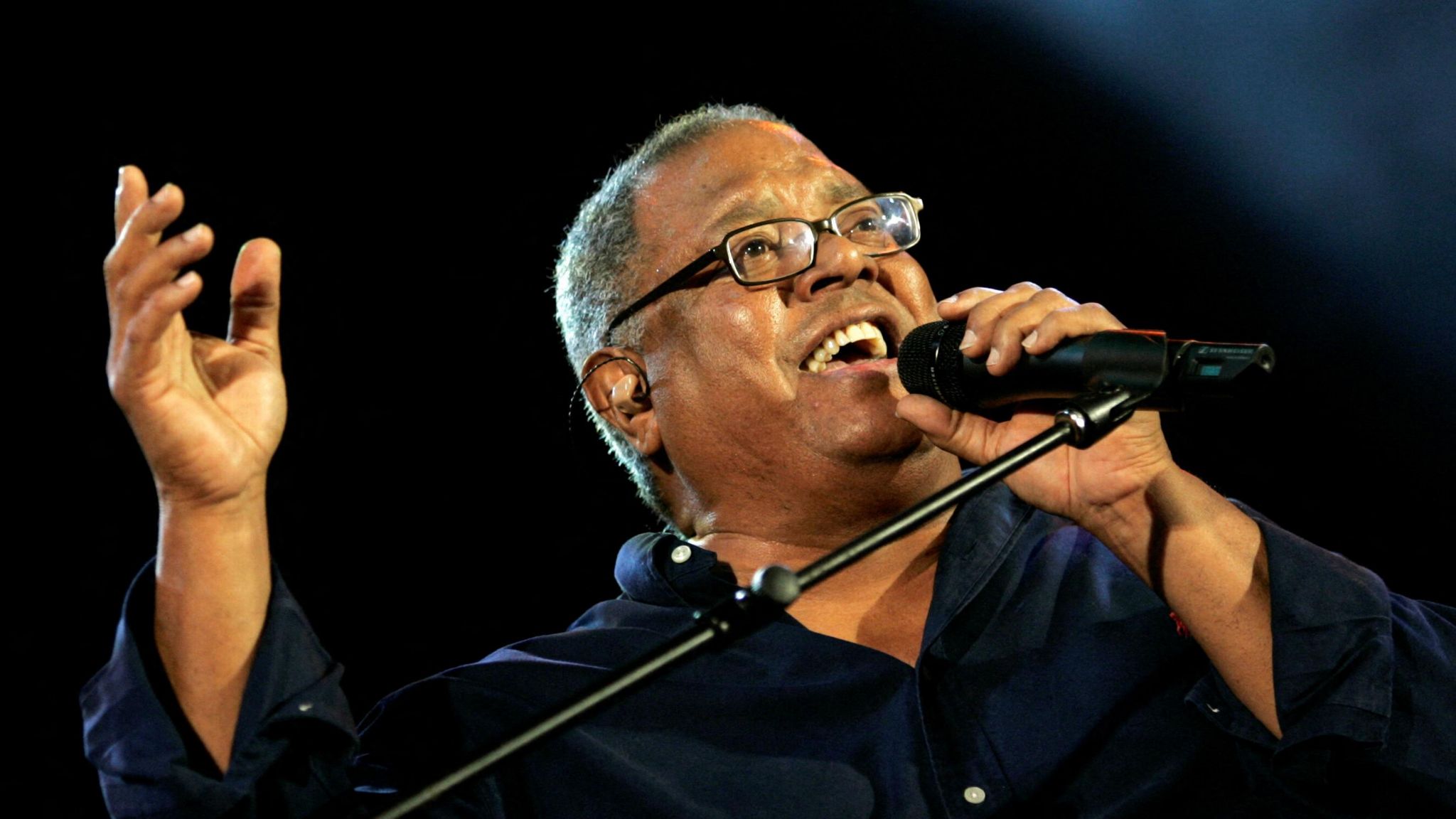
Pablo Milanés has died. 

El V, hardly alive, turned them down. He said was because I was still asleep – slept late –since we'd been up by 7 AM yesterday and didn't get to bed until nearly 3 -- Thanksgiving travel was already jamming up the airports.   But he said it was really because he didn’t want to.

He'd also just gotten the news that his dear Eddie Palmieri is in hospital, a stomach hemorrhage. 

El Vs upset. He was close to Pablo, and very close to two of his performing children, particularly Haydée Milanés, who have great careers in their own right.


Thursday, November 17, 2022

From Da List -- Santos: Skin to Skin

     . . . . Pardon my delay in getting this out, but I wanted y'all to know that tonight (Thursday. Nov. 17)-- at 8 pm eastern, from New Orleans!  Postmambo Movie Night proudly presents a special virtual screening of Santos: Skin to Skin, 


 a new feature-length documentary -- still making the festival rounds -- about our colleague, percussion master John Santos, followed by a conversation with filmmakers Kathryn Golden and Ashley James, as well as Mr. Santos himself.

You need to be on the parallel [seminar] list to attend.  If you aren't already on it and want to attend, just send me an e-mail with the word [seminar] in the subject line.

The Zoom link goes out at 6 pm eastern. Thanks! 

~~~~~~~~~~~~~

Whew, it's cold!  But not anywhere near as cold as it is back up in NY.  Worse They Say Buffalo and Watertown are probably getting 4 feet of snow between today and Sunday.

Monday, November 14, 2022

The Struggle That Failed 1919 -- 1945

     . . . . Hitler: A Career (German: Hitler – Eine Karriere) (1977)

West German documentary film about the career of Adolf Hitler directed by Christian Herrendoerfer and Joachim Fest and written by Fest, a German historian.

 Everything on screen is documentary film footage shot at the time in real time, though the narration – in English -- is not, and overdubbed.

This latest edition of the digitally restored period film footage, which the team that got this on Netflix did, taking out the herkyjerky fast walking and so on that we were used to from footage of the time – the miracles that can be done now.  It’s much easier watching this 1977 film in 2022 than it was to watch on television in 1977.

As per usual, my first question was the same as it always is when watching nazi documentaries. Where did the nazi organizers get these hundreds of thousands participants in the spectacles, that are viewed by an equal number of wildly cheering spectators, how is it possible the paraders and performers can execute the endless vast unison parading and maneuvers that, among other things, create monumental swastikas of human beings?  (Later in the film there's some analysis as to why so many of these spectacles were arranged at night -- the dark covered up much of the reality of what was there.)  I also think, seeing the scenes of the nazi youth groups how much I’d hated growing up in nazi Germany – those girl youth camps in which one is told that washing clothes for the family was more fun for girls than going to school, forced to play volleyball instead of reading books. They sound like mother did, having a fit when she asked, "Why don't you like anything about housework?" and I looked at her as insane.


Poland, is often regarded as comically out of date confronting Hitler’s invasion of tanks and aircraft, without any of the weapons and infrastructure of a modern army.* However, we forget -- if we ever knew -- how little time Poland had in the last 100 years or so to even BE A NATION, much less have the money or time to create a modern army, since the partition and disappearance of it in the 18th C. Under the circumstances, that it took Hitler’s forces 2 weeks to subdue Poland seems, to me, at least, admirable and truly heroic, not something for non-Poles to feel superior about. Not to mention our current home-grown nazis would never heroically make a stand like that against even an equal force, much less such an overwhelming one.  Shoot, they can't even stand up to not having somebody cooking breakfast and handing to them, or have teenage girls laugh at their trux.

On! To Moscow. Mud up to the horses’ shoulders. Mud past the tanks' treds.  Then snow, higher than the horses' bellies. This is footage shot on that advance, and the defeat WWII -- a scene of Hitler walking in snow behind the lines and the front's 'advance', stating, "I hate snow.  I never want to see snow again." Then going back to Germany, where, presumably some heads rolled, due to snow not foretold or removed.

Whilst the viewer ponders how so many of the scenes of vast numbers adoring Hitler and the nazis, united in joy of hatred, often in tears – thousands of girls melting down over the Beatles have nothing on these hormonal charges – we’ve been seeing in the last few years. 

* Poland's cavalry charge against tanks and aircraft is a myth.

The true story behind the myth is as follows.

On Sept. 1, 1939, a Polish Cavalry regiment operating along Poland’s northwestern border attacked a column of unsuspecting German infantry.

The invaders were quickly scattered, but before the Poles could celebrate, a squad of German armoured vehicles appeared on the scene and inflicted heavy casualties on the horsemen with their canons and machine guns.

The next day, war correspondents were brought to the scene and told that the Poles had charged German tanks.

Despite no one actually having witnessed the supposed charge, seemingly overnight the story spread across the globe and was quickly accepted as true. Both Time Magazine and The New York Times described the incident in hyperbolic detail; high ranking German officers recalled it in their memoirs; and even Winston Churchill mentioned it in his history of the Second World War.

I suppose we need not be surprised that one of the most solid, enduring platforms of this myth is a film the nazis shot to show their infinite military superiority to everyone?

…. Perhaps the most notorious example was the pseudodocumentary Kampfgeschwader Lützow, which featured staged footage of Polish cavalry charging panzer tanks. ….

Friday, November 11, 2022

Keepin' the Home Fires Burning

     . . . . Could this actually be a week in which decent people can have some joy?  The retreat from Kherson, inflation seeming to have hit peak, our midterms giving us the "Something not turning as out as bad as it could necer felt so good."

Somehow, the three feel related, along with the outcomes of both Colombia's and Brasil's presidential elections. Even so, I'm probably centering, wrongly, the US here?

OTOH, covid infections are increasing like mad here.  Glad I did the late autumn hair stylist visit early.  Also we are going back to NO next week.  Back in time for Thanksgiving with some friends -- who had covid, but are over it  But we won't have the usual second Thanksgiving we usually have with other friends, as they both have covid presently.  Pax is doing its job, but as one is so run down from years of caregiving and job, and the other is still recovering from emergency brain surgery, it's not so easy.

Another amiga has been subjected to round after round of chemo since June/July. She and I have email discussions about the books and television likes we have in common. The latest was around learning we both had liked The Peabody Sisters: Three Women Who Ignited American Romanticism (2005) by Megan Marshall, is another of those biographies that work beautifully for me as well. I've read it, in fact, three times. 


Sophia Hawthorne was one of the sisters. She spent her life in Boston being sick, unable to walk or do housework.  The only treatment that worked for what ailed her was spending the winter in Cuba on a hacienda.  The further her ship got from the Boston, the better she felt, until, by the time she reached Cuba, she was quite, quite well.  She adored spending her mornings a-gallop on spirited horses of her host, across the river valley fields. Then, returning to Boston, the closer her ship got to US shores, and the closer to Boston, the more unwell she became.

 Reading this in the biography back then, sent me looking for Sophia's journals, and I found some material that el  V was able to use in his Cuba And Its Music. Sophia Hawthorne was as racist and non-condemning of slavery as she could be, without coming right out and saying she believed slavery was a positive institution, but she was observant, so there were bits that were of use. Her remarks on the enslaved form part of the unlovely picture of our nation's history of Black hatred. 

I want to blame her husband, since Sophia's sisters were quite concerned with slavery and abolition.  Nat. Hawthorne, though, was quite a piece of work. All his life he was in bromance with Franklin Pierce, and, even, quite possibly, his lover.  Hawthorne wrote Pierce's presidential campaign political bio for excellent pay, received sinecure government posting from Pierce, was with him on his deathbed -- he asked for him, not Sophia -- was totally in the slaveocracy's pockets.  Hawthorne was vocally anti-abolitionist, and decisively told people discussions of slavery were boring and a waste of time, and he didn't care about slavery one way or the other.  Quite out-of-step with fellow Concordians.  Though Sophia's Cuban trips began before she knew Hawthorne, of course, so it was more like-to-like than caused by Hawthorne. My, this book, and the experience of it, like everything before 2016 and covid feels far, far away in time.  


Coincidence: as I finished Sister Novelists, another biography of sisters appears --a new book about the Grimkés: The Grimkes: The Legacy of Slavery In An American Family, by Kerri Greenidge.  It seems to be a study intended to debunk their reputations as anti-slaverites -- the review I read suggests they profited immensely from slavery.

So, this morning, receiving the news the library had The Grimkés available, I dashed off to the library to pick it up, because it wasn't raining much, despite we being in Tropical Storm Nicola predicted wind and rain. I knew it was Veterans Day, but didn't stop to think this is a holiday and the libraries are closed.  Duh.  I'm smart that way.  Though I was wearing the rain-snow-storm boots I got last week, so I'm not so dumb that way!  Had on rain coat and carried umbrella too.  Which was good because the storm hit hard as I was returning home, due to the fog and heavy cloudfs, dark came even earlier than the roll back of EDST makes it. We're currently in fog, as well as dark, since the temps are fairly warm -- in the 60's. Well stocked with what we need, and even what we want, we are happily cozy and comfortable.  How lucky can we get?

The week was quite lively, while we ignored the pre-election and pre-results backbenching with all our hearts.  El V did another Postmambo Zoom last night, this time with live guest and his film,  from Lome, in Togo, Africa.    He also went out to several music gigs, and we taught two classes.  

Hope the internet stays on -- it's gone out twice now in less than 24 hours.  If no problems I plan to watch more Crown, season 5, 2022. This is the season to turn the mythologies of Di and Charlie inside out. The first two eps dull and dreary.  The actor doing Di is lacking in all that made cameras and screens bewitched by her.  We see her being acidly mocking and mean, o so not quite subtly (due to the bile and acid of bulimia?). It got interesting in the 3rd episode which was generally only about the Al-Fayed family and the man who was the Duke of Windsor’s valet until death – Fayed sr. hires Black Barbadian, Sydney Johnson, whom the Duke had taught everything that makes an English gentleman.  According to the show, Johnson was the one who advised Al-Fayed to buy palace estate, Villa Windsor, decaying on the outskirts of Paris – and Harrods Department Store, then finally buy some position in a most prestigious equine something or other so he can sit next to, and, finally, meet and speak with the Queen. Queenie’s not about to allow this unworthy vulgarian colonial his reward. She and her Equerry send Diana instead. The Princess insults him, and they get along famously.  Di and Elizabeth are equally nasty in this sequence. Later, at E’s court, the members eagerly check with each other as which possessions in the Villa belong to Them/the Crown/ -- and they go over the lists with the same avid attention any grocer would go over his delivery lists and invoices.  The Court looks small and grasping, petty and avaricious. And, always, deadly dull.

The other character is Charles (now Kingwingy Charles III). Played as he is by Dominic West – as Charlie then as now lacks all charisma, electricity and interest, whilst West can’t help splattering it everywhere just standing around -- this doesn’t work. Can you imagine The Wire's Jimmy McNulty having a temper tantrum over a ... pen?  No, we cannot, but Charlie did. Immediately on being king, even not yet crowned. 

If Charlie was in the least like West’s presentation, none of the messes would have happened in the first place.

So, history's revisionism continues apace, even revisionism of what we've 'always known' because we were there.  Ha!


Saturday, October 29, 2022

The Mothers of English Historical Novels - Plus Fèt Gede

     . . . .  Sister Novelists: The Trailblazing Porter Sisters, Who Paved the Way for Austen and the Brontë by Devoney Looser (2022).


Washington Post review here, which upon reading the review, I immediately ordered the biography. These Porter sister novelists were the mothers of English historical fiction. I have often invoked Sir Walter Scott as the father of historical fiction (and Dumas as godfather), but as deep as my knowledge of English literary history is, I'd no idea these women had existed.  Can we guess why, one wonders . . . .

 Maria and Jane Porter published the first Brit historical fiction in novel form in several books in the first decade of the 19th century.  


Delaware Art Museum 
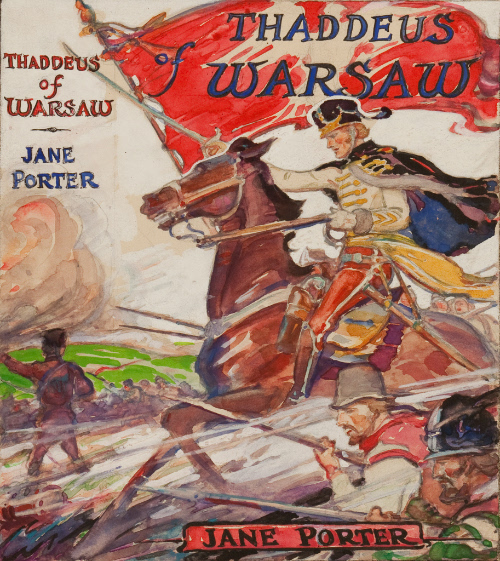
Book cover design for Thaddeus of Warsaw, by Jane PorterATTRIBUTED TO: Walter Stewart (American illustrator and painter, 1902–1981) 


Maria Porter, in her 1803 Thaddeus of Warsaw, created

... “the historical novel as we know it” in her 1803 tale of a Polish war hero who becomes a refugee in England. “What was new about ‘Thaddeus of Warsaw,’ ” Looser explains, “was its mingling of climactic historical events with the conventions of biographies, romantic tales, and probable domestic novels.” Contemporary critics dubbed it “a work of genius,” and it was a sensational bestseller. ....


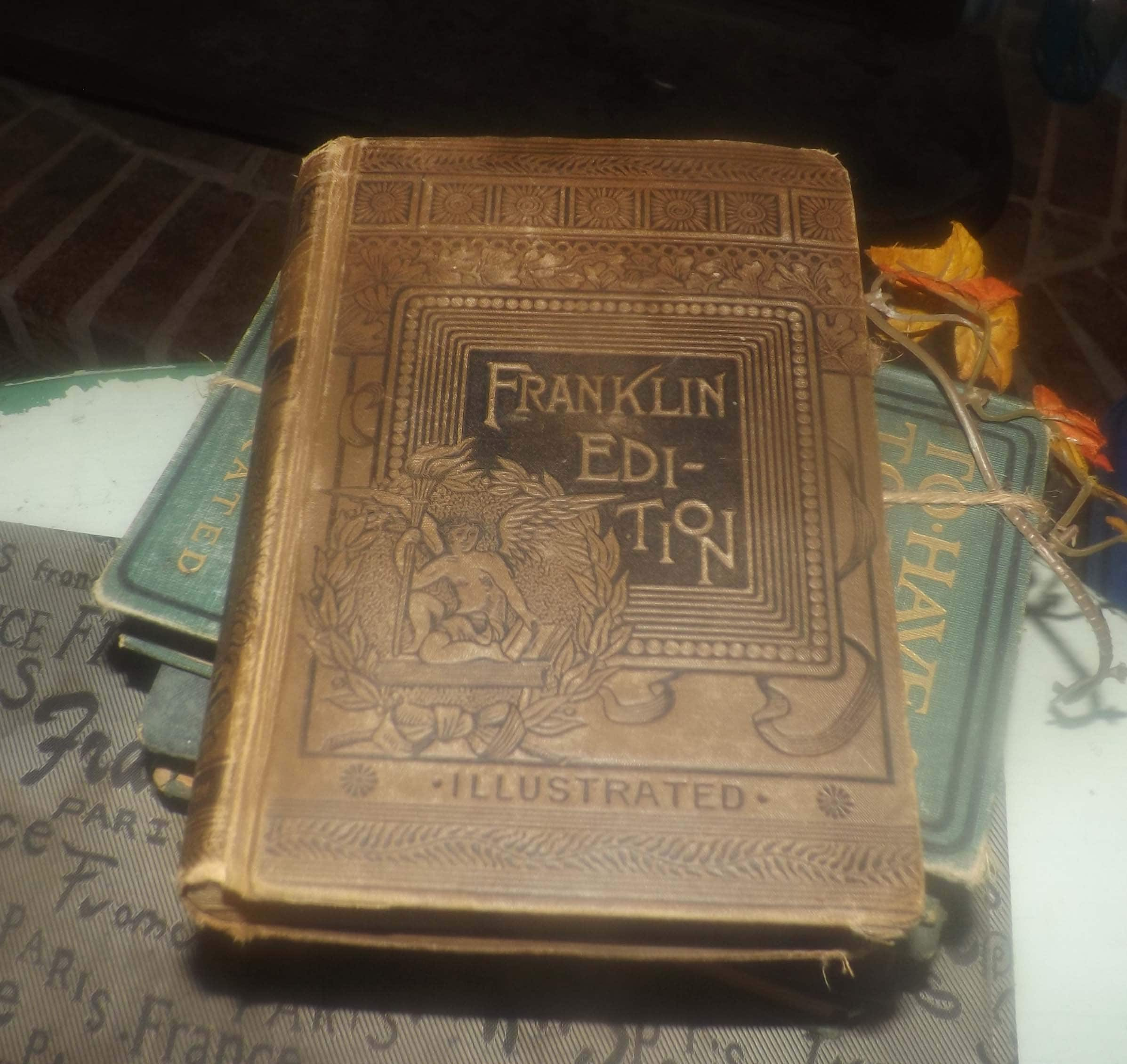
ANTIQUE (1810) FIRST-EDITION HARDCOVER BOOK THE SCOTTISH CHIEFS. JANE PORTER. FRANKLIN EDITION. PUBLISHED PRINTED ENGLAND BY WORTHINGTON


In 1810 Jane Porter published The Scottish Chiefs, telling the tale of William Wallace’s battle for Scottish independence from Britain, published quite prior to Scott’s first novel, Waverly, 1814, that told of of the 1745 Jacobite rebellion. 

These two sisters’ novels were massive hits, best sellers, out of the box. Would that have had any influence on Scott’s literary choice of form and subject?  One commentator to the review observed,

 "I find it interesting that of the twenty-six ‘Waverley novels’ written by Walter Scott not one was set during the time of William Wallace and King Robert I." 

Author Looser did address this -- how could she, how can we, not?

... [Looser] is more cogent on the question of why these popular and influential authors are virtually unknown today. The root cause of the sisters’ decline in literary reputation and, eventually, sales, Looser writes, was the phenomenal success of Walter Scott’s “Waverley” in 1814 and the author’s failure to acknowledge that the methods he employed in his historical novels were very similar to the Porters’: “Critics would increasingly claim that the Waverley novels had elevated the genre of fiction — and especially historical fiction — bringing to it a superior new (masculine) excellence, while correcting supposed previous (feminine) faults.”

Are we surprised yet?

.... Jane in particular resented this and in 1827 wrote a pointed short story, “Nobody’s Address,” that implicitly accused Scott of reducing his literary precursors to nobodies. By the time she died in 1850, having survived Maria by 18 years, Jane had been reduced to living with a brother and receiving charitable grants from the government. Her achievements deserved better recognition, and although Looser’s thickly detailed biography could stand to be a little less detailed, it pays overdue tribute to pioneering siblings unjustly neglected by literary history. ....

~~~~~~~~~~~~~~~~~

     . . . . A perfect day -- gold, red and blue -- so clear and still, low humidity for a change, and the temperature in the seasonal 50's. Receiving audio royalties for The Books, was a good start to the day. However,  packed restaurants, streets and sidewalks. The annual Village Halloween Parade cattle stanchions are unloaded and going up too, for Monday, further blocking access to sidewalks and intersections.  Getting around down here is nearly impossible; I had to fight my way through the outsiders to my polling place. This is the first day of early voting in the Midterm election.  Alas there was so little, were so few, to vote for; mostly I was voting against. 

Weep for the city, weep for the state, weep for the nation, weep for the world. 

However, after Monday's Hell Night, Tuesday night, known in some places as El dia de los muertos and others as the Day of the Dead, in Haiti is Festival of the Dead,  Postmambo's Fèt Gede*, will zoom throughout the US and Europe.  This is the third year Postmambo is hosting a Gede festival: 


Postmambo Movie Night

presents

Fèt Gede in Weimar America

Tuesday, Nov. 1, 7 pm eastern

note earlier-than-usual start time

We'll warm up with some Haitian music videos, including some of my all-time favorites, namely RAM's videos featuring Gede, lwa of the dead. Including their new one, "Gede Vim Anwo." Mr. RAM himself, Richard A. Morse, has indicated that he will be able to drop in and talk to us from his pied-a-terre in New Orleans, where RAM is presently rehearsing and gigging, about these awe-inspiring videos.

==> Our main feature will be Maya Deren's Divine Horsemen: The Living Gods of Haiti, shot between 1947 and 1954. We'll talk about it afterwards with my fave co-host, Dr. Elizabeth McAlister. (Revisit her January 2022 Postmambo Session on "Funerary Rites in Haitian Vodou" here.)

==> More guests to be announced, including an instructor in Gede dancing . . . Drop in for Fèt Gede / All Saints Day / Day of the Dead / at whatever time you can make it on Tuesday Nov. 1, starting at 7 eastern and continuing until 11 or so. More info to come.

I'll be sending the Zoom link out to this list on Tuesday at 5 p.m. eastern . . .

Get your purple, black and white, your single-lensed shades and black bowler hat, and be your own Gede self. 


* Fèt Gede is naturally huge in New Orleans, as well as Haiti and eastern Cuba.  The Morse and Ram's pied-à-terre there is so important, not only for the cross-aculturation going on between them and the city's indigenous vodun population and musicians and Head, but because Haiti is so very very dangerous -- no exaggeration to say Haiti is very dangerous -- for everyone, on so many fronts from the second invasion of cholera, lack of water and food, drugs, gang and 'government' violence -- climate change.  You name it, it's there in the perfect storm of calamity that has come to this nation, thanks to relentless, historical, racist politics on the part of the US and Europe.

Wednesday, October 19, 2022

Is This the First US Science Fiction Novel? The Partisan Leader

      . . . .  Science Fiction, published very early in the United States of America, is a confederate novel by a Virginian, who was a passionate advocate for slavery.  


The Partisan Leader (1836) by Nathaniel Beverly Tucker (male; 'Beverly' is a common male surname and first name in earlier decades among the Aristo class in VA, SC, etc., particularly those descended from pre-Independence VA ), under the pseudonym of Edward William Sidney.  After losing election campaigns in two states, Missouri and Virginia, Tucker's well-connected friends and family got him appointed as professor of Constitutional Law at William and Mary -- his father held the position before him. As we see, this gave Tucker copious free time to write novels (while waited on hand-and-foot by enslaved labor): his first novel, George Balcombe was also published in 1836. *. 

He employed his additional leisure time to write political pro-southern slave state secession, economy and power tracts. Thus, as one likely would expect, this, if not the first, one of the first sf novels -- the novel is set 13 years in the future from the year in which it was published -- would be a romance centered on Virginia, about slavery,  a successful Southern secession from, and confederation against, the dastardly North, which Happy Ending turns the entire Western hemisphere into a vast slave state.

Tucker lived in those halcyon decades in which the Southern Plantation class ruled the Federal government from the White House all the way down, planning to expand slavery as the economic system throughout the Western Hemisphere, while defending it from the heinous designs of Britain, "the Great Apostle of Emancipation”. This 'design' was to destroy the Southern cotton economy in favor of their own in India (which Britain did not have and wasn't trying to have then), while invading the United States with an army of Africans and those freed from bondage out of Cuba, Haiti, Brasil, etc..


One of Tucker's  best friends was Virginian, Abel P. Upshur, who was contributing his bit to expansion and defense by building a navy that could successfully take on Britain's.  The photo above is the USS Abel P. Upshur (DD-193), a Clemson-class destroyer in the service of the United States Navy and United States Coast Guard until -- IRONY!  IRONY! IRONY! --  transferred to the United Kingdom in 1940. During World War II, she served in the Royal Navy as HMS Clare.

The Partisan Leader can be read on the Documenting the South website here. 

* Incidentally, as a point of interest in the history of American Literature, it was reviewed by this southerner, Edgar Allan Poe.

~~~~~~~~~~~~~


     . . . . This Vast Southern Empire: Slaveholders at the Helm of American Foreign Policy (2016) by Matthew Karp "illuminates this era of American history with an intelligent survey of those Southern politicians and their ambitions, both at the regional level and the federal level. “By the middle of the [19th] century,” he writes, “southern masters ruled over the wealthiest and most dynamic slave society the world had ever known.”

Their leaders were nationalists, not separatists. Their “vast southern empire” was not an independent South but the entire United States, and only the election of Abraham Lincoln broke their grip on national power. Fortified by years at the helm of U.S. foreign affairs, slaveholding elites formed their own Confederacy—not only as a desperate effort to preserve their property but as a confident bid to shape the future of the Atlantic world.

 Calhoun's policy was to insure the power of the agrarian South by limiting the power of the federal government. "That section distinct from the rest of the nation, however, eventually aimed to create its own Confederate States of America and then export that confederacy. The result would be a Southern Empire."

The consequence? The failure or success would depend upon southern statesmen advancing that world through United States foreign policy. “Few mid-nineteenth-century Americans,” he writes, “were more deeply engaged with international politics than southern slaveholders.” Those in positions of power, southern elites, also kept the international politics of slavery under constant surveillance, “tracking threats to slave property . . . monitoring oscillations in global attitudes toward emancipation.”

"Given that global perspective, there was little in the southern “institution” that was “peculiar.” During those antebellum decades, the blunt facts illustrate a vise-like grip on the presidency, the cabinet, and the lower levels of federal administration. Professor Karp quotes Iowa Congressman Josiah Grinnell, who observed that during those antebellum years southern slaveholders held the Secretary of State office for two-thirds of the time."

In their minds, Great Britain’s 1833 Slavery Abolition Act was part of the nefarious design to destroy them.  This accounts for the region's adamant anti-British policy in all things up until the War of the Rebellion.

I do believe though, the author is mistaken when he describes these Southerners as "cosmopolitan, highly educated and sophisticated -- because their fundamental tenets were made of contradiction. They were firmly convinced Britain schemed to destroy them economically for it's own economic benefit.  Yet, these leaders also assumed, presumed and expected Britain to support and assist and finance their Great War of the Rebellion. It could have no choice, they were certain, because Britain's industry depended on King Cotton.

Goes to show, again, that the current crops of racist conspiracists, delusionists, climate and election deniers, disseminators of lies and fakery and outright insanity come from a vast pedigree in our national history of determined violence to rid themselves of government and have their own preferred systems of cruel, selfish greed.